
INTERNACIONAL
Democrats demanding ICE reforms lose airport escorts in shutdown they triggered

NEWYou can now listen to Fox News articles!
The Trump administration is escalating pressure on Senate Democrats as negotiations to end the partial government shutdown remain at a standstill.
The partial government shutdown, which is only affecting the Department of Homeland Security (DHS), entered its second week on Monday. So far, the impacts of the shutdown have been minimal, but the pain could be coming soon as the agency activates «emergency measures» while the shutdown drags on.
DHS announced over the weekend it would be making tweaks to some Transportation Security Administration (TSA) functions that could lead to longer wait times for passengers and lawmakers alike.
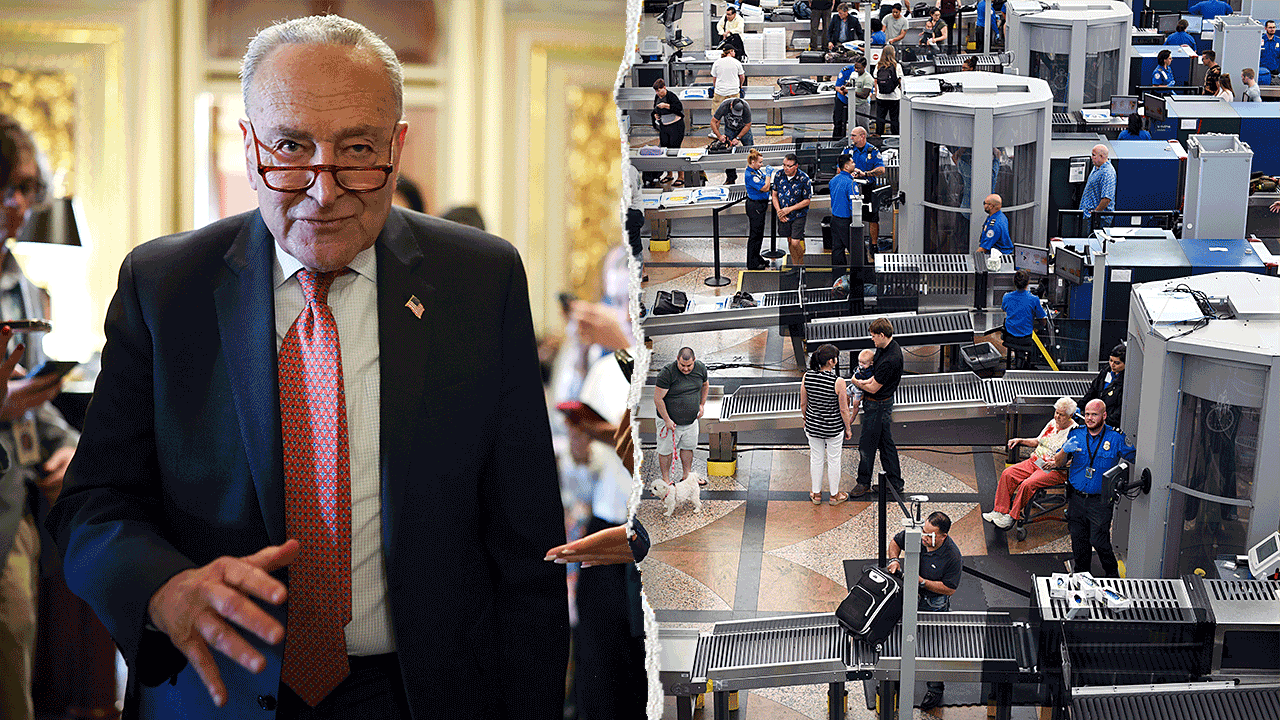
The Department of Homeland Security enacted emergency measures over the weekend, tweaking some TSA functions as Senate Minority Leader Chuck Schumer, D-N.Y., and Democrats remained dug in on their positions. (Kayla Bartkowski/Getty Images; Robert Alexander/Getty Images)
«Shutdowns have real-world consequences, not just for the men and women of DHS and their families who go without a paycheck, but it endangers our national security,» DHS Secretary Kristi Noem said in a statement. «The American people depend on this department every day, and we are making tough but necessary workforce and resource decisions to mitigate the damage inflicted by these politicians.»
The agency announced that, for now, TSA PreCheck would stay operational after a back-and-forth over whether to continue the program during the shutdown. The program is used by more than 20 million people to speed up wait times at airports across the country, according to the agency. However, courtesy escorts for members of Congress have been suspended.
«At this time, TSA PreCheck remains operational with no change for the traveling public,» a spokesperson for the agency told Fox News Digital. «As staffing constraints arise, TSA will evaluate on a case-by-case basis and adjust operations accordingly.»
DHS SHUTDOWN EXPLAINED: WHO WORKS WITHOUT PAY, WHAT HAPPENS TO AIRPORTS AND DISASTER RESPONSE

DHS Secretary Kristi Noem announced that the agency would begin emergency measures over the weekend as the government shutdown dragged into its second week. (Ash Ponders/Bloomberg via Getty Images)
Much of the real pain that could come from a prolonged shutdown will have to do with TSA agents missing paychecks. That became a major factor during the historic 43-day shutdown last fall that saw wait times skyrocket and flight cancellations compound by the day.
Some Republicans believe it will take that kind of disruption to get Democrats to reverse course on their current position.
«Nothing’s going to happen here until flights get shut down, right? When TSA workers stop showing up,» Sen. Rick Scott, R-Fla., told Fox News Digital. «When the Democrats, you know, can’t fly, then they’ll give in. I mean, they don’t care, because they’re being paid.»
Senate Democrats, led by Senate Minority Leader Chuck Schumer, D-N.Y., and the White House are gridlocked in their ongoing back-and-forth over a compromise to fund the agency.
DEMOCRATS RISK FEMA DISASTER FUNDING COLLAPSE AS DHS SHUTDOWN HITS DAY 5
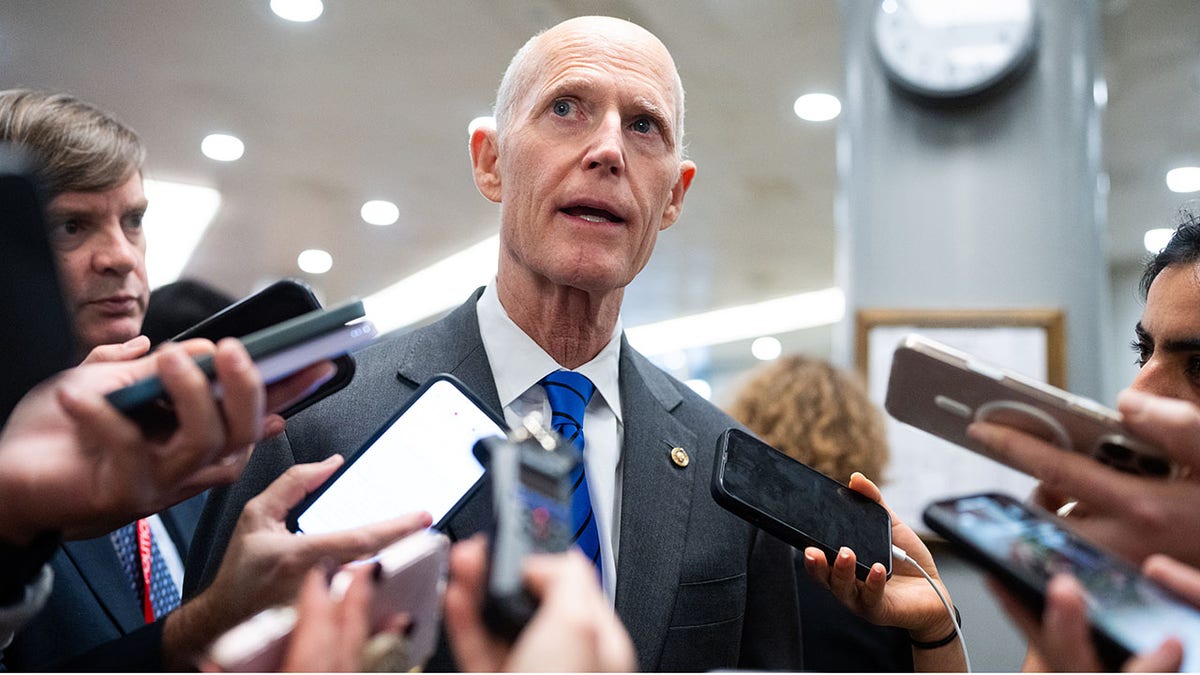
Sen. Rick Scott, R-Fla., said Senate Democrats wouldn’t take the shutdown seriously until flight delays and cancellations started to stack up. (Bill Clark/CQ Roll Call, Inc. via Getty Images)
Schumer and his caucus want more stringent reforms to Immigration and Customs Enforcement (ICE), following deadly shootings in Minnesota amid immigration operations. The White House has so far been willing to entertain some of the changes they’ve proposed, but Republicans have drawn red lines on imposing judicial warrant requirements and unmasking agents, among other provisions.
That means a bulk of the agency is going without funding as both sides continue to butt heads, given that ICE and some immigration enforcement functions are flush with funding from the «big, beautiful bill.»
The tweaks to TSA are not the only steps DHS has taken to implement emergency measures during the shutdown.
CLICK HERE TO DOWNLOAD THE FOX NEWS APP
Customs and Border Protection (CBP) has halted Global Entry at airports and diverted agents to instead help process travelers.
The Federal Emergency Management Agency (FEMA) has also stopped all public assistance for ongoing disasters, paused non-emergency work, halted non-disaster-related activities and restricted personnel travel to activities «strictly necessary to respond to active disasters and life-safety emergencies,» according to the agency.
Related Article
politics,senate,government shutdown,chuck schumer,homeland security













INTERNACIONAL
US allowing some Nigeria embassy staff to evacuate over ‘deteriorating security situation’
NEWYou can now listen to Fox News articles!
The State Department said it authorized the departure of some staff at its embassy in Nigeria over the «deteriorating security situation» in the African country.
The development comes weeks after the U.S. military reportedly sent MQ-9 Reaper drones to Nigeria amid fears of a renewed insurgency by the terrorist group Boko Haram. The day before the authorization was issued, gunmen attacked two villages about 155 miles from Abuja, where the U.S. embassy is located, killing 20 people, residents told The Associated Press.
«On April 8, 2026, the U.S. Department of State authorized the voluntary departure of non-emergency U.S. government employees and family members from U.S. Embassy Abuja due to the deteriorating security situation,» the U.S. Embassy and Consulate in Nigeria said. «The U.S. Embassy in Abuja will remain open but will have limited ability to provide emergency services to U.S. citizens in Nigeria.»
«The U.S. Consulate General in Lagos will continue to provide routine and emergency services to U.S. citizens in Nigeria,» it added. «The Department of State Travel Advisory for Nigeria remains at Level 3, recommending travelers reconsider travel to Nigeria due to crime, terrorism, civil unrest, kidnapping, armed gangs, and inconsistent availability of health care services.»
GUNMEN ON BIKES STORM NIGERIA VILLAGE ON PALM SUNDAY, KILLING AT LEAST 20
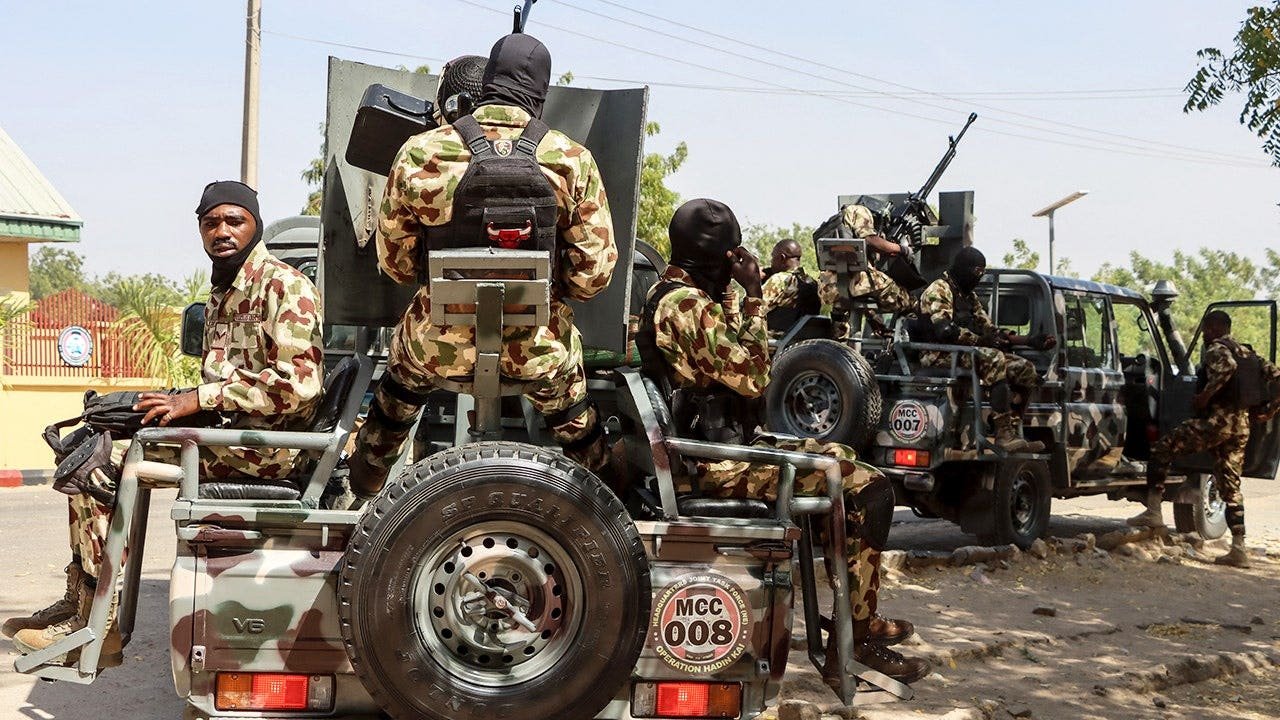
Nigerian soldiers prepare to patrol in Maiduguri on March 18, 2026, following a deadly triple suicide bombing that killed 23 people on March 16. (Audu Marte/AFP/Getty Images)
The embassy also said, «U.S. citizens in Abuja should consider departing if you do not need to remain for emergency or essential purposes.»
The recent attacks occurred in the early hours of Tuesday in Bagna and Erena, located in the Shiroro area of Niger state.
«They came on motorbikes and began shooting. It was a surprise attack, because it was in the early hours of the morning,» Jibrin Isah, who lives in Erena, told the AP.
100 US TROOPS LAND IN NIGERIA AS ISLAMIC MILITANTS THREATEN WEST AFRICA REGIONAL SECURITY

Police officers gather at the scene of Sunday night gunmen attack in the Gari Ya Waye community in Nigeria, Monday, March 30, 2026. (Samson Omale/AP)
Residents said at least 20 people were killed, with more missing. However, local police said only three people were killed.
The State Department said in a travel advisory issued Wednesday that there is «risk of terrorist violence, including terrorist attacks and other activity in Nigeria,» adding, «Terrorists collaborate with local gangs to expand their reach» and «They may attack with little or no warning.»
The MQ-9 drones reportedly were deployed to Nigeria in late March after 200 U.S. troops arrived in February to provide training and intelligence. Nigeria, Africa’s most populous country, is battling a complex security crisis, especially in the north of the country.
A spokesperson for AFRICOM, the U.S. Africa Command, had told the AP that U.S. troops «are working alongside their Nigerian counterparts to provide intelligence support, advisory assistance, and targeted training in support of the Nigerian Armed Forces.»
Among the most prominent Islamic militant groups active in Nigeria are Boko Haram and its breakaway faction, which is affiliated with the Islamic State and is known as Islamic State West Africa Province, or ISWAP.

A U.S. military MQ-9 Reaper drone approaches for landing at Rafael Hernandez Airport in Aguadilla, Puerto Rico, on Dec. 29, 2025. (Miguel J. Rodriguez Carrillo/AFP)
There is also the ISIS-linked Lakurawa, as well as other «bandit» groups that specialize in kidnapping for ransom and illegal mining.
President Donald Trump has spoken out against violence targeting Christians in Nigeria, telling Fox News Radio last year, «I’m really angry about it» and «What’s happening in Nigeria is a disgrace.»
CLICK HERE TO DOWNLOAD THE FOX NEWS APP
Secretary of War Pete Hegseth also met with Nigerian national security advisor Nuhu Ribadu last November amid threats from Trump to cut off aid to Nigeria if the country «continues to allow the killing of Christians.» Nigerian officials have pushed back on the accusation.
Fox News Digital’s Anders Hagstrom and The Associated Press contributed to this report.
warnings, counter terrorism, us, state department, military
NEWYou can now listen to Fox News articles!
House Democrats are weighing a long-shot scenario to remove President Donald Trump using the 25th Amendment, but are declining to say whether they’ll act before the November midterm elections.
House Judiciary Committee Ranking Member Jamie Raskin, D-Md., will brief congressional Democrats Friday afternoon on the constitutional mechanism that would rely heavily on Trump’s Cabinet agreeing to push him out of office.
The 25th Amendment has never been used before to involuntarily remove a president and is effectively moot without widespread Republican buy-in. But a bevy of House Democrats have embraced that scenario following the president’s escalating conflict with Iran.
«Donald Trump’s deranged threat to destroy ‘a whole civilization’ in Iran is a threat to commit war crimes and genocide,» Raskin wrote on social media Tuesday. «Republicans in Congress must prevail upon Vice President Vance, now campaigning for Putin’s puppet Viktor Orban in Hungary, to return to the U.S. and invoke Section 4 of the 25th Amendment.»
Rep. Jamie Raskin, D-Md., speaks to reporters outside House Speaker Nancy Pelosi’s office in Washington, D.C., on July 22, 2021, after meeting with members of the select committee investigating the January 6 insurrection. The committee is scheduled to hold its first hearing next week. (Anna Moneymaker/Getty Images) (Anna Moneymaker/Getty Images)
MASSIE-LED PUSH TO HANDCUFF TRUMP ON IRAN GETS JEFFRIES’ BACKING
«The 25th Amendment should be invoked to spare our country and the world from his increasingly unhinged behavior,» Rep. Zoe Lofgren, D-Calif., a member of the Judiciary Committee, also said Tuesday.
Dozens of House Democrats have continued to press for the president’s ouster despite the announcement of a two-week ceasefire.
«All options should be on the table,» Rep. Sara Jacobs, D-Calif., said Thursday.
House Minority Leader Hakeem Jeffries, D-N.Y., has offered support for the briefing and ongoing discussions about the president’s removal, saying Democrats are considering a «range of accountability mechanisms.»
The lead Democrat, however, has remained ambiguous about his personal views despite signaling that all options remain on the table. That is largely in keeping with Jeffries’ efforts over the past year to keep the focus away from impeachment talk while leaning into policy fights over health care costs, tariffs and immigration enforcement.
Fox News Digital reached out to members of House Democratic leadership, but did not receive a response before publication.
A spokesperson for the House Judiciary Committee declined to comment on the 25th Amendment briefing.
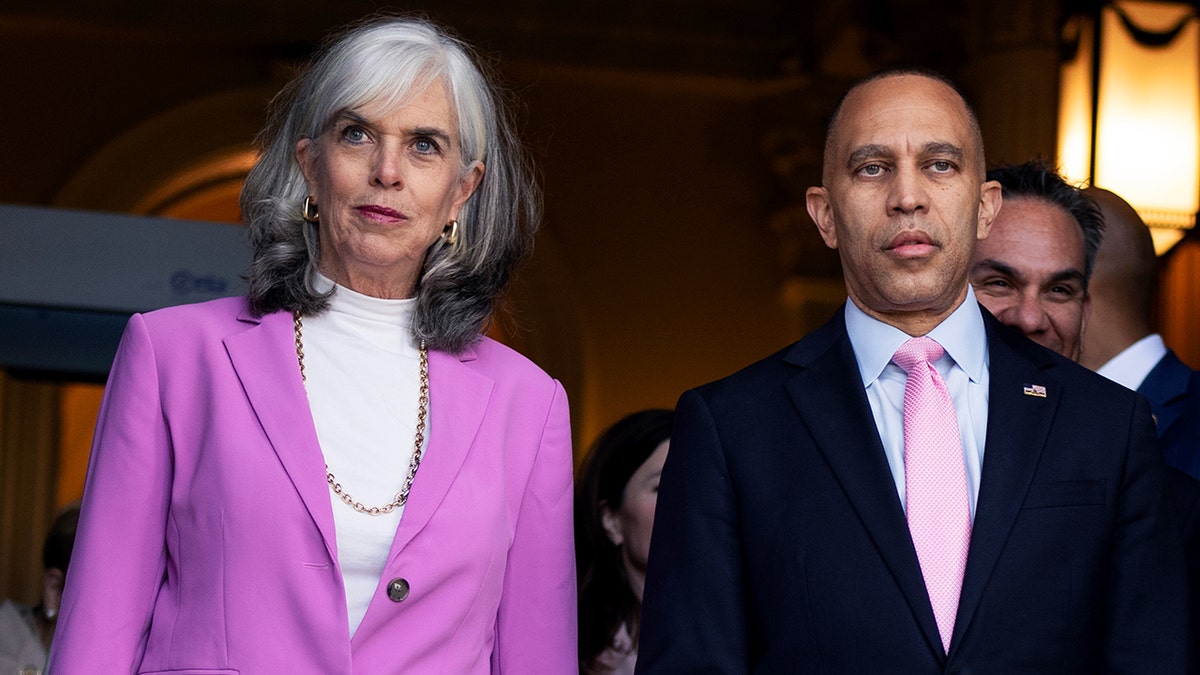
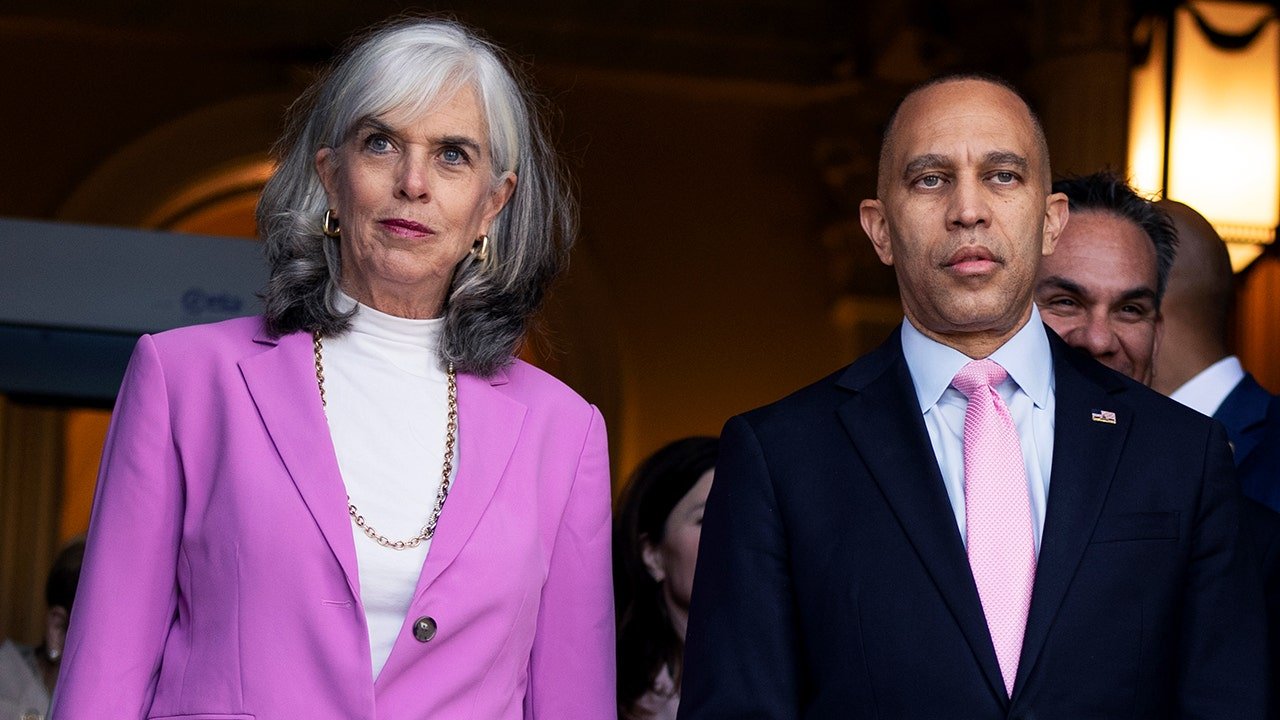
House Minority Leader Hakeem Jeffries, D-N.Y., and House Minority Whip Katherine Clark, D-Mass., are seen before a rally with House Democrats on the steps of the U.S. Capitol to oppose the Senate passed spending bill that would reopen the government because it does not extend the Affordable Care Act tax credits, on Wednesday, November 12, 2025. (Tom Williams/CQ-Roll Call, Inc)
LONGTIME TRUMP CRITIC REVEALS WHY SHE THINKS HIS IRAN ACTIONS ARE WRONG, WARNS IT’S A ‘MUCH BIGGER WAR’
Jeffries largely sidestepped a question Thursday regarding why Democrats are having conversations about removing Trump during a news conference in New York City.
«We have a responsibility as a separate and co-equal branch of government to defend the American people, and we want to be able to do it in an informed way,» Jeffries said before pivoting to criticizing Republicans over the cost of living.
«We’ve ruled nothing out and we’ve ruled nothing in,» Jeffries told MS Now when asked about whether he thought the 25th Amendment should be invoked.
In both appearances Jeffries did not acknowledge that Democrats, who are effectively powerless in Washington, lack the numbers to successfully push impeachment or constitutional mechanisms to oust Trump.
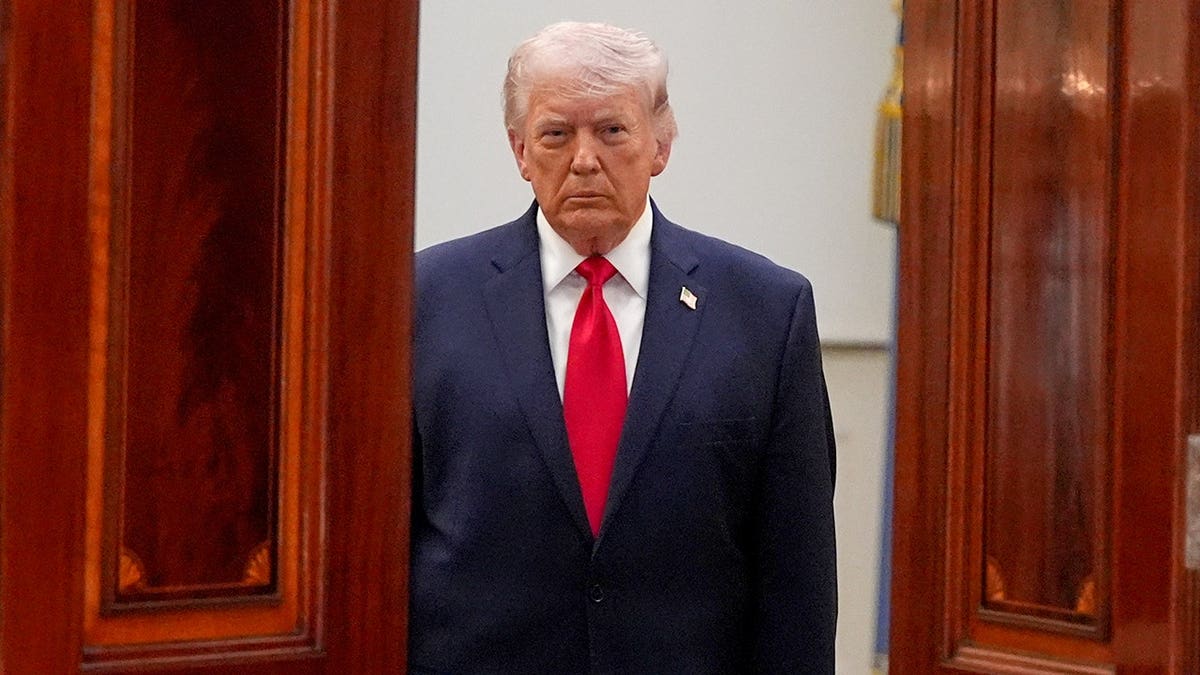
U.S. President Donald Trump arrives to address the nation from the Cross Hall of the White House on April 1, 2026 in Washington, D.C. (Alex Brandon-Pool/Getty Images)
CLICK HERE TO DOWNLOAD THE FOX NEWS APP
In the 25th Amendment scenario, the power rests with Vice President JD Vance and Trump’s Cabinet, who would have to agree the president is unfit to serve. Assuming Trump were to challenge that decision, two-thirds of the House and Senate — meaning a significant number of Republicans in Congress — would have to vote in support of that judgment.
At present, Democrats also have a math problem when it comes to impeachment and conviction, which requires a two-thirds majority in the Senate. Congressional Democrats failed twice to convict Trump in his first term.
midterm elections, republicans, congress, donald trump, democrats

«Extraña a Nicole porque en el sexo los deja arando»: Fuerte teoría de Graciela Alfano sobre el llanto de Poroto Cubero
Óscar Puente llama a cuidar carreteras, vías y puentes como el patrimonio «que se recorre» Por EFE

Argentina enfrentará a Brasil en busca de la clasificación a semifinales del Sudamericano Sub 17: hora, TV y posibles formaciones

Javier Milei confirmó que viajará a Israel para participar del Día de la Independencia a fin de mes

A menos de un mes de haber sido designado, renunció uno de los veedores que debía revisar los balances y contratos de la AFA

El peronismo observa la caída de Milei en las encuestas y debate con qué perfil de candidato enfrentarlo: ¿kirchnerista o moderado?

Mario Kart Tour avanza su siguiente temporada de primavera con ciudades europeas – Nintenderos

Melania Trump’s forceful Epstein denial draws bipartisan support from lawmakers

Un gobernador presentó un amparo contra la reforma de la Ley de Glaciares y pidió suspender su aplicación

Trump blasts Biden admin for releasing illegal immigrant now charged in fatal hammer attack on Florida mother
-
 SOCIEDAD8 horas ago
Mario Kart Tour avanza su siguiente temporada de primavera con ciudades europeas – Nintenderos
-
 INTERNACIONAL7 horas ago
Melania Trump’s forceful Epstein denial draws bipartisan support from lawmakers
-
 POLITICA7 horas ago
Un gobernador presentó un amparo contra la reforma de la Ley de Glaciares y pidió suspender su aplicación