INTERNACIONAL
Democrats mocked for ‘out of touch’ comments dismissing no tax on tips: ‘Peak elitism’


NEWYou can now listen to Fox News articles!
Nevada Democratic representatives Dina Titus, Susie Lee and Steven Horsford are being mocked as «out of touch» for keeping silent after a national Democratic Party spokesperson dismissed no tax on tips as mere «crumbs.»
In a Politico article about the importance of the no tax on tips policy in congressional races in Nevada, Democratic Congressional Campaign Committee spokesperson Lindsay Reilly appeared to dismiss the policy, saying, «D.C. Republicans are giving temporary crumbs to working families.»
Reilly added, «Meanwhile, millions of families are at risk of losing their health care, hundreds of hospitals could close, and countless Americans could lose their jobs — all to pay for permanent tax cuts for billionaires.»
The no-tax-on-tips provision in the big, beautiful bill establishes an income tax deduction of up to $25,000 on qualified tipped income through 2028.
WATCH: DEM LAWMAKERS ATTEMPT TO EXPLAIN WHY STOCK MARKET IS BOOMING DESPITE TRUMP TARIFFS
Left to right: Nevada Democratic Reps. Susie Lee, Steven Horsford and Dina Titus (Bill Clark/CQ-Roll Call, Inc via Getty Images); Mandel NGAN / AFP; Rep. Susie Lee official House of Representatives official website)
With Nevada being the state with the highest share of tipped workers in the country, these comments ignited a firestorm of criticisms from Republican voices online.
«Marvel at just how out of touch Democrats are with reality. The DCCC thinks no taxes on tips is ‘crumbs,’» wrote conservative commentator Steve Guest.
«What makes this so bad, is that this is ACTUALLY what the Democrat party thinks,» wrote White House spokeswoman Abigail Jackson.
National Republican Senatorial Committee advisor Nathan Brand added, «Nancy Pelosi peddled this same elitist ‘crumbs’ message in 2017 after Trump and Republicans cut taxes for nearly all working families.»
The Republican Congressional Leadership Fund challenged Titus, Lee and Horsford, saying, «Will you denounce the @dccc’s statement that cutting taxes on tips amounts to ‘crumbs?’ Many of your constituents rely on tips to support their families.»
National Republican Congressional Campaign Committee spokesman Christian Gonzalez wrote, «The @dccc sneering that No Tax on Tips is ‘crumbs’ is peak Democrat elitism.»
KAMALA HARRIS-ENDORSED CANDIDATE IN HOT SEAT FOR MILLION-DOLLAR DC HOME HUNDREDS OF MILES OUTSIDE DISTRICT

Nancy Pelosi speaks onstage during the 2025 Concordia Annual Summit at Sheraton New York Times Square on Sept. 23, 2025 in New York City. (Riccardo Savi/Getty Images for Concordia Annual Summit)
Though all three Democrats have advocated for the no tax on tips policy, they voted against the big, beautiful bill in which the policy was included.
Gonzalez said that the Nevada Democrats’ «voting record says it all» and that «Out of touch Democrats Dina Titus, Susie Lee, and Steven Horsford are too scared of their radical, latte-sipping bosses in D.C. to stand with the workers who keep Nevada running.»
«Only a party run by latte-liberals who refuse to go into the office thinks hard-earned tip money is pocket lint,» he said.
The NRCC itself also asked: «Will Titus, Lee, and Horsford stand with workers?»
«National Democrats just mocked Nevada’s servers, bartenders, cooks, housekeepers, dealers, and hospitality workers, sneering that their right to keep their own hard-earned tip money amounts to nothing more than ‘crumbs,’» the NRCC said in a statement.
«This is the shameless party of Dina Titus, Susie Lee, and Steven Horsford. They can’t hide from their vote AGAINST No Tax on Tips for hardworking Nevadans. If Titus, Lee, and Horsford actually stood with workers, they’d condemn these comments and stand up for workers keeping more of their hard-earned money,» the NRCC went on.
‘SQUAD’ DEM SPENDS EYE-POPPING AMOUNT ON LUXURY LIMO SERVICES IN ONE YEAR

Rep. Susie Lee, D-Nev., walks down the House steps at the Capitol after the last votes of the week on Friday, April 1, 2022. (Bill Clark/CQ-Roll Call, Inc via Getty Images)
After its passage, Lee wrote in the Las Vegas Sun that she «rushed back to Washington to vote against the One Big Beautiful Bill,» calling it «one of the least popular pieces of legislation in modern American history, giving massive, permanent tax breaks to the wealthiest Americans and temporary crumbs for working families in Southern Nevada.»
In August, the three sent a letter to U.S. Treasury Secretary Scott Bessent «to ensure the successful implementation» of the no-tax-on-tips policy. In a statement, Lee’s office said the letter highlighted that «the version of ‘No Tax on Tips’ passed by Republicans in Washington does not fully meet the needs of Nevadans.»
In a statement to Fox News Digital, Lee said, «I believe that no one should lose out on tips they earned. That’s why I support the TIPS Act to PERMANENTLY end taxes on tips.»
She said that earlier this year, she «called on Speaker [Mike] Johnson to bring the permanent fix ‘No Tax on Tips Act’ — which unanimously passed the Senate — to the House floor for a vote.»
PROGRESSIVE DEMOCRATS TURN ON PARTY LEADERSHIP AFTER GOVERNMENT SHUTDOWN ENDS WITHOUT HEALTHCARE GUARANTEES

The no-tax-on-tips provision in the big, beautiful bill establishes an income tax deduction of up to $25,000 on qualified tipped income through 2028. (iStock)
«Instead, Republican leaders held it hostage so they could provide cover for themselves as they voted to pass the largest transfer of wealth in American history,» she said, adding, «The Republican ‘no tax on tips’ provision is a raw deal for tipped earners — it’s temporary, capped, and so much smaller than the tax breaks the wealthiest Americans got out of the Big Bulls**t Bill.»
«Let me be clear — our service workers can’t benefit from no tax on tips if they aren’t receiving tips thanks to our tourism slump or if they’ve lost their jobs,» she said.
CLICK HERE TO DOWNLOAD THE FOX NEWS APP
DCCC spokeswoman Lindsay Reilly also responded to the backlash, telling Fox News Digital «it’s sad that the out-of-touch operatives at the NRCC are having a meltdown when confronted with the facts.»
«Everyone knows the Big, Ugly Bill is a massive tax giveaway for the wealthiest few that sticks working families with the bill. That is fact, and it’s why everyone hates it,» she said, adding, «Voters can see through Republicans’ cheap spin and people know their bill fails to deliver meaningful relief to everyday Americans, while the billionaires cash out.»
In response to the knock on her 2017 «crumbs» comment, Pelosi’s office shared a statement from 2018, which accused President Donald Trump’s first-term tax breaks of being a scam and «a monumental theft from the middle class to enrich the wealthiest 1 percent.»
Fox News Digital also reached out to Titus and Horsford, but did not immediately receive a response.
democratic party,economic policy,nevada,house of representatives politics,elections












INTERNACIONAL
DC court rulings stall Trump agenda across immigration, policing, Fed — raising stakes on executive power
NEWYou can now listen to Fox News articles!
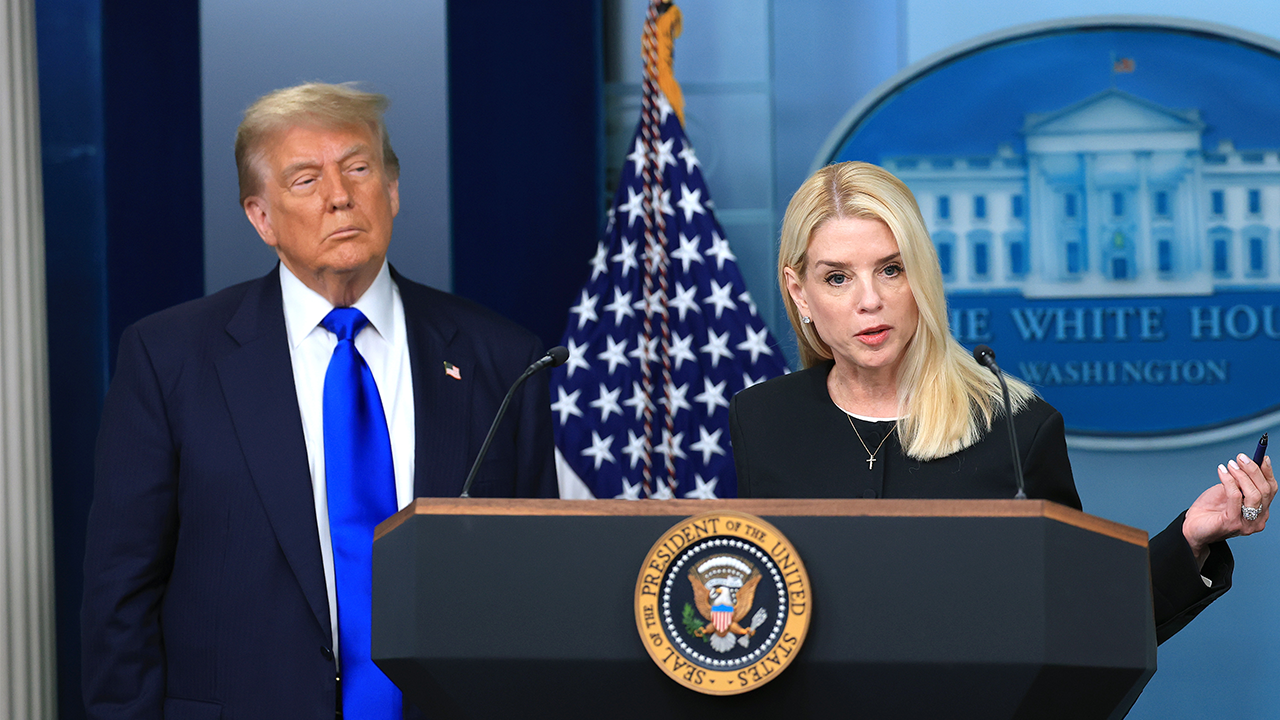
President Donald Trump’s second-term agenda is hitting repeated roadblocks in Washington, D.C., federal court, where judges have halted major policies — fueling a growing clash over whether the judiciary is checking executive power or overstepping into it.
The rulings have halted key parts of Trump’s agenda on immigration, policing and federal authority, intensifying debate over whether courts are acting as a constitutional check or obstructing elected leadership.
Here are some of the biggest court clashes Trump is facing in D.C. federal court.
Alien Enemies Act: A centuries-old statute becomes the focus of a modern fight
One of the biggest fights is also one of the earliest lawsuits filed against the Trump administration in D.C. federal court — centered on the Trump administration’s use of the Alien Enemies Act, a 1798 wartime law, to deport certain migrants to El Salvador’s CECOT prison.
Civil rights groups and immigration advocates have argued the Trump administration is stretching the law beyond its intended use case, including the three previous times it was used in U.S. history — most recently, during World War II. The Trump administration has defended the move as a lawful exercise of executive authority over national security and immigration enforcement.
The case quickly landed in D.C. federal court and has since moved up on appeal, with higher courts now weighing the scope of the president’s authority under the centuries-old statute. The outcome could have sweeping implications for how rarely used emergency powers are applied in modern immigration policy.
EX-JUDGES BLAST TOP TRUMP DOJ OFFICIAL FOR DECLARING ‘WAR’ ON COURTS
Salvadorian troops are seen guarding the exterior of CECOT, or Counter Terrorism Confinement Center, Dec. 15, 2025, in Tecoluca, El Salvador. (John Moore/Getty Images)
Who controls DC streets: Washington or the White House?
The scope of federal power over states and localities has also been tested. Courts have imposed limits on Trump’s efforts to assert control over National Guard units, raising federalism concerns about the balance between state and federal authority.
The standoff began in August 2025. Trump moved to expand federal control over policing in Washington, D.C., including deploying National Guard troops to respond to crime.
A related lawsuit, District of Columbia v. Trump, challenges what city officials describe as an unprecedented federal intrusion into local policing. The case remains a key test of presidential authority over the nation’s capital.
Protected status for Haitian migrants: Temporary or ‘de facto amnesty’?
The Supreme Court agreed to hear a pair of appeals from the Trump administration seeking to immediately halt Temporary Protected Status (TPS) designations for Haitian migrants. Haitians were first granted TPS status in 2010 after a devastating earthquake. Previously, a lower court judge in D.C., U.S. District Judge Ana Reyes, had blocked the Trump administration from lifting the TPS designation.
U.S. Solicitor General D. John Sauer urged the high court to take up the broader issue of whether the Trump administration can revoke TPS protections for other migrants living in the U.S. — citing the Justice Department’s appeal of a similar case centered on TPS protections for Syrian migrants that was kicked to the high court earlier this year.
«Unless the court resolves the merits of these challenges — issues that have now been ventilated in courts nationwide — this unsustainable cycle will repeat again and again, spawning more competing rulings and competing views of what to make of this court’s interim orders,» Sauer said last week. «This court should break that cycle.»
The appeal comes as the Trump administration has sought to wind down most TPS designations, arguing the programs have been extended for too long under Democratic presidents.
«Haiti’s TPS was granted following an earthquake that took place over 15 years ago,» said then-spokesperson for DHS Tricia McLaughlin. «It was never intended to be a de facto amnesty program, yet that’s how previous administrations have used it for decades.»
SCOTUS TO REVIEW TRUMP EXECUTIVE ORDER ON BIRTHRIGHT CITIZENSHIP
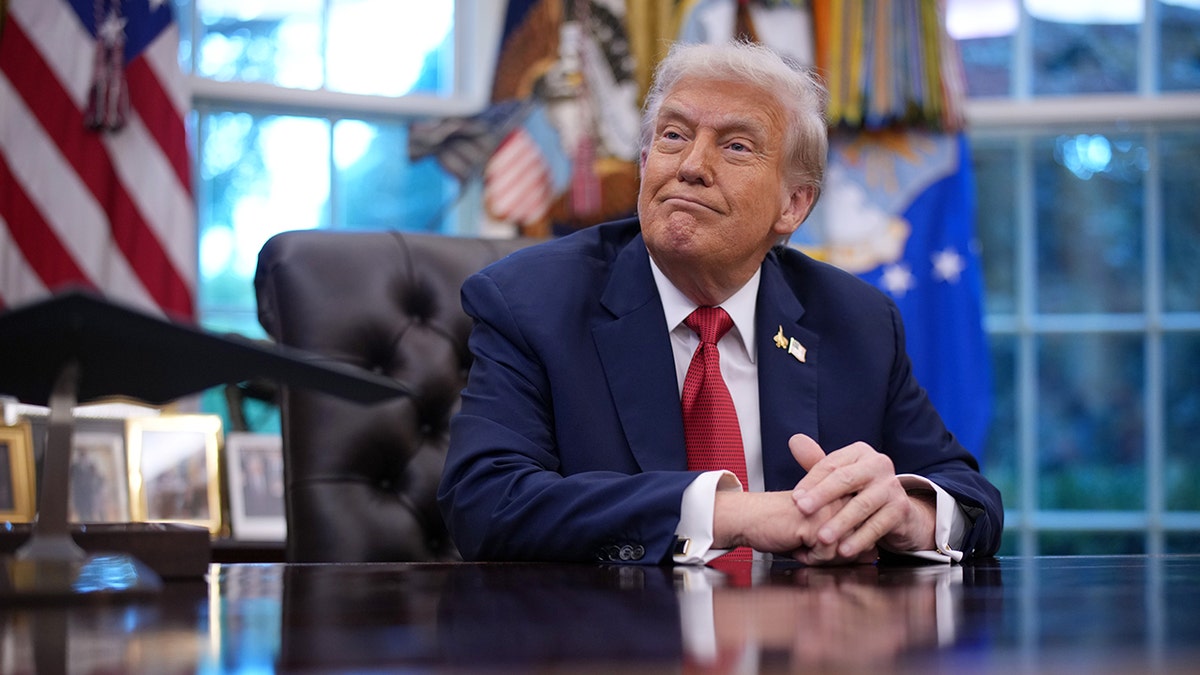
U.S. President Donald Trump speaks in the Oval Office of the White House. (Andrew Harnik/Getty Images)
USAID: Judges pump the brakes on agency cuts
Early in the term, the administration’s effort to rapidly scale back the U.S. Agency for International Development was halted by a federal judge, who blocked mass leave orders and the dismantling of the agency’s workforce.
The Supreme Court eventually intervened in the case. Last March, the high court denied the Trump administration’s request to block a lower court’s order for the administration to pay nearly $2 billion in foreign aid money for previously completed projects, and leaving to the lower court judge the details of how those contracts should be paid out. That suit was eventually appealed to a higher court, where litigation remains pending.
BIDEN-APPOINTED FEDERAL JUDGE RULES TRUMP’S ‘THIRD COUNTRY’ DEPORTATION POLICY IS UNCONSTITUTIONAL
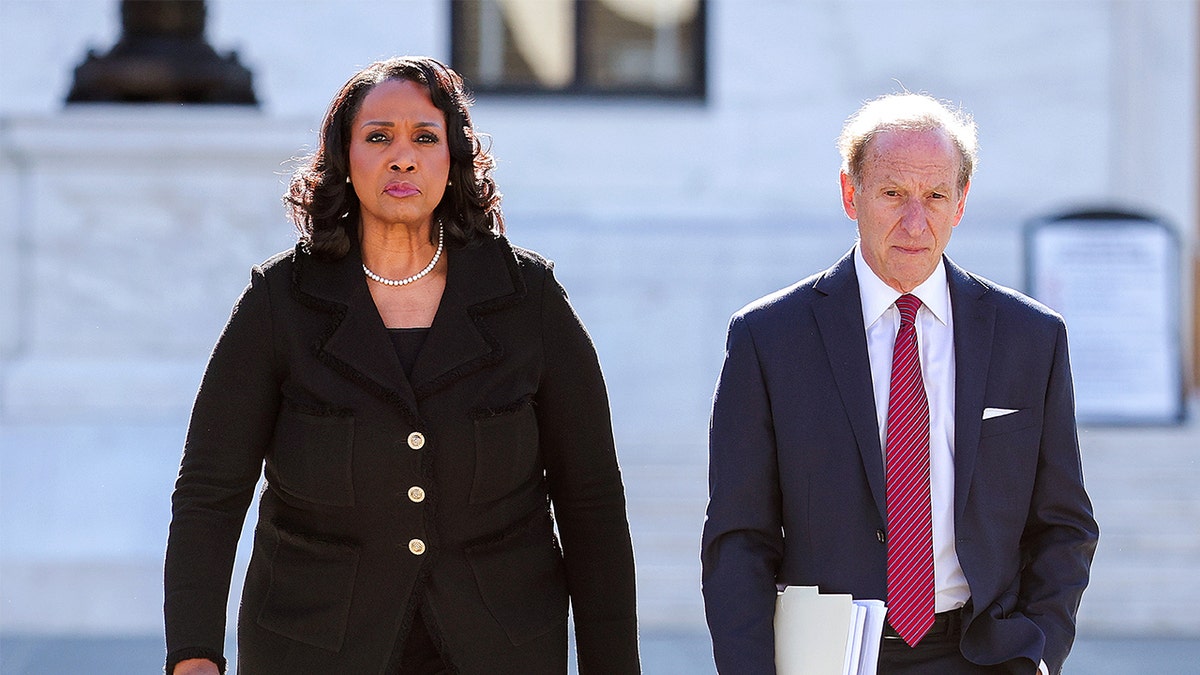
Federal Reserve Governor Lisa Cook and attorney Abbe Lowell leave the U.S. Supreme Court today in Washington, D.C. (Getty Images)
Can the White House reshape the Fed?
The independence of the Federal Reserve is also an issue before the courts.
Lawyers for the Trump administration asked U.S. District Judge James Boasberg earlier this month to reconsider an earlier order that quashed grand jury subpoenas of Federal Reserve Chair Jerome Powell, appearing to make good on a vow from U.S. Attorney for D.C. Jeanine Pirro to appeal the order to a higher court.
In the Justice Department’s motion for reconsideration that was submitted Monday, prosecutors argued that the court «applied an incorrect legal standard, erred with respect to certain facts, and overlooked other relevant facts.»
They argued that a subpoena should be allowed when there is even a «reasonable possibility» that the category of materials the government seeks will produce information «relevant to the general subject of the grand jury’s investigation,» and even where a subpoena recipient «proposes a plausible theory of an ulterior motive.»
The Supreme Court heard oral arguments in a separate case, Trump v. Cook, earlier this year. That case centered on whether Trump has the power to fire Lisa Cook from the Fed’s board of governors — without notice and largely without the ability for courts to challenge the «for cause» provision underpinning her removal.
Cook remains in her position for now, following an order from U.S. District Court Judge Jia Cobb.
CLICK HERE TO GET THE FOX NEWS APP
Meanwhile, White House officials have railed against the «activist» judges who they have accused of overstepping their agenda or acting with a political agenda to halt or pause Trump’s policies from taking force.
donald trump, federal courts, supreme court, politics, immigration
INTERNACIONAL
Sistema de agua en ciudad de Panamá vuelve a operar al 100% tras falla en principal potabilizadora

Después de cuatro días de operar al 90% de su capacidad, la planta potabilizadora Federico Guardia Conte de Chilibre volvió a funcionar al 100%, tras completarse los trabajos de reparación e instalación del motor de una de las bombas de la estación de bombeo de agua tratada.
La recuperación de esta infraestructura, la más importante del país para el abastecimiento de agua potable, permite empezar a normalizar el suministro en la ciudad de Panamá y San Miguelito, dos de las zonas más afectadas por la reducción temporal de operaciones.
El restablecimiento llega antes de lo previsto. Cuando se detectó la falla mecánica, las autoridades habían estimado que las labores podrían tomar alrededor de seis días, pero el trabajo técnico concluyó en un plazo menor.
Durante ese período, la planta se mantuvo en funcionamiento parcial, lo que obligó a operar con menor margen en la red de distribución y a advertir sobre posibles interrupciones o variaciones del servicio, sobre todo en los sectores altos y alejados.
La pieza intervenida era clave para sostener la presión y la salida de agua tratada hacia la red. Por eso, aunque la potabilizadora no dejó de producir, la reducción al 90% tuvo efectos inmediatos en el sistema.

En este tipo de eventos, las primeras zonas en resentir el impacto suelen ser las comunidades con menor presión natural o ubicadas en puntos más distantes, donde cualquier merma en la capacidad de bombeo se traduce con rapidez en baja presión, intermitencia o ausencia temporal del suministro.
El comunicado oficial informa que la recuperación al 100% fue posible luego de culminar con éxito la reparación y la instalación del motor, en una jornada extendida que concluyó en horas de la madrugada.
A partir de allí, el restablecimiento del servicio empezó de forma progresiva, especialmente en los puntos altos y alejados de Panamá y San Miguelito que pudieron verse afectados mientras se ejecutaban las labores.
Las autoridades también insistieron en el llamado a usar el agua con moderación para acelerar la recuperación plena del sistema.
La contingencia, además, volvió a dejar en evidencia que la operación de Chilibre sigue dependiendo de equipos críticos cuya falla repercute de inmediato sobre una parte importante del país.

Cuando se anunció el daño, también se explicó que estaba en marcha el proceso para reemplazar cuatro motores en la estación de bombeo, equipos que ya habían sido adquiridos y estaban pendientes de entrega por parte del proveedor. Es decir, la reparación que permitió salir de la emergencia no elimina un problema más amplio de renovación de componentes.
Ese dato es importante porque la avería actual no fue presentada como un episodio aislado. Ya antes la planta había operado con capacidad reducida por fallas similares y, en noviembre del año pasado, una interrupción en el sistema eléctrico la dejó fuera de servicio por varias horas.
En una infraestructura que abastece a gran parte del área metropolitana, la repetición de incidentes mecánicos o eléctricos amplifica la preocupación sobre la estabilidad operativa de un sistema del que dependen miles de hogares.
La planta de Chilibre capta agua del Lago Alajuela y cumple una función estratégica dentro del esquema de distribución nacional. No se trata de una instalación secundaria ni de apoyo: es la principal fuente de agua potable para una enorme franja urbana.

Por eso, cada reducción en su capacidad se convierte en un asunto sensible, no solo por la cantidad de personas afectadas, sino porque cualquier demora en la reparación obliga a redistribuir presión y a administrar con más cuidado un recurso básico en una red ya exigida.
En esta ocasión, el mensaje oficial subraya que la detección rápida de la falla y la coordinación entre especialistas permitieron completar el trabajo antes del tiempo inicialmente proyectado. Ese resultado evita que la contingencia se prolongue durante casi una semana completa, como se había anticipado al inicio.
La normalización total del servicio, sin embargo, no siempre ocurre al mismo ritmo en todos los puntos de la red. Aunque la planta ya funciona a plena capacidad, el agua debe recuperar presión y niveles en el sistema para llegar con estabilidad a las áreas más comprometidas.
En los eventos anteriores, las autoridades ya habían advertido que las zonas más alejadas y elevadas suelen tardar más en volver a la normalidad, por lo que el regreso al 100% de operación no implica que todos los usuarios sientan el efecto de inmediato.
ciudad de panamá 2023.,edificio,estadísticas población,exterior,paisaje urbano,rascacielos

Borussia Dortmund de Alemania, estaría interesado en Ian Subiabre, la joya de River Plate

Caso $LIBRA: viaje al laberinto del teléfono de Mauricio Novelli

El futuro de Agostina Páez en Brasil: cuáles son los escenarios posibles y que podría definir el juez

Sin Vaca Muerta no se puede, con Vaca Muerta no alcanza: el mensaje argentino en el más grande evento petrolero mundial

Las claves del fallo por YPF: por qué la Justicia de EE.UU. anuló la condena contra la Argentina

Cómo le fue a las selecciones que juegan el Mundial 2026 en los amistosos de este sábado

¡VERGÜENZA NACIONAL! Humillan a la Policía Federal mandándolos a un merendero antes de darles un aumento de sueldo digno

El Presidente y Karina Milei volvieron a respaldar a Manuel Adorni tras la polémica por sus vuelos

Manuel Adorni: “Mi patrimonio lo construí antes de entrar al Gobierno, no tengo nada que esconder”

Máximo Kirchner salió al cruce de Milei y Macri tras el fallo por YPF a favor de la Argentina

 POLITICA7 horas ago
Máximo Kirchner salió al cruce de Milei y Macri tras el fallo por YPF a favor de la Argentina
- POLITICA2 días ago
¡DERIVA ECONÓMICA Y SOBERBIA POLÍTICA! El abismo entre el «relato oficial» y la realidad de una clase media que no aguanta más
- POLITICA20 horas ago
Kicillof refuerza su perfil de candidato y se aferra al fallo de YPF para polarizar con Milei