INTERNACIONAL
Dems’ potential 2028 hopefuls come out against US strikes on Iran

NEWYou can now listen to Fox News articles!
Some of the top rumored Democratic potential candidates for president in 2028 are showing a united front in opposing U.S. strikes on Iran, with several high-profile figures accusing President Donald Trump of launching an unnecessary and unconstitutional war.
Former Vice President Kamala Harris said Trump was «dragging the United States into a war the American people do not want.»
«Let me be clear: I am opposed to a regime-change war in Iran, and our troops are being put in harm’s way for the sake of Trump’s war of choice,» Harris said in a statement Saturday following the joint U.S. and Israeli strikes throughout Iran.
«This is a dangerous and unnecessary gamble with American lives that also jeopardizes stability in the region and our standing in the world,» she continued. «What we are witnessing is not strength. It is recklessness dressed up as resolve.»
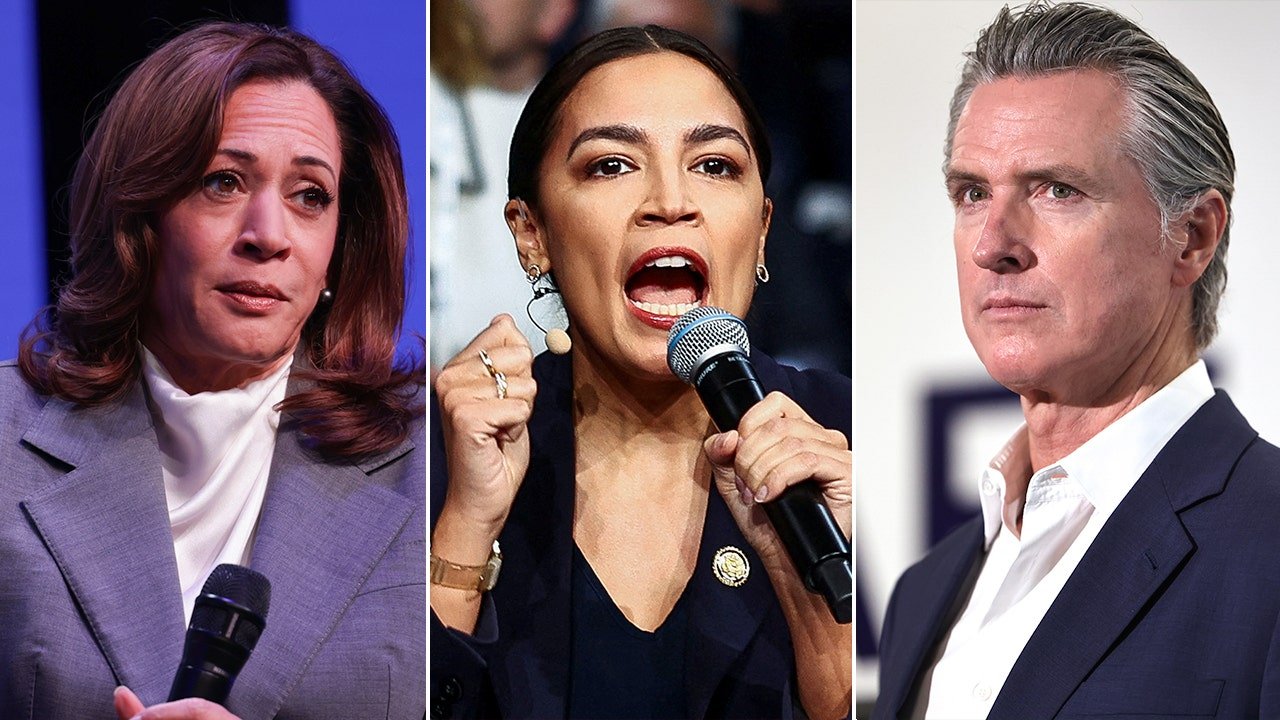
Former Vice President Kamala Harris, Rep. Alexandria Ocasio-Cortez and California Gov. Gavin Newsom are seen in separate appearances as leading Democratic 2028 hopefuls spoke out against U.S. strikes on Iran. (Big Event Media/Getty Images for HumanX Conference; REUTERS/Liesa Johannssen; Mario Tama/Getty Images)
California Gov. Gavin Newsom delivered some of his sharpest criticism during a book tour stop Saturday night in San Francisco, accusing Trump of manufacturing a crisis.
«It stems from weakness masquerading as strength,» Newsom said. «He lied to you. So reckless is the only way to describe this.»
«He didn’t describe to the American people what the endgame is here,» Newsom added. «There wasn’t one. He manufactured it.»
Newsom is currently promoting his memoir, «Young Man in a Hurry,» with recent and upcoming stops in South Carolina, New Hampshire and Nevada — three key early voting states in the Democratic presidential calendar.
Earlier in the day, Newsom said Iran’s «corrupt and repressive» regime must never obtain nuclear weapons and that the «leadership of Iran must go.»
«But that does not justify the President of the United States engaging in an illegal, dangerous war that will risk the lives of our American service members and our friends without justification to the American people,» Newsom wrote on X.
California is home to more than half of the roughly 400,000 Iranian immigrants in the United States, including a large community in West Los Angeles often referred to as «Tehrangeles.»
DEMOCRATS BUCK PARTY LEADERS TO DEFEND TRUMP’S ‘DECISIVE ACTION’ ON IRAN
Rep. Alexandria Ocasio-Cortez, D-N.Y., a leading progressive voice and «Squad» member, accused Trump of dragging Americans into a conflict they did not support.
«The American people are once again dragged into a war they did not want by a president who does not care about the long-term consequences of his actions. This war is unlawful. It is unnecessary. And it will be catastrophic,» Ocasio-Cortez said.
«Just this week, Iran and the United States were negotiating key measures that could have staved off war. The President walked away from these discussions and chose war instead,» she continued.
«In moments of war, our Constitution is unambiguous: Congress authorizes war. The President does not,» she said, pledging to vote «YES on Representatives Ro Khanna and Thomas Massie’s War Powers Resolution.»
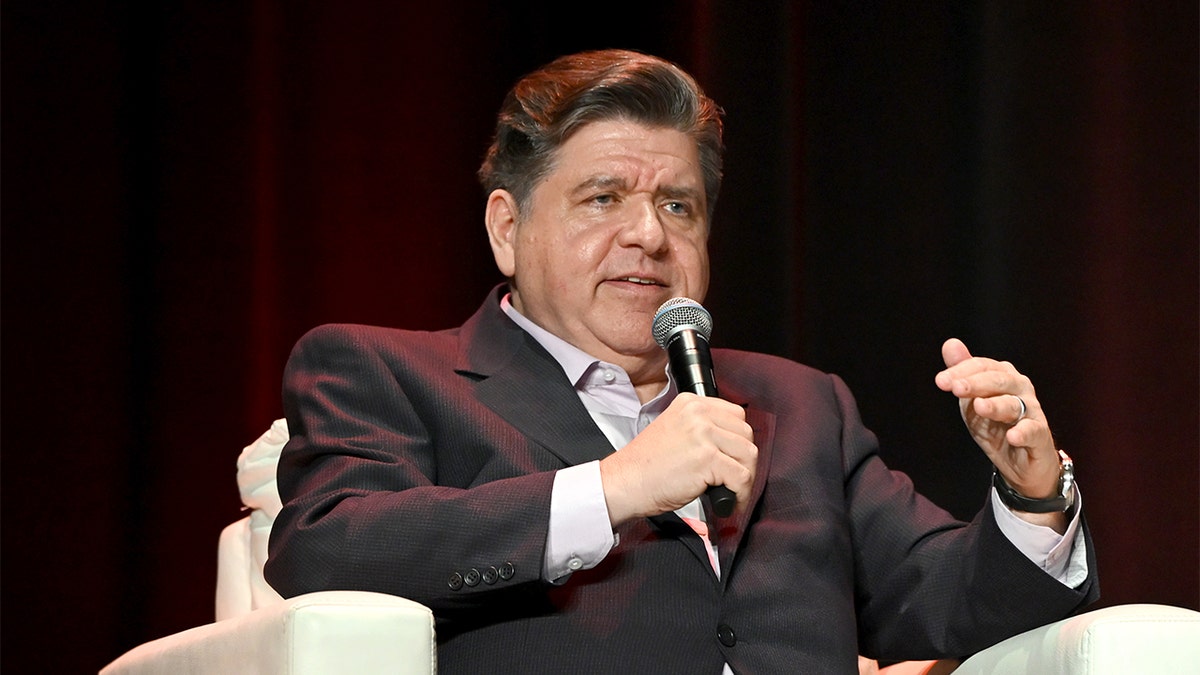
Illinois Gov. JB Pritzker criticized the strikes and accused Trump of ignoring Congress. (Daniel Boczarski/Getty Images for Vox Media)
Illinois Gov. JB Pritzker, another Democrat often mentioned as a potential 2028 contender, also criticized the strikes and accused Trump of ignoring Congress.
«No justification, no authorization from Congress, and no clear objective,» Pritzker wrote on X.
«Donald Trump is once again sidestepping the Constitution and once again failing to explain why he’s taking us into another war,» he continued. «Americans asked for affordable housing and health care, not another potentially endless conflict.»
«God protect our troops,» Pritzker added.
Pennsylvania Gov. Josh Shapiro focused his criticism on war powers, arguing Trump acted outside constitutional guardrails.
«In our democracy, the American people — through our elected representatives — decide when our nation goes to war,» Shapiro said, adding that Trump «acted unilaterally — without Congressional approval.»
JONATHAN TURLEY: TRUMP STRIKES IRAN — PRECEDENT AND HISTORY ARE ON HIS SIDE
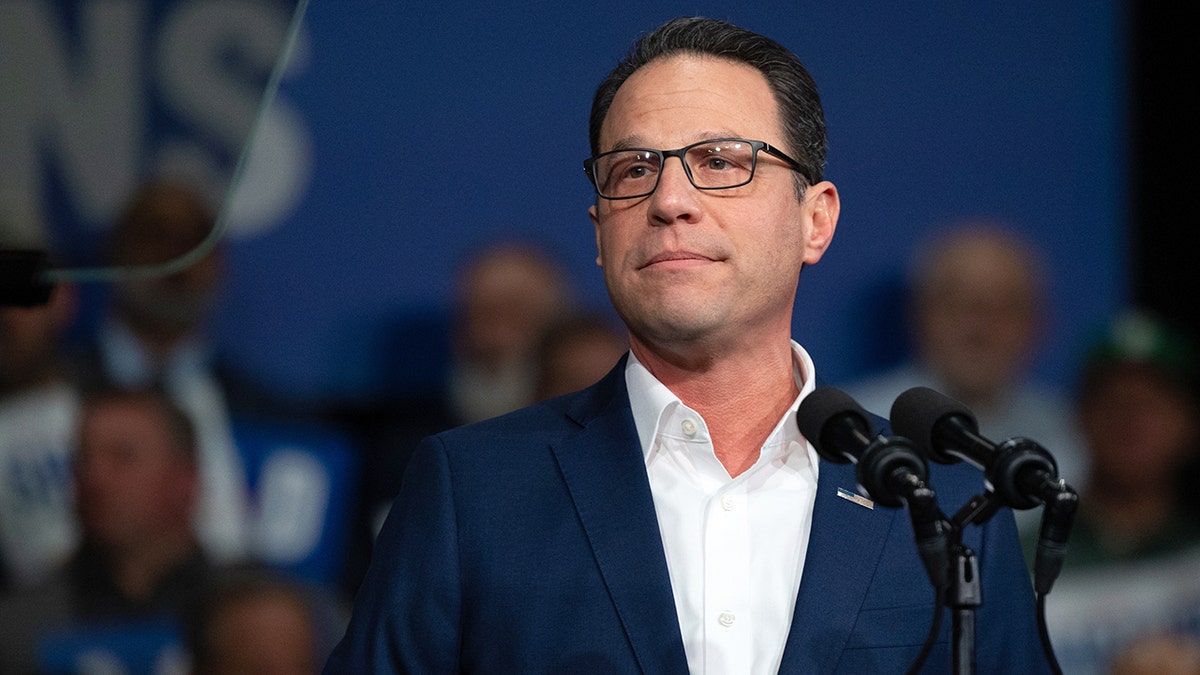
Pennsylvania Gov. Josh Shapiro focused his criticism on war powers, arguing Trump acted outside constitutional guardrails. (Rachel Wisniewski/Bloomberg via Getty Images)
«Make no mistake, the Iranian regime represses its own people … they must never be allowed to possess nuclear weapons,» he said. «But that does not justify the President of the United States engaging in an illegal, dangerous war.»
Shapiro added that «Congress must use all available power» to prevent further escalation.
Former Transportation Secretary Pete Buttigieg also accused Trump of launching a «war of choice.»
«The President has launched our nation and our great military into a war of choice, risking American lives and resources, ignoring American law, and endangering our allies and partners,» Buttigieg wrote on X. «This nation learned the hard way that an unnecessary war, with no plan for what comes next, can lead to years of chaos and put America in still greater danger.»
Buttigieg has been hitting early voting states, stopping in New Hampshire and Nevada in recent weeks to campaign for Democrats ahead of the 2026 midterm elections.
Sen. Ruben Gallego, D-Ariz., who has been floated as a rising national figure within the party, said he lost friends in Iraq to an illegal war and opposed the strikes.
CLICK HERE TO DOWNLOAD THE FOX NEWS APP
«Young working-class kids should not pay the ultimate price for regime change and a war that hasn’t been explained or justified to the American people. We can support the democracy movement and the Iranian people without sending our troops to die,» Gallego wrote on X.
Fox News’ Daniel Scully and Alex Nitzberg contributed to this report.
Related Article

war with iran,politics,gavin newsom,alexandria ocasio cortez,pete buttigieg,ben shapiro,kamala harris





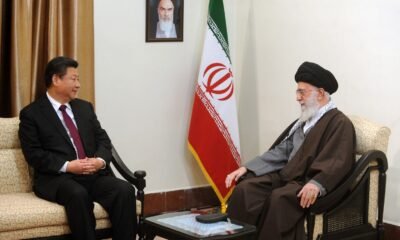

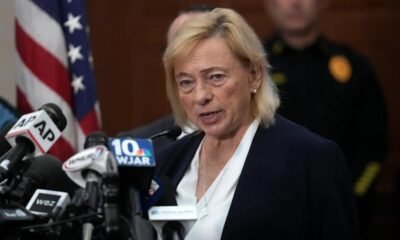



Rusia y Ucrania anunciaron este sábado el canje de 350 prisioneros de guerra, 175 por cada bando, con la mediación de los Emiratos Árabes Unidos.
El anuncio, hecho casi simultáneamente por el ministerio de Defensa de Rusia y por el presidente ucraniano, Volodímir Zelensky, se produjo horas antes de que comience la tregua anunciada por las partes beligerantes con ocasión de la Pascua ortodoxa.
“Nuestros soldados están regresando a casa. 175 militares. Soldados de las Fuerzas Armadas, guardias nacionales, guardias de fronteras. Soldados rasos, sargentos y oficiales. Y siete civiles”, escribió Zelensky en sus redes sociales.
En el caso de los combatientes rusos, como en anteriores ocasiones, estos se encuentran en territorio de Bielorrusia, donde reciben asistencia médica y psicológica, según Moscú.
Además, añade la nota castrense rusa, Kiev devolvió a siete civiles de la región fronteriza rusa de Kursk, ocupada parcialmente por el ejército ucraniano durante menos de un año.
Moscú agradeció a las autoridades de los Emiratos “los esfuerzos humanitarios” realizados para consumar el intercambio.

Por su parte, Zelensky indicó que los militares ucraniano liberados habían sido capturados cuando defendían a Ucrania en diversos puntos del frente, por ejemplo la ciudad costera de Mariúpol (sur), tomada por Rusia en 2022, o la central nuclear de Chernóbil, así como en las regiones de Donetsk, Lugansk, Kharkiv, Khersón, Zaporizhzhia, Sumi y Kiev y en la región rusa de Kursk.
“Entre ellos hay heridos. La mayoría han estado cautivos desde 2022. Y ahora, finalmente, en casa”, subrayó Zelensky.
El presidente agradeció su trabajo a las unidades ucranianas que capturan soldados rusos, con los que amplían las reservas de prisioneros de guerra para canjear, y señaló la importancia de recuperar a todos los ucranianos cautivos en Rusia.
A pocas horas de la tregua pascual
Poco antes, Zelensky había reiterado el compromiso de su país con la tregua con ocasión de la Pascua ortodoxa que está previsto que comience en pocas horas con Rusia y advirtió de una respuesta “simétrica” en caso de que el enemigo infrinja el alto el fuego.
Además, insistió en que Ucrania está dispuesta a prolongar la tregua de dos días, a pesar de que el viernes Moscú volviera a rechazar esta posibilidad y justificara el alto el fuego temporal con la Pascua ortodoxa y con su “carácter humanitario”.

Este jueves el Kremlin anunció unilateralmente “un alto el fuego desde las 16:00 horas (13:00 GMT) del 11 de abril hasta el término del 12 de abril de 2026” sin previas consultas con Estados Unidos ni Ucrania, al que se sumó de inmediato Kiev.
Ambos bandos informaron el viernes sobre otro canje de los cadáveres de mil soldados ucranianos por 41 rusos. En línea con lo acordado el pasado año en Estambul, Moscú habría entregado en torno a 10.000 cuerpos de ucranianos caídos en acción y recibido cerca de 200.
Esta proporción se debe al avance ruso en el frente, que -aunque lento- no permite a los ucranianos recoger a sus caídos en el campo de batalla.
(Con información de EFE)
Europe,Military Conflicts
INTERNACIONAL
Russia, China veto UN resolution aimed at reopening Strait of Hormuz, hours before Trump deadline

NEWYou can now listen to Fox News articles!
Russia and China vetoed a U.N. Security Council resolution Tuesday aimed at reopening the Strait of Hormuz, just hours before President Donald Trump’s deadline for Iran to cease threatening the key waterway.
Trump has given Iran until 8 p.m. ET to reopen the Strait of Hormuz or face strikes against its power plants and bridges on Tuesday. The resolution received 11 votes in favor and two against, with abstentions from Pakistan and Colombia.
«No one should tolerate that they are holding the global economy at gunpoint, but today, Russia and China did tolerate,» U.S. Ambassador Mike Waltz said Tuesday. «They sided with a regime that seeks to intimidate the Gulf into submission, even as it brutalizes its own people during a national internet blackout for daring to imagine dignity or freedom.»
«Failing to adopt this resolution sends the wrong signal to the world, to the people of the world — the signal that the threat to international waterways can pass without any decisive action by the international organization responsible for the maintenance of international peace and security,» Bahrain’s foreign minister, Abdullatif bin Rashid Al Zayani, added following the vote.
US EMBASSIES IN BAHRAIN, EGYPT ISSUE WARNINGS AS IRAN THREATENS UNIVERSITIES ACROSS MIDDLE EAST
Members of the Security Council vote on a resolution to unblock the Strait of Hormuz at U.N. headquarters in New York on April 7, 2026. China and Russia vetoed the resolution. (Timothy A. Clary/AFP via Getty Images)
The vetoed resolution, which was introduced by Bahrain, «strongly encourages states interested in the use of commercial maritime routes in the Strait of Hormuz to coordinate efforts, defensive in nature, commensurate with the circumstances, to contribute to ensuring the safety and security of navigation across the Strait of Hormuz.»
The resolution also demanded that Iran immediately halt attacks on merchant and commercial vessels and stop impeding their freedom of navigation through the Strait of Hormuz and attacking civilian infrastructure.
The language of the resolution was significantly weakened to try to get Russia and China to abstain rather than veto it, according to The Associated Press.
The initial Gulf proposal would have authorized countries to use «all necessary means» — U.N. wording that would include military action — to ensure transit through the Strait of Hormuz and deter attempts to close it.
WHY THE STRAIT OF HORMUZ MATTERS AS TRUMP ISSUES FRESH ULTIMATUM TO IRAN
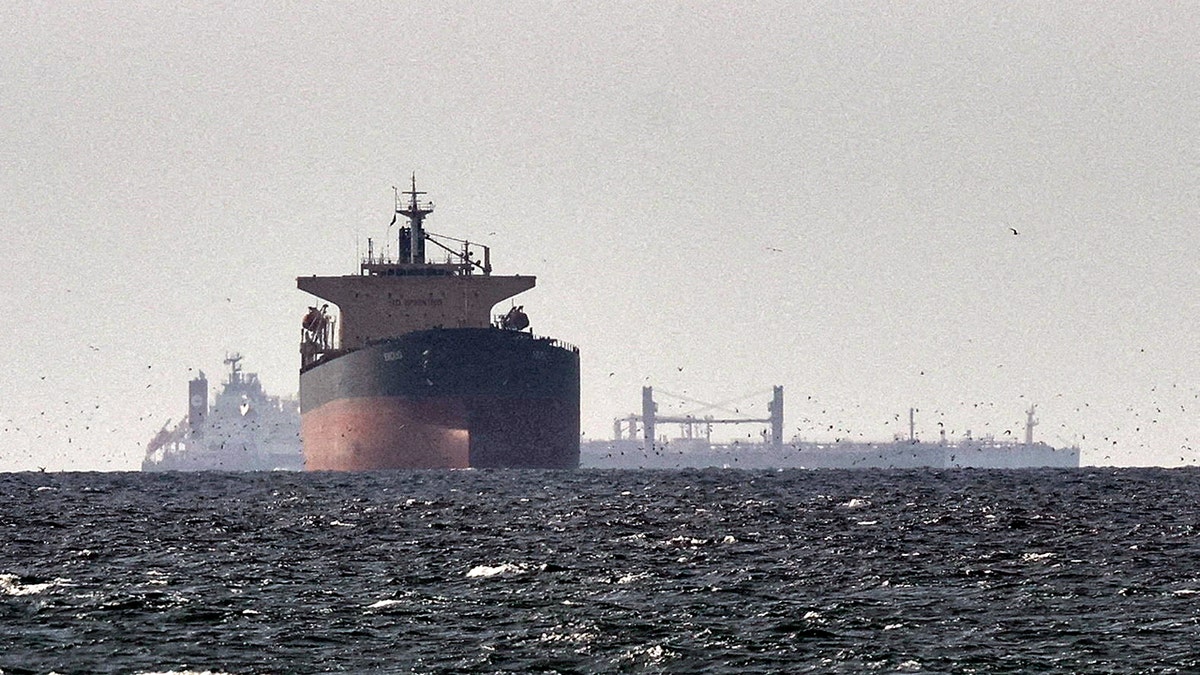
Cargo ships in the Gulf, near the Strait of Hormuz, as seen from northern Ras al-Khaimah, near the border with Oman’s Musandam governance, in United Arab Emirates, March 11, 2026. (Reuters/Stringer/File Photo/File Photo)
After Russia, China and France, all veto-wielding countries on the 15-member Security Council, expressed opposition to approving the use of force, the resolution was revised to eliminate all references to offensive action. It would have authorized only «all defensive means necessary.» A vote had been expected on Saturday.
But instead, the resolution was further weakened to eliminate any reference to Security Council authorization — which is an order for action — and limit its provisions to the Strait of Hormuz. Previous drafts had included adjacent waters.
«Let me be clear — this text would only embolden the United States and the Israeli regime to continue in their unlawful actions and atrocious crime, while shielding from accountability,» Iran’s ambassador to the U.N., Amir Saeid Iravani, said following the vote.
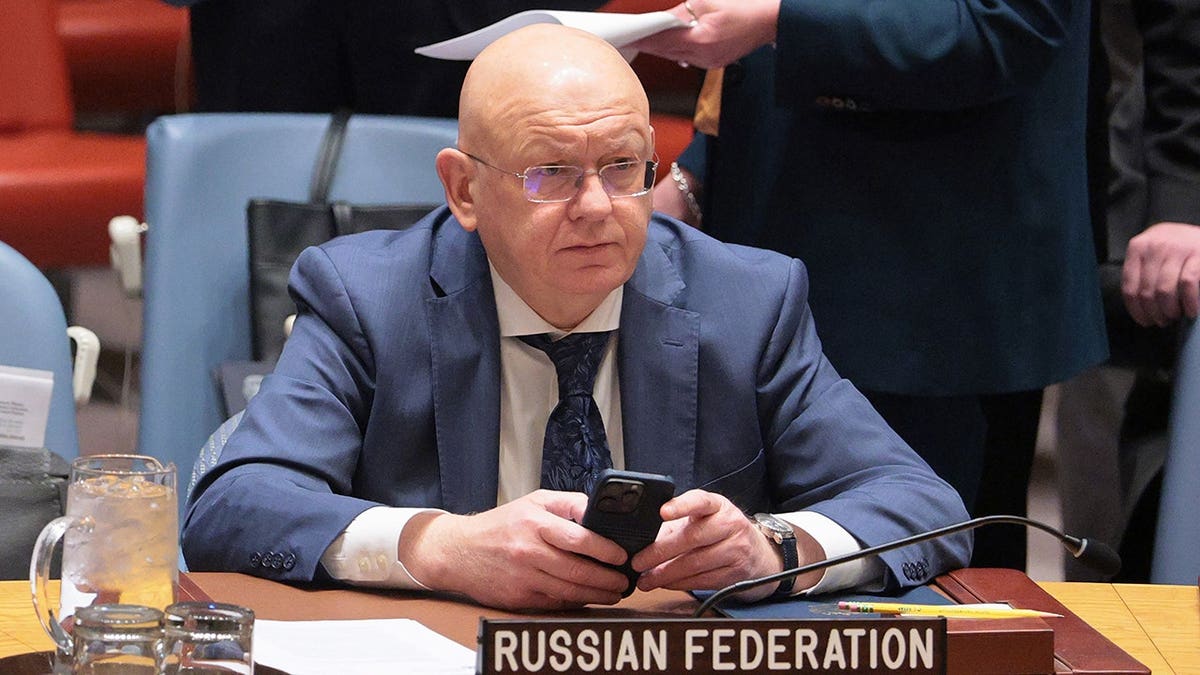
Ambassador Vassily Nebenzia, of Russia, waits for the start of a Security Council meeting at U.N. headquarters in New York City on April 7, 2026. (Michael M. Santiago/Getty Images)
CLICK HERE TO GET THE FOX NEWS APP
«The Iranian regime has until 8 p.m. Eastern Time to meet the moment and make a deal with the United States,» White House press secretary Karoline Leavitt told Fox News on Tuesday. «Only the president knows where things stand and what he will do.»
Fox News’ Patrick Ward, Anders Hagstrom and The Associated Press contributed to this report.
security council, middle east, united nations, war with iran, iran
INTERNACIONAL
Swalwell ripped for changing his tune on how sexual assault victims ‘deserve to be heard’
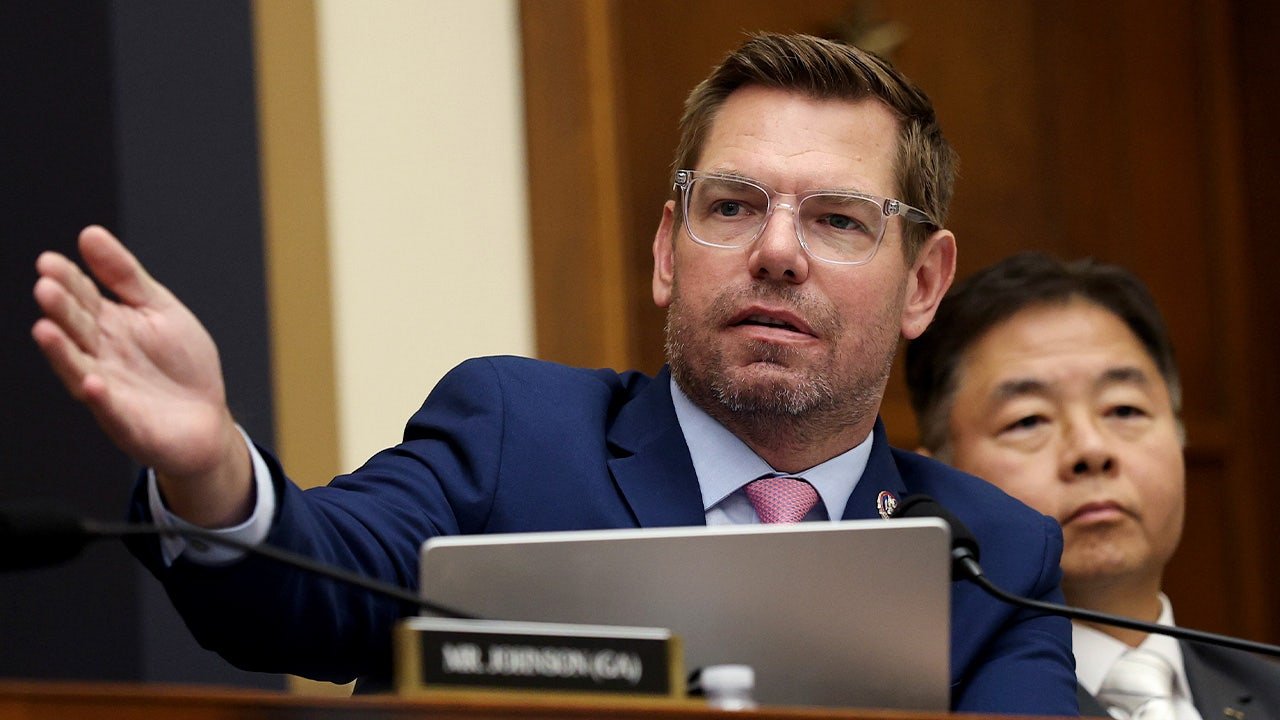
NEWYou can now listen to Fox News articles!
California gubernatorial candidate Rep. Eric Swalwell, D-Calif., is facing backlash on social media after it was reported that his lawyer was sending cease-and-desist letters to Swalwell’s accusers a day before multiple bombshell allegations were published on Friday.
Swalwell, who once called on lawmakers to hear out women raising allegations against Supreme Court Justice nominee Brett Kavanaugh during his 2018 confirmation hearings and said they «deserve to be heard,» is now being slammed for hypocrisy.
«I saw continued demeaning of victims of sexual assault, people who deserve to be heard, people who deserve their allegations to be investigated and a president who wants to rush this through,» Swalwell said in an interview with MSNBC at the time.
«And so, for Brett Kavanaugh’s sake, if he is innocent, I hope tomorrow he opens his statement and says, ‘You know what? Bring in all the victims, all of them to be questioned.’ That will clear his name if he is indeed innocent,» Swalwell added.
SWALWELL VOWS TO MAKE ICE AGENTS ‘UN-HIRABLE’ IN CALIFORNIA STATE GOVERNMENT POSITIONS
California gubernatorial candidate Eric Swalwell waves before speaking at the 2026 California Democratic Party State Convention in San Francisco, Saturday, Feb. 21, 2026. (AP Photo/Jeff Chiu)
The resurfaced clip comes as Swalwell has made efforts to downplay allegations against him as he leads a crowded field of gubernatorial hopefuls in a race to replace outgoing Gov. Gavin Newsom, who is prevented by term limits from remaining in the role.
Jonathan Turley, a Fox News contributor and Shapiro Professor of Public Interest Law at George Washington University, took to X on Friday, saying Swalwell is «hoping that voters will apply a different standard than the one he applied to Justice Brett Kavanaugh during his confirmation.»
«When Kavanaugh was asserting his innocence, Swalwell was leading the mob,» Turley continued.
Mike Davis, the former chief counsel for nominations in the Senate Judiciary Committee, posted «Receipt time» on X while resurfacing an old Swalwell post attacking Kavanaugh.
«Oh, how I remember this hypocritical predator peddling these utterly bullsh– allegations against Kavanaugh,» Davis said in another post.
Rumblings of sexual misconduct from Swalwell first emerged last month when Cheyenne Hunt, a former Capitol Hill staffer and a progressive political media personality, began circulating testimony from women who said they had been sexually assaulted by the congressman.
Swalwell’s lawyer, Elias Dabaie, reportedly sent out cease-and-desist letters to try to quell the rumors Thursday, but multiple outlets, including CNN and the San Francisco Chronicle, published bombshell reports Friday, which Swalwell later denied in a video he posted late Friday night on X.
ADAM SCHIFF MAKES ENDORSEMENT IN CALIFORNIA GUBERNATORIAL RACE

Democratic United States Representative Eric Swalwell delivers a speech as he attends the SEIU-United Service Workers West (SEIU-USWW)’s Gubernatorial Candidate Worker Forum at Meruelo Studios in Los Angeles, California, on January 10, 2026. = (Etienne Laurent/AFP)
One of the alleged victims shared her story publicly for the first time, accusing Swalwell of taking advantage of her while she was intoxicated on multiple occasions, according to a report published by the San Francisco Chronicle.
The alleged victim’s story also included claims that Swalwell pressured her to send naked pictures of herself and sent sexually explicit photos of his own, pulled out his private parts while driving in a car with her and requested she perform oral sex on him, among other incidents the victim said affected how Swalwell treated her professionally.
The unnamed female accuser reportedly worked for Swalwell for about two years and revealed that he started pursuing her, despite being married, shortly after she was hired as a 21-year-old staffer in his district office.
She also reportedly revealed that years after she worked for Swalwell, she attended an April 2024 charity event Swalwell was being honored at and reunited with him. In her account of the night, which included grabbing drinks with him after the event and later blacking out, she alleged that she remembered pushing Swalwell away and told him «no» as he allegedly tried to force her to have sex with him in his hotel room.
The woman reportedly texted a friend after the incident telling her she had been sexually assaulted by Swalwell. Other messages reviewed by the San Francisco Chronicle reportedly showed the victim indicating she had «blacked out» but «woke up once during it and even told him to stop at one point.»
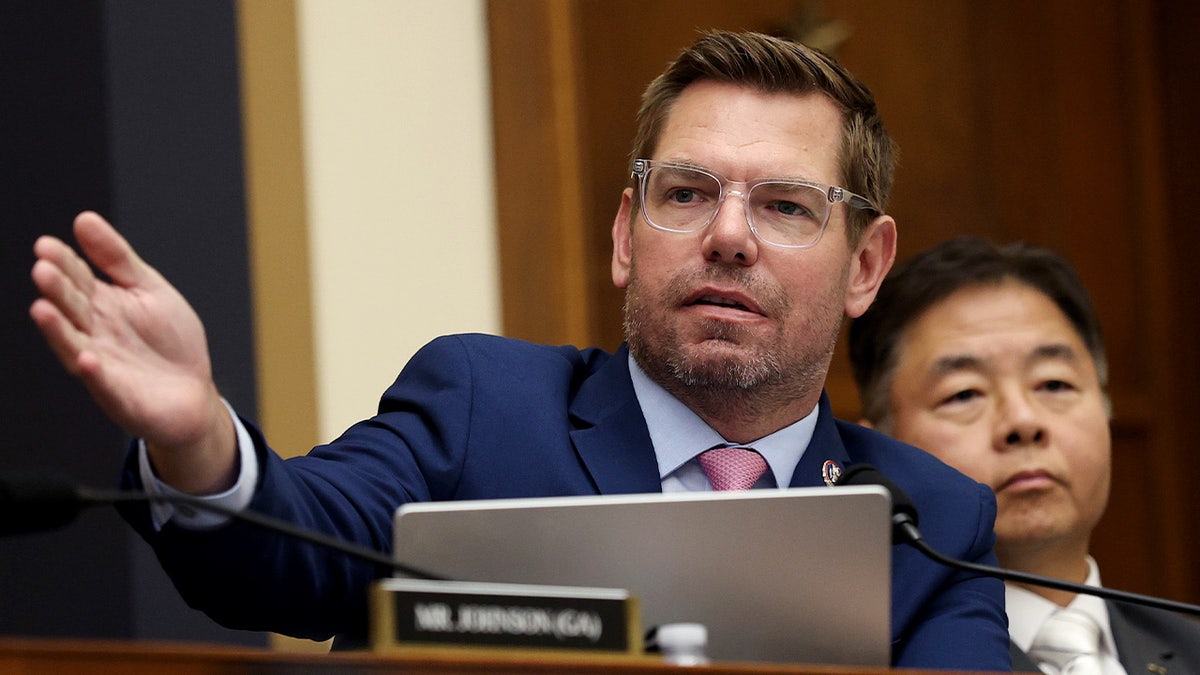
Rep. Eric Swalwell (D-Calif.) speaks during a House Judiciary Committee hearing with FBI Director Kash Patel in the Rayburn House Office Building on Sept. 17, 2025. (Win McNamee/Getty Images)
CLICK HERE TO DOWNLOAD THE FOX NEWS APP
After the allegations went viral and top Democrats called for him to drop out of the California gubernatorial race, Swalwell said in a video message on X that the «sexual assault allegations are flat false. They are absolutely false. They did not happen. They have never happened and I will fight them with everything that I have.»
«I’ve certainly made mistakes in judgment in my past, but those mistakes are between me and my wife and to her- I apologize deeply for putting her in this position,» Swalwell continued.
«This false, outrageous rumor is being spread 27 days before an election begins by flailing opponents who have sadly teamed up with MAGA conspiracy theorists because they know Eric Swalwell is the frontrunner in this race,» Micah Beasley, a spokesperson for Swalwell, said earlier this week.
Swalwell’s office did not immediately respond to a request for comment.
gavin newsom, issues, eric swalwell, investigations, confirmation of judge kavanaugh

La escandalosa verdad de la pelea de Indiana Cubero contra Mica Viciconte: “Es monstruoso”, destaparon en Puro Show sobre la interna familiar

Cierran la investigación a la jueza Capuchetti por su actuación en la causa del atentado contra Cristina Kirchner

La Casa Rosada enviará la semana que viene la reforma electoral que incluye la eliminación de las PASO

Temor al cierre de mercados que compran subproductos cárnicos de la Argentina

Boca Juniors vs. Independiente: formaciones, hora y dónde ver por tv

Rusia y Ucrania anunciaron el canje de 350 prisioneros de guerra

Mario Kart Tour avanza su siguiente temporada de primavera con ciudades europeas – Nintenderos

Melania Trump’s forceful Epstein denial draws bipartisan support from lawmakers

Un gobernador presentó un amparo contra la reforma de la Ley de Glaciares y pidió suspender su aplicación

Trump blasts Biden admin for releasing illegal immigrant now charged in fatal hammer attack on Florida mother

 SOCIEDAD1 día ago
Mario Kart Tour avanza su siguiente temporada de primavera con ciudades europeas – Nintenderos
- INTERNACIONAL1 día ago
Melania Trump’s forceful Epstein denial draws bipartisan support from lawmakers
- POLITICA1 día ago
Un gobernador presentó un amparo contra la reforma de la Ley de Glaciares y pidió suspender su aplicación