INTERNACIONAL
Después de acusarlo de «líder del narcotráfico», Donald Trump recibe a Gustavo Petro en la Casa Blanca: claves de un encuentro impredecible


INTERNACIONAL
Democrats accuse ICE of targeting Dreamers while DHS highlights gang members, child rapists arrested this week

NEWYou can now listen to Fox News articles!
EXCLUSIVE: The Department of Homeland Security fired back at the top Democrat on the Senate Judiciary Committee following a dispute over the proportion of DACA recipients being picked up by the agency amid President Donald Trump’s mass deportation agenda.
Illinois Sen. Richard Durbin, who is the longtime sponsor of the related DREAM Act in successive Congresses, lambasted Secretary Kristi Noem earlier Tuesday, demanding to know why so many beneficiaries of the Obama-era Deferred Action for Childhood Arrivals program were being deported.
DHS also responded to an exchange Noem had with Sen. Alex Padilla, D-Calif., over his concern that ICE or CBP agents would be dispatched to polling places in November. She responded by asking him whether Democrats have plans to facilitate illegal immigrant voting.
«Contrary to what Senators Dick Durbin and Alex Padilla said in Secretary Noem’s Senate hearing today, nearly 70% of illegal aliens arrested by ICE have criminal records,» Deputy Assistant Secretary Lauren Bis told Fox News Digital.
The Department of Homeland Security shared with Fox News Digital several criminal illegal immigrants arrested in the past week, as of March 3, 2026. (DHS/U.S. Immigration and Customs Enforcement/Getty Images) (DHS/U.S. Immigration and Customs Enforcement/Getty Images)
«Just yesterday, ICE arrested MS-13 gang members, child predators, and drug traffickers,» she said.
«These are the public safety threats we are removing from American communities every single day.»
During Noem’s exchange with Durbin, the retiring Democrat demanded to know why ICE arrested 261 DACA recipients in the past year and deported 86 of them.
He also criticized her for allowing her agency to deport a Mexican man living in Northridge, Illinois, whose daughter was dying of cancer.
«Finally, he [was] returned for a court hearing. His daughter lived to see that hearing where the court said he was treated unfairly by your agency. And she died three days later. I was at a memorial service. Is that really necessary? Was he a violent criminal?» Durbin asked.
DHS FIRES BACK AT SENATE DEMS OVER ICE DETAINEE DEATH CLAIMS: ‘TRYING TO TWIST DATA’
Noem replied that DHS enforces the laws as passed by Congress and that if an individual has a final order of removal, that is the proper procedure.
«If you don’t like the law, I would suggest you change the law,» she said.
Durbin also claimed 85% of the 400,000 illegal immigrants arrested by ICE had no violent criminal record beyond immigration offenses. Noem pointed out that reports citing that number earlier this year did not factor in several classifications of similarly serious crimes, such as drug trafficking, embezzlement and assault.
She said that when all were factored together, the true percentage was closer to 70%.
DHS followed up by providing Fox News Digital with an exclusive list of dangerous illegal immigrants arrested in the past day, implying that Democrats are not concerned with their rap sheets or victims.
In one case, Gasper Florentino, an illegal immigrant from Mexico and an MS-13 gang member, was convicted in Fairfax, Virginia, of aggravated sexual battery of a victim who was 13 to 14 years old and rape by force, threat or intimidation.
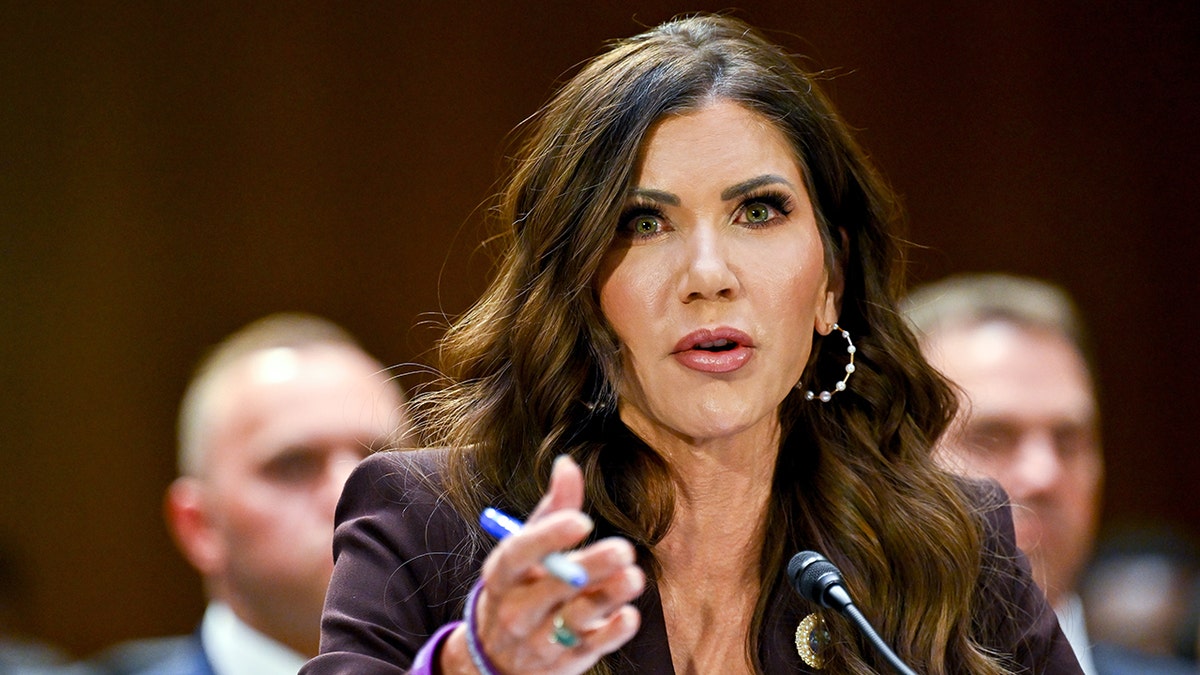
DHS Secretary Kristi Noem testifies before the Senate Judiciary Committee during a hearing. (Graeme Sloan/Getty Images) (Graeme Sloan/Getty Images)
In Durbin’s Illinois, ICE arrested Juan Leonardo Alvarado-Gonzalez of Guatemala, who was convicted in Cook County of predatory criminal sexual assault of a child.
CLICK HERE TO DOWNLOAD THE FOX NEWS APP
Yancarlos Marte-Morel of the Dominican Republic was convicted of conspiracy to distribute fentanyl by a federal court in Massachusetts.
Back in Virginia, a Vietnamese national named Minh Tai Son Tran was arrested following convictions on three counts of burglary — forced entry to a residence.
Related Article

homeland security,daca,deportation,kristi noem,illegal immigrants
INTERNACIONAL
Top Israeli military official reveals operation against Iran involved ‘strategic and operational deception’

NEWYou can now listen to Fox News articles!
FIRST ON FOX: As Israel wages what it describes as an existential campaign against Iran, IDF spokesperson Brig. Gen. Effie Defrin said the war has reinforced a fundamental strategic shift in how Israel sees itself and its alliances, particularly with the United States and regional partners.
«Israel was never part of this region. We thought we were part of Europe,» he said. «Since the Abraham Accords started, we are having good relations with our neighbors. We are part of this region now.»
He described the 2020 agreements as transformative, building on the peace treaties with Egypt and Jordan. «The military cooperation is great. Some of the things are overt and some covert,» Defrin said in his first English-language media interview since the beginning of the conflict. «Iran is a regional threat, and that is clear to everyone now.»
But he stressed the campaign against Tehran is not only regional.
«It’s a worldwide problem, it’s a global problem, it’s a regional problem and it’s also an Israeli problem,» he said. «They are not hitting only Israel.»
Bombing occurs in Tehran, Iran on Feb. 28, 2026. (Fatemeh Bahrami/Getty Images)
Months of Deception
The spokesperson revealed that the operation was preceded by months of strategic deception.
«It was a strategic and operational deception,» he said.
On the eve of the strike, senior officials deliberately maintained routine appearances.
«Friday night we went to dinner at home. The chief of staff and I returned late in cars that were not our official vehicles. The official cars stayed at home, and we made sure that from satellite imagery it would not look like the Kirya (ministry of defense) was full while all the planes were armed and ready.»
He said Iran was caught off guard. «For many long months there was deception, so they were surprised. They fired what they had pre-planned in their preset response.»
‘A Mutual Operation’
The spokesperson said the strike that killed Iran’s Supreme Leader, Ali Khamenei, was carried out in coordination with the Trump administration. «It was a mutual operation,» he said. «The cooperation between us and the American military is amazing. We have mutual planning and mutual executing for the plans in Iran and beyond.»
HEGSETH LAYS OUT ‘CLEAR’ 3-PART MISSION AGAINST IRAN, SAYS WAR ‘IS NOT ENDLESS’
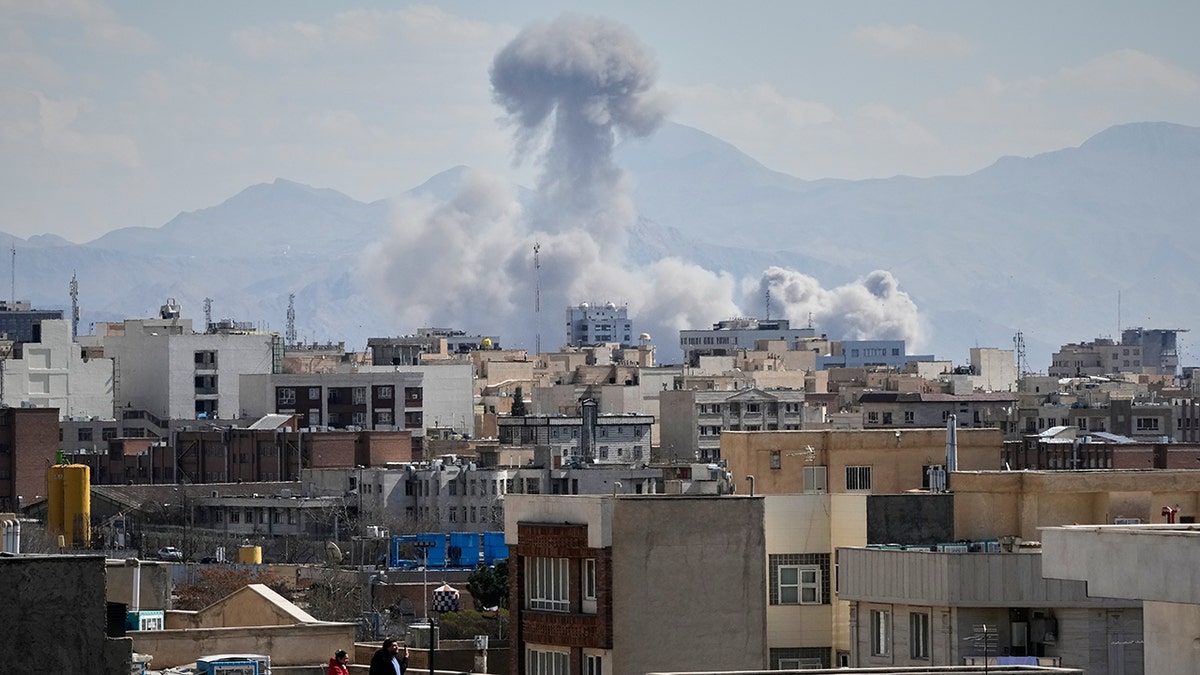
People watch from a rooftop as a plume of smoke rises after a strike in Tehran, Iran, Sunday, March 1, 2026. (Vahid Salemi/AP Photo)
He framed the operation as part of unprecedented U.S.-Israeli military coordination. The entire operation in Iran is a mutual and coordinated campaign,» he said.
He also described a broader international dimension. «It’s a problem with the United States of America as well,» he said, citing attacks by Iranian-backed groups that have killed American service members and threatened shipping lanes.
«They are posing a threat to the Red Sea… the movement of naval ships in the Suez Canal dropped by 90% since the Houthis started shooting at ships in the Bab al-Mandab Strait,» he said. «It’s a global problem. It’s a terror regime. They are acting all over the world. And again, we had to act.»
He added that regional states increasingly understand the threat. «Israel is here to stay. You see the countries of the region placing their trust in Israel.»
Strike on Iranian Targets
Addressing reports that dozens of senior Iranian figures were eliminated in a strike on Tuesday, including claims that 88 members of Iran’s Assembly of Experts were killed, he dismissed the figures.
«We struck a few targets involved in terrorism. We still don’t have any battle damage assessment. Once we have it, we will publish it. It’s too early.»
He emphasized that the targets were military. «We struck military targets,» he said. «They are attacking population centers.»
According to the spokesperson, Israeli intelligence shows Iran is deliberately aiming at civilians «to exact a price,» including launches toward civilian infrastructure.
EX-CIA CHIEF WARNS NOT TO UNDERESTIMATE IRAN’S RESPONSE AFTER OPERATION EPIC FURY EXPOSED REGIME ‘ARROGANCE’
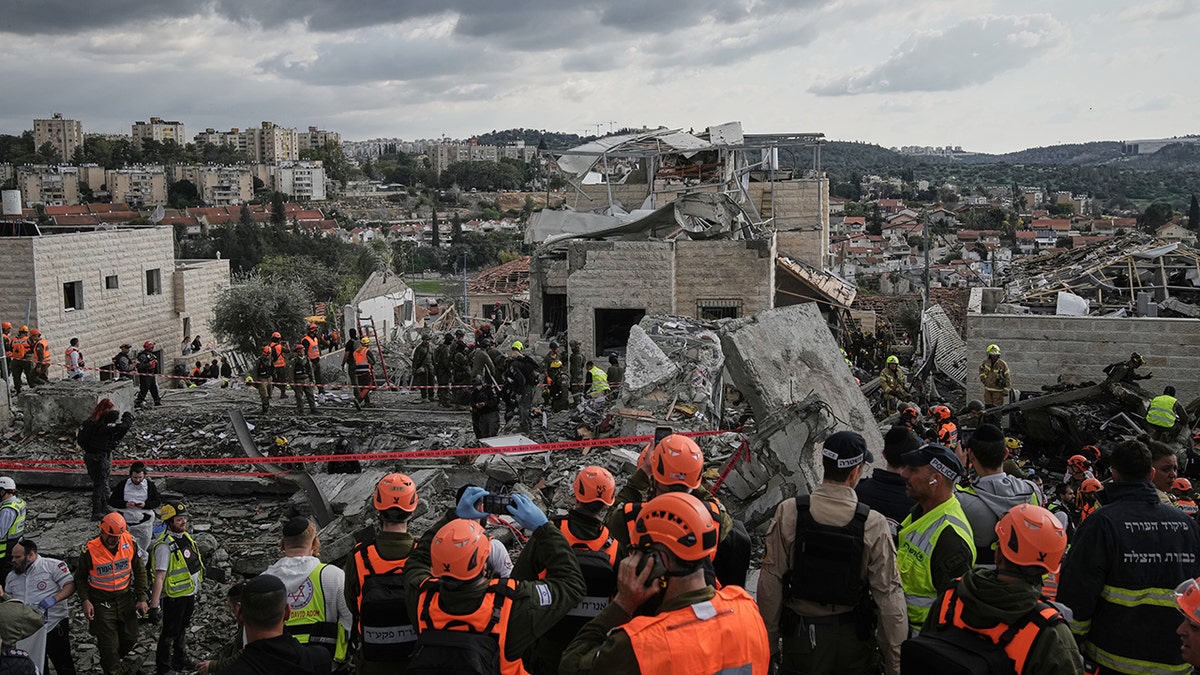
Rescue workers and military personnel operate at the scene where several people were killed by an Iranian missile strike in Beit Shemesh, Israel Sunday, March 1, 2026. (Leo Correa/AP Photo)
War Aims
Explaining the decision to launch the campaign, the spokesperson described Iran as an imminent existential threat.
«We didn’t have another choice, unfortunately. It’s an existential imminent threat. This is a terror regime,» he said.
«They declared it. Whatever they declared, they did.»
Asked whether regime change is an objective, he drew a distinction between military aims and political outcomes.
TRUMP ADMIN WARNED LAWMAKERS ISRAEL WAS ‘DETERMINED TO ACT WITH OR WITHOUT US’ BEFORE MASSIVE IRAN STRIKES

An explosion is seen as an Iranian missile directly hits a building in Tel Aviv, Israel, Saturday, Feb. 28, 2026. (Tomer Neuberg/AP Photo)
«As a member of the military, I cannot say we have an aim to remove the regime,» he said. «But definitely, we want to weaken it and create the conditions that one day this regime will be removed by its own people.»
As fighting expands to Lebanon following renewed Hezbollah fire, he reiterated Israel’s view of Iran as the head of a regional network.
«Hezbollah is an octopus. The head of the octopus is in Iran.»
CLICK HERE TO DOWNLOAD THE FOX NEWS APP
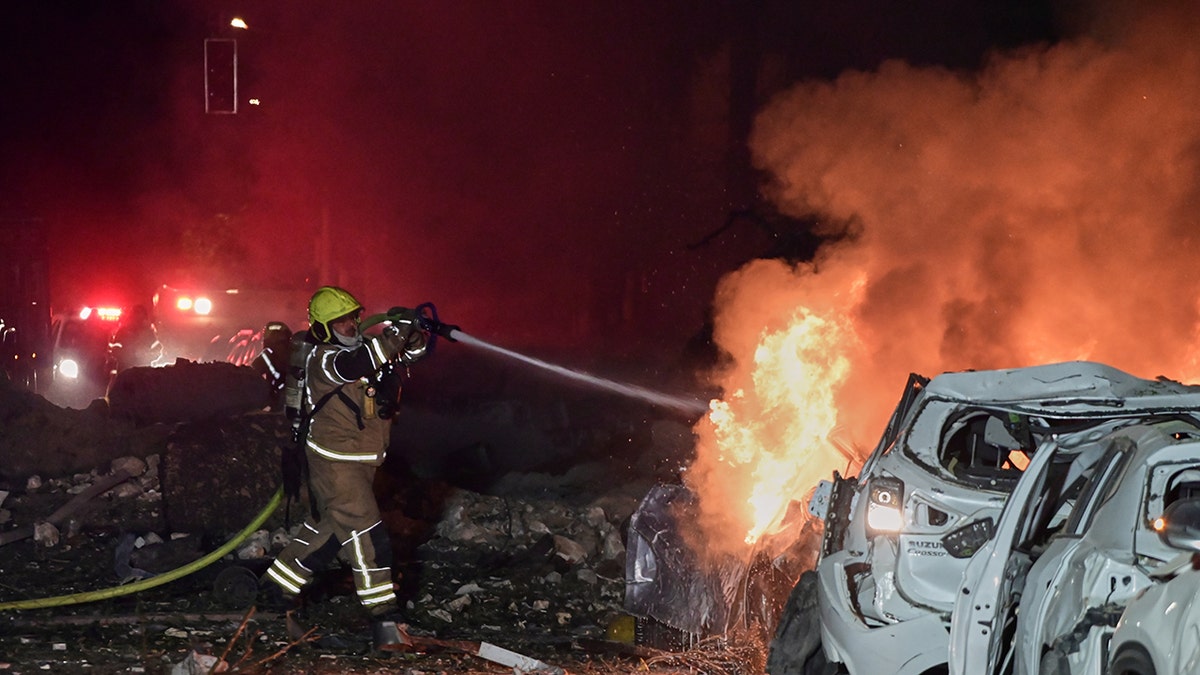
A firefighter attempts to extinguish a burning car at the site of a direct hit from an Iranian missile strike in Tel Aviv, Israel, Saturday, Feb. 28, 2026. (Tomer Neuberg/AP Photo)
For Israel, he said, the campaign has clarified a strategic reality shaped by the Abraham Accords and deepened U.S. cooperation. «We are part of this region now.»
Related Article
war with iran,israel,iran,wars,middle east
INTERNACIONAL
Donald Trump dijo que la Marina de Estados Unidos escoltará a los petroleros que quieran cruzar el Estrecho de Ormuz
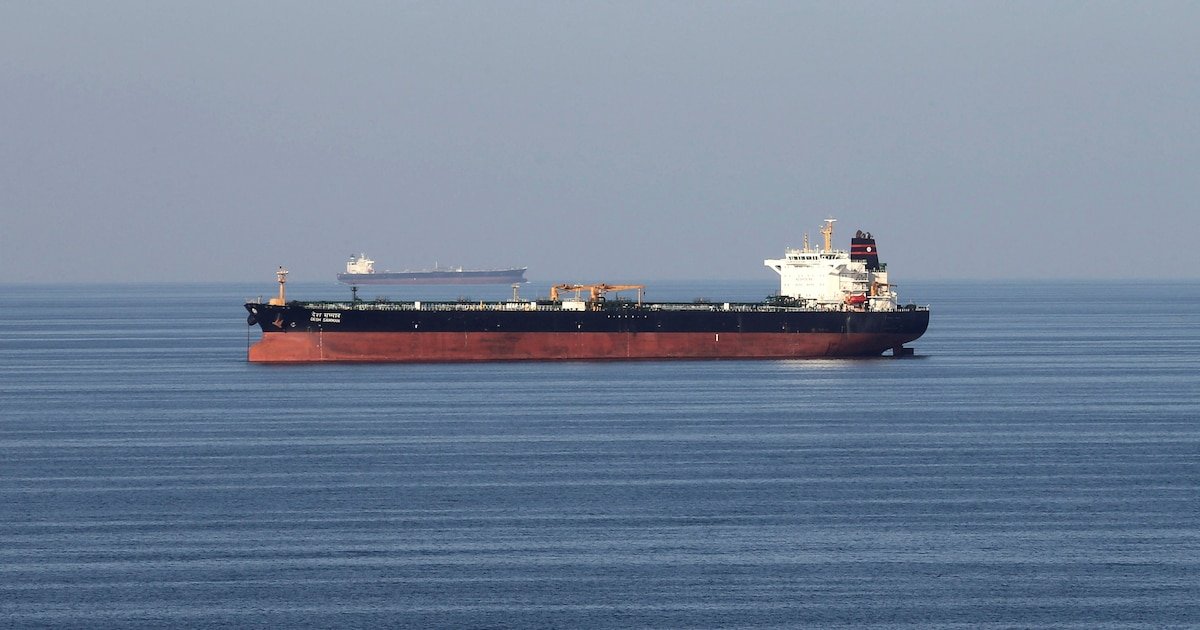
El presidente de Estados Unidos, Donald Trump, anunció que el país ofrecerá garantías de seguro e incluso escoltas navales para asegurar el paso seguro de petroleros y otras embarcaciones a través del estrecho de Ormuz, con el objetivo de evitar una posible crisis energética derivada de la guerra con Irán. Trump comunicó el martes que la US International Development Finance Corporation (DFC) ofrecerá seguros “a un precio muy razonable” para facilitar el flujo de energía y comercio en el Golfo, y que la Marina estadounidense escoltará buques si resulta necesario.
“No importa qué suceda, Estados Unidos garantizará el FLUJO LIBRE de ENERGÍA para el MUNDO”, publicó Trump en redes sociales. El anuncio tuvo impacto inmediato en los mercados: el precio del Brent, referencia internacional del petróleo, se estabilizó en torno a 80 dólares el barril tras una jornada de volatilidad.
La decisión surge después de que los ataques de Estados Unidos e Israel contra Irán interrumpieran el tráfico de crudo por el estrecho de Ormuz, ruta por la que transita una quinta parte del suministro energético mundial. El conflicto provocó que los principales clubes de seguro marítimo retiraran la cobertura por riesgos de guerra para barcos que ingresen al Golfo Pérsico, incrementando drásticamente los costos para los armadores que buscan otras alternativas de cobertura.
El gobierno estadounidense busca frenar la escalada de precios del petróleo resultante del cierre virtual del estrecho, considerado un corredor estratégico para el transporte de crudo. Un aumento sostenido en los precios de los combustibles podría convertirse en un riesgo político para Trump de cara a las elecciones legislativas de noviembre.
El secretario de Estado, Marco Rubio, declaró a la prensa que la administración había previsto el encarecimiento de la energía y anticipó que el secretario del Tesoro, Scott Bessent, y el secretario de Energía, Chris Wright, anunciarán un programa de contención de precios. Trump tenía previsto reunirse con ambos funcionarios en la Casa Blanca el mismo martes para abordar el tema.

El seguro político de la DFC está diseñado para cubrir pérdidas derivadas de guerras, violencia o inestabilidad política, aunque el presidente no especificó los detalles del mecanismo. Se informó que la medida busca sostener el comercio y reducir la incertidumbre para los operadores marítimos, en un contexto donde los precios del petróleo han sufrido aumentos abruptos por las hostilidades en Oriente Medio y la interrupción de una de las rutas más vitales para el suministro energético global.
Emmanuel Macron solicitó este martes la creación de una coalición internacional para proteger las vías marítimas esenciales, tras el aumento de tensiones en Oriente Medio que amenazan el tráfico por el estrecho de Ormuz. La decisión llegó después de que Estados Unidos e Israel atacaran objetivos en Irán, acción que el mandatario francés desaprobó por haberse realizado fuera del marco del derecho internacional, aunque señaló a Teherán como responsable final de la situación debido a su programa militar y respaldo a milicias en la región.
Durante un discurso televisado, el presidente de Francia advirtió sobre la gravedad de la crisis surgida en el estrecho de Ormuz, por donde circula el 20% del petróleo mundial. Macron enfatizó que tanto el Canal de Suez como el mar Rojo se encuentran igualmente bajo amenaza. En palabras del mandatario: “La historia nunca llora a los verdugos de sus pueblos. No se echará de menos a ninguno”.
El aumento de la tensión en el estrecho de Ormuz ha suscitado preocupación internacional por las posibles repercusiones en el suministro energético global. Macron explicó que Francia ha lanzado una iniciativa para conformar una coalición que reúna medios, incluidos recursos militares, con el objetivo de restaurar y mantener la seguridad en las rutas marítimas clave para la economía mundial. Al mismo tiempo, anunció un refuerzo del dispositivo militar francés en la zona, para contribuir a la protección de estas arterias estratégicas.
La propuesta de Macron surge en un contexto de creciente hostilidad entre Irán, Estados Unidos e Israel, donde los recientes acontecimientos han incrementado el riesgo de incidentes que puedan afectar la estabilidad del transporte marítimo en una región esencial para el comercio internacional.
(Con información de Bloomberg y EFE)
Corporate Events,Middle East,Military Conflicts

Democrats accuse ICE of targeting Dreamers while DHS highlights gang members, child rapists arrested this week

Top Israeli military official reveals operation against Iran involved ‘strategic and operational deception’

El Gobierno de la Ciudad brindará alojamiento a los vecinos evacuados tras el derrumbe en Parque Patricios

La inesperada actividad que comparte Pedro Alfonso con un grupo de mujeres: cuál es el motivo detrás

¿Cuánto cobra un pintor para dejar listo un departamento de 2 o 3 ambientes?

Preocupa la lesión de Cristiano: es peor de lo esperado

Destrozaron a Andrea del Boca por el terrible pecado que tuvo en Gran Hermano: “La quiero presa”, apuntaron contra la actriz por un detalle en la cocina

Las predicciones más importantes en la vida de cada signo del horóscopo en marzo, según Jimena La Torre: «Será un cambio rotundo»

¡Tensión en vivo! Aníbal Pachano y Nancy Pazos protagonizaron un cruce explosivo en la mesa de Mirtha Legrand

¡Otro abandono! El participante de Gran Hermano que anunció su salida de la casa: La confesión de Gabriel Lucero que se suma a la lista de renuncias

 CHIMENTOS2 días ago
Destrozaron a Andrea del Boca por el terrible pecado que tuvo en Gran Hermano: “La quiero presa”, apuntaron contra la actriz por un detalle en la cocina
- CHIMENTOS3 días ago
¡Tensión en vivo! Aníbal Pachano y Nancy Pazos protagonizaron un cruce explosivo en la mesa de Mirtha Legrand
- CHIMENTOS2 días ago
¡Otro abandono! El participante de Gran Hermano que anunció su salida de la casa: La confesión de Gabriel Lucero que se suma a la lista de renuncias