INTERNACIONAL
DHS looks to demolish historic St Elizabeths buildings due to ‘unacceptable’ risks


Crumbling building at historic St. Elizabeths campus
Video shows a deteriorating historic building at the St. Elizabeths West Campus in Washington, a former psychiatric hospital complex now being redeveloped into Department of Homeland Security headquarters. (Credit: GSA)
NEWYou can now listen to Fox News articles!
The Department of Homeland Security (DHS) is moving to demolish a cluster of historic buildings at a long-vacant former psychiatric hospital complex in Washington D.C. that is being redeveloped into headquarters for the agency, according to documents obtained by The Washington Post.
DHS Secretary Kristi Noem wrote in a Dec. 19 memo to the General Services Administration (GSA), obtained by the Post, that the buildings in question at St. Elizabeths’ 176-acre West Campus «present a risk to life and property» and that «demolition is the only permanent measure that resolves the emergency conditions.»
DHS included a security risk assessment report with the memo that Noem said supports immediate corrective action.
The assessment states the vacant buildings could be accessed by unauthorized individuals and could provide a tactical advantage for small-arms or active-shooter scenarios. The report also warned of threats from «malicious insiders,» including employees or contractors with legitimate access who could exploit the vacant buildings to target executives, disrupt operations or compromise sensitive information.
TRUMP’S TROUBLING WEEK: DEMANDING GOVERNMENT MONEY, DEMOLISHING THE EAST WING
A split image shows the interior and exterior deterioration of an abandoned historic building at the St. Elizabeths campus in Southeast Washington, D.C. The former psychiatric hospital complex is now being redeveloped into the Department of Homeland Security’s headquarters, as DHS seeks emergency demolition of multiple structures at the site. (GSA)
In total, DHS is seeking to demolish 17 buildings. Four have already received approval from federal planning bodies, while the remaining 13 have not been reviewed or approved and are now being pushed through under the emergency demolition designation, according to preservation officials.
DHS Assistant Secretary Tricia McLaughlin told Fox News Digital that buildings at the site need to be demolished for safety reasons.
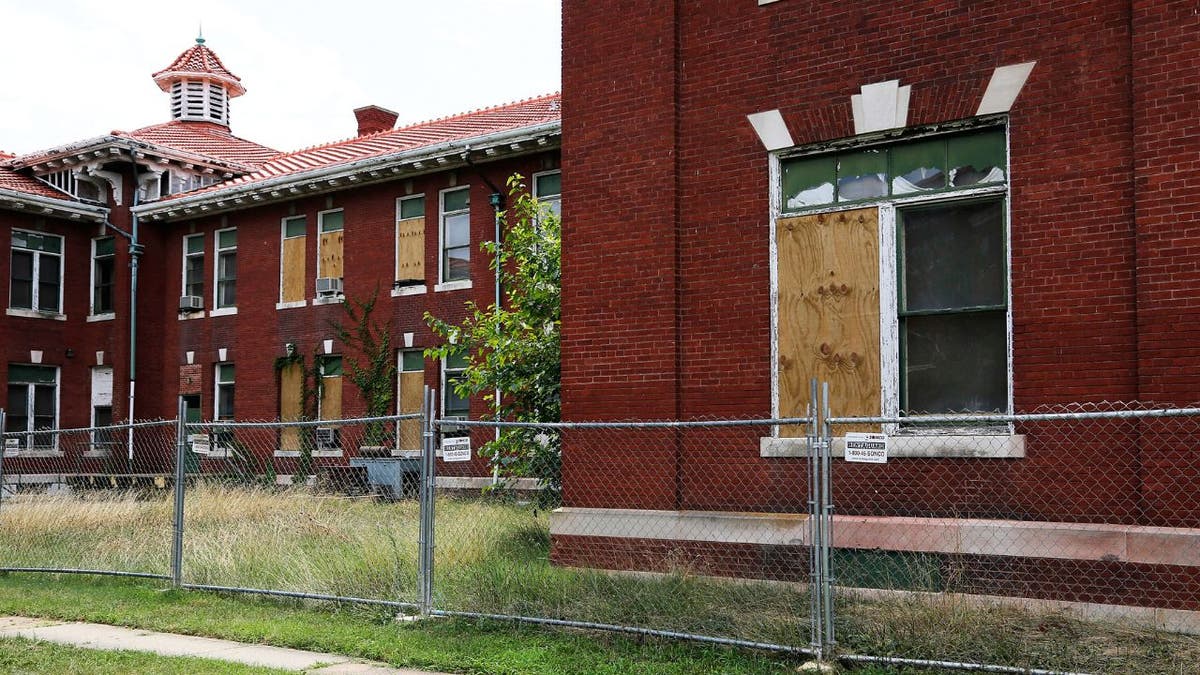
File photo shows a vacant historic building at St. Elizabeths West Campus in Washington, D.C., part of a former psychiatric hospital complex now slated for redevelopment as the Department of Homeland Security’s headquarters. (Jonathan Ernst/Reuters)
«DHS security and safety assessments have determined these dilapidated, vacant buildings pose unacceptable safety, security and emergency-response risks,» McLaughlin said. «Demolition is the only permanent corrective action.»
A GSA spokesperson told Fox News Digital that the agency was notified by DHS of a serious and immediate security risk at the St. Elizabeths campus.
«Where buildings pose a threat, demolition may be necessary, and we are currently following all applicable laws and regulations,» GSA spokesperson Marianne Copenhaver said.
Founded in 1855, St. Elizabeths was the nation’s first federally operated psychiatric hospital.
The West Campus was declared «excess property» in 2001 and then transferred to the GSA. It was later selected to become DHS’s headquarters and has been redeveloped over the past 15 years into a high-security, fortified complex for DHS, according to the GSA website.
TRUMP ADMIN DEFENDS WHITE HOUSE BALLROOM AS NATIONAL SECURITY MATTER
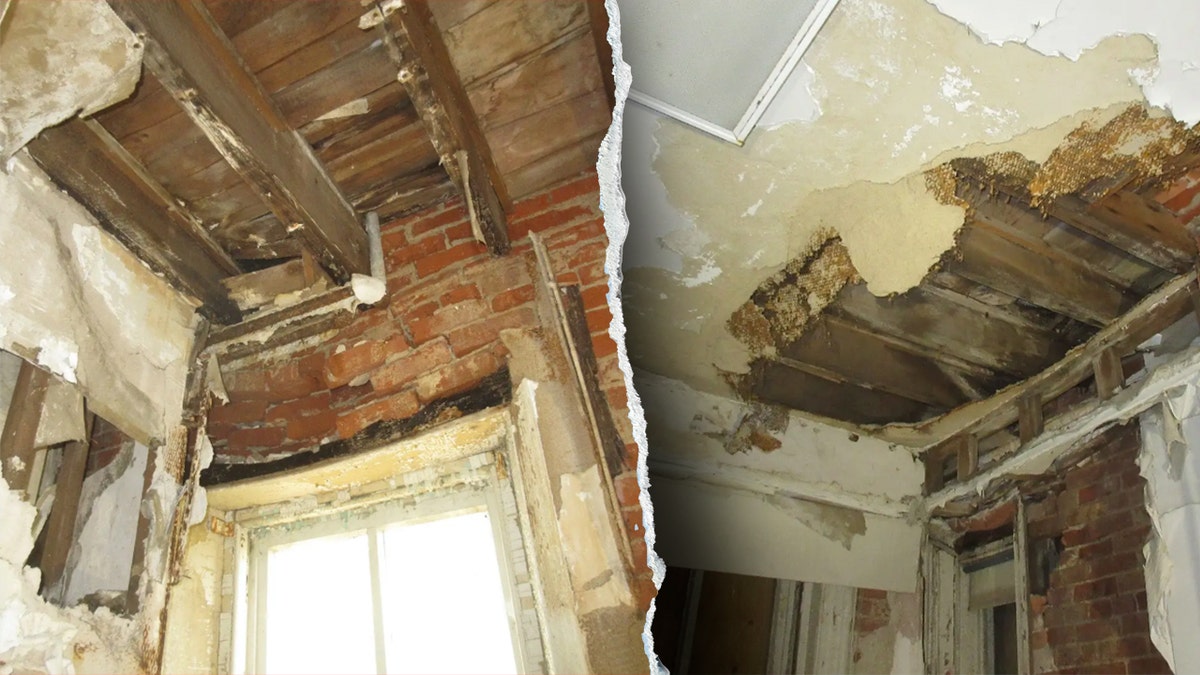
A split image shows interior deterioration inside an abandoned historic building at the St. Elizabeths campus in Southeast Washington, D.C. The former psychiatric hospital complex is now being redeveloped into the Department of Homeland Security’s headquarters, as DHS seeks emergency demolition of multiple structures at the site. (GSA)
The site is a National Historic Landmark and is listed on the National Register of Historic Places, with dozens of 19th- and early-20th-century buildings.
The demolition plan has drawn opposition from the National Trust for Historic Preservation and the D.C. Preservation League, which argue that DHS has not shown evidence of an actual emergency.
The groups told the Post that the emergency declaration relies solely on Noem’s own determination and bypasses required historic-preservation review procedures for a National Historic Landmark.
«A unilateral declaration like this is problematic because it bypasses the procedural safeguards designed to ensure stability, legitimacy and fairness,» reads a letter signed by Elizabeth Merritt, the National Trust’s general counsel, and Rebecca Miller, the Preservation League’s executive director, according to the Post.
CLICK HERE TO DOWNLOAD THE FOX NEWS APP
The preservation groups also argue that DHS used an emergency declaration and holiday timing to compress the review window, leaving little opportunity to challenge the demolition of historic buildings.
DHS declared an emergency on Dec. 19, when Noem signed the memo and security assessment, but GSA did not notify D.C. officials until the evening of Dec. 23, just before the Christmas holiday, per the Post.
The National Trust for Historic Preservation also filed a legal challenge opposing President Donald Trump’s plan to demolish the White House East Wing and build a new ballroom.
kristi noem,homeland security,historic sites,national security,washington dc,politics,us









INTERNACIONAL
Unearthed clip exposes shocking claim by Newsom’s wife about inmates at violent California prison
NEWYou can now listen to Fox News articles!
California Governor Gavin Newsom’s wife, Jennifer Siebel Newsom, is getting raked over the coals for comments she made several years ago, suggesting criminals housed in a notorious California prison, which was known for housing violent criminals and death row prisoners, got there by «accident.»
Siebel Newsom’s comments came as she was discussing a tragedy in her younger life at an event in 2016. A few days before her seventh birthday, Siebel Newsom was involved in a fatal golf cart accident that ultimately killed her sister.
«I had to be very raw when we interviewed the young men who were juvenile offenders at San Quentin. I told them about my own loss, where I lost my older sister a few days before my seventh birthday and I blame myself for her death and I share that because they ultimately were accused of committing these violent crimes and sentenced for life, and I think it shocked them that this blonde lady, who was interviewing them, had a similar story – was perhaps in the wrong place at the wrong time – but wasn’t punished the way they were because clearly it was an accident, but theirs was probably an accident too,» Siebel Newsom said when discussing ways to connect with others.
NEWSOM’S WIFE SLAMS TRUMP FIRINGS OF BONDI, NOEM, SPARKING PANEL DEBATE
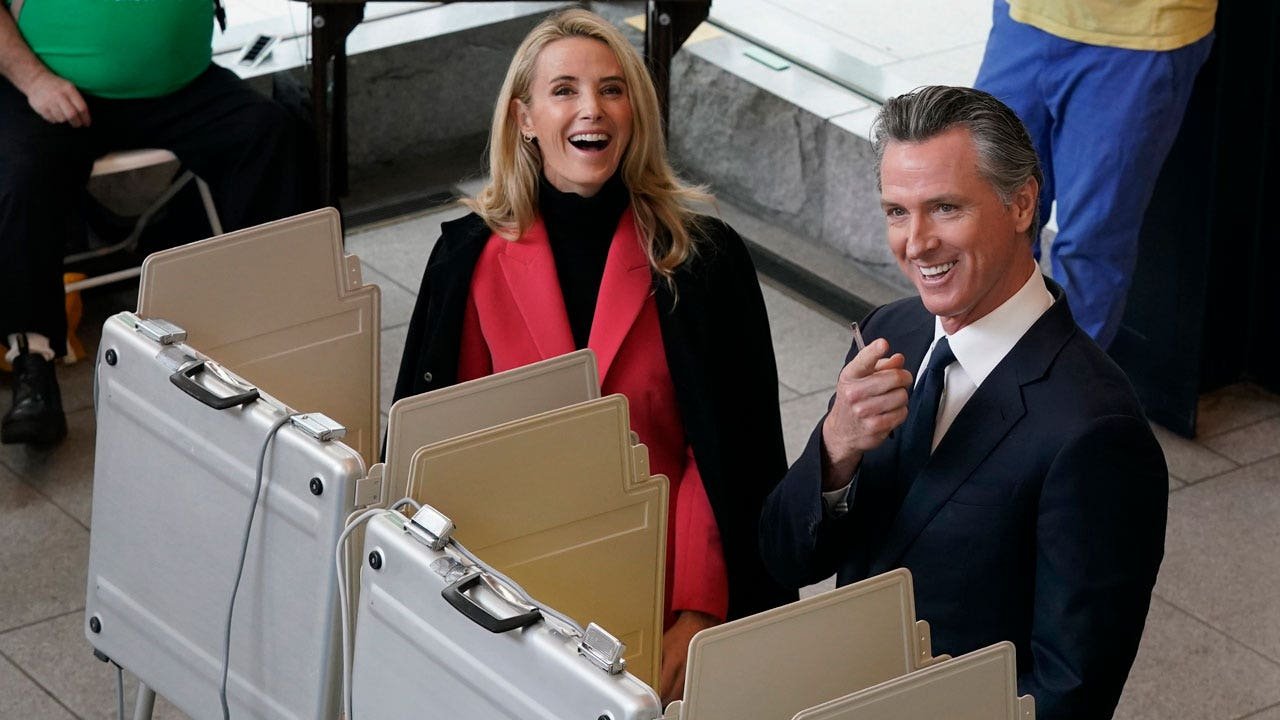
Democrat California Gov. Gavin Newsom stands with wife Jennifer at a Sacramento voting center. (AP Photo/Rich Pedroncelli)
«Anyways, I share that – I guess – I quite enjoy spending time with people and being real and unmasking and showing them that it’s safe to unmask themselves.»
A spokesperson for Governor Newsom’s wife clarified that the remarks in the 2016 interview with the first partner, were referring to incarcerated individuals for her 2015 documentary «The Mask You Live In.»
The spokesperson did not provide an on-the-record statement but did point Fox News Digital to a social media post from Gov. Newsom’s press office calling out the media for being «focused on running nonstop hit pieces on California’s First Partner,» while the president is «threatening to obliterate a civilization tonight.»
On Tuesday, the same day the clip began going viral on social media, President Donald Trump issued an ominous message on his social media platform Truth Social, indicating «a whole civilization will die tonight,» amid his threat of a looming U.S. attack against Iranian bridges and power plants.
«This is the MAGA distraction machine — in full force,» concluded the social media post, which included news segments criticizing Siebel Newsom on Tuesday.
GAVIN NEWSOM’S WIFE SAYS SHE GAVE HER BOYS DOLLS TO PLAY WITH IN RESURFACED CLIP
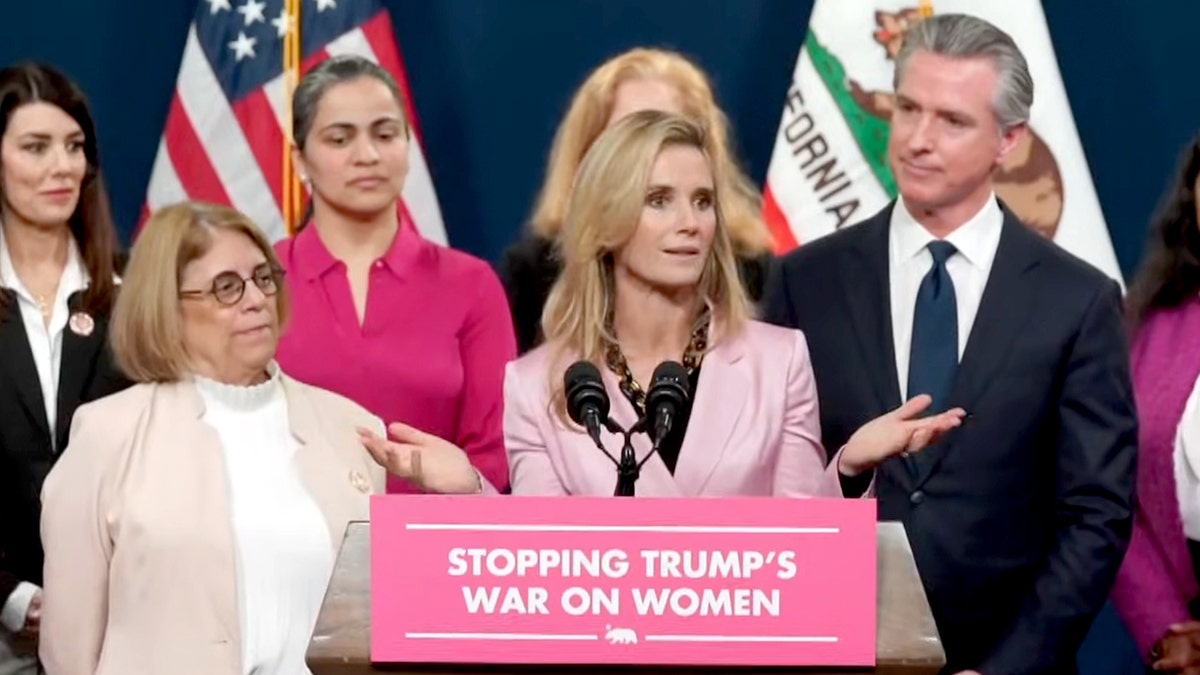
Jennifer Siebel Newsom speaks at Planned Parenthood funding bill signing ceremony (Screenshot/Gavin Newsom’s YouTube Page)
However, Siebel Newsom’s resurfaced comments still garnered attention on Tuesday from conservative critics who called the California governor’s spouse out for virtue signaling.
In direct response to Siebel Newsom’s claims that San Quentin inmates got in their position by «accident,» Rep. Tim Burchett, R-Tenn., shot back sarcastically: «Yeah, like the time that guy accidentally stabbed that dude 27 times.»
«What the…» commented Assistant Attorney General for Civil Rights at the U.S. Department of Justice, Harmeet Dhillon, in a social media post responding to the 2016 remarks.

California Gov. Gavin Newsom and first partner Jennifer Siebel-Newsom embrace during a campaign event in support of Proposition 50 in San Francisco, Monday, Nov. 3, 2025. (Gabrielle Lurie/San Francisco Chronicle via Getty Images)
CLICK HERE TO DOWNLOAD THE FOX NEWS APP
«She represents everything that is wrong with California,» comedian Adam Carolla added.
«Newsom’s wife’s latest virtue signal is telling San Quentin lifers that she faced zero consequences when her sister was killed because it was an accident, then telling them their life sentences are probably for ‘accidents’ too,» wrote conservative women’s sports activist Riley Gaines. «Peak elite tone-deafness.»
gavin newsom, california, crime world, blue city crime, assassinations murders, politics
INTERNACIONAL
Libertad de expresión: el presidente de Uruguay, Yamandú Orsi, firmó las declaraciones de la SIP

El presidente de Uruguay, Yamandú Orsi, suscribió las dos declaraciones de principios de la Sociedad Interamericana de Prensa (SIP), Chapultepec y Salta II, durante un acto oficial en la Torre Ejecutiva, sede del gobierno uruguayo. Orsi estuvo acompañado por una delegación internacional de la organización que visitó esta semana la ciudad para analizar aspectos relacionados con el ejercicio del periodismo en el país.
En representación de la entidad que agrupa a más de 1.300 medios en todo el continente, habló en primer término su primer vicepresidente, Carlos Jornet, director de La Voz del Interior (Córdoba, Argentina).
Tras reconocer que Uruguay fue uno de los primeros países del continente en adherir a la Declaración de Chapultepec en 1994 y que Orsi es el primer mandatario de su país y de todo el Cono Sur que suscribe la Declaración de Salta II, Jornet expresó en nombre de la SIP: “Este gesto suyo representa, además, una demostración cabal del clima de convivencia que caracteriza a Uruguay. Un país donde existen discrepancias ideológicas, por cierto, pero que no impiden el diálogo y la búsqueda de consensos esenciales”.
Jornet añadió que, pese a que en los últimos años hubo señales de incipiente deterioro, Uruguay “sigue siendo un país calificado como de baja restricción a las libertades de expresión y de prensa”.
Y agregó: “Aspiramos a que este gesto que lo honra, presidente Orsi, sea una marca permanente de su gestión, constituya además una señal para quienes administran el Estado en todos los niveles, y que Uruguay continúe siendo un territorio donde se acepta y se valora el disenso, pero se trabaja para buscar consensos; donde no se acallan las diferencias, pero se procuran coincidencias sobre la base de diálogos fructíferos”.
El vicepresidente primero de la SIP exhortó además a que “valoren el respeto, sigan defendiéndolo como sello de identidad nacional, y mantengan lejos la ola global que recurre a agravios, a descalificaciones personales, a la diseminación de desinformación como herramientas de contienda política”.
A su turno, luego de suscribir las declaraciones, Orsi destacó que “como presidente de Uruguay es un gran honor y una responsabilidad enorme añadir estas firmas” a las declaraciones impulsadas por la SIP.
“Créanme que no lo hacemos como un saludo a la bandera: lo hacemos porque el Uruguay como tal, su sociedad, sus medios de comunicación, sus periodistas y sus representantes políticos creemos y defendemos con firmeza el derecho a la libertad de expresión y a la libertad de prensa”.
El mandatario agregó que “lo entendemos como una garantía indiscutible para la existencia misma de una sociedad democrática”. Orsi indicó que “los países no se refundan cada cinco años. Como países somos más robustos y confiables cuando apostamos a la acumulación positiva en todos sus órdenes”.
Sostuvo que, en 2025, al celebrar los 40 años de retorno a la democracia, “todos los presidentes coincidimos en resaltar que nos une el respeto a las libertades fundamentales y que el debate público no debe transformarse en un espacio para difundir ataques personales, falsedades deliberadas o desacreditar a quienes piensan distinto a uno”.
Previo a la firma de las declaraciones, el presidente Orsi, el canciller Mario Lubetkin y la delegación de la SIP mantuvieron un encuentro para analizar la situación de libertad de prensa en Uruguay y en las Americas.
Además de Jornet, integraron la misión de la SIP el expresidente y actual vicepresidente segundo, Michael Greenspon (The New York Times, Estados Unidos); la presidenta de Comité Ejecutivo, Gabriela Vivanco (La Hora, Ecuador); el copresidente de la Comisión Legal, Martín Etchevers (Clarín, Argentina); el integrante del Consejo Consultivo y expresidente Danilo Arbilla, y el director ejecutivo, Carlos Lauría.
Durante su estadía, la delegación también sostuvo reuniones con la fiscal de Corte, Mónica Ferrero, así como con periodistas y directivos de medios.
La Declaración de Chapultepec, adoptada en 1994, impulsa las libertades públicas e individuales como “motor y punto de partida de los derechos básicos del ser humano”. Ha sido firmada por numerosos presidentes y líderes de las Américas desde su enunciación. La Declaración de Salta II sobre Principios de Libertad de Expresión en la Era Digital, actualizada en 2024, inspira la promoción de las libertades públicas e individuales en el contexto de las nuevas tecnologías de la información y la comunicación.
INTERNACIONAL
UK defense minister warns Putin of ‘serious consequences’ after covert underwater military operation

NEWYou can now listen to Fox News articles!
U.K. Defense Minister John Healey warned Russian President Vladimir Putin of «serious consequences» Thursday after revealing a weeks-long military operation to deter Russian meddling in the North Sea.
«To President Putin I say we see you, we see your activity over our cables and our pipelines, and you should know that any attempt to damage them will not be tolerated and will have serious consequences,» he cautioned.
The defense minister detailed an operation involving a Royal Navy frigate, a Royal Air Force patrol plane and hundreds of personnel deployed to deter a trio of Russian submarines that were detected near underwater cables in Britain’s economic exclusionary zone.
RUSSIA, CHINA VETO UN RESOLUTION AIMED AT REOPENING STRAIT OF HORMUZ, HOURS BEFORE TRUMP DEADLINE
British Defense Secretary John Healey delivers a statement on recent U.K. operational activity at 9 Downing Street, in London, Thursday, April 9, 2026. (Yui Mok/Pool Photo via AP)
One of the submarines, Healey announced, was a nuclear-powered Akula-class submarine, while the other two were spy submarines from Russia’s Main Directorate of Deep Sea Research, also known as GUGI. Subs from this unit were directed specifically by Putin «to conduct hybrid warfare activities against the UK» and its allies, Healey said.
At least one of those allies, Norway, was involved in the deterrent operation, Healey revealed. Norway’s Defense Minister Tore O Sandvik confirmed the cooperation in a Thursday statement.
«Norway has participated in a coordinated military operation with our allies to send a clear message: covert activities in our waters will not be tolerated,» Sandvik wrote.
The submarines left U.K. waters after a protracted period of monitoring from the U.K. and Norway, and there is no evidence of damage to any underwater infrastructure, Healey said.
Fox News Digital has reached out to the U.K.’s Defense Department for more information.
The Russian incursion marked the second time in less than six months that the U.K. detected Russian seacraft near its territorial waters. Healey announced a similar military operation in November after Russia deployed the spy ship Yantar to the North Sea in 2025.
TRUMP, STARMER AGREE STRAIT OF HORMUZ MUST REOPEN AS MIDDLE EAST CONFLICT ESCALATES
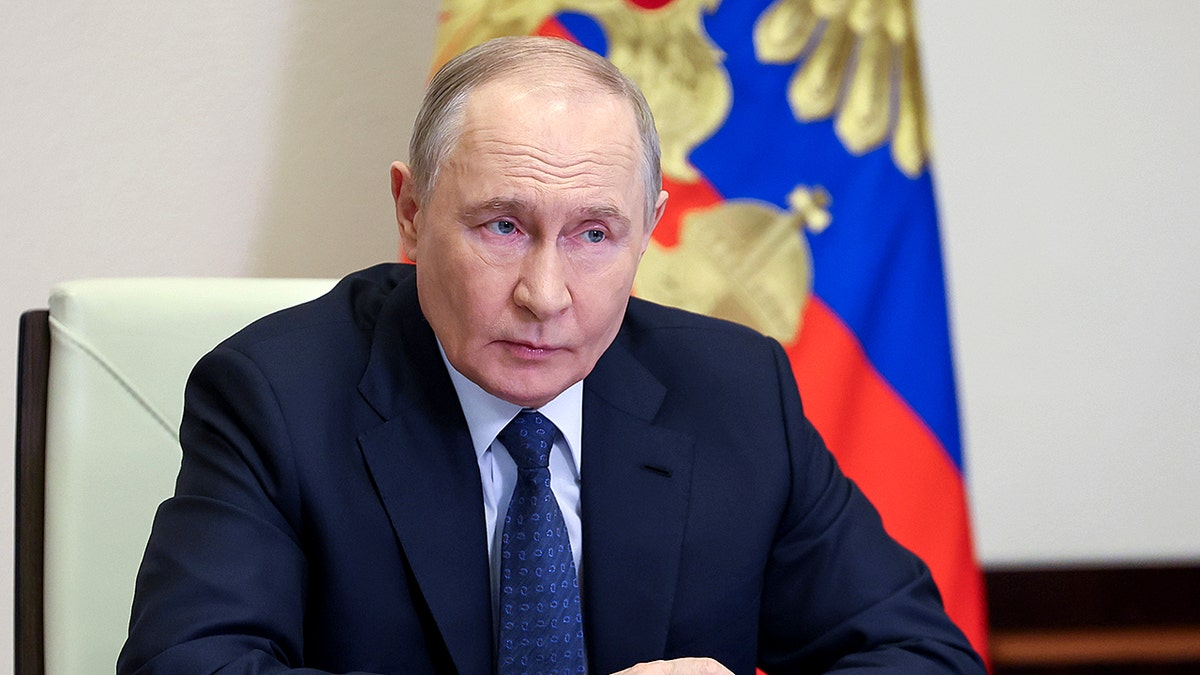
Russian President Vladimir Putin holds a meeting to discuss the situation in Dagestan hit by severe flood via videoconference at the Novo-Ogaryovo state residence outside Moscow, Russia, Tuesday, April 7, 2026. (Alexander Kazakov, Sputnik, Kremlin Pool Photo via AP)
Healey also cited this year’s incident as an example of why the U.K. hasn’t sent troops to the Strait of Hormuz, the narrow waterway in the Persian Gulf key to global energy markets that Iran has choked off in recent weeks.
«I understand people questioning why all UK military assets and personnel have not been deployed to deal with it. But that is not in Britain’s national interest,» he said, later calling Russia «the primary threat to the UK and to NATO.»
President Donald Trump has criticized NATO allies and the organization itself for not acceding to requests to help open the Strait of Hormuz.
«NATO WASN’T THERE WHEN WE NEEDED THEM, AND THEY WON’T BE THERE IF WE NEED THEM AGAIN,» he wrote in a Thursday morning Truth Social post.
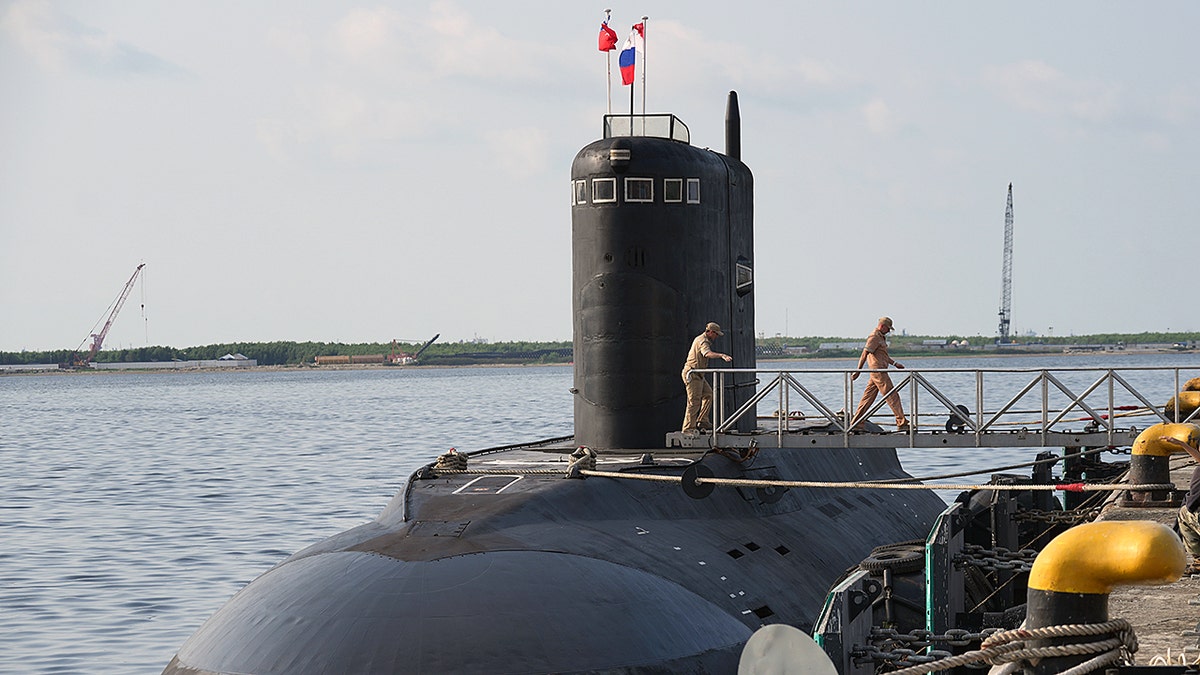
Russian personnel walk on the gangway to Russian Navy submarine RFS Petropavlosvsk-Kamchatskiy, which is currently on a port visit at Tanjung Priok Port in Jakarta, Indonesia, Tuesday, March 31, 2026 (AP Photo/Tatan Syuflana)
CLICK HERE TO DOWNLOAD THE FOX NEWS APP
The U.K., while holding a planning meeting on how to reopen the Strait of Hormuz after the Iran War is over, initially refused to let the U.S. use a British air base to launch military strikes against Iran.
British Prime Minister Keir Starmer eventually allowed the U.S. to launch «defensive strikes» from Royal Air Force bases after Trump slammed him as «not Winston Churchill.»
nato, russia, united kingdom, vladimir putin

Canales para ver el Rosario Central vs. Independiente del Valle por Copa Libertadores

Esperaba con ganas noticias del regreso de uno de los mejores estrenos de ciencia ficción de 2025, pero ahora no estoy nada contento

“No hicimos nada ilegal ni inmoral”: dos funcionarios de Economía hablaron sobre los créditos que tomaron del Banco Nación

Unearthed clip exposes shocking claim by Newsom’s wife about inmates at violent California prison

Cuadernos de las coimas: dos exfuncionarios y un empresario apelaron al mismo argumento para defenderse en el juicio

Eliminan un impuesto clave en la venta de propiedades: quiénes dejan de pagarlo y cuánto se ahorran

Caputo habló sobre los créditos del Banco Nación que tomaron sus funcionarios: “No hay nada ilegal ni inmoral”

Adorni recibió US$100 mil de otras dos mujeres por la hipoteca de un departamento anterior en Caballito

Ajuste y Castigo: El Gobierno de Milei Pasa a «Disponibilidad» al Policía que se Encadenó por un Sueldo Digno

Adepa mostró su preocupación por las revelaciones de una presunta operación de espionaje ruso contra Milei

 POLITICA2 días ago
Ajuste y Castigo: El Gobierno de Milei Pasa a «Disponibilidad» al Policía que se Encadenó por un Sueldo Digno
- INTERNACIONAL2 días ago
Uno por uno, los ultimátums de Trump a Irán y las postergaciones: del inicio de la guerra al anuncio de la tregua
- POLITICA2 días ago
Carlos Melconian no descartó presentarse como candidato a presidente en 2027: “Tengo la vocación”