INTERNACIONAL
DOGE’s Medicaid data dump aims to expose fraud — but privacy and legal hurdles loom

NEWYou can now listen to Fox News articles!
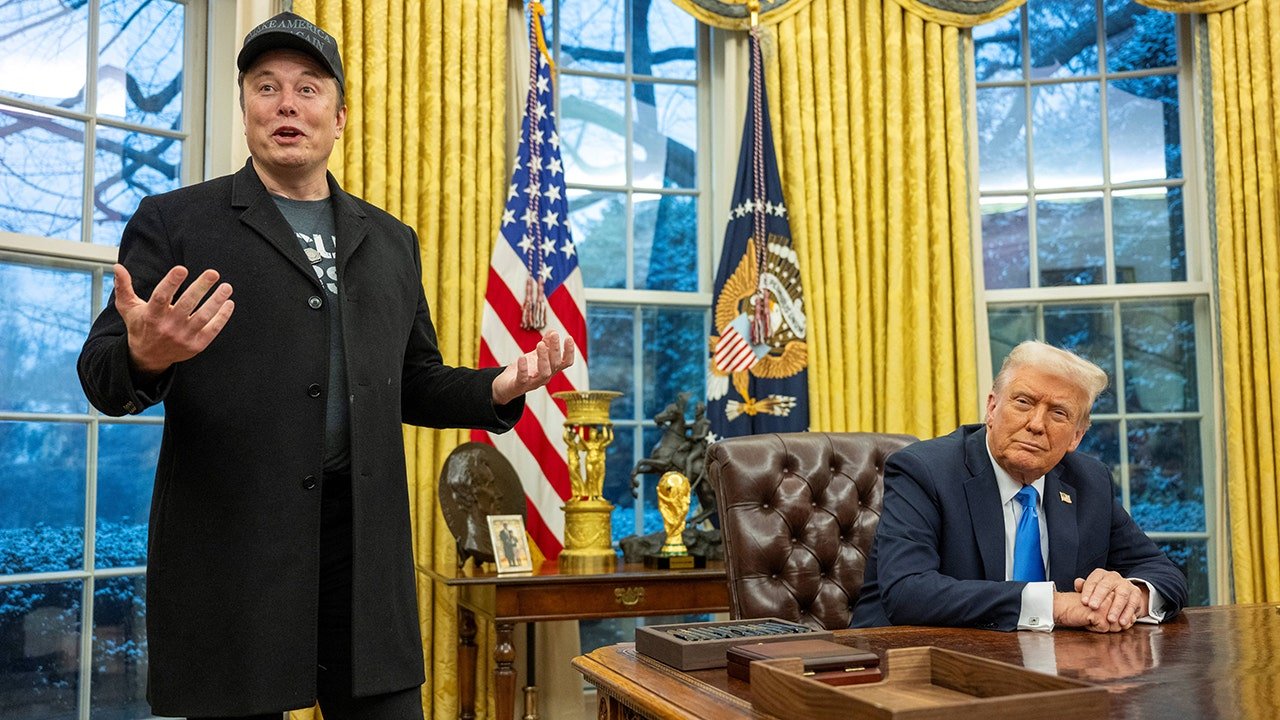
The Department of Government Efficiency’s release of years of anonymous, open-source Medicaid data was hailed by former DOGE chief Elon Musk as a transparency win that will make fraud «easy to find.» But turning internet sleuthing into prosecutions could prove far harder for the Justice Department— and legally messy.
Prosecutors and privacy experts warn the leap from anonymous tips to a courtroom case runs through three choke points: patient privacy, proof standards and the uneven quality of state-reported Medicaid data.
The DOGE data will include aggregate-level information about providers, claims, and other general information, according to the Department of Health and Human Services. Senior Trump administration officials have stressed that any information released will be done in accordance with federal privacy laws, in order to avoid identifying individuals or sharing private medical information.
The release comes as the Justice Department ramps up healthcare fraud enforcement, particularly targeting schemes involving Medicaid and other taxpayer-funded programs. Its healthcare fraud «strike force» now operates across 25 federal districts and has brought charges against roughly 5,000 individuals, according to information shared with Fox News Digital.
FLORIDA EXECS SENTENCED IN $233M OBAMACARE FRAUD THAT TARGETED HOMELESS, HURRICANE VICTIMS
Attorney General Pam Bondi celebrated a «historic deal» with Northwestern University on Nov. 28. (AP Photo/Mark Schiefelbein)
But before the Justice Department can chase down new leads, it may have to sort through mountains of flawed data.
Information shared by DOGE in its early days may be imperfect due to its reliance on state data submitted through the Transformed Medicaid Statistical Information System, or T-MSIS — a system that has struggled with data quality and reporting issues that vary widely from state to state. The Centers for Medicare & Medicaid Services is actively working to improve state compliance.
There are open questions as to how the federal government might seek to retroactively «claw back» Medicaid reimbursements from states, in the event fraud is detected.
Others have cautioned that investigations could be hindered by new or thorny legal challenges — including privacy concerns, statute of limitations questions and evidentiary hurdles.
The emphasis on healthcare fraud reflects a broader enforcement priority for Trump and Attorney General Pam Bondi, who built her prosecutorial profile in Florida cracking down on opioids, drug trafficking, and so-called «pill mills.»
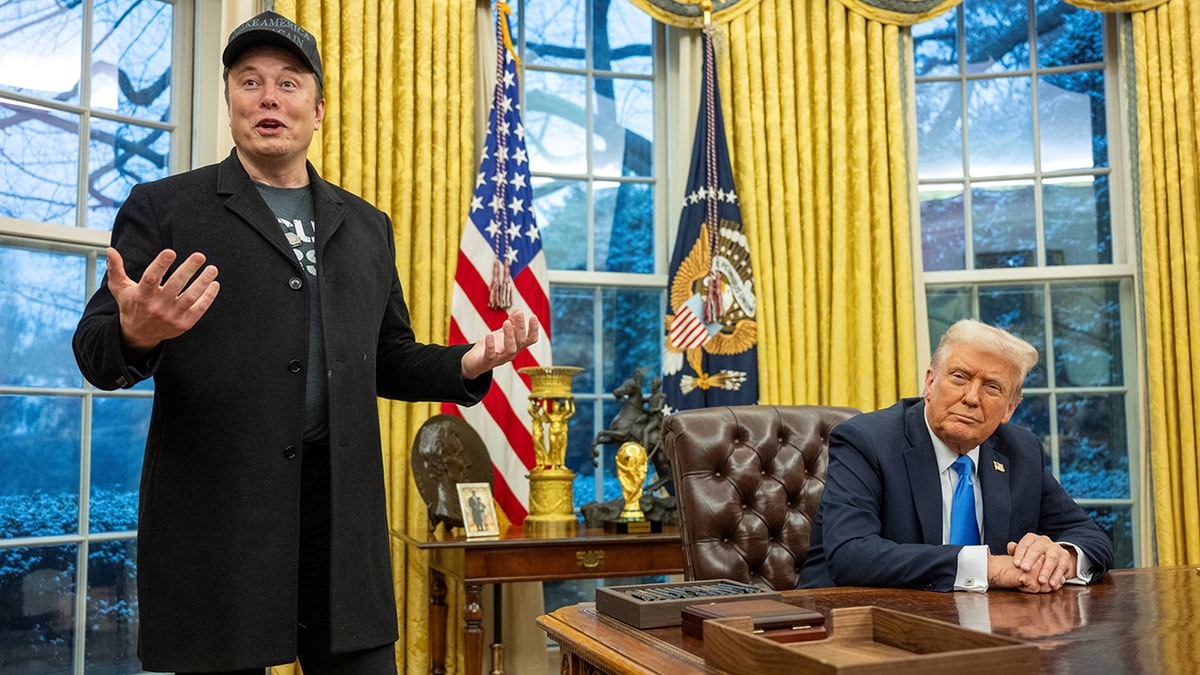
Elon Musk and President Donald Trump are seen at the Oval Office. (JIM WATSON/AFP via Getty Images)
That enforcement posture has translated into expanded resources for federal prosecutors, particularly within the Justice Department’s Health Care Fraud Unit. Formed in 2007, the unit has grown in scope and funding in recent years as officials confront increasingly complex and large-scale fraud schemes.
The unit has benefited from the creation of its data analytics team in 2017 and the newly announced healthcare fraud data «fusion center» late last year. The center draws on DOJ’s criminal and fraud divisions, the FBI and outside agencies, including HHS-OIG, to leverage cloud computing, artificial intelligence and other analytics tools to more quickly identify and prosecute sweeping healthcare fraud in the public and private sectors, at a rate and scope that would have been unimaginable just years ago.
A Justice Department official with knowledge of the unit’s operations told Fox News Digital that the effort allows prosecutors to identify so-called «outlier» providers earlier.
«It’s an area of work that’s not only reactive prosecutions — but proactive prosecutions, using data analytics,» this person said.
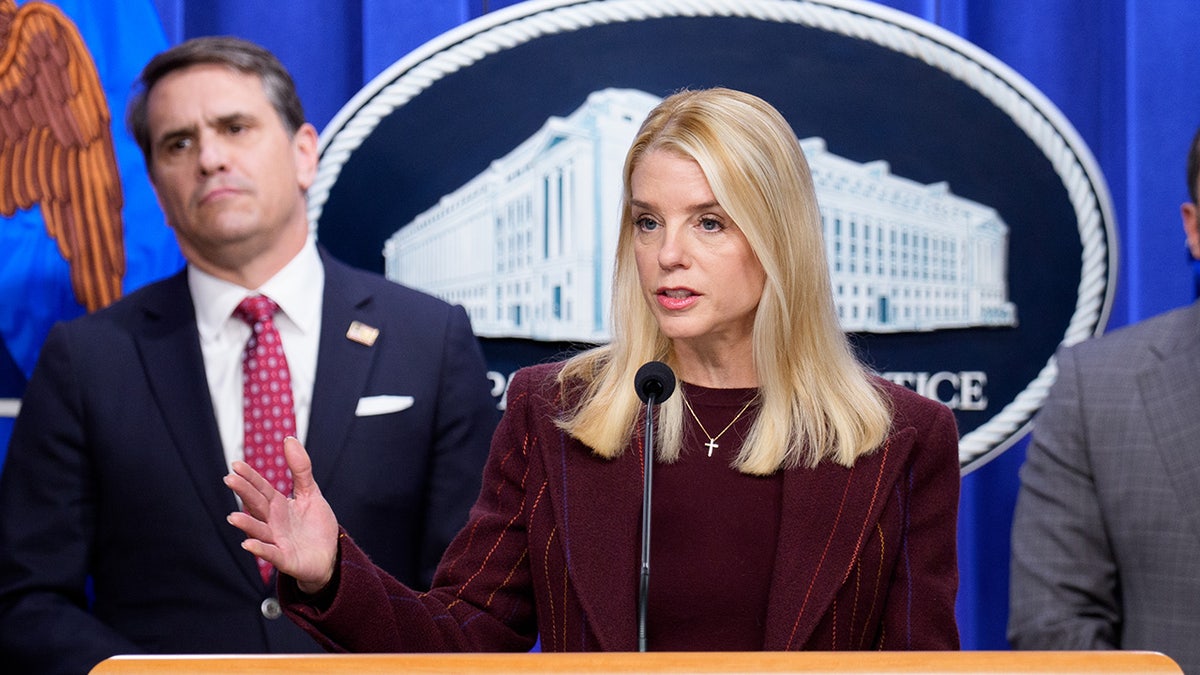
Attorney General Pam Bondi accompanied by Deputy Attorney General Todd Blanche and FBI Director Kash Pate, speaks during a news conference. (Andrew Harnik/Getty Images)
The new data analytics have been crucial to helping DOJ develop and prosecute widespread instances of healthcare fraud cases, as well as major prescription drug cases.
One official pointed to the recent conviction of a California telehealth company founder and CEO who was sentenced to 20 years in prison for illegally prescribing and distributing roughly 40 million Adderall pills, a Schedule II controlled substance, over the internet using false and fraudulent information.
The tools the Justice Department used in that case were critical in quickly identifying the $100 million scheme.
CLICK HERE TO GET THE FOX NEWS APP
The Justice Department’s Health Care Fraud Unit announced the largest-ever national healthcare fraud takedown in its history in 2025, securing an estimated $15 billion in losses and forfeitures and returning a record $560 million to the public.
donald trump,politics,doge,justice department,us,crime world,minnesota fraud exposed








INTERNACIONAL
“Queremos que termine la guerra, pero también el régimen”: la voz de civiles iraníes en pleno conflicto

El relato de familias iraníes obligadas a abandonar sus casas tras repetidas ofensias revela el efecto devastador de la guerra en Irán sobre la vida cotidiana en el país. La rutina se convirtió en una sucesión de decisiones difíciles y miedos compartidos.
A pesar de la situación, algunos ciudadanos intentan mantener su vida cotidiana antes del inicio del conflicto. Las cafeterías, parques y espacios al aire libre siguen recibiendo visitantes, como una forma de resistir y buscar normalidad. El deseo de preservar fragmentos de la vida anterior se mezcla con la resignación y el hastío.
Los sectores afines al régimen defienden la continuidad del conflicto y califican la guerra como “santa” y asisten a actos públicos y funerales de funcionarios caídos, incluso bajo el sonido de los bombardeos o durante tormentas. Además, buscan reunirse en plazas y corear consignas para reafirmar su postura.
Las redes sociales también documentan la vigilancia nocturna de los barrios, donde se observa a hombres progubernamentales —junto a integrantes de la milicia Basij e incluso adolescentes— recorriendo las calles en motocicletas y camionetas, según informó Irán International.

La división de opiniones se acentúa entre quienes consideran que los ataques podrían precipitar el fin del sistema actual y quienes solo desean el cese de la violencia. Un usuario describió el clima en su familia: la inquietud aumenta cuando los bombardeos disminuyen, por temor a que la guerra acabe sin cambios y las autoridades del régimen se mantengan en el poder.
Elham compartió vía redes el sentir de una conocida: “Cuando no hay ataques, me estresa que sigamos aquí y que estos salvajes sigan en el poder”. El dilema se resume en una confesión: “Cuando hay huelgas, tengo tanto miedo que solo puedo llorar y desear que terminen pronto. Ya ni siquiera sé qué quiero. Solo quiero que se vayan, y que la guerra también. Esta no es una vida que nadie merezca. No queríamos nada más que una vida normal”.

En varias zonas urbanas, la inseguridad empujó a miles a desplazarse hacia áreas rurales en busca de algo de calma. Quienes permanecen en sus viviendas, como Golshan en Teherán, describen noches de vigilia y ansiedad. “La noche ya no es un momento para dormir, sino un campo de espera”, escribió X, al relatar la tensión de anticipar el próximo estruendo.
La población civil en Irán enfrenta un panorama de miedo y adaptación permanente. Sin sistemas de alerta efectivos, la sensación de vulnerabilidad es continua. El impacto psicológico afecta a niños, ancianos y adultos por igual, mientras el acceso a servicios médicos se complica para quienes huyen de las áreas más golpeadas.
Golshan confesó que dejó de usar el ascensor en su edificio, temiendo quedar atrapada durante un corte de energía. “Evito el ascensor por miedo a los apagones”, explicó.
Otras voces, como la de Marzieh, relatan cómo la tensión impregna incluso las tareas básicas. “Para muchos, ducharse se ha convertido en una fuente de ansiedad”, escribió, aludiendo al temor de quedar expuestos o sufrir cortes de agua o electricidad en pleno ataque. “Cada momento de sus vidas está lleno de miedo y preocupación”, agregó en su publicación.

El relato de Golnaz, difundido por el Comité Internacional de la Cruz Roja en redes sociales, ilustra las consecuencias materiales y emocionales de los bombardeos. Tras un ataque que destruyó parte de su vivienda y cortó la luz, reconoció: “Después de eso, nuestra casa dejó de ser un lugar seguro”. La familia buscó refugio con parientes, pero los niños siguen alterados. “Estoy pensando en llevarlos a algún lugar alejado del ruido de la guerra para que se recuperen del trauma”, explicó la madre.
La vida en Irán, bajo el asedio de los ataques, quedó atrapada entre la resistencia diaria, la polarización política y el anhelo de una existencia común, lejos de la guerra.
Middle East,Military Conflicts
INTERNACIONAL
Colorado House advances conversion therapy lawsuit bill; GOP lawmaker calls it ‘slap in the face’ to SCOTUS

NEWYou can now listen to Fox News articles!
The Democratic-controlled Colorado House passed a bill Thursday allowing people harmed by conversion therapy to sue therapists, just days after the Supreme Court blocked enforcement of the state’s ban on the method.
HB26-1322 would establish a pathway for Coloradans to bring civil claims against licensed mental health professionals accused of causing harm through efforts to change a person’s sexual orientation or gender identity.
The bill also allows people to seek legal action against the entities that hired and supervised a professional who conducted conversion therapy. The bill now heads to the state Senate, which is also controlled by Democrats, for consideration.
The measure could open the door to lawsuits years after therapy takes place and expose providers to significant financial liability.
KAGAN TURNS ON LIBERAL ALLY JACKSON WITH FOOTNOTE JAB OVER FREE SPEECH
Students listen to a man explaining the significance of the statues adorning the U.S. Supreme Court building on March 31, 2026, in Washington, D.C. (Roberto Schmidt/Getty Images)
The legislation was advanced just days after the U.S. Supreme Court ruled that Colorado cannot enforce its conversion therapy ban regarding conversations between therapists and LGBTQ+ minors, arguing the law likely violates the First Amendment by allowing some viewpoints but not others.
In an 8-1 decision Tuesday, the court said the law favors one viewpoint by allowing therapists to affirm a minor’s gender identity or sexual orientation, but not help them change it if they want to.
Matt Soper, a Republican in the Colorado House, told Fox News Digital that the new bill pushed by Democrats is a «slap in the face» to the Supreme Court.
SUPREME COURT RULING ON SECRETIVE CALIFORNIA GENDER POLICY COULD RESHAPE PARENT RIGHTS FIGHTS NATIONWIDE
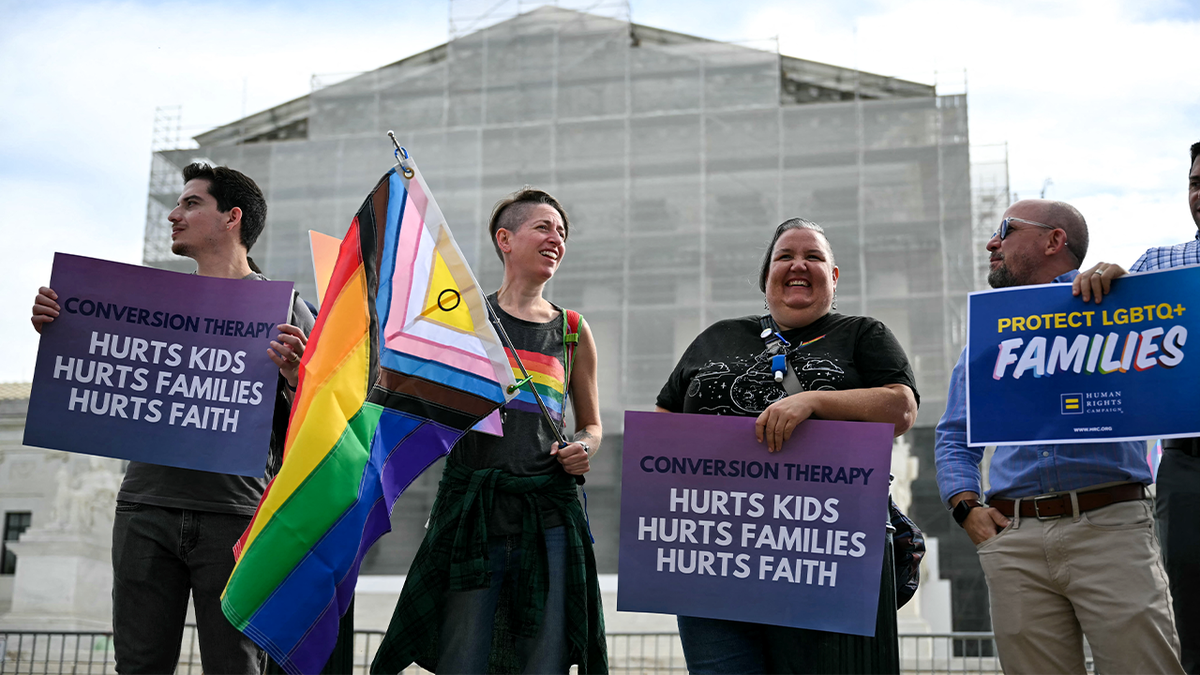
Demonstrators protest against conversion therapy outside the U.S. Supreme Court as the Court hears oral arguments in Chiles v. Salazar, a landmark case on conversion therapy, on Oct. 7, 2025, in Washington, D.C. (Andrew Caballero-Reynolds/AFP via Getty Images)
«We have a bill that’s designed to be a de facto ban on conversion therapy moving forward,» Soper said.
«That just hits at the heartstrings of the average American, that the Supreme Court can’t even have a ruling be hot off the press before you have a legislature already pushing to undo what the Supreme Court just ruled,» he continued.
«At the bottom line, there’s not even a sense of what the law is or can be from the Supreme Court when you have states that are already working really hard to undermine an 8-1 ruling.
«Americans don’t like it when you have a legislature immediately trying to overturn or undermine the highest court in the land before the printing has even cooled down.»
NJ SCHOOL DISTRICT’S SECRETIVE TRANSGENDER POLICY FACES LEGAL THREAT FOR BUCKING SUPREME COURT RULING
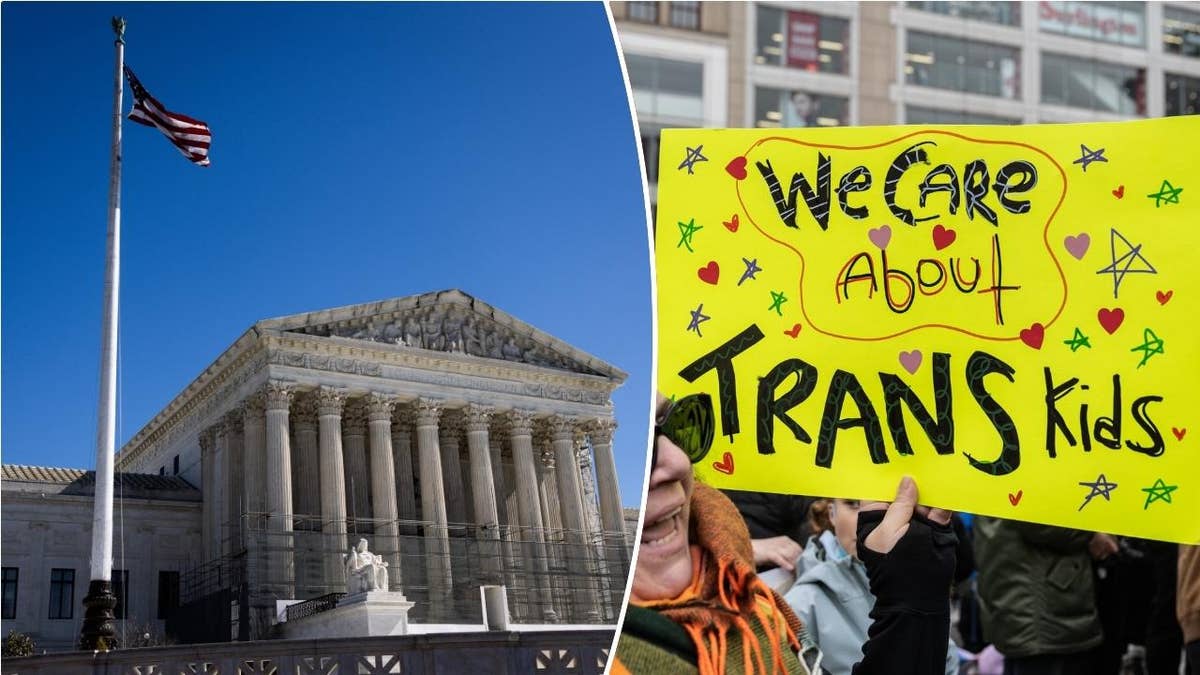
Colorado lawmakers passed a bill allowing lawsuits over «conversion therapy» days after a Supreme Court ruling limited the state’s ban. (Getty Images)
The sponsors of the bill in the Colorado House, Reps. Alex Valdez and Karen McCormick, released a statement following the high court’s ruling, reiterating that conversion therapy is «ineffective and harmful.»
«In Colorado, you belong just the way you are. Now more than ever, we must protect LGBTQ+ Coloradans from the harmful practice that is conversion therapy. We vow to keep moving forward to safeguard the rights of the LGBTQ+ community in Colorado,» the lawmakers said.
DAVID MARCUS: SCOTUS GETS CASE ON TRANSING KIDS RIGHT, DESPITE THREE CLUELESS JUSTICES
The Supreme Court’s decision stemmed from a lawsuit brought by Kaley Chiles, a licensed Christian therapist, who argued her conversations with youth clients were a form of protected speech.
The Colorado government argued the conversations amounted to professional conduct that the state was allowed to regulate.
The case centered on a law Colorado passed in 2019 banning what the state government described as conversion therapy.
JONATHAN TURLEY: JUSTICE JACKSON’S ‘CHILES’ DISSENT REVEALS NARROW VIEW OF THE FIRST AMENDMENT
While the 2019 law required that claims against providers be filed within two years, HB26-1322 would remove time limits for legal action, and if the victim has died, their representatives could pursue damages within five years of the individual’s death.
Soper criticized the bill for lacking a cap on recoverable damages or a statute of limitations on claims.
CLICK HERE TO DOWNLOAD THE FOX NEWS APP
«A mental health therapist could actually be liable for their entire life,» he said.
Fox News Digital’s Michael Dorgan and Ashley Oliver contributed to this report.
legislation, colorado, first amendment, politics, state and local
INTERNACIONAL
«Está todo parado»: el turismo se desploma en Cuba en medio de la profunda crisis energética

Las calles de La Habana casi sin turistas, incluso en esta Semana Santa, muestran una fotografía abandonada de Cuba. En plena crisis energética, la isla mantiene un desplome en el turismo, y registró un 30% menos de visitantes en los dos primeros meses del año respecto a 2025.
«En esta zona, Habana Vieja, Parque Central, el mítico Capitolio, el turismo está malo por el problema energético. No está entrando turismo por eso. Todo en Cuba está parado», se queja Alberto Ruiz Laffitte, encargado del cuidado de los autos clásicos descapotables destinados al paseo de turistas.
La isla sufre una grave crisis energética desde 2024 debido a las frecuentes averías de sus obsoletas centrales termoeléctricas y la falta de divisas del Estado para importar combustibles, algo que se ha agravado desde enero de este año por el asedio petrolero de Estados Unidos.
Los apagones son constantes, es difícil conseguir combustible para los automóviles y las calles aparecen oscuras y sin tráfico, una imagen que recuerda a la pandemia de Covid-19.
Hasta febrero, se habían recibido 262.496 visitantes internacionales, es decir, 112.642 menos que en el mismo período del año anterior, informó el lunes un informe de la Oficina Nacional de Estadísticas e Información (ONEI) del país caribeño.
El sector turístico, esencial para su economía, se encontraba ya en crisis antes del agravamiento de la situación energética a partir de enero por el asedio petrolero de Washington y la captura de Nicolás Maduro en Venezuela.
Solo en 2025, el país recibió 1.810.663 visitantes internacionales, las peores cifras desde 2002 (sin contar los años de la pandemia).
«Hay muy poco turismo. No hay prácticamente. Nuestro trabajo se ha hecho muy difícil; ahora hasta ofrecemos servicio a cubanos y lo cobramos en la moneda nacional», cuenta Ezequiel Palacios, chofer de un carro a caballo en la Habana Vieja.
En febrero, señaló la ONEI, apenas llegaron a la isla 77.663 turistas.
El número de viajeros de los dos mayores mercados emisores, Canadá y Rusia, descendió en un 28,4% y un 7,6%, respectivamente, hasta los 124.283 y los 20.668 ese mes.
La mayoría de mercados experimentaron retrocesos durante este período, algunos de carácter marcado, como es el caso de la comunidad cubana en el exterior, que cayó más de un 40%, hasta los 23.002 viajeros; y de EE.UU., que cedió un 55,9%, hasta los 11.791.
También sufrieron un descenso las cifras de México (6.674), Francia (5.649), España (4.422) e Italia (4.059). Solo se incrementaron los visitantes procedentes de Argentina (10.590) y China (5.429).
Con la situación de desabastecimiento de combustible en la isla caribeña, agudizada por el bloqueo petrolero, las autoridades cubanas comenzaron a cerrar algunos hoteles.
Desde inicios de febrero, el viceprimer ministro Oscar Pérez-Oliva Fraga aseguraba que «se había diseñado un plan en el turismo para reducir los consumos energéticos, compactar las instalaciones turísticas y aprovechar la temporada alta que está transcurriendo en estos momentos».
Esto afectó principalmente a varias instalaciones turísticas ubicadas en el balneario de Varadero (oeste) y de los cayos del norte de la isla.
Además, el pasado 4 de marzo, las autoridades del país caribeño extendieron hasta el 10 de abril el aviso de falta de combustible para aviones en todos sus aeropuertos, señalando que el déficit de queroseno afecta a todos los aeropuertos internacionales de Cuba.
Tras una Semana Santa en mínimos, Cuba perfila un fin de temporada alta con cifras muy lejanas a los máximos de turistas registrados en 2018 (4,6 millones) y en 2019 (4,2 millones).
Esos números récord estuvieron ligados al «deshielo» de las relaciones diplomáticas entre EE.UU. y Cuba en esos años y a la eliminación de restricciones de Washington a los viajes a la isla.
La situación del turismo en Cuba contrasta con la de destinos similares de la región del Caribe, como Punta Cana (República Dominicana) y Cancún (México), que están registrando máximos históricos de visitantes tras la pandemia.

La asistencia de un Neymar que pelea por estar en el próximo Mundial

La Justicia ratificó que el Gobierno debe ejecutar de inmediato la ley de financiamiento universitario
El comité de Seat pide fabricar en Martorell (Barcelona) otro Cupra eléctrico más grande Por EFE

¡Insólito! Luciana Rubinska se siente estafada por lo que pagó el lavado de su auto: “¿Me vieron la cara?»

Polémica en Brasil: ¡Acusan a Neymar de misógino!

La OCDE evaluó avances de Argentina contra el soborno internacional, pero alertó que no hay sanciones y faltan medidas de protección a los denunciantes

Dos jubiladas que le habrían prestado dinero a Manuel Adorni negaron conocerlo

Quiénes son las dos acreedoras del préstamo con el que Adorni compró su departamento en Caballito

El Gobierno reevalúa la estrategia de comunicación por el caso Adorni y mide el impacto en la imagen de Milei

Milei se pone al frente de la defensa de Adorni y lo suma a un acto por Malvinas en una nueva muestra de respaldo

 POLITICA3 días ago
Dos jubiladas que le habrían prestado dinero a Manuel Adorni negaron conocerlo
- POLITICA2 días ago
El Gobierno reevalúa la estrategia de comunicación por el caso Adorni y mide el impacto en la imagen de Milei
- POLITICA22 horas ago
Milei se pone al frente de la defensa de Adorni y lo suma a un acto por Malvinas en una nueva muestra de respaldo