INTERNACIONAL
Dos estados de EEUU podrían enfrentar una tormenta invernal con más de 2 metros de nieve

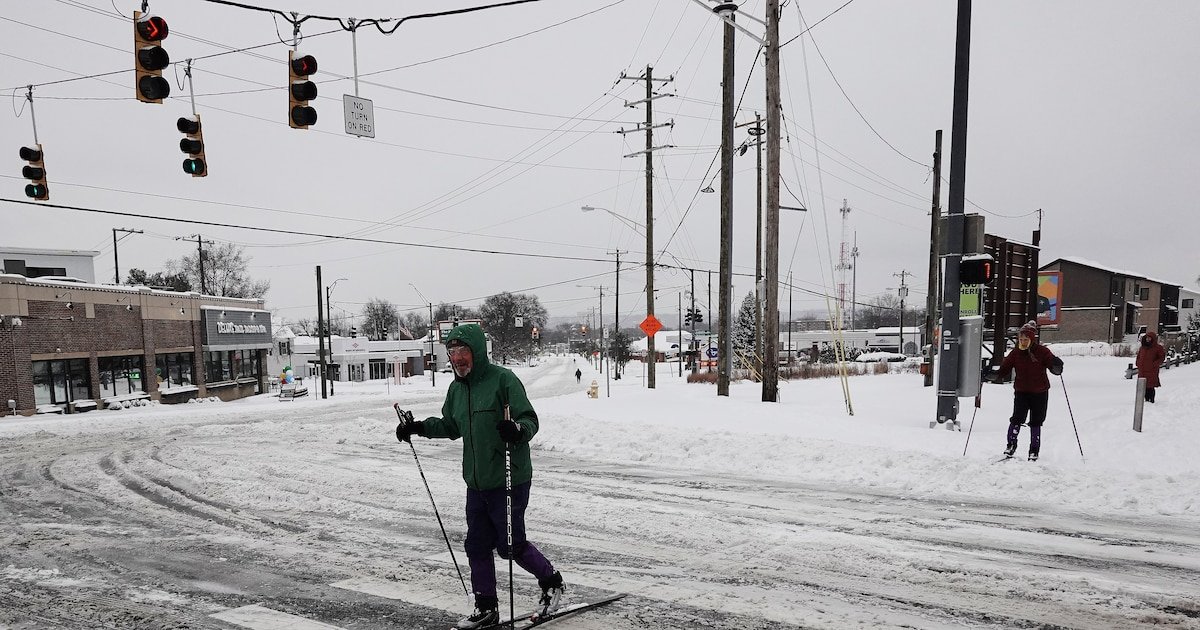
Una tormenta invernal de gran magnitud impactará a California y Nevada desde la noche del domingo 15 de febrero, con previsiones oficiales que anticipan acumulados de nieve por encima de los 2 metros en zonas montañosas y vientos de hasta 160 kilómetros por hora. Este evento, informado por el National Weather Service (NWS), se mantendrá hasta la noche del miércoles 18 de febrero y afectará principalmente a la región de la Sierra Nevada y el área de Lake Tahoe, donde las autoridades prevén complicaciones para la movilidad y los servicios esenciales.
De acuerdo con el NWS, la advertencia de tormenta invernal entrará en vigor el domingo por la noche, con previsión de acumulaciones de nieve de entre 90 y 240 centímetros en altitudes superiores a 1.800 metros. Los vientos serán intensos, con ráfagas que podrían superar los 160 kilómetros por hora en áreas elevadas, lo que aumentará el riesgo de caída de árboles y cortes de energía. El Weather Prediction Center de la NOAA coincide en que este será uno de los episodios más severos de la temporada para el oeste de Estados Unidos.
Las tormentas invernales intensas son recurrentes en la Sierra Nevada durante los meses de enero y febrero, pero la magnitud prevista para este episodio ha llevado a que las autoridades estatales y federales activen protocolos de emergencia. En temporadas anteriores, eventos similares han ocasionado cierres prolongados en rutas como la Interestatal 80 y la autopista 50, así como afectaciones en el acceso a servicios básicos en comunidades de montaña, según datos oficiales del NWS.
El NWS ha informado que la tormenta invernal se iniciará durante la noche del domingo 15 de febrero y se prolongará al menos hasta la noche del miércoles 18 de febrero. Durante este lapso, se esperan las mayores acumulaciones de nieve y los vientos más intensos en la Sierra Nevada, el área de Lake Tahoe y condados aledaños en California y Nevada.
El NWS Hanford especificó que la advertencia abarca parques nacionales como Yosemite, Sequoia y Kings Canyon, así como regiones del norte como Shasta y Plumas. Las primeras horas del lunes marcarán el inicio de las condiciones más severas, con incrementos progresivos en la intensidad del viento y la caída de nieve.

Según el NWS Hanford, la Sierra Nevada central y sur recibirá acumulaciones de nieve de 90 a 150 centímetros entre los 1.800 y 2.400 metros de altitud, con máximos que podrán superar los 210 centímetros en los puntos más elevados. Las cotas medias, a partir de 1.200 metros, podrían registrar entre 30 y 60 centímetros de nieve.
El NWS Sacramento estima que los condados de Shasta, Plumas y el parque nacional Lassen podrían recibir entre 30 y 60 centímetros de nieve en altitudes bajas, y hasta 240 centímetros en las cumbres. El NWS Reno proyecta en el área de Mono e Inyo acumulados de entre 40 y 120 centímetros, con ráfagas de viento superiores a 160 kilómetros por hora en las crestas.
El NWS Las Vegas ha advertido también sobre acumulaciones superiores a 60 centímetros en las laderas orientales de la Sierra y las White Mountains, y acumulados de entre 25 y 40 centímetros en cotas medias. Algunas zonas bajas, incluyendo valles del norte de California, podrían experimentar nevadas menores, pero suficientes para dificultar el tránsito regional.
El pronóstico oficial del NWS anticipa que los principales corredores de montaña, vitales para el transporte regional y el acceso a áreas recreativas, se verán afectados por la intensidad de la tormenta. Se prevé que los desplazamientos serán muy difíciles o imposibles durante los momentos de mayor acumulación de nieve y viento.
La Interestatal 80 y la autopista 50, rutas clave para la comunicación entre el oeste y el este de California y Nevada, podrían cerrar de manera intermitente o mantener controles de cadenas obligatorias para vehículos. El NWS Reno subrayó que habrá riesgo de visibilidad nula y posibles cierres prolongados por acumulación de nieve y caída de árboles o tendido eléctrico.
El Weather Prediction Center de la NOAA incluyó a gran parte de la región occidental de Estados Unidos en su mapa de riesgos para la semana, con especial énfasis en California y Nevada debido a la magnitud del evento.

La Oficina de Servicios de Emergencia de California (Cal OES) ha activado planes de contingencia para coordinar la respuesta ante incidentes derivados de la tormenta invernal. Entre las medidas previstas se encuentran el despliegue de maquinaria pesada para despejar carreteras, el refuerzo de cuadrillas eléctricas y la instalación de centros de información para residentes y viajeros.
El NWS mantiene contacto permanente con los gobiernos estatales y locales para actualizar las alertas y difundir recomendaciones. El organismo recordó que “las condiciones meteorológicas pueden cambiar con rapidez y los pronósticos de nevadas extremas suelen ajustarse conforme se acerca el evento”. El monitoreo de la tormenta se realiza con herramientas satelitales y modelos predictivos actualizados.
El NWS recomienda evitar desplazamientos no esenciales durante el periodo de la tormenta. Para quienes deban viajar, la institución sugiere llevar cadenas para neumáticos, mantas, agua, alimentos no perecederos, linternas y baterías de repuesto. El organismo advirtió que “las personas que deban viajar por motivos inaplazables deben considerar la posibilidad de quedar varadas por varias horas”.
Los residentes en zonas de montaña han sido instados a prepararse para posibles cortes de energía y dificultades de acceso. La acumulación de nieve sobre techos, automóviles y caminos incrementa los riesgos estructurales y de movilidad. El NWS Hanford y el NWS Sacramento reiteran la importancia de seguir las actualizaciones oficiales que se difundirán a través de los canales gubernamentales.

El invierno de 2023 registró tormentas invernales de características similares en la Sierra Nevada, con acumulados altos y efectos sobre el transporte y la vida de las comunidades de montaña. Según la NOAA, la nieve extrema en la Sierra tiene un impacto directo en el abastecimiento de agua de California, ya que el deshielo primaveral alimenta los embalses estatales.
El área de Lake Tahoe y las estaciones de esquí de la Sierra suelen anticipar estas situaciones reforzando protocolos de seguridad. La intensidad prevista para este episodio se ubica en el rango superior de los registros recientes, lo que explica el nivel elevado de alerta y la movilización de recursos estatales y federales.
El NWS prevé que las nevadas intensas continuarán hasta la noche del miércoles 18 de febrero, aunque algunas áreas de montaña podrían registrar acumulaciones adicionales si persisten las condiciones atmosféricas. Las autoridades mantienen la recomendación de evitar traslados innecesarios y permanecer atentos a las indicaciones oficiales.
La situación será monitoreada de manera continua a través de los sitios web y canales de comunicación del NWS, la NOAA y las agencias estatales de emergencia, donde se actualizará la información sobre rutas, servicios y evolución meteorológica.
climate,extreme weather,snow,weather,winter storm










NEWYou can now listen to Fox News articles!
EXCLUSIVE: Activists and agitators opposed to enforcement of federal immigration laws have found a new, intrusive way to dox or leak personal and identifying information of ICE and CBP agents, the Department of Homeland Security exclusively told Fox News Digital Tuesday.
Immigration agents continue to face an escalating 8,000% increase in death threats and a 1,300% increase in assaults since President Donald Trump took office in January 2025, according to DHS.
An ICE agent living in Wake County, North Carolina, was doxxed in recent days, as evidenced by postcards sent to the officer’s neighbors with language suggesting they needed to be warned of his presence on their block.
«Beware, your neighbor is an ICE agent. Immigration enforcement lives next door,» the postcard said in billboard-style font festooned with a generic image of a federal agent and a mock-up of an ICE badge addressed to a resident in Raleigh.
DEMOCRATIC OFFICIALS, TIKTOKERS, LIBERALS TAKE THEIR ANTI-ICE RHETORIC TO THE NEXT LEVEL
Federal law enforcement agents detain a demonstrator during a raid in south Minneapolis. An Oklahoma man was charged with threatening to kill ICE agents, «MAGA Republicans» and politicians, the Justice Department said Wednesday. (Getty Images)
The message section of the postcard shared with Fox News Digital showed what appeared to be a still shot from CCTV footage depicting a Black federal immigration agent. DHS blurred the agent’s face, which was not blurred in the original mailing.
DHS Assistant Secretary Lauren Bis told Fox News Digital the doxxing only adds to threats because agents «risk their lives every single day to remove murderers, pedophiles, rapists, terrorists and gang members from American neighborhoods.»
Fox News Digital also noticed fine print on the doxxing postcard’s postage stamp indicating it was sent «presorted first-class,» a special subset of USPS business mail that requires the sender to mail at least 500 pieces, each weighing 3.5 ounces or less.
Presorted first-class also requires more than typical local «junk mail» granted presorted standard postage, which indicates at least 50 such letters or postcards.
That detail indicates that hundreds of such postcards were disseminated around the country.
THE FAR-LEFT NETWORK THAT HELPED PUT ALEX PRETTI IN HARM’S WAY, THEN MADE HIM A MARTYR
«Comparing ICE day-in and day-out to the Nazi Gestapo, the Secret Police and slave patrols has consequences,» Bis said Tuesday. «The men and women of ICE are fathers and mothers, sons and daughters. They get up every morning to try and make our communities safer.
«Like everyone else, they just want to go home to their families at night. The violence and dehumanization of these men and women who are simply enforcing the law must stop.»
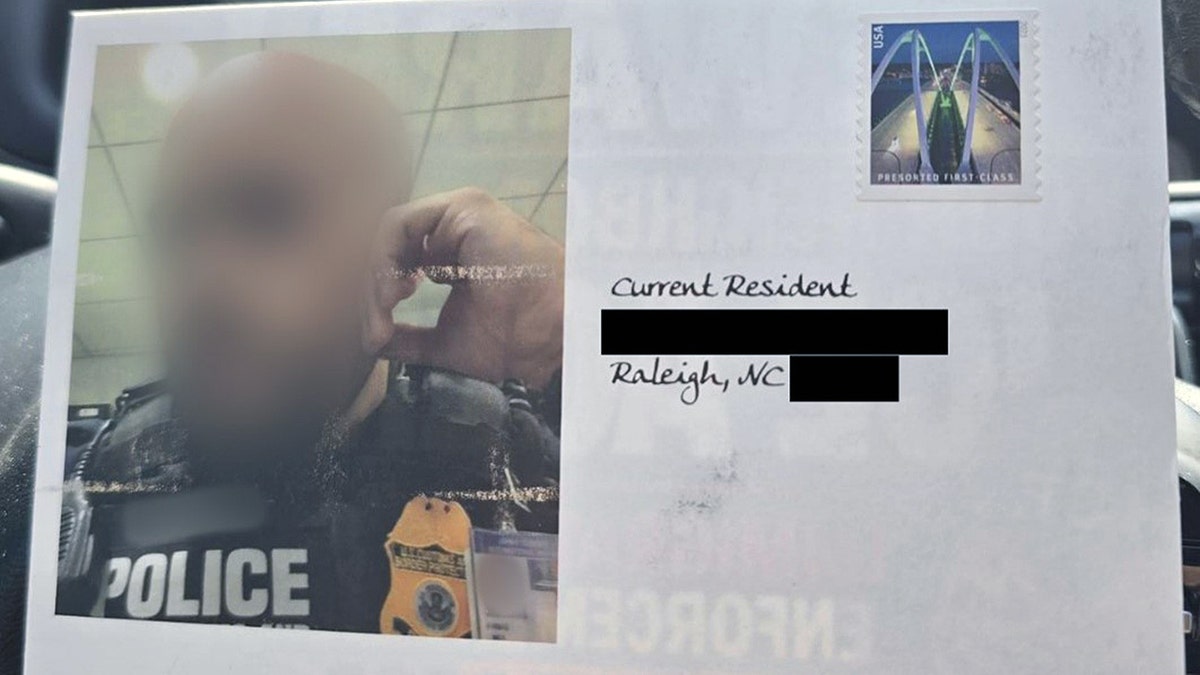
An ICE Agent was doxxed in this postcard sent to a North Carolina resident. (U.S. Immigration and Customs Enforcement)
The news comes weeks after identifying information for a reported 4,500 ICE and USBP employees was allegedly leaked by a DHS whistleblower to an Irish national who runs a website called the «ICE list.»
After the shooting death of Renee Good in January, Dominick Skinner received the massive dataset, The Daily Beast reported. The outlet quoted the website administrator as saying information about ICE agents’ identities flooded in.
Some people told him their neighbors were allegedly immigration agents, while hotel and bar staff reportedly sent him sticky notes, according to the outlet.

A postcard doxxing ICE agents was sent in North Carolina. (U.S. Immigration and Customs Enforcement)
CLICK HERE TO GET THE FOX NEWS APP
Skinner, who now lives in the Netherlands but has American family, told the outlet the website was not supposed to turn into a database but suggested it was a response to then-Secretary Kristi Noem warning people stateside they could be prosecuted for doxxing.
Anyone who receives similar postcards or paraphernalia doxxing DHS agents is advised to contact ICE’s tip line at (866) DHS-2-ICE or (866) 347-2423.
homeland security, police and law enforcement, immigration, enforcement, fox news investigates

Hace dos años, Megan Agnew, redactora de The Sunday Times en Londres, causó furor en internet con su perfil certero e inquietante sobre Hannah Neeleman, una exbailarina que se mudó a una granja en Utah con su esposo, tenía —en ese momento— ocho hijos y se convirtió en una exitosa influencer del movimiento tradwife. El artículo resultaba llamativo por la disonancia entre la historia que Neeleman y su esposo intentaban contar —la realización personal a través de la tradición— y los detalles que insinuaban una realidad más oscura.
“Daniel quería vivir en los grandes parajes salvajes del Oeste, así que lo hicieron; quería ser agricultor, así que lo son; le gustan las citas nocturnas una vez por semana, así que salen”, escribió Agnew. “No quería niñeras en la casa, así que no las hay”. Hannah bajó la voz al confesar que durante uno de sus partos, cuando Daniel no pudo estar presente, le pusieron una epidural. Habló con nostalgia de la carrera de danza que abandonó. Daniel le comentó a Agnew que, en ocasiones, Hannah se encuentra tan exhausta que pasa una semana en cama. En Instagram, algunos usuarios le pedían a Hannah que parpadeara dos veces si necesitaba ayuda.
Las memorias Adult Braces de Lindy West, que han generado amplio debate, evocan una inquietud similar, aunque con la política en sentido opuesto. West había sido una figura destacada del feminismo digital de los años 2000 y un símbolo de la positividad corporal; su anterior autobiografía, Shrill, fue adaptada a una serie de televisión. Pero detrás de esa fachada, revela su nuevo libro, sufría un dolor extraordinario, con relaciones distorsionadas tanto con su cuerpo como con su esposo. Aunque ahora afirma haber encontrado paz y empoderamiento tras acceder a la exigencia de su esposo de tener un matrimonio poliamoroso, su relato no resulta del todo convincente.

No sorprende que algunos interpreten “Adult Braces” como una crítica a las creencias progresistas de West. Un ensayo en The Atlantic sobre el libro llevaba el título “La muerte del feminismo millennial”. The Wall Street Journal declaró: “El progresismo destruye a sus siervos más leales”. Pero interpreté el libro de West como una advertencia sobre la autoanulación femenina. Esa tendencia suele celebrarse en sectores conservadores, pero siempre ha estado presente en la izquierda también. Prácticamente cualquier ideología puede utilizarse para hacer sentir a las mujeres que están fallando.
En textos anteriores, West presentaba su unión con el músico Ahamefule Oluo, conocido como Aham, como una especie de final de cuento de hadas feminista. “Mi boda fue perfecta, y estuve gorda todo el tiempo”, tituló una columna en The Guardian en 2015. Pero si la boda fue idílica, West revela en “Adult Braces” que el matrimonio no lo fue. Casi desde el principio, escribe, Aham condicionó la relación a que él pudiera acostarse con otras mujeres. Ella accedió porque no quería perderlo, pero sus aventuras la hicieron sentir una inseguridad insoportable.
Como West vivía en un entorno progresista donde la no monogamia es habitual, sentía una capa extra de vergüenza por no poder aceptar la vida sexual extramatrimonial de Aham. (“En ese momento, ser comprensiva con el poliamor parecía un imperativo creciente en los círculos progresistas”, escribe). Su angustia aumentaba por un fuerte rechazo hacia su propio cuerpo, que, según ella misma reconoce, contradice la imagen que había construido públicamente. “¿Crees que alguna vez sentí que merecía exigirle algo a un hombre?”, pregunta.

Para muchos lectores, incluido yo, parecía que Aham se aprovechó de la profunda falta de autoestima de West. Utilizó su ideología en su contra; West cuenta que Aham, que es mitad nigeriano, “creía que la monogamia era, en esencia, un sistema de propiedad”. No es la primera vez que un hombre de izquierda emplea el lenguaje de la liberación para traspasar los límites de una mujer. Tras la revolución sexual de los años 60 y 70, Ellen Willis describió cómo los hombres de la contracultura “intensificaron las ansiedades sexuales de las mujeres al equiparar la represión con el deseo de amor y compromiso, y exaltar el sexo sin emoción ni apego como el ideal”. Es un ideal que muchas mujeres sienten la presión de cumplir.
Pero West —o al menos la versión de West que narra “Adult Braces”— no logra ver la aparente manipulación de Aham. En cambio, el libro, que transcurre durante un largo viaje por carretera, describe cómo West aprende a aceptar el poliamor y llega a querer a Roya, la novia de Aham, con quien ahora mantiene una relación de tres.
Al final de “Adult Braces”, Aham, Roya y West viven juntos en una cabaña que perteneció a los padres de ella. Se declara feliz, aunque con un tono defensivo: “Si crees que me han lavado el cerebro y que en secreto soy infeliz, sinceramente no sé qué decirte”. Pero aunque se tome al pie de la letra su satisfacción, hay un trasfondo inquietante en la situación, uno que sería evidente si el libro fuera una novela y no unas memorias.

A lo largo de “Adult Braces”, West, que ahora tiene 44 años, hace referencia a sus dificultades con la adultez, en ocasiones con una voz deliberadamente infantil. “¡Solo soy un angelito suave que todos quieren!”, escribe en un momento. Describe cómo, al mudarse sola, le costaba cuidar de sí misma: “Cuando tienes 25 años, nadie se enoja si no limpias tu cuarto”. Le embargaron el auto porque olvidó pagar las cuotas. Cuando estaba deprimida, Aham tenía que obligarla a ducharse y a cepillarse el cabello. Se pregunta si es “una mujer que podría discernir sus propios sentimientos o un bebé que necesita que le digan cuándo divorciarse”. Uno de los mejores días del viaje, se tatúa la frase “good girl”.
West parece añorar el cuidado y la simplicidad de la infancia, y al final del libro encuentra una aproximación a eso. De niña, cuenta, quería vivir en la cabaña a tiempo completo, y ahora lo hace. Roya paga las cuentas puntualmente para que no caigan en agencias de cobro y mantiene relaciones con Aham cuando West no quiere. “Me encanta dormir en el cuarto de invitados y meterme en la cama con ellos en la mañana”, escribe West. “Me encanta cuando me arropan y me dejan jugar con el móvil hasta tarde”. Duerme con un gato de peluche. Es como si, sintiéndose lastimada, hubiera optado por retroceder a una etapa infantil.
Tras la publicación del artículo de Agnew, Neeleman grabó un video en el que decía estar sorprendida por haber sido retratada “como oprimida, con mi esposo como el culpable”, y aseguró que adora a su marido y la vida que llevan. Pienso que es posible creerle y también pensar que adaptó sus deseos a los de su esposo, como se les anima a hacer a muchas mujeres. Si West hizo lo mismo, no es culpa del feminismo millennial ni del liberalismo social. La política no siempre puede salvarnos de la necesidad autoaniquiladora de ser amadas, en los términos que sean.
Fuente: The New York Times
Lindy West,escritora,activista,feminismo,retrato,autora,Jenny Jimenez,Hachette,cultura


El Gobierno evalúa llevar a la Corte la pelea por la aplicación de la Ley de Financiamiento Universitario

PHOTOS: Anti-ICE agitators dox agents by sending warning postcards to neighbors

$LIBRA: Novelli tuvo un ida y vuelta frenético con un banco de Miami el día que se reunió con Milei y Davis en la Rosada

El día de furia de Brian Sarmiento en Gran Hermano: discusiones, acusaciones cruzadas y un sorpresivo beneficio

16 frases de Scaloni tras el 5-0 de Argentina: la presencia de Messi en el Mundial, por qué De Paul fue al banco y su error con Otamendi

Las memorias de una feminista millennial sobre el poliamor pueden ser desgarradoras

Máximo Kirchner salió al cruce de Milei y Macri tras el fallo por YPF a favor de la Argentina

La secretaria del piloto denunció que el amigo de Adorni la hostiga y la justicia dispuso medidas

El Gobierno cambia su propuesta de reforma: endurece penas para delitos comunes, pero no para los casos de corrupción

Nuevas críticas de Marcela Pagano contra los Milei: “Karina es la que gobierna”, aseguró

 POLITICA3 días ago
El Gobierno cambia su propuesta de reforma: endurece penas para delitos comunes, pero no para los casos de corrupción
- POLITICA2 días ago
Nuevas críticas de Marcela Pagano contra los Milei: “Karina es la que gobierna”, aseguró
- POLITICA20 horas ago
Dos jubiladas que le habrían prestado dinero a Manuel Adorni negaron conocerlo