INTERNACIONAL
Education experts warn Mamdani plan could gut NYC gifted programs, hurt low-income students


NEWYou can now listen to Fox News articles!
Socialist New York City Mayor Zohran Mamdani has outlined plans to scale back the city’s Gifted and Talented program, prompting some education experts to warn that doing so could deprive high-achieving students, particularly those from low-income families, of critical academic opportunities.
Recent media reports indicate that Mamdani, who took office in January, intends to end the city’s Gifted and Talented program for kindergarten students and delay entry until third grade, a move critics argue would amount to a major weakening of accelerated learning options in the nation’s largest school district.
The plan is drawing sharp criticism from Defending Education, a national education watchdog group that previously fought, and won, a years-long legal battle to preserve New York’s gifted programs after it was argued that the admissions system had discriminatory effects and reinforced racial inequities in education.
«The Court of Appeals rightly concluded that the role of the judiciary is not to make education policy,» Sarah Parshall Perry, vice president and legal fellow at Defending Education, told Fox News Digital, adding that the program complied with state education law and equal protection requirements.
GOT A SCOOP ON CAMPUS? SEND US A TIP HERE
New York City Mayor Zohran Mamdani plans to end the city’s Gifted and Talented program for kindergarten students and delay entry until third grade. (Adam Gray/Bloomberg via Getty Images)
But Perry warned that Mamdani’s policy agenda could undo what the courts upheld.
«As we suspected he might, newly minted democratic socialist mayor Zohran Mamdani — himself, a product of expensive private schools — has pledged to shut down the gifted and talented program, despite the fact that it has helped countless students from humble backgrounds achieve their full academic potential,» Perry told Fox News Digital.
«Depriving kids of much-needed advanced learning opportunities is not only foolhardy, but it’s also the height of hypocrisy coming from someone who was born into affluence and attended costly private schools. Apparently, Mamdani believes only the privileged should have access to various educational opportunities.»
‘FULL-BLOWN BATTLE’ BREWING IN DEM PARTY AS MAMDANI-STYLE CANDIDATES RISE IN KEY RACES

Mamdani has argued that early gifted testing contributes to inequities in the school system, though critics counter that dismantling selective programs does little to improve outcomes for struggling students while actively harming high performers.
Paul Runko, senior director of strategic initiatives for K-12 programs at Defending Education, echoed Perry’s concerns, emphasizing the impact such changes could have on working-class families.
«On behalf of parents who simply want the best possible education for their children, Defending Education spent years in court fighting to preserve New York City’s gifted and talented programs against efforts to use the courts to inject race into every aspect of the school system,» Runko said.
CLICK HERE TO DOWNLOAD THE FOX NEWS APP
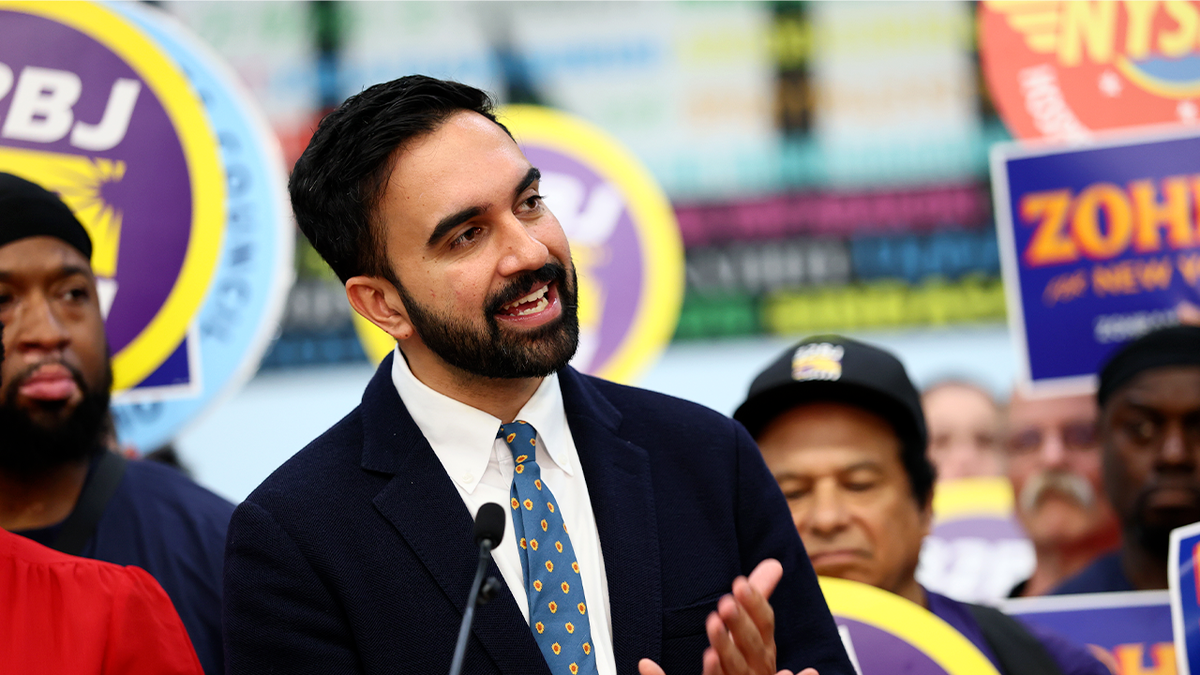
New York City Mayor Zohran Mamdani was elected in November 2025 and sworn in as the city’s first socialist mayor on Jan. 1, 2026. (Michael M. Santiago/Getty Images)
«Those efforts may succeed if Mayor Zohran Mamdani moves forward with eliminating these accelerated learning opportunities,» he warned. «Students, particularly those from lower-income families who benefit from NYC’s gifted and talented programs, deserve opportunities for academic excellence, not a one-size-fits-all approach that could weaken learning for all students.»
Mamdani’s office pushed back on Defending Education’s characterization, telling Fox News Digital that the administration opposes testing five-year-olds for gifted and talented programs but is not eliminating advanced learning opportunities across all grade levels.
Mamdani’s office said the focus is instead on reshaping the public school system to provide «rigorous» instruction for all students, rather than separating children at an early age.
Mamdani faced heated criticism from his opponents in the mayoral race regarding his plans to change the program, as well as from the Washington Post editorial board in October.
«Who could have guessed that Zohran Mamdani (D), the leading candidate to become the next New York mayor, would provoke a firestorm by announcing this week that he intends to phase out the city’s early elementary school programs for gifted students in the name of equity? Parents of bright children want access to schooling that meets their needs?» The Post wrote. «Shocking.»
zohran mamdani,politics,education,campus radicals












INTERNACIONAL
El bloqueo iraní del estrecho de Ormuz provocó una escasez mundial de fertilizantes y amenaza los precios de los alimentos

Agricultores de todo el mundo resienten la presión de la guerra con Irán. Los precios de la gasolina se han disparado y los suministros de fertilizantes escasean debido al cierre casi absoluto del estrecho de Ormuz por parte de Teherán en respuesta a los bombardeos de Estados Unidos e Israel.
La escasez de fertilizantes representa un nuevo peligro al sustento de los agricultores en países en vías desarrollo, el cual ya se ve afectado por el aumento de las temperaturas del planeta y los erráticos sistemas meteorológicos, y podría elevar el precio de los alimentos para las personas de todo el mundo.
Los agricultores más pobres en el hemisferio norte dependen de la importación de fertilizantes desde el Golfo Pérsico, y la escasez coincide con el inicio de la temporada de siembra, señaló Carl Skau, subdirector ejecutivo del Programa Mundial de Alimentos.
“En el peor de los casos, esto significa cosechas más pequeñas y la pérdida de cosechas durante la próxima temporada. En el mejor de los casos, el costo más alto de los insumos se trasladará al precio de los alimentos el próximo año”.
Baldev Singh, un agricultor de arroz en Punjab, India, asegura que los pequeños productores —la mayor parte de los agricultores del país— podrían no sobrevivir si el gobierno no puede subsidiar los fertilizantes una vez que la demanda alcance su punto máximo en junio.

“Ahora mismo, estamos a la espera y conservamos la esperanza”, expresó el hombre de 55 años de edad.
La guerra frena el suministro de nutrientes vitales
Irán está limitando seriamente los envíos a través del estrecho de Ormuz, una vía por la que normalmente pasa alrededor de una quinta parte del petróleo comercializado a nivel mundial y casi una tercera parte del comercio global de fertilizantes.
El nitrógeno y el fosfato —dos nutrientes principales para los fertilizantes— corren un riesgo inmediato debido al bloqueo.
Los suministros de nitrógeno, incluida la urea –el fertilizante más comercializado, que ayuda a las plantas a crecer y aumenta los rendimientos–, son los más afectados debido al retraso de los envíos y al drástico aumento de los precios del gas natural licuado, un ingrediente esencial.
El conflicto ha restringido cerca del 30% del comercio mundial de urea, indicó Chris Lawson, de CRU Group, una consultora de materias primas con sede en Londres.
Algunos países ya enfrentan una escasez crítica, afirmó Raj Patel, economista de sistemas alimentarios de la Universidad de Texas. Por ejemplo, Etiopía obtiene más del 90% de su fertilizante nitrogenado del Golfo Pérsico a través de Yibuti, una ruta de suministro que ya enfrentaba presión incluso antes del inicio de la guerra el mes pasado.
“Ya estamos en temporada de siembra”, afirmó Patel. “Y no hay fertilizante”.

Los suministros de fosfato, que favorecen el desarrollo de las raíces, también enfrentan una enorme presión. Arabia Saudí produce alrededor de una quinta parte del fertilizante fosfatado del mundo, y la región exporta más del 40% del azufre a nivel mundial, un ingrediente clave y subproducto del refinado de petróleo y gas, explicó Lawson.
Incluso después de que la guerra llegue a su fin, los productores del Golfo necesitarían de claras garantías de seguridad antes de reanudar los envíos a través del estrecho, además de que es casi un hecho que el costo de los seguros aumentará, indicó Owen Gooch, analista de Argus Consulting Services.
En India, el gobierno ha priorizado los suministros de urea para uso interno y proporciona a los fabricantes de fertilizantes alrededor del 70% de sus necesidades de gas natural. Algunas plantas aún operan por debajo de su capacidad, dando como resultado una menor producción.
“El sistema alimentario es frágil y depende de cadenas estables de suministro de fertilizantes para garantizar que los agricultores puedan producir los alimentos de los que depende el mundo”, declaró Hanna Opsahl-Ben Ammar, de Yara International, una de las mayores empresas de fertilizantes del mundo.
La escasez golpea en un momento crítico
El fertilizante se suele aplicar justo antes o en el momento de la siembra, por lo que los cultivos se pierden de etapas clave de crecimiento y los rendimientos pueden caer cuando las entregas se retrasan, incluso si los suministros mejoran más adelante.
El impacto ya se resiente en Estados Unidos y Europa, donde la principal temporada de siembra ya está en marcha. Además, se tiene previsto que afecte a la primera temporada de siembra en gran parte de Asia en los próximos meses.
“Nuestros cultivos necesitan de nitrógeno ahora —cuanto antes, mejor— para que puedan arrancar bien, lo que les ayuda a establecerse y a acumular reservas para la cosecha a finales de este verano”, explicó Dirk Peters, un ingeniero agrónomo que dirige una granja a las afueras de Berlín.

Los precios de los fertilizantes están por debajo de los picos que se registraron al inicio de la invasión rusa a Ucrania, pero los precios de los granos eran más altos entonces, lo que ayudó a los agricultores a absorber los costos, señaló Joseph Glauber, del Instituto Internacional de Investigación sobre Políticas Alimentarias. Los precios de los cereales son más bajos actualmente, lo que significa que hay menos margen y los agricultores podrían verse obligados a cambiar a cultivos que requieran de menos fertilizante —como la soya en Estados Unidos— o aplicar menos fertilizante, reduciendo el rendimiento. Un menor rendimiento puede traducirse en precios más elevados para los consumidores.
Es probable que otras naciones no compensen el faltante. China, el mayor productor mundial de fertilizantes nitrogenados y fosfatados, ha dado prioridad al suministro interno, y los envíos de urea probablemente no se reanuden sino hasta mayo, dijo Lawson. Las plantas en Rusia, otro importante productor, ya operan cerca de su capacidad máxima, agregó.
Las naciones en vías de desarrollo son vulnerables
Las interrupciones ya se sienten en toda África, donde muchos agricultores dependen de los fertilizantes importados desde Oriente Medio y Rusia.
Las fuertes lluvias en el oriente del continente le han dejado a los agricultores cerca de una semana de clima seco para preparar los campos y aplicar el fertilizante, dijo Stephen Muchiri, un agricultor de maíz en Kenia y director ejecutivo de Eastern African Farmers Federation, un organismo que representa a 25 millones de pequeños productores.

La falta de fertilizantes y el aumento en los precios son un duro golpe para los agricultores, quienes se ven obligados a usar menos fertilizante, lo que provoca un menor rendimiento. Incluso el más breve retraso puede reducir la cosecha del maíz en alrededor de un 4% en una temporada, afirmó Patel, citando investigaciones en Zambia.
Los gobiernos pueden intervenir con subsidios, promoviendo la producción nacional y controlando las exportaciones.
India ya aplicó un subsidio los fertilizantes para aliviar la presión sobre los agricultores, pero esos subsidios dejan menos dinero para inversiones agrícolas a largo plazo. Este año ha presupuestado 12.700 millones de dólares únicamente para los subsidios a la urea, según el Institute for Energy Economics and Financial Analysis.
Los esfuerzos a nivel nacional por producir urea han incrementado la dependencia de India en el gas importado, y el uso excesivo de urea ha causado daños en el suelo, dijo Purva Jain, de IEEFA, quien respalda el uso de fertilizantes orgánicos.
Una menor dependencia en los fertilizantes importados podría proteger a los agricultores y consumidores de las oscilaciones en los precios de la energía y de los impactos climáticos, señaló Oliver Oliveros, coordinador ejecutivo de la Agroecology Coalition.
“Esto podría ser un punto de inflexión”, afirmó.
(AP)
Agricultural Markets,Asia / Pacific,Food & Drink,LEGACY: Financials (TRBC),Financials (TRBC level 1)

Un total de 26 mil sociedades serán disueltas en Panamá este 31 de marzo de 2026, como parte del proceso de depuración del registro corporativo que impulsa el Gobierno.
Esta nueva fase se suma a las 180,346 personas jurídicas ya disueltas, correspondientes al universo del año 2016, en un esfuerzo que busca ordenar la información empresarial, reforzar la trazabilidad de las estructuras legales y fortalecer la transparencia del sistema financiero panameño.
Con esta jornada, el país alcanzará un avance acumulado del 71% en la depuración de ese grupo histórico, lo que convierte esta etapa en una de las más relevantes dentro del proceso de saneamiento corporativo.
La medida no se limita a borrar registros, sino que apunta a eliminar sociedades que permanecían suspendidas, inactivas o con inconsistencias, afectando la calidad de los datos oficiales y debilitando los mecanismos de control institucional.
Una persona jurídica es una entidad creada conforme a la ley, como una sociedad anónima, fundación o empresa, que puede tener derechos y obligaciones propias, distintas a las de sus dueños o representantes.

En la práctica, este tipo de estructura permite firmar contratos, abrir cuentas, declarar impuestos, adquirir bienes y desarrollar actividades económicas. Precisamente por ese peso legal y operativo, el Estado exige que estas entidades mantengan su información actualizada y cumplan con los requisitos establecidos por la normativa panameña.
El problema aparece cuando esas estructuras dejan de operar o incumplen con obligaciones básicas, pero siguen figurando en los registros oficiales. Eso genera un sistema más opaco, menos confiable y más vulnerable al uso indebido de sociedades para fines distintos a los declarados.
Por eso, la depuración busca dejar activo únicamente el universo de entidades que realmente cumplen con sus deberes, permitiendo una mejor supervisión, una base de datos más limpia y un entorno corporativo más coherente.
Para avanzar en ese objetivo, el gobierno implementó mejoras en las plataformas tecnológicas que conectan al Registro Público, la Superintendencia de Sujetos No Financieros y la Dirección General de Ingresos.

Entre los cambios figura la incorporación de un identificador único de persona jurídica y la conformación del Registro Único de Contribuyentes (RUC) a partir de los datos registrales, lo que permite una verificación cruzada de la información y fortalece la confiabilidad del sistema.
Ese cruce automático de datos tiene un valor práctico importante. Permite detectar duplicidades, inconsistencias y errores en los registros, pero también mejora la capacidad del Estado para rastrear el estatus real de cada sociedad.
En otras palabras, ya no se trata solo de revisar expedientes de forma aislada, sino de tener un ecosistema institucional donde las entidades puedan validar información entre sí y actuar con más rapidez frente a irregularidades.
Las autoridades también han advertido que la depuración no termina con esta fase. De manera adicional, ya se encuentra en curso el análisis de las personas jurídicas correspondientes al período 2017–2025, y como parte de ese proceso se prevé que al 30 de abril de 2026 se realice la disolución de aproximadamente 100 mil sociedades ya homologadas, dentro de una etapa previamente planificada y ejecutada de forma ordenada.
Como parte de la estrategia de transparencia, el Registro Público habilitó en su portal institucional un espacio con listados descargables en Excel de personas jurídicas candidatas a disolución y de sociedades que serán disueltas. egistro

Además, el sitio incluye información para corregir inconsistencias en el RUC, resolver duplicidades y comprender las implicaciones de una suspensión o una disolución. Con eso, las autoridades buscan que los propios contribuyentes revisen el estado de sus sociedades antes de que avancen las próximas etapas.
En paralelo, la DGI recordó que toda persona jurídica debe mantener un único RUC activo. Si existen duplicidades u otras inconsistencias, el trámite debe hacerse de forma presencial en la sección correspondiente de la sede central, con documentos como poder notariado, memorial de solicitud, copia de identificación del representante legal y certificación vigente del Registro Público o copia del pacto social.
Las autoridades también exhortaron a verificar si la persona jurídica presenta otras causales de suspensión en el Registro Público, como problemas con el agente residente, los registros contables, los beneficiarios finales o el incumplimiento de otras leyes. Si esas observaciones siguen activas, la sociedad puede ser objeto de disolución en próximas fases.
La importancia de este proceso va más allá del papeleo. Panamá lleva años bajo presión internacional para demostrar que su sistema corporativo cuenta con controles reales y que no sirve como refugio para estructuras opacas.
Por eso, depurar sociedades suspendidas, homologar datos y mejorar la interoperabilidad institucional no es un ejercicio decorativo: es una pieza clave en la estrategia del país para mejorar su posición ante evaluaciones técnicas internacionales y avanzar hacia la salida de listas fiscales.
H-1B,visa,Estados Unidos,inmigración,costos,requisitos,abaco,documentos,legal,economía

NEWYou can now listen to Fox News articles!
House Republicans’ gambit to end the ongoing Department of Homeland Security shutdown survived a critical hurdle on Friday evening, teeing up a chamber-wide vote that will put the chamber on a collision course with the Senate.
The House Rules Committee advanced a two-month DHS stopgap measure after House GOP leadership vigorously rejected a Senate-passed deal earlier on Friday with House Speaker Mike Johnson, R-La., dubbing the funding bill a «joke.» President Donald Trump also criticized the Senate bill in an interview with Fox News.
The Senate deal provided full-year appropriations for DHS minus funding for Immigration and Customs Enforcement (ICE), halting roughly $5.5 billion for the agency. It also largely nixed funds for U.S. Customs and Border Protection (CBP), save for just over $11 billion for operations and support.
«The Senate’s proposal is nothing more than unconditional surrender masquerading as a solution, and the House will not bend itself into submission by acquiescing,» House Rules Committee Chairwoman Rep. Virginia Foxx, R-N.C., said Friday.
Chairwoman Rep. Virginia Foxx, R-N.C., arrives for the House Rules Committee hearing in the Capitol on Wednesday, April 9, 2025. (Bill Clark/CQ-Roll Call, Inc via Getty Images)
DHS SHUTDOWN BREAKTHROUGH COMES AT COST FOR REPUBLICANS AS FUNDING FIGHTS NEARS END
House Republicans are expected to have the votes to pass the 60-day CR in a chamber-wide vote, though Johnson will be able to spare just one GOP defection in a party-line scenario. A vote on final passage could occur as early as Friday evening.
House Democrats are expected to line up against the short-term funding patch, citing their opposition to funding Trump’s immigration enforcement efforts absent myriad reforms. House Minority Leader Hakeem Jeffries, D-N.Y., is also pinning the blame on House Republicans for prolonging the 42-day government shutdown.
«This could end and should end today,» Jeffries said Friday. «There is a bipartisan bill that has been sent over from the Senate that would reopen the non-controversial parts of the Department of Homeland Security, make sure TSA agents are paid and end the chaos at airports throughout the nation.»
Any CR from the House stands no chance of surviving in the Senate, given that Senate Democrats blocked numerous attempts by Republicans throughout the shutdown to pass short-term, two-week extensions.
Lawmakers in the upper chamber have also left Washington, D.C., with some going abroad on congressional delegations.
Senate Minority Leader Chuck Schumer, D-N.Y., immediately came out against Johnson’s plan and said that Democrats and Republicans reached unanimous agreement to advance the DHS funding bill while carving out immigration enforcement funding.

House Speaker Mike Johnson, Representative Lisa McClain, and Representative Steve Scalise, left to right, during a news conference at the U.S. Capitol in Washington, DC, US, on Thursday, Oct. 16, 2025. (Al Drago/Bloomberg via Getty Images)
‘SHIP HAS SAILED’: THIS IS WHAT DEMS WON’T GET IN DHS DEAL AFTER SHUNNING GOP
«A 60-day CR that locks in the status-quo is dead on arrival in the Senate, and Republicans know it,» Schumer said.
And a GOP aide told Fox News Digital that «the easiest way to end this shutdown is for the House to pass the Senate-passed bill.»
«We know the Democrats are not going to support a CR, in fact the Senate tried to pass CRs for the last 40 days and Dems have blocked Every. Single. One,» they said.
When asked about its uncertain prospects in the Senate, House GOP leadership Conference Chair Lisa McClain, R-Mich., told Fox News Digital that she hoped the upper chamber returned to Washington next week.
«I will tell you what can’t pass is what is what the Senate sent us at three in the morning,» McClain said. «We will not go back to the Biden administration, where we had wide open borders.»
Senate Republicans are already determined to front-load funding for ICE and CBP for the next several years in a new budget reconciliation bill, just as they did last year when Congress passed President Donald Trump’s «big, beautiful bill.»
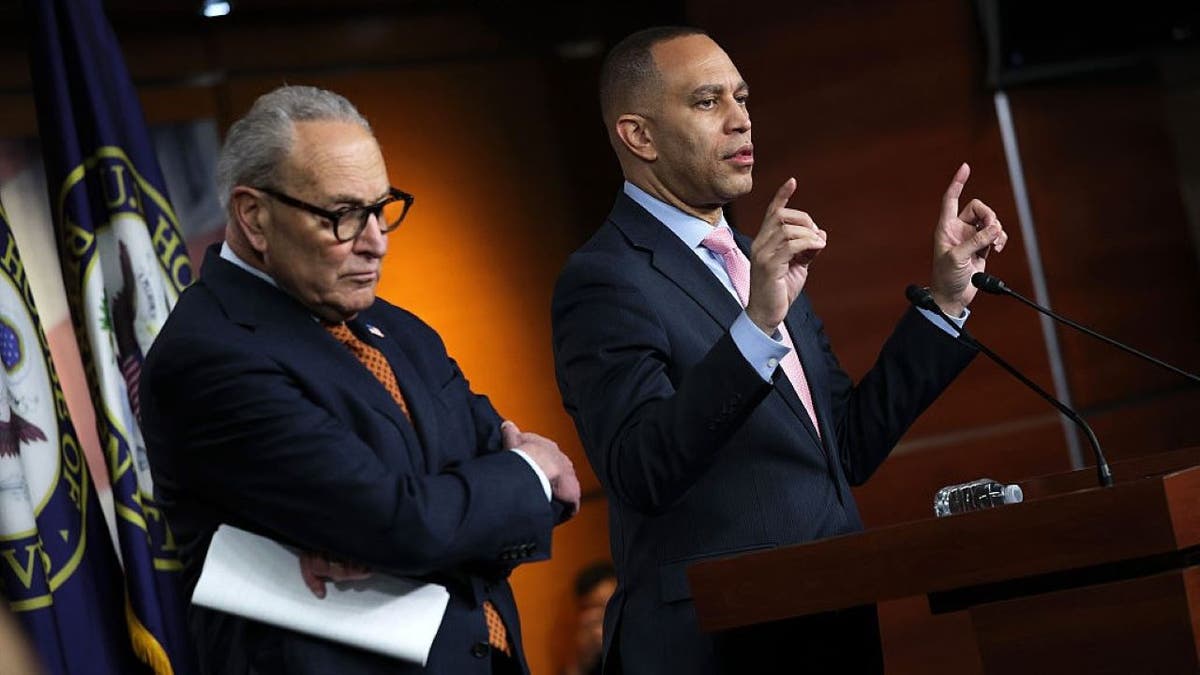
Senate Majority Leader John Thune, R-S.D., didn’t believe that Senate Minority Leader Chuck Schumer, D-N.Y., nor House Minority Leader Hakeem Jeffries, D-N.Y., would be honest brokers in the upcoming DHS negotiations. (Photo by Kevin Dietsch/Getty Images)
CLICK HERE TO DOWNLOAD THE FOX NEWS APP
However, McClain insisted Friday that funding for ICE and Border Patrol must be handled through the appropriations process, rather than receiving additional money through another party-line megabill.
«Border deserves a guarantee. I’m not willing to roll the dice on ‘Oh, let’s try and do it in reconciliation.’ No. Let’s do what the American people sent us here in the ‘24 election to do, and that’s make sure our people are safe and our borders remain closed.»
homeland security, government shutdown, republicans, immigration, democrats

La Selección Argentina venció 2-1 a Mauritania en el primer amistoso de la fecha FIFA en La Bombonera

Caputo alerta: «Si el BCRA no comprara u$s100 millones por día, el dólar llegaría a $1.100»

El bloqueo iraní del estrecho de Ormuz provocó una escasez mundial de fertilizantes y amenaza los precios de los alimentos

La arrogancia casi mata a PlayStation hace 20 años. Con la subida de precio de PS5, parece que Sony ya se ha olvidado

Los argumentos de la Justicia de EE.UU. para fallar a favor de la Argentina en el caso YPF

Con una frase, Milei volvió a mostrar su apoyo a Adorni en el cierre de una semana complicada

¡VERGÜENZA NACIONAL! Humillan a la Policía Federal mandándolos a un merendero antes de darles un aumento de sueldo digno

24 DE MARZO: La historia completa que el relato omitió sobre el golpe de 1976 y el Juicio a las Juntas

El Presidente y Karina Milei volvieron a respaldar a Manuel Adorni tras la polémica por sus vuelos

Manuel Adorni: “Mi patrimonio lo construí antes de entrar al Gobierno, no tengo nada que esconder”

 POLITICA2 días ago
¡VERGÜENZA NACIONAL! Humillan a la Policía Federal mandándolos a un merendero antes de darles un aumento de sueldo digno
- POLITICA2 días ago
El Presidente y Karina Milei volvieron a respaldar a Manuel Adorni tras la polémica por sus vuelos
- POLITICA3 días ago
Manuel Adorni: “Mi patrimonio lo construí antes de entrar al Gobierno, no tengo nada que esconder”