INTERNACIONAL
EE.UU. quiere deportar a Uganda a un migrante convertido en símbolo de la lucha contra la política migratoria

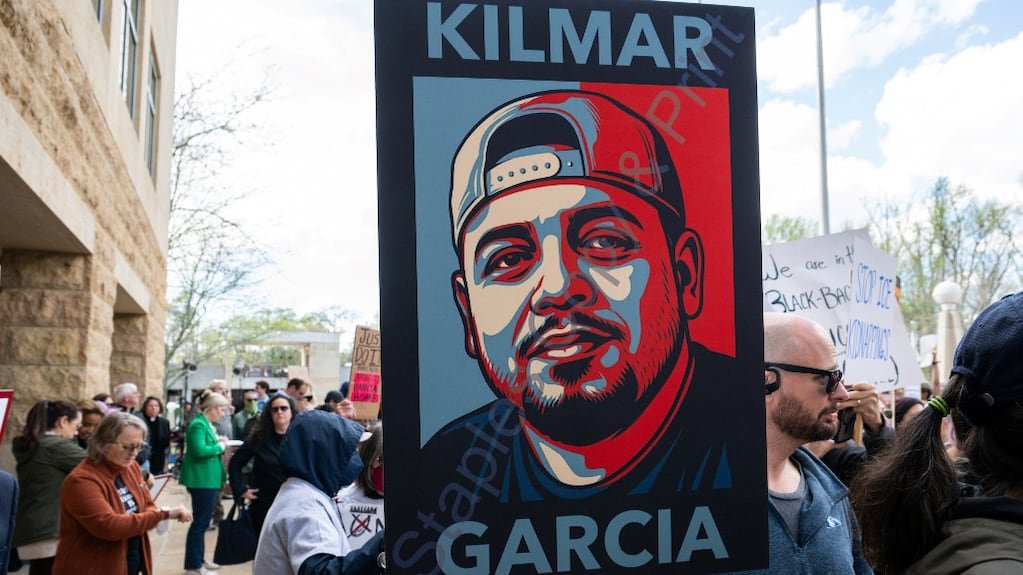
Un ciudadano salvadoreño que se volvió un símbolo de la guerra del presidente Donald Trump contra la inmigración ilegal fue detenido nuevamente este lunes por las autoridades estadounidenses, que ahora buscan deportarlo a Uganda.
Kilmar Ábrego García, que había sido expulsado por error y alojado en una cárcel de alta seguridad de su país de origen, fue detenido en su cita de registro con los funcionarios de inmigración en Baltimore, en el estado de Maryland, días después de ser liberado de una prisión en Tennessee.
Leé también: Florida abrirá un “depósito de deportación” de inmigrantes en una prisión abandonada
El Departamento de Seguridad Nacional informó que Ábrego García, de 30 años, “será procesado para su deportación a Uganda”. Lo acusan de tráfico de personas y de pertenecer a pandillas criminales.
El hombre había sido deportado por un “error administrativo”, según el gobierno, a una prisión de alta seguridad en su país de origen y luego regresó a EE.UU. solo para ser detenido por segunda vez.
Ábrego García estaba en Estados Unidos bajo estatus legal protegido desde 2019, cuando un juez dictaminó que no debía ser deportado porque podría sufrir daños en El Salvador.
La Casa Blanca lo describió como “un criminal, extranjero ilegal, golpeador de mujeres” y miembro de la pandilla MS-13. Ábrego García niega haber cometido cualquier delito.
Qué dijeron los abogados del inmigrante salvadoreño
Simon Sandoval-Moshenberg, uno de los abogados del migrante salvadoreño, dijo que su cliente fue detenido cuando se presentó a una cita en la oficina de Servicios de Inmigración y Aduanas (ICE, policía migratoria).
“¡Vergüenza, vergüenza!”, corearon decenas manifestantes, algunos de los cuales sostenían carteles que decían “Liberen a Kilmar”, reunidos fuera de la oficina migratoria. Kilmar Ábrego Garcíafue detenido este lunes tras asistir a una cita migratoria (Foto: REUTERS/Elizabeth Frantz)
“El aviso (entregado a Ábrego García) indicaba que el motivo (de la cita) era una entrevista”, dijo Sandoval-Moshenberg.
“Claramente eso era falso. No había necesidad de que lo detuviera el ICE”, sostuvo el abogado.
Leé también: El gobierno de Trump informó que arrestó a más de 300.000 migrantes en los primeros seis meses del año
“Ya estaba bajo monitoreo electrónico del Servicio de Alguaciles de Estados Unidos y básicamente bajo arresto domiciliario”, dijo. “La única razón por la que han decidido detenerlo es para castigarlo”, enfatizó.
“Sigan pidiendo libertad”
Antes de ingresar a los servicios de inmigración en Baltimore, el salvadoreño dijo: “Pase lo que pase hoy (…) prométanme que continuarán rezando, peleando, resistiendo y amando. No solo por mí sino por todo el mundo. Sigan pidiendo libertad”.
El sábado, los abogados de Ábrego García adelantaron que el gobierno estadounidense pretendía deportarlo a Uganda, que firmó un convenio con Washington para recibir inmigrantes indocumentados que el país norteamericano considera indeseables.
En un escrito, los defensores solicitaron a los tribunales que desestimaran el caso. Argumentaron que se trata de un intento vengativo de castigarlo por impugnar su deportación inicial a El Salvador.
El intento de deportar a García a la lejana Uganda, en África Oriental, añade un giro dramático a este caso que se ha convertido en emblemático del combate de Trump contra la inmigración ilegal y, según sus críticos, de sus violaciones a las leyes.
El viernes García Ábrego, casado con una estadounidense, fue liberado por orden judicial y se le permitió regresar a su hogar en Maryland en espera de juicio por cargos de tráfico de personas.
El jueves, cuando se hizo evidente que Ábrego García sería liberado al día siguiente, funcionarios del gobierno le ofrecieron declararse culpable de los cargos de tráfico de personas a cambio de ser deportado a Costa Rica, informaron sus abogados, pero rechazó la oferta.
“El gobierno respondió de inmediato con indignación a la liberación del señor Ábrego”, afirmaron.
A los pocos minutos de su liberación de la prisión preventiva, un representante del ICE informó a su abogado que el gobierno tenía la intención de deportarlo a Uganda y allí fue que le ordenó presentarse en la oficina local de esa agencia en Baltimore el lunes por la mañana, añadieron.
(Con información de AFP)
inmigracion, Donald Trump












INTERNACIONAL
Jewish communities on high alert as Passover begins amid rising security threats nationwide

NEWYou can now listen to Fox News articles!
As Jewish families across the United States celebrate Passover, an intensifying threat environment is shaping how communities approach the holiday and beyond. Tensions tied to the war with Iran, attacks against Jews and Jewish institutions have led to concerns over the community’s safety and security.
From Miami to New York, officials are responding to what they describe as a sustained and evolving threat landscape. At a pre-Passover security strategy briefing at the NYPD, Police Commissioner Jessica Tisch told Jewish community leaders, «It is clear that we will be in a heightened state of alert for the foreseeable future,» a warning that comes as policymakers and security experts point to a widening gap between the level of threat facing Jewish communities and the federal resources available to protect them.
Despite security fears, funding for houses of worship in the United States remains below what experts say is needed to meet the current threat, even as antisemitic incidents continue to rise.
NYC BOOSTS PATROLS AMID ‘HEIGHTENED THREAT ENVIRONMENT,’ AFTER GUNMAN RAMS TRUCK INTO MICHIGAN SYNAGOGUE
Aftermath of the attack on Temple Israel synagogue in West Bloomfield, Michigan. An attacker rammed into the building on Thursday, March 12, 2026. (Temple Israel)
According to data from the Federal Bureau of Investigation, anti-Jewish hate crimes have consistently accounted for the largest share of religion-based crime incidents in the United States in recent years.
The gap between risk and resources has become a central concern for those working directly with affected communities. Scott Feltman, Preventative Security Analyst and Executive Vice President at One Israel Fund, said no religious group should have to choose between remaining open and ensuring safety.
«No one should feel unsafe walking into a synagogue, church, mosque or temple in New Jersey or anywhere in America,» Rep. Josh Gottheimer, D-N., told Fox News Digital, who in recent weeks has been advocating for an increase in federal Nonprofit Security Grant Program (NSGP) funding to $1 billion in fiscal year 2027, a proposal currently under consideration in Congress.
Recent attacks underscore the urgency. In Michigan, a man rammed a vehicle into a synagogue in West Bloomfield and opened fire while more than 100 preschool children were inside. In California, two Jewish men speaking Hebrew were reportedly assaulted in a restaurant while the attacker shouted antisemitic slurs.
Jesse Arm, Manhattan Institute vice president for external affairs, told Fox News Digital, «What the latest attempted massacre made clear — when an Islamist from Dearborn via Lebanon tried to ram an explosive-laden truck into a synagogue preschool in my hometown of West Bloomfield, Michigan — is that security works. The presence of trained, armed guards helped save the lives of 140 American children and their caretakers.
SIGN UP FOR ANTISEMITISM EXPOSED NEWSLETTER
«But the broader lesson for the Jewish community is that safety cannot be outsourced entirely to the federal government or to any administration. It requires a cultural shift: normalizing lawful firearm ownership and training, hardening facilities at every level, and investing in the day schools, camps and identity-forming institutions that build communities confident and rooted enough to defend themselves.»
Arm had praise for the administration in its fight against antisemitism: «President Trump has been a godsend for American Jewry. His administration has been unambiguous in its commitment to Jewish safety — naming antisemitism as a serious national security threat, taking a hard line on campus radicalism and prioritizing the kind of border security and counter-jihadist vigilance that the previous administration routinely soft-pedaled. American Jews should recognize that and be immensely grateful for it.»
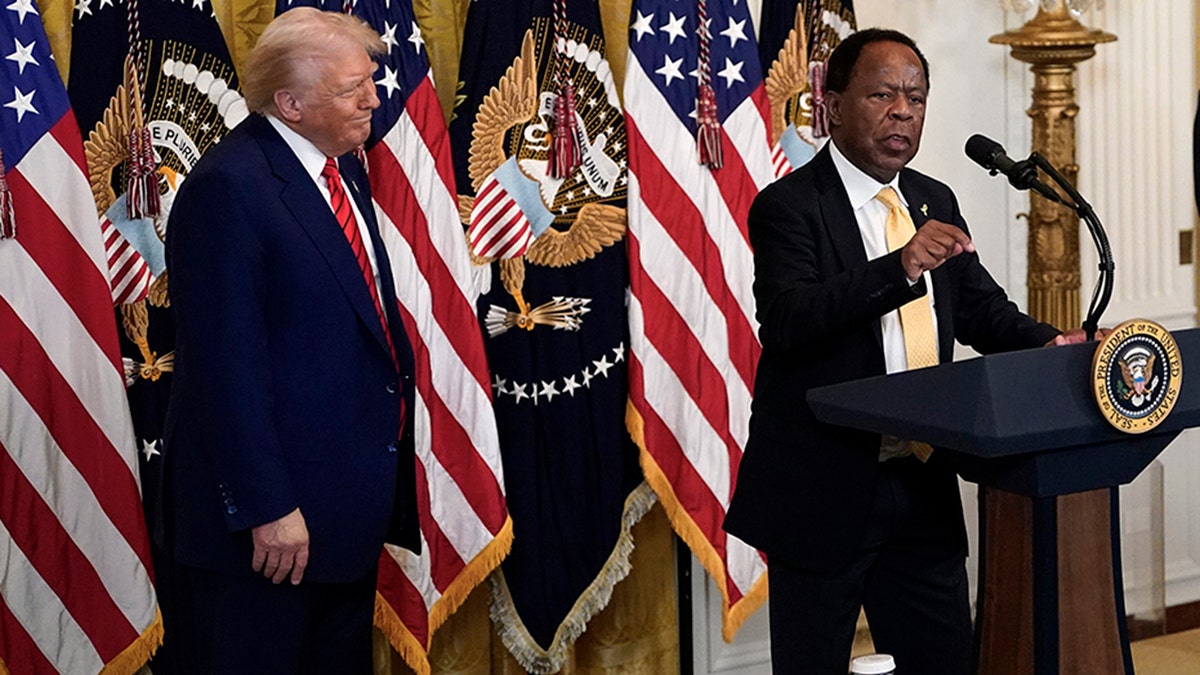
Leo Terrell, chairman of the DOJ Task Force to Combat Antisemitism speaks during a reception for Black History Month in the East Room of the White House on Feb. 20, 2026. (Pool via AP)
JEWISH SUMMER CAMPS RAMPING UP SECURITY MEASURES AMID RISING ANTISEMITISM — AND PARENTS ARE FOOTING THE BILL
The federal Nonprofit Security Grant Program, administered by FEMA, currently allows at-risk institutions to apply for up to $200,000 per location. In practice, however, many organizations receive less than that amount, often after delays that can stretch one to three years, and demand for the program has exceeded available funding in recent years, with applications far outpacing the number of grants awarded, according to federal data.
Security experts add that the delay between identifying a threat and receiving funding can leave institutions without the protections recommended by security professionals during periods of heightened risk.
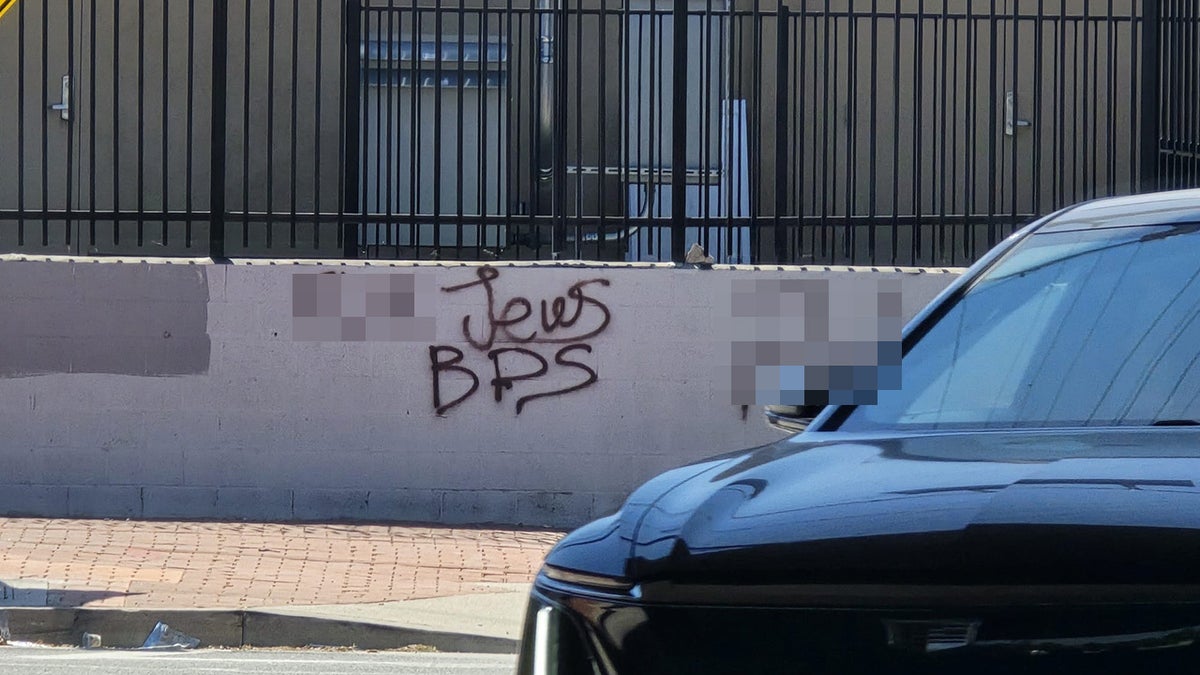
Antisemitic graffiti defaces Israeli-American Council HQ (The Israeli-American Council (IAC) national headquarters in Los Angeles)
To address those gaps, experts recommend layered security measures including trained personnel, reinforced entry points, surveillance systems, controlled access and emergency response training, which they estimate require between $400,000 and $500,000 in funding per location, roughly double the current federal cap. Security experts say both the funding level and the timeline for distribution have become central concerns as incidents continue to rise.
CLICK HERE TO DOWNLOAD THE FOX NEWS APP
Steven Ingber, CEO of the Jewish Federation of Detroit, said much of the financial burden for security continues to fall on the Jewish community itself rather than being fully addressed through government support.
As that debate continues, officials are urging institutions to remain vigilant and maintain close coordination with local law enforcement, particularly during periods of increased tension tied to global events.
Fox News Digital reached out to FEMA for comment but did not receive a response.
anti semitism, us, israel, new york city, terrorism, faith personal freedoms

John Thune blasts Democrats’ DHS shutdown demands
Senate Majority Leader John Thune accuses Democrats of playing politics with the DHS shutdown, explaining how the Senate passed a bill to fund most agencies. He also addresses President Donald Trump’s remarks on rising gas prices.
NEWYou can now listen to Fox News articles!
The House is primed to end the record-breaking Homeland Security shutdown, but Republicans are still fuming over a «s— sandwich» deal from the Senate.
The Senate again advanced its partial Department of Homeland Security (DHS) funding bill on Thursday after being derailed by a House GOP rebellion. The frustration among House Republicans hasn’t gone anywhere, however, with lawmakers railing against House Speaker Mike Johnson, R-La., during a members-only call on Thursday afternoon.
The simmering anger comes after Johnson made a swift reversal, spurred by President Donald Trump, and backed Senate Majority Leader John Thune’s, R-S.D., on a two-track approach Wednesday that would pass the Senate’s partial DHS bill while funding Immigration and Customs Enforcement (ICE) and Customs and Border Protection (CBP) in a forthcoming party-line reconciliation package.
A senior GOP aide told Fox News Digital that House Republicans wanted to see action from their Senate counterparts on reconciliation and were frustrated with how the upper chamber handled the DHS deal, which the source said amounted to a «s— sandwich.»
House Speaker Mike Johnson, R-La., and Senate Majority Leader John Thune, R-S.D., endorsed a two-track approach to end the shutdown on Wednesday, but Johnson is facing criticism from his conference over his previous rejection of the plan. (Getty Images)
BEHIND THE SCENES OF CONGRESS’ ELEVENTH-HOUR RUSH TO FUND THE DHS
House Republicans are incensed at the Senate plan, which carves out funding for ICE and CBP. Still, the bill is expected to pass with bipartisan support.
«People are mad at Johnson,» one source familiar with the call told Fox News.
But for now, House Republicans are in no hurry to return to Washington, D.C., to end the 48-day shutdown. The House is next scheduled to return on April 14. A source familiar with the call told Fox News Digital that leadership is not expected to ask members to return to Washington early to vote on the measure.
A source told Fox News that there was «a lot of frustration» with the situation.
«Does feel like whiplash,» the source said.
«Not happy,» another person familiar with the call said. «Not willing to vote for anything that defunds law enforcement absent tangible action from Senate. Thune should call Senate back today.»
Some House Republicans argued the chamber must fund the president’s immigration and border security efforts through reconciliation before considering the Senate bill — despite the budget reconciliation process expected to take months.
This viewpoint was expressed by a broad group within the conference, not just the conservative flank, according to a source familiar with the call.
If Johnson proceeded first with the Senate bill, conservative opposition could determine how he brings the legislation to the floor. In the event he lacks conference-wide support for the upper chamber’s partial DHS bill, he could be forced to call up the Senate bill under suspension of House rules.
That strategy — requiring a two-thirds majority to pass — risks upsetting conservatives if the DHS bill relies on Democratic votes to clear the chamber.
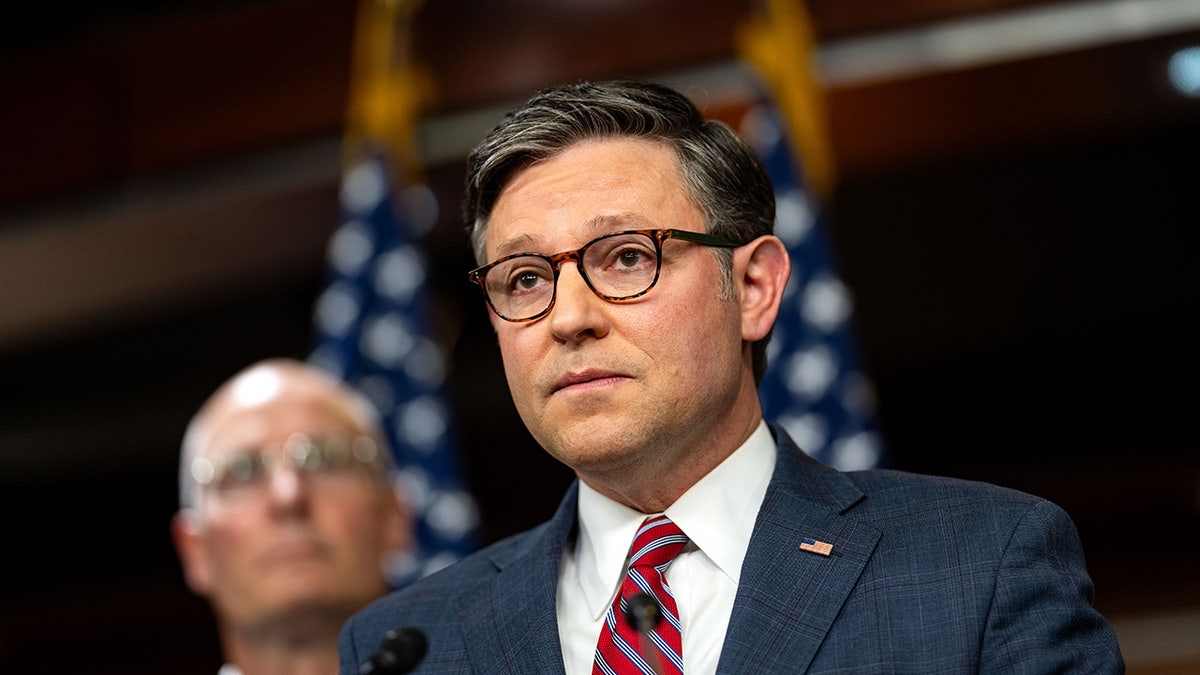
Some House members voiced frustration with House Speaker Mike Johnson’s, R-La., DHS shutdown strategy during a private call Thursday, sources told Fox News Digital. (Getty Images)
HOUSE REPUBLICANS PASS RIVAL DHS PLAN, SETTING UP SENATE FIGHT AS SHUTDOWN SET TO BECOME LONGEST IN HISTORY
House lawmakers could have used the same fast-track process Thursday to pass the DHS bill that was done in the Senate, but opted not to.
Thune said Thursday that he didn’t know when the House would move on the bill, but noted that when they did, Republicans would begin a sprint to complete the budget reconciliation process.
«My assumption is, at some point, hopefully they’ll move it,» Thune said. «And you know, [with] the understanding that we’re going to come behind it with the Recon bill. I mean, I think this whole — where we are is just a regrettable place.»
Senate Minority Leader Chuck Schumer’s, D-N.Y., demanded that the House GOP immediately take up the bill and accused them of now owning «the longest government shutdown in history.»
«The deep division and dysfunction among House Republicans is needlessly extending the DHS shutdown and hurting federal workers who are missing another paycheck,» Schumer said. «The Senate did its work twice to fund key parts of DHS without funding the lawlessness of ICE and Border Patrol.»

President Donald Trump moved to pay all DHS employees who were reporting to work without pay during the shutdown, despite Senate Minority Leader Chuck Schumer, D-N.Y., vowing that Republicans would get the blame for a prolonged funding lapse. (Anna Moneymaker/Getty Images; Elizabeth Frantz/Reuters)
CLICK HERE TO DOWNLOAD THE FOX NEWS APP
But Trump has already teed up a counter, and plans to pay DHS employees through an executive order.
«Because the Democrats are fully and 100% committed to the Radical Left Policy of Open Borders and Zero Immigration Enforcement (which will hopefully cost them dearly in the Midterms!), allowing Murderers and Criminals of all types into our Country, totally unchecked and unvetted, I will soon sign an order to pay ALL of the incredible employees at the Department of Homeland Security,» Trump said on Truth Social.
mike johnson, politics, congress
INTERNACIONAL
El accidente de autobús en Quimistán deja catorce heridos durante Semana Santa en Honduras

Un accidente de tránsito registrado la mañana de este jueves 2 de abril sobre la carretera CA-4, en el municipio de Quimistán, departamento de Santa Bárbara, dejó al menos catorce personas heridas, según informaron autoridades municipales y medios locales. El hecho involucró a un autobús tipo “rapidito” que, de acuerdo con el alcalde de Quimistán, Rubén Darío Pacheco, perdió el control y terminó fuera de la vía, provocando el siniestro. Entre las personas lesionadas se encuentra el conductor del vehículo, aunque hasta el momento no se ha emitido un informe oficial sobre el estado de salud de todos los afectados.
De acuerdo con los reportes de los medios hondureños Hondudiario y La Tribuna, el accidente ocurrió en un tramo de la carretera caracterizado por curvas pronunciadas y vegetación densa a los costados. Personal de emergencia, incluidos miembros de la Policía Nacional, militares y bomberos, acudió al lugar para asistir a los heridos, quienes inicialmente recibieron atención en el sitio y posteriormente fueron trasladados a la clínica periférica de Quimistán. Sin embargo, la falta de ambulancias en el municipio complicó el traslado, por lo que fue necesario movilizar siete unidades provenientes de localidades vecinas para atender la emergencia y facilitar el traslado de los lesionados al Hospital Mario Catarino Rivas de San Pedro Sula, el centro asistencial más cercano y con capacidad para atención especializada.
Entre los heridos, se identificaron personas de diversas edades, incluidos menores y adultos mayores. La Tribuna publicó una lista preliminar de los lesionados, entre quienes figuran Josué Arita (9 años), Erick Roberto Padilla (14 años), Julia Jessenia Gómez (24 años), Melvin Diaz (40 años), Alba Luz Carbajal (62 años), José Roberto Padilla (59 años), Orlando Perdomo Granados (65 años, sargento del Cuerpo de Bomberos), Estiven Julián López (21 años), José Noé Rodríguez Lara (45 años), Geiny Xiomara Díaz Enríquez (50 años), Graciana Jamileth Castellanos (43 años) y Nelsa Gereli Arita (33 años), entre otros. La presencia de un menor de edad y de un miembro del Cuerpo de Bomberos entre los afectados resalta la gravedad y el impacto del hecho en la comunidad.

Hasta el cierre de los reportes, las autoridades no han confirmado las causas exactas del accidente. El alcalde Pacheco mencionó que el percance fue originado por un despiste del autobús, pero se mantienen abiertas las investigaciones a cargo de la Dirección Nacional de Vialidad y Transporte y la Policía Nacional. El estado de salud de los heridos no ha sido detallado por las autoridades médicas, aunque se sabe que algunos presentan lesiones de consideración que motivaron su referencia a un hospital de mayor capacidad.
Este accidente se suma a una serie de incidentes viales registrados en Honduras durante la Semana Santa de 2026. Según datos oficiales publicados en días recientes, el país ha experimentado un incremento en la cantidad de accidentes de tránsito durante este periodo vacacional, en comparación con años anteriores. Solo entre el sábado 28 de marzo y el miércoles 1 de abril, se reportaron más de 130 accidentes en diferentes puntos del territorio nacional, con un saldo de al menos 35 personas fallecidas y más de 180 lesionadas, de acuerdo con informes de la Dirección Nacional de Vialidad y Transporte. La mayoría de estos hechos se atribuyen a exceso de velocidad, distracción al volante y fallas mecánicas, aunque también se han documentado casos de conductores bajo efectos del alcohol.
Las autoridades hondureñas han intensificado los operativos de control vehicular y campañas de prevención durante la Semana Santa, desplegando retenes en carreteras principales y zonas turísticas. Pese a estos esfuerzos, los accidentes continúan siendo uno de los principales riesgos durante la temporada, afectando tanto a familias locales como a visitantes. Organizaciones civiles y cuerpos de socorro han reiterado el llamado a la conducción responsable y al respeto de las normas de tránsito para evitar nuevas tragedias en lo que resta del periodo vacacional.

El accidente en Quimistán evidencia los retos persistentes en Honduras, como la falta de ambulancias en municipios rurales, sumada a la saturación de hospitales en zonas urbanas, que complica la atención oportuna a las víctimas y pone en evidencia la necesidad de fortalecer los sistemas de prevención y respuesta ante este tipo de emergencias.

Jewish communities on high alert as Passover begins amid rising security threats nationwide

En medio de las turbulencias, Milei reunirá al Gabinete para mostrar unidad y darle impulso a la gestión

El peso argentino rompe con años de caídas y se convierte en refugio durante la crisis global

Los gobernadores kirchneristas y los mensajes al PJ dominaron el acto por Malvinas

¿Separados? El famoso conductor que festejó su cumpleaños sin su novia y evidenció su crisis: “Una nueva vuelta al sol desde el saber elegir”, reveló Marcelo Tinelli

Otro gol del Flaco Castillo para el puntero Fluminense

Dos jubiladas que le habrían prestado dinero a Manuel Adorni negaron conocerlo

Quiénes son las dos acreedoras del préstamo con el que Adorni compró su departamento en Caballito

El Gobierno reevalúa la estrategia de comunicación por el caso Adorni y mide el impacto en la imagen de Milei

Milei se pone al frente de la defensa de Adorni y lo suma a un acto por Malvinas en una nueva muestra de respaldo

 POLITICA3 días ago
Dos jubiladas que le habrían prestado dinero a Manuel Adorni negaron conocerlo
- POLITICA3 días ago
Quiénes son las dos acreedoras del préstamo con el que Adorni compró su departamento en Caballito
- POLITICA2 días ago
El Gobierno reevalúa la estrategia de comunicación por el caso Adorni y mide el impacto en la imagen de Milei