INTERNACIONAL
EEUU alertó sobre el riesgo de una “grave escalada” tras el ataque ruso a Kiev que alcanzó la sede del Gobierno

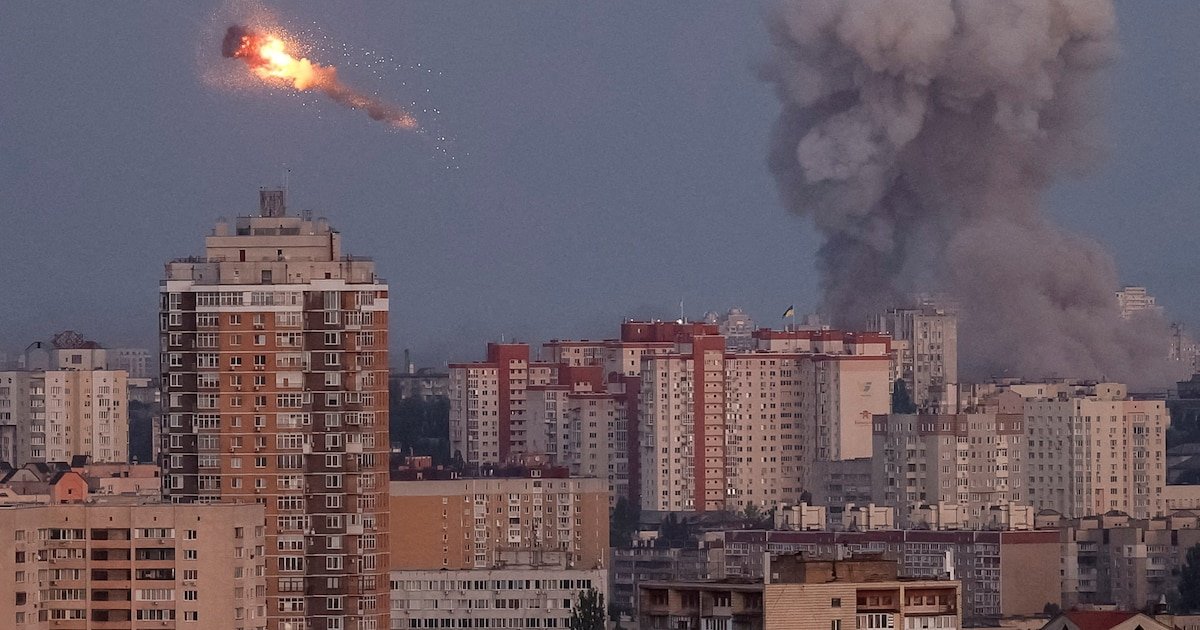
El asesor especial de Estados Unidos para Ucrania, Keith Kellogg, advirtió sobre la “escalada peligrosa” del conflicto tras el ataque sin precedentes ejecutado por Rusia este domingo en Kiev, donde por primera vez fue alcanzada la sede del Gobierno ucraniano, con un saldo de al menos dos muertos y más de una veintena de heridos.
Las primeras horas de este domingo estuvieron marcadas por una ofensiva nocturna contra la capital ucraniana y otras ciudades, en la que Rusia desplegó más de 800 drones suicidas y más de una docena de misiles de diversos tipos, en lo que fuentes militares ucranianas denominaron como el mayor ataque de este tipo desde el inicio de la guerra.
Los servicios de emergencia informaron que solo en Kiev murieron dos personas y al menos diecisiete sufrieron heridas, mientras que edificios gubernamentales y barrios residenciales registraron graves destrozos.

“El peligro en cualquier guerra es la escalada. Rusia parece estar intensificando la situación, con el mayor ataque de la guerra contra las oficinas del Gobierno de Ucrania en Kiev“, advirtió Kellogg, a través de su cuenta oficial en X.
Recordó haber estado con la primera ministra ucraniana, Yulia Sviridenko, en ese mismo edificio dos semanas antes.
En su mensaje, Kellogg planteó la posibilidad de que el conflicto pueda intensificarse aún más.
“Los acontecimientos pueden descontrolarse con acciones como estas”, dijo.
El enviado estadounidense lamentó que este bombardeo “no fue una señal de que Rusia quiera ponerle fin diplomáticamente”, en clara referencia a los llamados a la negociación que han circulado en foros internacionales en los últimos meses.

“Por eso, el presidente Trump está trabajando para detener esta guerra”, añadió.
Washington anunció tras el bombardeo la preparación de una nueva ronda de sanciones dirigidas a Moscú. El secretario del Tesoro estadounidense, Scott Bessent, reforzó este posicionamiento y afirmó la disposición de imponer medidas adicionales dirigidas no solo contra Rusia, sino también contra países que compren petróleo ruso, como parte de la estrategia para debilitar la economía del Kremlin. Entre los anuncios, Bessent recordó los aranceles del 50 por ciento impuestos en agosto a las importaciones de carbón ruso por parte de India.
La preocupación de Kellogg encuentra eco en las autoridades ucranianas. Para la primera ministra Yulia Sviridenko, la afectación directa al edificio gubernamental constituye un antes y un después en el conflicto.

“Por primera vez desde el inicio de la guerra a gran escala, Rusia dañó el edificio del Gobierno de Ucrania en Kiev. Solo esto ya representa una grave escalada,” escribió en sus redes sociales. El ministro de exteriores, Andrí Sibiga, coincidió en calificar la ofensiva como inédita por el número de drones empleados.
“El mayor cinismo es que estos brutales ataques ocurren justo cuando el presidente Trump hace todo lo posible por lograr la paz. Pero en lugar de corresponder a estos esfuerzos y aceptar una reunión de líderes, Putin rechaza la diplomacia y escala el terror”, denunció.
Fotografías compartidas por el Servicio Estatal de Emergencias de Ucrania mostraron los daños en el edificio gubernamental, con incendios en los pisos superiores y ventanas completamente destrozadas por las explosiones. La evacuación fue rápida y permitió evitar víctimas adicionales entre el personal.

Kellogg insistió en que el carácter masivo del ataque y el uso combinado de drones suicidas tipo Shahed, junto a misiles Iskander, produce un riesgo creciente de descontrol en el desarrollo del conflicto. La defensa antiaérea ucraniana derribó la mayoría de los dispositivos, pero no pudo evitar el impacto de 54 drones y nueve misiles en distintas zonas de Kiev y otras ciudades.
Las consecuencias no se limitaron a la capital. En Odesa, el bombardeo provocó al menos tres heridos y dañó edificios residenciales y comercios. En Krivói Rog y Dnipropetrovsk las explosiones alcanzaron instalaciones administrativas y empresas, dejando también heridos y daños en diversas infraestructuras urbanas.
Las respuestas oficiales a los mensajes de Kellogg giraron en torno a nuevas demandas de armamento y amplificación de la cooperación militar con Occidente.
“El enemigo cada día aterroriza y mata a nuestra gente en todo el país. El mundo debe reaccionar ante esta destrucción no solo con palabras, sino con acciones. Es necesario aumentar la presión de las sanciones,” alentó Sviridenko, quien también subrayó la necesidad de obtener más defensas antiaéreas.
(Con información de Europa Press y EFE)
Europe,Military Conflicts,Kyiv







NEWYou can now listen to Fox News articles!
Transportation Security Administration (TSA) workers are on the cusp of working without pay, and there is no backup plan in place to ensure they don’t miss a check.
During the longest government shutdown in history last year, the White House was able to shift around funding from the GOP’s «big, beautiful bill» to ensure that military service members were paid. But TSA workers won’t get the same treatment.
Over 60,000 TSA workers are set to receive partial paychecks this week for the work they did before funding expired earlier this month. They won’t get another paycheck until Congress can land on a deal to fund the agency.
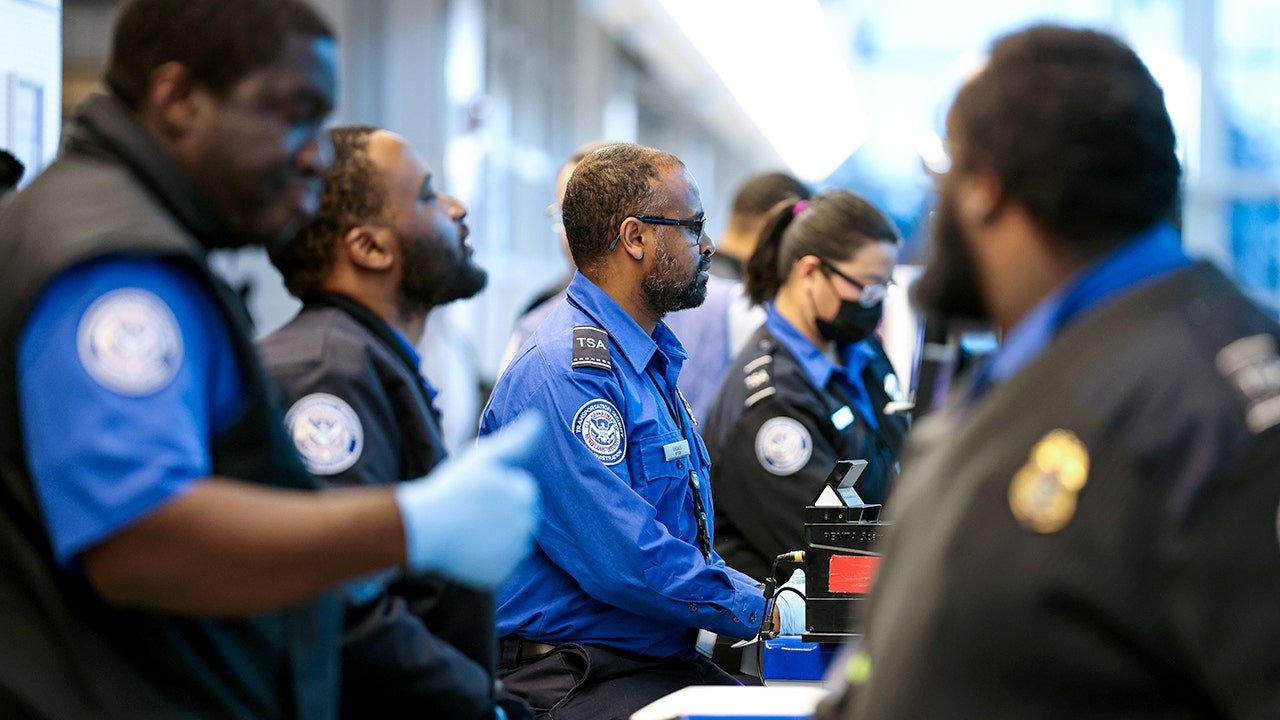
TSA agents scan luggage at Ronald Reagan Washington National Airport in Arlington, Va. (Valerie Plesch/Getty Images)
And the likelihood of that wrapping sooner rather than later is low.
Senate Majority Leader John Thune, R-S.D., said that if the Trump administration could «figure out a way to pay government employees, absolutely.»
«I mean, these are people who have jobs and have commitments and have families,» Thune said. «And, you know, it’s going to be really unfortunate if we get to a point where I hope we don’t, where people aren’t getting paid because the Democrats continue to insist on changes to things that are just not feasible or tenable.»
DHS SHUTDOWN EXPLAINED: WHO WORKS WITHOUT PAY, WHAT HAPPENS TO AIRPORTS AND DISASTER RESPONSE
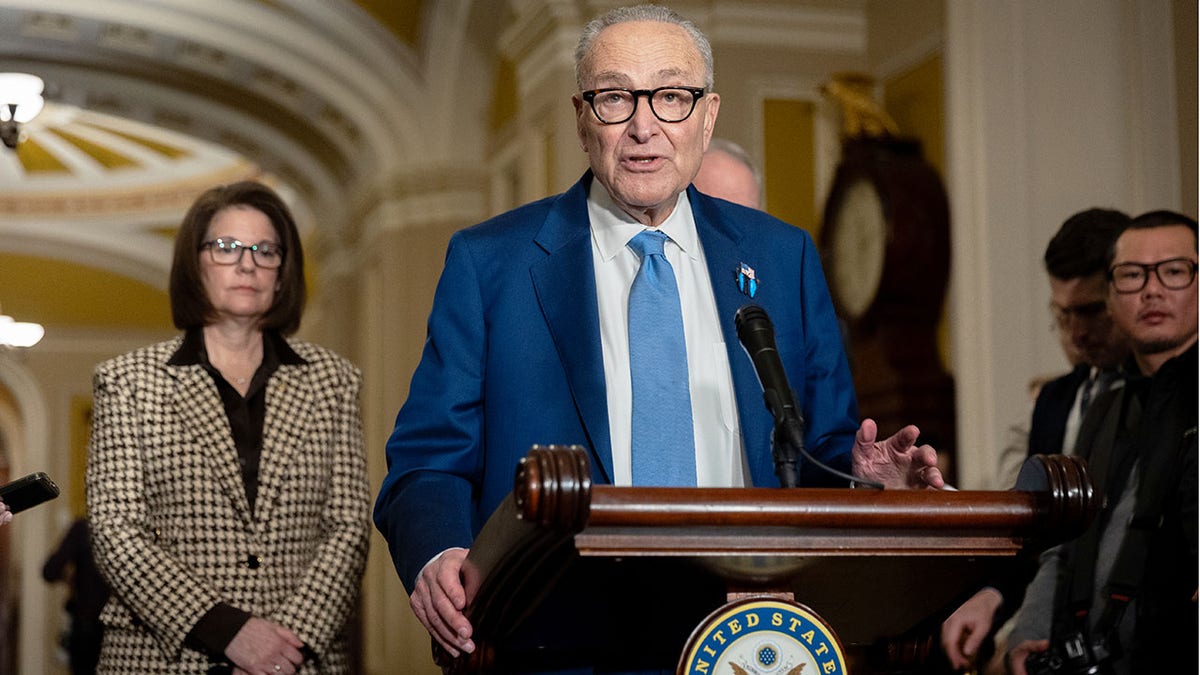
Senate Minority Leader Chuck Schumer, D-N.Y., and his caucus have not relented in their position as DHS enters its 14th day of being shut down. (Nathan Posner/Anadolu via Getty Images)
But a White House official told Fox News Digital in a statement that, like the 43-day shutdown, the Trump administration would be able to transfer funding «to cover certain employees at DHS that were funded by the bill — namely law enforcement and active-duty military such as USCG.»
«TSA has not been part of that, as they have a different funding stream from these other agencies,» the official said.
Republicans believe that a key difference maker in the shutdown could be longer lines at airports and flight cancellations start to stack up as workers go without pay and take time off. A similar scenario played out during the previous shutdown, when cancellations compounded day after day.
«When people start missing paychecks, and you start having disruptions in travel and that sort of thing, it’s going to get more and more painful,» Thune said. «So it’d be nice to fix this before and to avoid all that, but we’ve got to have a partner that actually wants to make a deal.»
DEMOCRATS DEMANDING ICE REFORMS LOSE AIRPORT ESCORTS IN SHUTDOWN THEY TRIGGERED

Senate Majority Leader John Thune, R-S.D., again tried to ram a full-year funding bill to reopen the Department of Homeland Security but was blocked by Senate Democrats for a second time. (Michael M. Santiago/Getty Images)
The White House and Senate Democrats, led by Senate Minority Leader Chuck Schumer, D-N.Y., have been at odds over finding a compromise deal to fund the Department of Homeland Security (DHS), with hopes for a quick resolution to the ongoing shutdown quickly fading this week.
Both sides have rejected back-and-forth offers over the last two weeks. Senate Democrats argued that, for now, whether the agency would be reopened and TSA workers get paid was in the White House and Republicans’ hands.
Senate Democrats portrayed negotiations as having totally flatlined and put the onus of further conversations on the Trump administration.
CLICK HERE TO DOWNLOAD THE FOX NEWS APP
«We told them what our priorities were, they answered with a very, very weak, limited response,» Sen. Patty Murray, D-Wash., said. «And we said, ‘No, this is what our requests were. We made a few changes,’ nothing back.»
When asked if she believed the White House was negotiating in good faith, Murray said, «Not yet.»
But Senate Republicans said that talks were happening on the side among members.
Sen. Katie Britt, R-Ala., hoped that she could convince enough Senate Democrats to come around and ensure that TSA agents, and others, wouldn’t go without pay for the foreseeable future.
«I am working on talking to people,» Britt said.
Related Article

politics,senate,government shutdown,donald trump,general
INTERNACIONAL
World leaders split over military action as US-Israel strike Iran in coordinated operation
NEWYou can now listen to Fox News articles!
World leaders reacted swiftly Saturday after the United States and Israel launched strikes on Iran, exposing a deep divide between governments backing the attack on Iran and those warning the attacks risk a wider regional war.
In a joint statement, Canada’s Prime Minister Mark Carney and Foreign Minister Anita Anand voiced firm support saying, «Canada supports the United States acting to prevent Iran from obtaining a nuclear weapon and to prevent its regime from further threatening international peace and security.» The statement described Iran as «the principal source of instability and terror throughout the Middle East» and stressed it «must never be allowed to obtain or develop nuclear weapons.»
Australian Prime Minister Anthony Albanese also endorsed the action, writing on X, «Australia stands with the brave people of Iran in their struggle against oppression.» He confirmed Australia supports «the United States acting to prevent Iran from obtaining a nuclear weapon,» while activating emergency consular measures and urging Australians to leave Iran if safe.
The United Kingdom said Iran «must never be allowed to develop a nuclear weapon.» U.K. Prime Minister Keir Starmer’s office said he was speaking with the leaders of France and Germany «as part of a series of calls with allies.»
A person holds an image of Iran’s Supreme Leader Ayatollah Ali Khamenei as Iranian demonstrators protest against the U.S.-Israeli strikes, in Tehran, Iran, Feb. 28, 2026. (Majid Asgaripour/WANA (West Asia News Agency) )
French President Emmanuel Macron warned, «The outbreak of war between the United States, Israel and Iran carries grave consequences for international peace and security.» He added, «The ongoing escalation is dangerous for all. It must stop,» and called for an urgent meeting of the United Nations Security Council.
European Union foreign policy chief Kaja Kallas described developments as «perilous,» saying Iran’s «ballistic missile and nuclear programmes… pose a serious threat to global security,» while emphasizing that «Protection of civilians and international humanitarian law is a priority.»
Spain openly rejected the strikes. Socialist Prime Minister Pedro Sánchez said, «We reject the unilateral military action by the United States and Israel, which represents an escalation and contributes to a more uncertain and hostile international order.»
Meanwhile, Gulf states responded to reported Iranian missile activity.
Saudi Arabia’s Foreign Ministry said, «The Kingdom of Saudi Arabia condemns and denounces in strongest terms the blatant Iranian aggression and the flagrant violation of the sovereignty of the UAE, Bahrain, Qatar, Kuwait, and Jordan.» It affirmed «its full solidarity with and unwavering support for the brotherly countries» and warned of «grave consequences resulting from the continued violation of states’ sovereignty and the principles of international law.»
The United Arab Emirates’ Ministry of Defense said the country «was subjected to a blatant attack involving Iranian ballistic missiles,» adding that air defense systems «successfully intercepted a number of missiles.» Authorities said falling debris in a residential area caused «one civilian death of an asian nationality» and material damage.
The ministry called the attack «a dangerous escalation and a cowardly act that threatens the safety of civilians and undermines stability,» and stated the UAE «reserves its full right to respond.»
UN’S ATOMIC AGENCY’S IRAN POLICY GETS MIXED REVIEWS FROM EXPERTS AFTER US-ISRAEL ‘OBLITERATE’ NUCLEAR SITES
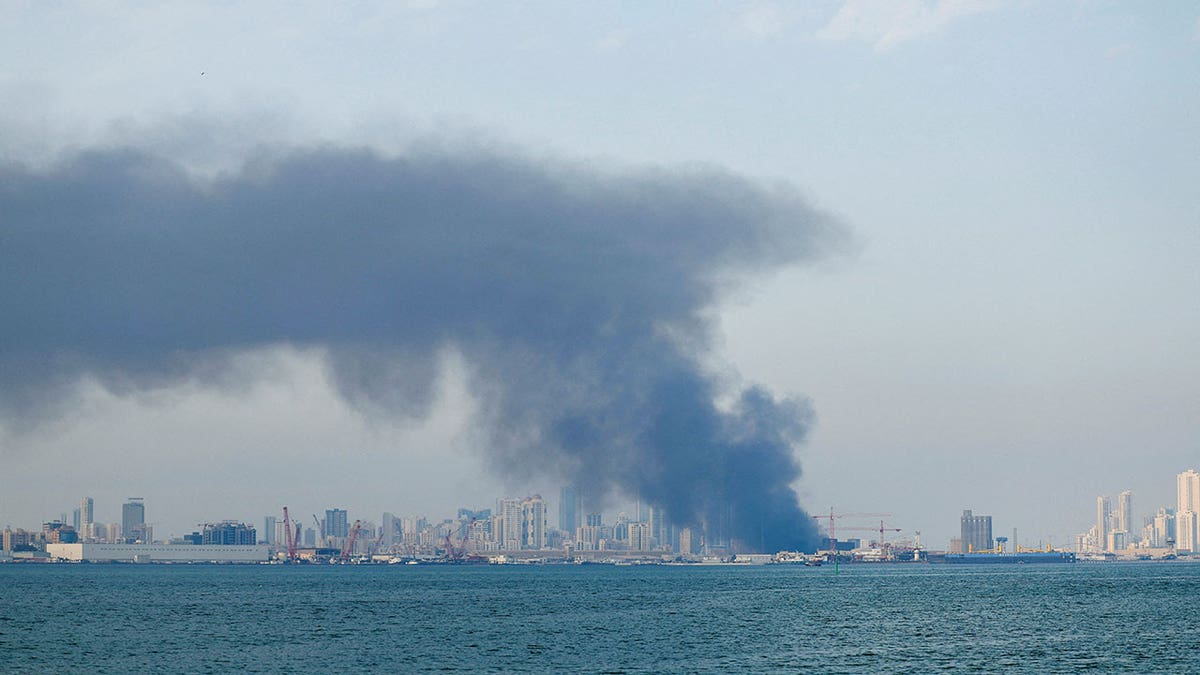
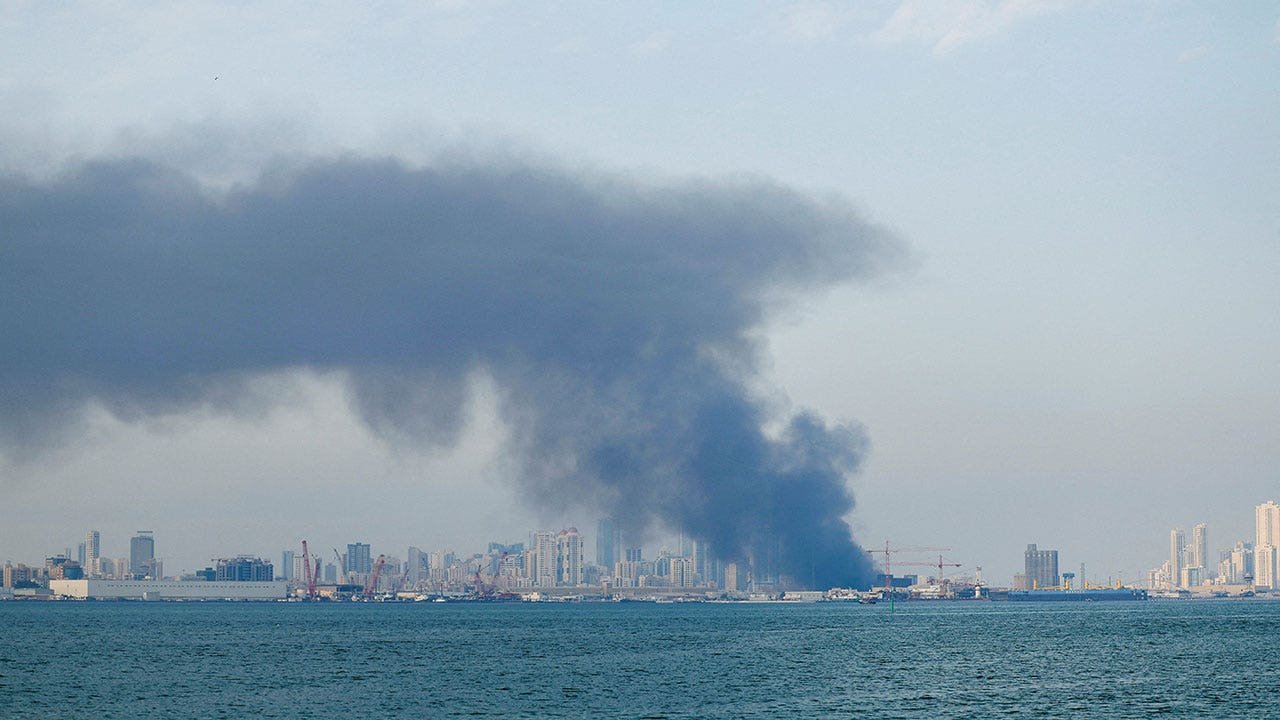
Smoke rises after reported Iranian missile attacks, following strikes by the United States and Israel against Iran, in Manama, Bahrain, Feb. 28, 2026. (Reuters)
Pakistan’s Foreign Ministry said Deputy Prime Minister and Foreign Minister Mohammad Ishaq Dar «strongly condemned the unwarranted attacks against Iran» and called for «urgent resumption of diplomacy.»
Turkey’s Foreign Minister Hakan Fidan held calls with counterparts across the region, a Turkish Foreign Ministry source told Reuters. The discussions focused on «possible steps to be taken to help bring an end to the attacks.»
Ukraine’s President Volodymyr Zelenskyy directly linked the developments to Russia’s war against his country.
«Although Ukrainians never threatened Iran, the Iranian regime chose to become Putin’s accomplice and supplied him with ‘shahed’ drones,» Zelenskyy wrote, adding that Russia has used «more than 57,000 shahed-type attack drones against the Ukrainian people.»
«It is important that the United States is acting decisively,» he said. «Whenever there is American resolve, global criminals weaken.»
Russia sharply criticized the operation. Dmitry Medvedev, deputy chairman of Russia’s Security Council, said, «All negotiations with Iran are a cover operation.»
CLICK HERE TO DOWNLOAD THE FOX NEWS APP
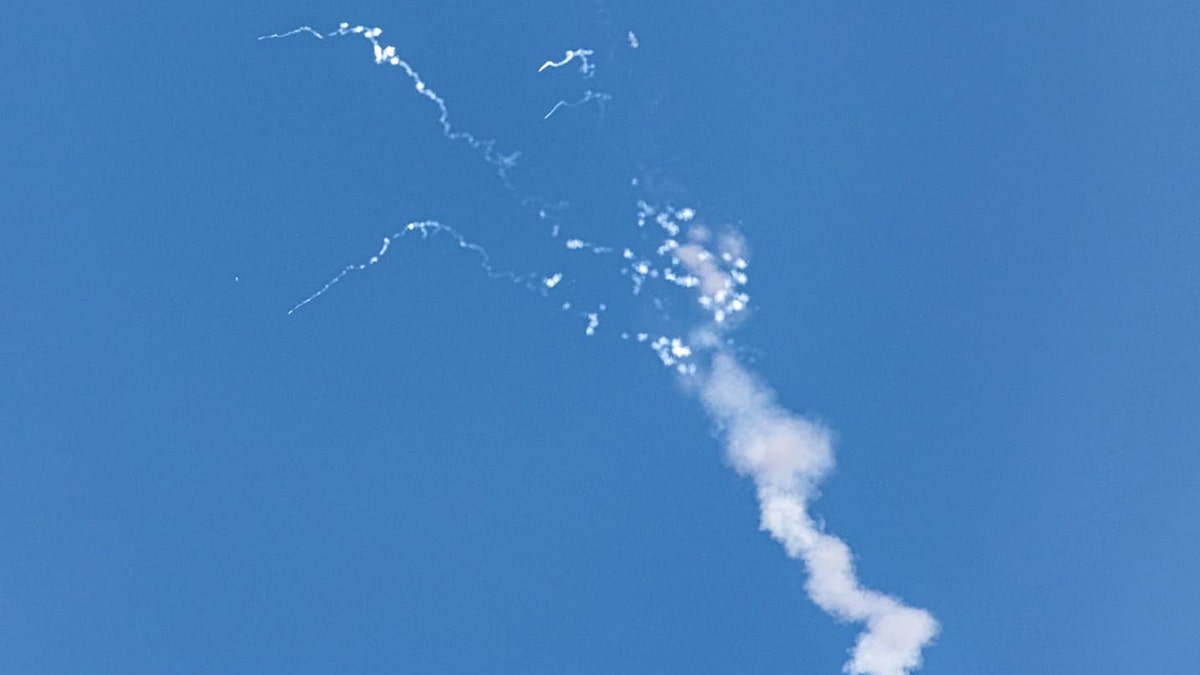
An interception is visible in the sky over Haifa during the latest barrage. (Anthony Hershko/TPS-IL)
Lebanese Prime Minister Nawaf Salam warned, «We will not accept anyone dragging the country into adventures that threaten its security and unity.»
Norwegian Foreign Minister Espen Barth Eide said the strike «is not in line with international law.»
Reuters contributed to this report.
Related Article
iran,us,israel,donald trump,wars,bombings,united nations,europe,middle east,russia,volodymyr zelenskyy,united kingdom,the european union
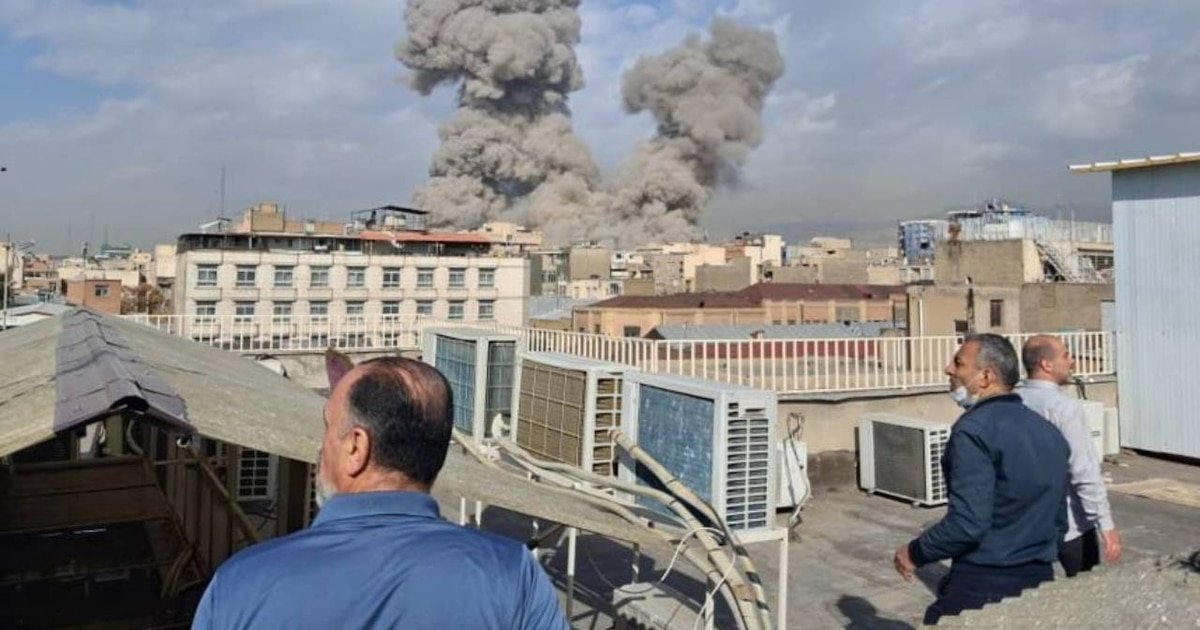
Dos detonaciones han estremecido la capital iraní este sábado por la mañana. “El Estado de Israel lanzó un ataque preventivo contra Irán. El ministro de Defensa, Israel Katz, declaró el estado de emergencia especial e inmediato en todo el país”, indicó la oficina del ministro en un comunicado.
Según periodistas de AFP presentes en el lugar, el sonido de las explosiones se percibió con claridad, mientras columnas de humo emergían tanto en el centro como en el este de Teherán. “La naturaleza de las explosiones sugiere que se trata de un ataque con misiles”, señaló la agencia de prensa Fars.
El Ministerio de Defensa de Israel informó este sábado que lanzó un “ataque preventivo” contra Irán, mientras sonaban sirenas de emergencia en Jerusalén y la población recibía alertas telefónicas sobre una amenaza “extremadamente grave” en todo el país. Estados Unidos también inició ataques “de gran envergadura” contra Irán, y Trump afirmó a la población que “la hora de su libertad está al alcance de la mano”.
Por otra parte, la agencia Isna informó que una de las columnas de humo se observaba cerca del emblemático barrio Pasteur, en cuya zona se localizan tanto la residencia el ayatollah Ali Khamenei, como la sede presidencial, lo que subraya la sensibilidad estratégica del área.
El presidente de Estados Unidos, Donald Trump, ofreció este sábado a los dirigentes militares del régimen iraní la opción de recibir “inmunidad” o enfrentarse una “muerte segura”.
Las autoridades israelíes anunciaban poco después la detección de “misiles lanzados desde Irán”, precedidos por sirenas que sonaban en distintas áreas del país. Enviaban debido a esto un mensaje a los teléfonos móviles de los ciudadanos urgiéndolos a buscar refugio. Poco después, ya se habían reportado las primeras explosiones sobre Jerusalén, según la AFP. En Teherán, un importante dispositivo de las fuerzas iraníes de seguridad bloquean varias calles alrededor del barrio en el que se encuentra la residencia del Ayatollah Jamenei.
También se han escuchado sirenas sobre Amman, capital de Jordania, cuya dirección de seguridad pública advierte: “El significado de las sirenas será el siguiente: tres sirenas intermitentes indican que hay una amenaza, y una sola sirena significa que la amenaza ha pasado. Cuando escuche las tres sirenas, debe refugiarse en el edificio más cercano hasta que la amenaza haya pasado”. La respuesta de Irán, por el momento, incluye ataques contra los Emiratos Árabes Unidos, Catar, Baréin, Kuwait y Arabia Saudita.


Los bombardeos fueron confirmados por el Ministerio de Defensa israelí y el presidente Donald Trump. El país hebreo declaró el estado de emergencia y el cierre de su espacio aéreo


Civil Conflict,Demonstrations,Riots,Europe,Civil Unrest

TSA workers brace for missed paychecks as Democrats hold firm on DHS funding

Impacto en el fútbol por el “paquete de medidas” que cambiarán el reglamento para el Mundial 2026: los 10 puntos clave

World leaders split over military action as US-Israel strike Iran in coordinated operation

El Gobierno elevó el nivel de seguridad en todo el país tras la operación militar de EEUU e Israel contra Irán

Pokémon Café ReMix ha recibido este nuevo evento centrado en Venusaur – Nintenderos

Cuándo cobro ANSES: el calendario de pagos para jubilados, beneficiarios de AUH y planes sociales en marzo 2026

Jorge Macri prepara su discurso para abrir el año legislativo: el deseo de reelección y el espejo en Bukele

Crisis en la industria: otra multinacional se achica y cierra una planta en la Argentina

Alarma por la salud de Divina Gloria tras salir de Gran Hermano: “La internaron directamente en terapia intensiva”

Catherine Fulop contó el difícil momento que atraviesa su madre en Venezuela: “Está postrada”

 ECONOMIA3 días ago
Crisis en la industria: otra multinacional se achica y cierra una planta en la Argentina
- CHIMENTOS2 días ago
Alarma por la salud de Divina Gloria tras salir de Gran Hermano: “La internaron directamente en terapia intensiva”
- CHIMENTOS3 días ago
Catherine Fulop contó el difícil momento que atraviesa su madre en Venezuela: “Está postrada”