INTERNACIONAL
El Ejército de Ecuador anunció el hallazgo de dos cuerpos de presuntos miembros del grupo armado que asesinó a 11 militares


El Ejército de Ecuador informó este martes que encontró los cuerpos sin vida de dos presuntos miembros de los Comandos de la Frontera, el grupo disidente de la otrora guerrilla de las Fuerzas Armadas Revolucionarias de Colombia (FARC) al que atribuye el asesinato de once militares ecuatorianos el pasado viernes en una zona de la Amazonía.
El hallazgo se produjo durante una operación militar que se realizaba en el sector de Alto Punino, en la provincia amazónica de Orellana, específicamente en el denominado “punto cero”, lugar en donde el viernes se produjo la emboscada a una patrulla de la Brigada de Selva 19 Napo que realizaba un operativo contra la minería ilegal y que terminó con un saldo de doce muertos, entre ellos once militares fallecidos y un atacante al que se le ha identificado como el líder.
Según el Ejército, uno de los dos hombres “pertenecientes a dicho grupo irregular” tenía un uniforme y en la zona también se encontró granadas, mochilas y cargas explosivas colocadas en las maquinarias utilizadas para la extracción de material minero.

Además, se halló medicamentos, pañuelos con los distintivos de los Comandos de la Frontera, colchones y ponchos de agua.
“Con estos hallazgos se confirma que pertenecen al grupo irregular armado Comandos de Frontera y la muerte de tres de sus miembros durante el ataque del 9 de mayo”, señaló la institución en su cuenta de la red social X.
El primero de ellos fue encontrado ese mismo viernes, pero no fue hasta el lunes que las Fuerzas Armadas identificaron que el hombre, conocido como ‘Compadre’, era el presunto líder del grupo armado en Ecuador.

El hombre era el supuesto responsable del control de actividades ilícitas de minería ilegal en Ecuador, “así como del cobro de extorsiones, conocidas como vacunas, a los mineros que operan en la región”, en complicidad con la banda criminal ecuatoriana Los Lobos.
La operación es liderada por el comandante general del Ejército, Henry Delgado, quien el lunes se desplazó hasta la zona junto con más de 1.500 soldados de diversas unidades especiales para intensificar los controles en varias partes de la frontera con Colombia, con el objetivo de “identificar, localizar y neutralizar” a más integrantes de los Comandos de la Frontera.

El Ejército señaló que en estas operaciones están utilizando “tecnología especializada” como “cámaras FLIR y sensores LiDAR, que permiten recolectar información segmentada del área”.
Además, añadió que la Policía está colaborando en la investigación e identificación de posibles sospechosos que se encuentran al interior de la población, así como en el control de las vías del sector y de los trámites legales relacionados a los cuerpos encontrados y el material incautado.

Ecuador ha desplegado centenares de efectivos para “continuar con operaciones de reconocimiento ofensivo y rastrillaje para identificar, localizar y neutralizar” a los integrantes de ese grupo armado ilegal, destacó el Ejército. Añadió que “factores climáticos adversos han dificultado el desplazamiento hacia los puntos de interés operacional”.
El Ejército también señaló que desde el pasado domingo fue desplazado personal de unidades élite de fuerzas especiales y de inteligencia hacia las provincias de Orellana y Sucumbíos para intensificar las operaciones militares. Entre los puntos de patrullaje, están los ríos San Miguel y Putumayo, que marcan la frontera de Ecuador con Colombia “para prevenir el uso de esas rutas por parte de grupos irregulares”.
(Con información de AP y EFE)
South America / Central America,Civil Unrest,QUITO










INTERNACIONAL
Surging UK Green Party pushes church-state split, critics warn of break from Britain’s Christian roots
UK scales back policing of social media posts
Fox News senior foreign affairs correspondent Greg Palkot reports on the U.K. Home Office’s decision to stop policing certain social media posts and refocus on tackling ‘real’ crime on ‘America Reports.’
NEWYou can now listen to Fox News articles!
LONDON: The left-wing British Green Party has said it wants to separate the Church of England from the state if it wins the next general election, which must be held before August 2029.
The Church of England has been the «established» church since the 16th-century Reformation, with the British monarch serving as its supreme governor. For traditionalists, this link is not merely ceremonial but is the foundational bedrock of British identity.
The Greens have come under fire for seeking to remove centuries of British history and tradition by separating the church from British politics, with critics characterizing it as the latest move against Christianity in the U.K.
GB News reported last month that the Green Party policy document stated: «No person shall hold office in the state, or be excluded from any such office, by virtue of their or their spouse’s membership or non-membership of any religion or denomination of religion.»
UK FLAG CLASH AS FOREIGN BANNERS FLY, CITIZENS PUSH BACK AGAINST WOKE POLICIES RESHAPING BRITAIN
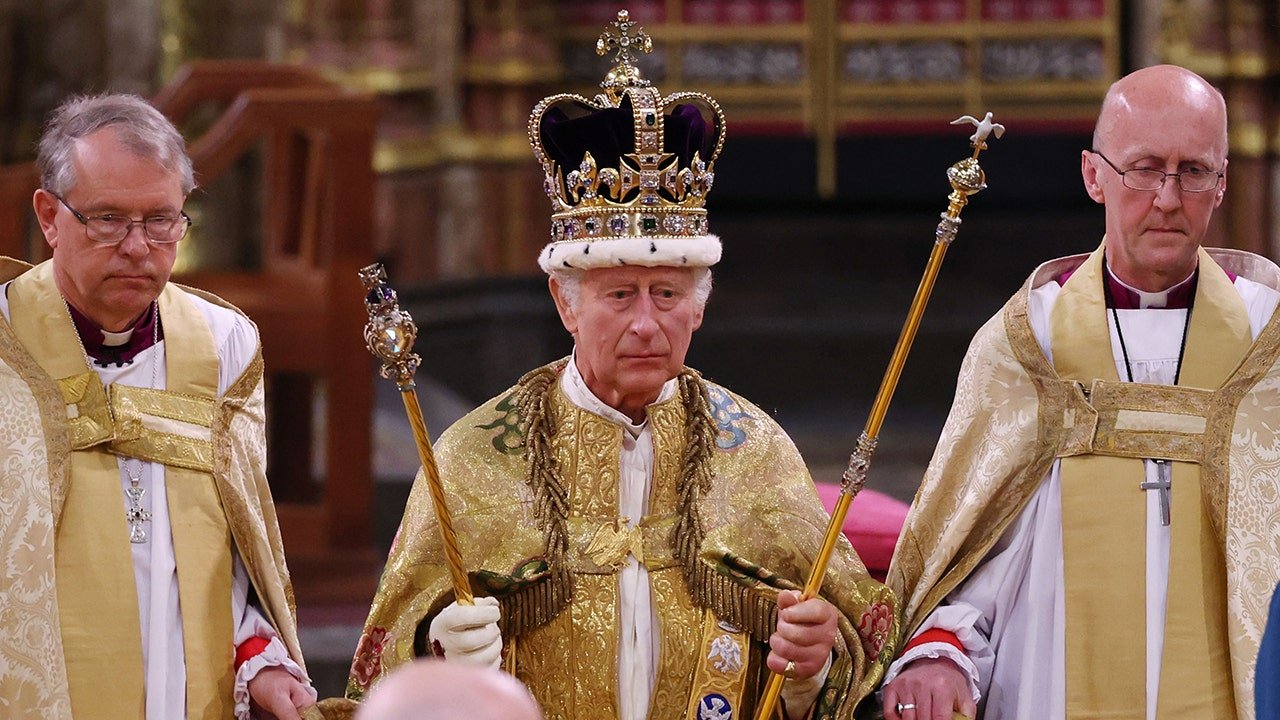
King Charles ascended the throne in September 2022 following his mother’s death, and his coronation was in May 2023. (Richard Pohle – WPA Pool/Getty Images)
Michael McManus, the director of research at the Henry Jackson Society, a U.K. think tank, told Fox News Digital, «Britain is a tolerant society but with clear Christian origins and culture. Aiming to disestablish the Church of England could be seen as an attempt to reject that ethical foundation without being clear what would replace it instead.»
High-profile figures have also weighed in on the debate, with actor and comedian John Cleese responding to a comment about the Greens’ proposal by stating on X: «The UK has always been based at the deepest level on Christian values, regardless of dogma. Despite the many mistakes made by churches, for centuries British people have been influenced by Christ’s teaching. If these values are replaced by Islamic ones, this will not be Britain anymore.»
FORMER UK PM DEFENDS TRUMP FOR HIGHLIGHTING ‘SHARIA LAW’ IN BRITAIN DURING UN SPEECH
The Greens are a growing political force, placing second behind Reform UK in a recent YouGov poll. Another YouGov poll linked the Greens’ rise in popularity with younger voters in the country, finding a majority of those between 18 and 24 supported them, while also doing well with women and other groups.

UK Green Party leader Zack Polanski. (Finnbarr Webster/Getty Images)
A spokesperson for the Green Party told Fox News Digital, «We will be setting out our detailed plans for government at the time of the next General Election, just as we did at the last General Election. As always, our members will be shaping our priorities. These will again address the real and immediate needs of people and the planet, such as tackling the climate crisis, bringing down the cost of living and rebuilding our public services, including the NHS. Our focus is on the issues that impact ordinary people most.»
CHURCHILL, SHAKESPEARE AND THE UK FLAG ALL UNDER SIEGE IN MODERN BRITAIN, COMMENTATORS SAY
Green Party leader Zack Polanski has defended a secular state. He has also drawn criticism for his support of legalizing drugs such as heroin and cocaine, his climate policies and anti-Israel positioning.

A view of Christmas morning Eucharist service at Canterbury Cathedral, Canterbury, United Kingdom, on Dec. 25, 2022. (Stuart Brock/Anadolu Agency)
The timing of the Green Party’s push is particularly sensitive as it comes on the heels of the House of Lords (Hereditary Peers) Act 2026, which passed last month, removing the last hereditary aristocrats from Parliament. With the hereditary principle gone, the presence of the «Lords Spiritual» has become the next logical target for constitutional reformers. There are currently 26 seats reserved for Church of England archbishops and bishops in the House of Lords.
CLICK HERE TO DOWNLOAD THE FOX NEWS APP
As the U.K. heads toward a local 2026 election cycle, the «Church and State» debate looks set to become a wedge issue. For the Greens, it represents their commitment to a «diverse and inclusive» Britain. For their detractors, it is a dangerous move that risks «de-Christianizing» the country at a moment of profound social uncertainty.
Whether the proposal will mobilize a new «religious vote» or simply fade behind the urgency of other issues remains to be seen. What is clear, commentators say, is that the image of the established Church is increasingly being viewed through the lens of a much sharper and more polarized political fight.
united kingdom, elections, green, religion, uk politics, christianity religion, family personal freedoms
NEWYou can now listen to Fox News articles!
President Donald Trump’s effort to investigate race-based admissions at U.S. colleges was temporarily blocked Friday by a federal judge in Boston.
U.S. District Judge F. Dennis Saylor IV granted a preliminary injunction Friday, temporarily barring the Trump administration from forcing public colleges in 17 Democrat-led states to submit detailed admissions data meant to prove they are not unconstitutional considering race.
Saylor did admit the federal government likely can seek such information in «identifying potential problems» and «patterns of discrimination» but the executive order’s 120-day deadline was «rushed and chaotic» and «epitomizes arbitrary and capricious agency action.»
Trump, while moving to shut down the Department of Education to return its functions to the states last March, sought a four-month deadline for race data on college admissions this past August.
TRUMP ADMIN PROBE ACCUSES HARVARD OF DISCRIMINATING AGAINST JEWISH STUDENTS, THREATENS TO PULL ALL FUNDING
Education Secretary Linda McMahon (Getty Images)
«Within 120 days of the date of this memorandum, and to be initiated this 2025-2026 school year, the Secretary of Education, in coordination with NCES [National Center for Education Statistics], shall expand the scope of required reporting to provide adequate transparency into admissions, as determined by the Secretary of Education, consistent with applicable law,» Trump’s executive order challenged by Democrats read.
A coalition of 17 Democratic state attorneys general sued, arguing the new reporting regime would invade student privacy, burden universities and trigger unwarranted federal investigations.
«Plaintiffs have established, based on the record before the Court, that they are likely to succeed on the merits of their claim that the agency action was ‘arbitrary, capricious, an abuse of discretion, and not otherwise in accordance with the law,’» Saylor concluded. «Furthermore, and notwithstanding the contention of the government, plaintiffs have established that immediate irreparable harm will result if the injunction does not issue. And they have likewise established that the balance of equities and the public interest favor preliminary injunctive relief. Accordingly, the motion for a preliminary injunction will be granted.»
GEORGE MASON UNIVERSITY VIOLATED TILE VI WITH ‘UNLAWFUL DEI POLICIES,’ EDUCATION DEPARTMENT SAYS
The administration argued the data collection is needed to ensure colleges are complying with the Supreme Court’s 2023 decision ending affirmative action in admissions, while still allowing applicants to discuss how race affected their lives in essays.
«Race-based admissions practices are not only unfair, but also threaten our national security and well-being,» Trump’s order read. «It is therefore the policy of my Administration to ensure institutions of higher education receiving Federal financial assistance are transparent in their admissions practices.»
TRUMP DOJ PROBES MICHIGAN SCHOOLS OVER GENDER CURRICULUM, JOINS LAWSUIT AGAINST LA RACE-BASED PROGRAM
Under the policy, colleges were told to provide admissions data broken down by race and sex and to report it retroactively for seven years, with possible penalties for schools that failed to comply.
The administration’s policy echoes settlement agreements the government negotiated with Brown University and Columbia University, restoring their federal research money. The universities agreed to give the government data on the race, grade-point average and standardized test scores of applicants, admitted students and enrolled students. The schools also agreed to be audited by the government and to release admissions statistics to the public.
The NECS is to collect the new data, including the race and sex of colleges’ applicants, admitted students and enrolled students. Education Secretary Linda McMahon has said the data, which was originally due by March 18, must be disaggregated by race and sex and retroactively reported for the past seven years.
TRUMP’S DEMAND FOR COLLEGES NATIONWIDE TO FORK OVER RACE DATA FACES LEGAL HURDLE
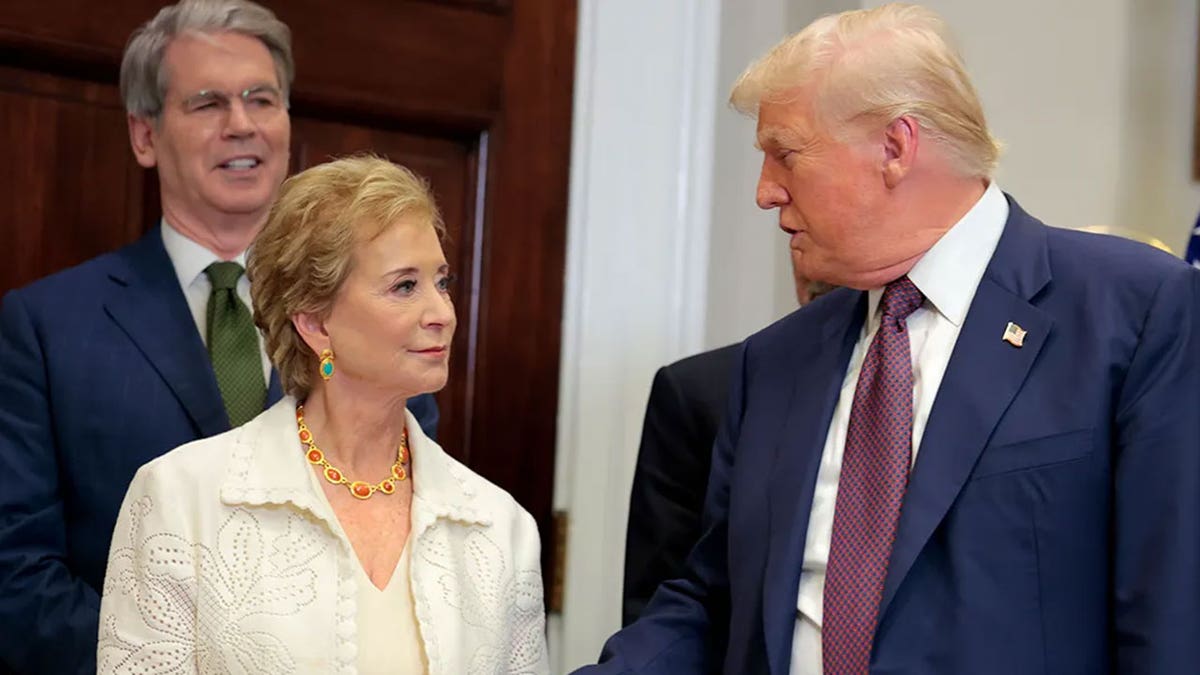
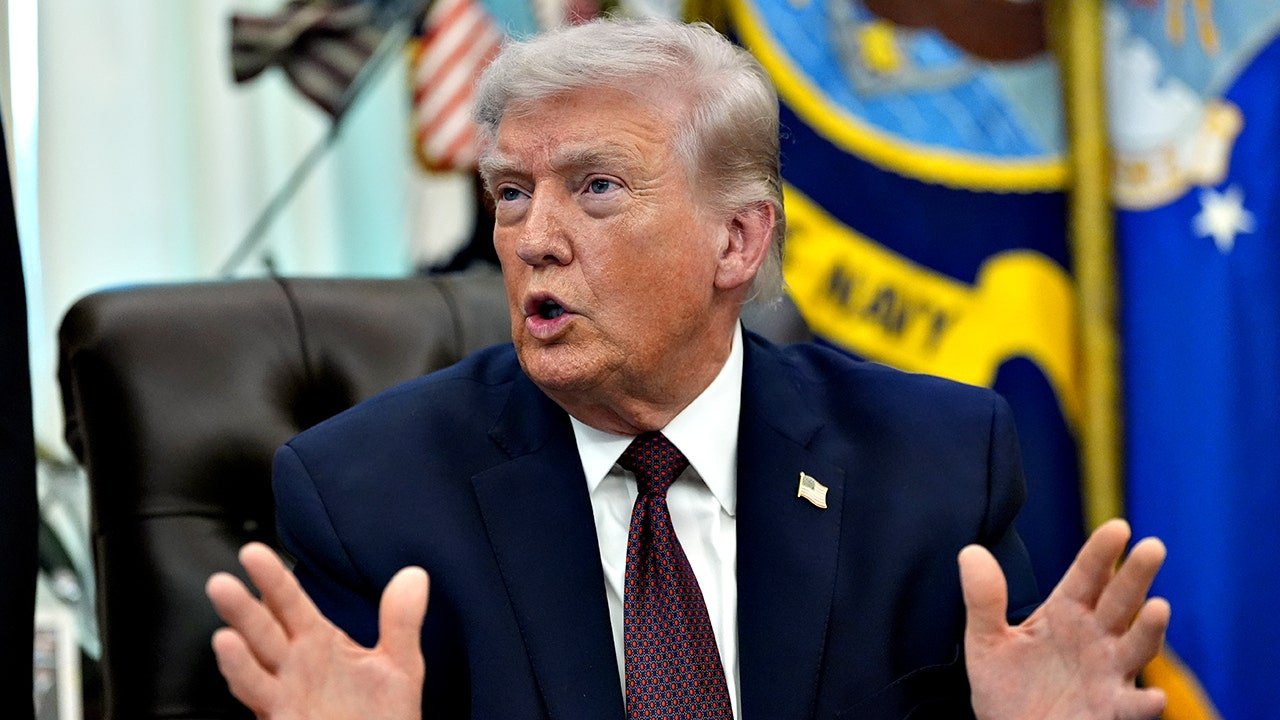
President Donald Trump speaks with Secretary of Education Linda McMahon during an executive order signing ceremony in the Roosevelt Room of the White House on July 31, 2025. (Anna Moneymaker/Getty Images)
If colleges fail to submit timely, complete and accurate data, the administration has said McMahon can take action under Title IV of the Higher Education Act of 1965, which outlines requirements for colleges receiving federal financial aid for students.
The Trump administration separately has sued Harvard University over similar data, saying it refused to provide admissions records the Justice Department demanded to ensure the school stopped using affirmative action.
Harvard has said the university has been responding to the government’s requests and is in compliance with the Supreme Court ruling against affirmative action. On Monday, the Education Department’s Office for Civil Rights directed Harvard to comply with the data requests within 20 days or face referral to the U.S. Justice Department.
CLICK HERE TO DOWNLOAD THE FOX NEWS APP
Saylor’s injunction applies only to public institutions in the 17 Democratic plaintiff states, at least for now.
The Associated Press contributed to this report.
dept of education, federal judges, education, justice department
INTERNACIONAL
Ucrania golpeó tres instalaciones petroleras en Rusia en una nueva escalada de su campaña energética
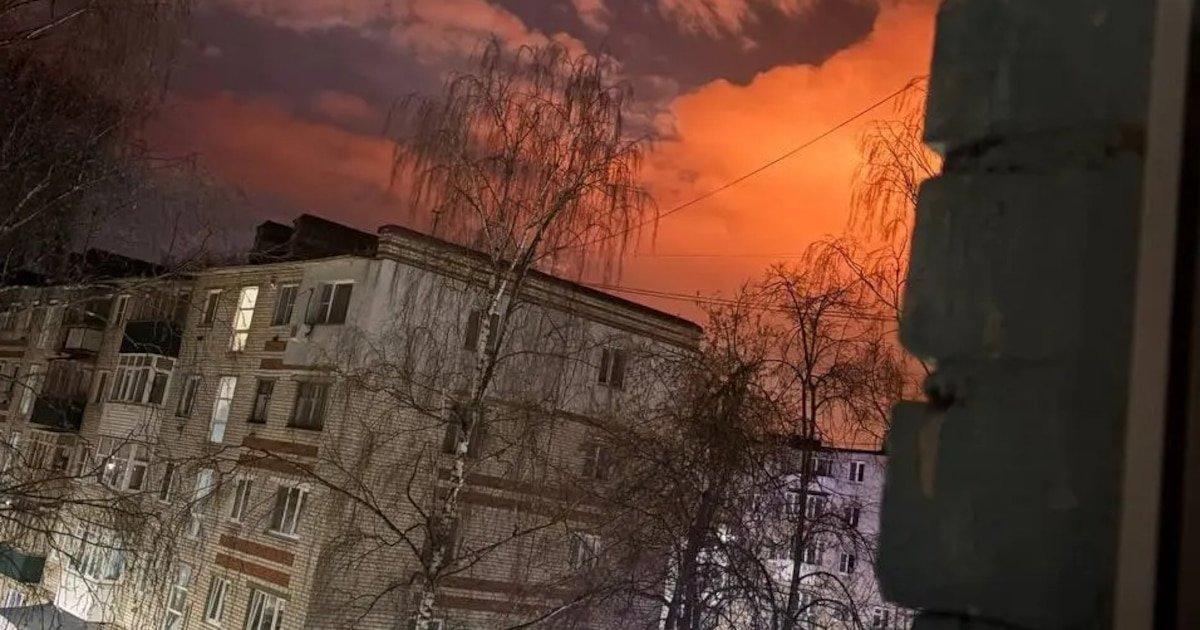
Drones ucranianos atacaron esta madrugada tres infraestructuras petrolíferas en territorio ruso, entre ellas dos refinerías en la región de Nizhni Nóvgorod y un oleoducto en la región de Leningrado, en una nueva escalada de la campaña de Kiev contra las instalaciones energéticas del Kremlin.
El gobernador de Nizhni Nóvgorod, Gleb Nikitin, informó que los restos de un dron derribado dañaron dos instalaciones de la petrolera Lukoil y provocaron incendios que fueron controlados. Las autoridades señalaron que rechazaron 30 drones ucranianos que apuntaban al distrito industrial donde se ubican las refinerías.
Se trata de una de las mayores refinerías de Rusia, con una capacidad de procesamiento de hasta 17 millones de toneladas de crudo por año. Según datos de fuentes abiertas, se registraron más de 20 explosiones, actividad de defensa aérea y un incendio de gran escala en las inmediaciones de la instalación.

Además, en la misma región resultaron dañadas una central termoeléctrica y varios edificios residenciales.
En la región de Leningrado, a orillas del mar Báltico, el gobernador Alexandr Drozdenko informó que un dron abatido cayó sobre un oleoducto cerca de la ciudad de Primorsk. “Esta mañana, las fuerzas de defensa aérea derribaron 19 drones sobre la región de Leningrado”, añadió.

El Ministerio de Defensa ruso comunicó que durante la noche derribó un total de 87 drones ucranianos en catorce regiones del país, incluida la península de Crimea, anexionada por Rusia en 2014.
Heridos civiles y ataque ruso

Los ataques no se limitaron a infraestructuras. El gobernador de Bélgorod, Viacheslav Gladkov, informó que un dron ucraniano impactó contra un minibús blindado utilizado para transportar civiles al trabajo en la aldea de Zamostye, en el distrito de Graivoron, dejando siete heridos.
En paralelo, Rusia lanzó su propio ataque nocturno contra Ucrania con casi cien drones. Según el parte diario de la Fuerza Aérea ucraniana, Moscú empleó 93 drones suicidas de los tipos Shahed, Gerbera e Italmas, lanzados desde territorio ruso y desde Crimea. La defensa antiaérea derribó o neutralizó 76 de ellos, pero 17 lograron impactar en diez ubicaciones distintas. Entre los lugares alcanzados estuvo la región de Odesa, donde edificios residenciales del distrito de Jadzhibei resultaron dañados y tres personas resultaron heridas.
Una campaña que incomoda a los aliados

Los ataques del domingo se producen en un contexto de creciente tensión dentro del bloque occidental. Aliados de Ucrania han pedido a Kiev que suspenda su campaña de drones contra refinerías rusas, preocupados por el impacto sobre los precios globales del crudo en un momento en que la guerra entre Estados Unidos e Israel contra Irán ha bloqueado el estrecho de Ormuz, por el que transitaba el 20% del petróleo mundial.
Kirilo Budánov, jefe de gabinete del presidente Volodímir Zelensky, confirmó a la agencia Bloomberg que Kiev ha recibido esas solicitudes. “Respondamos a esto de forma diplomática. Estamos recibiendo ciertas señales al respecto”, afirmó, sin revelar qué países han pedido la pausa.
Kiev considera las instalaciones energéticas rusas objetivos militares legítimos porque abastecen a las tropas del Kremlin y financian la maquinaria bélica. En las últimas semanas, además de los ataques del domingo, Ucrania golpeó una refinería en Sarátov y la tercera más grande del país, en Kirishi, también en la región de Leningrado.
El petróleo, un factor clave en la guerra
El debate sobre los ataques a refinerías tiene un trasfondo económico de peso. Según el Instituto KSE, el aumento repentino de los precios mundiales del combustible podría impulsar significativamente las finanzas rusas, después de que los ingresos petroleros del Kremlin se redujeran a la mitad en los dos primeros meses de 2026. En el escenario menos favorable para Ucrania, Rusia podría obtener hasta 252.000 millones de dólares en ingresos adicionales este año.
Estados Unidos, en tanto, relajó temporalmente las sanciones a las ventas de petróleo ruso debido a las interrupciones en el estrecho de Ormuz, lo que añade complejidad a los cálculos estratégicos de Kiev sobre si continuar o no con su campaña energética.
War,Europe,Military Conflicts

Surging UK Green Party pushes church-state split, critics warn of break from Britain’s Christian roots

La preocupación de Marcelo Teto Medina por los resultados de sus últimos estudios tras el cáncer: “Solo me queda esperar”

Inversiones en abril: qué acciones, bonos y CEDEAR pican en punta entre brokers de la City

Estuvo cerca de clasificar para el Mundial: ahora, se complicó la salud del último entrenador de la selección de Rumania

Federal judge blocks Trump push to collect race-based admissions data

Milei volvió a destacar la baja de la inflación, pero advirtió que “queda pendiente una gran corrección de precios regulados”

Milei se pone al frente de la defensa de Adorni y lo suma a un acto por Malvinas en una nueva muestra de respaldo

Oriana Sabatini sorprendió al elegir a una famosa como madrina de Gia, su hija con Paulo Dybala

Banco lanza un plazo fijo inédito: sigue a la inflación y permite retirar intereses todos los meses

La Armada sorteará 30 lugares en el buque que escoltará la salida de la Fragata Libertad: cómo anotarse

 CHIMENTOS3 días ago
Oriana Sabatini sorprendió al elegir a una famosa como madrina de Gia, su hija con Paulo Dybala
- POLITICA3 días ago
La Armada sorteará 30 lugares en el buque que escoltará la salida de la Fragata Libertad: cómo anotarse
- INTERNACIONAL19 horas ago
La nueva advertencia de Donald Trump a Irán: «El tiempo se acaba, quedan 48 horas antes del infierno»