INTERNACIONAL
El Helicoide: cómo es el centro de detención que los venezolanos comparan con la ESMA y que ahora será transformado en un centro social




NEWYou can now listen to Fox News articles!
Sen. Markwayne Mullin, R-Okla., was sworn in as the U.S.’ ninth secretary of Homeland Security on Tuesday, with President Donald Trump in attendance.
Mullin, 48, is a former mixed martial arts champion and plumbing business owner who will replace outgoing Secretary Kristi Noem, a South Dakota Republican recently picked to lead the Shield of the Americas security initiative announced by Trump earlier this month.
Mullin will take the reins of DHS at a time of increased turmoil and congressional scrutiny at the agency, where Democrats continue to withhold funding for TSA and other subagencies in hopes of forcing changes to immigration enforcement operations at ICE and CBP.
40+ HOUSE REPUBLICANS RALLY BEHIND MARKWAYNE MULLIN FOR DHS, CALL IT A ‘CRITICAL MOMENT’ FOR BORDER SECURITY
Sen. Markwayne Mullin, R-Okla., President Donald Trump’s pick for Homeland Security secretary, is sworn in before testifying during Senate Committee on Homeland Security and Governmental Affairs hearing, Wednesday, March 18, 2026 on Capitol Hill in Washington. (Manuel Balce Ceneta/AP)
He narrowly made it through the nomination process after clashing with Senate Homeland Security Committee Chairman Rand Paul, R-Ky., as the two continue to feud over Mullin’s response to an incident in which Paul’s neighbor blindsided him in his yard, fracturing his ribs.
Mullin needed a Democratic ally to get his nomination out of committee after Paul’s no vote. Sen. John Fetterman, D-Pa., who formerly exchanged endorsements with socialist Sen. Bernie Sanders, I-Vt., as Pennsylvania’s lieutenant governor, has become somewhat of a political maverick and provided the necessary vote to advance the nomination to the full Senate.
There, he garnered support from another Democrat, New Mexico Sen. Martin Heinrich, who said in a statement that he doesn’t believe Mullin will be «bullied» or allow himself to «take orders from Stephen Miller» at the White House.
«This is going to surprise some people, but I consider Markwayne Mullin a friend. We have a very honest and constructive working relationship. We have authored legislation together, such as the Tribal Buffalo Management Act, and we crafted the Legislative Branch Appropriations bill together this year,» Heinrich said.
«We often disagree and when we do, we work to find whatever common ground we share.»
In turn, Oklahoma Gov. Kevin Stitt was tasked with naming Mullin’s replacement, which was subject to a unique Sooner State law that requires the nominee to pledge not to run for a full term in the Senate come November.
WHITE HOUSE SAYS ‘NO ONE’ CHANGING TRUMP ENFORCEMENT AGENDA IN RESPONSE TO ANGEL MOM APPEAL TO MULLIN
Stitt named natgas magnate Alan Armstrong, chief executive of the Williams Companies, whose nomination was criticized by some on the right given the mogul’s past donations to then-Rep. Adam Kinzinger, R-Ill., a vocal Trump critic.
«He’s a strong business leader who understands the power of free markets and limited government. He spent his career fighting for Oklahoma’s energy industry and providing affordable, reliable energy to all of America,» Stitt said of Armstrong on Tuesday.
Mullin succeeds Noem, who herself succeeded controversial Secretary Alejandro Mayorkas, whom Trump blamed for the open border crisis.
CLICK HERE TO DOWNLOAD THE FOX NEWS APP
Other top names who have held the role include its inaugural secretary, former Pennsylvania Gov. Tom Ridge, nominated by President George W. Bush in the wake of 9/11. Ridge has since broken with the mainstream «MAGA» GOP in his support for Trump.
Former Arizona Gov. Janet Napolitano, former Air Force general counsel Jeh Johnson, Gen. John Kelly (Ret.), and former Deputy Trump White House chief of staff Kirstjen Nielsen also prominently served.
homeland security, national security, kristi noem, john thune, border security
INTERNACIONAL
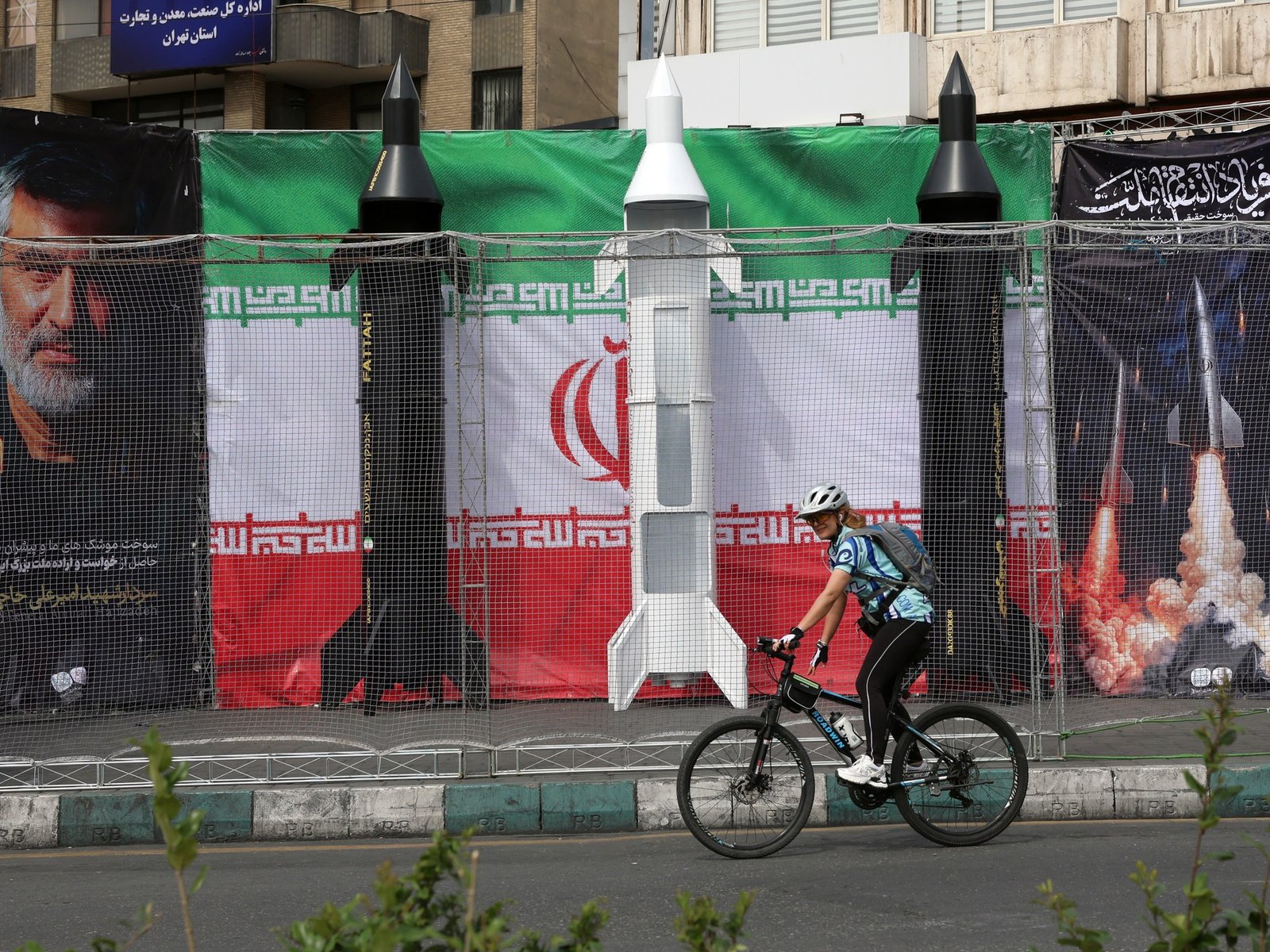
Pakistán emerge como mediador clave entre Donald Trump e Irán para frenar la escalada en el Estrecho de Ormuz
¿En Islamabad esta semana?
¿Quién negociará?
“Fake news” y la interna iraní
¿Trump frenará los ataques?
El Golfo con sus economías destruidas
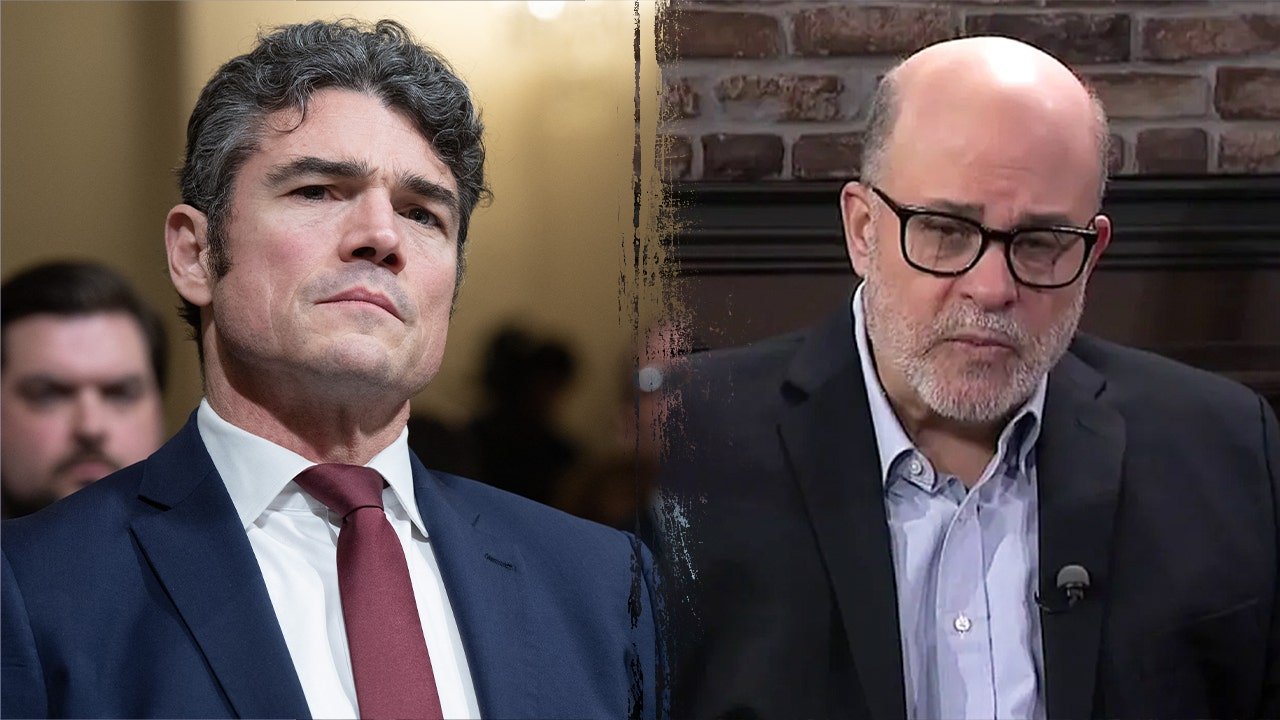
Dan Bongino slams Joe Kent’s comments about Iran
Former FBI deputy director Dan Bongino criticizes former National Counterterrorism Center Director Joe Kent for his claims that Iran was not an imminent threat to the United States on ‘Hannity.’
NEWYou can now listen to Fox News articles!
Former counterterrorism official Joe Kent sparred with conservative radio host and Fox News personality Mark Levin on his syndicated radio show Monday, denying leak allegations, breaking with the Trump administration over Iran, and saying Israel «forced President Trump into this war.»
«I never leaked any classified information,» Kent said, as Levin pressed him on reports he was under investigation by the FBI for leaking.
Three sources familiar with the matter have told Fox News the FBI probe into Kent predated his resignation.
Kent also disputed the administration’s case for the conflict with Iran, saying «there was no imminent threat coming from Iran against Americans.»
Kent resigned March 17 as director of the National Counterterrorism Center (NCTC), issuing a public letter claiming the U.S. entered the conflict due to «pressure from Israel,» a position he has since defended in multiple media appearances.
Kent maintained that U.S. intelligence did not support the administration’s justification for military action in Iran, asserting «we had no intelligence that said that Iran was working to develop a nuclear weapon,» a claim that runs counter to assessments publicly cited by top administration officials.
Kent’s resignation makes him the highest-ranking figure in the Trump administration to step down over the Iran war, a rare instance of open dissent from a senior national security official. His assertions put him at odds with top intelligence and defense officials who have said Iran posed an immediate threat.
INSIDE JOE KENT’S ABRUPT FALL AS GOP BACKLASH GROWS OVER ANTISEMITISM ACCUSATIONS, FBI PROBE
(Former counterterrorism official Joe Kent sparred with Mark Levin in a heated interview Monday, denying leak allegations, breaking with the Trump administration over Iran, and saying Israel «forced President Trump into this war.»)
«Joe Kent’s self-aggrandizing resignation letter and recent comments are riddled with lies. Most egregious are Kent’s false claims that the largest state sponsor of terrorism somehow did not pose a threat to the United States and that Israel forced the President into launching Operation Epic Fury,» White House spokesperson Davis Ingle told Fox News Digital. «As Commander-in-Chief, President Trump took decisive action based on strong evidence which showed that the terrorist Iranian regime posed an imminent threat and was preparing to strike Americans first.»
Levin, a staunch advocate of the U.S. alliance with Israel and host of weekend program «Life, Liberty and Levin» on Fox, repeatedly challenged Kent’s claims throughout the roughly 22-minute interview, turning what began as a policy discussion into a pointed back-and-forth over intelligence, Israel and Trump’s decision-making.
Levin rejected Kent’s assertion that Israel drove the U.S. into war, calling it «conspiratorial» and pushing back on the idea that a foreign government could dictate American military action.
«Why do you create a conspiratorial notion that Israel dragged the powerful Donald Trump into war?» Levin asked on his radio show, «The Mark Levin Show.» «Do you have no respect for Donald Trump’s agency that he has the capacity to make these decisions himself?»
Kent responded, «I believe that he was influenced by a media echo chamber and by the Israelis.»
Kent also argued that «the Israelis forced President Trump into this war,» a claim Levin repeatedly pushed back on during the exchange.
Kent elsewhere described the decision as influenced by Israeli pressure.
Kent maintained that «there was no intelligence that said that Iran was working to develop a nuclear weapon.»
As director of the NCTC, Kent would have had access to high-level intelligence assessments, including threat reporting and interagency analysis used to brief senior policymakers. Administration officials have told Fox News he was not included in discussions surrounding the Iran conflict known as Operation Epic Fury.
Levin countered, saying, «The president agrees with his own conclusions. The CIA director says you’re wrong.»
Asked Wednesday during a Senate hearing if he disagreed with Kent’s assessment that Iran did not pose an imminent threat, CIA Director John Ratcliffe said he did.
«I think Iran has been a constant threat to the United States for an extended period of time and posed an immediate threat at this time,» Ratcliffe said.
Levin also questioned Kent’s credibility, telling him, «I hope when you tell me you haven’t leaked that you are telling me the truth.»
Kent also indicated that efforts to investigate potential foreign links to the killing of Charlie Kirk and the attempted assassination of President Donald Trump in Butler, Pennsylvania, were not fully carried out.
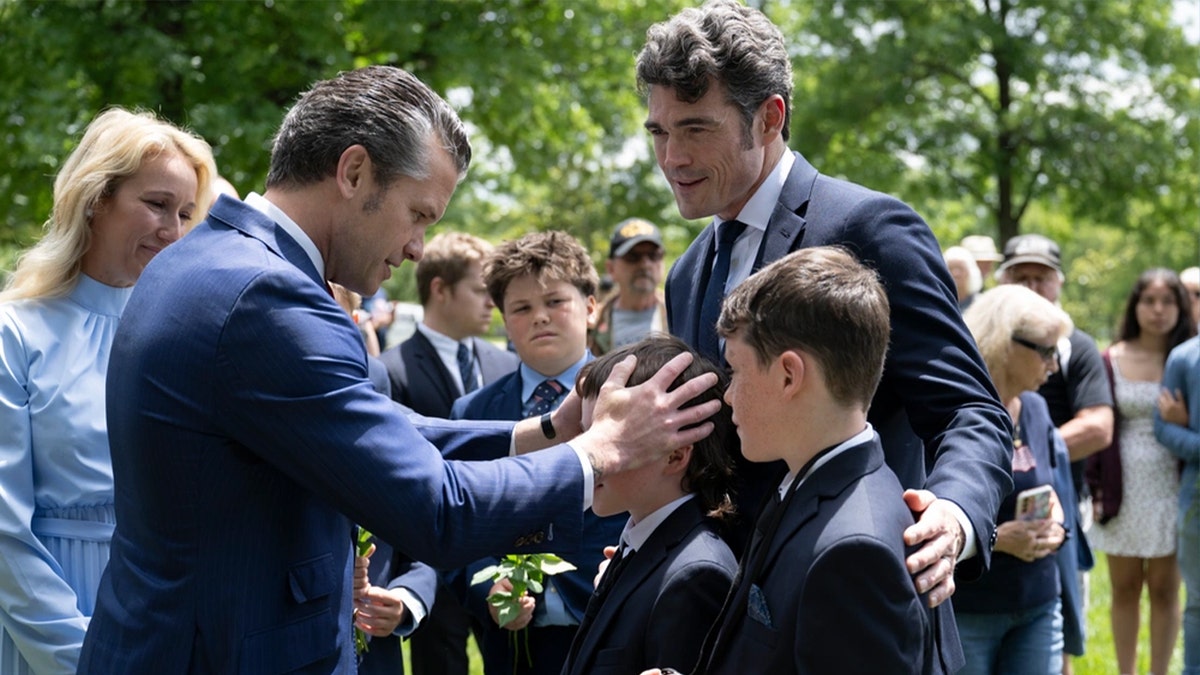
War Secretary Pete Hegseth greets one of Joe Kent’s sons. The former National Counterterrorism Director is a father of two and a Gold Star spouse. (U.S. Army photo by Elizabeth Fraser / Arlington National Cemetery)
GABBARD SIDESTEPS IRAN ‘IMMINENT THREAT’ CLAIM UNDER SENATE GRILLING
«What I know is that there were foreign leads that we didn’t get a chance to look into. From my vantage point at the National Counterterrorism Center, that was not thoroughly looked into,» Kent said, referring to the killing of conservative activist Charlie Kirk.
In other interviews, Kent has pointed to social media posts made before the attack and suggested authorities should examine whether any individuals had prior knowledge or made threats ahead of the violence.
Levin pressed Kent on whether he was suggesting a specific country, including Israel, may have been involved, but Kent stopped short of naming any nation, saying only that potential foreign links should be investigated.
On Thomas Matthew Crooks and the attempted assassination of Trump in Butler, Pennsylvania, Kent said: «We should investigate to see if there’s any linkage, particularly between Iran and the Iranian agent who was convicted for plotting an assassination attempt against President Trump.»
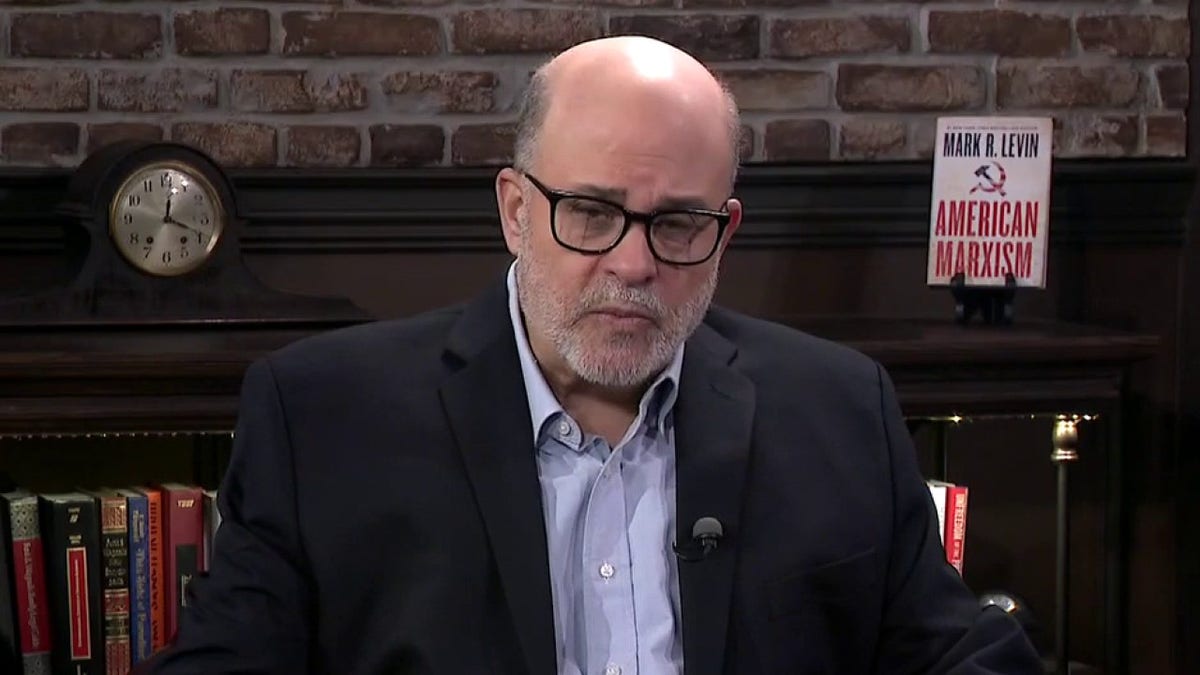
«I never leaked any classified information,» Kent said, as Levin pressed him on reports he was under investigation by the FBI for leaking (Fox News)
Kent pointed to the case of Asif Merchant, a man convicted in federal court for attempting to orchestrate a political assassination plot tied to Iran’s Revolutionary Guard.
CLICK HERE TO DOWNLOAD THE FOX NEWS APP
Endorsed by Trump in two unsuccessful congressional campaigns, Kent rose to MAGA stardom in large part on opposition to «endless wars» after the death of his wife Shannon Kent in a suicide bombing in Syria in 2019.
Kent could not be reached for comment.
Tulsi Gabbard, the director of National Intelligence, has not publicly weighed in on Kent’s claims and largely has deferred to the president’s assessment of the Iran threat in recent public appearances. It’s not clear who has taken on Kent’s duties as director of the NCTC.
The Office of the Director of National Intelligence and Israeli embassy could not immediately be reached for comment.
war with iran, national security

Tensión en la cadena de pagos de las pymes: crece el rechazo de cheques y la mora en los créditos

La repesca, vida o muerte para Italia: ‘He hablado con Gattuso más que con mi madre’

El live-action de One Piece quiere que haya Luffy para muchos años y confirma las sospechas en torno al manga

Mullin sworn in as DHS chief after GOP fracture forced Dem to save nomination

Daniela Ballester volvió a trabajar a un mes de sufrir el ACV y contó todo: «La saqué re barata, podría no estar»

Adorni demora la presentación del informe de gestión en el Congreso mientras la oposición reclama que dé explicaciones por sus viajes

¿FIN DE CICLO? Escándalo por la mansión no declarada y viajes de lujo empujan a Manuel Adorni fuera del Gobierno: Su salida sería inminente

»¡VAN A FUNDIR A MEDIO PAÍS!»: El lapidario diagnóstico de Roberto Cachanosky sobre el plan de Milei

Apareció otra factura y complica más a Adorni: el vuelo de vuelta también lo pagó su amigo Grandio

ALERTA FINANCIERA: 4 de cada 10 argentinos ya no pueden pagar sus deudas. ¡Caputo debe actuar ya!

 POLITICA2 días ago
»¡VAN A FUNDIR A MEDIO PAÍS!»: El lapidario diagnóstico de Roberto Cachanosky sobre el plan de Milei
- ECONOMIA2 días ago
ALERTA FINANCIERA: 4 de cada 10 argentinos ya no pueden pagar sus deudas. ¡Caputo debe actuar ya!
- POLITICA21 horas ago
El mensaje de Milei sobre la “traición” que llamó la atención en el Gobierno y también en la oposición