INTERNACIONAL
El líder separatista yemení huyó y movilizó fuerzas tras faltar a las negociaciones de paz en Arabia Saudita

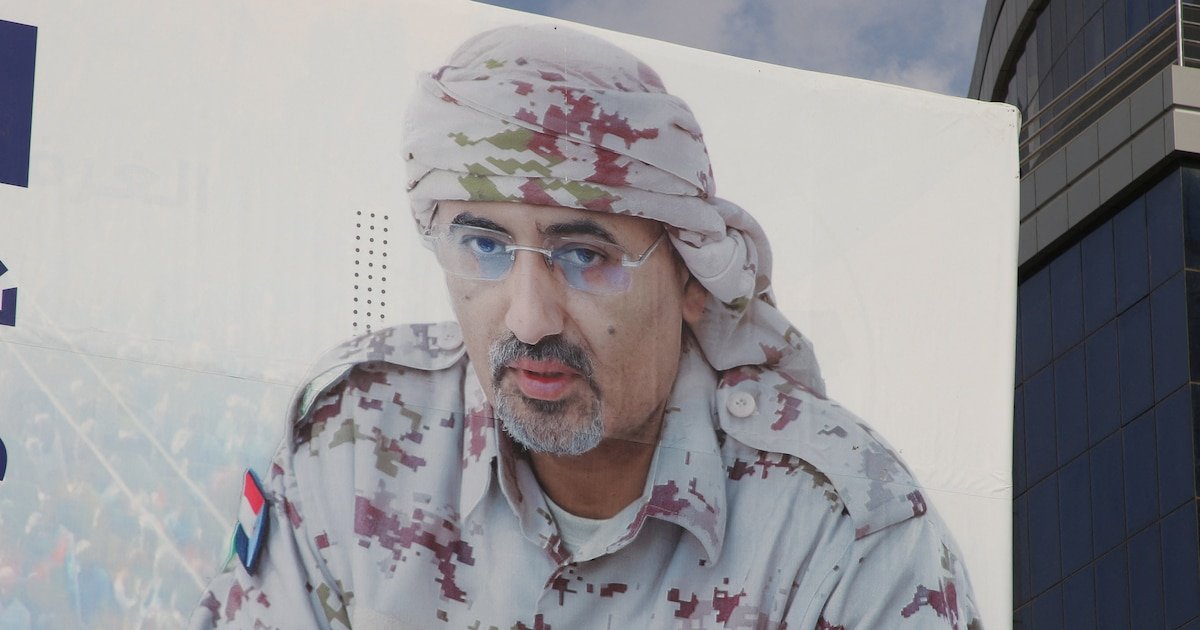
Una coalición liderada por Arabia Saudita llevó a cabo el miércoles mortíferos ataques aéreos contra la provincia natal de un líder separatista respaldado por los Emiratos Árabes Unidos en Yemen, después de que su gobierno dividido lo expulsara y lo acusara de traición.
El Consejo de Transición del Sur (STC) de Aidaros Alzubidi se apoderó de amplias zonas del territorio el mes pasado, antes de ser rechazado por la coalición liderada por Arabia Saudita y las fuerzas yemeníes aliadas.
Tenía previsto acudir a Riad para mantener conversaciones destinadas a reducir la violencia, pero su avión acabó retrasándose y no estaba a bordo cuando despegó.
Según la coalición, Alzubidi huyó y movilizó “grandes fuerzas” en Dhale, su provincia natal en el suroeste de Yemen, tras no asistir a las conversaciones en Riad.

El Consejo de Liderazgo Presidencial de Yemen, que ostenta el poder ejecutivo y agrupa a facciones rivales, anunció entonces la destitución de Alzubidi, acusándolo de alta traición.
El miércoles, más de 15 ataques aéreos alcanzaron Dhale, causando la muerte de cuatro personas, según informaron dos fuentes hospitalarias a la AFP.
La violencia entre el STC, apoyado por los Emiratos Árabes Unidos, y las fuerzas pro saudíes se ha recrudecido en las últimas semanas en los alrededores de Adén, sede del Gobierno yemení reconocido internacionalmente desde que fue derrocado en Saná por los rebeldes hutíes, respaldados por Irán, en 2014.
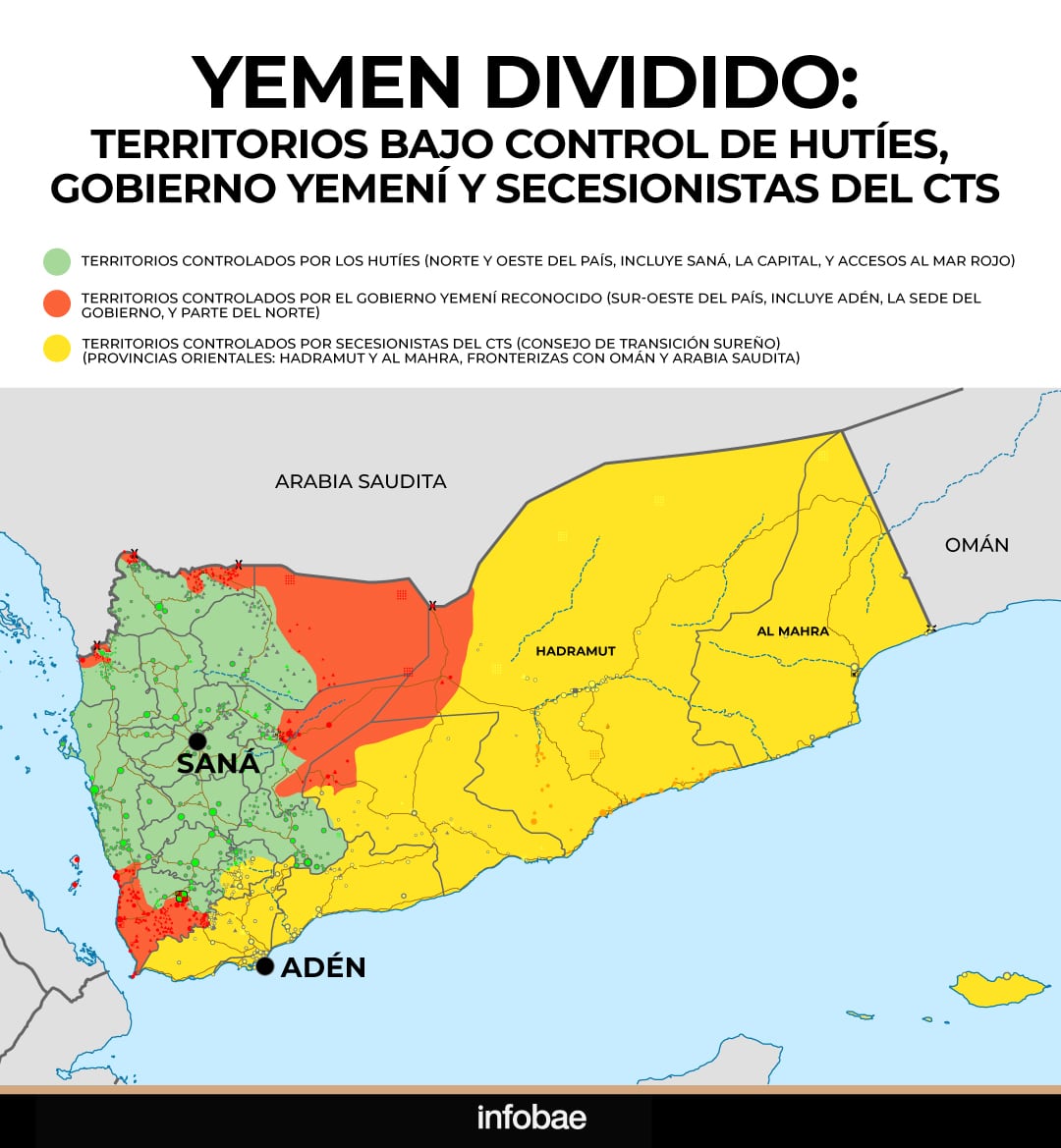
El avance del STC y la respuesta saudí han provocado un deterioro de las relaciones con los Emiratos Árabes Unidos, otra potencia petrolera y rival en Yemen.
Alzubidi “huyó a un lugar desconocido… después de haber distribuido armas y municiones a decenas de elementos dentro de Adén”, dijo el portavoz de la coalición, el mayor general Turki al-Maliki, en un comunicado.
La coalición llevó a cabo nuevos ataques para evitar que Alzubidi “intensificara el conflicto” y lo extendiera a la provincia de Dhale, dijo.
Un funcionario del STC declaró a la AFP que Alzubidi decidió no unirse a la delegación que volaba a Arabia Saudita para mantener conversaciones tras enterarse de que se le pediría que disolviera su grupo, que forma parte del Consejo de Liderazgo Presidencial.
Más tarde, el STC afirmó que había perdido el contacto con la delegación tras su llegada a Riad, expresando su “grave preocupación”.
“Esto plantea serias preguntas que requieren una aclaración urgente”, declaró el STC.
Alzubidi “continúa con sus funciones” en Adén, afirmó el grupo, que pidió a la coalición liderada por Arabia Saudita que detuviera los ataques aéreos. Afirmó que seguía abierto a las conversaciones.
El Consejo Presidencial de Liderazgo anunció la destitución de Alzubidi, acusándolo de cometer varios delitos, entre ellos “alta traición” y “participación en una insurgencia armada”.
“Se ha determinado que (Alzubidi) ha abusado de la justa causa del sur y la ha explotado para cometer delitos graves contra la población civil en las provincias meridionales”, afirmó.
Más de 100 personas han muerto en los ataques de la coalición liderada por Arabia Saudita contra las posiciones de los separatistas y en los enfrentamientos sobre el terreno.

Los saudíes y los emiratíes llevan mucho tiempo apoyando a facciones rivales del conflictivo Gobierno de Yemen, después de que inicialmente unieran sus fuerzas en la coalición militar liderada por Arabia Saudita contra los hutíes.
Un responsable de seguridad en Adén declaró a la AFP que la tarea de garantizar la seguridad en Adén se ha asignado a las fuerzas y a la policía de Adén, todas ellas controladas por el vicepresidente del STC, Abdulrahman Al-Mahrami, vicepresidente del Consejo de Liderazgo Presidencial.
Estas fuerzas se han desplegado en las calles y en los edificios gubernamentales, incluido el palacio presidencial, según el responsable.
Otro funcionario de seguridad dijo a la AFP que, hace dos días, el STC evacuó su sede en Adén y trasladó las operaciones de su canal de televisión a un lugar desconocido por temor a los bombardeos saudíes.
La semana pasada, después de que las fuerzas separatistas se apoderaran de la provincia de Hadramawt, rica en recursos y fronteriza con Arabia Saudita, y de la vecina Mahra, en la frontera con Omán, Alzubidi anunció una transición de dos años hacia la creación de un nuevo país, “Arabia del Sur”, en el sur de Yemen.
(Con información de AFP)
Domestic,Politics,Middle East,Government / Politics






INTERNACIONAL
Secretaría de Inteligencia de Uruguay estudia opciones para imitar el modelo de Estados Unidos

El presidente de Uruguay, Yamandú Orsi, quiere que la Secretaría de Inteligencia Estratégica del Estado (SIEE) se transforme en una agencia con mayor protagonismo y mayor capacidad de acción. La misión es que sea algo similar, salvando las distancias, a la Agencia Central de Inteligencia (CIA, por su sigla en inglés) de Estados Unidos.
El objetivo quedó planteado en la memoria anual de 2025 de la SIEE, informó días atrás el semanario uruguayo Búsqueda. “En consonancia con los lineamientos generales anunciados por el señor presidente de la República, durante el año 2026 se trabajará en la identificación y análisis de los elementos necesarios, así como en la evaluación de su viabilidad, para avanzar hacia la creación de una Agencia de Inteligencia del Estado”, dice este documento.
El trabajo fue iniciado y tiene como primer paso elevar a Presidencia posibles sistemas que puedan implementarse en Uruguay, consignó el medio uruguayo. “La secretaría contribuirá, desde su rol técnico y estratégico, al estudio de alternativas institucionales y buenas prácticas comparadas, sin perjuicio de las competencias que correspondan a los ámbitos político y parlamentario”, señaló la secretaría de inteligencia.

Lo que está haciendo esta secretaría es diseñar una agencia con mayores capacidades operativas y ejecutivas, que luego serán puestas a consideración del Poder Ejecutivo y del Parlamento para que pueda ser aprobada durante este período de gobierno.
La intención del gobierno es avanzar a un organismo con capacidad de producir inteligencia propia en el terreno y ejecutar operaciones, algo que debe incluir las tareas de inteligencia y contrainteligencia frente a amenazas concretas. Aunque con matices, la lógica que está detrás es la de la CIA, de la Agencia Brasileña de Inteligencia (Abin) o de la Dirección Nacional de Inteligencia (DNI) de Colombia.
Para lograrlo tiene algunas dificultades. La más evidente son las restricciones presupuestales, que no le permiten contratar personal, tener un mejor el equipamiento y acceso a fuentes abiertas de información como la que requeriría.

Otra dificultad se da a la hora de compartir datos y generar vínculos de confianzas con otros organismos clave del sistema, como la Policía Nacional. Pero son varios los organismos relacionados a la inteligencia, algo que complejiza la coordinación y lograr un flujo eficaz de información.
En diciembre, el mismo medio había informado que el gobierno ya estaba trabajando en crear una agencia de inteligencia. Lo señaló explícitamente el presidente en un discurso ante la Asociación de Dirigentes de Marketing: “Dije y sostengo que Uruguay debe caminar decididamente hacia la creación de una agencia nacional de inteligencia”.
En una línea similar, se había expresado en una entrevista con Búsqueda. “Uruguay no tiene una agencia de inteligencia. Tiene una Secretaría de Inteligencia y tiene divisiones de Inteligencia medio separadas. Pero hablás con cualquier país y tiene una agencia. Entonces, yo quiero dar la discusión”, expresó el presidente.”Capaz que nosotros no necesitamos una agencia porque somos distintos… ¡Es raro!”, ironizó luego.

El argumento que ha utilizado el presidente Orsi para argumentar esta necesidad es el avance del crimen organizado en el país. Considera que su combate debe darse con información, con cooperación internacional, con un servicio de inteligencia más profesional y con un trabajo más coordinado entre los distintos organismos relacionados a la seguridad.
El mandatario considera que la transformación del actual servicio de inteligencia uruguayo debe darse con la incorporación de herramientas tecnológicas.
Una de las alternativas que analiza el gobierno es que la actual SIEE se transforme en un organismo híbrido que incorpore ciertas capacidades operativas, como la inteligencia y la contrainteligencia, pero que no abandone su rol estratégico. Además, tendría áreas vinculadas a la detección y la neutralización de amenazas dirigidas contra el proyecto Estado o contra el sistema de inteligencia.
2026,20260326,camilo dos santos ayala presidencia de uruguay,montevideo,presidencia,uruguay

NEWYou can now listen to Fox News articles!
St. Paul, MINN. – From Times Square to here in Minnesota’s state capital, communist and socialist activists at the nationwide «No Kings» protests escalated their anti-America campaign and openly called for a nationwide economic strike on May 1, an international communist holiday known as May Day, as key Democratic activists joined their call.
At the rally here in St. Paul, organizers, speakers and activists distributed communist literature, waved flags from socialist governments and revolutionary movements, and urged demonstrators to transform the day’s protests into a nationwide shutdown of work, school and commerce.
By early Sunday, Press TV, the propaganda arm of the Islamic Republic of Iran, leveraged news of the protests to tell readers, «Regime change begins at home’: No Kings, No War protests held across US.»
As Fox News Digital reported, about 500 organizations with an estimated combined annual revenue of about $3 billion sponsored and organized the demonstrations, creating a centralized protest apparatus even while organizers tried to market the activists as «grassroots.»
The network included traditional Democratic advocacy organizations, like Indivisible, MoveOn and the American Federation of Teachers, alongside openly socialist and communist groups such as the Party for Socialism and Liberation, Freedom Road Socialist Organization and local chapters of the Communist Party USA, including the Twin Cities Communist Party USA club, which endorsed the St. Paul rally.
500 GROUPS WITH $3B IN REVENUES ARE BEHIND THE #NOKINGS PROTESTS AND COMMUNIST CALL FOR ‘REVOLUTION’
Kevin Dwire, a candidate for the U.S. Senate from the Socialist Workers Party, holds «The Militant» newspaper during the «No Kings» protest in St. Paul, Minn., on March 29, 2026. (Derek Shook for Fox News Digital)
Offstage at the celebrity-filled «No Kings» protest in St. Paul, activists with the Party for Socialism and Liberation sold a manifesto, «Socialist Reconstruction: A Better Future for the United States,» filled with Marxist teachings.
Yards away, near the main stage, Kevin Dwire a candidate for the U.S. Senate from the Socialist Workers Party, sold copies of the «Communist Manifesto» by Karl Marx and Friedrich Engels, the 1847 work that would transform the next century’s global politics. The group says it is «part of the continuity of revolutionary Marxism,» tracing back to Marx, Vladimir Lenin and Leon Trotsky.
In the middle of the lawn, flags for the Islamic Republic of Iran, Venezuela and Cuba flew next to a flag of the Freedom Road Socialist Organization, a self-described Marxist group.
In the back of the lawn, a young man who identified himself only as «Mason» championed the teachings of the Revolutionary Communists of America. A young woman nearby sold copies of Socialist Alternative, which describes itself as a «revolutionary organization working to build a movement for a democratic, socialist society.»
‘NO KINGS’ CALLS ITSELF LEADERLESS, BUT ITS OWN INTERNAL DOCUMENTS TELL A VERY DIFFERENT STORY
Across the country, from Los Angeles to New York City, pro-communist Americans marched alongside traditional center-left Democrats in an alliance that many mainstream media outlets largely portrayed simply as anti-Trump protests.
The ideological adherents themselves, however, were not shy about their beliefs.
In Times Square, members of the Revolutionary Communists of America chanted: «There is only one solution — communist revolution,» while waving red flags bearing the hammer and sickle.
The common refrain from these groups was a call for a nationwide strike on May 1, the traditional May Day holiday long embraced by communist and socialist movements as a day of mass political action.
At the St. Paul rally, that call received support from the stage.
Ezra Levin, the co-founder of Indivisible, the protest’s key organizer, joined the communist call for a national strike and urged protesters to prepare for economic disruption on May Day, similar to a shutdown that saw limited success in Minneapolis during protests on Jan. 23 against Immigration and Customs Enforcement.
«I want everyone here to put this on their calendar… It is a tactical goal, an escalation… It is an economic show of force, inspired by Minnesota’s own day of truth and action,» Levin told the crowd.
Levin continued: «On May 1, on May Day, we are saying, ‘No business as usual.’ No work, no school, no shopping. We’re going to show up and say, ‘We’re putting workers over billionaires and kings.’»
While Indivisible has participated in May Day coalitions before, the prominence of socialist organizations in the protest ecosystem illustrates the growing influence of the far left within networks that overlap with mainstream Democratic political organizing.
Indivisible Project, a nonprofit whose work is often marketed with just the first word of the group’s name, has received $5 million in recent years from billionaire George Soros’ Open Society philanthropy arm.
POWER COUPLE OF CHAOS: HOW A TYCOON AND ACTIVIST BUILT A ‘REVOLUTIONARY BASE’ AT THE HOUSE OF SINGHAM
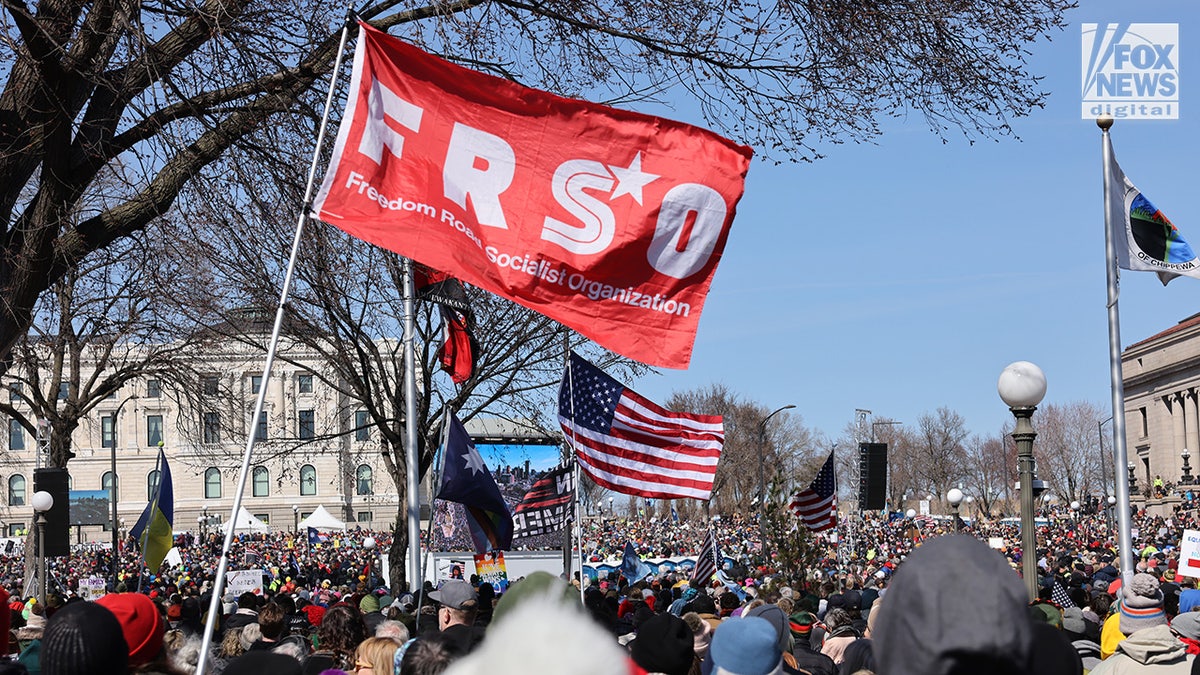
Members of the Freedom Road Socialist Organization, a Marxist group, raise their flag over the «No Kings» protest at the Minnesota State Capitol in St. Paul, Minn,, on March 28, 2026. (Derek Shook for Fox News Digital)
Meanwhile, some of the openly pro-communist groups marching alongside Democratic activists are connected to a global activist network funded by Neville Roy Singham, an American-born tech tycoon now based in Shanghai, promoting messaging critical of U.S. democracy and sympathetic to China’s political model.
That network includes media and organizing hubs such as the People’s Forum, BreakThrough BT Media Inc.’s BreakThrough News, CodePink, the ANSWER Coalition and the Party for Socialism and Liberation, which have received funding and support through the Singham network.
Over the years, Singham, who sold his tech company for approximately $800 million in 2017, has provided $22.4 million to People’s Forum, $1.3 million to CodePink and $1.1 million to BreakThrough BT Media Inc. The ANSWER Coalition and Party for Socialism and Liberation have received support through their relationships with the People’s Forum.
The network has funded conferences, media outlets and activist organizations promoting narratives that portray the United States as a «fascist» and «hyper-imperialist» power while defending the authoritarian governments of China, North Korea, Venezuela, Cuba and the Islamic Republic of Iran.

Socialist and communist political literature sits on a table during a No Kings protest in St. Paul, Minnesota, March 29, 2026. (Derek Shook for Fox News Digital)
The theme echoed throughout the protests, where demonstrators warned of rising «fascism» in the United States.
In the hours after the protests ended, the activist networks celebrated the demonstrations online. In Los Angeles, CodePink posted video showing its banner in the middle of a protest where demonstrators chanted: «Hey, hey, ho ho, Donald Trump has got to go.»
BreakThrough News shared videos from protests in San Francisco, Washington, D.C., Houston and Gainesville, Florida, declaring: «Massive demonstrations took place as part of the ‘No Kings Day.’»
The outlet blasted what it described as Trump’s «right-wing agenda of endless wars and deportations.»
The ANSWER Coalition circulated video showing Indivisible, CodePink and the Party for Socialism and Liberation marching together in Chicago, writing that the «people of Chicago take the streets to stand against Trump’s agenda.»
Indivisible Chicago responded with three fire emojis, revealing the emerging synchronicity between traditionally Democratic groups and openly pro-communist organizations.
The ANSWER Coalition operates out of the People’s Forum in New York City, which also celebrated the demonstrations online with the caption, putting its stamp on the day: «No Kings Day NYC.»
Leaders tied to some of these activist groups, including CodePink co-founders Jodie Evans and Medea Benjamin, have participated in delegations to Venezuela, Cuba, Iran, North Korea and China, strengthening relationships with governments frequently at odds with U.S. foreign policy. Evans married Singham in 2017, as he started funding this network in the U.S.

A demonstrator leaned a Party for Socialism and Liberation sign against the porta-toilet at the end of the «No Kings» protest in St. Paul, Minn. (Asra Q. Nomani/Fox News Digital)
Back in St. Paul, even some socialist activists expressed skepticism about those alliances.
Dwire, the Socialist Workers Party leader selling copies of Marx’s manifesto, shook his head when discussing China’s political system. «China socialism is capitalism,» he said.
The young activist from the Revolutionary Communists of America also distanced himself from China’s government, describing it as a betrayal of communist ideals, while he openly embraced communist ideology. «We are against imperialism,» he told Fox News Digital.
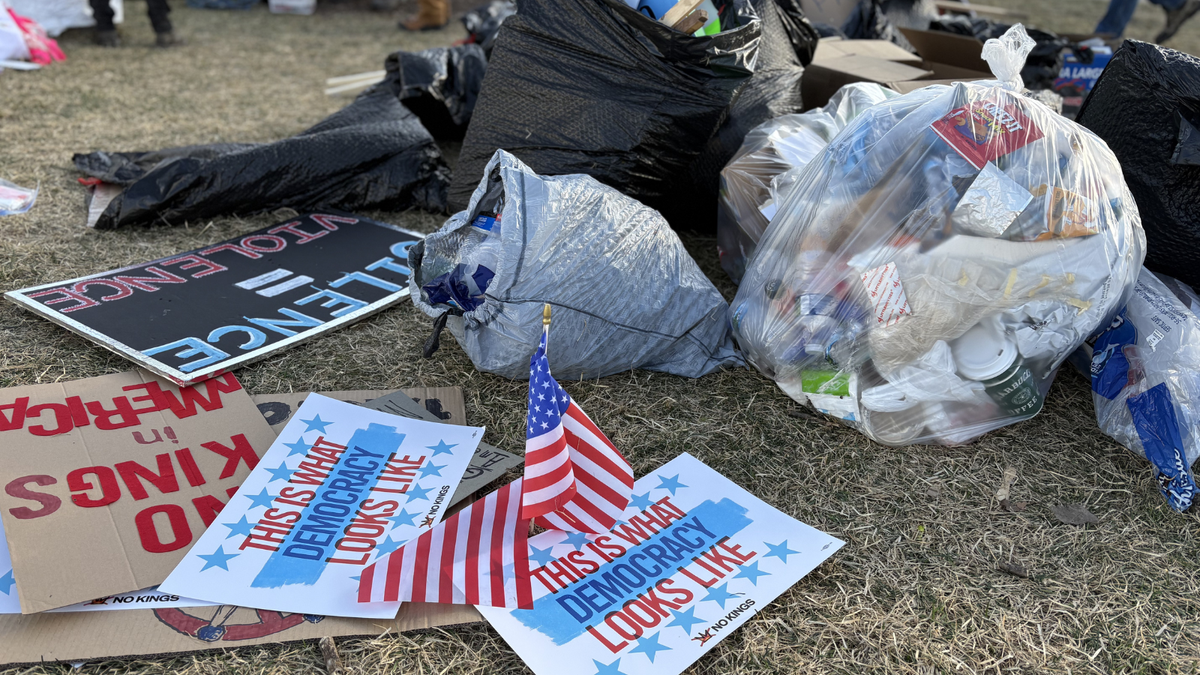
Protester organizers dump American flags in the trash after the «No Kings» demonstration in St. Paul. (Asra Q. Nomani/Fox News Digital)
As the rally wound down and crews dismantled stage equipment, the protest grounds began to empty.
A demonstrator propped a Party for Socialism and Liberation sign against a porta-toilet.
Nearby, two American flags lay discarded in the grass beside a heap of garbage bags, an emptied bag of Cheez-It visible among the trash.
Kyle Schmidbauer contributed to this report.
politics, us protests, minnesota fraud exposed, socialism
INTERNACIONAL
Quién es la científica argentina que fue detenida en Brasil acusada por el robo de un virus peligroso

Mientras la justicia brasileña avanza en la investigación acerca del robo de un peligroso virus, se conocieron detalles acerca de la científica argentina que fue detenida y está siendo acusada.
Soledad Palameta Miller, de 36 años, es especialista en Virología y Bacteriología de los Alimentos. Se desempeñaba como docente, investigadora y coordinadora del área afectada dentro del Instituto de Biología de la Universidad Estatal de Campinas (Unicamp), en el estado de San Pablo, desde 2022.
Según confirmaron medios locales y fuentes oficiales, fue arrestada en una primera etapa de la investigación, aunque días después recuperó la libertad bajo condiciones judiciales, mientras continúa imputada. Su familia negó las acusaciones y asegura que la denunciaron para perjudicarla.
Palameta Miller se recibió de licenciada en Biotecnología de la Universidad Nacional de Rosario. Su carrera la desarrolló, en gran parte, en Brasil, donde trabajó en el Laboratorio Nacional de Biociencias en proyectos vinculados a vectores virales, inmunomodulación y anticuerpos monoclonales dirigidos a terapias contra el cáncer, informó Clarín.
A la par hizo un posdoctorado en virología y participó en investigaciones relacionadas con el desarrollo de vacunas y pruebas diagnósticas.
La científica rosarina Soledad Palameta Miller fue detenida y luego liberada en el caso de la presunta sustracción de material biológico en un centro de investigación de alta seguridad de Brasil. (Foto: NA)
En la actualidad, coordinaba un laboratorio enfocado en la vigilancia epidemiológica y en el desarrollo de diagnósticos y terapias vinculadas a virus transmitidos por alimentos y agua de la Facultad de Ingeniería de Alimentos.
Soledad y su marido, un ciudadano estadounidense identificado como Michael Miller, son socios en la empresa Agrotrix Biotech Solutions, cuya actividad principal es la investigación y el desarrollo experimental en ciencias físicas y naturales.
Leé también: Israel impidió que un cura pueda celebrar la misa del Domingo de Ramos en la iglesia de Jerusalén: “Fue la primera vez en siglos”
Desde la universidad brasileña involucrada emitieron varios comunicados donde informaron que iniciaron una investigación interna para esclarecer lo sucedido. Al mismo tiempo, remarcaron que el caso está en manos de la Justicia.
La Unicamp explicó que se trató de un episodio aislado y que se actuó enseguida para detectar el material desaparecido. Asimismo, indicó que los laboratorios involucrados operan bajo estrictos protocolos de bioseguridad y que todo el material incautado quedó bajo custodia de las autoridades, encargadas de realizar las pericias para determinar con precisión qué tipo de virus es.
Cómo se descubrió el caso
El episodio se remonta al 13 de febrero, cuando se detectó la desaparición de material biológico almacenado en un laboratorio de nivel 3, uno de los más estrictos en términos de bioseguridad. Este tipo de instalaciones manipula agentes que pueden provocar enfermedades graves o incluso mortales, con capacidad de transmisión aérea, lo que elevó de inmediato la preocupación de las autoridades.
El caso se mantuvo en reserva durante varias semanas, hasta que el rectorado de la universidad lo hizo público el 23 de marzo a través de un comunicado oficial. Allí se informó que, ante la gravedad del hecho, se dio intervención a la Policía Federal de Brasil y a la Agencia Nacional de Vigilancia Sanitaria (Anvisa), que colaboró con asistencia técnica en la investigación.
Ese mismo día, los primeros avances derivaron en la detención en flagrancia de un sospechoso vinculado al robo. En paralelo, se llevaron adelante dos allanamientos ordenados por la Justicia federal de Campinas, que permitieron recuperar el material sustraído. Las muestras fueron posteriormente enviadas al Ministerio de Agricultura y Ganadería para su análisis.

El robo ocurrió dentro de la Unicamp. (Foto: Unicamp)
Desde la universidad evitaron brindar detalles sobre la naturaleza específica de los virus y bacterias involucradas, argumentando que revelar esa información podría comprometer el curso de la investigación. No obstante, remarcaron que todo el material recuperado se encuentra actualmente bajo custodia de las autoridades federales.
Palameta Miller, en tanto, fue trasladada a una unidad penitenciaria femenina en San Pablo y liberada al día siguiente. Según el informe de la Policía Federal, enfrenta cargos por hurto agravado, fraude procesal y transporte ilegal de organismos genéticamente modificados.
La defensa de la investigadora sostiene que no existen pruebas concluyentes de un robo y argumenta que la utilización del laboratorio respondía a la falta de instalaciones propias para sus investigaciones. En ese sentido, el caso también abrió un debate sobre las condiciones de trabajo en el ámbito científico.
Mientras tanto, los investigadores no descartan la posible participación de otras personas, entre ellas el entorno cercano de la acusada. La causa sigue abierta y bajo estricta reserva.
Brasil, Detenida, Virus

Carrefour, Jumbo y ChangoMás liquidan televisores: hay modelos por menos de $200.000

La Justicia procesaría a «Chiqui» Tapia y a Toviggino en la causa por presunta evasión fiscal de $19.000 millones

Secretaría de Inteligencia de Uruguay estudia opciones para imitar el modelo de Estados Unidos

La advertencia del Pibe Valderrama a sus 64 años: ‘Con estos ‘cooling breaks’ voy a volver a jugar’

Las exportaciones del agro en 2025 registraron el tercer mejor resultado en la historia del sector

Confirmado, y son malísimas noticias para Tomb Raider. La serie se enfrenta a un duro revés por una lesión de Sophie Turner

Máximo Kirchner salió al cruce de Milei y Macri tras el fallo por YPF a favor de la Argentina

Ian Lucas contó que Maxi López le advirtió sobre su romance con Evangelina Anderson: “No seas bol…”

La secretaria del piloto denunció que el amigo de Adorni la hostiga y la justicia dispuso medidas

¡DERIVA ECONÓMICA Y SOBERBIA POLÍTICA! El abismo entre el «relato oficial» y la realidad de una clase media que no aguanta más

 POLITICA2 días ago
Máximo Kirchner salió al cruce de Milei y Macri tras el fallo por YPF a favor de la Argentina
- POLITICA2 días ago
La secretaria del piloto denunció que el amigo de Adorni la hostiga y la justicia dispuso medidas
- POLITICA3 días ago
¡DERIVA ECONÓMICA Y SOBERBIA POLÍTICA! El abismo entre el «relato oficial» y la realidad de una clase media que no aguanta más