INTERNACIONAL
Elderly British couple released by Taliban after eight months in custody following negotiations

NEWYou can now listen to Fox News articles!
An elderly British couple were released by the Taliban this week after eight months in captivity.
Barbie Reynolds, 76, and husband Peter Reynolds, 80, arrived in Qatar on Friday following months of negotiations between Qatar, the Taliban and Britain.
The couple had lived in Afghanistan for 18 years, where they ran an education charity.
Despite the ordeal, Barbie Reynolds said they would return to Afghanistan if they could. They are both Afghan citizens.
«God is good, as they say in Afghanistan,» she added at the Kabul airport.
ISRAEL RECOVERS REMAINS OF THREE MORE BODIES HELD BY HAMAS: ‘NO VICTORY UNTIL LAST HOSTAGE RETURNS’
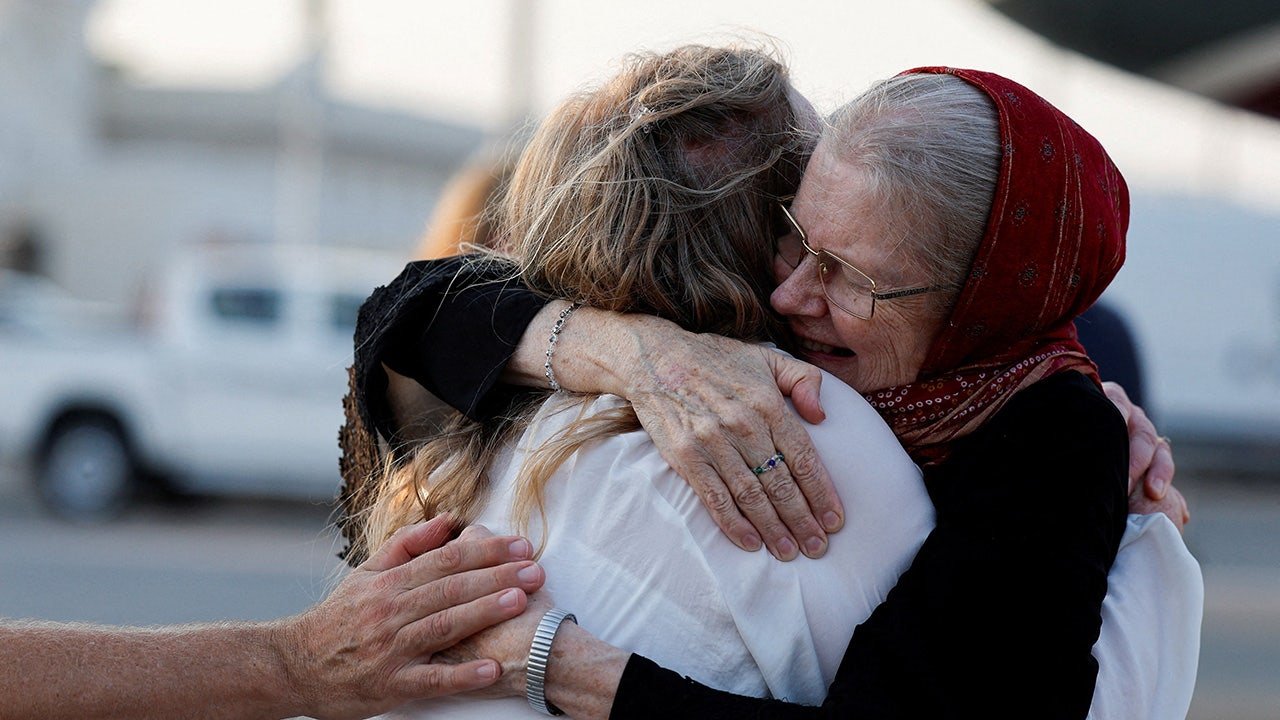
Barbie Reynolds, who was released from Taliban detention in Afghanistan, is greeted by her daughter Sarah Entwistle in Qatar on Friday. (Reuters/Ibraheem Abu Mustafa )
The couple, who had been taken into custody in February, were met by relatives, including their daughter, when they arrived in Doha, Qatar, on Friday.
Their daughter, Sarah Entwistle, was clearly emotional and told reporters in Qatar, «Thank you for giving us our family back.»
She added that their family would be «forever grateful to the Qatari and British governments for standing with us during this difficult time.»
«This experience has reminded us of the power of diplomacy, empathy and international cooperation,» she said.
The couple’s son, Jonathan Reynolds, told Sky News from the U.S. that their health would have started to deteriorate if they had been held any longer, despite Qatar making sure they had access to their doctor and medicines during their captivity.
United Nations health experts had also warned that the couple’s captivity could harm or even kill them.
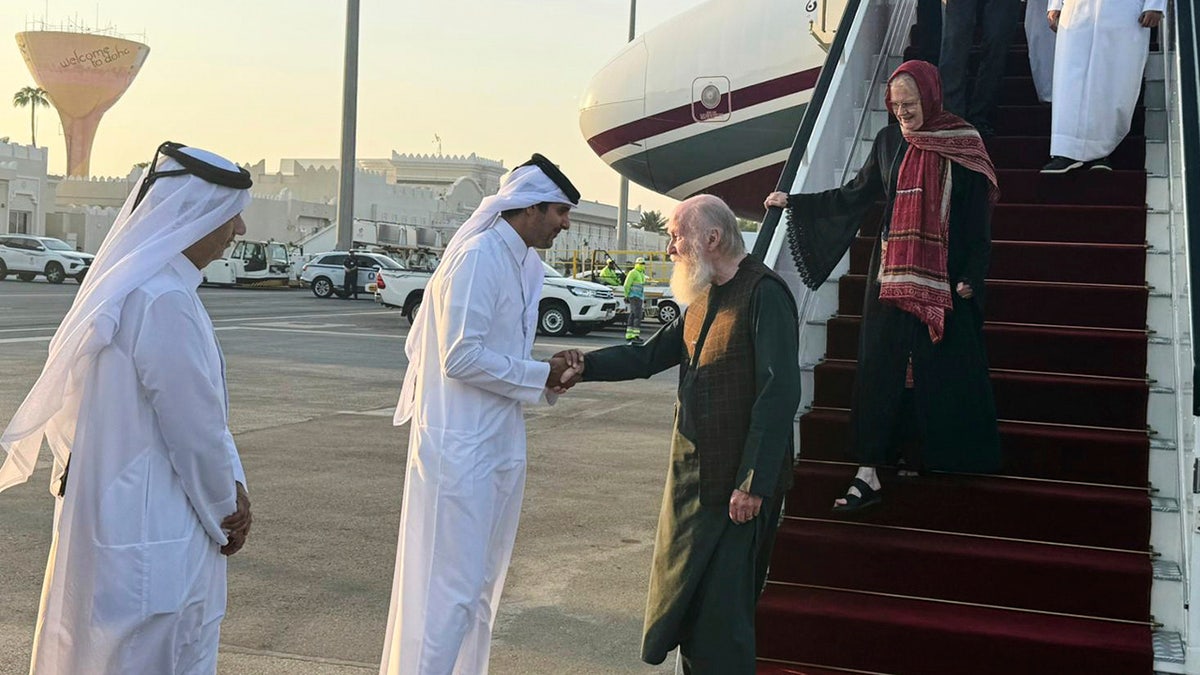
A Qatari official welcomes the released British couple, Barbie and Peter Reynolds, as they step off the plane upon their arrival in Doha, Qatar, on Friday. (AP Photo/Najib Jubain)
AFGHANISTAN MARKS FOUR YEARS IN POWER BY LURING YOUNG FEMALE INFLUENCERS TO BOOST TOURISM
Their family had accused the Taliban of mistreating the couple, and urged the government to explain why they had been detained.
Mohammed bin Abdulaziz al-Khulaifi, Qatar’s minister of state, said he was grateful «for the fruitful cooperation» between the U.K. and the Taliban in getting the pair released.
The Taliban claimed that the couple had broken Afghan laws without going into detail.
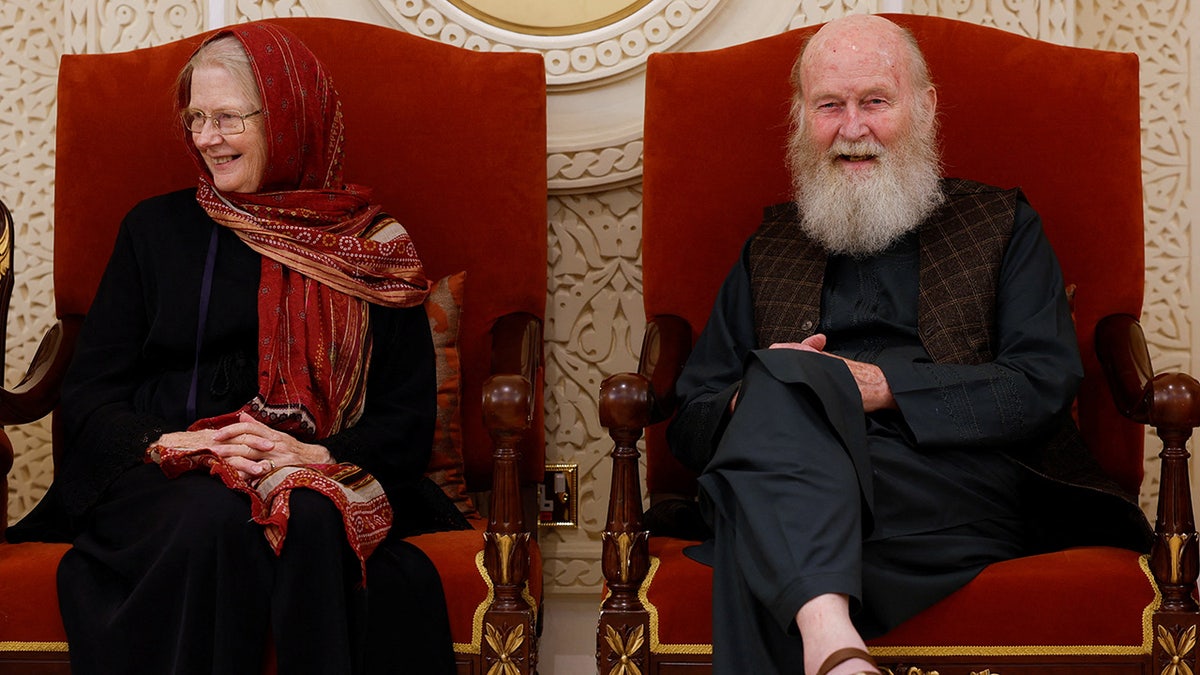
British couple Peter and Barbie Reynolds, who were released from Taliban detention in Afghanistan, rest after disembarking from a plane, in Doha, Qatar. (Reuters/Ibraheem Abu Mustafa)
«We are very grateful that at least, today is a very great humanitarian day, that they will be reunited with their family,» Richard Lindsay, Britain’s special envoy to Afghanistan, said, adding that it was «obviously up to the [Afghanistan] authorities here to determine why they were detained.»
British Prime Minister Keir Starmer added, «I want to pay tribute to the vital role played by Qatar, including the emir, His Highness Sheikh Tamim bin Hamad al Thani, in securing their freedom.»
CLICK HERE TO GET THE FOX NEWS APP
The U.S. pulled out of Afghanistan in 2021, leaving the Taliban to return to power.
conflicts,world,afghanistan,united kingdom








INTERNACIONAL
El FMI advirtió que la guerra en Medio Oriente impulsará la inflación y frenará el crecimiento mundial
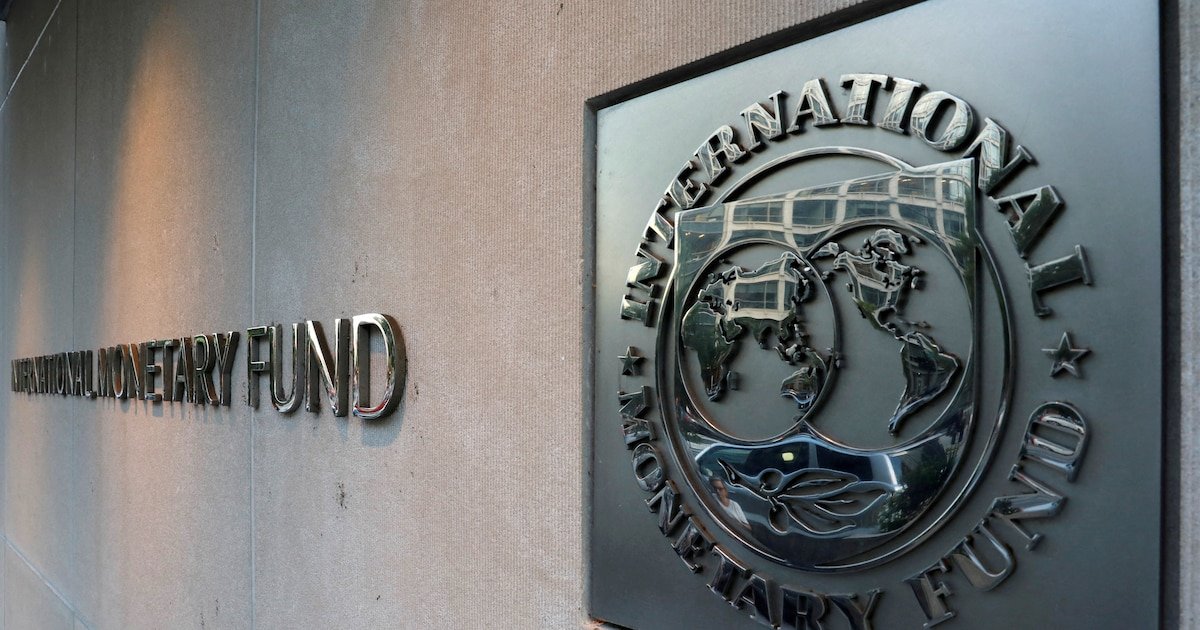
El Fondo Monetario Internacional (FMI) advirtió que la guerra en Medio Oriente acelerará la inflación y ralentizará el crecimiento mundial, en un contexto de creciente incertidumbre económica y antes de la publicación de nuevas previsiones globales la próxima semana.
La directora gerente del organismo, Kristalina Georgieva, señaló en declaraciones a Reuters que, sin el conflicto, el FMI habría proyectado una mejora en la actividad económica global. Según indicó, las estimaciones previas situaban el crecimiento en el 3,3% para 2026 y en el 3,2% para 2027.
“Si no hubiéramos tenido esta guerra, habríamos visto una ligera revisión al alza de nuestras previsiones de crecimiento. En cambio, ahora todo apunta a un aumento de los precios y a un crecimiento más lento”, dijo el lunes.
Georgieva explicó que el impacto del conflicto ya se refleja en las perspectivas de inflación y de crecimiento. Incluso en un escenario de resolución rápida, el efecto negativo persistirá sobre las proyecciones.
“Incluso un pronto fin de las hostilidades y una recuperación bastante rápida darían lugar a una revisión a la baja ‘relativamente pequeña’ de la previsión de crecimiento y a una revisión al alza de su previsión de inflación”, sostuvo.

La titular del FMI advirtió que una prolongación de la guerra agravará el impacto sobre la economía mundial. “Si la guerra se prolongara, el efecto sobre los precios y la actividad económica sería mayor”, afirmó.
En paralelo, indicó que el organismo recibió solicitudes de ayuda financiera de algunos países afectados por el contexto internacional, aunque no detalló cuáles. También señaló que el FMI evalúa mecanismos para responder a estas necesidades.
“El FMI podría ampliar algunos programas de préstamo existentes para satisfacer las necesidades de los países”, agregó.
Días antes, en un documento elaborado por el economista jefe del Fondo y varios departamentos internos, la institución definió la situación como “un nuevo shock global” que interrumpe la recuperación de economías que comenzaban a estabilizarse tras crisis recientes. El informe advirtió que los países directamente involucrados sufren daños de largo alcance en infraestructura y sectores productivos.
El principal canal de transmisión del impacto económico es el encarecimiento de la energía. Según la Agencia Internacional de Energía, el cierre parcial del estrecho de Ormuz y los daños a la infraestructura regional alteraron el mercado internacional del petróleo. El FMI señaló que, para los países importadores, este aumento de precios funciona como un impuesto sobre los ingresos nacionales.

Cerca del 30% de la producción mundial de petróleo y el 20% del gas natural licuado transitan por el estrecho de Ormuz, lo que expone a economías de África y Asia. En Asia y Europa, los principales importadores concentran el mayor impacto por el aumento de los costos energéticos.
El alza de la energía también repercute en Medio Oriente, África, Asia-Pacífico y América Latina. En estas regiones, el encarecimiento se combina con subas en alimentos y fertilizantes y con condiciones financieras más restrictivas. El FMI advirtió que los países de bajos ingresos enfrentan mayores riesgos de inseguridad alimentaria.
“Los habitantes de los países de ingreso bajo son quienes corren el mayor riesgo cuando suben los precios”, indicó el organismo.
Las cadenas de suministro globales registran disrupciones. Las rutas marítimas se desvían, lo que eleva los costos de transporte y seguros y provoca demoras en las entregas. El tráfico aéreo en centros del Golfo también sufre interrupciones, con impacto en el turismo y el comercio internacional.
El conflicto afecta además el comercio de fertilizantes, ya que cerca de un tercio del suministro global transita por el estrecho de Ormuz. Esta situación coincide con la temporada de siembra en el hemisferio norte y presiona los precios de los alimentos.

En el plano financiero, el FMI señaló un aumento de la volatilidad. Las bolsas globales registraron caídas, los rendimientos de los bonos subieron y las condiciones financieras se volvieron más restrictivas, aunque sin una liquidación masiva como en crisis anteriores.
El organismo destacó que el impacto resulta desigual entre países. Algunos exportadores de materias primas fortalecen sus cuentas fiscales y externas, mientras otros enfrentan mayores presiones sobre sus balanzas de pagos y el costo de vida.
(Con información de REUTERS)
North America
INTERNACIONAL
New poll reveals Spanberger’s popularity is plummeting amid backlash over gerrymandering
NEWYou can now listen to Fox News articles!
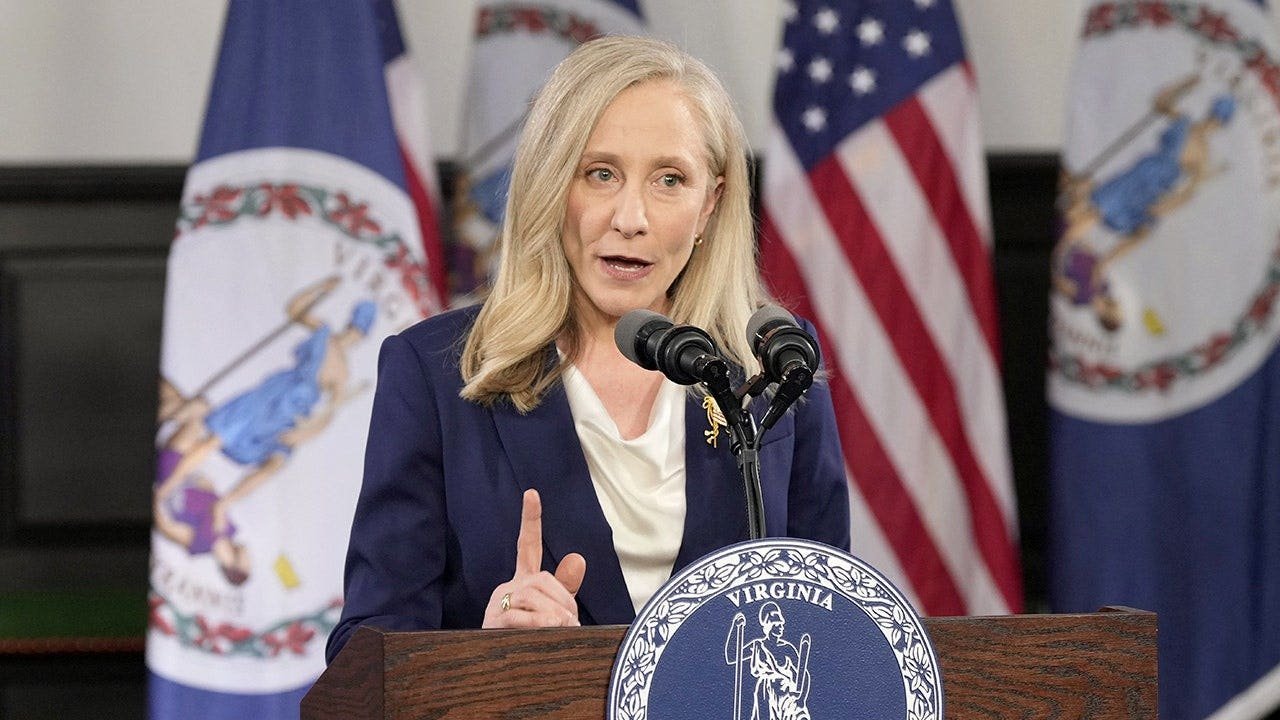
Virginia’s Democratic Gov. Abigail Spanberger was swept into the governor’s mansion on a deep blue wave last November, but has seen her popularity plummet after less than 3 months in office.
Forty-six percent of Virginians disapprove of her job performance, while 47% approve. Compared to Virginia governors from both sides of the aisle since 1994, Spanberger has the highest disapproval rating at this point in her term.
In contrast, predecessor Gov. Glenn Youngkin saw a 54-39 job approval at this point in his term, with the highest favorability going to Democrat Mark Warner – now Virginia’s senior senator – with a 78-20 rating.
ICE PRESSURES SPANBERGER AS FAIRFAX MURDER SUSPECTS TRIGGER NEW DETAINERS IN ‘SANCTUARY’ CLASH
Virginia Gov. Abigail Spanberger responds to President Donald Trump’s, unseen, State of the Union. (Steve Helber/Reuters)
Warner’s current counterpart, Sen. Tim Kaine, was at 62-31, GOP Gov. Jim Gilmore III at 63-30, Republican Gov. Bob McDonnell at 59-39 and Democrats Terry McAuliffe and Ralph Northam at 52-30 and 48-37 respectively.
RNC SUES TO STOP DEMOCRATS’ VIRGINIA REDISTRICTING PUSH
Spanberger defeated then-Lt. Gov. Winsome Sears by 15 points in November and completely flipped statewide offices to Democrats Ghazala Hashmi for lieutenant governor and Jay Jones for attorney general.
The Post pointed out that while Spanberger’s favorability was narrow, her win dwarfed that of Youngkin’s over McAuliffe in 2021 – and the Falls Church business executive’s favorability was several points higher than hers.
George Mason University Policy & Government Dean Mark Rozell, a co-sponsor of the poll, told the Post that while some bit of political polarization is «baked in,» it was «unusual» to see such a result for Spanberger this early in her term after a campaign on a «centrist image.»
PRIMARY PAUSE, POLITICAL FIRESTORM: HIGH-STAKES ELECTIONS THIS MONTH TAKE CENTER STAGE
Seven percent of Virginians, however, by contrast, cite her tenure as «too conservative.»
Spanberger’s shift on gerrymandering was recently evinced through redistricting referendum critics citing her own 2019 words back to her in recent mailers, according to reports.
«Gerrymandering is detrimental to our democracy and it weakens the individual voices that form our electorates. Opposing gerrymandering should be a bipartisan priority,» Spanberger tweeted six years ago when Virginia considered its ultimately successful bid to remove map-redrawing power from the partisan legislature.
INSURGENT VIRGINIA DEMOCRAT SAYS HIS PARTY IS ‘COMPLETELY WRONG’ ON GUN RIGHTS AND GERRYMANDERING
However, Spanberger’s office recently denied claims that there had been any internal deals made involving her personally to help get more Democrats elected, particularly in the case of the Second Congressional District in Hampton Roads and the Eastern Shore.
Spanberger has also received criticism for appearing to pivot on gun control, from a moderate stance while in Congress favoring commonsense reforms and citing her resume as a former gun-toting CIA agent and postal inspector, to a governor poised to sign sweeping gun bans drafted by far-left Fairfax Democrats.
«I’m a mother of three girls in Virginia Public Schools. I’m also a former federal agent who carried a gun every single day for my job,» she said at a 2025 rally. «So I come at this issue as someone who cares deeply about the safety of our kids and as someone who understands the responsibilities of owning and of carrying a firearm.»

A welcome sign is posted in the grass near the intersection of Lee Highway, Key Bridge, and the George Washington Memorial Parkway in Rosslyn, Arlington County, Virginia. (Universal Images Group/Getty Images)
The redistricting referendum has been criticized for unfairly empowering Spanberger’s base counties, as five newly-drawn districts would originate in Fairfax and envelop – and critics say overpower – the voices of rural central and Western Virginia.
CLICK HERE TO DOWNLOAD THE FOX NEWS APP
One such district in particular, unfavorably shaped like a lobster according to critics, already has three notable Democratic candidates – gun control bill sponsor State Del. Dan Helmer of Fairfax, former first lady Dorothy McAuliffe, and former Jack Smith deputy JP Cooney – despite the referendum not being officially decided by the voters until April 21.
Fox News Digital reached out to Spanberger for comment.
virginia governor race, abigail spanberger, governors, virginia, polls
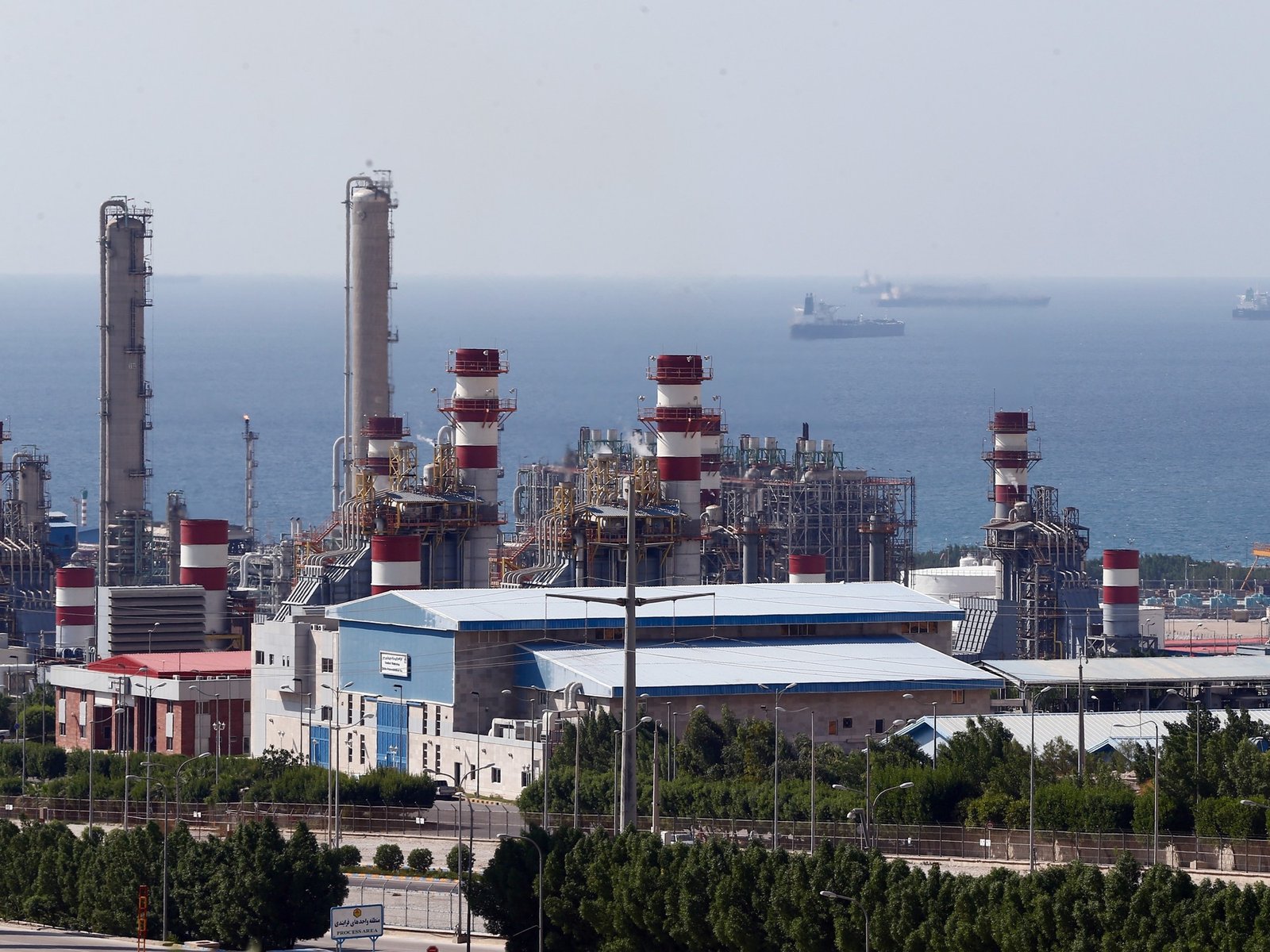
Las estaciones de servicio europeas siguen suministrando combustibles y los aeropuertos siguen llenando los depósitos de los aviones, pero el cierre del Estrecho de Ormuz y el choque energético que provoca podría cambiar pronto esa situación de relativa normalidad. La Comisión Europea ya adelanta que si nada cambia en los mercados energéticos habría que empezar a tomar medidas en semanas o meses y ya está indicando a los gobiernos del bloque qué decisiones serían las primeras para consumir menos combustible, sobre todo queroseno de aviación y diésel para en transporte de mercancías por carretera.
El comisario de Energía del brazo ejecutivo de la Unión Europea, el danés Dan Jorgensen, contó al diario Financial Times que la Comisión Europea está evaluando “todas las opciones” porque “los precios de la energía serán más altos durante mucho tiempo” aunque se reabra Ormuz y vuelva a salir el petróleo y el gas del Golfo Pérsico. Fuentes comunitarias llevan días explicando que Europa no está todavía en una crisis de suministro, pero que podría estarlo si el conflicto, que ya cumplió seis semanas, se alarga. Esas mismas fuentes aseguran que no ven muchas probabilidades en un cierre limpio y rápido del choque entre Irán, por un lado, y Estados Unidos e Israel por el otro, y que eso tendrá consecuencias en los mercados energéticos europeos.
Jorgensen asegura que no hay que racionar por ahora, pero sí hay que prepararse para hacerlo en los próximos meses si sigue el conflicto.
Las primeras medidas que apunta la Comisión Europea no son muy disruptivas, pero los ciudadanos podrían empezar a notarlas pronto. Sobre todo en el sector del transporte.
Bruselas pide a los gobiernos, por ejemplo, que reduzcan la velocidad máxima en autopistas para reducir el consumo de combustible (se calcula que un auto que circula a 100 kilómetros por ahora consume un 15% menos que uno en las mismas condiciones a 120 kilómetros por hora).
En la carta de Jorgensen a los gobiernos se les señala también que deben fomentar el uso del transporte público y del teletrabajo para reducir los movimientos de personas y empezar a reducir el número de vuelos, aunque eso empieza a hacerlo el mercado por su cuenta por el aumento del precio del queroseno de aviación, que se ha doblado en estas semanas de guerra.
La carta no apunta más medidas, pero la Comisión Europea sí estudia, cuentan las mismas fuentes comunitarias, una lista de sugerencias que hizo hace dos semanas la Agencia Internacional de la Energía. Entre ellas una que no se activa en Europa desde los años 70 del siglo pasado. Se trataría de reducir a la mitad el uso del auto alternando su uso en función de su matrícula. Los días pares podrían salir a las calles y carreteras los autos con matrículas pares y los días impares los autos con matrículas impares.
El discurso y las sugerencias de Jorgensen y de la Comisión Europea variaron en apenas días. Si ahora empiezan a pedir esas medidas, el 20 de marzo pasado, con la guerra ya por su tercera semana, decían que no había ningún riesgo para el suministro en Europa, que no veían necesidad de tomar medidas excepcionales y que el continente estaba “relativamente protegido” porque sus importaciones de hidrocarburos desde el Golfo Pérsico en particular y desde Oriente Medio en general eran limitadas.
La única medida que se planteaba hace un mes es una que se toma cada año desde que empezó la guerra en Ucrania, el llenado de las reservas europeas de gas en primavera y verano para tenerlas llenas antes de las próximas estaciones de otoño e invierno. Ahora mismo esas reservas no llegan al 30% de su capacidad.
La subida radical del precio del queroseno de aviación preocupa en la Comisión Europea porque una reducción sustancial de vuelos en Europa en los próximos meses podría afectar de lleno a la campaña de primavera y verano del turismo, un sector económico esencial en el bloque y vital para las economías europeas del Mediterráneo.
El combustible, cuenta la Comisión Europea, supone entre un 25% y un 30% del coste total de operación de las aerolíneas, por lo que duplicar su precio les hace un agujero económico. Según la IATA (siglas en inglés de la Asociación Internacional del Transporte Aéreo) el barril de queroseno de aviación pasó de 99,4 dólares el 27 de febrero a 195,19 dólares un mes después, el 27 de marzo.

Fallo declara inconstitucional el pago de indemnizaciones en cuotas y advierte que es confiscatorio

El FMI advirtió que la guerra en Medio Oriente impulsará la inflación y frenará el crecimiento mundial

El peronismo suma señales de armonía y trata de ordenar sus internas para armar una oferta electoral

El Gobierno ofreció una recompensa de hasta $20.000.000 por el exguerrillero chileno Galvarino Apablaza

Los secretos de la historia de amor de Roger Federer y su esposa Mirka: el beso que lo cambió todo

La miniserie de 3 episodios basada en hechos reales para maratonear en una noche: El depredador de Sevilla, de Netflix

La nueva advertencia de Donald Trump a Irán: «El tiempo se acaba, quedan 48 horas antes del infierno»

Círculo rojo: intrigas en el gabinete, desgaste por el caso Adorni y movimientos inquietantes en el Poder Judicial

Caputo habló sobre los créditos del Banco Nación que tomaron sus funcionarios: “No hay nada ilegal ni inmoral”

Créditos del Banco Nación: el Gobierno reveló que Pettovello echó a Massaccesi porque “mintió”

 INTERNACIONAL2 días ago
La nueva advertencia de Donald Trump a Irán: «El tiempo se acaba, quedan 48 horas antes del infierno»
- POLITICA2 días ago
Círculo rojo: intrigas en el gabinete, desgaste por el caso Adorni y movimientos inquietantes en el Poder Judicial
- ECONOMIA18 horas ago
Caputo habló sobre los créditos del Banco Nación que tomaron sus funcionarios: “No hay nada ilegal ni inmoral”