INTERNACIONAL
Elecciones en Japón: el partido de la primera ministra Sanae Takaichi se encamina a recuperar una amplia mayoría en el Parlamento


El partido de la primera ministra japonesa, Sanae Takaichi, parecía haber conseguido una mayoría por sí solo en una elección parlamentaria clave el domingo, según la televisora pública NHK y otras grandes cadenas, que citaron los resultados de sus encuestas a pie de urna.
NHK dijo que la coalición gobernante de Takaichi, liderada por su Partido Liberal Democrático, podría lograr más de dos tercios de los 465 escaños de la cámara baja, la más poderosa del parlamento bicameral del país.
Takaichi es enormemente popular, pero el Partido Liberal Democrático, que ha gobernado Japón durante la mayor parte de las últimas siete décadas, ha enfrentado escándalos de financiación y religiosos. La mandataria convocó las elecciones anticipadas el domingo apenas tres meses después de asumir el cargo, con la esperanza de cambiar esa situación antes de que su popularidad se desvanezca.
El gran incremento respecto a los comicios previos podría permitir a Takaichi avanzar en una agenda de derecha que busca promover la economía y las capacidades militares de Japón mientras aumentan las tensiones con China. También quiere cultivar lazos con su crucial aliado, Estados Unidos, y un a veces impredecible presidente Donald Trump.

La ultraconservadora Takaichi, quien asumió el cargo en octubre como la primera mujer gobernante de Japón, prometió “trabajar, trabajar, trabajar”, y su estilo, que se considera desenfadado y duro a partes iguales, ha movilizado a seguidores más jóvenes.
En las encuestas previas a la votación apuntaban a una victoria aplastante en la cámara baja para el PLD. A pesar de la formación de una nueva alianza centrista y un auge de la extrema derecha, la oposición se considera demasiado fragmentada para plantear un verdadero desafío.
Takaichi aspiraba a que su partido, junto con su nuevo socio, el Partido de la Innovación de Japón, lograra una mayoría en la cámara baja de 465 escaños, la más poderosa del Parlamento bicameral de Japón.
Encuestas recientes realizadas por los principales periódicos japoneses muestran la posibilidad de que el partido de Takaichi pueda ganar una mayoría simple por sí solo, mientras que su coalición podría obtener hasta 300 escaños, un gran salto con respecto a la escasa mayoría que tenía desde su derrota electoral en 2024.

Si el PLD no logra ganar una mayoría, “renunciaré”, afirmó.
Una gran victoria de la coalición de Takaichi podría suponer un importante giro a la derecha en las políticas de seguridad, inmigración y otras en Japón. Hirofumi Yoshimura, líder del socio conservador JIP, dijo que su partido servirá como un “acelerador”.
El país ha visto recientemente cómo los populistas de extrema derecha ganan terreno, como el partido nacionalista antiglobalista en ascenso Sanseito.
Takaichi prometió revisar las políticas de seguridad y defensa para diciembre con el fin de reforzar las capacidades militares ofensivas de Japón, levantando una prohibición sobre las exportaciones de armas y alejándose aún más de los principios pacifistas de posguerra del país.

Ha impulsado políticas más estrictas con respecto a los extranjeros, las medidas contra el espionaje y otras favorecidas por los votantes de extrema derecha, pero que, según los expertos, podrían socavar los derechos civiles.
Takaichi también quiere aumentar el gasto en defensa en respuesta a la presión de Trump para que Japón relaje sus restricciones presupuestarias.
Aunque Takaichi dijo que busca un mandato público para sus “políticas divisorias”, evitó entrar en detalles como las formas de financiar el creciente gasto militar, cómo resolver la tensión diplomática con China y otros temas controvertidos.
En sus discursos de campaña, la primera ministra habló con entusiasmo sobre la necesidad de un gasto gubernamental “proactivo” para financiar “inversiones en gestión de crisis y crecimiento”, como medidas para fortalecer la seguridad económica, la tecnología y otras industrias. Takaichi también busca impulsar medidas más estrictas sobre la inmigración y los extranjeros, que incluyen requisitos más duros para los propietarios foráneos y un límite al número de residentes de otros países.

La elección anticipada después de solo tres meses en el cargo “subraya una tendencia problemática en la política japonesa en la que la supervivencia política tiene prioridad sobre los resultados de políticas sustantivas”, dijo Masato Kamikubo, profesor de política de la Universidad de Ritsumeikan. “Siempre que el gobierno intenta reformas necesarias pero impopulares… se avecina la próxima elección”.
Hay algunas incertidumbres. La elección convocada apresuradamente que dio poco tiempo para que la gente se preparara ya ha invitado a quejas.
La votación del domingo también comenzó bajo una nueva nevada en todo el país, incluida Tokio. El norte de Japón ha registrado nevadas récord en las últimas semanas que provocaron bloqueos en carreteras y docenas de muertes, y se teme que las ventiscas puedan obstaculizar la votación o retrasar el conteo de votos en las áreas más afectadas. Cómo se traducirá su popularidad en votos entre los votantes más jóvenes, notorios por su baja participación, durante el mal tiempo es impredecible.
Aún así, Kazuki Ishihara, de 54 años, dijo que votó por el PLD por estabilidad y con la esperanza de algo nuevo bajo Takaichi. “Tengo algo de esperanza de que ella pueda hacer algo” que sus predecesores no pudieron.
Un oficinista de 50 años, Yoshinori Tamada, dijo que su interés son los salarios. “Pienso mucho cuando miro mi nómina, y emití mi voto por un partido en el que creo que puedo confiar en ese sentido”.
(con información de AP)
Asia / Pacific











INTERNACIONAL
UK nuclear submarine deployed to Arabian Sea before Iran targets key US-UK base: reports

NEWYou can now listen to Fox News articles!
A British nuclear-powered submarine has been deployed to the Arabian Sea amid rising tensions in the region and came ahead of Iran’s failed ballistic missile attempt targeting Diego Garcia, a key U.S.-U.K. military base in the Indian Ocean, according to reports.
HMS Anson — a Royal Navy Astute-class submarine armed with Tomahawk Block IV cruise missiles and Spearfish heavyweight torpedoes — traveled about 5,500 miles from HMAS Stirling, near Perth, Australia, to the region earlier in March.
The submarine is reportedly operating in the northern Arabian Sea, positioning Britain to respond quickly if the conflict escalates.
HMS Anson periodically surfaces to maintain communications with the U.K.’s Permanent Joint Headquarters in London, GB News reported.
TRUMP SAYS US ‘OBLITERATED’ TARGETS IN STRIKE ON KEY IRANIAN OIL HUB
HMS Anson, the fifth of the Royal Navy’s Astute-class nuclear submarines, is seen docking in Gibraltar. (UCG/Getty Images)
The outlet reported that Anson is typically based at Faslane in Scotland, where an Iranian man has been charged with attempting to gain entry.
The deployment was said to have come shortly after the U.K. government authorized the United States to use British military bases for defensive operations targeting Iranian missile capabilities that have threatened shipping in the Strait of Hormuz.
In a statement, Downing Street said the aim of those operations was to «degrade the missile sites and capabilities» used in attacks on ships, while emphasizing that Britain does not want to be drawn into a wider regional conflict.
Tensions intensified Sunday after Iran launched two ballistic missiles toward Diego Garcia, according to multiple reports. Neither missile reached its target; one reportedly failed in flight, while the other was intercepted.
KING CHARLES TO ADDRESS ‘INCREASING PRESSURES OF CONFLICT’ IN SPEECH AS TRUMP CRITICIZES BRITISH PM ON IRAN

Diego Garcia is a strategic Indian Ocean base hosting 2,500 US military personnel. (Reuters)
The attempted strike has raised concerns about Iran’s missile range, as Diego Garcia is roughly 2,485 miles from Iran.
Iranian Foreign Minister Seyed Abbas Araghchi had warned Britain against supporting U.S. or Israeli military action, saying such involvement could further escalate the conflict.
Araghchi told U.K. Home Secretary Yvette Cooper that Iran views Britain’s decision to allow U.S. forces to use its bases as «participation in aggression,» according to his account of the call, the BBC reported.
IRAN’S DRONE SWARMS CHALLENGE US AIR DEFENSES AS TROOPS IN MIDDLE EAST FACE RISING THREATS

Iranian Foreign Minister Seyed Abbas Araghchi claimed he told U.K. Home Secretary Yvette Cooper that Iran views Britain’s decision to allow U.S. forces to use its bases as «participation in aggression.» (Shadati/Xinhua via Getty Images)
He also criticized what he described as the U.K.’s «negative and biased» approach and demanded that it cease cooperation with the United States.
The U.K. did not allow the U.S. to use its bases for initial offensive strikes against Iran but later granted permission for defensive operations in response to Iranian missile threats.
Downing Street said: «We didn’t participate in the initial strikes, and we’re not getting drawn into the wider war.»
Tehran has said it would exercise what it calls its right to self-defense if threatened.
Meanwhile, the U.K. Ministry of Defence said Sunday that Royal Air Force assets, including Typhoon jets, remain engaged in defensive operations in the region.
CLICK HERE TO DOWNLOAD THE FOX NEWS APP
The ministry added that British forces have helped counter Iranian drone threats while coordinating closely with allies.
Fox News Digital has reached out to the U.K. Ministry of Defence for comment.
war with iran,iran,us navy,military,united kingdom,geopolitics
INTERNACIONAL
El partido del canciller alemán Merz se perfila ganador de las elecciones regionales en Renania-Palatinado

La Unión Cristianodemócrata del canciller Friedrich Merz ganó este domingo las elecciones en Renania-Palatinado, estado federado del suroeste alemán que el Partido Socialdemócrata gobernó sin interrupción durante 35 años, mientras la ultraderechista Alternativa para Alemania duplicó su resultado de 2021 y se afianzó como tercera fuerza, según los sondeos a pie de urna.
De acuerdo con las primeras proyecciones de las cadenas públicas ZDF y ARD, los conservadores obtuvieron alrededor del 30,5% de los votos, seguidos de los socialdemócratas con entre 26,5% y 27%, la Alternativa para Alemania con el 20% y Los Verdes con entre 7,5% y 8,5%. Si se confirman estas cifras, la formación ultranacionalista habría pasado del 8,3% que logró hace cinco años a rozar el 20%, un salto histórico para una región occidental que nunca había registrado resultados tan elevados de la extrema derecha.
La victoria conservadora representa un alivio para Merz en un momento de presión acumulada. Dos semanas antes, su partido perdió la disputa por el primer puesto en Baden-Wurtemberg frente a Los Verdes, que obtuvieron el 30,2% ante el 29,7% de los democristianos. En ese estado, los socialdemócratas se desplomaron al 5,5%, su peor resultado histórico en unas elecciones regionales desde 1945. Según el barómetro ARD-DeutschlandTrend, apenas el 18% de los alemanes valora positivamente la gestión del gobierno Merz, mientras que el 79% la rechaza.

En Renania-Palatinado, la elección enfrentó al ministro-presidente en funciones, el socialdemócrata Alexander Schweitzer, y al candidato conservador Gordon Schnieder, de 50 años. Los sondeos le daban a Schweitzer una ventaja considerable en imagen: 41% de apoyo frente al 23% de Schnieder, según el Politbarometer de ZDF. Schweitzer asumió el cargo en julio de 2024 tras la renuncia por motivos de salud de Malu Dreyer, e intentó capitalizar esa popularidad personal frente a un rival de menor reconocimiento público. Sin embargo, los conservadores retuvieron una ventaja estructural al ser percibidos como más competentes en economía y seguridad, los dos temas prioritarios para el electorado regional.
La región es conocida por su tradición vinícola —concentra el 63% de los viñedos de Alemania— y es sede de importantes empresas como el gigante químico BASF, con la industria representando alrededor del 25% del valor añadido. Durante la campaña, los ejes centrales del debate fueron la política educativa, la infraestructura y la inmigración. Ambos partidos descartaron cualquier forma de cooperación con la Alternativa para Alemania, lo que en la práctica convierte la formación de gobierno en un asunto bilateral entre conservadores y socialdemócratas, con independencia de quién encabece la coalición.
Algunos expertos atribuyen el auge ultraderechista a que el partido logró canalizar el descontento de un electorado que se siente en situación de precariedad económica. En los comicios de 2021 la Alternativa para Alemania obtuvo el 8,3% en este estado; su instalación en torno al 20% en las encuestas de 2026 refleja un proceso de normalización del voto extremo también en los estados occidentales, históricamente más resistentes a ese fenómeno que los del este del país.

El resultado de Renania-Palatinado tiene implicaciones que van más allá de sus fronteras. El Partido Socialdemócrata, socio menor del gobierno Merz en Berlín bajo la figura del vicecanciller Lars Klingbeil, acumula una cadena de golpes electorales regionales que debilitan su posición dentro de la coalición. A nivel federal, el partido recibió apenas el 16% en las elecciones legislativas de febrero de 2025. En las regionales previstas para septiembre en Mecklemburgo-Pomerania Occidental y otras regiones del este, la Alternativa para Alemania parte como favorita o segunda fuerza, lo que podría agudizar la fragmentación del sistema político alemán y estrechar aún más el margen de los partidos establecidos para construir mayorías viables.
Europe,Government / Politics
INTERNACIONAL
Newsom’s claim Texas and Florida are the ‘real high tax states’ picked apart by expert: ‘Fatally flawed’

NEWYou can now listen to Fox News articles!
California Gov. Gavin Newsom’s repeated claims in recent weeks promoting his state as more tax-friendly than Florida and Texas don’t add up, according to an expert who ran the numbers.
«Texas and Florida are the REAL high-tax states,» Newsom recently posted on X, explaining onstage at SXSW in Austin, Texas that California has the most «progressive tax rates in America» while taking shots at the tax burden in Florida and Texas.
«Your middle class pays more taxes in Texas than our middle class in California,» Newsom said in Texas. «It’s a great mythology, it’s just ‘the richest of the rich come here because they can avoid paying a damn penny.’»
The comments drew pushback from conservatives on social media, including Florida Gov. Ron DeSantis, and from Just Facts President James Agresti, who says he looked into a «number of different angles» to determine the «validity» of Newsom’s claims.
FROM ‘JUMP ON A BUS’ TO TAX CRACKDOWNS: BLUE STATES CHASE WEALTHY RESIDENTS FLEEING TO RED HAVENS
California Gov. Gavin Newsom during a bill signing event on Aug. 21, 2025, in Sacramento. (Justin Sullivan/Getty Images)
«I looked at how much is each state taxing each of its citizens on average? So if you look at California, they collect about $10,000 a year in taxes for every person in the state, whereas the figures for Texas and Florida are only about $5,000, or about half as much,» Agresti told Fox News Digital.
«However, California is a higher-income state, so I also looked at it as a percentage of the states’ economies and what I found is that California taxes about 14% of its economy, as opposed to 9% for Texas and Florida.»
Just Facts broke those taxes down in a recent study and found that California imposes some of the highest taxes in the nation, with a top personal income tax rate of 13.3%, while both Texas and Florida have no state income tax.
Property taxes in California account for about 2.8% of personal income, slightly lower than Texas at 3.6% and close to Florida’s 2.6%, though measured as a share of home values, California’s rates are generally lower than both states, but in other tax areas, California is largely more burdensome.
The state’s unemployment insurance tax rate matches Texas at 6.2%, but is higher than Florida’s 5.4%. California also has a higher statewide sales tax at 7.2%, compared to 6.2% in Texas and 6.0% in Florida. Drivers in California face significantly higher gas taxes as well, paying 70.9 cents per gallon, more than triple Texas’ 20 cents and well above Florida’s 40.3 cents.
PROPOSED CALIFORNIA WEALTH TAX DRIVES BILLIONAIRE EXODUS TO FLORIDA REAL ESTATE, LOCALS CONFIRM
A Wallethub 2025 analysis ranking U.S. states by overall tax burden showed California coming in at 4th overall, behind Vermont, New York and Hawaii. On a per-capita basis, California also collects significantly more in state and local taxes than either state, according to data from the Tax Foundation.
At the heart of the issue is the data, Agresti says, making the case that Newsom is likely pulling from the Institute On Taxation & Economic Policy (ITEP) which Agresti said is widely used by mainstream news outlets and experts but is «fatally flawed» because «it does not account for all forms of income or all taxes.»
Agresti has been speaking out against ITEP’s methodology for over a decade, explaining in a 2015 post that the group «uses a partial measure of income in virtually all of its studies» and is «based on calculations that exclude certain taxes.»
CALIFORNIA BILLIONAIRES FLEE STATE’S WEALTH TAX IN THE MOST-PREDICTABLE RESULT EVER
ITEP’s analysis focuses on how tax burdens are distributed across income groups rather than overall tax levels. The group argues that states such as Texas and Florida look «low tax» largely because they do not levy a broad-based personal income tax, a structure that disproportionately benefits high earners.
To make up the difference, those states rely more heavily on sales, excise and property taxes, which tend to take a larger share of income from lower-income households. California, by contrast, uses a highly progressive income tax system that places more of the burden on top earners and helps offset regressive taxes lower down the income ladder.
Critics, however, say that framing captures only part of the picture because it focuses on tax burden by income group rather than overall tax climate, where California remains far more burdensome for top earners, investors and many businesses.
«It’s information from this group and others like it, by the way, that have misled people to believe that middle-income folks in the United States pay a higher federal tax rate than upper-income folks,» Agresti said.
«In fact, a survey done by Just Facts found that about 80% of America’s voters believe this fiction, even though the Congressional Budget Office, the U.S. Treasury, and the center-left Tax Policy Center all say that middle-income Americans pay an average effective federal tax rate of about 15% while upper income, or the top 1%, pay a rate of about 30%. And by the way, that includes all taxes and all income, all tax loopholes, it’s basically all taxes paid divided by all income earned or received.»
Fox News Digital reached out to ITEP for comment.
Agresti said Newsom is a «master of twisting statistics to paint a picture that is the exact inverse of reality» and pointed to the governor’s claim that the exodus of residents due to high taxes is a «myth.»
«Here’s the facts: According to his own Secretary of State, every year of Newsom’s governorship, more people have moved out of California into other states than have moved from other states into California,» Agresti, who has posted the data on his website, said. «In fact, over the time of his governorship, about 1.5 more million people have left California than moved in.»
«So how does Newsom get his claim, his evidence? Well, he looks at total population growth, which is dominated by immigrants moving in from other countries. The issue is not whether people would rather live in California than Mexico, but whether they would rather live in California than other states. And the data clearly show they do not.»
CLICK HERE TO DOWNLOAD THE FOX NEWS APP
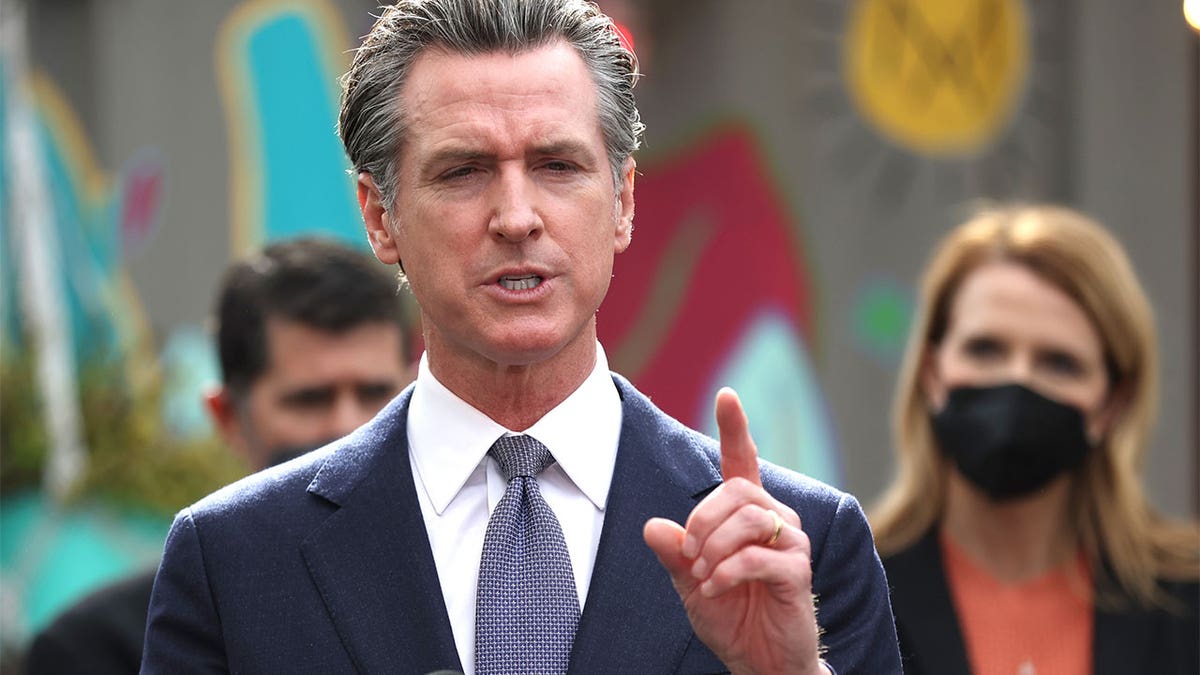
Democratic California Gov. Gavin Newsom (Justin Sullivan/Getty Images)
Newsom has also been touting data showing California now has the fourth-largest economy in the world, just surpassing Japan’s, which Agresti also took issue with and described as «fiction» according to his examination of the numbers.
«Here’s the fatal flaw in what he’s doing there,» Agresti said. «He is converting Japanese yen into U.S. dollars using a highly deceptive measure called foreign currency exchange rates. Scholars in this field warn explicitly: You are not to convert GDPs using exchange rates because it inflates the relative sizes of economies that have high prices, as California does. When you actually look at the proper way to transfer these exchange rates and account for them, Japan’s GDP is 56% larger than California’s.»
Additionally, Agresti pointed to data that shows California has a greater rate of poverty than any other state in the nation, as well as electricity prices that are more than twice the national average.
«When you look at California as a whole, it is one of the highest-tax states in the nation, and also there’s a lot of fallout from Newsom’s policies that make it one of the most expensive places to live in the entire United States,» Agresti said.
Fox News Digital reached out to Newsom’s office for comment.
Fox News Digital’s Bradford Betz contributed to this report.
politics,taxes,gavin newsom,california

El Banco Central alcanzó su mayor racha compradora en casi dos décadas: cuántos dólares sumó en lo que va del año

Tomás Etcheverry frenó a la revelación española y avanzó a octavos de final en el Miami Open

El apoyo de Pablo Echarri a Andrea Del Boca en Gran Hermano: “Fue objeto de una persecución injusta y horrible”

Novelli y Grandio: los amigos del pasado de Milei que ahora se transformaron en una pesadilla

Tras la renovación de autoridades partidarias, el PJ bonaerense activó la carrera por la sucesión de Kicillof

UK nuclear submarine deployed to Arabian Sea before Iran targets key US-UK base: reports

Kicillof desembarcó en CABA, lanzó su proyecto 2027 y empezará a ampliar su armado político en todo el país

¿DÓNDE ESTÁ ESMERALDA? El grito de una madre que sacude a la Argentina: «Me la arrebataron de la puerta»

¿MACRI 2027? El «operativo retorno» que sacude al PRO y los nombres que suenan para la vicepresidencia

¿FIN DE CICLO? Escándalo por la mansión no declarada y viajes de lujo empujan a Manuel Adorni fuera del Gobierno: Su salida sería inminente

 POLITICA3 días ago
¿MACRI 2027? El «operativo retorno» que sacude al PRO y los nombres que suenan para la vicepresidencia
- POLITICA2 días ago
¿FIN DE CICLO? Escándalo por la mansión no declarada y viajes de lujo empujan a Manuel Adorni fuera del Gobierno: Su salida sería inminente
- POLITICA2 días ago
“Tiro al facho”: la repudiable “intervención” en Facultad de Medicina en la que había que tirarle dardos a Javier Milei