INTERNACIONAL
Flashback: What happened the previous time Zelenskyy met with Trump in the Oval Office


NEWYou can now listen to Fox News articles!
Ukrainian President Volodymyr Zelenskyy will visit the White House Monday to meet with President Donald Trump, following the U.S. president’s Friday meeting in Anchorage, Alaska, with Russian President Vladimir Putin.
The visit marks the first time Zelenskyy has returned to the White House since February, where he sparred openly with Trump and Vice President JD Vance in the Oval Office over engaging in diplomacy with Russia to end the conflict. The encounter prompted Vance to ask the Ukrainian leader if he’d «said thank you once this entire meeting.»
The tense exchange started after Zelenskyy challenged Vance’s statements that diplomacy was the right path to end the conflict. Zelenskyy questioned the value of diplomacy, and brought up that Putin has broken other agreements in the past.
JD VANCE STEPS INTO THE SPOTLIGHT DEFENDING TRUMP’S FOREIGN POLICY IN OVAL OFFICE DUSTUP WITH ZELENSKYY
President Donald Trump and Ukrainian President Volodymyr Zelenskyy get into a verbal argument in the Oval Office in February 2025. (Getty Images)
«What kind of diplomacy, JD, you are speaking about?» Zelenskyy said. «What do you mean?»
Vance said, «I’m talking about the kind of diplomacy that’s going to end the destruction of your country.»
«Mr. President, with respect, I think it’s disrespectful for you to come into the Oval Office to try to litigate this in front of the American media,» Vance said. «Right now, you guys are going around and forcing conscripts to the front lines because you have manpower problems. You should be thanking the president for bringing it, to bring it into this country.»
«Have you ever been to Ukraine, that you say what problems we have?» Zelenskyy said.
«I’ve actually watched and seen the stories and I know that what happens is you bring people, you bring them on a propaganda tour,» Vance said. «Mr. President, do you disagree that you’ve had problems bringing people into your military? And do you think that it’s respectful to come to the Oval Office of the United States of America and attack the administration that is trying to, trying to prevent the destruction of your country?»
TRUMP SAYS ZELENSKYY CAN ‘COME BACK WHEN HE IS READY FOR PEACE’ AFTER FIERY WHITE HOUSE EXCHANGE
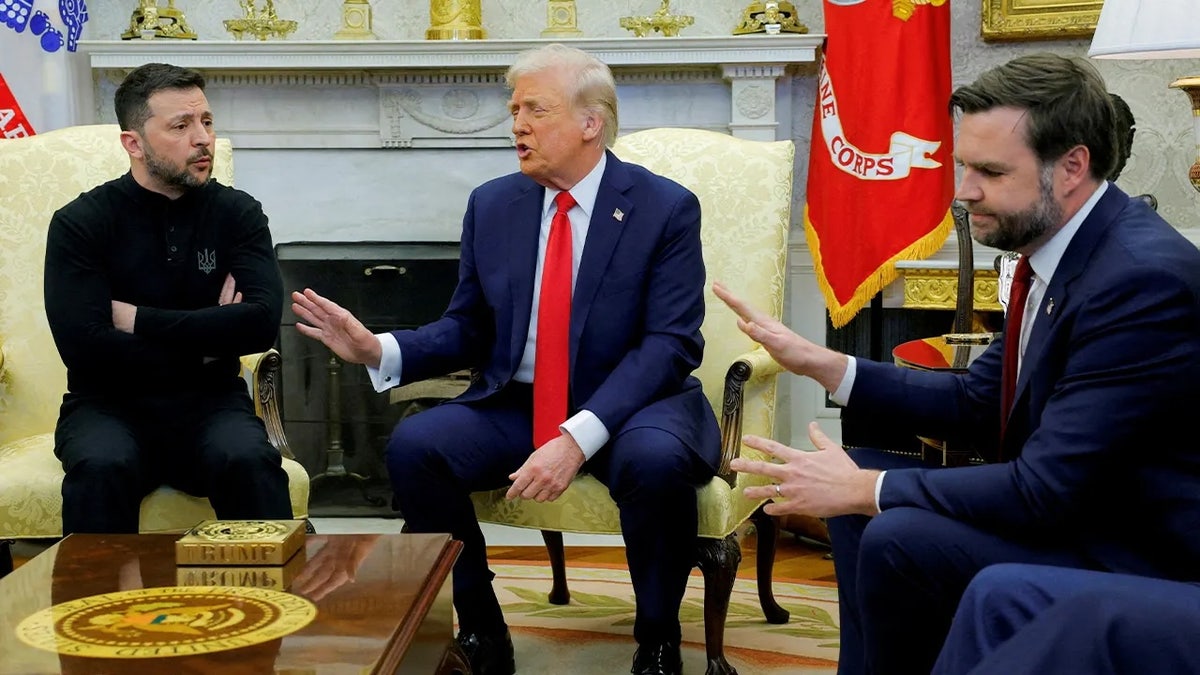
U.S. President Donald Trump and Ukrainian President Volodymyr Zelensky get into a verbal argument in the Oval Office. (Getty)
The exchange prompted Trump to temporarily put a pause on peace negotiations, saying that Zelenskyy could return to the White House when he was «ready» for peace. Following his departure from the White House, Zelenskyy then posted a statement on X thanking the U.S., Trump, Congress and the American people for their support for Ukraine.
Unlike the meeting in February, Zelenskyy will be joined Monday by other European leaders who have backed Ukraine, including British Prime Minister Keir Starmer, European Commission President Ursula Von der Leyen, French President Emmanuel Macron and NATO Secretary General Mark Rutte.
Meanwhile, Trump said that it’s up to Zelenskyy whether the war with Russia comes to an end, and stipulated that doing so would require certain land concessions to Russia. He also ruled out NATO membership for Ukraine under a potential peace deal.
WHERE ZELENSKYY IS HEADED FOLLOWING TENSE WHITE HOUSE EXCHANGE WITH TRUMP, VANCE
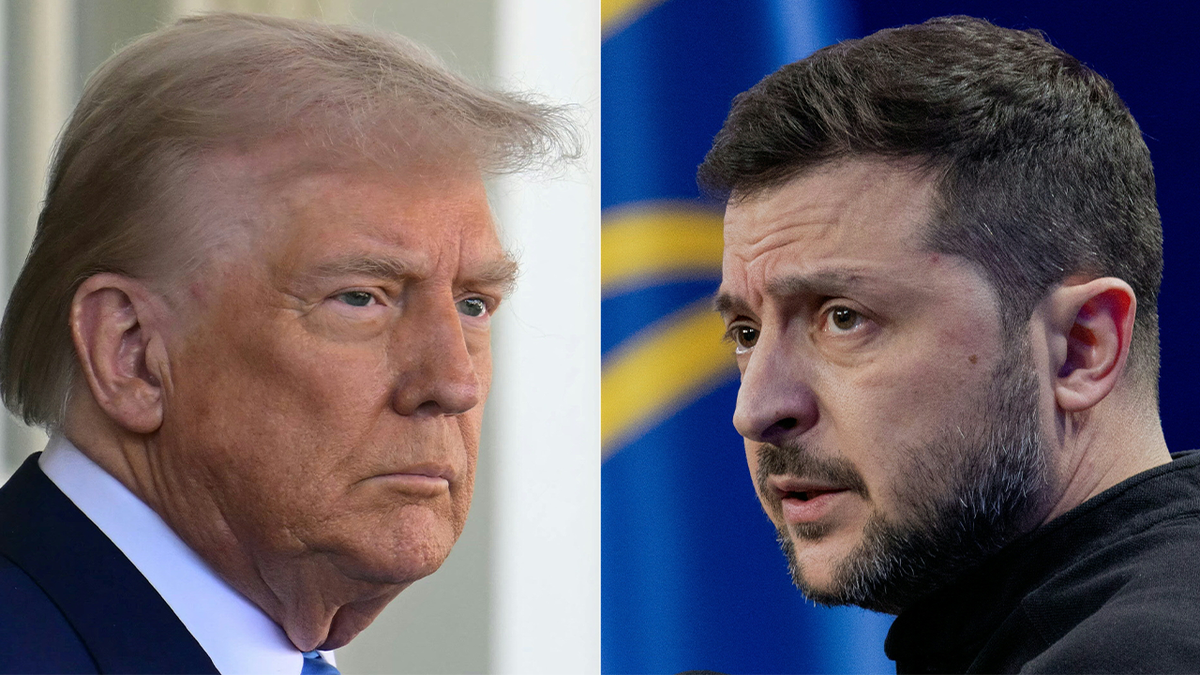
Ukrainian President Volodymyr Zelenskyy is slated to visit the White House on Monday, along with other European leaders. (Getty Images)
«President Zelenskyy of Ukraine can end the war with Russia almost immediately, if he wants to, or he can continue to fight,» Trump said in a Sunday post on social media. «Remember how it started. No getting back Obama given Crimea (12 years ago, without a shot being fired!), and NO GOING INTO NATO BY UKRAINE. Some things never change!!!»
Even so, U.S. special envoy Steve Witkoff said Sunday that Putin has agreed to permit the U.S. and other European allies to provide bolstered protection for Ukraine, akin to protections offered under NATO’s Article 5 mutual defense clause.
«We were able to win the following concession that the United States could offer Article 5-like protection, which is one of the real reasons why Ukraine wants to be in NATO,» Witkoff said in an interview with CNN.
white house,donald trump,vladimir putin,volodymyr zelenskyy,jd vance




INTERNACIONAL
Estas son algunas de las cosas más raras encontradas en aeropuertos de EEUU, desde espadas samurái hasta un meteorito y un Rolex

Una tienda especializada en Alabama informó que durante 2025 fueron encontrados en valijas no reclamadas objetos tan diversos como espadas samurái, una chaqueta de vuelo de la Segunda Guerra Mundial y un meteorito, tras agotar los procedimientos de devolución de las aerolíneas. El fenómeno afecta a pasajeros de vuelos nacionales e internacionales y muestra el alcance y el destino final de los bienes extraviados en aeropuertos de Estados Unidos.
Según comunicó el canal económico estadounidense Fox Business, la principal compañía de venta de equipaje no reclamado de EE. UU., Unclaimed Baggage, ubicada en Scottsboro, Alabama, publicó en marzo su informe anual Found Report 2025, donde documenta los objetos más costosos, raros y sorprendentes hallados en equipaje no reclamado. El reporte se nutre de los bienes que la compañía recibe de las aerolíneas tras culminar el proceso obligatorio para localizar a los propietarios, conforme a la normativa vigente y los protocolos federales.
La gestión de equipaje extraviado en Estados Unidos obedece a reglas federales y acuerdos comerciales entre aerolíneas y minoristas autorizados. Cuando la devolución al pasajero no resulta posible tras un periodo determinado, los objetos terminan en comercios habilitados a comercializar su contenido. Así lo explicó la Asociación Internacional de Transporte Aéreo (IATA). El caso de Unclaimed Baggage es representativo de este mecanismo, que transforma el extravío en una fuente continua de hallazgos fuera de lo común.
El informe Found Report 2025 de Unclaimed Baggage documentó la aparición de una amplia variedad de artículos, entre ellos un set de espadas samurái, una chaqueta de vuelo A-2 de la Fuerza Aérea de Estados Unidos utilizada en la Segunda Guerra Mundial y un meteorito. Según la compañía, estos objetos forman parte de los hallazgos inusuales, junto a piezas como un robot ensamblado, un lingote de oro australiano de una onza, dientes grill de oro de 10 quilates, guantes de boxeo autografiados por Terence Crawford, un didgeridoo de teca y un traje de apicultor. Fox Business resaltó que el 99,9 % de las maletas extraviadas finalmente se devuelve a sus dueños, mientras que solo el 0,1 % termina en el circuito de venta minorista especializado.
En esa línea, Fox Business detalló que la lista de hallazgos incluye objetos como un teléfono antiguo Kellogg, una moneda conmemorativa de 1893, un Ken doll de los años sesenta, una réplica de esqueleto, un bolso con forma de rana y una maleta que contenía veneno para ratas. Para Bryan Owens, director ejecutivo de Unclaimed Baggage, cada año el equipo se sorprende ante nuevos descubrimientos: “Después de más de cincuenta y cinco años recuperando objetos perdidos y rechazados, a veces creemos haberlo visto todo. Pero entonces aparece algo como un juego de espadas samurái o un robot completamente ensamblado y recordamos por qué existe el Found Report”.

El informe anual de Unclaimed Baggage identificó una serie de objetos con alto valor de mercado durante el último año. Entre ellos figuran pendientes de diamantes blancos valorados en más de USD 43.000, un Rolex de acero inoxidable con detalles en oro amarillo de 18 quilates y esfera de diamantes, estimado en USD 35.000, un clarinete bajo Tosca de USD 17.500 y una chaqueta de cuero Balenciaga con un precio de USD 12.500. La lista se completa con una cámara térmica T530 valorada en más de USD 12.000.
Estos artículos fueron detectados durante la apertura y catalogación del equipaje bajo protocolos internos que priorizan la seguridad y la identificación precisa de cada objeto, según datos institucionales de la empresa. Fox Business remarcó que parte de los hallazgos de mayor valor corresponde a objetos de lujo, tecnología y moda.
El informe Found Report 2025 de Unclaimed Baggage identificó un crecimiento en el transporte de objetos relacionados con la cultura pop, así como un aumento en la cantidad de libros y oro en diferentes formatos. La compañía observó una mayor presencia de artículos de colección, prendas de diseñador y objetos vinculados a la cultura del lujo accesible. Entre los libros más frecuentes figuran títulos de Freida McFadden.
De acuerdo con Unclaimed Baggage, en 2025 se hallaron más piezas de oro que en años recientes, incluyendo dados de 24 quilates y palos de golf bañados en oro. También se detectó la llegada de piezas de colección como una moneda de 1893, un Ken doll original y una selección de casetes vintage. Fox Business y otros portales especializados confirmaron estos datos, aportando así una visión de las preferencias y hábitos de los viajeros estadounidenses e internacionales.
El manejo del equipaje extraviado en Estados Unidos responde a una secuencia regulada. Según la IATA y la propia Unclaimed Baggage, las aerolíneas intentan localizar a los propietarios mediante sistemas de rastreo y contacto durante un periodo previamente establecido. Si después de ese plazo el equipaje no es reclamado, se transfiere a empresas autorizadas que pueden vender, reciclar o donar el contenido.
Un tercio de los artículos recuperados es reciclado y otro tercio es donado a organizaciones benéficas, informó Unclaimed Baggage. Así lo explicó Bryan Owens en declaraciones recogidas por Fox Business, donde añadió que las aerolíneas tienen incentivos económicos para lograr la devolución, ya que el costo de indemnizaciones y la logística asociada supera el ingreso por la venta de objetos no reclamados.

El destino de los objetos hallados en equipaje no reclamado depende de su naturaleza y valor. Según Unclaimed Baggage, los artículos de uso cotidiano y vestimenta suelen ponerse a la venta en el local de Scottsboro, mientras que las piezas históricas, de colección o de alto valor pueden ser donadas a museos, instituciones educativas u organizaciones sin fines de lucro.
En 2025 se destacan objetos históricos recuperados como una chaqueta de vuelo A-2 de la Segunda Guerra Mundial, una bayoneta anterior a la Primera Guerra Mundial y una selección de monedas antiguas. La compañía indicó que este tipo de hallazgos representa una minoría dentro del total de objetos procesados, pero aporta diversidad al inventario y atrae interés público hacia la tienda.
Los pasajeros que pierden su equipaje cuentan con una alta probabilidad de recuperación, conforme a los informes de Unclaimed Baggage y los procedimientos de las aerolíneas. La compañía estima que el 99,9 % de las maletas extraviadas finalmente regresa a sus dueños, mientras que solo una fracción mínima termina en el comercio minorista especializado.
La publicación anual del Found Report permite analizar patrones de consumo, movilidad internacional y hábitos de los viajeros. El estudio de los objetos hallados anticipa posibles cambios en la regulación y los procedimientos de devolución de la industria aérea estadounidense. Según datos recogidos por Fox Business, la difusión de estos informes contribuye a dimensionar la magnitud del fenómeno y a comprender el destino de los bienes extraviados.

De acuerdo con el equipo directivo de Unclaimed Baggage y los análisis publicados por Fox Business, el flujo de equipaje no reclamado continuará reflejando las tendencias de consumo y los cambios en los hábitos de viaje. El informe de 2025 resalta el aumento de objetos tecnológicos, prendas de lujo y piezas de colección que viajan en las maletas de los pasajeros.
El proceso de reciclaje, donación y comercialización de objetos extraviados seguirá bajo regulación federal y con participación de empresas autorizadas. Las aerolíneas mantienen su interés en reducir la cantidad de equipaje perdido, tanto por razones económicas como de satisfacción del cliente.
aeropuerto,viajeros,equipaje,vuelos,terminal,transporte,viajes internacionales,turismo,pasajeros,paneles de información

NEWYou can now listen to Fox News articles!
As Cuba faces rolling blackouts, food shortages and renewed protests, Cuban human rights activist Rosa María Payá is warning in an interview to Fox News Digital that the island’s deepening crisis cannot be solved with economic reforms alone and is urging the United States to maintain pressure on the communist government in Havana.
The recent outages and shortages are tied to Cuba’s worsening energy and economic crisis.
A recent nationwide blackout was triggered by a failure at the Antonio Guiteras thermoelectric plant, the island’s largest power station, cutting electricity across much of the country, according to Reuters. The crisis has been compounded by fuel shortages after the Trump administration moved to curtail oil shipments to the island, particularly from Venezuela — one of Cuba’s main suppliers.
Cuban officials say U.S. sanctions have worsened the country’s economic difficulties, while repeated power plant failures and an aging electrical grid have left millions facing prolonged blackouts that have fueled growing public frustration and protests.
RUSSIA WARNS AGAINST ‘PROVOCATIVE ACTIONS’ AROUND CUBA AFTER 4 KILLED ONBOARD US-REGISTERED SPEEDBOAT
The state-run company blamed U.S. sanctions in an official statement, saying, «Without ending the financial blockade, there can be no permanent energy stability,» according to CubaHeadlines.
Rosa Maria Paya, daughter of late Cuban dissident Oswaldo Paya, is seen during a tribute to her father’s memory in Santiago, Chile, April 17, 2017. (Ivan Alvarado/Reuters)
The Trump administration has increased pressure on Cuba in recent months, tightening sanctions and targeting oil shipments that help power the island’s energy system. The measures are part of a broader effort to weaken the Cuban government and support democratic change on the island.
«To President Trump, it’s important for you to know that the Cuban people are grateful for what this administration is doing and that we are ready, and we want to make Cuba great again,» Payá said, addressing him directly. «And that means an end to the communist dictatorship, not just a new economy, but a new republic.»
Her appeal comes as Cuba has re-emerged in Washington’s foreign policy discussions. Secretary of State Marco Rubio, the son of Cuban immigrants and one of the most prominent Cuban–American voices in U.S. politics, long has advocated a tougher stance toward Havana and stronger support for pro-democracy movements on the island.
The Trump administration recently has increased pressure on the Cuban government, including measures targeting oil shipments that help sustain the island’s struggling energy sector.
Trump praised Rubio during a press conference Tuesday and suggested he could play a central role in any potential negotiations with Havana.
«Marco Rubio is doing a great job,» Trump said. «I think he’s going to go down as the greatest secretary of state in history. They trust Marco.»
«We want to work with President Trump and with Secretary Rubio, the opposition is united,» Payá said. «We have a plan. It’s called the Freedom Accord,» she added, referring to a democratic transition framework promoted by opposition groups in Cuba. «We are ready to lead this process. The moment is now, Mr. President.»
Opposition groups have developed the Freedom Accord, a political roadmap for democratic change, which she says would guide a transition away from the current system in Cuba.
Payá, 37, who escaped the country 13 years ago, has spent the past decade advocating internationally for democratic change in Cuba.
She is the daughter of prominent dissident Oswaldo Payá, founder of the Christian Liberation Movement and architect of the Varela Project, a petition campaign in the early 2000s that gathered more than 25,000 signatures demanding free elections and civil liberties in Cuba.
Her father died in 2012 alongside fellow activist Harold Cepero in what Payá describes as an assassination by the Cuban regime. Cuban authorities said the men were killed in a car crash in eastern Cuba, but the Inter-American Commission on Human Rights later concluded there were «serious indications» that Cuban state agents were involved in the deaths.
«After the Cuban regime assassinated my father … I have been trying to follow his legacy together with many, many other Cubans on the island and in exile that today believe that we have a real chance and freedom,» she said, describing a movement that today includes activists both on the island and in exile.
FLORIDA LAUNCHES PROBE AFTER CUBA KILLS 4 ABOARD US-FLAGGED SPEEDBOAT NEAR KEYS

Members of the «Ladies in White» opposition group march beside the funeral procession of Oswaldo Paya, one of Cuba’s best-known dissidents, in Havana, July 24, 2012. (Reuters)
The crisis inside Cuba has reached a level where basic survival has become a daily struggle for many families, according to Payá.
«The situation today is that mothers don’t know if they are going to be able to feed their child tonight,» she said. «Most of the island has been suffering blackouts that last for days on many occasions.»The island has experienced waves of unrest in recent years driven by economic collapse and political repression.
The largest demonstrations against the regime erupted on July 11, 2021, when thousands of Cubans took to the streets across the island chanting «freedom» in the biggest protests since the 1959 revolution.
Authorities responded with mass arrests and prison sentences for many demonstrators.
For Payá, those protests reflected something deeper than economic frustration.
«The Cuban people have been fighting for freedom for the last 67 years,» she said. «We are demanding political freedom, not just a new economy.»
Despite comparisons between Cuba’s crisis and the political turmoil in Venezuela, Payá argues the situation in Cuba is fundamentally different.
«Cuba’s situation is quite different,» she said. «This is the longest running communist dictatorship in the Western hemisphere.»
MARCO RUBIO EMERGES AS KEY TRUMP POWER PLAYER AFTER VENEZUELA OPERATION
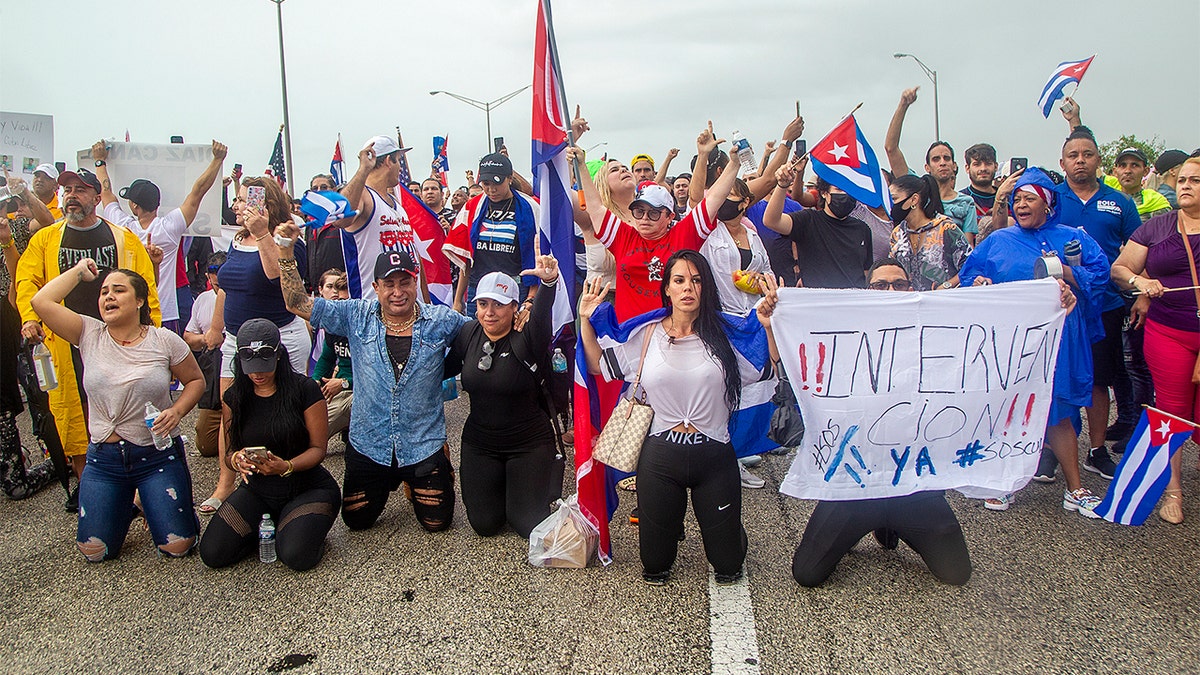
Cuban exiles block the Palmetto Expressway at Coral Way in support of protesters in Cuba in 2021 in Miami. (Pedro Portal/Miami Herald via AP)
While she emphasized that Cubans themselves must ultimately drive political change, Payá said international pressure remains essential because of the regime’s ability to repress dissent.
Her appeal comes as Cuba has re-emerged in Washington’s foreign policy discussions.
Payá said the Cuban opposition hopes the United States will continue supporting democratic change on the island.
CLICK HERE TO DOWNLOAD THE FOX NEWS APP
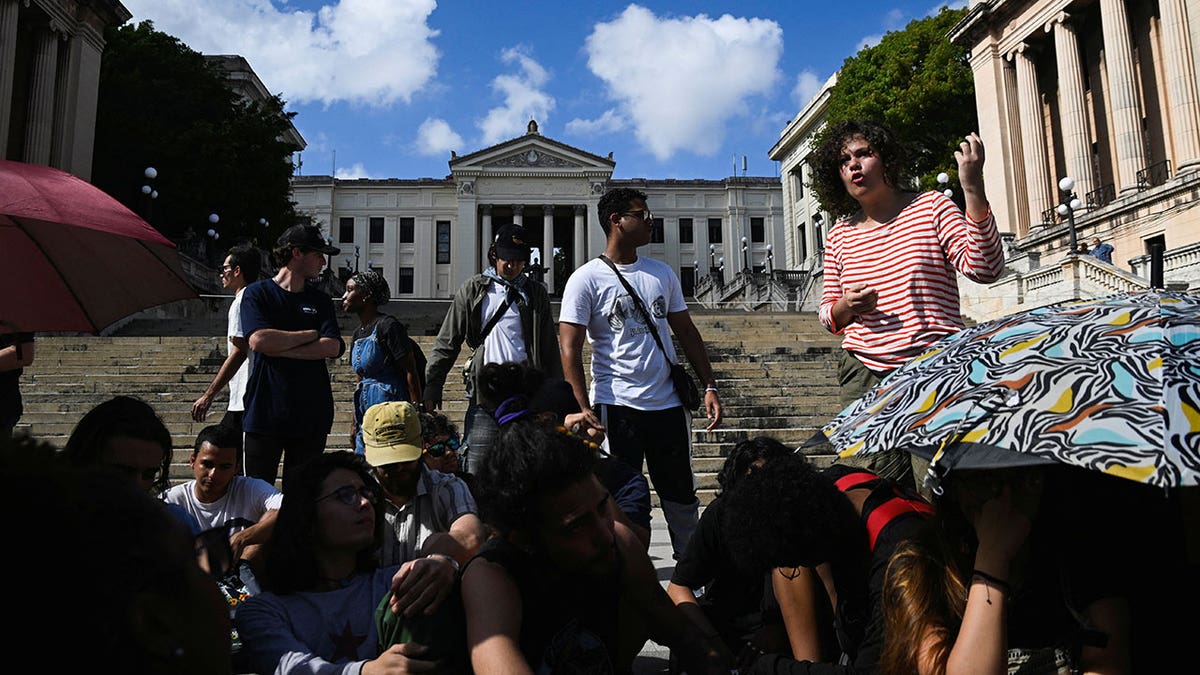
Anabel Oliva, 20, speaks outside the University of Havana during a protest against disruptions in classes due to energy and internet shortages, amid U.S. sanctions and an oil blockade that have deepened the country’s crisis, in Havana, Cuba, March 9, 2026. (Norlys Perez/Reuters)
«I believe that President Trump knows very well, better than anyone, the difference between a real deal and a better one,» she said. «He understands that this dictatorship must end.»
«To end the crisis,» she added, «we need to end the regime.»
Fox News Digital reached out to the White House and Rubio for comment and has not yet received a reply.
Reuters contributed to this report.
cuba,donald trump,marco rubio,venezuelan political crisis
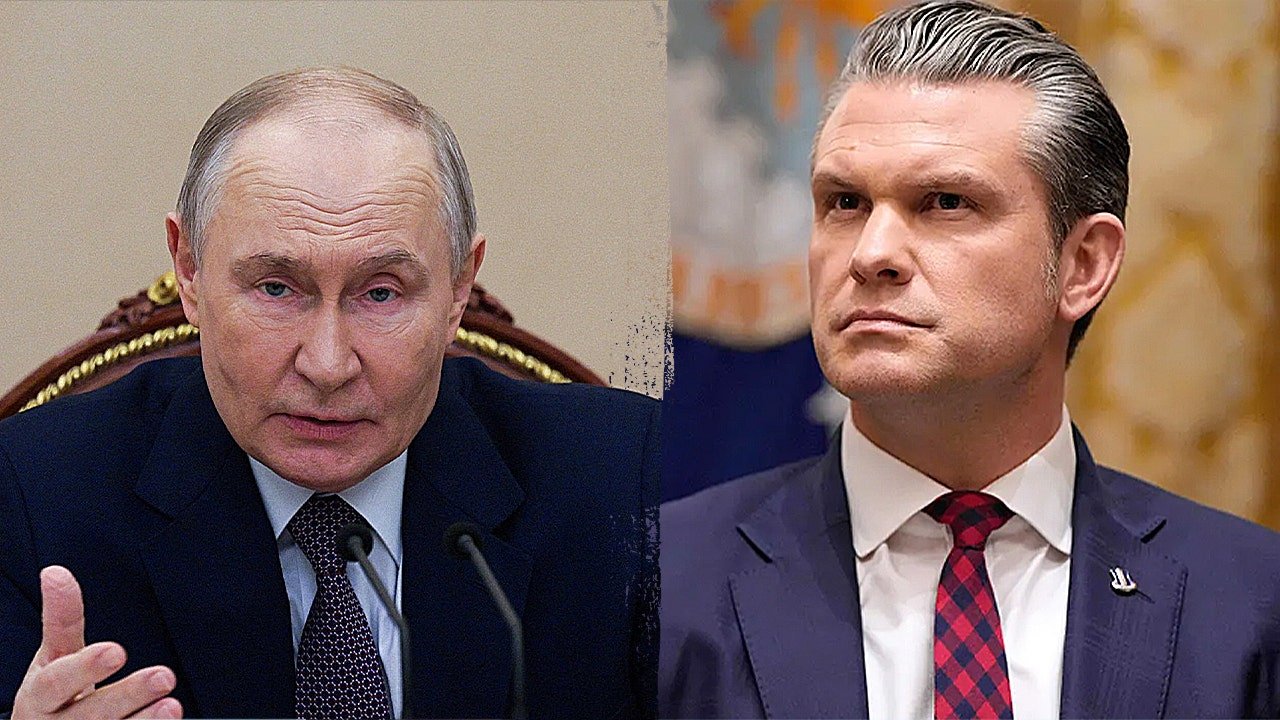
NEWYou can now listen to Fox News articles!
War Secretary Pete Hegseth said Tuesday that Russia «should not be involved» in the escalating conflict between the United States, Israel and Iran, even as analysts point to Russian military activity that aligns with reports Moscow may be aiding Tehran.
«The president maintains strong relationships with world leaders, which creates opportunities and options for us in very dynamic ways,» Hegseth said when asked about President Donald Trump’s recent call with Russian President Vladimir Putin.
But as it relates to the Middle East conflict, he added, Russia «should not be involved.»
IRAN LAUNCHES SATELLITES ON RUSSIAN ROCKETS AS MOSCOW-TEHRAN TIES DEEPEN
The administration’s messaging comes amid reports that Russia has provided information that could help Iran identify U.S. military assets in the Middle East, including warships and aircraft. Moscow has not publicly confirmed the claims.
Intelligence assessments have reportedly said Russia provided Iran with information that could help identify the locations of American warships, aircraft and other military assets in the Middle East. Officials reportedly stressed there is no public evidence that Moscow is directing Iranian strikes, but said the information could assist Tehran’s targeting efforts.
The scope, timing and operational impact of that information have not been publicly detailed.
War Secretary Pete Hegseth said Tuesday that Russia «should not be involved» in the escalating conflict between the United States, Israel and Iran, even as analysts point to Russian military activity that aligns with reports Moscow may be aiding Tehran. (Julia Demaree Nikhinson/AP)
While there is no public evidence definitively proving Russia is providing real-time targeting data, George Barros, a Russia expert at the Institute for the Study of War, said open-source indicators are consistent with the type of support described in the reports.
Barros pointed to Russian military reconnaissance satellites, including Cosmos-2550, a radar and electronic signature spacecraft that recently passed over the Persian Gulf and Arabian Sea — areas where U.S. forces have been operating.
«They’re specialized for naval reconnaissance and detecting ships, because the radar signature off the water really pings it quite well,» Barros said. «These are known capabilities of the Russians.»
Such radar systems can detect maritime targets and electronic emissions that reveal force positioning. Barros said those capabilities align with known gaps in Iran’s own space-based intelligence collection.
Although he cautioned that he does not have dispositive proof of real-time targeting support, Barros said the convergence of Russian reconnaissance capabilities, satellite positioning and reported cooperation «makes total sense.»
Trump on Monday described his recent conversation with Putin as «very good» and «constructive,» saying the Russian leader «wants to be very constructive.» Trump suggested Moscow could be more helpful by helping bring the war in Ukraine to an end.
Iran’s foreign minister, Abbas Araghchi, acknowledged over the weekend that Russia is assisting Iran «in many different directions» in its war with the United States and Israel. Pressed on whether that includes intelligence sharing, Araghchi said, «They are helping us in many different directions,» but added, «I don’t have any detailed information.»
AS UKRAINE WAR DRAGS ON, TRUMP HITS PUTIN BY SQUEEZING RUSSIA’S PROXIES
Beyond intelligence collection, analysts say battlefield patterns suggest tactical cross-pollination between Russia and Iran.
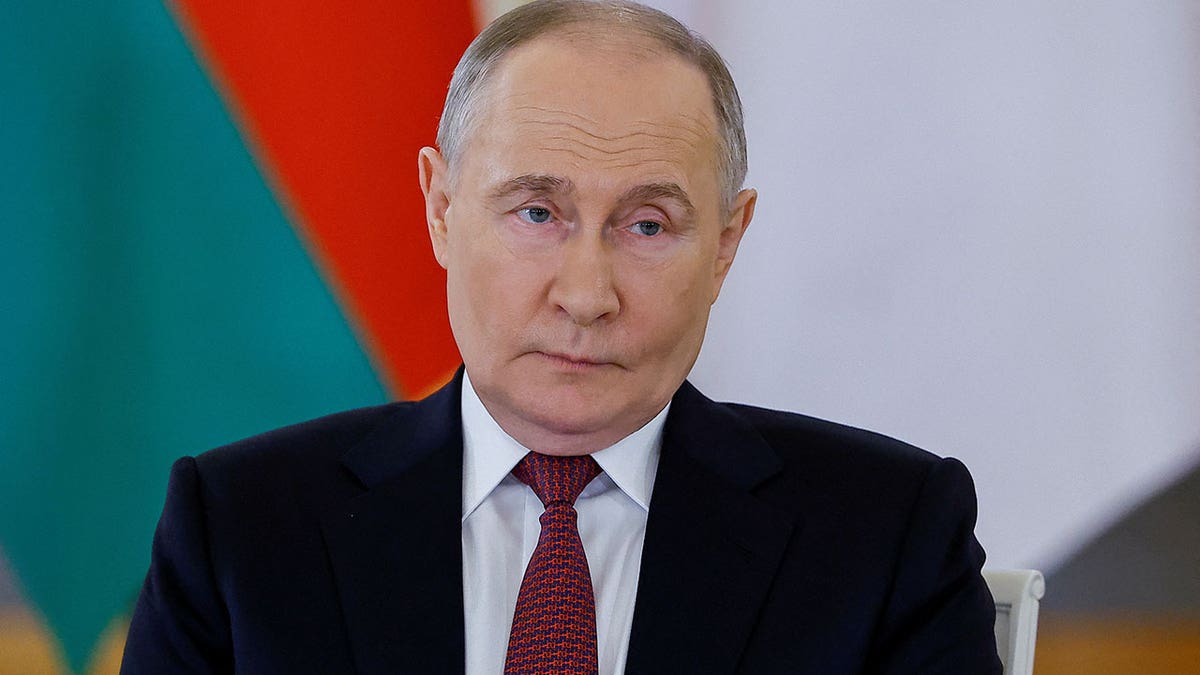
Iran’s foreign minister acknowledged over the weekend that Russia, led by President Vladimir Putin, pictured here, is assisting Tehran «in many different directions» in its war with the United States and Israel. (NASA/JPL-Caltech via AP)
During the war in Ukraine, Iran supplied Russia with Shahed one-way attack drones, which Moscow deployed extensively against Ukrainian cities and infrastructure. Over time, Russian forces refined strike packages combining drones, cruise missiles and ballistic missiles to overwhelm integrated Western air defense systems.
«The Russians got really, really good at learning how to launch drones against integrated Western air defense systems,» Barros said.
Those lessons, he said, appear to have informed Iranian strike tactics in the Middle East, where Tehran has launched large-scale combined missile and drone attacks against U.S. and allied targets.
If confirmed, Barros argued, intelligence sharing that materially supports Iranian targeting would amount to Moscow acting as a «co-belligerent.»
«The Russians are coming out with Iran as a co-belligerent,» he said, adding that the Kremlin has long viewed the United States as a geopolitical adversary.
At the same time, Russia remains constrained in how far it can go.
Russian ground forces are tied down in Ukraine and are not in a position to deploy troops to assist Iran. Analysts say any Russian support is far more likely to come in the form of intelligence sharing, technology transfers or drone production rather than boots on the ground.
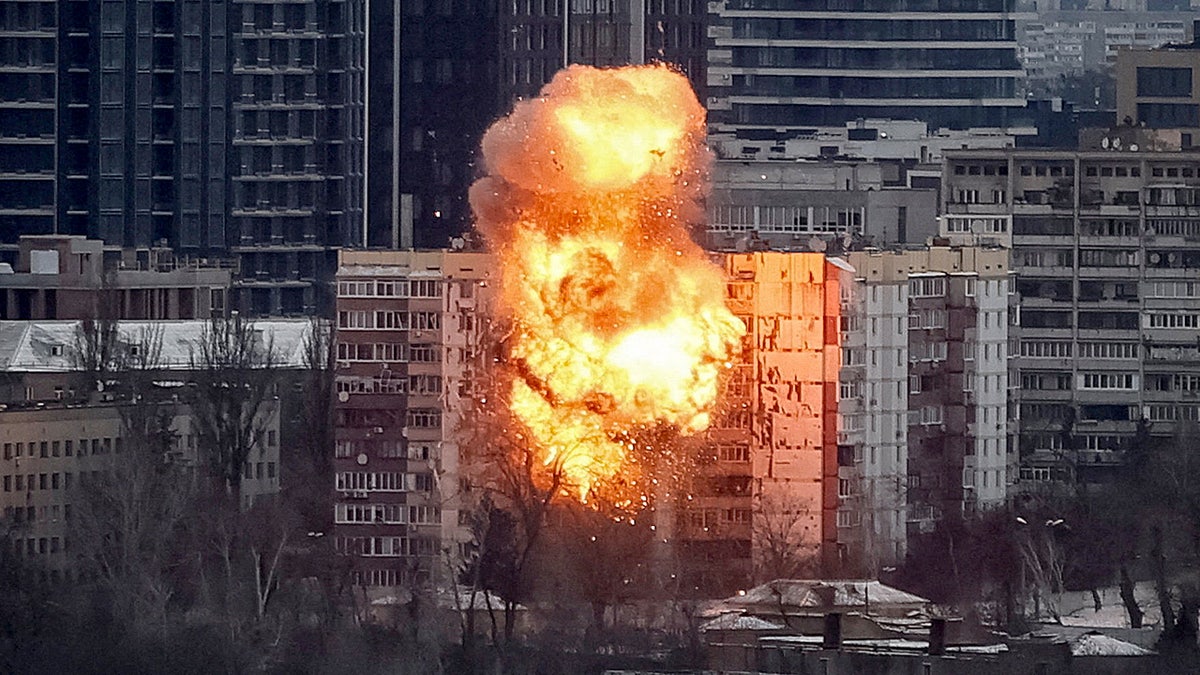
A drone hits an apartment building in Kyiv during Russia’s attack on Ukraine in December 2025. «The Russians got really, really good at learning how to launch drones against integrated Western air defense systems,» Russia expert George Barros says. (Gleb Garanich/Reuters)
One potential avenue involves drone manufacturing.
Russia operates large-scale Shahed-derived drone production facilities that were initially enabled by Iranian technology transfers. If Iran’s domestic drone factories are degraded by strikes, Russian production could theoretically help sustain Tehran’s aerial campaign, though there is no confirmed evidence that such transfers are occurring.
Defense officials have publicly downplayed the operational impact of any reported Russian assistance, saying U.S. commanders are tracking foreign intelligence activity and factoring it into planning.
CLICK HERE TO DOWNLOAD THE FOX NEWS APP
The contrast between Trump’s characterization of Putin as «constructive» and Hegseth’s warning that Russia should stay out of the conflict underscores the delicate balance the administration is attempting to strike — pursuing diplomacy in Ukraine while confronting the possibility of deeper cooperation between Moscow and Tehran in the Middle East.
For now, analysts say the evidence stops short of conclusive proof. But the alignment of Russian reconnaissance capabilities, battlefield tactics refined in Ukraine and Tehran’s own acknowledgment of assistance has intensified scrutiny of Moscow’s role as the regional war unfolds.
Russia has not publicly responded to the allegation of intelligence sharing with Iran, but has broadly called for de-escalation of the conflict.
The Russian embassy could not immediately be reached for comment.
war with iran,iran,russia,vladimir putin,conflicts

Gastronomía, paisajes y amor: el viaje de Esteban Lamothe y Débora Nishimoto por el sur de Francia

Messi va por los 900 goles y Mascherano lo define con una frase: “No lo dimensionamos”

Estas son algunas de las cosas más raras encontradas en aeropuertos de EEUU, desde espadas samurái hasta un meteorito y un Rolex

Sebastián Pareja: “Queremos que la economía se active para que la gente vea resultados rápidos”

Lo que no se vio del saludo de Macri y Kicillof en Expoagro, la advertencia de un dirigente peronista y una definición sobre Milei

La crisis golpeó fuerte en empresas: la drástica decisión que toman cada vez más empleados

La cruda confesión de Amalia Granata por el trastorno que sufre su hijo Roque: “Le hicimos estudios y salió que tiene TDAH, dislexia y disgrafia”

Wanda Nara involucrada en la separación de su hijo Valentino: su ex nuera contó toda la verdad

«Crisis industrial masiva»: alarmante informe de la UBA se mete en la pelea de Milei con la UIA

El mercado le está corriendo el arco a Caputo y el riesgo país no baja: en la City palpitan medidas

 CHIMENTOS2 días ago
La cruda confesión de Amalia Granata por el trastorno que sufre su hijo Roque: “Le hicimos estudios y salió que tiene TDAH, dislexia y disgrafia”
- ECONOMIA2 días ago
El mercado le está corriendo el arco a Caputo y el riesgo país no baja: en la City palpitan medidas
- CHIMENTOS1 día ago
Jenny Mavinga angustiada tras una quemadura en Gran Hermano 2026: “¡Ay, me quemó!