INTERNACIONAL
Fox News Poll: 6 in 10 are proud of US today – the most in more than a decade

NEWYou can now listen to Fox News articles!
The largest number of voters since 2011 say they are proud of the country, according to a new Fox News national survey.
Fifty-eight percent say they are proud of the country. That’s up 13 percentage points since June 2024 and the highest since 2011 when a record 69% were proud. By contrast, 41% are not proud. The survey was completed before recent events in the Middle East, including U.S. military strikes on Iranian nuclear facilities and President Donald Trump brokering a ceasefire between Israel and Iran.
FOX NEWS POLL: VOTERS THINK IRAN POSES A REAL THREAT TO US SECURITY, BUT SPLIT ON ISRAEL’S STRIKE
The increase comes from an overwhelming majority of Republicans (85%) now being proud compared to last summer (36%). That makes Republicans 30 points prouder of the country today than Democrats were a year ago (55% of Democrats in 2024). In 2011, majorities of Democrats, Republicans, and Independents were proud.
The new survey shows 36% of Democrats are proud (61% not proud) while Independents held relatively steady with roughly 4 in 10 expressing pride.
FOX NEWS POLL: ECONOMIC PESSIMISM ABATES SLIGHTLY AS VOTERS REFLECT ON THE ECONOMY
«Although pride in the U.S.A. seems like it should be above partisan wrangling, that’s only partially borne out by the data,» says Republican pollster Daron Shaw, who conducts the Fox News survey with Democrat Chris Anderson. «The reality is the out-party has become saltier in recent years when asked about the ‘land of the free.’ Democrats today (and Republicans last year) aren’t willing to express pride so long as the other side controls the White House.»
Majorities across most groups are proud, especially MAGA supporters (92%), Republican men (88%), and White evangelical Christians (80%). A lack of pride is highest among women with a college degree (51% not proud), voters under age 30 (57%), and Democrats (61%).
A 68% majority of voters also agrees the U.S. is the best country in the world to live in (30% disagree). While that’s roughly where sentiment has been for the last four years, it doesn’t match the 8 in 10 who felt the same in 2015 (83%) and 2011 (84%) when the question was first asked.
In 2011, 89% of Republicans, 84% of Democrats, and 73% of Independents thought living in America was the best. For Republicans, that number held steady at 90% today, but has decreased by 34 points among Democrats (50%), and by 13 points among Independents (60%).
Overall, one-third trust the federal government compared to nearly two-thirds who distrust it. The only time more voters trusted than distrusted the government was in 2002 (54% vs. 36%), and that was also the first time the question was asked on a Fox News survey.
Most Democrats (73%) and Independents (80%) distrust the government, while Republicans are split (47% trust, 48% don’t trust).
Even as more are proud of the country, more than 8 in 10 (85% extremely or very) are concerned about the future of the country, the highest in a list of eight concerns, albeit by one point. Almost as many say inflation is a huge concern (84%), followed by government spending (80%), Iran getting a nuclear bomb (78%), antisemitism (69%), illegal immigration (67%), domestic use of U.S. military troops (66%), and protests in U.S. cities (63%).
The future of the country is the top issue for Democrats and Independents (90% each concerned). For Republicans, it comes in fourth at 79% behind illegal immigration, Iran getting a nuclear bomb, and government spending.
CLICK HERE FOR CROSSTABS AND TOPLINE
Conducted June 13-16, 2025, under the direction of Beacon Research (D) and Shaw & Company Research (R), this Fox News survey includes interviews with a sample of 1,003 registered voters randomly selected from a national voter file. Respondents spoke with live interviewers on landlines (149) and cellphones (566) or completed the survey online after receiving a text (288). Results based on the full sample have a margin of sampling error of ±3 percentage points. Sampling error for results among subgroups is higher. In addition to sampling error, question wording and order can influence results. Weights are generally applied to age, race, education, and area variables to ensure the demographics of respondents are representative of the registered voter population. Sources for developing weight targets include the American Community Survey, Fox News Voter Analysis and voter file data.

NEWYou can now listen to Fox News articles!
While California Democratic Gov. Gavin Newsom blames President Donald Trump’s actions in Iran for the price of gas, critics are calling him out for «insane» climate policies as the state’s prices at the pump soar significantly above the national average.
On Tuesday, Newsom, who is widely considered a top contender for the 2028 Democratic presidential nomination, took to X to slam «Trump’s war with Iran» over gas prices.
Newsom wrote that «Americans will pay $1.5 BILLION MORE at the gas pump just this week because of Donald Trump’s war with Iran.» He added that California «will continue using the tools we’ve spent years developing to help fight price spikes and lessen the blow from Trump’s recklessness.»
In response, Steve Hilton, a Republican candidate for California governor, slammed Newsom, saying, «California has the highest gas taxes and fees in America.»
CALIFORNIA VOTER ID INITIATIVE CLEARS SIGNATURE THRESHOLD, SETTING UP NOVEMBER SHOWDOWN WITH NEWSOM
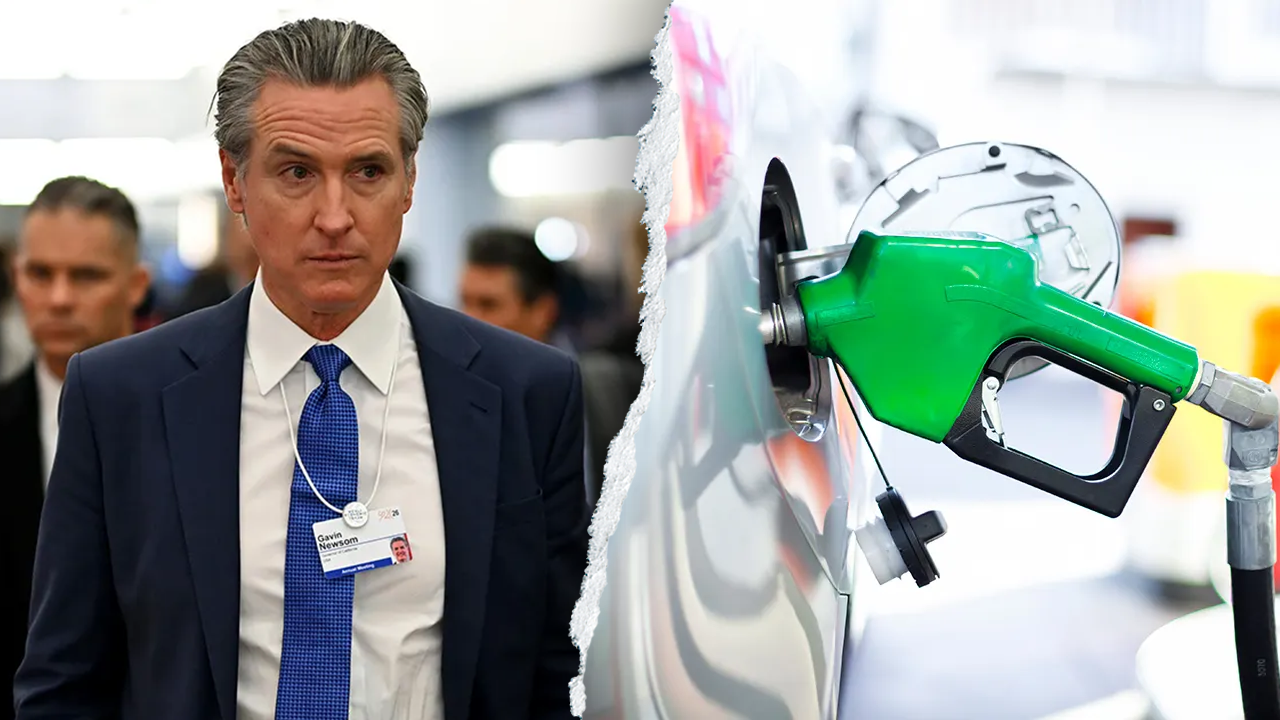
California Democratic Gov. Gavin Newsom is taking criticism for the state’s soaring gas prices after blaming «Trump’s war with Iran» for the spike. (Chris J. Ratcliffe/Bloomberg via Getty Images; iStock)
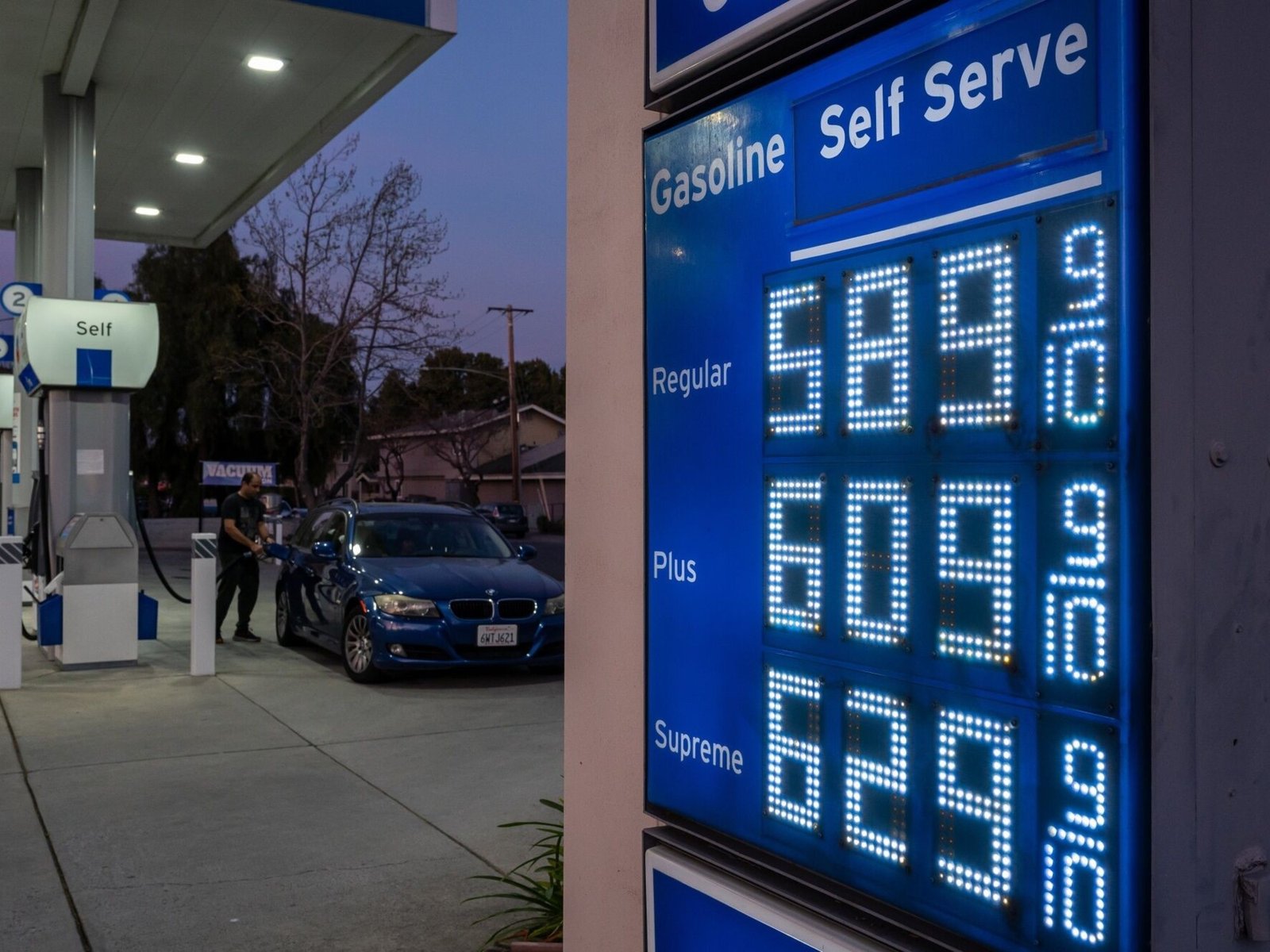
«Gavin Newsom is trying to shift blame,» said Hilton, «and he’s blaming these insane gas prices in California, $5.49, $5.69, heading to $6, on the war in Iran. It’s not the war in Iran, because in the rest of the country, they don’t have $5.49, they have $3 gas.»
«It’s entirely because of Gavin Newsom’s insane climate dogma that we have the highest gas taxes in the country,» he continued.
Hilton called on Newsom to end his national book tour and to immediately «suspend the gas tax.»
At approximately $5.33 per gallon, California has by far the highest average gas prices in the U.S., according to AAA. California gas prices significantly exceed those in the next two highest-priced states, Washington and Hawaii, which have average prices of $4.72 and $4.69 per gallon, respectively. Meanwhile, the national average in the U.S. is $3.57 per gallon.
California has the highest gas tax, at roughly 70 cents per gallon, according to the U.S. Energy Information Administration.
In a 2025 opinion piece on Fox News Digital, Hilton wrote that «California’s sky-high gas prices» are the «direct result of 15 years of one-party Democratic rule.»
He added that «Gavin Newsom, former Vice President Kamala Harris and every other leading Democrat in the state have been cheerleaders for this ‘war on fossil fuels,’ endlessly bragging about ‘leading the world’ on climate change.»
SUPREME COURT BLOCKS CALIFORNIA BAN ON NOTIFYING STUDENTS’ PARENTS ABOUT GENDER TRANSITIONS
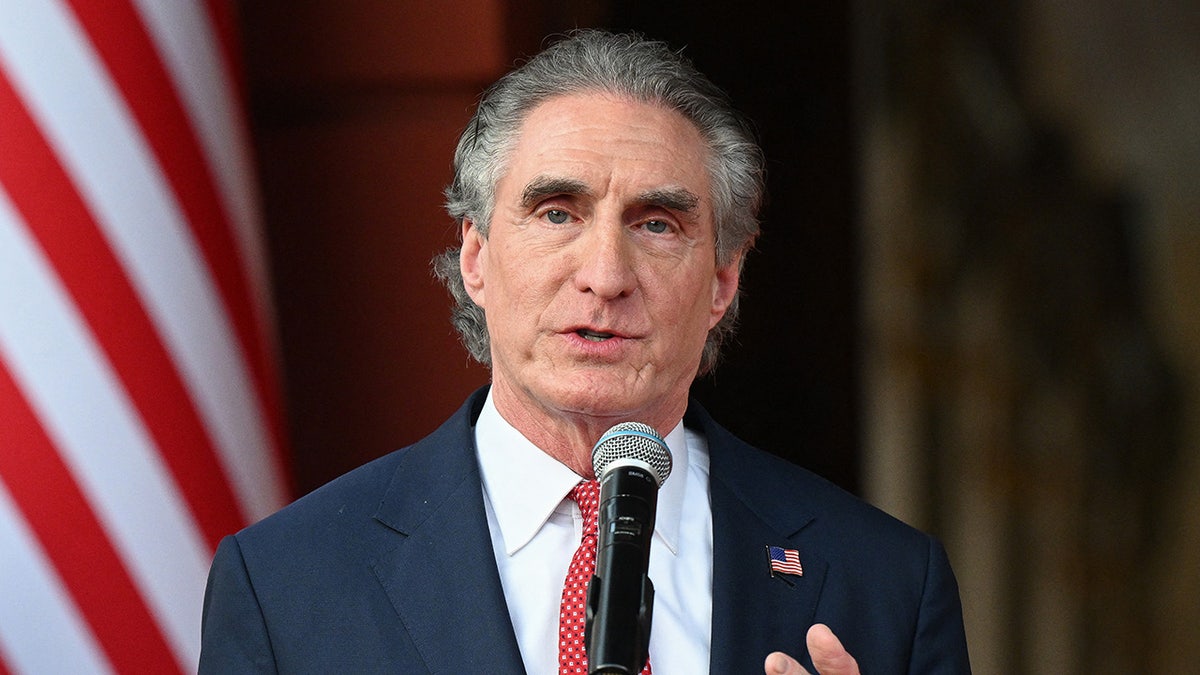
Interior Secretary Doug Burgum speaks alongside Venezuela’s interim president, Delcy Rodriguez (out of frame), after their meeting at the Miraflores Presidential Palace in Caracas on March 4, 2026. (Federico PARRA / AFP via Getty Images)
Hilton is not the only one criticizing Newsom’s oil and gas policies.
Roxanne Hoge, chair of the Los Angeles County GOP, called Newsom’s take «a textbook case of projection, pointing fingers at others while his own record is riddled with mismanagement and failure.»
«Californians have seen the cost of gas be higher than the rest of the USA for reasons having nothing to do with President Trump. He has driven supply down by banishing producers while not fixing infrastructure with gas tax money as promised,» Hoge told Fox News Digital, adding, «We all know that Gavin Newsom has moved on to campaigning for president in spite of his atrocious record at home.»
On Wednesday, Department of the Interior Secretary Doug Burgum posted on X that «California is KILLING their economy!»
The secretary wrote that while Newsom «continues to close refineries & drive up gas prices for California,» the department approved over 6,000 drilling permits «to advance [Trump’s] American Energy Dominance Agenda & lower gas prices nationwide.»
Chevron President Andy Walz also recently sounded the alarm, warning California Gov. Gavin Newsom and state regulators that newly proposed «cap-and-invest» amendments are a death knell for California’s remaining refineries.
‘UTTERLY UNAFFORDABLE’: STUDY REVEALS HOW DEEP BLUE CITY’S MINIMUM WAGE LAW IS RAVAGING KEY INDUSTRY
The California Air Resources Board is aiming to make companies cleaner by aggressively lowering the cap on how much total pollution is allowed in the state. Specifically, the board is proposing to pull 118.3 million allowances out of the state’s market between 2027 and 2030 and has more recently increased its carbon reduction target to 90% by 2045.
The energy giant warns the move will kill more than half a million jobs, threaten national security and spike gas prices by more than a dollar per gallon — all to fuel a state-run «shakedown» of the energy sector — in a letter addressed to Newsom and obtained by The California Globe.
«The proposed regulation will cripple the survivability of the state’s remaining refineries, which will result in California losing the entire industry to this misguided program,» Chevron President Andy Walz wrote.
«This regulation will increase transportation and aviation fuel prices for consumers. It will risk significant job losses, including many high-paying union jobs, while reducing funding for essential public services,» he continued, adding that «it will upend California’s fuels market and threaten critical energy and national security assets.»
In the same vein, Tim Stewart, a spokesperson for the U.S. Oil & Gas Association, told Fox News Digital that «California’s energy malaise is beginning to infect the other western states’ economies and unless there is a course change immediately, we will all feel the pain of decades of horribly bad California energy policy led by Governor Newsom.»

One expert predicted «we will all feel the pain of decades of horribly bad California energy policy led by Governor Newsom.» (Getty Images)
CLICK HERE TO DOWNLOAD THE FOX NEWS APP
«California’s gross mismanagement of its energy production and distribution economy is becoming a national security issue, and it now impacts all of us,» Stewart continued, adding that in addition to this, «agriculture, manufacturing, housing, the financial system is all impacted.»
«It doesn’t have to be this way, and Governor Newsom knows it,» said Stewart. «He also knows that no matter how hard he tries – he can’t pin this on Trump or our industry. The public isn’t buying it anymore.»
Fox Business’ Kristen Altus contributed to this report.
gavin newsom,energy,energy in america,california,democratic party,donald trump
INTERNACIONAL
La Unión Europea advirtió que la guerra en Medio Oriente podría impulsar su tasa de inflación por encima del 3%

La Unión Europea advirtió que su tasa de inflación podría superar el 3% este año si la guerra en Medio Oriente mantiene el precio del petróleo Brent cerca de 100 dólares por barril y los precios del gas permanecen elevados durante un período prolongado. El escenario también implicaría un menor crecimiento económico en 2026, según explicó el comisario europeo de Economía, Valdis Dombrovskis, durante una reunión con los ministros de Finanzas del bloque.
De acuerdo con personas familiarizadas con las conversaciones consultadas por Bloomberg, bajo ese escenario el crecimiento económico de la Unión Europea en 2026 sería hasta 0,4 puntos porcentuales inferior al ritmo de 1,4% que el bloque había previsto a finales del año pasado.
El escenario que analizó la Comisión Europea también contempla que los precios del gas en Europa se sitúen en torno a 75 euros por megavatio hora durante el resto del año. Con esas condiciones, la inflación sería entre 0,7 y 1 punto porcentual superior al 2,1% que se había proyectado previamente para 2026.
Un aumento significativo de la inflación podría llevar al Banco Central Europeo (BCE) a elevar las tasas de interés. Los operadores del mercado incrementaron sus apuestas sobre una posible subida de tasas durante este año. La próxima decisión de política monetaria del BCE está prevista para el 19 de marzo, aunque no se espera un aumento de tasas en esa reunión.
Según las personas informadas sobre las conversaciones, Dombrovskis también advirtió que el conflicto podría provocar efectos negativos adicionales en la economía europea debido a su impacto sobre los mercados financieros, el comercio y las cadenas de suministro.

Durante la reunión con los ministros de Finanzas, el comisario europeo explicó que los indicadores económicos recientes mostraban señales de mejora antes de la escalada del conflicto.
De acuerdo con las personas familiarizadas con el encuentro consultadas por Bloomberg, Dombrovskis indicó que las perspectivas económicas del bloque resultaban ligeramente mejores en comparación con el otoño, con un crecimiento esperado de alrededor de 1,5% este año y 1,6% el próximo. Sin embargo, ese panorama se vio afectado por la expansión del conflicto regional vinculado a la guerra en Irán.
Misiles y drones impactaron instalaciones energéticas en países como Arabia Saudita y Qatar, lo que afectó la producción de petróleo y gas natural licuado (GNL). Además, el tránsito de petroleros y otras mercancías a través del estrecho de Ormuz, una de las rutas energéticas más importantes del mundo, se redujo casi por completo.
En declaraciones a periodistas el lunes, Dombrovskis afirmó que “el impacto en la economía europea dependerá de la duración, alcance e intensidad del conflicto”. El comisario europeo también advirtió sobre los riesgos que implican los ataques contra infraestructuras energéticas y rutas comerciales.
“Una persistente ofensiva contra el transporte marítimo y la infraestructura energética expone a la economía mundial a un shock estanflacionario a más largo plazo”, dijo.

Los precios de la energía registraron fuertes movimientos desde el inicio de la guerra. El gas europeo subió con fuerza y el miércoles cotizó cerca de 50 euros por megavatio hora, después de haber alcanzado 70 euros a comienzos de la semana. El petróleo Brent se situó por encima de 90 dólares por barril.
En respuesta a las tensiones en el mercado energético, la Agencia Internacional de Energía acordó el miércoles liberar 400 millones de barriles de reservas estratégicas de petróleo, en lo que constituye la mayor liberación de este tipo realizada por el organismo.
Las autoridades del Banco Central Europeo siguen de cerca el impacto del conflicto sobre la inflación. La responsable de política monetaria del BCE Isabel Schnabel afirmó el miércoles que, aunque se espera que la inflación de la zona euro se sitúe en el objetivo del 2% en el mediano plazo, la nueva proyección que el banco central publicará en marzo reflejará parte del impacto de la guerra.
Schnabel señaló que la proyección “al menos reflejará parcialmente” el efecto del conflicto.
(Con información de Bloomberg)
Corporate Events,Diplomacy / Foreign Policy,Europe
INTERNACIONAL
Histórica liberación de reservas de petróleo: 32 países vuelcan 400 millones de barriles para frenar el precio del crudo
Alemania y Japón se adelantan
La mayor liberación de reservas
¿Qué pasa con China e India?
El efecto Ormuz
Reuniones preparatorias

Establecieron un nuevo protocolo para la realización de los festivales aéreos en Argentina

ATE anunció un paro de una semana en más de 27 aeropuertos y podría afectar a los vuelos

Juan Miranda: ‘Tendría difícil jugar en el Barça con Balde y Gerard Martín’

Milei subordinó su agenda internacional a necesidades domésticas: consolida a los industriales como enemigos

El tierno posteo de Indiana Cubero a su novio Thiago Silvero para celebrar sus tres meses de amor: “Mi vida”

Newsom knocked for ‘insane’ California gas prices after blaming Trump for rising costs

La cruda confesión de Amalia Granata por el trastorno que sufre su hijo Roque: “Le hicimos estudios y salió que tiene TDAH, dislexia y disgrafia”

Jenny Mavinga angustiada tras una quemadura en Gran Hermano 2026: “¡Ay, me quemó!

El mercado le está corriendo el arco a Caputo y el riesgo país no baja: en la City palpitan medidas

¿Fraude? Robertito Funes Ugarte contó todo sobre el “porro” y el celular dentro de Gran Hermano: “Se dice que les pasan información a los chicos”

 CHIMENTOS3 días ago
Jenny Mavinga angustiada tras una quemadura en Gran Hermano 2026: “¡Ay, me quemó!
- POLITICA2 días ago
Juan Carlos Schmid deja la conducción de Dragado y Balizamiento después de 33 años
- CHIMENTOS1 día ago
Muni Seligmann respondió las críticas tras el accidente de su bebé y su viaje a Miami: “Hay que contarlo y naturalizarlo”