INTERNACIONAL
Fox News Poll: Voters say White House is doing more harm than good on economy

NEWYou can now listen to Fox News articles!
Unhappy with the economy. Pain with prices. Unsure about Trump administration policies. It adds up to high disapproval among the president’s loyal constituencies.
Here are six takeaways from the latest Fox News national survey.
— Some 76% of voters view the economy negatively. That’s worse than the 67% who felt that way in July, and the 70% who said the same at the end of former President Biden’s term.
— Large numbers, overall and among Republicans, say their costs for groceries, utilities, healthcare, and housing have gone up this year.
— Voters blame the president. About twice as many say President Donald Trump, rather than Biden, is responsible for the current economy. And three times as many say Trump’s economic policies have hurt them (note, they said the same about Biden’s last year). Plus, approval of how Trump is handling the economy hit a new low, and disapproval of his overall job performance hit record highs among core supporters.
— After the government shutdown, the GOP and the Democratic Party have lower favorable ratings, and roughly 6 in 10 say the president and lawmakers on both sides don’t care about people like them.
— Voters think Republicans have a better plan for border security, immigration, and crime, while Democrats are seen as better on affordability, wages, healthcare, and climate.
— Views are divided on Trump’s peace deals making the world safer and the administration’s strategy for dealing with alleged drug-traffickers.
Here are the numbers behind those findings.
FOX NEWS VOTER POLL – CHANGE CANDIDATE MAMDANI DEFEATS LEGACY POLITICAL FIGURES
Trump’s job performance garners career-high disapproval among men, White voters, and those without a college degree.
Eighty-six percent of Republicans approve, down from 92% in March.
Among all voters, 41% approve of the job Trump is doing, while 58% disapprove. Only once have his ratings been lower and that was during his first term: 38-57% in October 2017. Two months ago, it was 46-54%.
For comparison, Biden’s marks were a bit better at the same point in his presidency: 44% approved and 54% disapproved in November 2021.
Forty percent of voters rate their personal finances as excellent/good, while 60% say only fair/poor, which is about where things stood a year ago. Ratings are notably bad (roughly 70% negative), among non-college voters, Hispanics, Blacks, independents, and those under age 45. For those with household income below $50K, fully 79% rate their finances negatively.
FOX NEWS VOTER POLL: NEW JERSEY GOVERNORSHIP REMAINS DEMOCRATIC WITH SHERRILL WIN
When it comes to the national economy versus personal finances, evaluations are also negative, as most say conditions are only fair/poor (76%), and fewer than one in five thinks inflation is completely/mostly under control (18%).
Compared to a year ago, voters say costs have increased for utilities (78%), healthcare (67%), housing (66%), and gasoline (54%). It’s 85% who say their groceries went up this year, including 60% who say costs increased «a lot.» Majorities of Republicans agree with majorities of Democrats and independents that costs have gone up on each of these items except gas.
FOX NEWS VOTER POLL: CALIFORNIA VOTERS OK CONGRESSIONAL REDISTRICTING PLAN
At the end of Biden’s term, voters said by a wide 30-point margin that his economic policies had done more to hurt than help their family, driven by three-quarters of Republicans saying they had been harmed. The new survey shows almost identical results, as voters say by a 31-point margin that Trump’s economic policies have hurt rather than helped them, driven by the three-quarters of Democrats saying they have been harmed. In December 2018, during his first term, only 21% overall said they had been hurt by Trump’s policies, including just one-third of Democrats.
By a nearly 2-to-1 margin, voters say Trump is more responsible for the current economy than Biden (62% vs. 32%). Unsurprisingly, there’s a large partisan gap, as Democrats are nearly 40 percentage points more likely than Republicans to blame Trump. Somewhat surprisingly though, 42% of Republicans blame him, while a 53% majority says Biden is responsible. Among independents, 62% say Trump and 29% Biden.
A larger share believes the Republicans have a better plan on securing the border, dealing with illegal immigrants, reducing crime, and reducing the federal budget deficit. Democrats are preferred on addressing climate change, reducing the cost of healthcare, raising wages, and making things more affordable. The parties are about equal on the issue of job creation.
Congressional Democrats said the shutdown was about extending subsidies for Obamacare. The 2010 healthcare law remains popular, as 54% have a favorable opinion of it — although much of that comes from nearly 9 in 10 Democrats viewing it positively. Not only do voters think Democrats have a better plan for reducing healthcare costs, but also Trump receives his lowest approval on the issue of healthcare.
«The situation isn’t complicated,» says Republican pollster Daron Shaw, who helps run the Fox News Poll with Democrat Chris Anderson. «People are struggling to afford necessities and blaming those in charge. What’s interesting is watching Democrats gain politically from a problem they arguably caused — and that crushed them in 2024. But that’s politics.»
While many families say the government shutdown caused them severe (10%) or moderate hardship (35%), more than half say it was not a hardship at all (54%).
The shutdown wasn’t a political winner for anyone: nearly two-thirds disapprove of how Trump (62%), Congressional Republicans (63%), and Congressional Democrats (64%) handled it.
A record low 39% have a favorable view of the Democratic Party, down from 42% in July. Another 39% have positive views of the GOP, down from 44% this summer. For Trump, it’s 40% positive, down from 43% in September and 50% in January.
But it’s Senate Minority Leader Chuck Schumer whose marks have deteriorated the most, as a record low 22% view him favorably vs. 54% unfavorably, for a net rating of -32 points. His ratings were underwater by 16 points in January. Among Democrats, positive views of Schumer went from 51% in January to 38% today.
The overall marks for House Minority Leader Hakeem Jeffries took a smaller hit (from -2 to -10), as did Speaker of the House Mike Johnson’s (from -9 to -15) and Senate Majority Leader John Thune’s (from -10 to -12). Many are unable to evaluate Thune (54%), Jeffries (38%), and Johnson (31%).
Voters also think their political leaders don’t care about people like them, as roughly 6 in 10 say Democrats (59%) and Republicans (65%) in Congress and Trump (63%) don’t care.
Trump’s job ratings on foreign policy are underwater: 43% approve, while 55% disapprove. Yet views are more evenly divided on whether his recent peace deals will make the world safer or less safe (37% apiece), with one quarter saying not much difference. And 49% favor the U.S. military using deadly force against presumed drug trafficking boats departing from Venezuela, while 47% oppose those efforts.
The president receives his top marks on border security (53% approve). Nearly half approve of his handling of immigration (46%), while a new low approves on the economy (38%), and about one-third approve on tariffs (35%) and healthcare (34%).
Poll-pourri
The electorate believes the different branches of government are failing to live up to their constitutional obligations. Two-thirds are concerned about Congress (64%) and the Supreme Court (63%) not doing the checks and balances that they should and are giving too much of their constitutional authority to the president. At the same time, about half (47%) are concerned the judicial branch is obstructing Trump’s constitutional authority to carry out his agenda.
CLICK HERE FOR CROSSTABS AND TOPLINE
Conducted November 14-17, 2025, under the direction of Beacon Research (D) and Shaw & Company Research (R), this Fox News survey includes interviews with a sample of 1,005 registered voters randomly selected from a national voter file. Respondents spoke with live interviewers on landlines (104) and cellphones (646) or completed the survey online after receiving a text (255). Results based on the full sample have a margin of sampling error of ±3 percentage points. Sampling error for results among subgroups is higher. In addition to sampling error, question wording and order can influence results. Weights are generally applied to age, race, education, and area variables to ensure the demographics are representative of the registered voter population. Sources for developing weight targets include the most recent American Community Survey, Fox News Voter Analysis, and voter file data.
Fox News’ Victoria Balara contributed to this report.
politics,fox news poll,donald trump,white house,congress,senate,house of representatives politics,economy












NEWYou can now listen to Fox News articles!
House Republicans are lurching forward with a second budget reconciliation package, ending months of speculation about whether the chamber would attempt to marshal a second GOP-only megabill through Congress before November’s midterm elections.
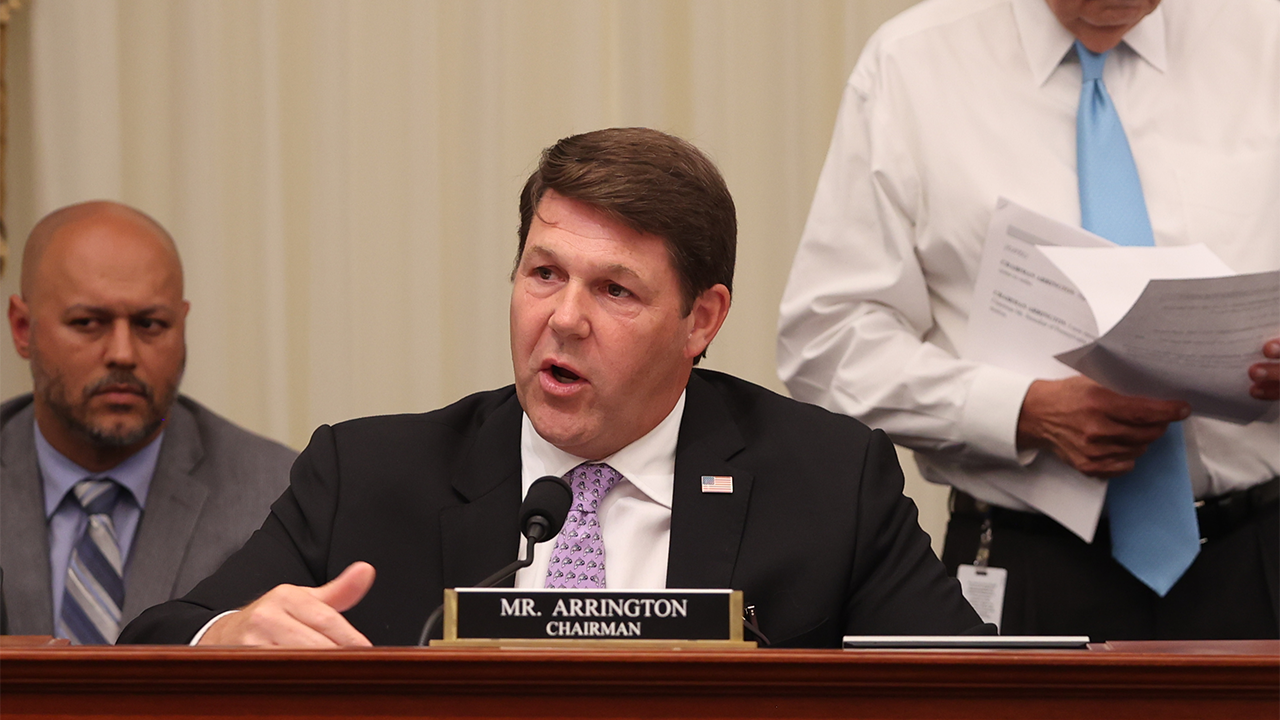
House Budget Committee Chairman Jodey Arrington, R-Texas, said Wednesday he wants the measure to pay for President Donald Trump’s Iran campaign and enact anti-fraud provisions that offset the cost of the anticipated defense infusion’s large price tag.
«It’s an opportunity to solve two problems and address two challenges and advance two great causes: fund the military, provide a strong defense, win the war, achieve the objectives and do it in a way that doesn’t put our kids further in the hole,» Arrington told reporters.
«We’re all but ready to mark up a budget resolution,» Arrington continued, adding his panel is still continuing to hash out the details of the package.
Representative Jodey Arrington, R-Texas and the chairman of the House Budget Committee, center, speaks during a House Budget Committee meeting at the U.S. Capitol in Washington, D.C., May 18, 2025. (Alex Wroblewski/Bloomberg via Getty Images)
HOUSE CONSERVATIVES ERUPT OVER SENATE GOP, WHITE HOUSE DEAL AMID SAVE ACT FIGHT
The Trump administration has floated a $200 billion request to help pay for the war in Iran but has yet to deliver a formal request. Given Democrats’ expected opposition to a defense supplemental, some House Republicans have said a second reconciliation package is the only viable vehicle to advance the measure and other Trump priorities through Congress.
«Democrats have obstructed everything,» Rep. August Pfluger, R-Texas, told Fox News Digital. «So, we believe, unfortunately, that reconciliation is the only mechanism to move the rest of the President’s agenda.»
Republicans have zeroed in on fraud in social services for months and view the enactment of fraud-related spending cuts as a way to offset the cost of the package.
The budget reconciliation process would allow Republicans to circumvent the Senate’s 60-vote requirement and pass a spending measure with a simple majority.
Arrington said he would be working closely with Senate Budget Committee Chairman Lindsey Graham, R-S.C., who also announced Wednesday that his panel would begin drafting reconciliation instructions. The South Carolina Republican floated funding increases for the military and law enforcement in addition to voter integrity measures as possible items in a second reconciliation bill.
«Let’s put it this way: The reconciliation train is leaving the station,» Graham posted on X after the two lawmakers met to discuss a second megabill Wednesday.
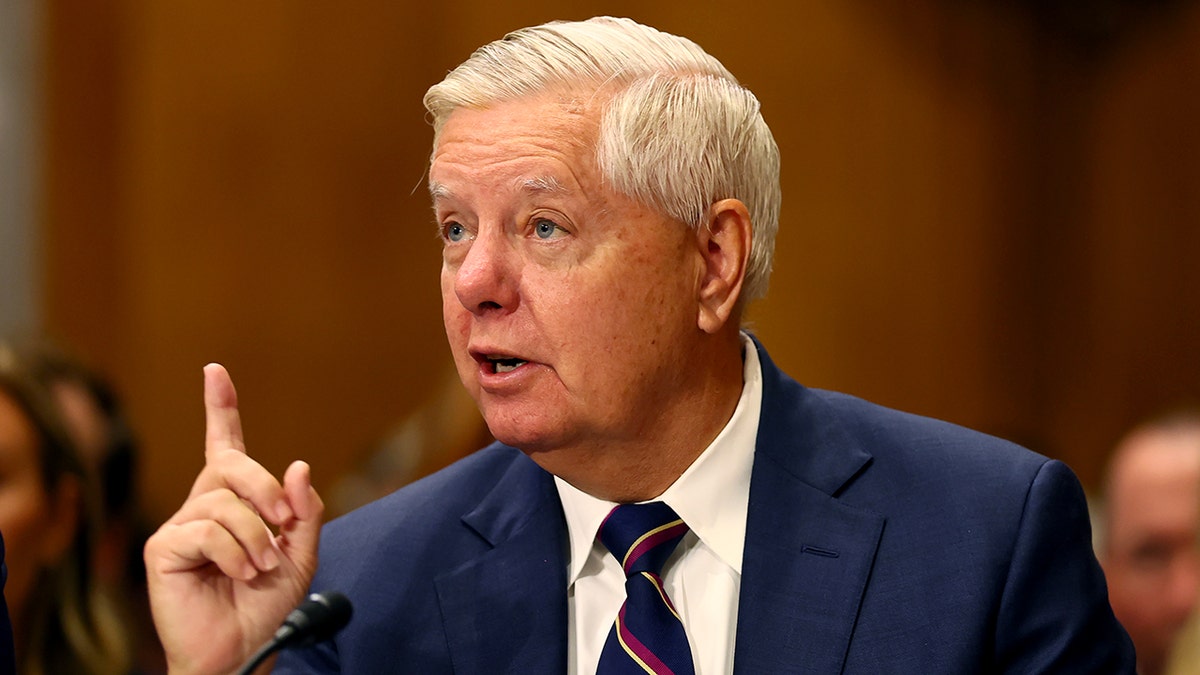
Sen. Lindsey Graham, R-S.C., speaks during a confirmation hearing before the Senate Committee on Foreign Relations in the Dirksen Senate Office Building July 15, 2025, in Washington, D.C. (Michael M. Santiago/Getty Images)
GOP MUST RACE FOR NEW ‘BIG, BEAUTIFUL BILL’ TO SLASH COSTS BEFORE MIDTERMS, TOP HOUSE REPUBLICANS WARN
Though Republicans are likely to broadly support defense supplemental funding and fraud-prevention measures, a second megabill could still face major hurdles.
Republicans narrowly passed Trump’s One Big Beautiful Bill Act in June 2025 after months of intraparty disagreement. Under House Republicans’ razor-thin majority, House Speaker Mike Johnson, R-La., can afford to spare just one GOP defection in a party-line vote.
However, Arrington argued that the war in Iran would be a unifying force to get the bill done.
«I think funding our military in a time of war, if there’s no sense of urgency and accountability from members of Congress to support our commander in chief, I can’t think of one,» Arrington said. «I do think the big push is going to be supporting our sons and daughters in uniform and making sure they have what they need to be successful.»
Arrington did not shut the door on including parts of the SAVE America Act in a GOP-only megabill. However, its sweeping provisions, requiring proof of citizenship to vote in federal elections and voter ID requirements, could fail to meet reconciliation’s stringent budget requirements.
The Trump-backed election bill has stalled in the Senate due to widespread Democratic opposition, though the upper chamber is continuing to debate the measure.
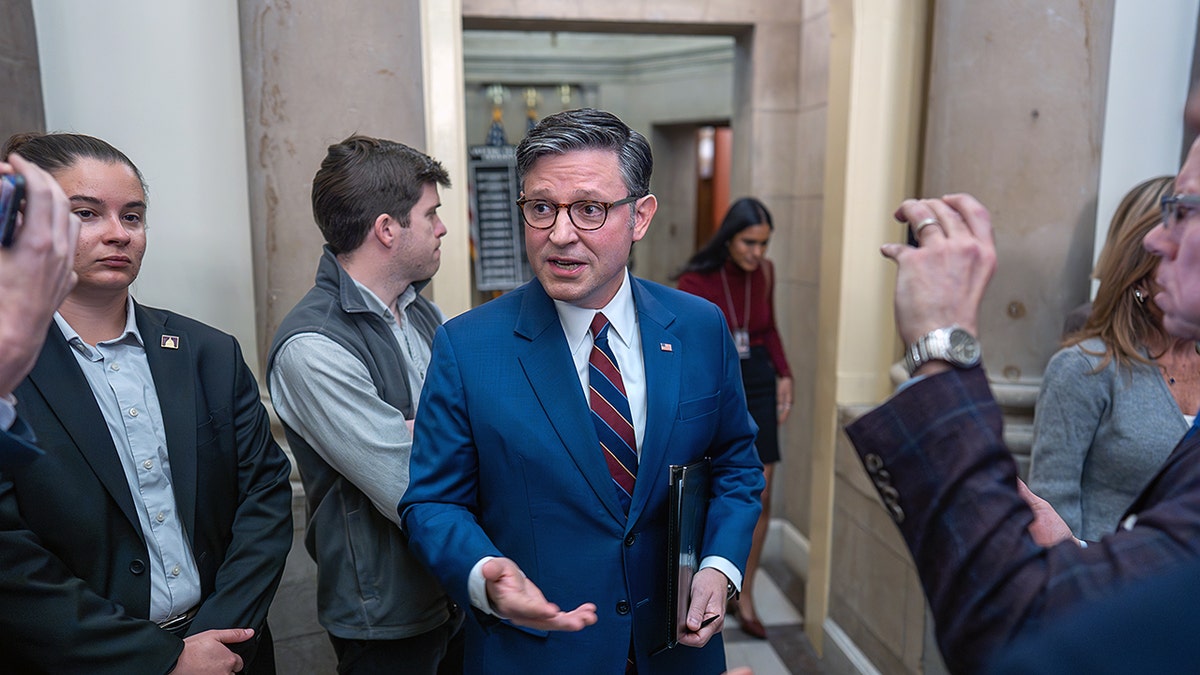
Speaker of the House Mike Johnson, R-La., talks to reporters outside his office on the 28th day of the government shutdown at the Capitol in Washington Oct. 28, 2025. (J. Scott Applewhite/AP Photo)
CLICK HERE TO DOWNLOAD THE FOX NEWS APP
Johnson, who has long pushed for a second budget bill, said Wednesday he was encouraged by Graham moving forward with reconciliation.
«I’m glad to know the Senate is interested in reconciliation 2.0,» the speaker said. «I have been a broken record. We need to do that. It’s an important legislative tool.»
budget house of representatives politics, lindsey graham, republicans, mike johnson, war with iran
INTERNACIONAL
Cumbre de aliados estratégicos de Putin en Pyongyang: Kim Jong Un recibió a Lukashenko para reforzar vínculos

El presidente de Bielorrusia, Alexander Lukashenko, llegó a Pyongyang en su primera visita oficial a Corea del Norte, donde fue recibido por el líder norcoreano Kim Jong Un. Lo anunció este jueves la agencia estatal KCNA.
El líder bielorruso y su par norcoreano son considerados dos de los principales socios y aliados del presidente ruso Vladimir Putin.
La ceremonia de bienvenida se celebró este miércoles en la Plaza Kim Il Sung. Kim Jong Un recibió a Lukashenko en el plaza Kim Il Sung de Pyongyang. (Foto: EFE)
El gobernante norcoreano recibió “con agrado” y dio una “cálida” bienvenida al líder bielorruso, según el reporte oficial.
Ambos países están sometidos a sanciones de potencias occidentales, mantienen estrechos vínculos con Rusia y son acusados de violaciones a los derechos humanos.
A qué fue el líder bielorruso a Corea del Norte
Lukashenko inició su primera visita a Corea del Norte para mantener conversaciones que consolidarán los lazos entre dos estrechos aliados de Putin. Kim Jong Un dio la bienvenida al gobernante bielorruso Alexander Lukashenko frente a una multitud en Pyongyang. (Foto: KCNA vía Reuters).
Kim proporcionó a Moscú millones de cartuchos de munición para su guerra en Ucrania y envió tropas para ayudar a Rusia a expulsar a las fuerzas ucranianas que invadieron su región occidental de Kursk en agosto de 2024.
Leé también: Guerra en Medio Oriente: exigencias “inaceptables” y amenazas alejan un acuerdo de paz entre Irán y EE.UU.
Bielorrusia permitió que se utilizara su territorio como plataforma de lanzamiento para la invasión rusa en febrero de 2022. Luego, accedió a albergar misiles nucleares tácticos rusos en su país, que limita con tres países de la OTAN. Kim Jong Un y Alexander Lukashenko asistieron a una ceremonia de ofrenda floral en la Torre de la Liberación de Pyongyang, Corea del Norte, este miércoles. (Foto: KCNA vía REUTERS)
Lukashenko llegó en avión a la capital, Pyongyang, donde se lo recibió con alfombra roja y fue saludado por la ministra de Asuntos Exteriores de Kim y por decenas de niños pequeños que ondeaban las banderas de ambos países.
Lukashenko se reunió más tarde con Kim. También rindió homenaje en el Palacio del Sol de Kumsusan, un mausoleo donde se exhiben los cuerpos embalsamados de los antiguos gobernantes Kim Il Sung y Kim Jong Il, abuelo y padre del actual líder.
Tanto Corea del Norte como Bielorrusia llevan años sometidas a sanciones internacionales: la primera, principalmente por su programa de armas nucleares, y la segunda, por su historial en materia de derechos humanos y su apoyo a Putin en Ucrania. El líder de Corea del Norte y el presidente de Bielorrusia buscan reforzar su alianza en medio de tensiones con Occidente. (Foto: Presidencia de Bielorrusia/REUTERS)
No obstante, ambos mantuvieron contactos en diferentes momentos con el presidente de Estados Unidos, Donald Trump.
El presidente estadounidense se reunió con Kim en tres ocasiones entre 2018 y 2019, durante su primer mandato en la Casa Blanca, pero sus encuentros no dieron resultados sustanciales.
Leé también: Quién es el halcón islámico Mohammed Bager Zolqadr, nuevo jefe del poderoso Consejo de Seguridad de Irán La visita del presidente de Bielorrusia a Corea del Norte se da en un contexto de sanciones y acercamiento estratégico con Rusia. (Foto: Presidencia de Bielorrusia/REUTERS)
Trump dijo el año pasado que “le encantaría tener otra reunión”, a lo que Kim respondió que podría suceder si Estados Unidos abandona su “absurda obsesión” por conseguir que Corea del Norte renuncie a las armas nucleares.
El año pasado, el presidente estadounidense restableció el contacto directo con Lukashenko, a quien el predecesor de Trump, Joe Biden, había tratado como a un paria. En los últimos meses, Estados Unidos empezó a suavizar las sanciones contra Bielorrusia a cambio de la liberación de presos políticos.
El viaje de Lukashenko a Corea del Norte se produce apenas seis días después de que se reuniera con el enviado de Trump, John Coale, y anunciara la liberación de otros 250 detenidos. La parte estadounidense afirmó que Lukashenko podría visitar pronto la Casa Blanca.
(Con información de AFP y Reuters)
corea del norte, Bielorrusia

NEWYou can now listen to Fox News articles!
Police in the United Kingdom arrested two men Wednesday who were allegedly behind what Prime Minister Keir Starmer described as an «antisemitic arson attack» as detectives are investigating a possible Iran link.
Metropolitan Police said the men, ages 45 and 47, were detained at addresses in northwest and central London on suspicion of arson with intent to endanger life and that their properties are being searched. On Monday, «Four ambulances from Hatzola, a volunteer-led ambulance service operating in the Golders Green area of north London, were set on fire,» according to police.
«The antisemitic arson attack in Golders Green is horrifying,» Starmer said on X in reaction to the incident.
A video circulating online purports to show Harakat Ashab al-Yamin al-Islamiyya, an Iran-linked group that has claimed responsibility for recent attacks on Jewish sites in Belgium and the Netherlands, taking credit for the London attack, according to the Jewish Chronicle.
UK COUNTERTERRORISM POLICE PROBE ANTISEMITIC ARSON ATTACK AS IRAN-LINKED GROUP CLAIMS RESPONSIBILITY
Members of the Jewish community view the scene of an antisemitic arson attack in the Golders Green neighborhood of north London, on Tuesday, March 24, 2026. (Henry Nicholls/AFP via Getty Images)
«We are aware of an online claim from a group taking responsibility for this attack,» Detective Chief Superintendent Luke Williams of the Metropolitan Police previously said. «Establishing the authenticity and accuracy of this claim will be a priority… but it is not something we can confirm at this point.»
When asked about the possible Iran link on Wednesday, the Metropolitan Police told Fox News Digital that establishing any potential motivation behind the attack is part of the ongoing investigation but that it could not comment further at this time.
Commander Helen Flanagan, head of Counterterrorism Policing London, which the Metropolitan Police said is leading the investigation, said Wednesday, «We have been working around the clock since this appalling attack took place and this has led to these arrests being made this morning.»
BELGIUM DEPLOYS MILITARY TO PROTECT JEWISH SITES AFTER ANTISEMITIC SYNAGOGUE EXPLOSION

Firefighters are seen tackling a blaze at Highfield Road in the Golders Green neighborhood of London, following an apparent arson attack on four ambulances belonging to the Jewish Community Ambulance Service. (PA/PA Images via Getty Images)
«This appears to be an important breakthrough in the investigation, but we’re also mindful that CCTV footage of the incident suggests there were at least three people involved,» she added. «We fully recognize the local community will still be concerned, and our investigation very much remains active, and we will continue to work to identify and seek to arrest all of those who may have been involved.»
«We know that community concerns remain heightened, and I want to reassure the community that an enhanced, bespoke policing plan and activity, which is particularly focused around vulnerable areas right across London, will continue over coming days and weeks,» Williams said Wednesday.

Charred remains of ambulances belonging to Hatzola, a Jewish community organization, which were set on fire in an incident that the police say is being treated as an antisemitic hate crime, in northwest London, on Monday, March 23, 2026. (Hannah McKay/TPX Images of the Day/Reuters)
CLICK HERE TO GET THE FOX NEWS APP
«This includes specialist officers and capability being deployed alongside local officers to help protect certain locations and will also involve highly visible armed police patrols to serve as a deterrent to anyone seeking to cause our communities harm,» he continued. «I must stress that these are precautionary and not in response to any specific threat, and we continue to work alongside our colleagues in counterterrorism policing to support their investigation.»
Fox News Digital’s Efrat Lachter contributed to this report.
anti semitism, counter terrorism, iran, united kingdom, europe, world

El dólar no encuentra piso y en el mercado confirman por qué está a precio de «ganga»

La autora de la Ley de Glaciares y un geofísico analizaron las posibles consecuencias de la reforma que impulsa el Gobierno

Steven Moreira, futbolista de Cabo Verde y rival de España en el Mundial: ‘Ya me han pedido la camiseta de Lamine’

House Budget chairman reveals how Republicans will pay for the Iran campaign

“Hubo incumplimientos”: Sergio Massa declaró como testigo en el juicio de Sueños Compartidos

Cumbre de aliados estratégicos de Putin en Pyongyang: Kim Jong Un recibió a Lukashenko para reforzar vínculos

»¡VAN A FUNDIR A MEDIO PAÍS!»: El lapidario diagnóstico de Roberto Cachanosky sobre el plan de Milei

ALERTA FINANCIERA: 4 de cada 10 argentinos ya no pueden pagar sus deudas. ¡Caputo debe actuar ya!

El mensaje de Milei sobre la “traición” que llamó la atención en el Gobierno y también en la oposición

24 DE MARZO: La historia completa que el relato omitió sobre el golpe de 1976 y el Juicio a las Juntas

 POLITICA2 días ago
El mensaje de Milei sobre la “traición” que llamó la atención en el Gobierno y también en la oposición
- POLITICA1 día ago
24 DE MARZO: La historia completa que el relato omitió sobre el golpe de 1976 y el Juicio a las Juntas
- POLITICA4 horas ago
¡VERGÜENZA NACIONAL! Humillan a la Policía Federal mandándolos a un merendero antes de darles un aumento de sueldo digno