INTERNACIONAL
From hostage crisis to assassination plots: Iran’s near half-century war on Americans

NEWYou can now listen to Fox News articles!
After radical students overthrew Iran’s shah in 1979 and took hostages in the U.S. embassy, the Middle Eastern nation became a strident and blood-soaked adversary of what its new Islamic fundamentalist dictatorship has long called the «Great Satan.»
Since then, Tehran has sponsored terrorism around the globe, including targeting the U.S. in multiple, high-profile instances. Former Reagan Justice Department chief of staff Mark Levin said Sunday there are at least 44 examples of Iran targeting Americans either directly or indirectly.
«The Iranian-Nazi regime… [has] murdered more than 1,000 Americans [and] relentlessly pursued nuclear weapons to use against us — they are genocidal warmongers,» said Levin, an author, attorney and Fox News Channel host.
The stage for Iran’s transformation from ally to enemy of the U.S. was set in the 1960s, when Shah Mohammed Reza Pahlavi began clashing with influential Islamic cleric Ruhollah Khomeini. The monarch infuriated the theocrat by liberalizing the national constitution to allow faiths other than Islam to be sworn into office on holy books of their choice.
Khomeini’s rhetoric from France, where he was exiled, intensified during the period known as the White Revolution, including misogynistic and xenophobic sermons and demands that Pahlavi be ousted.
Early aggression toward the US
With Pahlavi as a U.S.-aligned leader, this marked an early instance of antagonism by proxy. As protests engineered by Khomeini broke out in fall 1978, the shah declared martial law, and military police fired on a massive crowd of protesters.
Pahlavi and Empress Farah Pahlavi soon fled on a «vacation» to Egypt but never returned. By February 1979, Khomeini returned to Tehran with significant sectarian support.
Failed Carter strategy develops into hostage crisis
National security advisor Zbigniew Brzezinski (Reuters)
Carter national security advisor Zbigniew Brzezinski — the father of «Morning Joe» host Mika Brzezinski — coined the term «arc of crisis» and advanced an ultimately failed «Green Belt» strategy that supported an arc of largely unstable but fundamentalist regimes across the Middle East that were also viewed as oppositional to the Soviet Union.
Brzezinski’s envisioned buffer strategy soon collapsed when Khomeini proved to be just as anti-American as anti-Soviet.
In October 1979, after months of debate over whether to admit him to the U.S. amid the new turmoil in Iran, President Jimmy Carter relented and permitted the cancer-stricken shah to seek medical care in New York.

A map of Western strikes against Iran (Fox News)
That November, the group «Muslim Student Followers of the Imam’s Line» stormed the U.S. embassy, beginning 444 days of captivity for 52 American hostages.
The U.S. severed diplomatic ties the following April, and one rescue mission failed and left several U.S. service members dead. The shah died that summer in Egypt, leaving Khomeini in full control of the government.
In what was seen as the final offense to Carter, Iran suddenly released the hostages minutes into President Ronald Reagan’s administration on Jan. 20, 1981.
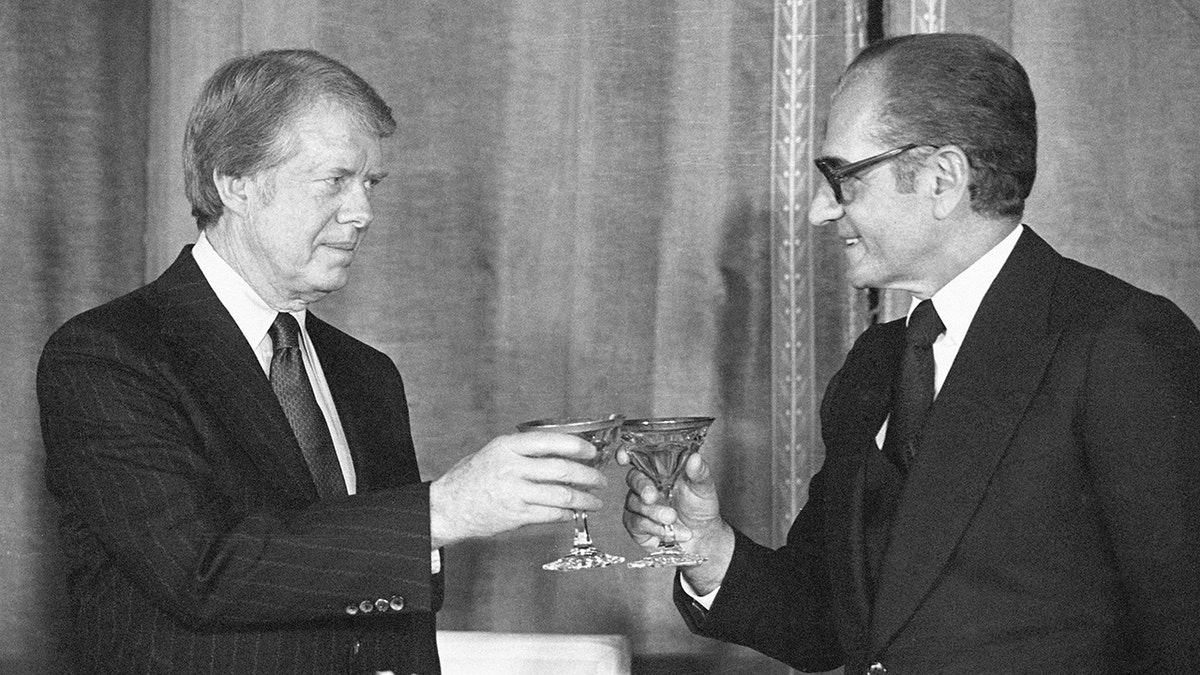
President Jimmy Carter and Shah Mohammed Pahlavi dine in Iran. (Bettmann/Getty Images)
Lebanon hostage crisis
On July 5, 1982, the years-long saga known as the Lebanon hostage crisis began with the systematic abductions of foreigners, including Americans, by Hezbollah and Iranian proxies in the Mideast country, according to United Against a Nuclear Iran.
That group, founded by former Florida Gov. Jeb Bush and former Ambassador Mark Wallace, maintains a comprehensive history of Iranian aggression on its website and is a nonpartisan policy organization formed to combat the threats posed by the Islamic Republic.
During the Lebanon hostage crisis, several victims spent years imprisoned by Hezbollah, where they were forced to undergo psychological and medical torture, including CIA Beirut Station Chief William Buckley, who was not related to the National Review founder of the same name.
Buckley was tortured for months by Dr. Aziz al-Abub, a Lebanese Hezbollah psychiatrist and medical expert who reportedly forced him to take phenothiazines and experimented on him to induce interrogation and make an example of him to the West.

US Naval asset map. (Fox News)
Buckley reportedly died in custody amid these experiments on June 3, 1985.
The CIA later memorialized him on its wall in Langley, Virginia, and Obama-era Director John Brennan said in a 2014 statement that «we remember Bill not for the manner in which he died but for the legacy he left behind. From his time as an Army lieutenant colonel to his tenure with the Agency, Bill inspired those around him to do great things despite often dangerous conditions.»
The agency later caught up with the figurehead of the Hezbollah-linked Islamic Jihad terrorist group — carrying out what the Washington Institute described as a rare contemporary CIA assassination nearly 25 years later.
Imad Mughniyeh’s group had announced Buckley’s execution in October 1985, but the actual date was determined later, with allegations that he died not from execution but from the side effects of the medical torture he endured. Former hostage David Jacobsen told the institute that Buckley was often sick and delirious in his cell and ultimately died «drowning in his own lung fluids» after a bout of torture.
David Dodge, then-president of the American University in Beirut, was also kidnapped for about a year, and U.S. journalist Terry Anderson was held in captivity for more than six years.
Reagan-era bombings and murders of American servicemembers
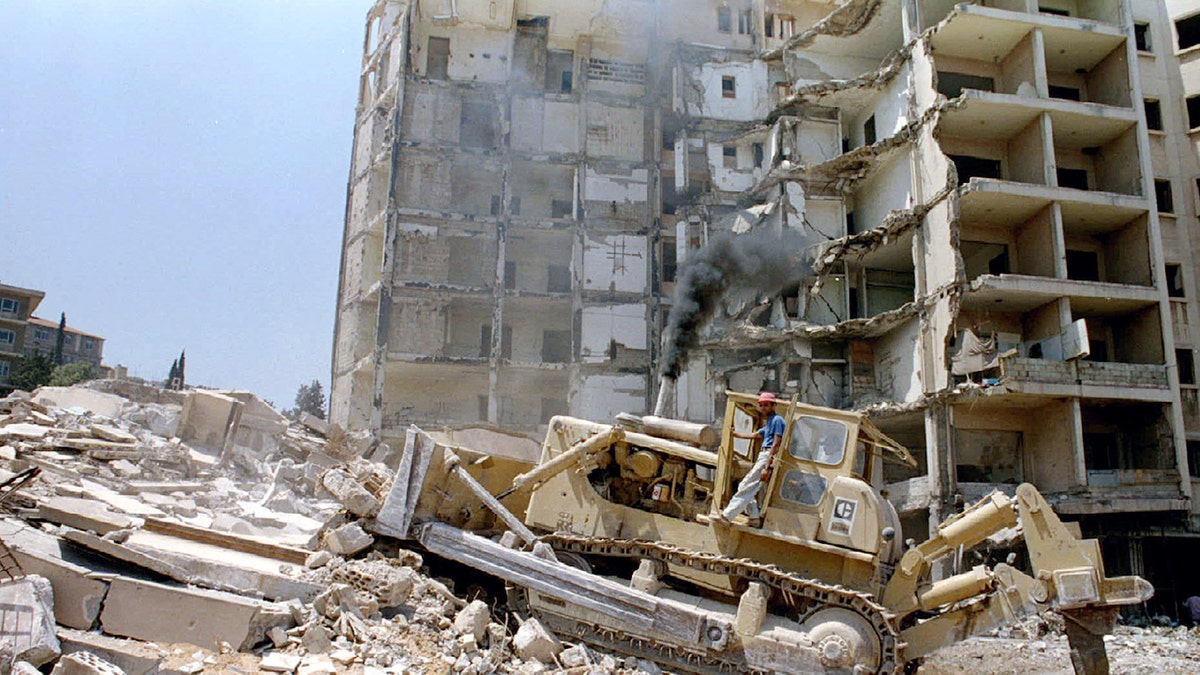
Iran bombed the Beirut U.S. Embassy in 1983. (Stringer/Reuters)
On April 18, 1983, an Iran-backed group seen as the predecessor to today’s Lebanese Hezbollah bombed the U.S. embassy in Beirut, killing 63 people, including 17 Americans.
That October, a suicide truck bomb linked to Iran hit a U.S. Marine barracks in Lebanon, killing 241 service members, in what remains the deadliest single day for the Corps since Iwo Jima.
According to the MEMRI translation of Khomeini’s representative to Lebanon, Sayyed Issa Tabatabai’s interview with the IRNA: «I quickly went to Lebanon and provided what was needed in order to [carry out] martyrdom operations in the place where the Americans and Israelis were.»
He added, «The efforts to establish [Hezbollah] started in [Lebanon’s] Baalbek area, where members of [Iran’s] Islamic Revolutionary Guards Corps (IRGC) arrived. I had no part in establishing the [political] party [Hezbollah], but God made it possible for me to continue the military activity with the group that had cooperated with us prior to the [Islamic] Revolution’s victory.»
The MEMRI report continued, «It is noteworthy that the part of the interview in which Tabatabai acknowledged receiving Khomeini’s fatwa ordering attacks on American and Israeli targets in Lebanon was removed by IRNA from its website shortly after publication. This is apparently because no official representative of Khomeini, the father of the Islamic Republic, or of Khamenei, Iran’s Supreme Leader, had ever said that Iran had any involvement in ordering, planning and carrying out the massive bombings in Lebanon against U.S.»
In 1985, Iran-backed Hezbollah hijacked Trans World Airlines (TWA) Flight 847 as it departed Athens. The hijackers collected IDs from the passengers and singled out U.S. Navy Seabee Robert Stethem of Waldorf, Maryland, mistaking him for a Marine and blaming him for involvement in the Lebanese civil war.
The hijackers tortured Stethem as they flew to Beirut before shooting him dead, dumping him on the tarmac, and shooting him again.
Operation Praying Mantis
In 1988, the USS Samuel B. Roberts struck an Iranian mine in the Persian Gulf and nearly sank. The Roberts had been escorting Kuwaiti oil tankers as a protective measure.
After the mines were matched to the Iranian ship Ajr, which had been captured by the Americans earlier that year, President Ronald Reagan sprang into retaliatory action.
Reagan’s operation destroyed two oil platforms reportedly used as Iranian Revolutionary Guard Corps (IRGC) surveillance structures, leading Iran to begin attacking nonmilitary targets.
The mission also claimed two other Iranian ships and was considered the largest naval surface engagement since World War II.
Two Americans died in a helicopter crash during the operation, while dozens of Iranian officers were killed.
Clinton-Bush-Obama era; 9/11
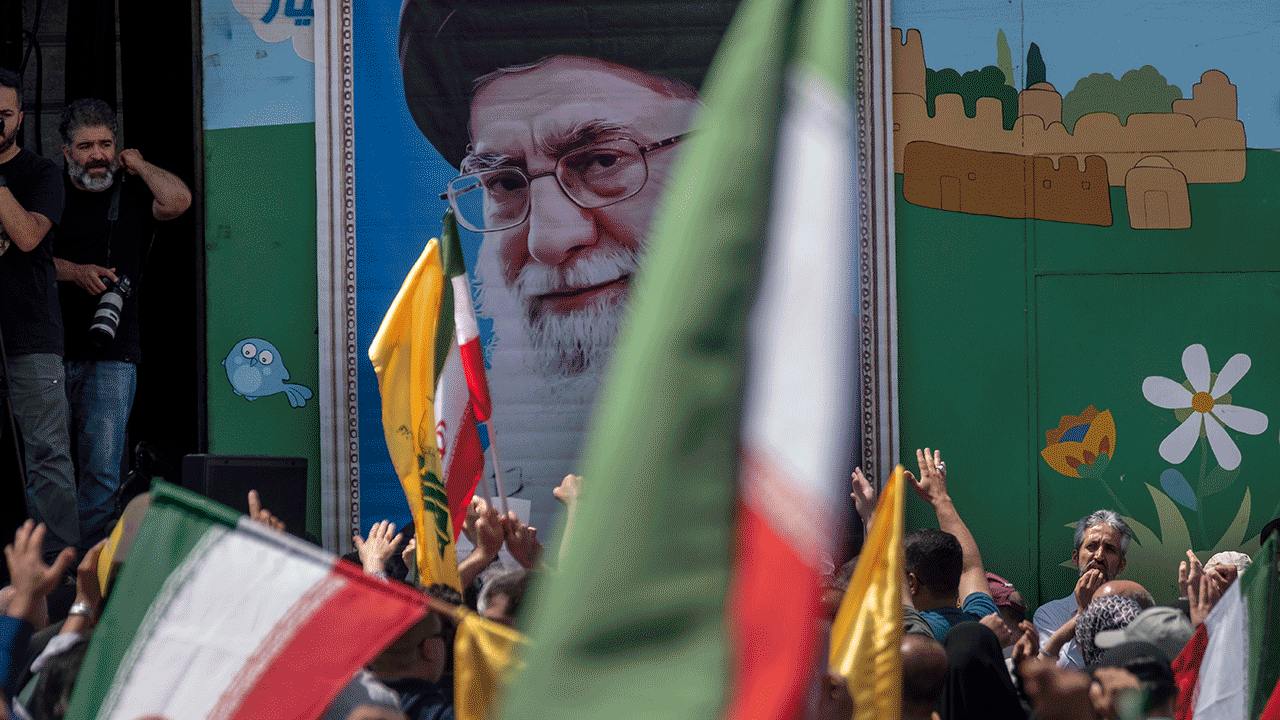
Iranian worshippers hold up their hands as signs of unity with Ayatollah Ali Khamenei, during a rally to condemn Israel’s attacks on Iran, in downtown Tehran, on June 20, 2025. (Morteza Nikoubazl/NurPhoto via Getty Images)
The FBI linked a 1996 attack on an American military housing complex in Saudi Arabia to another Iranian-backed terrorist group.
Hezbollah al-Hejaz was blamed for the Khobar Towers bombing in June of that year, which killed 19 U.S. service members.
In the aftermath of al Qaeda’s 2000 attack on the USS Cole destroyer in Aden, Yemen, American courts found Iran indirectly liable in that it provided support for the terrorists – in part by letting them be trained in Tehran-linked Hezbollah bases in Lebanon.
In 2015, FISA Judge Rudolph Contreras found Iran and Sudan liable, and during the Biden administration. Sudan agreed to settle claims of murdered sailors’ families.
After 9/11, when the U.S. went to war in Iraq, Iran and its proxies were suspected of causing a large portion of American casualties by supplying land mines to the Iraqi Shia insurgents. In 2019, the Department of Defense officially raised its estimate to more than 600 troop casualties directly tied to Iran or its proxies, meaning one in six Iraq War losses were caused by Tehran.
Navy Cmdr. Sean Robertson told the Army Times at the time that «these [American] casualties were the result of explosively formed penetrators (EFPs), other improvised explosive devices (IEDs), improvised rocket-assisted munitions (IRAMs), rockets, mortars, rocket-propelled grenades (RPGs), small arms, sniper fire, and other attacks in Iraq.»
During his first term in the White House, President Donald Trump ordered a strike on the IRGC, killing its legendary commander, Qassem Soleimani.
While Iran was not directly implicated as having specific knowledge of the Sept. 11, 2001, attacks in New York, Pennsylvania and Virginia, it was found to be complicit in facilitating the planned terrorism.
The report, led by former New Jersey Republican Gov. Tom Kean Sr., found a «persistence of contacts» between Iranian officials and al Qaeda.
Chapter 7 of the report found that Iran at least knew that the terrorists being trained by Hezbollah were going to act against the U.S. and/or Israel. The findings thereby blew apart critics’ claims that the Sunni terror group could not get along with its religious archenemy, the Shia who ran Iran.
Tehran border patrol officials also did not stamp passports of al Qaeda operatives traveling around the region, as the marking would have been flagged upon application for any U.S. visa.
In 2016, hackers linked to the IRGC were indicted by the Justice Department – including one 34-year-old Iranian national who allegedly gained access to the controls of a major dam in Rye Brook, New York, near the confluence of Interstate 287 and the New England Thruway.
In 2011, the U.S. also foiled an IRGC plot targeting the homeland, in which a District of Columbia restaurant was to be bombed to kill Saudi Ambassador to the U.S. Adel al-Jubeir.
Iranian-born U.S. citizen Manssoor Arbabsiar and Quds Force member Gholam Shakuri were charged in the incident. Arbabsiar was arrested at New York’s JFK Airport and Shakuri remains at large.
A confidential federal source met with Arbabsiar in Mexico that July, where the suspect agreed to pay $100,000 toward a $1.5 million bounty placed on al-Jubeir, according to the Justice Department.
Then-FBI Director Robert Mueller said at the time that the arrests depicted the U.S. «increased ability… to bring together the intelligence and law enforcement resources necessary to better identify and disrupt those threats, regardless of their origin.»
Biden era
By 2020, Iran was blamed for several recent attacks on commercial oil tankers, and after Trump ordered the killing of Soleimani, Ayatollah Ali Khamenei dispatched ballistic missiles at Al-Asad Air Base in Iraq.
Several dozen U.S. troops were wounded.
After Hamas militants massacred Israelis on Oct. 7, 2023, Iran-backed Hamas and Hezbollah launched about 180 attacks on Western forces in the region, including a drone strike on a base in Jordan that killed three Americans.
Trump era: Assassination plot on the president
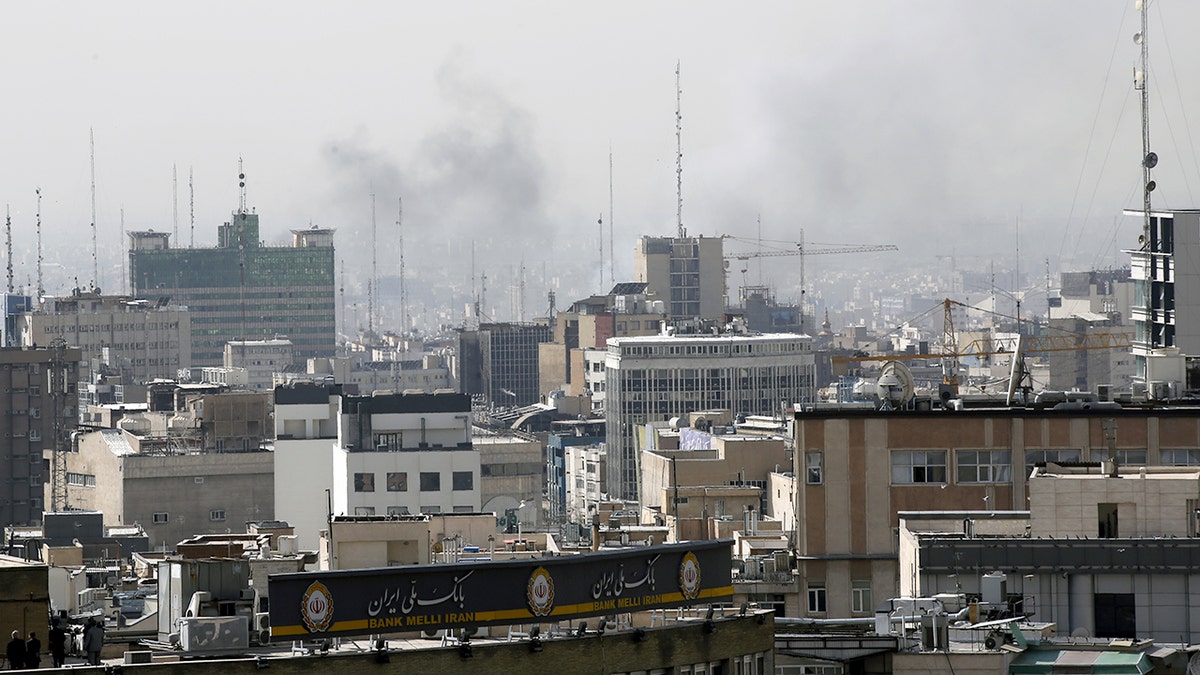
Bombing occurs in Tehran, Iran on Feb. 28, 2026. (Fatemeh Bahrami/Getty Images)
After an Afghan-born Iranian proxy and two American men were charged with allegedly trying to hunt down and assassinate an Iranian-born American critic of the ayatollah’s regime, the Justice Department disclosed that Trump was also the subject of a similar assassination plot.
Farhad Shakeri, who had spent 14 years in a New York state prison for robbery and made U.S. contacts to create a «network of criminal associates» to «supply the IRGC with operatives» domestically, was allegedly seeking to kill Masih Alinejad — a journalist who often appears on Fox News Channel.
Shakeri remained at large, likely in Iran, as of 2024, but his American counterparts were put on trial in Brooklyn.
Jonathon Loadholt of Staten Island and Carlisle Rivera of Brooklyn allegedly «were recruited as part of that network to silence and kill, on U.S. soil, an American journalist who has been a prominent critic of the regime,» according to then-Attorney General Merrick Garland.
«We will not stand for the Iranian regime’s attempts to endanger the American people and America’s national security,» Garland said, as the criminal complaint suggested Shakeri and Rivera first met while serving time.
The two men stalked Alinejad and were also accused of rotating plates on Loadholt’s car to avoid suspicion, while then-FBI Director Christopher Wray mentioned Trump as another target of an Iranian plot in a related statement on the Alinejad case.
Shakeri reportedly spoke to the FBI voluntarily from Iran, where he disclosed efforts to assassinate Trump, according to The New York Times.
Shakeri said he was told to create a plan to kill Trump after an IRGC meeting that October and that, if he could not, the assumption from the militia was that Trump would lose to Kamala Harris and be «easier to assassinate» while out of office.
«Thanks to the hard work of the FBI, their deadly schemes were disrupted. We’re committed to using the full resources of the FBI to protect our citizens from Iran or any other adversary who targets Americans,» Wray said in a statement at the time.
Trump has since warned Iran repeatedly to back down, with Secretary of War Pete Hegseth overseeing 2025 airstrikes on nuclear facilities, and the administration ultimately taking what it described as long-term military action to force regime change.
«Our objective is to defend the American people by eliminating imminent threats from the Iranian regime,» Trump said Saturday.
Fox News Digital’s Benjamin Weinthal contributed to this report.
war with iran,donald trump,iran,reagan,george w bush





INTERNACIONAL
Trump administration urges judge to dissolve injunction blocking Abrego Garcia’s deportation to Liberia
NEWYou can now listen to Fox News articles!
The Department of Justice (DOJ) on Friday urged a judge to dissolve the injunction that keeps the Trump administration from detaining Kilmar Abrego Garcia again so he can quickly be deported to Liberia.
«Dissolution is also warranted because the Court’s Memorandum Order failed to acknowledge that the Court’s own prior injunction against removal is the sole impediment to Petitioner’s prompt removal,» the DOJ wrote in a court filing obtained by Fox News Digital. «The Court cannot both impose the impediment that delays removal and consequently prolongs detention and, at the same time, hold that the resulting detention is impermissibly prolonged.»
It added, «Any attempt by this Court to permanently enjoin the government from exercising its authority to remove the Petitioner from this country is in direct contradiction to established judicial norms, and a clear error of law.»
The administration deported Abrego Garcia, who they claim is a member of MS-13, a year ago to a prison in his native El Salvador, but he was returned to the U.S. in June to face human smuggling charges in Tennessee related to a 2022 traffic stop despite at first saying the administration had no power to bring him back.
His Lawyers deny he is a member of MS-13.
US JUDGE VOWS TO RULE ‘SOON’ ON ABREGO GARCIA’S FATE AFTER MARATHON HEARING
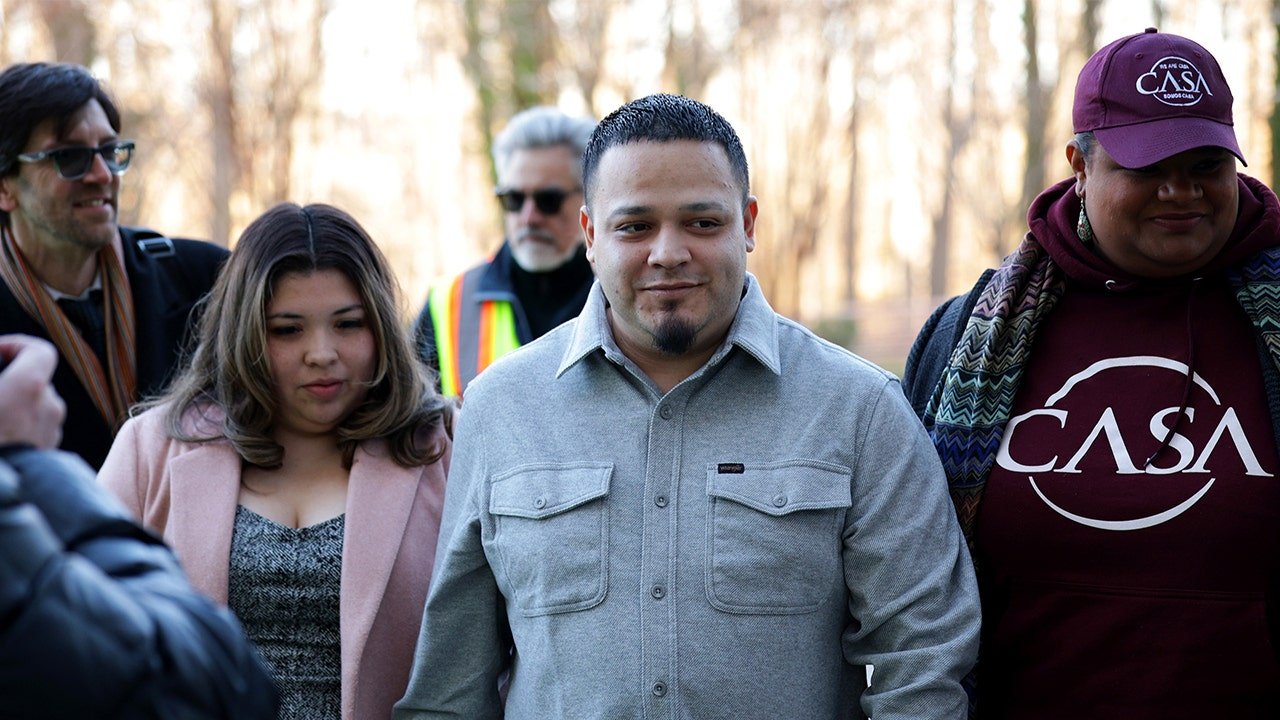
Kilmar Abrego Garcia arrives at U.S. District Court for the District of Maryland in December. (Alex Wong / Getty Images)
He was released from detention in December on the grounds that the Trump administration had not obtained the final notice of removal order that is needed to deport him to a third country.
Abrego Garcia, 31, has become a flash point in the national immigration debate since last March, when he was deported to El Salvador in violation of a 2019 court order in what Trump administration officials acknowledged was an «administrative error.»
The Supreme Court later ruled that the administration had to work to bring him back to the U.S.
JUDGE ORDERS MIGRANT DEPORTED IN ‘ERROR’ FREE FROM ICE CUSTODY WITH CRIMINAL CASE LOOMING
He has pleaded not guilty on the human smuggling charges and is seeking dismissal of the charges on the grounds of vindictive and selective prosecution.
The 2019 court order prevents Abrego Garcia from being deported to El Salvador after an immigration judge determined he faced danger from a gang that had threatened his family. He immigrated to the U.S. illegally as a teenager and has been under the supervision of Immigration and Customs Enforcement (ICE).
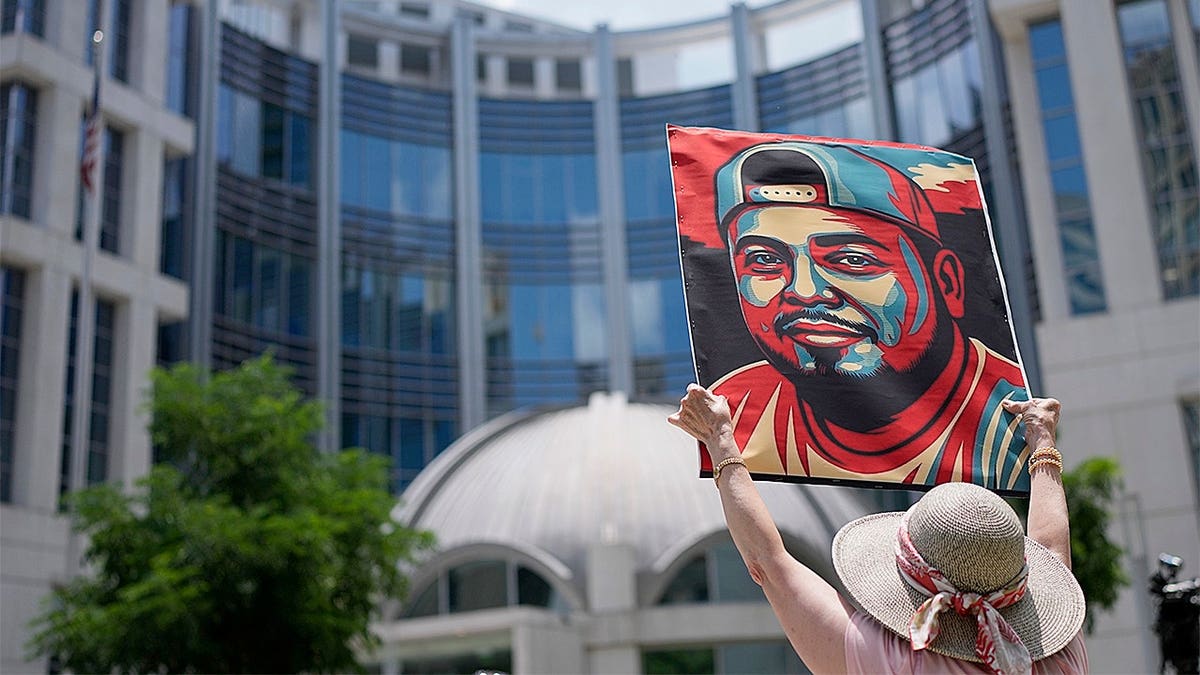
A protester holds a poster of Kilmar Abrego Garcia in front of the U.S. District Court in Nashville, Tenn. (Getty Images )
Last month, U.S. District Judge Paula Xinis agreed to convert her previous emergency order blocking ICE from immediately re-detaining Abrego Garcia into a longer-term form of injunctive relief sought by his lawyers.
She said that the Trump administration failed to provide the court with any «good reason to believe» that they plan to remove Abrego Garcia to a third country in the «reasonably foreseeable future.» Instead, she said, they «made one empty threat after another to remove him to countries in Africa with no real chance of success.»
Abrego Garcia has said he’s willing to be sent to Costa Rica, but Acting Immigrations and Customs Enforcement Director Todd Lyons said he will instead be removed to Liberia.
Abrego Garcia’s attorney said in December Abrego was willing to leave for Costa Rica immediately, and that the country had given him asylum status months ago.
CLICK HERE TO DOWNLOAD THE FOX NEWS APP
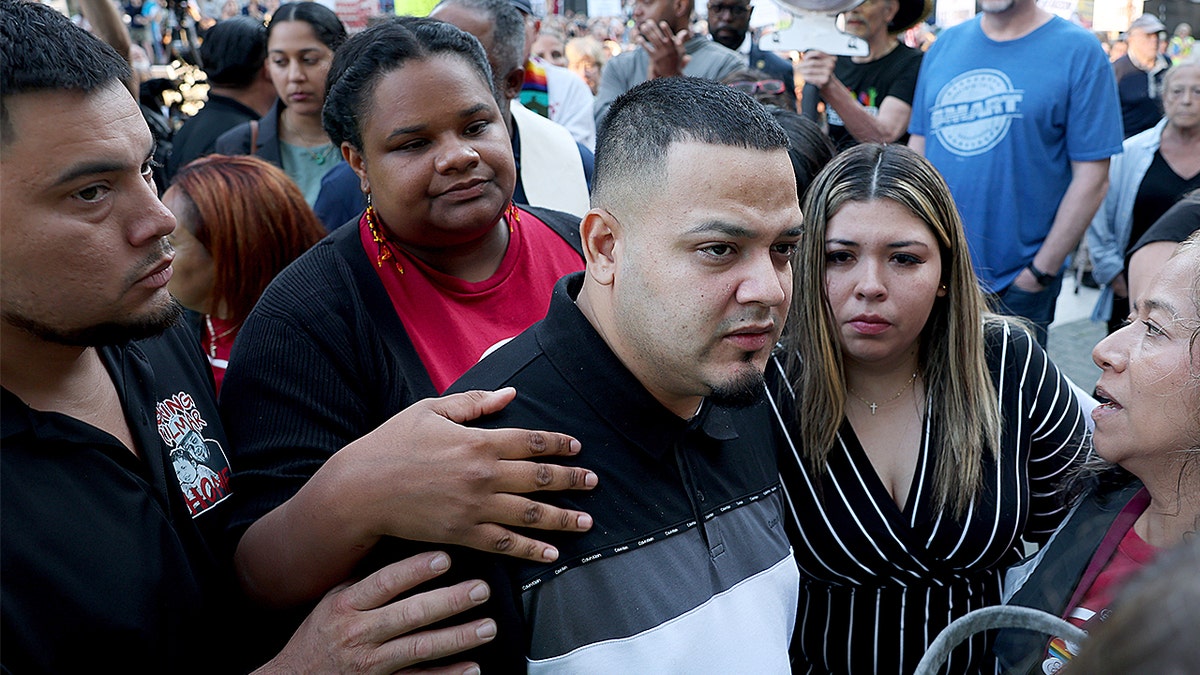
Kilmar Abrego Garcia enters a U.S. Immigration and Customs Enforcement (ICE) field office in Baltimore, Md. (Anna Moneymaker/Getty Images)
The government’s «persistent refusal to acknowledge Costa Rica as a viable removal option, their threats to send Abrego Garcia to African countries that never agreed to take him, and their misrepresentation to the Court that Liberia is now the only country available to Abrego Garcia, all reflect that whatever purpose was behind his detention, it was not for the ‘basic purpose’ of timely third-country removal,» Xinis said in December.
The administration asked the judge to rule on its request to have the injunction dissolved by April 17.
Fox News Michael Sinkewicz, Louis Casiano, Breanne Deppisch, and Jake Gibson contributed to this report.
justice department,federal courts,federal judges,immigration,politics,white house,donald trump
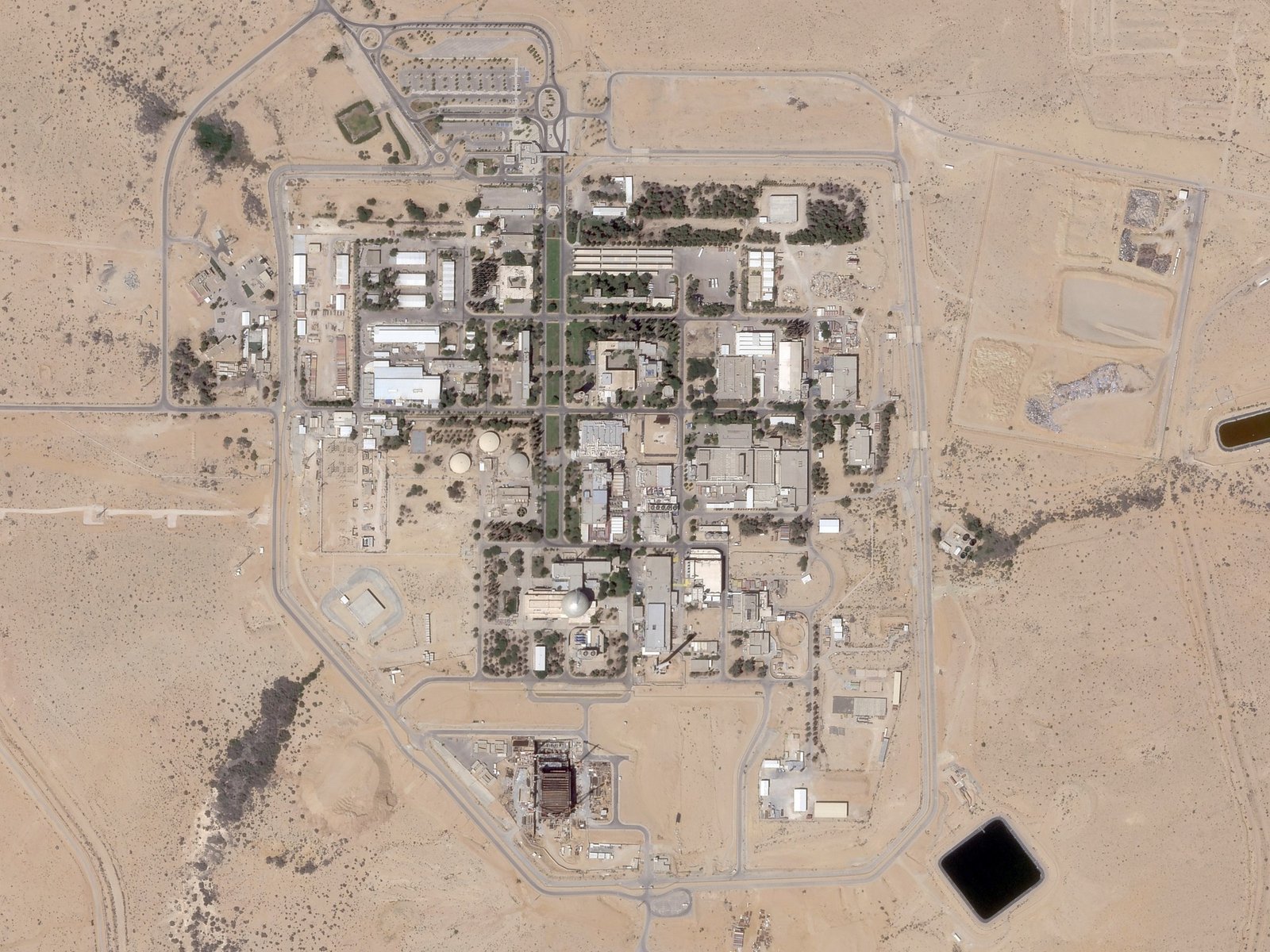
Un ataque misilístico de Irán sobre Dimona, una ciudad en la que funciona un centro nuclear clave para Israel, dejó este sábado por la tarde un saldo de más de 50 personas heridas. La televisión estatal iraní aseguró que se trató de un contraataque por la avanzada israelí-estadounidense sobre las instalaciones nucleares de Natanz, en el centro de Irán, más temprano este sábado.
Aunque en los últimos años el centro nuclear de Dimona ya había sido alcanzado por misiles enemigos, las autoridades israelíes todavía guardan parte de su armamento bélico allí, por lo que se trata de un objetivo de alta importancia. La máxima autoridad nuclear mundial aseguró que aún no se reportaron daños en el centro nuclear, pero volvió a lanzar un fuerte pedido a Irán, Israel y Estados Unidos.
Los reportes en los medios israelíes consignan más de 50 heridos tras el ataque a Dimona, una ciudad del centro de Israel, donde viven alrededor de 40 mil personas y que dista a menos de 14 kilómetros de un área que es mayor que su propia geografía: el Centro de Investigación Nuclear del Néguev Shimon Peres. Ese objetivo estratégico fue el blanco del ataque misilístico iraní y el contexto en que se reportaron los heridos.
La construcción de las instalaciones de Dimona comenzaron en 1958, en el marco del despegue del Programa Nuclear de Israel. Por esos años, los líderes David ben Gurion (el primero de los primeros ministros israelí) y Shimon Peres (quien luego también sería premier) habían recolectado U$S 40 millones, aproximadamente la mitad de lo que costaba un reactor nuclear construido en algún país amigo de Israel. Ese fue el envión del proyecto que configuraría el inicio de ese programa nuclear.
Para Israel se trataba de un objetivo estratégico, por lo que la elección del lugar para emplazar el centro nuclear debía ser concienzudamente elegido. Dimona fue una «ciudad desarrollo» de las que creó Ben Gurion en la década de 1950, aunque su nombre ya figuraba en los pueblos bíblicos compendiados en el Libro de Josué, del Antiguo Testamento. Pero lo de Dimona era más terrenal: está en medio del desierto del Néguev, relativamente aislada.
Podría decirse que Dimona desanduvo los años posteriores como una ciudad industrial de mediano tamaño, mientras la importancia de la zona escalaba a casi 14 kilómetros al sudeste de la ciudad, en el centro nuclear. Desde 1958, entonces, se construyó en secreto y en estricto aislamiento del Organismo Internacional de Energía Atómica (OEIA). Paradoja del tiempo: este sábado fue la OEIA la que confirmó públicamente que, a pesar del ataque iraní, el centro no sufrió daños físicos.
«Debe observarse la máxima moderación militar, en particular en las proximidades de las instalaciones nucleares», pidió Rafael Grossi, director general de la OEIA.
Entre 1962 y 1965, el reactor nuclear de Dimona ya no sólo estaba activo, sino también produciendo plutonio para las primeras armas nucleares con que iban contando las Fuerzas de Defensa de Israel (FDI) de cara a la Guerra de los Seis Días. Se estima que actualmente podría albergar entre 80 y 90 ojivas nucleares, según el Instituto de Investigación para la Paz de Estocolmo.
Sin embargo, ese centro nuclear de Israel ya no era secreto para los enemigos, al menos en los últimos años. En enero de 2012, las autoridades israelíes debieron suspender temporalmente la operatividad del reactor por considerar que ya se había convertido en un sitio vulnerable a un ataque de Irán.
Ese mismo año, en octubre y noviembre, las instalaciones fueron atacadas por Hamas, con misiles. El centro, no obstante, no resultó dañado, al igual que este sábado. En abril de 2021, un misil tierra-aire proveniente desde territorio sirio detonó cerca del centro nuclear de Dimona.
En la actualidad, la ciudad tiene una población de casi 40 mil habitantes, por fuera de las 25 más populosas del país. Sin embargo, este sábado quedó en el centro de las miradas.
Este sábado, la televisión estatal iraní no sólo adjudicó a ese país el ataque a Dimona, sino que explicó el porqué: «Una respuesta a un ataque anterior contra su sitio nuclear de Natanz», en el centro de Irán.
INTERNACIONAL
Trump proven right on Iran’s long-range missile capability as regime targets US-UK base, experts say
Iran fires missiles toward US-UK military base
Fox News senior correspondent Mike Tobin reports on Iran launching missiles toward a joint U.S.-U.K. military base, while Netanyahu advisor Caroline Glick provides analysis on ‘Fox News Live.’
NEWYou can now listen to Fox News articles!
The Islamic Republic of Iran significantly escalated its war effort against the U.S. with its launch of two intermediate-range ballistic missiles on Friday toward Diego Garcia, a key U.S.-U.K. military base in the Indian Ocean.
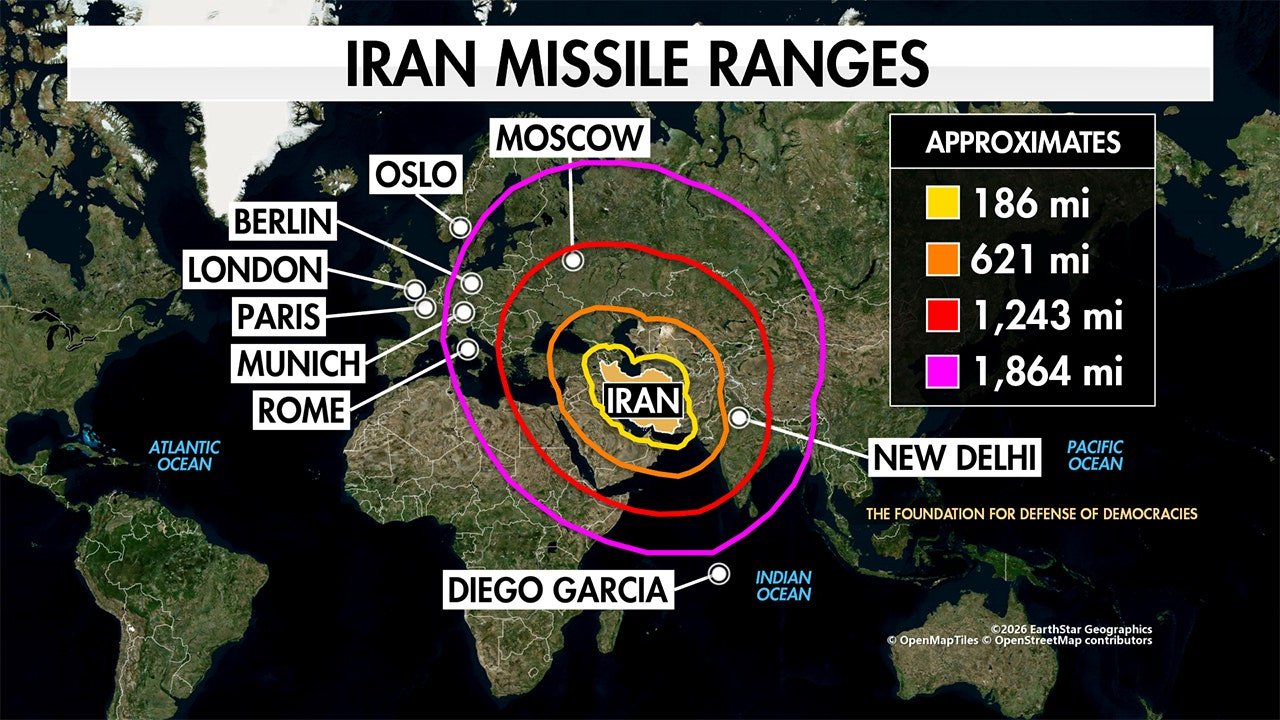
The targeting of Diego Garcia, roughly 2,500 miles from Iran, means Tehran’s missile capabilities appear to have exceeded previously acknowledged limits.
In the period leading up to Operation Epic Fury on Feb. 28, Iran’s Foreign Minister Abbas Araghchi claimed that «We intentionally kept the range of our missiles below 2,000 km so we don’t have that capability. And we don’t want to do that because we do not have hostility against the United States people and all Europeans.»
TRUMP VOWS TO HIT IRAN ‘VERY HARD’ AFTER OBLITERATING NEARLY ’90 PERCENT’ OF REGIME MISSILES
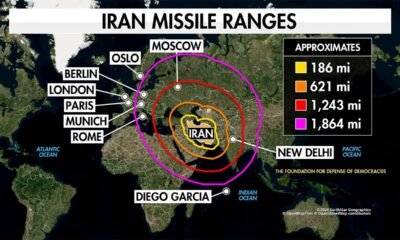
Map from the Foundation for Defense of Democracies showing Iran’s missile ranges. (The Foundation for Defense of Democracies)
On Saturday, Israel Defense Forces IDF Chief of Staff Lt. Gen. Eyal Zamir said «Just yesterday, Iran launched a two-stage intercontinental ballistic missile with a range of 4,000 kilometers [2,500 miles] toward an American target on the island of Diego Garcia. These missiles were not intended to hit Israel. Their range reaches the capitals of Europe — Berlin, Paris and Rome are all within direct threat range.»
IDF spokesman Nadav Shoshani blasted the alleged Iranian deception on X: «Just 3 days before the war, the Iranian regime said they don’t obtain long-range missiles. Today, their lies were exposed once again, when missiles were fired 4000km away from Iran. They hoped to lie their way into becoming a force that can terrorize the world. We didn’t buy it.»
Jason Brodsky, the policy director of United Against Nuclear Iran (UANI), told Fox News Digital, «The Trump administration, in citing Iran’s missile threat as a rationale for Operation Epic Fury, was therefore justified in its decision to undertake military action as Iran has consistently refused to negotiate over its missile program. It also shows how dangerous it is to solely rely on Iranian nuclear weapons fatwas and the supreme leader’s public rhetoric in formulating U.S. policy. As long as Iran retains the technical capability beyond public pronouncements, it is a threat.»
BEFORE-AND-AFTER SATELLITE IMAGERY OFFERS A RARE LOOK AT DAMAGE INSIDE IRAN
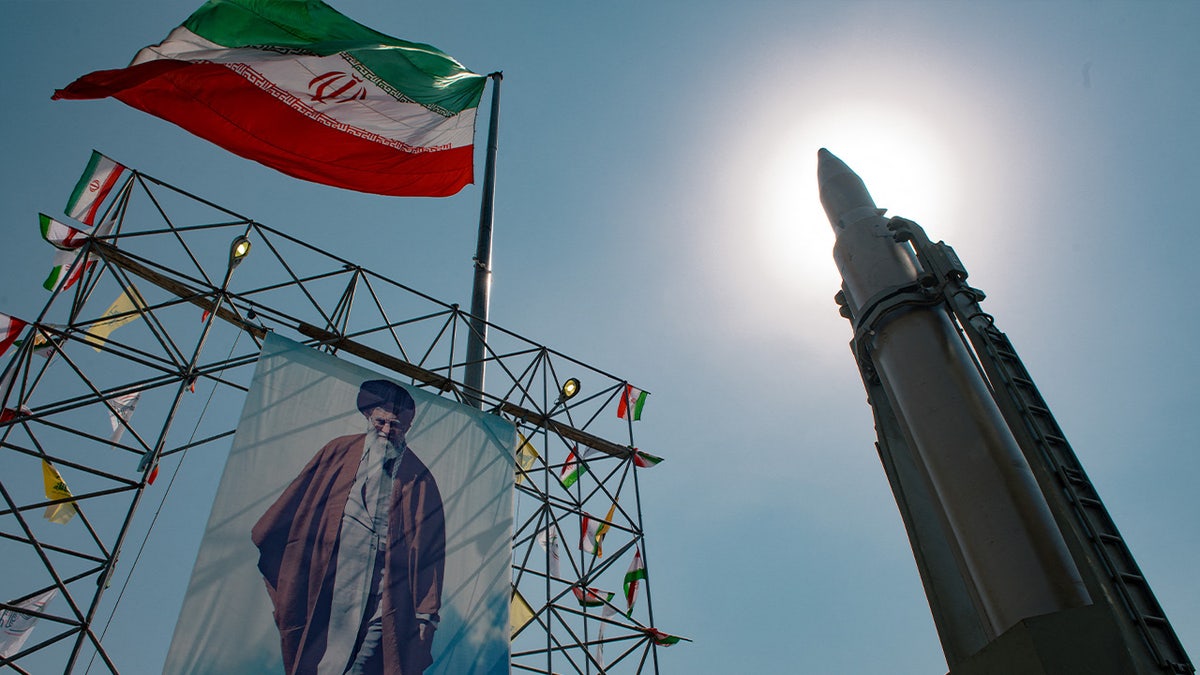
A big banner depicting Iran’s former Supreme Leader Ayatollah Ali Khamenei is placed next to a ballistic missile in Baharestan Square in Tehran, Iran, on September 26, 2024, on the sideline of an exhibition which marks the 44th anniversary of the start of Iran-Iraq war. (Photo by Hossein Beris /Middle East Images/AFP via Getty Images)
According to Brodsky, «I think it’s a message that the IRGC is in charge in Iran after Supreme Leader Ali Khamenei’s death. When Khamenei was alive, he limited the range of Iran’s missile program to 2000 km. Khamenei recounted in 2018 how he had rejected overtures from IRGC commanders seeking to increase the range to as much as 5000 km.»
He continued, «But now that he has died, those voices in the IRGC seeking to increase the range are likely driving the agenda. The launch of the missiles was likely meant as a signal of the IRGC’s capabilities to threaten U.S. allies beyond the Middle East. For example, this threatens Europe.»
The two long-range Iranian missiles did not hit the base, but the attempted attack marked a significant expansion of Iran’s reach beyond the Middle East and toward a major U.S. strategic hub. One missile reportedly failed in flight, while a U.S. warship launched an SM-3 interceptor at the other, officials said. It was not immediately clear whether the interception was successful. The remote base is a critical launch point for U.S. bombers, nuclear submarines and other strategic assets.
Ilan Berman, Vice President of the American Foreign Policy Council in Washington, D.C., told Fox News Digital, «The launch hammers home the president’s point about Iran being an imminent threat. It’s easy for casual observers to ignore, but the increasing maturity of Iran’s strategic programs, plural, has been exponentially expanding the threat that the Islamic Republic poses beyond the Middle East. That is what «Epic Fury» is seeking to address. The administration believes, absolutely correctly in my view, that these types of capabilities cannot be left in the hands of a radical, predatory regime.»
HEZBOLLAH, IRAN UNLEASH COORDINATED CLUSTER BOMB STRIKES ON ISRAEL IN MAJOR ESCALATION
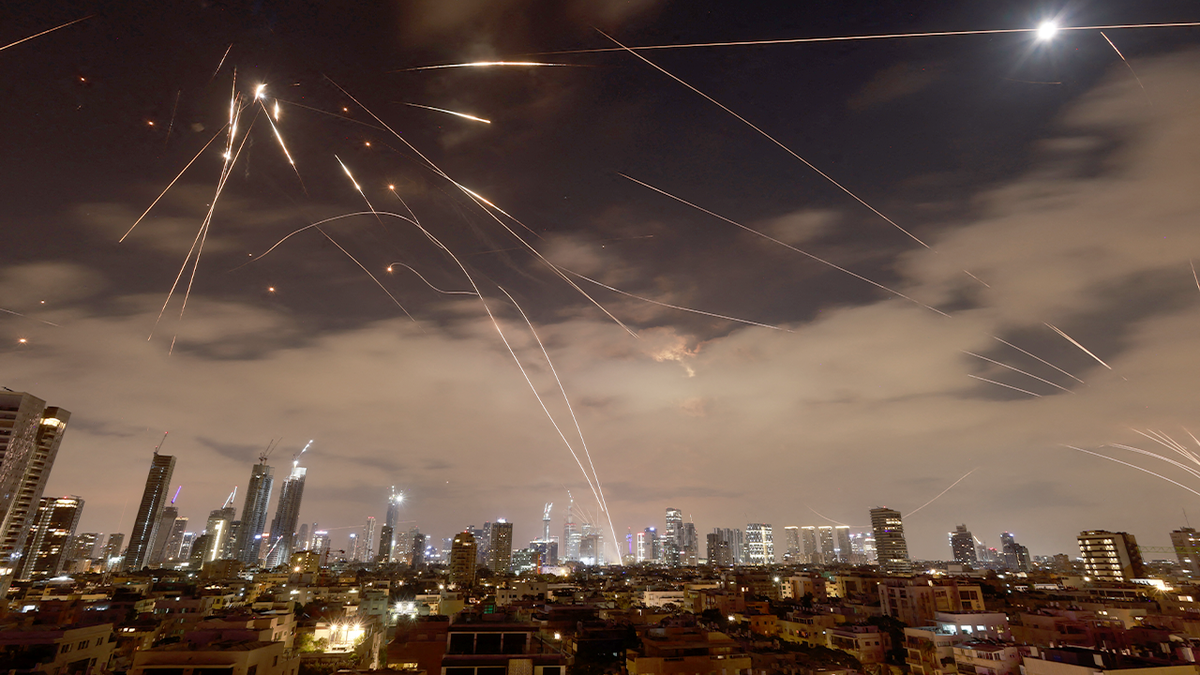
Israeli air defense systems are activated to intercept Iranian missiles over the Israeli city of Tel Aviv amid a fresh barrage of Iranian rockets on June 16, 2025. (Menahem Kahanna/AFP via Getty Images)
He continued that «Despite its public denials, it’s been clear that the Iranian regime has been working on expanding the range of its ballistic missile capabilities for years. The launch toward Diego Garcia confirms that it has made real progress toward that goal, and is already able to put targets in the same range as Central and Eastern Europe at risk. Moreover, it’s clear that the regime is seeking still greater capabilities – and that, if left intact, Iran’s ballistic missiles would attain intercontinental range soon.»
Berman, the author of «Iran’s Deadly Ambition: The Islamic Republic’s Quest for Global Power,» added, «The parallel development Iran has been carrying out on its space program is significant. The booster used to put payloads into orbit can be married onto a medium-range missile to create intercontinental range capabilities. Before the war, we were seeing a clear convergence of the regime’s strategic programs: its ballistic missile work, its space capabilities and its nuclear program.»
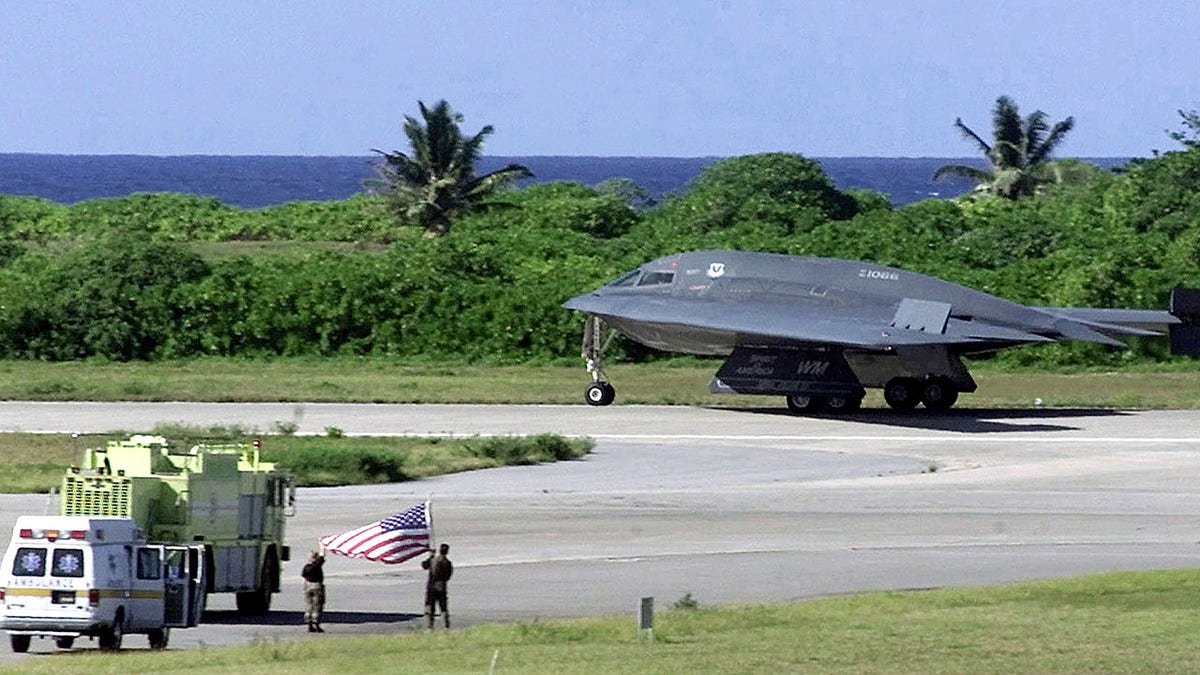
A U.S. B-2 Spirit bomber, part of the 509th Bomb Wing at Whiteman Air Force Base in Missouri, stops for refueling at the U.S. military base on Diego Garcia in October 2001, following an airstrike mission over Afghanistan in support of Operation Enduring Freedom. (U.S. Department of Defense/Senior Airman Rebeca M. Luquin)
He warned about the serious Iranian threat to continental Europe. «Europe is absolutely at risk, as the recent launch makes clear. I wouldn’t say that a failure to recognize this to date has been due to a grand deception by Tehran, though. It is more attributable to willful blindness on the part of European elites about the extent of the threat that the Iranian regime poses, as well as undue faith in diplomacy and arms control in containing it,» he said.
On Saturday, the United Kingdom condemned the attack. «Iran’s reckless attacks, lashing out across the region and holding hostage the Strait of Hormuz, are a threat to British interests and British allies,» the U.K. Ministry of Defense said in a statement. «RAF jets and other U.K. military assets are continuing to defend our people and personnel in the region.»
CLICK HERE TO DOWNLOAD THE FOX NEWS APP
«This government has given permission to the U.S. to use British bases for specific and limited defensive operations,» it added.
Fox News Digital’s Greg Norman and Jasmine Baehr contributed to this report.
war with iran,israel,donald trump,conflicts,terrorism,united kingdom

Trump administration urges judge to dissolve injunction blocking Abrego Garcia’s deportation to Liberia

Apelan la resolución de la jueza que habilitó la demolición del histórico Luna Park, pese a estar protegido

El nombre radiactivo que incomoda a Milei

La impactante lesión de un jugador de rugby que quedó los dientes colgando: su particular reacción

De líder mundial a escolta regional: un estudio mostró cuánto se amplió la brecha de producción de carne y granos entre la Argentina y Brasil

Cómo es el complejo nuclear de Dimona, la ciudad israelí atacada por Irán

Juicio por YPF: la Justicia de EEUU benefició a Argentina y suspendió todas las demandas hasta que se defina la cuestión de fondo

Senado: la oposición pidió explicaciones por $LIBRA y los vuelos de Adorni y Bullrich defendió al Gobierno

Kicillof desembarcó en CABA, lanzó su proyecto 2027 y empezará a ampliar su armado político en todo el país

¿DÓNDE ESTÁ ESMERALDA? El grito de una madre que sacude a la Argentina: «Me la arrebataron de la puerta»

 POLITICA2 días ago
Kicillof desembarcó en CABA, lanzó su proyecto 2027 y empezará a ampliar su armado político en todo el país
- POLITICA3 días ago
¿DÓNDE ESTÁ ESMERALDA? El grito de una madre que sacude a la Argentina: «Me la arrebataron de la puerta»
- POLITICA2 días ago
¿MACRI 2027? El «operativo retorno» que sacude al PRO y los nombres que suenan para la vicepresidencia