INTERNACIONAL
From talk to tactics: Trump pivots on Russia strategy to end war

NEWYou can now listen to Fox News articles!
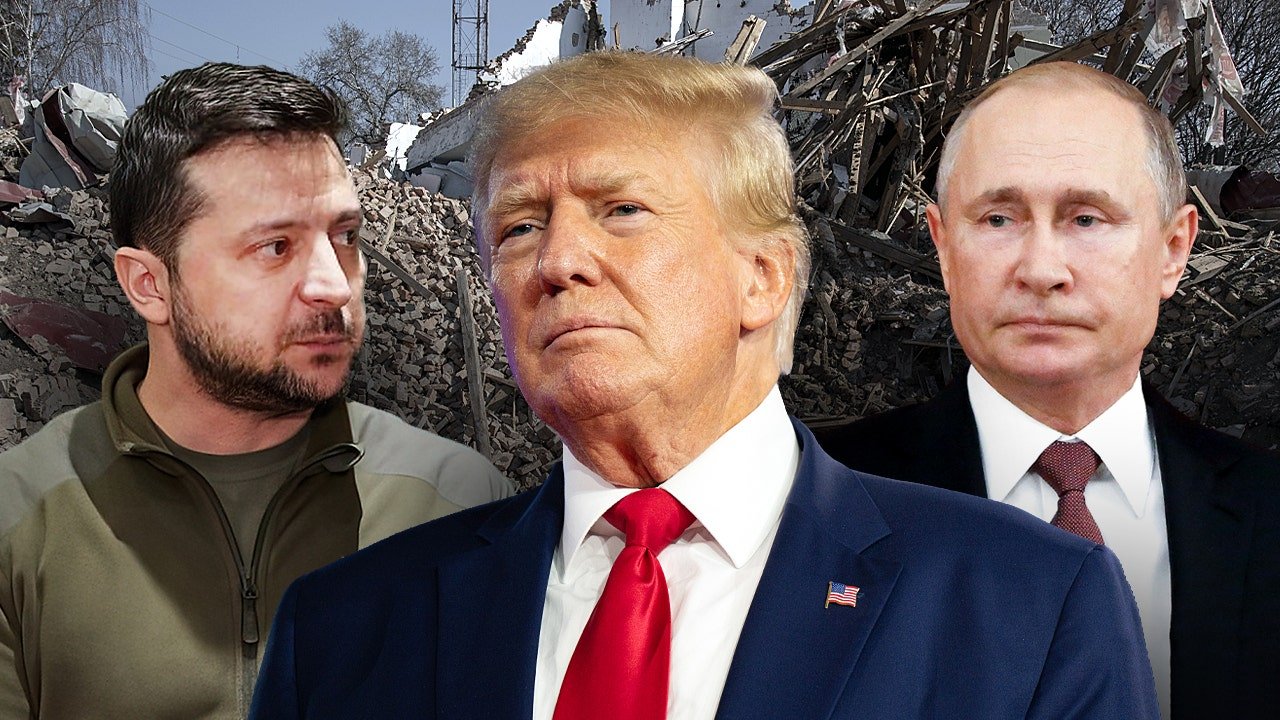
President Donald Trump’s approach with Russian President Vladimir Putin pivoted drastically this month when, for the first time since returning to the White House, he not only confirmed his support for Ukraine in a NATO arms agreement but issued an ultimatum to the Kremlin chief.
The warning came in a clear message: Enter into a peace deal with Ukraine or face stiff international sanctions on its top commodity, oil sales.
While the move has been championed by some, it has been questioned by others who debate whether it will be enough to deter Putin’s war ambitions in Ukraine. One security expert is arguing the plan will work, but it might take years to be effective.
President Trump speaks to Russian President Vladimir Putin during his first term. (Reuters/Jorge Silva)
NATO CHIEF PRAISES TRUMP’S WEAPONS SALES TO ALLIES AS ‘SIGNIFICANT’ MOVE THAT COULD FORCE PUTIN TO NEGOTIATE
«I think it will be effective, and he’s going to stick to that strategy. He’s going to continue to push Putin to return to the bargaining table and negotiate in good faith, not come to the bargaining table, make promises that the Russians don’t plan on keeping,» Fred Fleitz, who served as a deputy assistant to Trump and chief of staff of the National Security Council during the president’s first term, told Fox News Digital.
«That’s something Trump’s not going to tolerate,» Fleitz added. «We will see this is just the first six months of the Trump presidency. This may take a couple of years to solve.»
But Trump campaigned on ending the wars in Ukraine and Gaza, which has proven to be more complicated than he suggested from the campaign trail. And not everyone in the Republican Party has backed his approach when it comes to Europe, including a staunch Trump supporter, Rep. Marjorie Taylor Greene.
«We do not want to give or sell weapons to Ukraine or be involved in any foreign wars or continue the never-ending flow of foreign aid,» Greene said on X. «We want to solve our own problems plaguing our own people.»
Fleitz pointed to Trump’s decision to directly strike Iran and argued it reflected Trump’s ability to be nimble as a leader.
«He looked at the intelligence and realized it was getting too close, and he decided to adjust his policy, which was first diplomacy,» Fleitz said.
«But Trump also specified something very important. He said to his supporters, ‘I came up with a concept of the America-first approach to U.S. national security, and I decide what’s in it,» Fleitz added. «He has ownership of this approach, and he will adjust if necessary.»
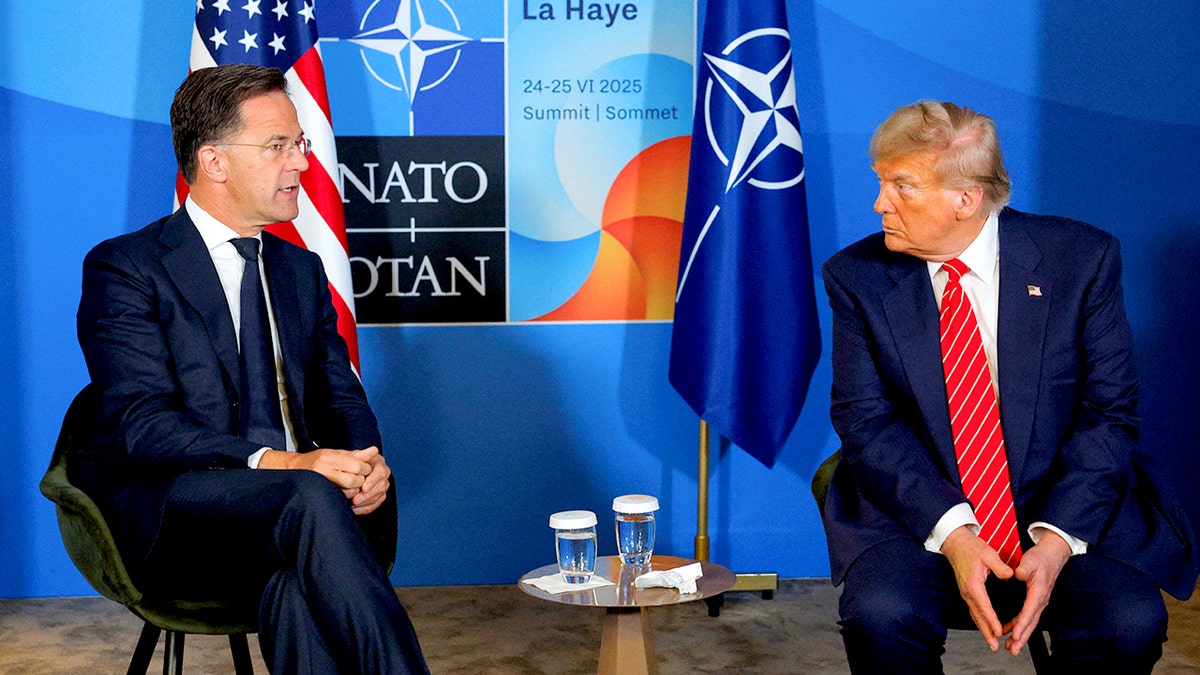
President Donald Trump meets with NATO Secretary General Mark Rutte at the NATO summit in The Hague, Netherlands, June 25, 2025. (Reuters/Brian Snyder)
TRUMP SAYS US WILL SEND PATRIOT MISSILES TO UKRAINE, ADDS THAT PUTIN ‘TALKS NICE AND THEN HE BOMBS EVERYBODY’
Though Trump had made clear from the campaign trail that he wanted to see Europe take a leading role in the war in Ukraine, last week he countered a major talking point from some within his party, including Vice President JD Vance.
Vance has argued against arming Ukraine and said in an op-ed last year, «[It] is not just a matter of dollars. Fundamentally, we lack the capacity to manufacture the amount of weapons Ukraine needs us to supply to win the war.»
Trump agreed to sell NATO nations top U.S. arms that will then be supplied to Ukraine.
«We want to defend our country. But, ultimately, having a strong Europe is a very good thing,» Trump said, sitting alongside NATO Secretary General Mark Rutte.
Security experts have largely argued that the future of Ukraine’s negotiating ability and, ultimately, the end of the war, will play out on the battlefield.
On Thursday, John Hardie, deputy director of FDD’s Russia Program, told U.S. lawmakers on the Helsinki Commission, also known as the Commission on Security and Cooperation in Europe, in a defense briefing that Ukraine needs to be supplied with long-range strike capabilities that can hit key Russian missile and drone plants.
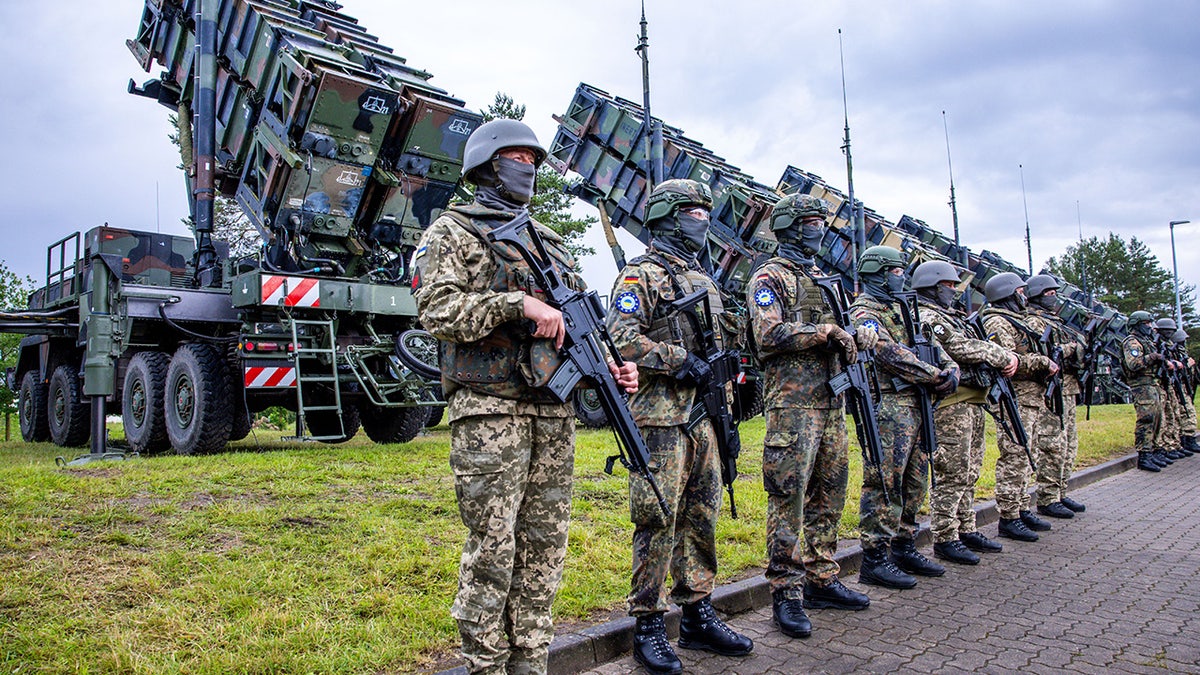
Ukrainian and German soldiers train on the Patriot air defense missile system at a military training area in Germany in June 2024. (Jens Büttner/picture alliance via Getty Images)
‘TRUMP HAS CHANGED THE GAME’: NATO ENTERS BRAVE NEW ERA UNDER PRESSURE FROM US, RUSSIA
«Ukraine shouldn’t be restricted merely to shooting down ‘arrows’,» Hardie said. «An optimal approach will combine both offense and defense. Ukraine needs to be able to hit the ‘archer’ and the factories that make the ‘arrows.’
«Putin will continue his unprovoked war so long as he believes it’s sustainable and offers a pathway to achieving his goals,» Hardie argued. «By shoring up Ukraine’s defense of its skies and enabling Ukraine to inflict growing costs on Russia’s war machine, as well as pressuring the Russian economy and exhausting Russia’s offensive potential on the ground, we may be able to change that calculus.»
But Fleitz, who serves as vice chair of the America First Policy Institute’s Center for American Security, said he believes this war will only be brought to an end when an armistice agreement is secured.
«I think there’s probably going to be an armistice where both sides will agree to suspend the fighting,» Fleitz said. «Someday, we will find a line where both nations will agree to stop fighting.»
Ultimately, he believes this will happen by Ukraine agreeing not to join NATO for a certain period of time, though with Moscow’s understanding that Kyiv will be heavily armed by Western allies.

In this photo provided by the Ukrainian Presidential Press Office, Ukraine President Volodymyr Zelenskyy, right, and President Donald Trump, talk as they attend the funeral of Pope Francis in Vatican April 26, 2025. (Ukrainian Presidential Press Office via AP)
CLICK HERE TO GET THE FOX NEWS APP
«I think there’s a way to do this where Russia wouldn’t be concerned about growing Western European influence in Ukraine, and Ukraine would not be worried that Russia will invade once a ceasefire or armistice is declared,» he added. «Maybe this is a pipe dream, but I think that’s the most realistic way to stop the fighting.
«We know from history conflicts like this take time; peacemaking takes time,» Fleitz said. «I think that over time, Trump is going to have an effect on Putin.»

INTERNACIONAL
En un rincón azotado por los cárteles, los mexicanos están abiertos a la intervención de EE.UU.


INTERNACIONAL
Iran moves hundreds of millions in crypto during nationwide internet blackout, report reveals

NEWYou can now listen to Fox News articles!
EXCLUSIVE: Cryptocurrency infrastructure linked to Iran’s Islamic Revolutionary Guard Corps (IRGC) continued operating during the country’s nationwide internet blackout after the Feb. 28 U.S.–Israeli strikes, a cyber intelligence report reviewed by Fox News Digital claims. It allowed hundreds of millions of dollars in crypto to move out of the country.
Omri Raiter, founder and CEO of RAKIA, a cyber intelligence firm that develops data analysis platforms used by governments and security agencies, told Fox News Digital his team began monitoring Iranian cryptocurrency activity in real time after the attacks and quickly detected a surge of funds leaving Iranian-linked crypto accounts.
«We’ve seen a surge of funds since the first hours of the war,» Raiter said. «It started with tens of millions in the first hours, and it grew to hundreds of millions and more. Money was just flowing out from Iranian crypto accounts.»
Wallets linked to the IRGC received more than $3 billion in cryptocurrency in 2025, according to the internal report based on blockchain intelligence data cited by RAKIA. The report also cites publicly available data from blockchain analysis firm Chainalysis, which estimated Iran’s cryptocurrency ecosystem reached $7.78 billion in activity in 2025.
IRAN PROXIES WAGE WAR ON ISRAEL, THREATEN US INTERESTS AS IRAQ SLAMMED FOR NOT DISARMING THEM
Strikes on the Iranian leadership, the IRGC and Iranian naval vessels and oil infrastructure have roiled the markets. ( Sasan/Middle East Images / AFP via Getty Images)
Raiter said the data suggests Iran has developed a significant crypto-based financial infrastructure capable of operating even during heavy sanctions and communications shutdowns.
«The IRGC has been financing proxy operations through the very same crypto corridors that sanctions were designed to shut down,» Raiter said.
The U.S. Department of the Treasury sanctioned cryptocurrency exchanges tied to Iranian actors Jan. 30, marking one of the first times the U.S. targeted entire digital asset platforms rather than individual wallets for sanctions evasion linked to the Islamic Revolutionary Guard Corps.
Treasury Secretary Scott Bessent said the move was part of a broader effort to disrupt financial networks connected to Tehran, Iran.
«The Treasury will continue to pursue Iranian networks and corrupt elites who enrich themselves at the expense of the people,» Bessent said in a Treasury press release in January. «This also applies to attempts by the regime to use digital assets to circumvent sanctions.»
The recent surge appears to reflect two parallel trends: funds moving to support Iran’s regional proxy networks and money being moved by individuals connected to the regime seeking to protect their personal wealth, according to RAKIA’s analysis.
«The proxy war funding and the personal capital flight are two sides of the same coin,» Raiter said. «They move through the same pipelines.»
IRAN WAR, 11 DAYS IN: US CONTROLS SKIES, OIL SURGES AND THE REGION BRACES FOR WHAT’S NEXT

Tehran’s skyline, including the Azadi Tower, became the backdrop to a crisis shaped as much by cyber disruption as by missiles in the sky. (Kurt «CyberGuy» Knutsson)
Raiter said the firm identified cryptocurrency flows connected to networks previously associated with Iran-backed groups.
«Some of the accounts we saw are connected to areas where money historically flows to proxy wars,» he told Fox News Digital, citing activity linked to Lebanon and Yemen.
«Some of it could be people inside the IRGC trying to move their own money,» Raiter said. «But when you see the scale and the timing, it looks coordinated.»
The report produced by RAKIA claims the activity continued even after Iran imposed a sweeping internet shutdown across the country. National connectivity dropped to roughly 1% of normal levels during the blackout, according to internet monitoring group NetBlocks.
FROM MISSILES TO MINERALS: THE STRATEGIC MEANING BEHIND THE IRAN STRIKE

Military members of the Islamic Revolutionary Guard Corps in western Tehran, Iran (Morteza Nikoubazl/NurPhoto via Getty Images)
Despite that shutdown, RAKIA researchers said they detected more than 1,100 active cryptocurrency nodes operating inside Iran.
«When the internet is at one percent and you still see over a thousand active crypto nodes, you’re not looking at retail users,» Tom Malca, RAKIA’s head of cyber and AI research, said in the report. «Those nodes require dedicated bandwidth, stable power and deliberate exemption from the shutdown.»
RAKIA researchers said the activity suggests specialized infrastructure continued operating even as millions of Iranian civilians were cut off from the internet.
Most of the nodes were concentrated in the Tehran–Qom corridor, according to the report, an area that includes major government and IRGC institutions. Smaller clusters were detected in Iranian cities, including Isfahan, Mashhad, Tabriz and Kermanshah, according to the analysis.
CLICK HERE TO DOWNLOAD THE FOX NEWS APP
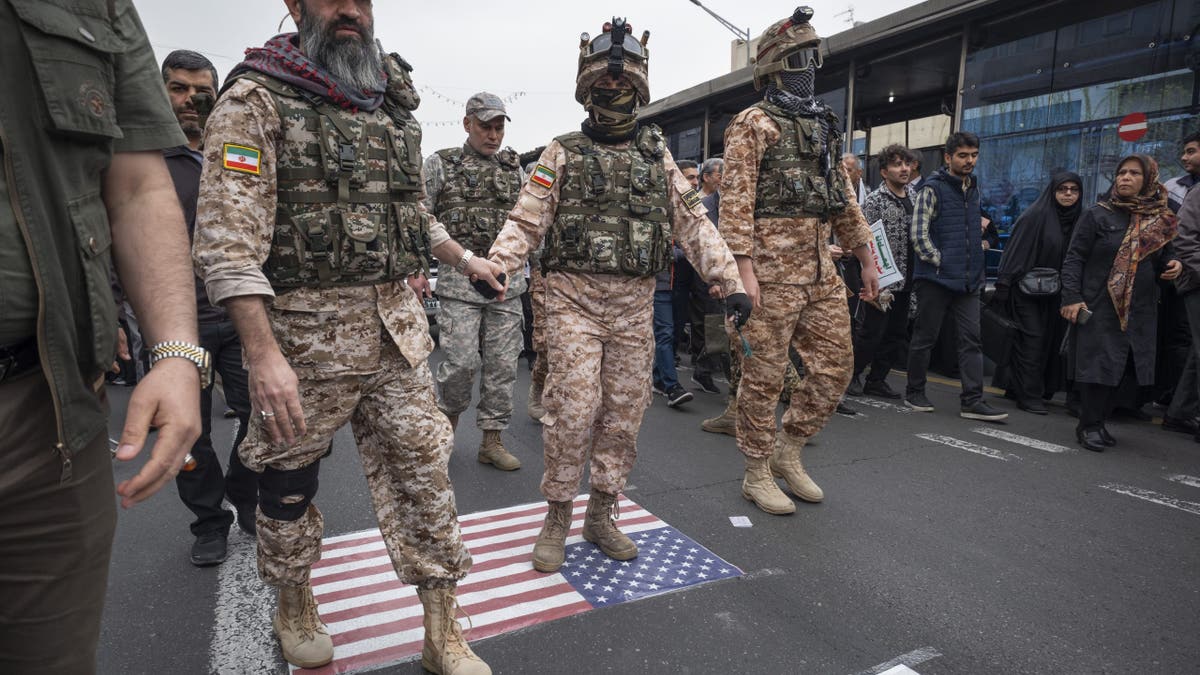
Islamic Revolutionary Guard Corps special forces walk on the U.S. flag during a rally commemorating International Quds Day, also known as Jerusalem Day, in Tehran, Iran, March 28, 2025. (Morteza Nikoubazl/NurPhoto via Getty Images)
RAKIA said its investigation relied on a combination of network monitoring and publicly available blockchain intelligence.
The Iranian mission to the United Nations in New York declined to comment on the report’s claims.
war with iran,terrorism,cybercrime
INTERNACIONAL
Florida Republicans send SAVE Act–style proof-of-citizenship voting bill to DeSantis’ desk
NEWYou can now listen to Fox News articles!
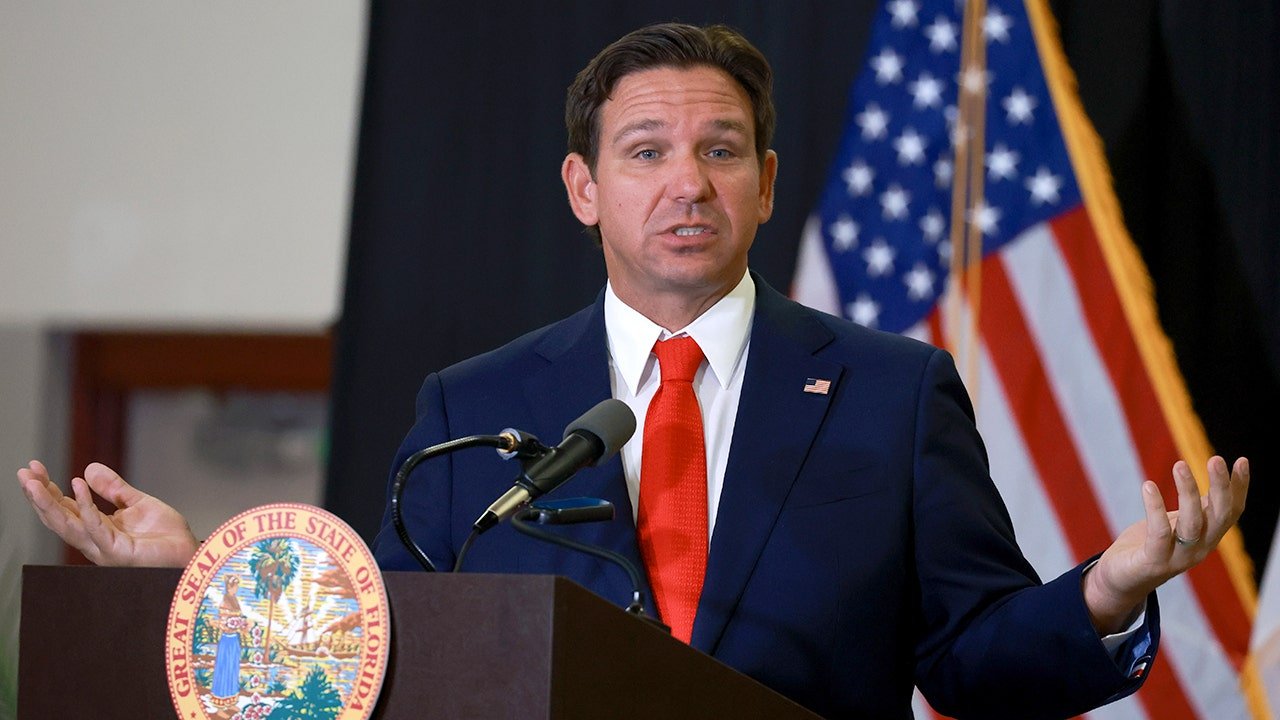
Florida lawmakers are sending Republican Gov. Ron DeSantis a strict elections bill modeled after the federal SAVE America Act strongly championed by President Donald Trump that mandates voters verify their citizenship when registering.
Lawmakers in Tallahassee, Florida, in the GOP-dominated state House approved the measure in a 77–28 vote Thursday, hours after the bill passed the Republican-controlled state Senate 27–12. The votes in both houses of the Florida legislature were nearly entirely along party lines.
DeSantis, a supporter of what he calls «the Florida version of the SAVE Act,» is expected to sign the measure when it reaches his desk.
«Although Florida has already enacted much of what the federal legislation contemplates, this will further fortify our state as the leader in election integrity,» the governor highlighted in a social media post.
SENATE GOP EYES BLAME GAME AS TRUMP-BACKED SAVE ACT HEADED FOR DEFEAT
The developments in Florida come as the federal bill faces an uncertain future in Congress.
Republican Gov. Ron DeSantis of Florida supports a bill approved by his state’s legislature which mandates proof-of-citizenship when registering to vote. (AP Photo/Rebecca Blackwell, File)
The SAVE Act, which stands for Safeguard American Voter Eligibility, narrowly passed the GOP-controlled House in February mostly along party lines. But it’s stalled in the Senate, where Republicans hold a 53–47 majority in the chamber, far short of the 60 vote threshold needed to pass the bill.
The federal bill would require strict voter ID and proof-of-citizenship requirements across the country. Republicans say the bill is necessary to secure election integrity.
While polls indicate the vast majority of Americans — regardless of the political affiliation — support voter IDs at the polls and preventing noncitizens from voting in federal elections, Democrats argue the bill is not needed, since citizenship already is a requirement to vote and instances of noncitizen voting are rare.
THUNE GUARANTEES VOTER ID BILL TO HIT THE SENATE DESPITE SCHUMER, DEM OPPOSITION: ‘WE WILL HAVE A VOTE’
Democrats and voting rights groups also claim that the federal bill would create unnecessary barriers, making it harder for voters to cast a ballot.
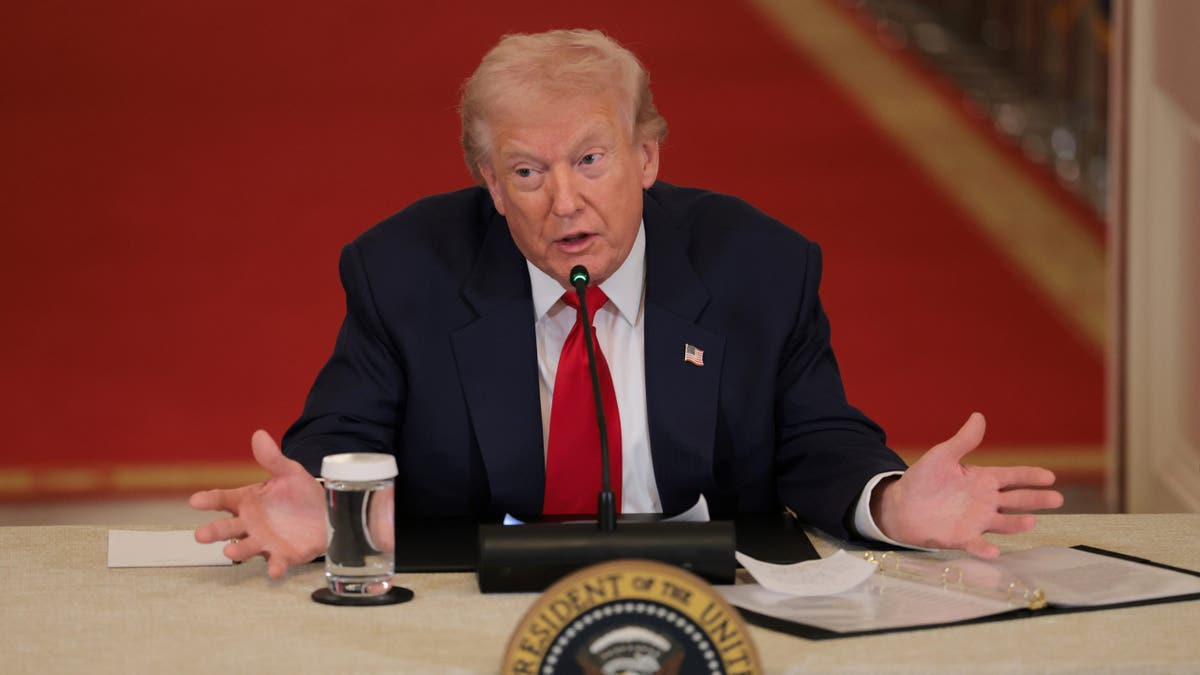
President Donald Trump has said that passing a federal bill that mandates proof-of-citizenship to register to vote should be the number one priority for Congress. (Anna Moneymaker/Getty Images)
Trump, who is intent on holding the Republican congressional majorities in the 2026 midterm elections, said earlier recently that the federal bill should be the top priority in Congress and that if passed, it «will guarantee the midterms» for Republicans.
But the Florida bill’s proof of citizenship requirement wouldn’t take effect until January, after the November 2024 midterm elections. And the bill also doesn’t limit the Sunshine State’s allowance for excuse-free mail-in-voting.
Trump has long railed against mail-in-balloting.
SCHUMER DOUBLES DOWN ON GOP VOTING BILL ‘JIM CROW 2.0’ DESPITE DEMOCRATIC VOTER SUPPORT
The Florida measure also would prevent college students from using their student IDs when voting in person, but that provision wouldn’t take effect until 2027.
«This bill creates real barriers for everyday Floridians, especially those with the fewest resources,» Democratic state Sen. LaVon Bracy Davis of Orlando argued in a social media post. «It will disproportionately impact working families, seniors, and college students who want to exercise their voice and right to vote.»
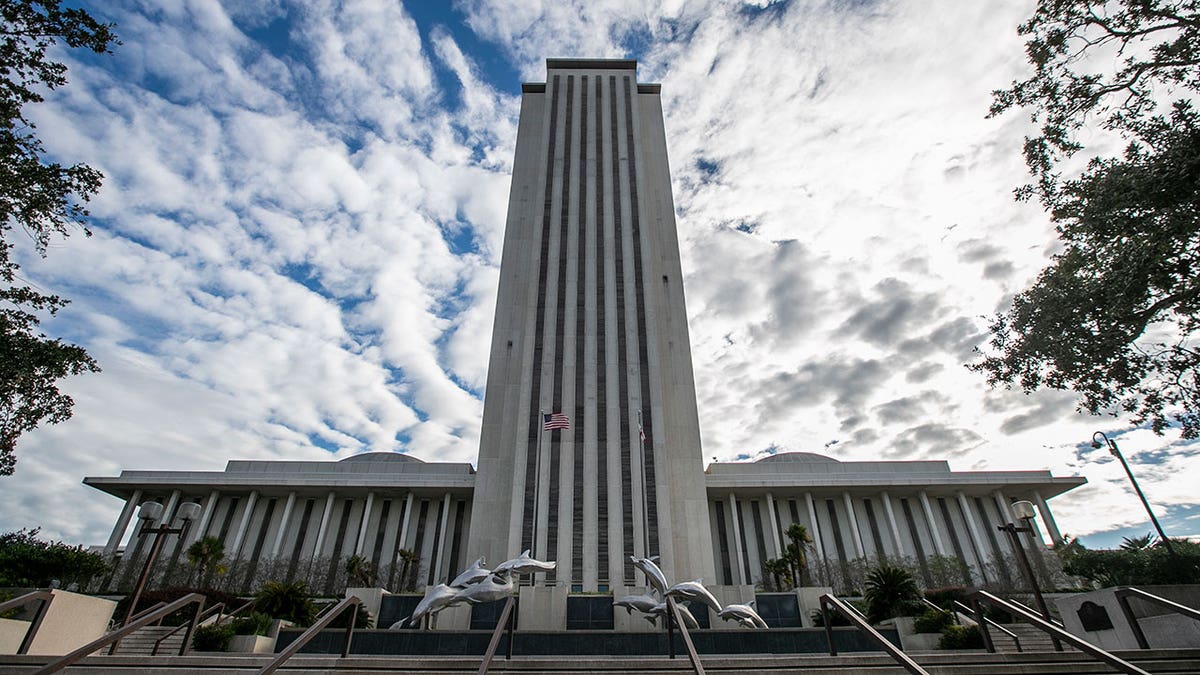
A view of the Florida State Capitol building in Tallahassee, Florida. (Mark Wallheiser/Getty Images)
And Florida Democratic Party Chair, Nikki Fried charged, «In the cover of night, Florida Republicans made it harder for U.S. citizens to vote.»
«While Democrats, civic groups, and voters voiced their concerns to stop this harmful policy, Republicans decided citizens’ voices didn’t matter and voted to disenfranchise hardworking Floridians,» she added.
The bill would make Florida the most populous state in the nation to mandate proof-of-citizenship to register to vote.
Arizona and Kansas enacted similar requirements in the past two decades, and Louisiana passed a law two years ago.
CLICK HERE TO DOWNLOAD THE FOX NEWS APP
Proof-of-citizenship bills passed recently in the South Dakota and Utah legislatures, and are awaiting the governors’ signatures.
And in 2024, New Hampshire mandated that all first-time voters show proof of citizenship when registering.
donald trump,ron desantis,voting,elections,midterm elections,florida

Surgen nuevos detalles a través de la clasificación por edades de Tomodachi Life: Una vida de ensueño – Nintenderos

Por la crisis en Medio Oriente, subirán las retenciones a las exportaciones argentinas de petróleo convencional

Canales para ver el Estudiantes vs. Lanús por el Torneo Apertura

La secuencia de más de 35 llamadas de Novelli con Milei, su hermana y Santiago Caputo por el lanzamiento de $LIBRA

Jorge Telerman analizó los dichos de Díaz-Canel sobre el diálogo de Cuba con EEUU: “Las aperturas que promete el régimen son solo fachada”

Tras el aumento: cuanto gana un camionero en marzo 2026

Muni Seligmann respondió las críticas tras el accidente de su bebé y su viaje a Miami: “Hay que contarlo y naturalizarlo”

El ex novio de Luana de Gran Hermano reveló información sensible sobre su relación: “El bolso tenía plata”

Juan Carlos Schmid deja la conducción de Dragado y Balizamiento después de 33 años

Sorpresa en Gran Hermano tras la expulsión de Carmiña: la reacción de la producción y las dudas sobre su reemplazo

 CHIMENTOS3 días ago
Muni Seligmann respondió las críticas tras el accidente de su bebé y su viaje a Miami: “Hay que contarlo y naturalizarlo”
- CHIMENTOS1 día ago
El ex novio de Luana de Gran Hermano reveló información sensible sobre su relación: “El bolso tenía plata”
- CHIMENTOS1 día ago
Sorpresa en Gran Hermano tras la expulsión de Carmiña: la reacción de la producción y las dudas sobre su reemplazo