INTERNACIONAL
G7 summit opens in Canada, with leaders to address trade, wars while hoping to avoid clash with Trump

NEWYou can now listen to Fox News articles!
Group of Seven leaders are meeting in Canada, with issues such as the Israel-Iran conflict and U.S. tariffs high on the agenda, while nations hope to avoid clashes with U.S. President Donald Trump, who has repeatedly threatened to annex the host nation.
Canadian Prime Minister Mark Carney said his priorities are strengthening peace and security, building critical mineral supply chains and creating jobs. But Trump’s tariffs on countries around the world and the conflicts in the Middle East and Ukraine are expected to receive heavy attention during the summit.
Israel and Iran launched new attacks on each other overnight into Monday, raising the death toll in the conflict that began with an Israeli offensive on Friday.
A G7 official said the leaders plan to issue a joint statement calling for de-escalation in the conflict.
AT LEAST 8 KILLED, DOZENS WOUNDED IN ISRAEL AFTER IRAN LAUNCHES NEW WAVE OF MISSILE STRIKES
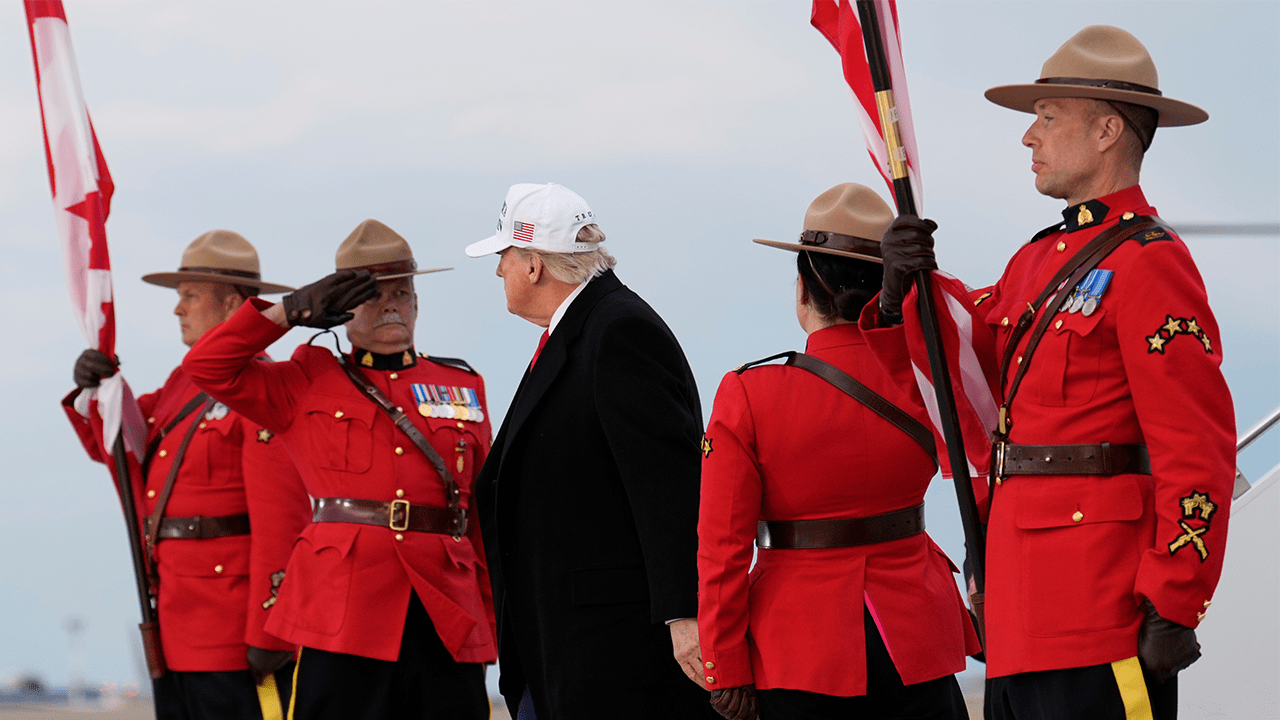
U.S. President Donald Trump arrives on Air Force One at Calgary International Airport, Sunday, June 15, 2025, in Calgary, Canada, ahead of the G7 Summit. (AP)
German Chancellor Friedrich Merz told reporters his goals for the summit include for Iran to not obtain nuclear weapons, ensuring Israel’s right to defend itself, avoiding escalation of the conflict and creating room for diplomacy.
«This issue will be very high on the agenda of the G7 summit,» Merz said.
Iran has maintained that its nuclear program is peaceful, and U.S. intelligence agencies and the International Atomic Energy Agency have said Iran was not pursuing a nuclear weapon.
The last time Canada hosted the summit in 2018, Trump left before denouncing then-Canadian Prime Minister Justin Trudeau as «very dishonest and weak» and instructing the U.S. delegation who stayed behind to withdraw its approval of the final statement endorsed by the leaders of Japan, France, the United Kingdom, Italy, Germany and Canada.
«I have instructed our U.S. Reps not to endorse the Communiqué as we look at Tariffs on automobiles flooding the U.S. Market!» Trump posted on X, which at the time was still known as Twitter.
The notable image from that summit was of Trump seated with his arms folded defiantly as then-German Chancellor Angela Merkel stared daggers at him.
LIVE UPDATES: ISRAEL-IRAN CONFLICT

Canadian Prime Minister Mark Carney, right, meets with German Chancellor Friedrich Merz ahead of the G7 Summit at the Pomeroy Kananaskis Mountain Lodge, in Kananaskis, Alberta, Sunday, June 15, 2025. (AP)
This time, Trump’s severe tariffs on many nations risk a global economic slowdown and the conflicts in Ukraine, Gaza and now between Israel and Iran do not see an end in sight.
Other issues impacting world leaders include immigration, drug trafficking and new technologies such as artificial intelligence.
Diplomats said Canada ditched the idea of a traditional comprehensive joint communiqué and would issue chair summaries instead in an attempt to avoid a diplomatic disaster and maintain engagement with the U.S.
A senior Canadian official told reporters that Ottawa wanted to focus on actions the seven members — Canada, France, Germany, Italy, Japan, the United Kingdom and the U.S. — could take together.
Asked as he was leaving the White House on Sunday if he planned to reveal any trade agreements at the summit, Trump said: «We have our trade deals. All we have to do is send a letter, ‘This is what you’re going to have to pay.’ But I think we’ll have a few, few new trade deals.»
The U.K. reached a trade framework with the U.S. that included quotas to protect against some tariffs, but the 10% baseline would remain.
TRUMP SAYS ISRAEL AND IRAN ‘HAVE TO FIGHT IT OUT’ BUT BELIEVES DEAL IS POSSIBLE

A worker prepares a sign ahead of the G7 summit at a satellite location in Banff, Alberta, Canada, June 14, 2025. (Reuters)
CLICK HERE TO GET THE FOX NEWS APP
A senior U.S. official said on Friday that working discussions would cover trade and the global economy, critical minerals, migrant and drug smuggling, wildfires, international security, artificial intelligence and energy security.
«The president is eager to pursue his goals in all of these areas, including making America’s trade relationships fair and reciprocal,» the official said.
Trump will have at least three scheduled bilateral meetings during the summit with other world leaders, including with Carney, Mexican President Claudia Sheinbaum and Ukrainian President Volodymyr Zelenskyy.
Reuters and The Associated Press contributed to this report.


NEWYou can now listen to Fox News articles!
Police in the United Kingdom arrested two men Wednesday who were allegedly behind what Prime Minister Keir Starmer described as an «antisemitic arson attack» as detectives are investigating a possible Iran link.
Metropolitan Police said the men, ages 45 and 47, were detained at addresses in northwest and central London on suspicion of arson with intent to endanger life and that their properties are being searched. On Monday, «Four ambulances from Hatzola, a volunteer-led ambulance service operating in the Golders Green area of north London, were set on fire,» according to police.
«The antisemitic arson attack in Golders Green is horrifying,» Starmer said on X in reaction to the incident.
A video circulating online purports to show Harakat Ashab al-Yamin al-Islamiyya, an Iran-linked group that has claimed responsibility for recent attacks on Jewish sites in Belgium and the Netherlands, taking credit for the London attack, according to the Jewish Chronicle.
UK COUNTERTERRORISM POLICE PROBE ANTISEMITIC ARSON ATTACK AS IRAN-LINKED GROUP CLAIMS RESPONSIBILITY
Members of the Jewish community view the scene of an antisemitic arson attack in the Golders Green neighborhood of north London, on Tuesday, March 24, 2026. (Henry Nicholls/AFP via Getty Images)
«We are aware of an online claim from a group taking responsibility for this attack,» Detective Chief Superintendent Luke Williams of the Metropolitan Police previously said. «Establishing the authenticity and accuracy of this claim will be a priority… but it is not something we can confirm at this point.»
When asked about the possible Iran link on Wednesday, the Metropolitan Police told Fox News Digital that establishing any potential motivation behind the attack is part of the ongoing investigation but that it could not comment further at this time.
Commander Helen Flanagan, head of Counterterrorism Policing London, which the Metropolitan Police said is leading the investigation, said Wednesday, «We have been working around the clock since this appalling attack took place and this has led to these arrests being made this morning.»
BELGIUM DEPLOYS MILITARY TO PROTECT JEWISH SITES AFTER ANTISEMITIC SYNAGOGUE EXPLOSION
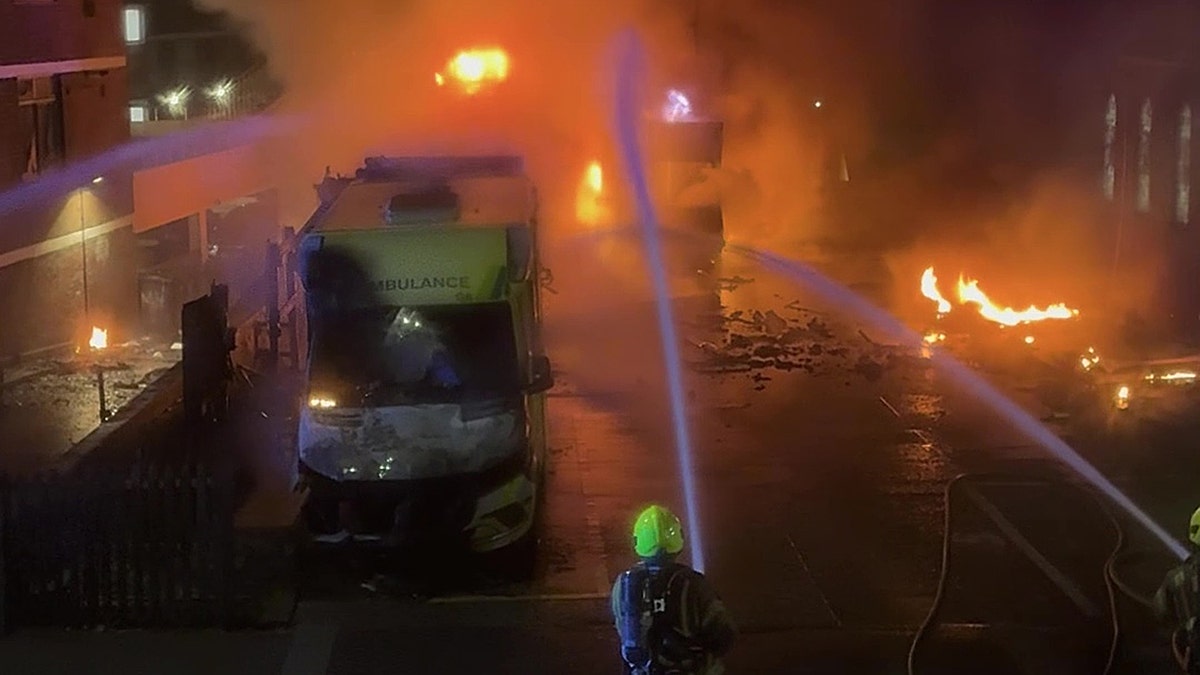
Firefighters are seen tackling a blaze at Highfield Road in the Golders Green neighborhood of London, following an apparent arson attack on four ambulances belonging to the Jewish Community Ambulance Service. (PA/PA Images via Getty Images)
«This appears to be an important breakthrough in the investigation, but we’re also mindful that CCTV footage of the incident suggests there were at least three people involved,» she added. «We fully recognize the local community will still be concerned, and our investigation very much remains active, and we will continue to work to identify and seek to arrest all of those who may have been involved.»
«We know that community concerns remain heightened, and I want to reassure the community that an enhanced, bespoke policing plan and activity, which is particularly focused around vulnerable areas right across London, will continue over coming days and weeks,» Williams said Wednesday.
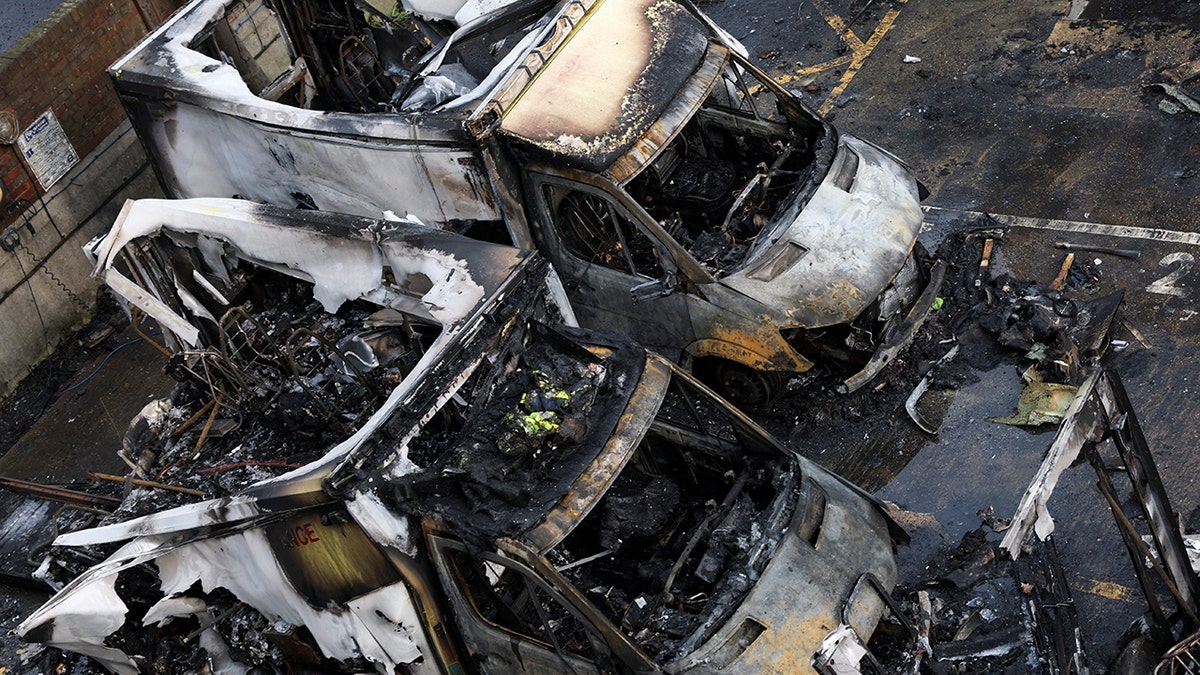
Charred remains of ambulances belonging to Hatzola, a Jewish community organization, which were set on fire in an incident that the police say is being treated as an antisemitic hate crime, in northwest London, on Monday, March 23, 2026. (Hannah McKay/TPX Images of the Day/Reuters)
CLICK HERE TO GET THE FOX NEWS APP
«This includes specialist officers and capability being deployed alongside local officers to help protect certain locations and will also involve highly visible armed police patrols to serve as a deterrent to anyone seeking to cause our communities harm,» he continued. «I must stress that these are precautionary and not in response to any specific threat, and we continue to work alongside our colleagues in counterterrorism policing to support their investigation.»
Fox News Digital’s Efrat Lachter contributed to this report.
anti semitism, counter terrorism, iran, united kingdom, europe, world
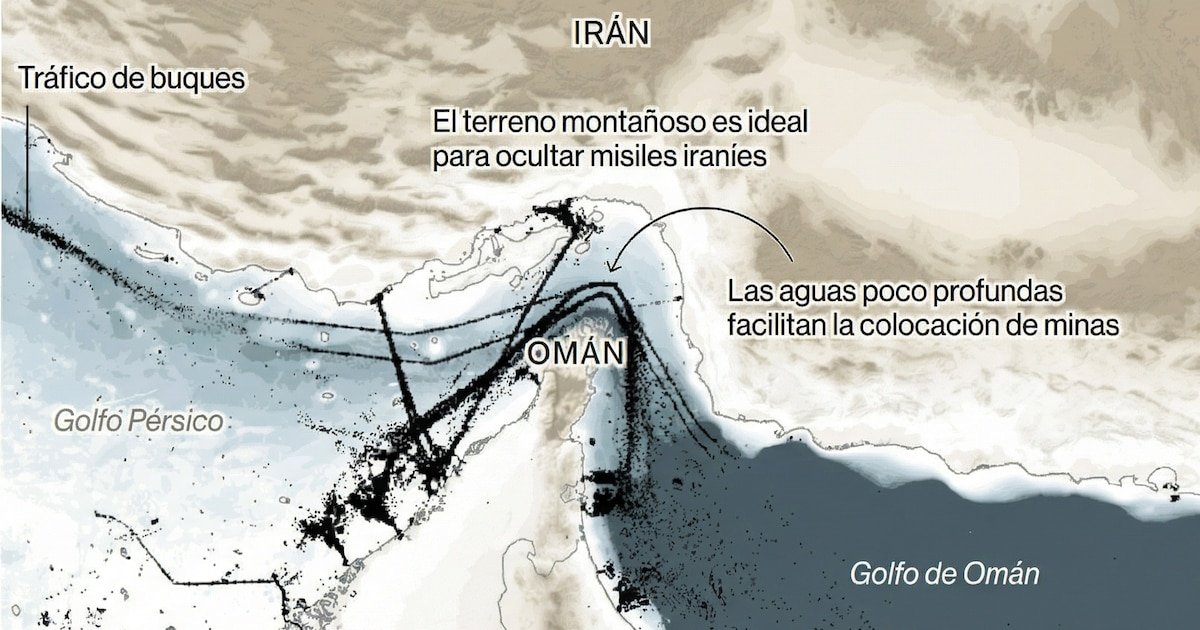
Cada día que el estrecho de Ormuz permanece prácticamente cerrado al tráfico marítimo ensombrece aún más la economía mundial.
Es improbable que se restablezca el tráfico normal a través del estrecho mientras la guerra continúe. Y una vez que el conflicto finalmente cese, no está claro cuándo se reanudarán las travesías ni a qué ritmo. La mera amenaza de ataques iraníes ha disuadido a la mayoría de los operadores navieros de aventurarse en la ruta desde que Estados Unidos e Israel comenzaron a bombardear Irán el 28 de febrero. Su temor no desaparecerá por completo una vez que cesen los combates, ni siquiera si se declara un alto el fuego formal. Es probable que inicialmente se requiera algún tipo de escolta naval, y dicha operación presenta numerosos riesgos y limitaciones.
Aquí presentamos un resumen visual de lo que se necesita para reactivar esta arteria vital del comercio mundial, cómo podría ser su reapertura y algunos ejemplos de advertencias de la historia.
Ormuz no es el único punto de estrangulamiento comercial del mundo. También están el estrecho de Malaca, el canal de Panamá y el estrecho paso hacia el mar Rojo entre Yemen y Yibuti. Pero el estrecho de Ormuz es, sin duda, la vía marítima más crucial para la industria energética, ya que maneja aproximadamente una cuarta parte del comercio mundial de petróleo por vía marítima y una quinta parte del suministro de gas natural licuado. No existe una ruta marítima alternativa para evitar Ormuz. Su ubicación en una región inestable y políticamente volátil, junto con su topografía única, lo hacen especialmente vulnerable a las interrupciones.
El estrecho tiene unos 225 kilómetros de largo y solo 40 kilómetros de ancho en su punto más angosto, lo que significa que los barcos tienen poco espacio para maniobrar y son blancos fáciles para ataques desde la costa o pequeñas embarcaciones. Entrar y salir con seguridad lleva entre 10 y 14 horas para buques cisterna completamente cargados que viajan a velocidades máximas de alrededor de 14 nudos. Dado que es relativamente poco profundo, el ejército iraní puede colocar minas con bastante facilidad, si así lo desea. Además, el terreno montañoso de la costa iraní es ideal para ocultar plataformas de lanzamiento de misiles y drones.

Irán lleva décadas acumulando misiles y se desconoce cuánto de su arsenal le queda. Además, posee —y probablemente sigue produciendo— miles de drones tipo Shahed, menos avanzados, que pueden usarse para atacar petroleros. Por lo tanto, el ejército iraní podría convertir fácilmente el estrecho en un campo de tiro.

Los armadores y operadores pierden dinero cada día que los buques cisterna, graneleros y portacontenedores no pueden entrar ni salir del Golfo Pérsico. Muchos de aquellos cuyos barcos están varados en la región se enfrentan a primas de seguro adicionales debido a la guerra, pagan salarios extra a la tripulación para compensar el peligro y las molestias, y gastan grandes sumas para preservar sus cargamentos. Por lo tanto, están ansiosos por asegurar el paso tan pronto como consideren que es seguro.
Cada uno tiene su propio nivel de tolerancia al riesgo. Un puñado de barcos cruzó el estrecho en marzo mientras misiles y drones sobrevolaban el Golfo. Estos buques estaban vinculados a Irán o a su principal cliente petrolero, China, o, en el caso de los buques indios de transporte de gas licuado de petróleo, habían obtenido garantías del gobierno iraní de que no serían atacados. Algunos estaban pagando millones de dólares en tasas de tránsito a Irán, dando a entender que no pagarlas los pondría en peligro. Los barcos bordearon la costa iraní, lo que sugiere que siguieron una ruta aprobada por las autoridades iraníes. En circunstancias normales, los barcos evitan navegar tan cerca de Irán debido a los riesgos de seguridad, y quienes salen del estrecho suelen usar el lado opuesto.
La gran mayoría de los operadores de buques no están dispuestos o no pueden pagar un peaje a Irán, por lo que su única alternativa es esperar a que el conflicto amaine. Tres operadores de buques o de carga entrevistados por Bloomberg News afirmaron que no realizarían ningún viaje a través del estrecho de Ormuz bajo ninguna circunstancia mientras la guerra continuara.
Incluso después de que terminen los combates, los armadores que no cuenten con una garantía iraní de paso seguro probablemente seguirán deseando algún tipo de protección militar. Las escoltas navales podrían brindar la seguridad necesaria. Si esto finalmente restablece un nivel sustancial de tráfico, podría aliviar parte de la interrupción del suministro y frenar los precios mundiales de la energía, que se han disparado desde que estalló el conflicto.

Según expertos militares, una misión de escolta probablemente implicaría una cadena de buques de guerra a lo largo del estrecho, que se desplazarían en paralelo con buques mercantes para protegerlos de amenazas como misiles, drones aéreos, buques de ataque de superficie y armas sumergibles, como drones submarinos. La Armada de EEUU probablemente desplegaría destructores de la clase Arleigh Burke, optimizados para este tipo de operaciones defensivas. Estos están equipados con el sistema Aegis, que utiliza sistemas avanzados de radar y control para misiles antibalísticos, además de armas de menor alcance y contramedidas como señuelos reflectantes de radar, bengalas y otros señuelos. Si Francia, Alemania o el Reino Unido, aliados de EEUU, se unieran a la operación, sus buques aportarían capacidades similares.
Sin embargo, antes de que pudieran comenzar las escoltas, los buques de guerra especializados tendrían que asegurarse de que las rutas marítimas del estrecho de Ormuz estuvieran libres de minas iraníes, algo que solo podría ocurrir una vez que cesaran los disparos. Este proceso podría durar alrededor de dos semanas, según Jennifer Parker, profesora adjunta del Instituto de Defensa y Seguridad de la Universidad de Australia Occidental.
Este trabajo preparatorio requeriría pequeñas y rápidas embarcaciones dragaminas y posiblemente drones marinos. Estados Unidos y sus aliados también pueden desplegar helicópteros para remolcar sensores por el agua para su detección, así como contramedidas para desactivar minas con explosivos u otros medios. Si los combates cesan sin un alto el fuego formal, es probable que Estados Unidos intensifique sus esfuerzos para destruir equipo militar iraní en la zona cercana al estrecho, antes de una operación de escolta. El Comando Central de Estados Unidos ya ha declarado haber destruido o dañado más de 30 embarcaciones iraníes de colocación de minas y haber lanzado bombas antibúnker sobre emplazamientos de misiles iraníes cerca del estrecho.
Aviones de guerra estadounidenses también serían necesarios para sobrevolar la zona y ayudar a detectar posibles amenazas.

La proximidad de la costa iraní dejaría poco tiempo para localizar e interceptar proyectiles entrantes. Incluso buques de guerra avanzados equipados con los sistemas más sofisticados podrían verse superados por un ataque masivo desde la costa iraní. Los ataques de Irán contra objetivos terrestres en la región demuestran esto, ya que algunos misiles y drones han penetrado las defensas aéreas.
Expertos militares y de la industria naviera afirmaron que es improbable que las escoltas restablezcan el tráfico marítimo completo a través del estrecho. La Armada estadounidense por sí sola no cuenta con suficientes buques para proteger 140 embarcaciones, el número aproximado que suele transitar por la vía marítima diariamente en circunstancias normales. Funcionarios de defensa occidentales indicaron que la reapertura del estrecho solo puede ser posible mediante una coalición multinacional una vez que cesen los combates. Un alto el fuego podría persuadir a los aliados a atender el llamado del presidente estadounidense Donald Trump para desplegar sus propias armadas en una misión conjunta de protección marítima.

Es posible que una operación de este tipo no pueda dar cabida a tantos buques como los que transitan por el estrecho en condiciones normales: permitir que demasiados buques se congestionen en la vía marítima podría aumentar el riesgo de limitaciones en la línea de fuego, por ejemplo, cuando un buque de guerra no puede destruir una amenaza entrante porque un buque mercante se interpone en su camino.
Incluso garantizar la seguridad de la navegación a través del estrecho de Ormuz podría no ser suficiente para los armadores más conservadores, quienes podrían solicitar protección más allá del estrecho, en el Golfo Pérsico, lo que potencialmente extendería el área de operaciones de protección naval hasta 560 millas náuticas.

En diciembre de 2023, una coalición naval liderada por Estados Unidos lanzó una operación para impedir que los hutíes, respaldados por Irán en Yemen, dispararan contra buques en el Mar Rojo y el estrecho de Bab el-Mandeb, situados al otro lado de la península arábiga, frente al estrecho de Ormuz. La misión consistía en escoltar buques mercantes a través de la vía marítima. Muchos operadores navieros desviaron sus rutas rodeando el extremo sur de África, lo que añadió semanas a los tiempos de viaje. En su punto álgido, Estados Unidos empleó cerca de una docena de buques de guerra para la operación, más que los aportados por el Reino Unido y otros aliados.
En mayo de 2025, tras una campaña de bombardeos que alcanzó más de 1000 objetivos hutíes, el presidente Trump anunció que Estados Unidos pondría fin a sus ataques, ya que el grupo rebelde había acordado un alto el fuego. La calma resultó ser temporal, y los hutíes volvieron a atacar el transporte marítimo. El Centro Conjunto de Información Marítima, creado como parte de la operación de protección, consideró graves nueve incidentes, y cuatro buques fueron hundidos en esos ataques.
Podría decirse que la campaña de bombardeos estadounidenses fue la que propició el breve cese de hostilidades. La disminución en el número de ataques pudo deberse, en parte, a que los buques seguían evitando el Mar Rojo por temor a los ataques hutíes.
Durante la Guerra de los Petroleros de la década de 1980, parte del conflicto más amplio de ocho años entre Irán e Irak, cientos de buques mercantes fueron atacados en el Golfo Pérsico por ambos bandos, lo que provocó la muerte de cientos de marineros civiles.
En julio de 1987, Estados Unidos se involucró formalmente en el conflicto con la Operación Earnest Will, brindando protección a los petroleros de propiedad kuwaití contra los ataques iraníes. La operación se convirtió en el mayor convoy naval desde la Segunda Guerra Mundial, con más de 30 buques de guerra en su punto álgido. Sin embargo, no puso fin de inmediato a los ataques: en la primera misión de escolta, un petrolero comercial kuwaití, que había cambiado su bandera a la de Estados Unidos, chocó contra una mina submarina que dañó el buque, pero no causó heridos. Los posteriores ataques con minas y misiles también dañaron buques kuwaitíes y buques de guerra estadounidenses.
Esta fue una parte secreta de la Operación Earnest Will. Su propósito: destruir la capacidad de Irán para colocar minas y así permitir escoltas seguras. Las fuerzas especiales estadounidenses operaban principalmente de noche para localizar buques iraníes minadores, atacándolos o destruyéndolos para permitir el tránsito seguro de sus escoltas. Esta misión, junto con otros ataques de represalia estadounidenses contra objetivos navales iraníes, finalmente condujo a una disminución de los ataques contra buques en la región.
(Bloomberg)
Estrecho de Ormuz,Irán,Omán,Golfo Pérsico,Golfo de Omán,navegación,tráfico marítimo,geopolítica,seguridad,estrategia
INTERNACIONAL
US moves airborne troops, Marines as Iran rejects ceasefire, raising ground war potential
NEWYou can now listen to Fox News articles!
The U.S. is positioning ground-capable forces in the Middle East as Iran rejected a ceasefire proposal Wednesday, a shift that gives Washington new — though limited and high-risk — options for potential operations inside Iran.
Military experts say the deployments are not a precursor to a large-scale invasion, but instead position the U.S. for targeted, short-duration missions — options that have taken on new relevance as diplomatic off-ramps narrow.
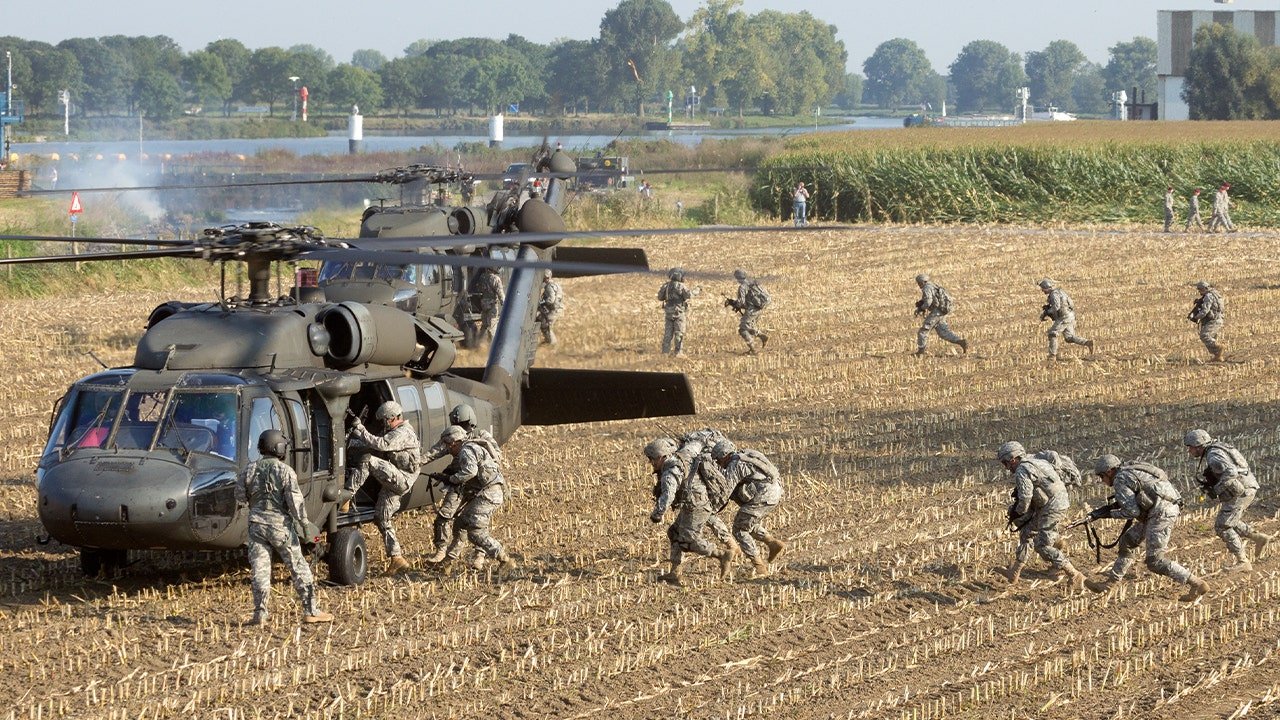
In recent days, the Pentagon has moved ground-capable forces into the region, including around 1,000 paratroopers, with the Army’s 82nd Airborne Division — among them the 1st Brigade Combat Team, a core component of the military’s Immediate Response Force rapid-response unit designed to deploy on short notice to crises anywhere in the world — along with roughly 5,000 Marines and sailors assigned to the 31st Marine Expeditionary Unit and its Amphibious Ready Group, led by the amphibious assault ship Tripoli.
Marine expeditionary units and airborne forces often are among the first U.S. units deployed in a conflict, designed to rapidly establish an initial presence and respond to emerging crises.
IRAN’S REMAINING WEAPONS: HOW TEHRAN CAN STILL DISRUPT THE STRAIT OF HORMUZ
The U.S. is positioning ground-capable forces in the Middle East after Iran rejected a ceasefire proposal, a shift that gives Washington new—though limited and high-risk—options for potential operations inside Iran. (Vanderwolf Images via Getty)
The White House has emphasized the deployments are meant to preserve flexibility as the conflict evolves — a posture that now carries greater weight after Iran rejected a U.S.-backed ceasefire proposal.
«The president likes to maintain options at his disposal,» press secretary Karoline Leavitt said Wednesday at a White House press briefing. «It’s the Pentagon’s job to provide those options to the commander in chief.»
Lawmakers on the Armed Services Committees emerged from a classified briefing on Iran Wednesday expressing frustration over a lack of clarity from the administration.
«We want to know more about what’s going on, what the options are, and why they’re being considered,» House Armed Services Chairman Rep. Mike Rogers, R-Ala., told reporters. «We’re just not getting enough answers.»
«Let me put it this way, I can see why he might have said that,» Sen. Roger Wicker, R-Mo., chairman of the Senate Armed Services Committee, said in agreement.
Military experts said the types of forces being deployed point to a more limited set of options on the ground.
«It is not for the type of ground invasion that we saw in Iraq,» James Robbins, Institute of World Politics dean and former special assistant to Defense Secretary Donald Rumsfeld, told Fox News Digital. «There simply aren’t enough troops.»
The U.S. already maintains roughly 40,000 troops to 50,000 troops across the Middle East, with recent deployments adding several thousand more forces, including Marines and airborne units.
The Pentagon did not respond to a request for comment.
What limited ground options could look like
If U.S. forces were used inside Iran, experts say operations likely would focus on specific, high-value objectives rather than holding territory.
One likely focus would be along Iran’s southern coast near the Strait of Hormuz — a critical global shipping lane that would become a central pressure point in any limited U.S. ground option.
Iranian forces have positioned missiles, drones and naval assets throughout the region, creating a persistent threat environment for any operation.
«The most logical step is to try to secure the straits by taking some key positions inside Iran,» Ehud Eilam, a former official with Israel’s Ministry of Defense, told Fox News Digital.
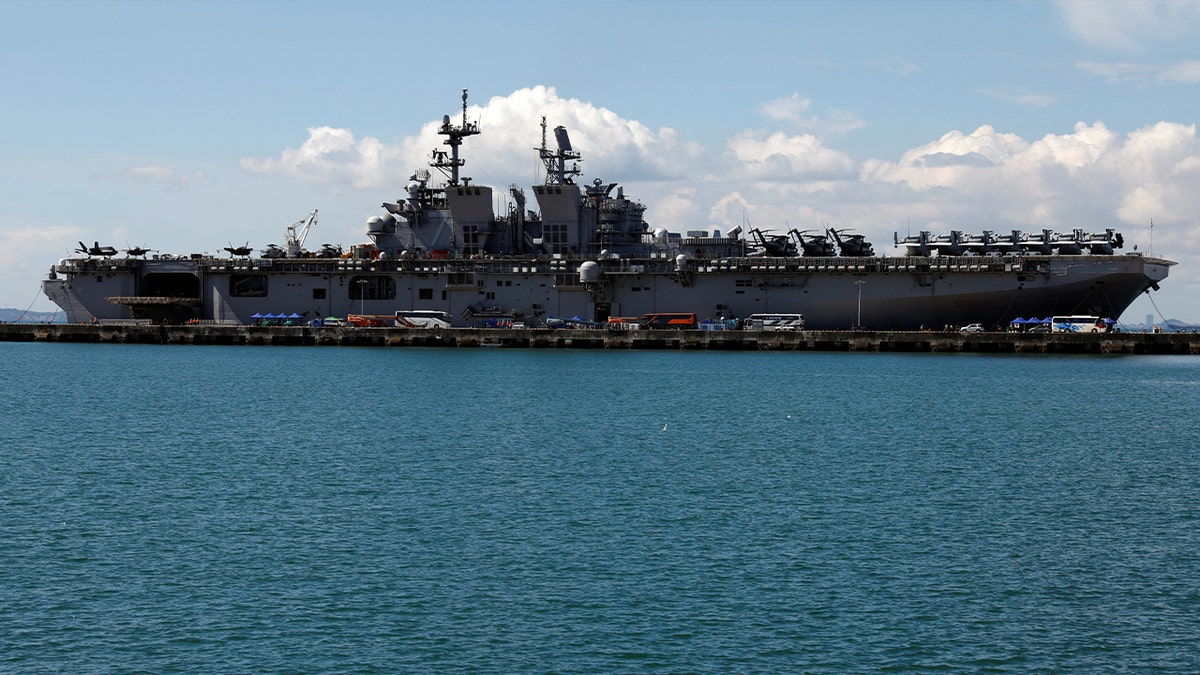
USS Tripoli is headed to the Middle East. (Edgar Su/Reuters)
«For the Marines, it would probably be somewhere along the Iranian side of the Persian Gulf, around the straits or nearby to establish a base of operations,» Robbins said.
Trump has said the U.S. Navy could escort commercial tankers through the waterway if necessary, as Iranian threats have disrupted traffic in one of the world’s most critical energy choke points. But no plans have been enacted to do so, according to officials.
But even limited objectives would be difficult to secure or sustain under constant threat.
«It’s a large gulf and there’s lots of places you could drop a mine or shoot a cruise missile from or shoot a drone from,» said Adm. Kevin Donegan, former commander of the U.S. Navy’s Fifth Fleet.
Beyond coastal positions, U.S. forces could be used for short-duration missions targeting specific military assets — such as missile launch sites, radar systems or other infrastructure that cannot be fully neutralized from the air.
AFTER THE STRIKES, HOW WOULD THE US SECURE IRAN’S ENRICHED URANIUM?
Eilam said special operations forces could also be used for targeted missions inside Iran, including striking military infrastructure or capturing key personnel.
«They may come and capture a certain objective, destroy some Iranian radar, or some Iranian facility, take some generals into captivity,» Eilam said.
Such operations would be aimed at degrading Iran’s capabilities and supporting broader air and naval operations, rather than holding territory.
Some experts noted that small special operations teams can operate inside Iran without public visibility, making it difficult to assess the full scope of current activity.
(Photo by Elif Acar/Anadolu via Getty Images)
Securing nuclear infrastructure
One potential objective for ground forces would be securing Iran’s nuclear infrastructure.
Nuclear experts have insisted that the material could not be destroyed by airstrikes alone — a presence on the ground would be essential.
Robbins said U.S. troops could be used to secure nuclear material or facilities — but not under active fire.
«That would have to be more under a permissive environment,» Robbins said. «It could not really well be done under fire.»
Iran is believed to have roughly 970 pounds of uranium enriched to near weapons-grade levels, though international inspectors say they can no longer verify the size or location of that stockpile.
In past conflicts, U.S. forces have been tasked with securing weapons sites or sensitive materials even in unstable or contested environments, particularly during and after the 2003 invasion of Iraq, when specialized units conducted extensive searches of hundreds of facilities.
Any such operation in Iran would be complex. Key nuclear facilities are hardened, dispersed, and in some cases buried deep underground, making them difficult to access or secure quickly.
What the US is unlikely to do — and why
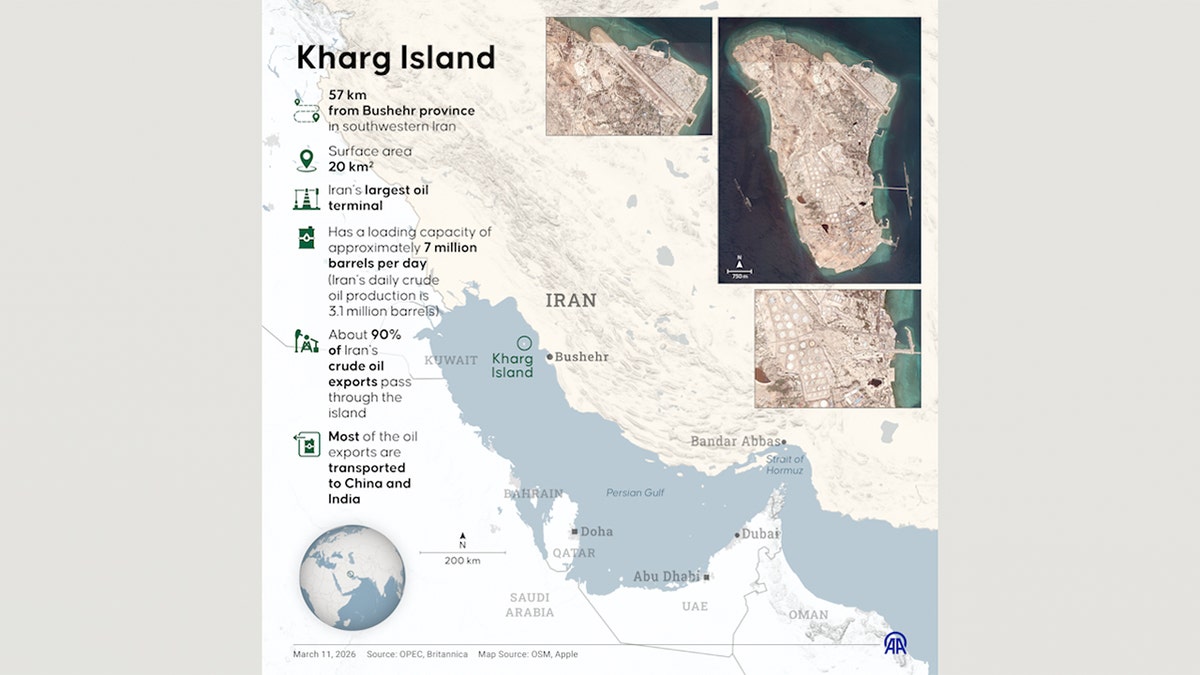
Experts cautioned that some of the more aggressive scenarios being discussed — such as seizing Iran’s key oil export hub at Kharg Island — are unlikely to be pursued.
While such a move could, in theory, choke off a major source of revenue for Iran, they said similar effects could be achieved through less exposed means.
«You could achieve that desired outcome just by constraining the flow that comes out of Kharg after it gets outside the Gulf,» Donegan said.
Robbins also questioned the strategic value of seizing the island.
«To what end would be the question,» he said. «I don’t see an endgame to seizing Kharg.»
Experts warned that occupying territory like Kharg would expose U.S. forces as fixed targets while creating major logistical challenges, requiring continuous resupply under the threat of Iranian missile and drone attacks.
«Occupying territory creates a vulnerability, because you now become a target,» Donegan said.
Instead, they said U.S. forces are better suited for limited operations ashore that do not require holding ground.
«Doing something ashore to eliminate things, because you have to be on the ground to do it, and leaving — that’s also a capability,» Donegan said.
The buildup also has included increased activity from U.S. military transport aircraft, including C-17 and C-130 airlifters used to move troops and heavy equipment into the region, part of the logistical groundwork that would be required for any potential ground operations.
Iran prepares defenses at Kharg and across the region
Behind the scenes, Iranians likely are preparing for all contingencies in a ground war. Iranian officials dismissed Trump’s talk of «productive» negotiations as «psychological warfare» and negotiations weren’t happening.
Iranian Lt. Col. Ebrahim Zolfaghari, a military spokesperson, mocked the U.S. attempts at a ceasefire deal Wednesday in a video statement, asking, «Have your internal conflicts reached the point where you are negotiating with yourselves?»
Any U.S. ground operation targeting Kharg Island would face an environment Iran already has prepared and militarized.
The island is not just an oil hub but a coastal military hub. Recent U.S. strikes hit more than 90 Iranian military targets on the island, including missile storage bunkers and naval mine facilities.
Iran has been moving additional forces and air defenses, as well as laying traps, at Kharg for weeks in preparation for a potential U.S. operation to seize the island, sources familiar with the intelligence told CNN.
CLICK HERE TO DOWNLOAD THE FOX NEWS APP
Beyond the island itself, Iranian forces have increased military readiness across the region.
Reporting shows the repositioning of missile units, expanded air defense activity, and increased naval patrols in the Strait of Hormuz — part of a broader effort to disperse assets and reduce vulnerability to strikes.
war with iran, conflicts defense, middle east foreign policy

Mavinga abandonó la casa de Gran Hermano Generación Dorada por decisión propia: “Mi cabeza y mis emociones no son las mismas”

Patricia Bullrich habló con la familia de la argentina acusada de racismo en Brasil: «Están desesperados»

Cruce entre Sturzenegger y economistas por la cantidad de empresas que cerraron en los últimos dos años

La esposa de Adorni pidió crédito en un organismo público que, ahora, LLA busca eliminar en la Ciudad

Tras la clasificación de Atlético Tucumán, Banfield goleó a Real Pilar en su debut en la Copa Argentina

La historia de Noelia Castillo Ramos, la joven que recibirá la eutanasia este jueves pese a la lucha de su padre

»¡VAN A FUNDIR A MEDIO PAÍS!»: El lapidario diagnóstico de Roberto Cachanosky sobre el plan de Milei

ALERTA FINANCIERA: 4 de cada 10 argentinos ya no pueden pagar sus deudas. ¡Caputo debe actuar ya!

El mensaje de Milei sobre la “traición” que llamó la atención en el Gobierno y también en la oposición

24 DE MARZO: La historia completa que el relato omitió sobre el golpe de 1976 y el Juicio a las Juntas

 POLITICA2 días ago
El mensaje de Milei sobre la “traición” que llamó la atención en el Gobierno y también en la oposición
- POLITICA1 día ago
24 DE MARZO: La historia completa que el relato omitió sobre el golpe de 1976 y el Juicio a las Juntas
- POLITICA3 horas ago
¡VERGÜENZA NACIONAL! Humillan a la Policía Federal mandándolos a un merendero antes de darles un aumento de sueldo digno