INTERNACIONAL
GOP bill brewing in House to reform civil litigation sparks opposition from conservative groups

NEWYou can now listen to Fox News articles!
Republican legislation brewing in the House of Representatives aimed at addressing civil litigation transparency is sparking concern from some conservative organizations that fear it could chill donor participation and make it more difficult for Americans of modest means to hold «woke» companies accountable.
In a letter sent earlier this week, Tea Party Patriots Action urged the House Judiciary Committee to reject HR 1109, introduced by GOP Reps. Darrell Issa, Scott Fitzgerald and Mike Collins, which is known as the Litigation Transparency Act of 2025.
It’s aimed at ensuring greater transparency in litigation, requiring parties receiving payment in lawsuits to disclose their identity.
VAN JONES ADMITS WOKE ACTIVISM AT WORK GOT ‘RIDICULOUS’ AND ‘WE NEED TO MOVE ON’
The letter warns that «sweeping disclosure mandates in this bill threaten our core American principles of personal privacy, confidentiality, and freedom of speech and association.»
«This legislation would require litigants to preemptively disclose detailed information about private financial arrangements, such as litigation funding agreements, independent from the discovery process and without any finding of relevance by a judge,» the letter, signed by over a dozen conservative groups, including America First Legal, Defending Education, Heartland Institute and the American Energy Institute, states.
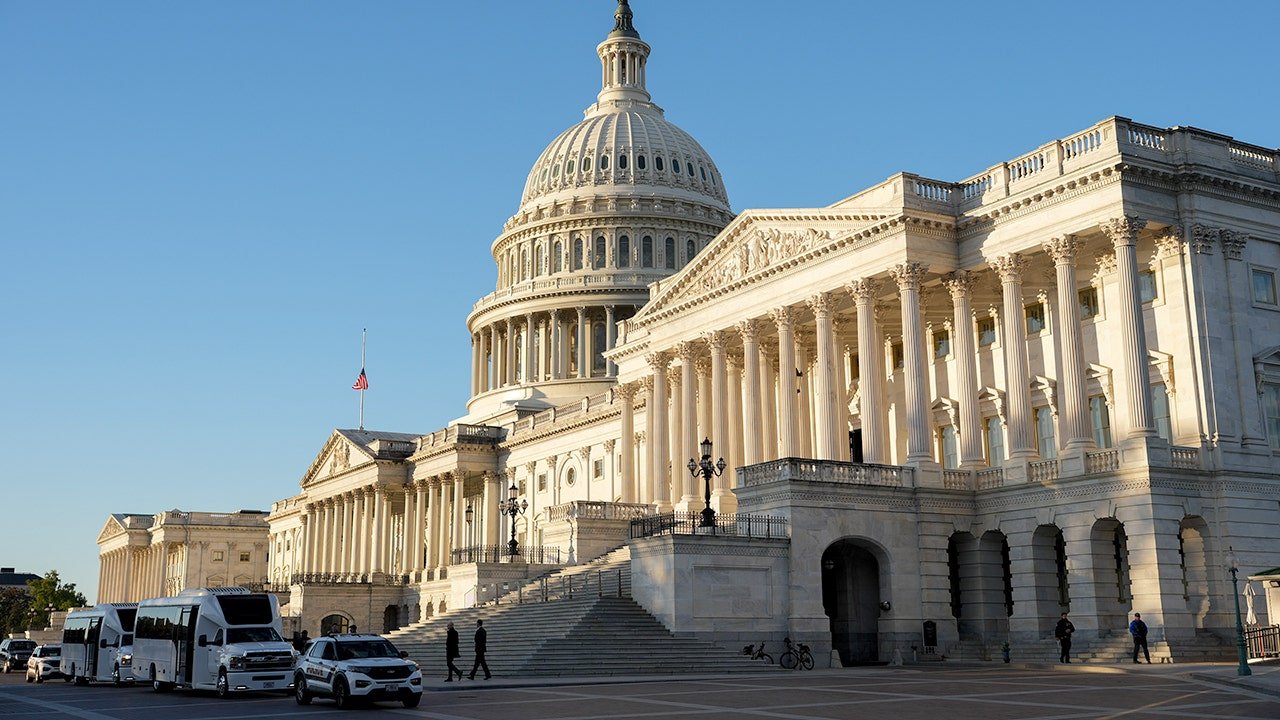
The U.S. Capitol building in Washington, D.C., Nov. 5, 2025. (Eric Lee/Bloomberg via Getty Images)
«The bill’s forced disclosure mandates would broadly apply to any number of political organizations, religious groups, law firms, or individual plaintiffs that rely on outside support to vindicate their rights.
«If adopted, H.R. 1109 will have a chilling effect on free speech and association and directly threaten the privacy rights of Americans,» the letter warns. «The end result will be fewer Americans having the resources or willingness to bring legitimate claims, which threatens to undermine future legal battles over issues critical to our movement.
«The privacy interests at stake here are not abstract. We have seen how disclosure regimes can be easily weaponized by bad actors, particularly those seeking to attack and intimidate political opponents.»
Issa told Fox News Digital Wednesday afternoon there is «misinformation» circulating about what the bill actually proposes to do, and there will be a «small update tomorrow to clarify one item.»
«What’s actually happened is language has been put in to assure groups that we’re not looking to overturn NAACP v. Alabama or any of the other historical 501(c) privileges that you don’t turn over your donor list and so on,» Issa said. «That was something that Obama and Biden tried to do a couple of times. We want nothing to do with that. We’re only asking that if there is a material funder slash partner in a lawsuit, that they be disclosed.
«I fully respect and appreciate the concerns of people who want to make sure that this does not turn into a burdensome discovery of, for example, a nonprofit’s hundreds, thousands or millions of donors.
PALANTIR CEO CLAIMS COMPANY IS FIRST TO BE ‘COMPLETELY ANTI-WOKE,’ BACKS TRUMP ADMIN’S BOMBING OF DRUG BOATS
«We share the concern of all these groups that we wanted to make sure we believed we were on solid ground as written, but in an abundance of caution, my staff and all the parties worked to try to come up with the most straightforward, effective way to say, of course, you don’t have to disclose your donors.»
Proponents of the legislation, including the U.S. Chamber of Commerce, call it a «vital step toward ensuring that our legal system remains a tool for justice rather than being a playground for hidden financial interests.»
In his press release announcing the legislation in February, Issa said, «Our legislation targets serious and continuing abuses in our litigation system that distort our system of justice by obscuring public detection and exploiting loopholes in the law for financial gain.
«Our approach will achieve a far better standard of transparency in the courts that people deserve, and our standard of law requires. We fundamentally believe that if a third-party investor is financing a lawsuit in federal court, it should be disclosed rather than hidden from the world and left absent from the facts of a case.»
The press release explained that hundreds of cases a year involve civil cases funded by undisclosed third-party interests as an investment for return from hedge funds, commercial lenders and sovereign wealth funds through shell companies and that there are often investor-backed entities who seek hefty settlements from American companies that end up «distorting the free market and stifling innovation.»
The conversation about the legislation reignites an ongoing showdown between insurers and large corporations that have made the case that third-party funding drives abusive suits and inflated settlements. Some argue there’s a need for more transparency about those who fund litigation and for limits to speculative investment in lawsuits against advocacy-oriented nonprofits and legal networks. Those groups argue they are the only mechanism for those without deep pockets to take legal action against well-funded companies.
Many advocacy-oriented nonprofits and legal networks simply don’t hand over charitable donations to a lawsuit. Instead, they use structured litigation vehicles, limited liability companies, donor-advised funds or legal defense trusts that front the costs of a case and are reimbursed, sometimes with interest, if the case wins or settles. The process is known as non-recourse or outcome-contingent funding, meaning the investor only gets money back if the case succeeds.
BOMBSHELL REPORT SHOWS FOREIGN CHARITIES DUMPED BILLIONS INTO US POLITICAL ADVOCACY GROUPS, ‘ERODE’ DEMOCRACY
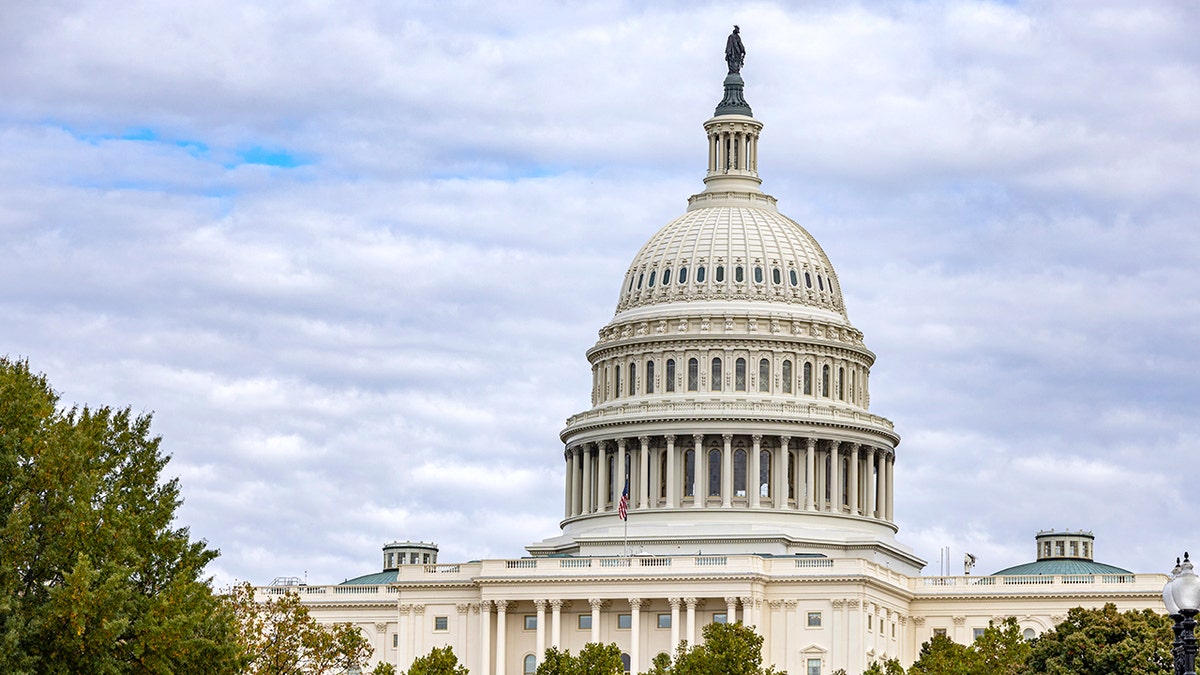
A view of the US Capitol in Washington D.C. (Nicolas Economou/NurPhoto via Getty Images)
Nonprofits like Consumers’ Research have been using litigation finance in recent years to push back against «woke capitalism» to counter ESG and DEI policies. And the group’s executive director, Will Hild, told Fox News Digital it has been «all too easy for major companies to use their outsized influence and powerful market shares to push an ideological agenda with little to no recourse.»
Hild told Fox News Digital he views the legislation as an «attack» on one of the «few tools Americans have to hold powerful, woke corporations accountable.»
Hild added, «Even worse, it imposes dangerous disclosure mandates that would force plaintiffs to expose confidential litigation funding agreements. This bill blatantly tips the scales in favor of woke corporations and makes it far harder for victims to secure the resources they need to fight back.»
The letter from the conservative groups also expresses fear that «compelled disclosure of private financial arrangements would force litigants to unveil the identity of donors — violating donor privacy rights and exposing them to threats of harassment and retaliation.»
In a Tuesday op-ed in The Hill opposing the legislation, Alliance Defending Freedom founder Alan Sears pointed to Supreme Court decisions he says have «affirmed that forced disclosure of private association undermines fundamental freedoms.»
In a statement to Fox News Digital, Rep. Fitzgerald said, «As reiterated to these groups in multiple discussions, it remains Congress’ intent to protect the First Amendment rights of those who contribute to political groups and religious organizations, consistent with the Supreme Court’s opinion in Citizens’ United.»
Organizations that have endorsed the bill have pointed to concerns about foreign funding in courtrooms, specifically from China, including High Tech Investors Alliance, which said in a press release it commends the legislators who put it forward for «defending American businesses against the exploitation of our courts by foreign adversaries and unscrupulous hedge funds.»
«For too long, a lack of transparency has allowed shell entities to manipulate the legal system to prey on American employers, concealing their predatory practices and identities of their financial backers,» HTIA said. «As President Trump takes bold action against aggressive economic maneuvers by China and other countries, Congress must also act decisively to protect our judges and juries from becoming tools in the economic warfare waged by antagonists.»
CLICK HERE TO DOWNLOAD THE FOX NEWS APP
Leonard Leo, who operates a vast network of conservative nonprofits and is linked to Consumers’ Research, told Politico earlier this year that «while there are areas, like mass tort, where litigation financing has been abused and could be reformed, it has always been a critical tool for the conservative movement to advance the public good by taking on the liberal woke agenda.»
The House Judiciary Committee did not mark the bill up Tuesday, and Fox News Digital is told it will be marked up on Thursday at 12 p.m.
«If someone is acting as a principal litigant, either directly or one step removed, then you have a right to face them. You have the right to cross-examine them. You have a right to know if they receive your trade secrets that were exposed and disclosed in litigation. These things are all important,» Issa said.
He added the legislation does not require materials to be turned over to the defendant, and a judge can review them in private.
Issa continued, «We just want to make sure that the judge knows that just as the markman is a required part of determining what a patent means, that it’s a responsibility of the judge to determine who the litigants are and, as appropriate, disclosing them is required. And that last part has always been ignored a little bit. We’re only making sure that that discovery is asked for and evaluated at a minimum by the judge or magistrate overseeing the case.»
politics,house of representatives politics,legislation,in court











INTERNACIONAL
Cómo las noticias falsas e imágenes creadas con IA multiplicaron el pánico tras la muerte del capo más poderoso de México

INTERNACIONAL
Biden-appointed judge who slapped down Trump deportation policy previously rebuked by SCOTUS
NEWYou can now listen to Fox News articles!
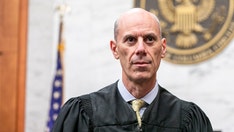
A federal judge appointed by former President Joe Biden on Thursday again ruled against the Trump administration’s third-country deportation policy, months after the Supreme Court blocked his earlier decision and rebuked him in a rare follow-up order.
The Supreme Court not only stayed Boston-based Judge Brian Murphy’s injunction over the same deportation policy in a 6-3 order last June, but the high court followed up with a second 7-2 order a week later admonishing the judge for flouting its decision. Murphy’s latest ruling is also likely to land before the justices, setting up a fresh test of the judge’s decisions in the high-stakes case.
Murphy, who was confirmed by the Senate along party lines, had issued a sweeping 81-page decision on Thursday finding that the Department of Homeland Security’s process for deporting migrants to third countries (countries that are not specified in the migrants’ removal orders) was unlawful because it violated the migrants’ due process by not giving them enough time to raise fears that they could be tortured in the country they are sent to.
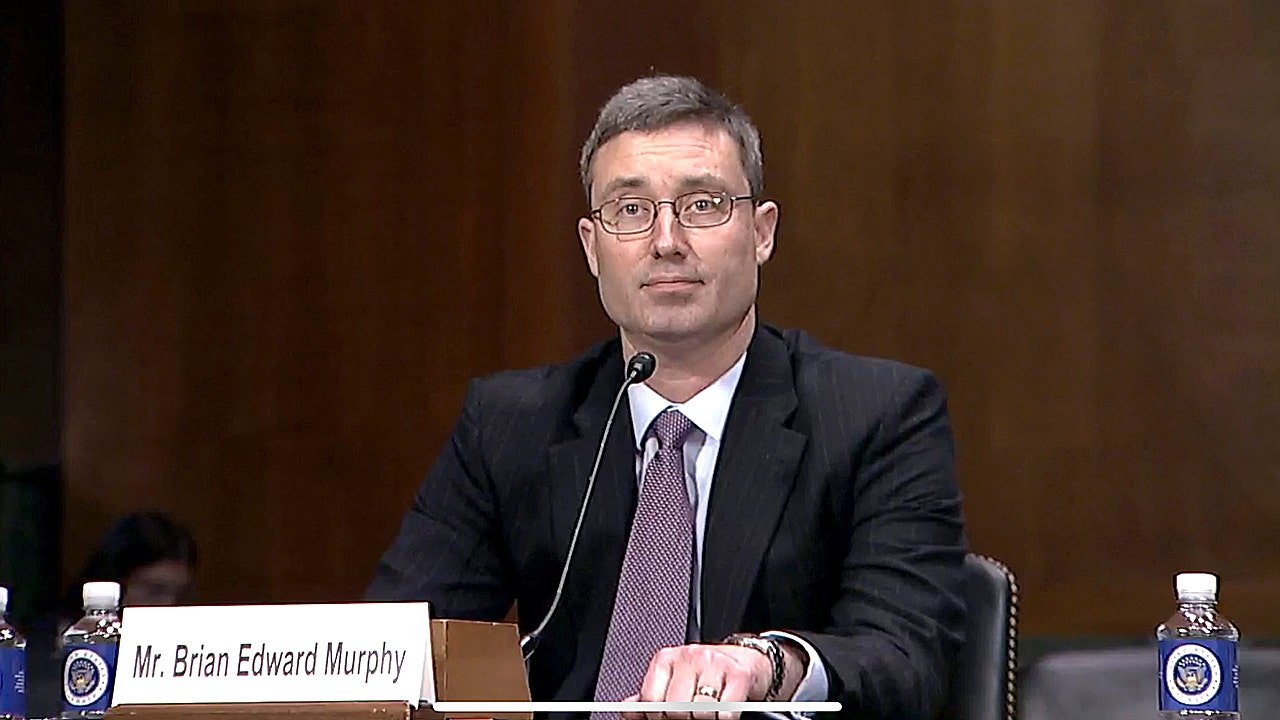
Judge Brian E. Murphy speaks at his Senate Judiciary Committee confirmation hearing on April 17, 2024. (U.S. Senate Committee on the Judiciary)
Murphy’s decision came after the judge last year issued a preliminary injunction that also blocked DHS from deporting migrants to third countries under the department’s current protocols. The Supreme Court’s order in June halted that decision, but, pointing to a technicality, Murphy said that a separate subsequent ruling he made on May 21 specifically addressing six migrants bound for South Sudan was still «in full force and effect» despite the high court’s stay.
The judge’s move led the Department of Justice to ask the Supreme Court for clarification, and the high court responded by issuing its follow-up 7-2 opinion saying Murphy could not block DHS from deporting the six migrants.
«Our June 23 order stayed the April 18 preliminary injunction in full. The May 21 remedial order cannot now be used to enforce an injunction that our stay rendered unenforceable,» the Supreme Court’s majority wrote.
In an unusual move, the majority also noted that if the government needed further help to stop Murphy’s interference, it could seek a writ of mandamus, a rare legal tool used by a higher court to force a lower court judge to follow the law.

Department of Homeland Secretary Kristi Noem (Getty Images/Alex Brandon)
The high court said it expected Murphy to «now conform [his] order to our previous stay and cease enforcing the April 18 injunction through the May 21 remedial order.»
Justice Elena Kagan, an Obama appointee who agreed with Murphy’s initial decision to block the deportations, sided with the majority in agreeing that the judge had acted defiantly.
«I do not see how a district court can compel compliance with an order that this Court has stayed,» Kagan wrote in a concurring opinion.
FEDERAL JUDGE RULES AGAINST DHS ON WARRANTLESS IMMIGRATION ARRESTS IN OREGON
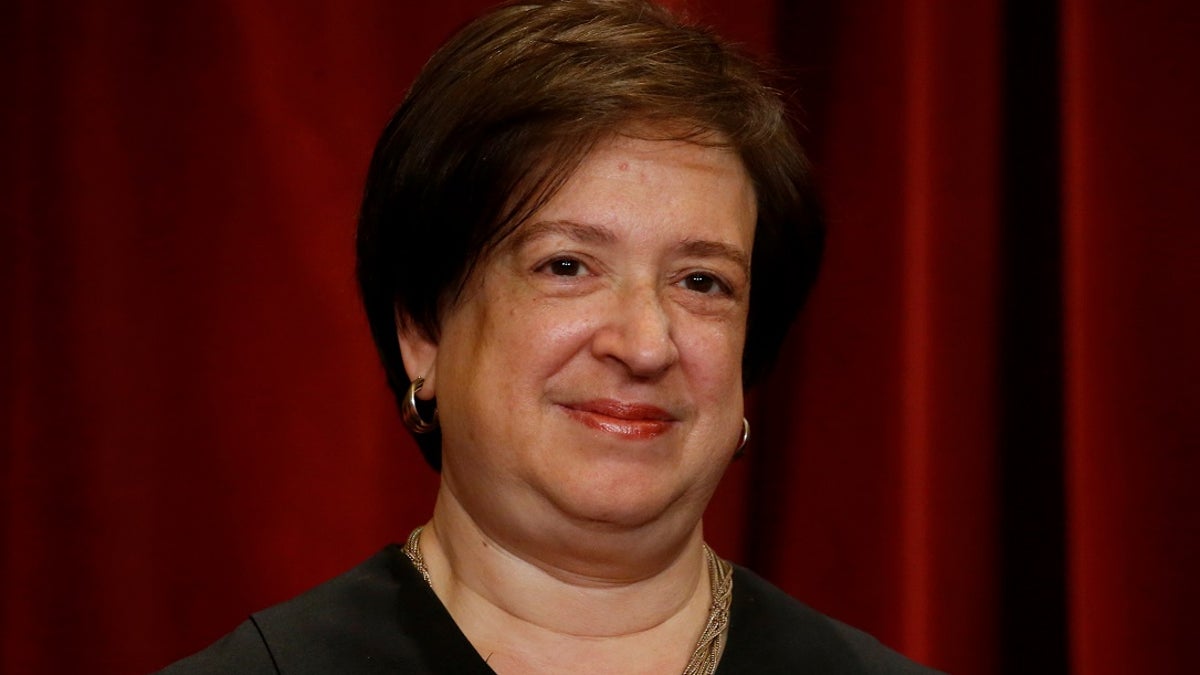
Justice Elena Kagan joined the Supreme Court in 2010 after being nominated by former President Barack Obama. (Reuters/Jonathan Ernst)
The DOJ had fumed over Murphy’s attempt to block the deportation of the six migrants. Solicitor General John Sauer described it as a «lawless act of defiance» of the Supreme Court’s authority when seeking clarification from the high court.
CLICK HERE TO DOWNLOAD THE FOX NEWS APP
«For over two months now, the Executive has labored under an injunction that this Court yesterday deemed unenforceable,» Sauer wrote. «This Court should immediately make clear that the district court’s enforcement order has no effect, and put a swift end to the ongoing irreparable harm to the Executive Branch and its agents, who remain under baseless threat of contempt as they are forced to house dangerous criminal aliens at a military base in the Horn of Africa that now lies on the borders of a regional conflict.»
Murphy said in his ruling Thursday that DHS’s deportation policy was «not fine nor is it legal.» During the prior administration, when Murphy was appointed to the federal bench, Biden sought to undo Trump’s strict immigration policies, leading to nearly 10 million migrant encounters at the southern border. Biden also faced criticism for lax policies that involved releasing millions of migrants into the country during his tenure while they awaited immigration hearings. Border encounters have dropped dramatically since Trump retook office.
Murphy stayed his ruling for 15 days to give the Trump administration time to appeal to the U.S. Court of Appeals for the 1st Circuit, given what the judge acknowledged was the «importance» and «unusual history» of the case.
Fox News Digital’s Breanne Deppisch contributed to this report.
Related Article
supreme court,judiciary,immigration,deportation,justice department

NEWYou can now listen to Fox News articles!
Talks between Iran and the U.S. wrapped up in Geneva Thursday as officials cited «significant progress» and announced a next meeting set for Vienna within days.
Yet despite senior U.S. officials describing the third round as «positive,» per Axios, Iranian state television also reported that Tehran will continue enriching uranium and rejected proposals to transfer it abroad.
According to The Associated Press , the reports claimed Iran would also push for the lifting of international sanctions — signaling it is not prepared to meet President Donald Trump’s demands.
The negotiations were carried out primarily indirectly, with Omani Foreign Minister Badr al-Busaidi relaying messages between the two sides.
Oman’s Foreign Affairs’ Minister Badr bin Hamad al-Busaidi gives a thumbs up as he leaves his hotel to reach Oman’s ambassador residency for new round of talks between the United States and Iran to address Iran’s nuclear program. (Fabrice COFFRINI / AFP via Getty Images)
In a post on X, al-Busaidi confirmed that the round had concluded and said discussions would resume soon.
«We have finished the day after significant progress in the negotiation between the United States and Iran,» he said on X.
«We will resume soon after consultation in the respective capitals. Discussions on a technical level will take place next week in Vienna. I am grateful to all concerned for their efforts: the negotiators, the IAEA, and our hosts, the Swiss government,» al-Busaidi said.
There was no immediate public statement from U.S. or Iranian officials after the session.
LEAVITT SAYS TRUMP CHOOSES DIPLOMACY FIRST FOR IRAN, BUT REMAINS ‘WILLING TO USE’ LETHAL FORCE IF NECESSARY

Special envoy Steve Witkoff (C) and Jared Kushner (L) meet with Oman’s Minister of Foreign Affairs Sayyid Badr bin Hamad Albusaidi (R) in Geneva, Switzerland, to discuss ongoing diplomatic negotiations on Thursday, Feb. 26, 2026. (Oman Ministry of Foreign Affairs/X)
Trump’s special Middle East envoy, Steve Witkoff, attended the three-hour negotiations with Iranian Foreign Minister Abbas Araghchi.
IAEA Director General Rafael Grossi was also involved, with Iranian officials presenting a draft proposal for a potential nuclear agreement with the U.S., which has key demands.
Iran insists it has the right to enrich uranium and has appeared to refuse to negotiate over other issues, including its long-range missile program and support for armed groups such as Hamas and Hezbollah.
TRUMP ADMIN RAMPS UP ‘MAXIMUM PRESSURE’ IRAN SANCTIONS AHEAD OF NEW ROUND OF NUCLEAR TALKS

Iran’s Supreme Leader, Ayatollah Ali Khamenei pictured sitting next to a senior military official in Iran. (Getty Images)
Trump, meanwhile, insists on a deal to curb Iran’s nuclear program. In his State of the Union address Feb. 24, the president said he prefers a diplomatic solution.
«My preference is to solve this problem through diplomacy, but one thing is certain: I will never allow the world’s number one sponsor of terror, which they are by far, to have a nuclear weapon,» the president said. «Can’t let that happen.»
As the Geneva talks unfolded Thursday, Ali Shamkhani, a senior adviser to Iran’s Supreme Leader, Ayatollah Ali Khamenei, also wrote on X that if the main U.S. concern is preventing a nuclear weapon, that stance «aligns» with Khamenei’s fatwa and Iran’s defensive doctrine.
CLICK HERE TO DOWNLOAD THE FOX NEWS APP
He added that Iranian Foreign Minister Abbas Araghchi has «sufficient support and authority» to come to a final agreement in the talks.
The development came as the U.S. continues assembling military assets, including a fleet of aircraft and warships in the Middle East.
Fox News Digital has reached out to the White House for comment.
Related Article

iran,ali khamenei,middle east,sanctions,nuclear proliferation,donald trump

Los judiciales volvieron a parar y escala el conflicto por el traspaso del fuero laboral a la Ciudad

La embajada argentina en Ucrania homenajeó a José de San Martín en Kiev

Juicio por YPF: Estados Unidos presentó un escrito en defensa de Argentina y contra el pedido de desacato y sanciones

La anécdota del taxista que explica el gran debate en Portugal: ‘Con Cristiano Ronaldo en el campo, ¿cómo vamos a ganar?’

Qué se sabe del estado de salud de Bastián Jerez, el niño de 8 años accidentado en Pinamar

Reparto de cargos: tensa pulseada entre Kicillof y La Cámpora por un lugar clave en la línea sucesoria de Buenos Aires

Jorge Macri prepara su discurso para abrir el año legislativo: el deseo de reelección y el espejo en Bukele

Daiana Fernández Molero defendió la reforma laboral: “Va a haber mayor creación de empleo porque va a ser más fácil contratar en blanco”

Uno por uno, todos los famosos que saludaron a Mirtha Legrand por sus 99 años

Crisis en la industria: otra multinacional se achica y cierra una planta en la Argentina

 POLITICA2 días ago
Jorge Macri prepara su discurso para abrir el año legislativo: el deseo de reelección y el espejo en Bukele
- POLITICA3 días ago
Daiana Fernández Molero defendió la reforma laboral: “Va a haber mayor creación de empleo porque va a ser más fácil contratar en blanco”
- CHIMENTOS3 días ago
Uno por uno, todos los famosos que saludaron a Mirtha Legrand por sus 99 años