INTERNACIONAL
GOP lawmaker vows to give parents more power as schools ‘blatantly’ violate students’ rights


NEWYou can now listen to Fox News articles!
FIRST ON FOX: Parental rights advocates are rallying behind a new bill being introduced by Rep. Harriet Hageman, R-Wyo., which would give parents more power if schools violate a federal law meant to grant them access to their kids’ school records, and in some cases control what their kids are exposed to in the classroom.
Hageman’s «Parental Rights Relief Act,» introduced this week, would allow parents a private right of action, or in other words, the ability to sue in civil court over violations of federal law that permits them access to certain K-12 school materials, including surveys, questionnaires, and evaluations on sensitive topics. The law also grants parents the right to opt their kids out of certain instruction, but has limitations as well when it comes to compelling schools or school districts to hand over curricular materials to parents.
«We have seen schools that are blatantly, intentionally, and aggressively violating parents’ and students’ rights,» Hageman told Fox News Digital, adding that past administrations have failed to hold schools and school districts accountable under the Family Educational Rights and Privacy Act (FERPA) and the Protection of Pupil Rights Amendment (PPRA). Each of these laws, established in the 70’s, have been cited in efforts to intervene when parents are not allowed access to certain curricular materials, or are not provided the opportunity to opt their children out of certain instruction on sensitive topics.
TRUMP ADMIN DROPS HAMMER ON ‘GHOST STUDENTS,’ CLAWS BACK $1B FROM ALLEGED LOAN SCAMMERS
Rep. Harriet Hageman, R-Wyo., introduced the «Parental Rights Relief Act» this week aimed at making easier and faster for parents and certain students to enforce federal education privacy and parental-rights laws. (Tom Williams/CQ-Roll Call, Inc via Getty Images)
In Milwaukee, conservative nonprofits attempted to hold the public school district there accountable for letting kids, without any parental consent, indicate in school evaluations if they wanted to be referred to by pronouns different than those associated with their birth gender. The district was subsequently accused of trying to secretly transition students without their parents’ knowledge. According to parental rights group Defending Education, over a thousand school districts across the country «have adopted policies to hide gender transitions at school from parents,» as of their count in February.
Meanwhile, in Connecticut’s Windsor Public Schools, parents highlighted federal law when they were denied access to their district’s «Social-Emotional Learning» curriculum being taught to their kids. Other examples of FERPA and the PPRA being invoked include when schools fail to offer any, or adequate, opt-out options to parents for student surveys involving sensitive questions, such as about sexuality and gender identity.
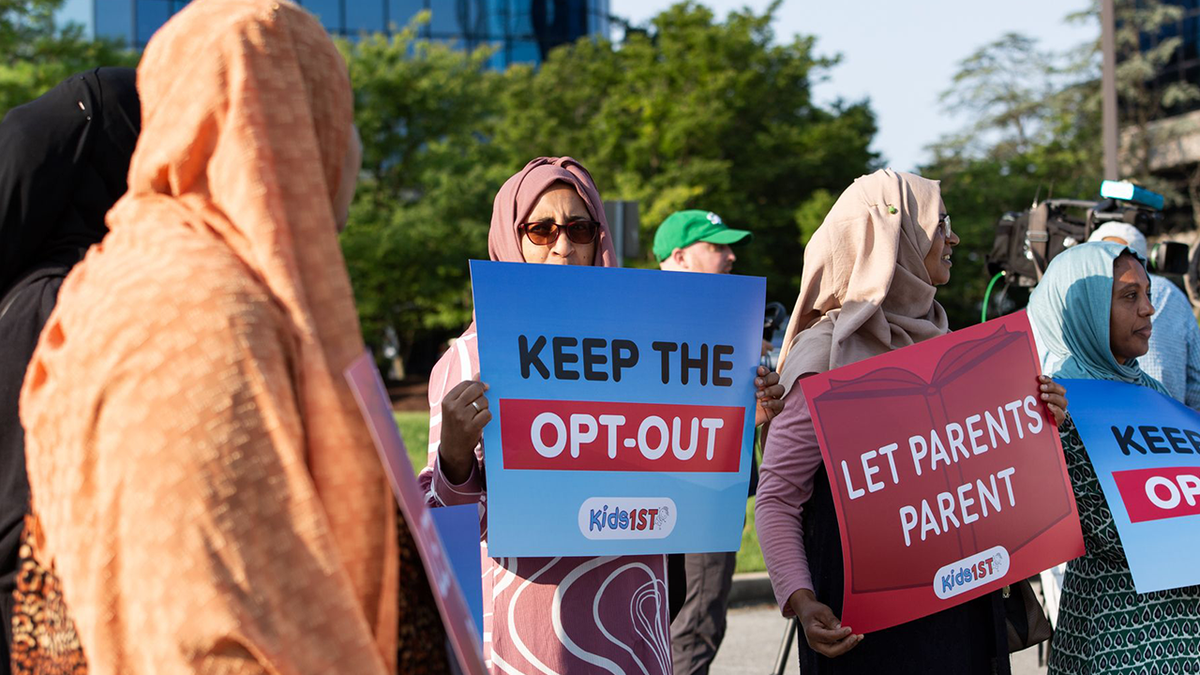
Parents rally in support of an «opt-out» rule for their kids in school, as it pertains to certain aspects of what their school is instructing. (Courtesy of Becket)
MCMAHON RECOUNTS STORY OF REASSURING PARENT OF SPECIAL NEEDS THAT FUNDING WILL CONTINUE AS DEPARTMENT SHRINKS
«All my bill is trying to do is enforce one aspect of federal law that I believe that the Department of Education has really attempted to avoid,» Hageman told Fox News Digital. «They slow walk the investigations when parents complain about not being able to access the curriculum. They refuse to investigate when the parents say their children have been indoctrinated – claiming that he’s a girl, or she’s a boy – and they are not following – they being the federal Department of Education – is not following the law in terms of FERPA and the PPRA.»
Fox News Digital reached out to numerous Democrats and left-leaning education leaders, including the American Federation of teachers and the National Education Association, for comment on Hageman’s new «Parental Rights Relief Act» but did not receive any responses in time for publication.
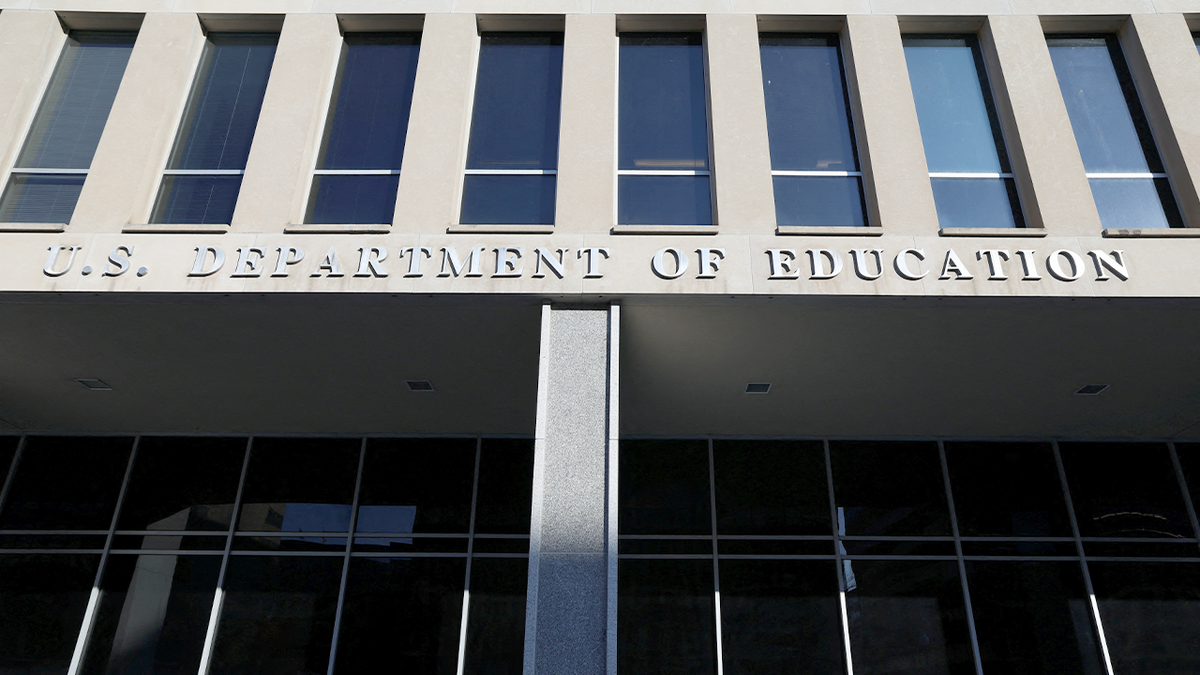
Morning sun lights the front of the Department of Education building in Washington, U.S., February 4, 2025. (REUTERS/Kevin Lamarque)
In addition to giving parents a private right of action under FERPA and PPRA violations, Hageman’s bill would also establish a review board to investigate, review and adjudicate complaints under these federal laws, which must be addressed within a 90-day timeframe.
CLICK HERE TO GET THE FOX NEWS APP
The private right of action is only eligible for students under 18, and allows parents to refrain from having to exhaust all other administrative remedies before going to court. A court may permit the Attorney General to intervene in a civil action brought forward under this bill, if it is deemed appropriate.
education,parents,childrens health,kids,congress,dept of education,house of representatives politics








NEWYou can now listen to Fox News articles!
Interior Secretary Doug Burgum said Iran could have hit Washington, D.C., and other major U.S. cities with intermediate-range ballistic missiles through proxies in Venezuela if the administration had not intervened in both countries.
Speaking at the CERAWeek oil and energy conference in Houston on Wednesday, Burgum pushed back on the narrative that Iran and Venezuela do not represent an imminent threat to the U.S. and global supply chains. He said the threat was demonstrated by Iran’s attempt to strike the U.S. military base Diego Garcia in the central Indian Ocean, more than 2,000 miles from the Middle Eastern country.
«That means, you know, Venezuela was a hotbed of Iranian-funded terror groups, including Hamas. If there was an Iranian ballistic missile placed in Venezuela, it could not just reach Houston; it can reach Washington, D.C.,» said Burgum.
«So, again, the actions that the United States is taking to make the world safer is lowering the risk premium that I think was missing from the [oil and energy] market. Because, maybe, the market wasn’t recognizing the risk.»
WHITE HOUSE WARNS IRAN AGAINST BALKING AT DEAL: TRUMP READY TO ‘UNLEASH HELL’
Left: Israeli air defense systems are activated to intercept Iranian missiles over Tel Aviv on June 16, 2025. Right: The U.S. Capitol in Washington, D.C. (Menahem Kahanna/AFP via Getty Images; Kent Nishimura/Bloomberg via Getty Images)
Burgum accused Iran, whose government he said is in shambles following intense U.S.-Israeli bombardment, of lying to the world about its missile capability.
«They said during negotiations last year, they told the international agencies, they said it right before the negotiations broke down, ‘Oh, don’t worry, we could only go 1,200 miles.’ And then they launched two missiles at Diego Garcia at 2,400 miles. That means they can hit London,» he explained.
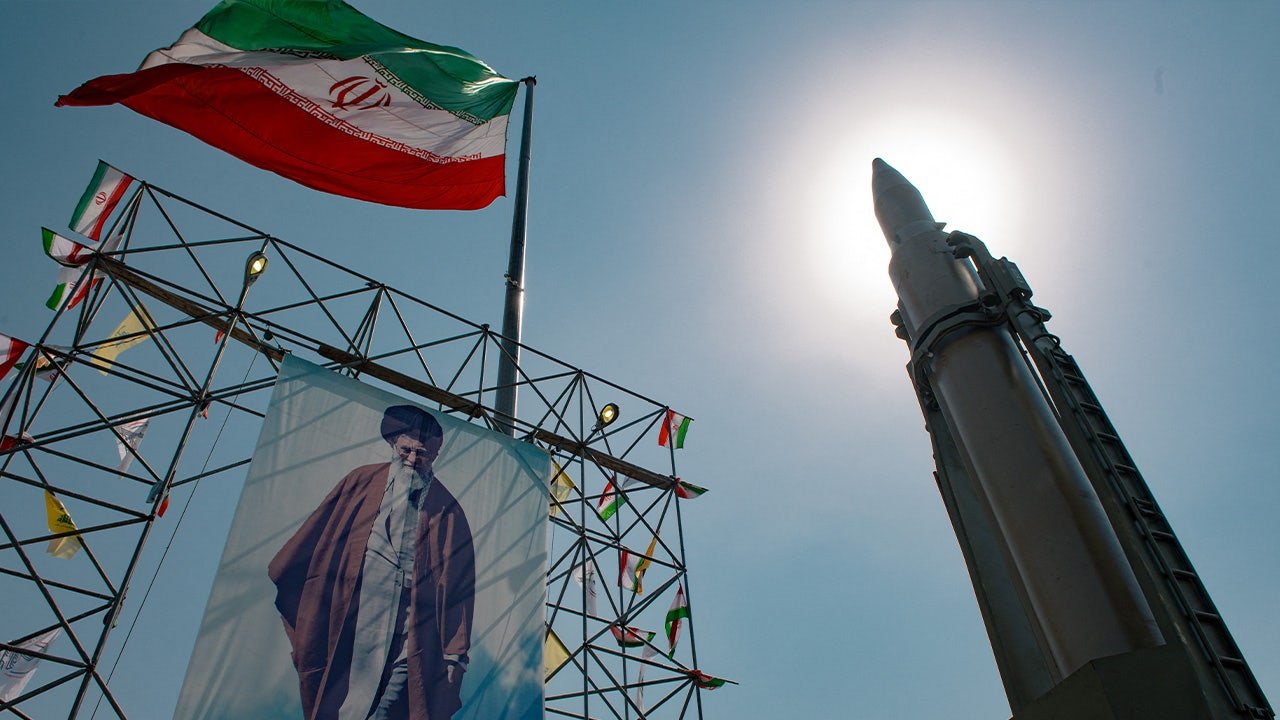
The Islamic Republic of Iran escalated its conflict with the U.S. by launching two intermediate-range ballistic missiles Friday toward Diego Garcia, a key U.S.-U.K. military base in the Indian Ocean. Targeting Diego Garcia, roughly 2,500 miles from Iran, suggests Tehran’s missile capabilities may exceed previously acknowledged limits.
IRAN-LINKED INFLUENCE CAMPAIGN PUSHES ANTI-ISRAEL MESSAGING DISGUISED AS US VOICES: REPORT
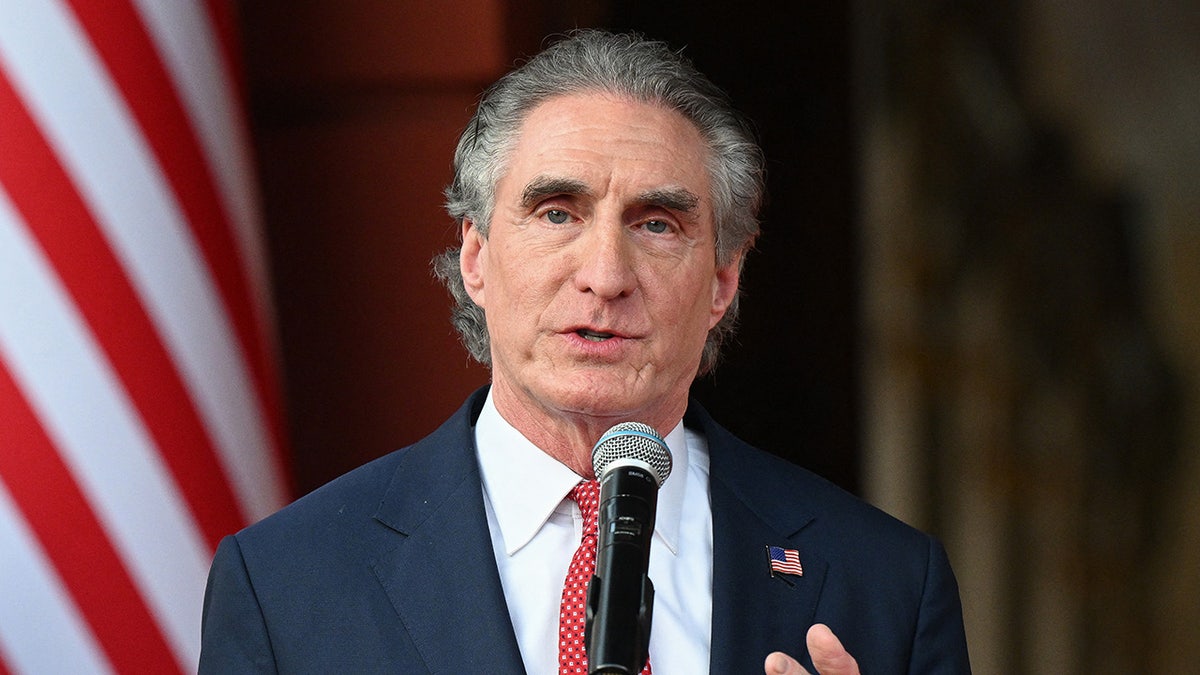
Interior Secretary Doug Burgum speaks after meeting with Venezuela’s interim president, Delcy Rodriguez at the Miraflores Presidential Palace in Caracas on March 4, 2026. (Federico Parra/AFP via Getty Images)
Houston, where Burgum was speaking, is roughly 2,200 miles from Venezuela, while the nation’s capital is just over 2,000 miles away, placing both cities within range of intermediate-range ballistic missiles fired from Venezuela. Other major U.S. cities within range include Miami, roughly 1,300 miles away; New York City, about 2,100 miles; and possibly Chicago, slightly more than 2,600 miles.
On Jan. 3, Trump launched a covert military operation in Venezuela that resulted in the arrest of former Venezuelan leader Nicolás Maduro.
Burgum said that, because of the administration’s military action, Venezuela is no longer a serious missile threat to the U.S. and is now a potentially significant oil and energy partner.
TRUMP ENERGY CZAR SAYS IRAN CONFLICT GAS SPIKE IS ‘TEMPORARY BLIP’ AS DRILLING PUSH RAMPS UP
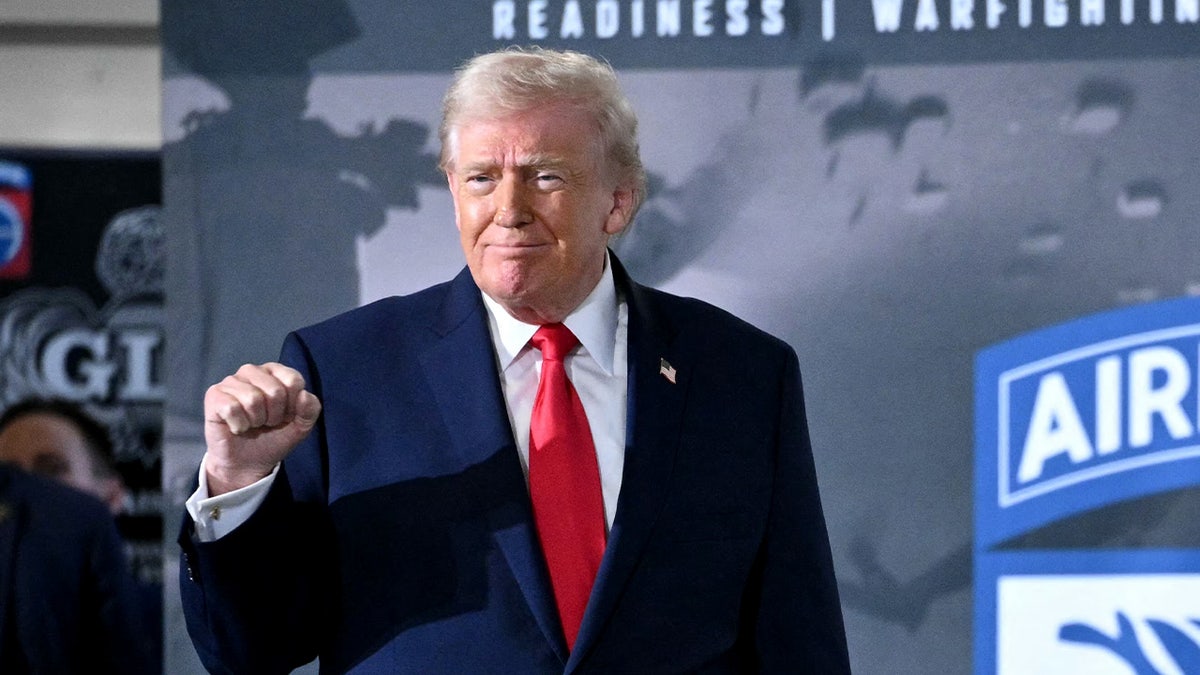
President Donald Trump with military members after the capture of Venezuela’s Maduro in January. (Mandel Ngan/AFP via Getty Images)
The secretary said that during a recent trip to Venezuela with oil executives, interim President Delcy Rodríguez signaled the country has the capacity and is eager for U.S. investment in developing its oil and gas reserves.
CLICK HERE TO DOWNLOAD THE FOX NEWS APP
«The resources there are quite amazing,» he said. «And from that trip we did… we were able to bring home $100 million of gold, physically, the gold, to bring back for U.S. refiners for commercial and consumer purposes. So, the level of cooperation is going.»
war with iran, iran, venezuelan political crisis, conflicts, donald trump, washington dc
INTERNACIONAL
Ministro de Economía advierte que frenar de golpe el crecimiento de la deuda sería traumático para Panamá

El ministro de Economía y Finanzas, Felipe Chapman, advirtió que, aunque el fenómeno inflacionario y el encarecimiento del combustible responden a factores externos, el impacto sobre la economía panameña podría intensificarse si se prolonga el conflicto en Medio Oriente entre Irán, Estados Unidos e Israel, obligando al Estado a incrementar el gasto en subsidios para evitar un golpe directo al costo de vida.
Según explicó, se trata de una situación que exige prudencia fiscal, disciplina en el manejo del presupuesto y evitar decisiones impulsivas que comprometan la sostenibilidad económica.
Chapman fue claro en que el país no debe caer en medidas desesperadas ni en desviaciones de su hoja de ruta económica, insistiendo en que Panamá mantiene una estrategia definida para reducir el déficit y desacelerar el crecimiento de la deuda.
“No es una sorpresa que la deuda haya alcanzado ciertos niveles, forma parte de un plan estructurado”, sostuvo, al reiterar que la prioridad es reducir gradualmente su ritmo de crecimiento sin provocar un choque abrupto en la economía.
Para febrero de 2026 la deuda alcanzó cerca de $60,059 millones, lo que implicó un incremento de más de $8,100 millones en poco más de año y medio.
Este aumento, aunque menor en ritmo frente al registrado en el quinquenio anterior, evidencia que la presión fiscal sigue presente y que la estrategia actual se ha centrado más en reordenar el perfil de la deuda que en reducir su saldo de forma inmediata.

El titular del MEF explicó que el conflicto internacional ya está teniendo efectos concretos en el país, especialmente en el costo de los combustibles, lo que obliga al gobierno a aumentar el subsidio al transporte público, incluyendo MiBus y el Metro de Panamá, así como al tanque de gas de 25 libras, utilizado por la mayoría de los hogares.
“Si el Estado no absorbe ese impacto, el costo del pasaje subiría y también el precio del gas y la electricidad”, advirtió, dejando claro que el gasto público ya está aumentando para contener esos efectos.
En años recientes, el subsidio al transporte público ha representado más de $300 millones anuales, considerando los aportes al Metro de Panamá y al sistema MiBus, mientras que el subsidio al tanque de gas de 25 libras ha superado los $80 millones al año, dependiendo del comportamiento del precio internacional del petróleo.
Bajo el escenario actual, estas cifras podrían incrementarse de forma significativa si el conflicto geopolítico se extiende y presiona aún más los mercados energéticos.
Chapman enfatizó que el costo de estos subsidios es altamente variable y depende directamente del precio del petróleo, el cual puede cambiar de forma drástica en cuestión de días.

“No es lo mismo un barril a $80 que a $120 o $150”, explicó, subrayando que el Estado no puede proyectar con precisión el gasto total en este contexto. En ese sentido, insistió en que sería irresponsable fijar cifras estáticas cuando el entorno internacional es tan volátil.
En cuanto al crecimiento económico, el ministro señaló que antes del estallido del conflicto, proyecciones de entidades internacionales situaban el crecimiento del Producto Interno Bruto (PIB) de Panamá alrededor del 5% para 2026, pero reconoció que ese escenario ahora debe ser revisado. Aunque mantiene una visión moderadamente optimista, admitió que el resultado final dependerá de la duración del conflicto y su impacto sobre la inflación y la economía global.
Sin embargo, Chapman también advirtió que un crecimiento económico demasiado acelerado podría ser contraproducente. “Si Panamá crece por encima del 6%, se podría generar inflación interna, y el país no cuenta con herramientas monetarias para contenerla”, explicó.
Por ello, planteó que el rango óptimo para la economía panameña se sitúa en un crecimiento superior al 5%, pero por debajo del 6%, lo que permitiría expandir la actividad sin presionar excesivamente los precios.
El ministro defendió que la estrategia del gobierno es mantener un equilibrio entre crecimiento y estabilidad, evitando medidas populistas como aumentar el déficit fiscal sin respaldo.

“No vamos a prometer cosas que no se pueden cumplir”, sostuvo, al referirse a propuestas de ampliar subsidios sin un sustento financiero claro. En ese sentido, reiteró que cualquier apoyo adicional deberá estar acompañado de recortes en otras áreas del gasto público, ya que los recursos del Estado son limitados.
Además, señaló que el gobierno ya ha logrado incrementar los ingresos en cerca de 14%, lo que forma parte del esfuerzo por mejorar la sostenibilidad fiscal. No obstante, insistió en que el crecimiento económico sigue siendo clave para mejorar la calidad de vida de la población, incluso si sus efectos no se perciben de forma inmediata.
“Si la economía no crece, la situación sería peor”, afirmó, al reconocer que muchos ciudadanos aún no sienten los beneficios de esa expansión.
En paralelo, Chapman descartó escenarios de desabastecimiento de combustible en Panamá, asegurando que en el continente americano existe suficiente oferta para cubrir la demanda. No obstante, reiteró que el verdadero riesgo no es la disponibilidad, sino el precio, que seguirá sujeto a la evolución del conflicto en Medio Oriente y a las tensiones en los mercados internacionales.
Finalmente, el ministro subrayó que el país debe mantenerse en una línea de cautela, disciplina y planificación, evitando decisiones improvisadas en un contexto global incierto. A su juicio, el reto no es solo enfrentar el impacto inmediato del alza en los combustibles, sino garantizar que las finanzas públicas se mantengan sostenibles en el mediano plazo, sin comprometer la estabilidad económica ni trasladar el costo de la crisis a los ciudadanos.

Las palabras de Felipe Chapman se dieron durante su intervención en el Foro Económico 2026, organizado por la Asociación Panameña de Ejecutivos de Empresa (APEDE), un espacio que reunió a autoridades, expertos y líderes empresariales para analizar el rumbo de la economía panameña en un contexto marcado por cambios geopolíticos, desafíos estructurales y nuevas oportunidades de inversión.
Desde este escenario, se planteó la necesidad de tomar decisiones estratégicas que permitan sostener el crecimiento en los próximos años.
La presidenta de APEDE, Giulia De Sanctis, subrayó que este tipo de foros son clave para elevar la calidad del debate económico en el país y generar propuestas concretas.
A su juicio, Panamá tiene el potencial de seguir creciendo, pero advirtió que ese crecimiento debe traducirse en bienestar real para la población, lo que requiere decisiones basadas en datos, instituciones sólidas y una visión de largo plazo que fortalezca la confianza y promueva la inversión.
En la misma línea, el presidente de la Comisión de Asuntos Económicos y Finanzas Nacionales de APEDE, Jorge Nicolau, explicó que el foro buscó abrir un espacio de análisis informado y diálogo técnico que permita identificar oportunidades reales para el país.
El enfoque, según indicó, está en orientar decisiones económicas sostenibles, tomando en cuenta un entorno global cada vez más dinámico y competitivo, donde Panamá debe redefinir su posicionamiento.
El evento también incorporó una agenda enfocada en temas clave como la inversión extranjera directa, las perspectivas económicas y el rol de Panamá en la región, incluyendo la participación de expertos nacionales e internacionales.
North America
INTERNACIONAL
Iran-linked influence campaign pushes anti-Israel messaging disguised as US voices: report
NEWYou can now listen to Fox News articles!
A new analysis of social media activity during the opening days of Operation Epic Fury suggests that much of the online backlash and anti-Israel content may not have been driven by Americans at all.
The report identified recurring narratives pushed by foreign-based accounts, including claims that the operation was a «betrayal of MAGA,» «highly unpopular with the American people» and carried out «on behalf of Israel.»
Sixty percent of the most viral posts on X mentioning «Iran» during the first week of the operation originated from accounts based outside the United States — despite often presenting themselves as American voices, according to research conducted by Argyle Consulting Group, a private intelligence and data analysis firm.
WITH DOGS, DANCE AND UNCOVERED HAIR, IRANIANS DEFY ‘UNHOLY ALLIANCE’ OF SOCIALISTS, RADICALS: ‘HYPOCRITES!’
«These aren’t just random opinions,» Eran Vasker, CEO and co-founder of Argyle Consulting Group, told Fox News Digital.
«What we’re seeing is discourse that looks American — written in English, using U.S. political language — but is actually coming from outside the country … almost impossible for a regular user to detect,» Vasker said, explaining that the accounts «look very American» and mirror domestic political language and debates.
A new analysis of social media activity during the opening days of Operation Epic Fury suggests that much of the online backlash and anti-Israel content may not have been driven by Americans at all. (Lori Van Buren/Times Union)
The analysis examined 100 highly X viral posts — each with more than 10,000 shares — between Feb. 28 and March 7. In total, posts containing the word «Iran» generated 98 million posts, 696.4 million interactions, and an estimated 1.5 trillion potential views, making it one of the largest online information events on record.
Foreign accounts alone generated 155.6 million views, compared to 93.4 million from U.S.-based accounts, outpacing them by more than 60 million views in the sample.
Even more striking, every single foreign-based post in the dataset was negative toward the operation, while the only supportive content came from U.S.-based users, Argyle found.
WHY TRUMP IS DENOUNCING THE MEDIA’S IRAN WAR COVERAGE AS TOO NEGATIVE – BOOSTED BY RHETORICAL FCC BACKING
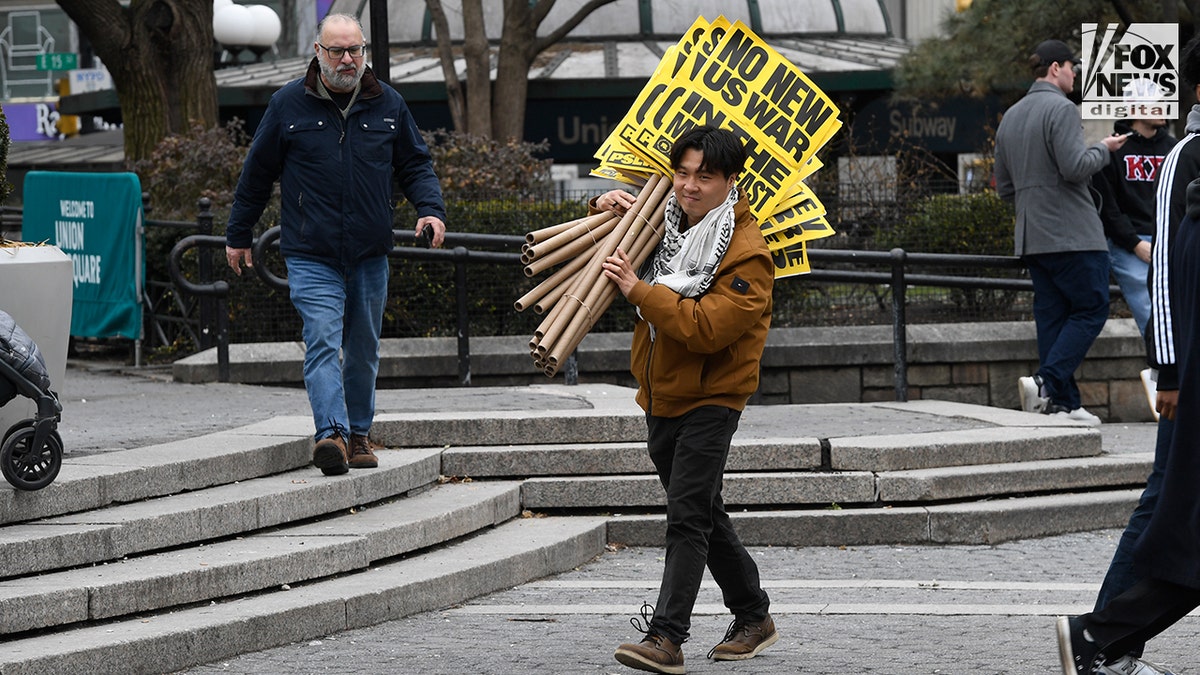
Among the most influential voices driving engagement, seven of the top 10 accounts were based outside the United States, including accounts linked to Russia, the United Arab Emirates, the United Kingdom and South Asia, Argyle found. (Rashid Umar Abbasi for Fox News Digital)
JP Castellanos, Binary Defense director of threat intelligence and a former member of U.S. Central Command’s Active Cyber Defense Team, said much of the activity is focused on Israel and combines disruption with messaging.
«About 42% of the attacks that we’re seeing or the claims that we’re seeing online are directed toward Israel,» Castellanos said.
He also pointed to doxing campaigns and AI-generated videos «trying to basically shape the information space.»
Much of the challenge, Castellanos said, is distinguishing real cyber incidents from inflated online claims by hacktivist groups seeking attention.
«A lot of times, these are just claims that they put online,» he said.
BLOODY NYC KHAMENEI VIGIL REVEALS ANTI-US PROTEST NETWORK LINKED TO IRAN

Cyber threat analysts say that an online narrative campaign is unfolding alongside broader activity by pro-Iranian and aligned groups across the digital space. (Rashid Umar Abbasi for Fox News Digital)
Researchers said the scale, consistency and geographic spread of the messaging point to a coordinated effort rather than organic global debate.
Cyber threat analysts say that an online narrative campaign is unfolding alongside broader activity by pro-Iranian and aligned groups across the digital space.
One of the most prominent groups to emerge in the current conflict, Castellanos said, is Handala, an Iran-linked hacking operation that has claimed responsibility for attacks on both U.S. and Israeli targets.
Among the most influential voices driving engagement, seven of the top 10 accounts were based outside the United States, including accounts linked to Russia, the United Arab Emirates, the United Kingdom and South Asia.
U.S. authorities and cybersecurity firms have linked Handala to Iran’s Ministry of Intelligence and Security, describing it as part of a broader effort combining cyberattacks with psychological and information operations.
CLICK HERE TO DOWNLOAD THE FOX NEWS APP

The report identified recurring narratives pushed by foreign-based accounts, including claims that the operation was a «betrayal of MAGA,» «highly unpopular with the American people» and carried out «on behalf of Israel.» (Asra Q. Nomani/Fox News Digital)
The cybersecurity researchers told Fox News Digital Handala is part of a wider network of Iran-aligned and pro-Russian hacktivist groups that have mobilized since the start of the war, blending disruptive cyber activity with narrative-shaping campaigns online.
Fox News Digital reached out to X multiple times, providing a list of the accounts in question per their request, but has not yet received a response.
war with iran, cybercrime, terrorism, anti semitism

Más problemas en Gran Hermano: una participante abandonó la casa en medio de un escándalo

Iranian missiles could have hit DC from Venezuela before Trump move, Burgum warns

Liverpool y Xabi Alonso, cuestión de tiempo

La TV Pública no renovará el contrato con Marcelo Grandio y solo queda en pie un convenio con su hijo en el streaming

Ministro de Economía advierte que frenar de golpe el crecimiento de la deuda sería traumático para Panamá

Hallaron un cuerpo flotando a la altura del Dique 4 de Puerto Madero

»¡VAN A FUNDIR A MEDIO PAÍS!»: El lapidario diagnóstico de Roberto Cachanosky sobre el plan de Milei

ALERTA FINANCIERA: 4 de cada 10 argentinos ya no pueden pagar sus deudas. ¡Caputo debe actuar ya!

El mensaje de Milei sobre la “traición” que llamó la atención en el Gobierno y también en la oposición

El Gobierno apunta a una sindicalista por la filtración del video de Manuel Adorni en un vuelo privado

 POLITICA2 días ago
El mensaje de Milei sobre la “traición” que llamó la atención en el Gobierno y también en la oposición
- POLITICA1 día ago
24 DE MARZO: La historia completa que el relato omitió sobre el golpe de 1976 y el Juicio a las Juntas
- ECONOMIA2 días ago
A cuánto llegará el dólar en abril de 2026, según los principales analistas de mercado