INTERNACIONAL
Guerra arancelaria: los mercados tuvieron el peor comienzo de un mandato presidencial en EEUU en 50 años

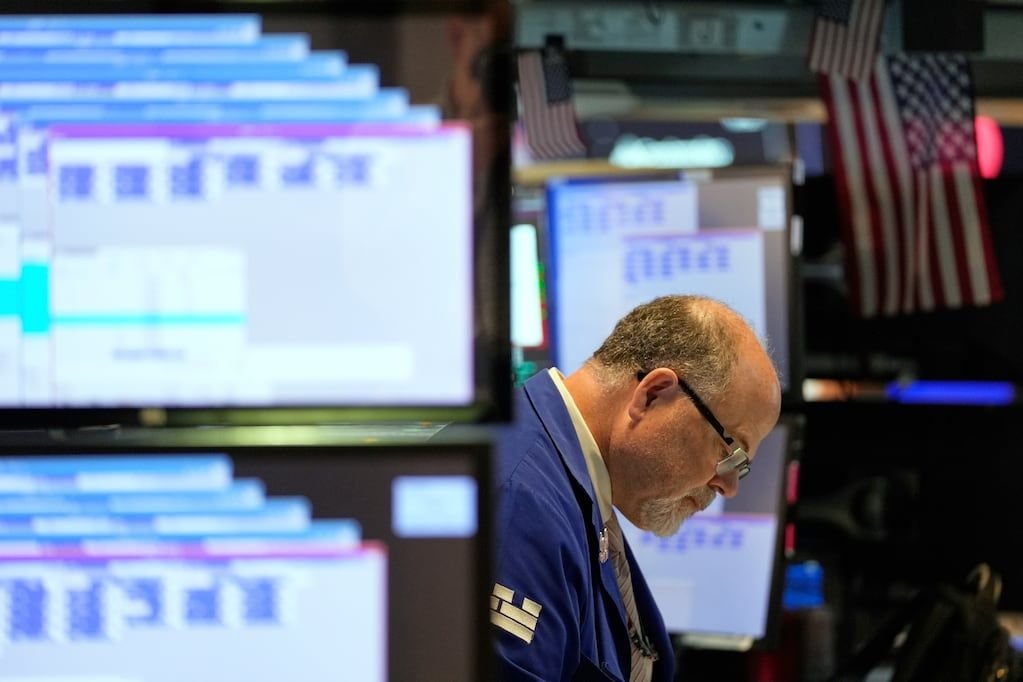
Cien días del presidente Donald Trump. Setenta días de fluctuaciones en los mercados financieros. Treinta y dos días de pérdidas. Más de 6,5 billones de dólares perdidos del valor de las empresas que cotizan en bolsa.
Para los mercados financieros, la caída del 7% del S&P 500 es el peor comienzo de un mandato presidencial desde que Gerald Ford sustituyó a Richard Nixon en agosto de 1974, tras el escándalo de Watergate. El desplome es más crítico que cuando estalló la burbuja tecnológica a principios de siglo y George W. Bush heredó un mercado ya en caída libre.
Leé también: Por la guerra arancelaria, comerciantes de EE.UU. advierten que puede haber escasez de juguetes en Navidad
En cambio, Trump heredó una economía con una base sólida y un mercado bursátil que subía de un máximo histórico a otro.
Esto cambió rápidamente cuando, el 2 de abril, anunció su conjunto de aranceles que no eran los primeros impuestos a la importación anunciados por su gobierno, pero sí, con mucho, los más radicales. Estalló la volatilidad. Wall Street empezó a lidiar frenéticamente con las consecuencias económicas de las políticas del nuevo gobierno.
El S&P 500 se desplomó más de un 10% en dos días, una caída comparable a algunos de los peores días de la venta desencadenada por la pandemia de marzo de 2020 y, antes de eso, a la crisis financiera de 2008.
Desde entonces, las acciones se han estabilizado, pero las ondas expansivas de la caótica implantación de aranceles siguen haciendo temblar el sistema financiero mundial. (Foto: The New York Times)
Algunos inversores han cuestionado el papel de Estados Unidos en el corazón de ese sistema financiero y la seguridad de los activos del país durante los períodos de agitación del mercado, amenazando el orden del mercado que se ha mantenido durante mucho tiempo.
Quedan algunos optimistas que señalan que parece que las turbulencias del mercado finalmente han hecho que Trump revierta sus aranceles más elevados. Pero para muchos inversores, incluso las esperanzas de acuerdos comerciales, recortes fiscales y desregulación —un retorno a las políticas más favorables a las empresas de la agenda del presidente— siguen empañadas por la pura incertidumbre sobre qué más podría ocurrir a continuación.
“Es una situación muy inestable”, dijo Michael Purves, director de inversiones de Tallbacken Capital.
Promesas de prosperidad en el futuro
Sin embargo, esto no empezó así. Un mes después del inicio del mandato de Trump, el índice S&P 500 marcó un máximo histórico. Los inversores estaban animados por el potencial aparentemente ilimitado de la inteligencia artificial y por un nuevo mandatario que había hecho campaña con un programa favorable al crecimiento.
En un discurso pronunciado el 19 de febrero ante el Instituto de la Iniciativa de Inversión Futura, en Miami, Trump aseguró a los inversores que les aguardaba la prosperidad económica.
“No hay mejor lugar en la tierra que los actuales y futuros Estados Unidos de América bajo un cierto presidente llamado Donald Trump”, dijo.
Leé también: Bajo presión de Trump, Washington y Kiev firmaron un acuerdo para explotar los recursos naturales ucranianos
Los inversores estaban exultantes. “Había mucho optimismo en el aire”, dijo Todd Ahlsten, director de inversiones de Parnassus Investments. Y añadió que “había pocas señales de advertencia en el horizonte”.
Sin embargo, un día después del discurso de Trump, la preocupación por la inflación empezó a afectar el mercado, intensificándose a principios de marzo con el anuncio de aranceles del 25% a México y Canadá. Los economistas esperan que los aranceles, que son un impuesto sobre las importaciones que paga el importador, provoquen un aumento de los precios para los consumidores y las empresas.
Los inversores, que antes creían que el agresivo discurso de Trump durante la campaña sobre los desequilibrios comerciales no se convertiría en políticas, de repente se enfrentaron a una nueva realidad. El Presidente hablaba en serio sobre la imposición de aranceles, y estaba dispuesto a arriesgarse a una liquidación del mercado bursátil para lograr sus objetivos.
Los inversores aún no estaban preparados para lo que vendría después.
Un enorme cambio de paradigma
El anuncio de aranceles de dos dígitos a países de todo el mundo provocó la peor venta de dos días del S&P 500 desde marzo de 2020. La diferencia fue que la caída se produjo en respuesta directa a la política gubernamental.
“Fue una venta rápida, sobre todo si se tiene en cuenta que no hubo una conmoción externa como la pandemia”, dijo Mohamed El-Erian, presidente del Queens’ College de la Universidad de Cambridge y exdirector ejecutivo de Pimco, una de las mayores gestoras de activos del mundo.
Los analistas empezaron a advertir que la economía, que había estado experimentando una desaceleración constante del crecimiento del empleo a medida que se enfriaba la inflación, se dirigía hacia una recesión mucho más aguda. El gobierno volvió a restarle importancia a la caída de las acciones. Los inversores se apresuraron a proteger sus carteras de nuevas pérdidas.
“La economía estadounidense ha pasado de ser celebrada por su excepcionalismo económico a la preocupación de que se esté deslizando hacia la estanflación o la recesión”, dijo El-Erian. “Se trata de un cambio enorme en el paradigma de la economía más importante del mundo”.
La semana previa a la entrada en vigor de los aranceles, tanto el índice Nasdaq Composite, de gran peso tecnológico, como el índice Russell 2000 de empresas más pequeñas —que suelen ser más un barómetro de las perspectivas económicas que las empresas multinacionales mucho más grandes— habían caído en mercados bajistas.
Un mercado bajista, en el que un índice cae un 20% desde su máximo, es poco frecuente. Cuando se produce, es un indicador del pesimismo extremo de los inversores. En este caso, según analistas y economistas, se trata de la dirección de la economía en respuesta a los aranceles. Es el límite de una liquidación que se convierta en un mercado bajista sostenido.
Cuando los mercados cerraron el 8 de abril, un día antes de que entraran en vigor los aranceles, el S&P 500 había caído un 18,9% por debajo de su máximo de febrero. Como el mercado seguía cayendo hacia un mercado bajista cuando los aranceles entraron en vigor a la mañana siguiente, Trump anunció una pausa de 90 días para los más punitivos en todos los países, excepto China. Las acciones subieron y el S&P 500 registró su mejor día desde 2008.
Alarma en todo el sistema financiero
Sin embargo, Trump dijo que no fue el mercado bursátil lo que lo hizo reflexionar.
Esa misma semana, ocurrió algo extraño tanto en el mercado de bonos como en el de divisas. Normalmente, en tiempos de agitación, los inversores de todo el mundo buscan activos estadounidenses como fuente de fiabilidad y seguridad. Compran dólares y deuda pública estadounidense, lo que suele provocar que suba el valor de cada uno de ellos.
Eso es lo que ocurrió cuando el mercado de valores cayó inicialmente. Pero en los días previos a los aranceles, tanto el dólar como la deuda pública estadounidense también empezaron a caer, haciendo saltar las alarmas en Wall Street.
Leé también: Duro golpe para Donald Trump: la economía de Estados Unidos cayó 0,3% en los primeros tres meses del año
Los operadores describieron una sensación de pánico y miedo cuando los precios se tambaleaban a la baja, disparando los rendimientos.
El bono del Tesoro a 30 años comenzó la semana con un rendimiento ligeramente superior al 4,3%. Durante la noche, antes de que entraran en vigor los aranceles, el rendimiento —que es indicativo del costo de los préstamos para el gobierno estadounidense— subió por encima del 5%. Fue un movimiento enorme en un mercado que normalmente se mueve en centésimas de punto porcentual cada día.
“El mercado de bonos es muy complicado”, comentó Trump.
Los operadores señalaron que se habían superado los umbrales técnicos en el mercado de bonos, lo que desencadenó una oleada de ventas por parte de distintas estrategias informáticas de negociación que compran y venden automáticamente en función de una programación preestablecida.
Entonces, las ventas cobraron impulso, y algunos analistas afirmaron que los movimientos inusuales eran una señal de que los inversores se estaban resintiendo de los activos estadounidenses en medio del caos provocado por los aranceles.
El excepcionalismo estadounidense está arraigado en la noción de que el país desempeña un papel central en los mercados financieros mundiales, en la que el dólar es la moneda de reserva y la deuda norteamericana sustenta los préstamos nacionales e internacionales. Esa misma noción, según los analistas, se ha vuelto vulnerable.
En medio del caos, Trump también arreció los ataques contra las personas e instituciones que sustentan el excepcionalismo estadounidense, como Jerome H. Powell, presidente de la Reserva Federal (Fed), cuya independencia contribuye a apuntalar la confianza de los inversores en los mercados estadounidenses.
Al mandatario le disgustó que el presidente de la Reserva Federal no hubiera bajado las tasas de interés, a pesar de que Powell le ha advertido que hacer eso podría impulsar una mayor inflación. Aunque muchos inversores también anhelan unas tasas más bajas, para ellos es más importante que la Fed mantenga su independencia.
¿Más aranceles ‘yo-yo’?
Desde el 9 de abril, se ha producido un cambio en el tono del gobierno.
Los funcionarios han promovido lo que dicen que han sido negociaciones comerciales positivas que tienen lugar entre bastidores.
Aunque las afirmaciones del gobierno sobre las negociaciones son rechazadas por ser inventadas, como en el caso de China, los inversores han interpretado que la Casa Blanca está intentando darle al mercado motivos para alegrarse.
Sin embargo, pocos están dispuestos a apostar por lo que ocurra a continuación.
Un banquero de bonos de un banco estadounidense dijo que su equipo ya no tomaba decisiones comerciales con un horizonte temporal de hasta seis meses, como el año pasado. En su lugar, la incertidumbre le ha obligado a tomar decisiones semana a semana, dependiendo en gran medida del nivel final de los aranceles, que es posible que no se conozca hasta dentro de semanas o incluso meses.
Los datos económicos se vigilarán de cerca en busca de señales de que los aranceles se están afianzando. Los informes de beneficios seguirán siendo estudiados con lupa en busca de indicios de que los aranceles están afectando.
Luego llegará julio y el final de la pausa de 90 días que dejó en suspenso los aranceles y el desplome del mercado.
“Si el gobierno modera pronto la política arancelaria, y la incertidumbre arancelaria disminuye, el daño duradero podría ser modesto o insignificante”, dijo James Egelhof, economista de BNP Paribas. Dijo que dedicaba cada vez más tiempo a responder a las preguntas de sus clientes sobre cómo podría ser una posible recesión económica si persiste la incertidumbre arancelaria.
“Si los aranceles siguen comportándose como un yo-yo, subiendo, bajando y volviendo a subir, esta incertidumbre no disminuirá y tendrá un efecto paralizante sobre todo en las empresas”, dijo.
Destacando de nuevo esa incertidumbre el miércoles, Trump responsabilizó a su predecesor por las actuales turbulencias del mercado.
“Esta es la Bolsa de Biden, no la de Trump”, escribió Trump en Truth Social. “No asumí el cargo hasta el 20 de enero. Los aranceles pronto empezarán a entrar en vigor, y las empresas están empezando a trasladarse a EE. UU. en cifras récord.“
“¡SEAN PACIENTES!”, añadió.
Por Joe Rennison.
Donald Trump, aranceles






NEWYou can now listen to Fox News articles!
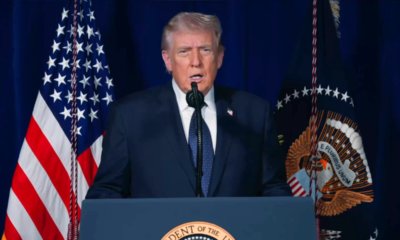
President Donald Trump goes before the nation in prime time on Wednesday evening to deliver what the White House says is «an important update» on the war with Iran.
The president’s address comes amid the month-long attacks by the U.S. and Israel on Iran, which polls indicate are unpopular with many Americans, and a surge in gas prices as a direct result of the fighting have triggered a further slide in Trump’s standing in public opinion surveys.
The political implications are clear: The strikes on Iran and the erosion of the president’s approval ratings are warning signs for the GOP as Republicans ramp up to defend their slim House and Senate majorities in this autumn’s midterm elections.
Trump stood at 41% approval and 59% disapproval in the latest Fox News national poll, which was conducted March 20–23. The president’s negative 18-point margin was up from 14 points in the previous Fox News poll, which was conducted Feb. 28–March 2, as the strikes against Iran began.
FOX NEWS LIVE UPDATES ON THE U.S. WAR WITH IRAN
The president’s approval ratings stood in the upper 30s, with his disapproval in the upper 50s to low 60s, in the most recent national surveys from Reuters/Ipsos, AP/NORC, and Quinnipiac University. A CNN poll conducted March 26–30 and released Wednesday indicated Trump had a 35%-64% approval/disapproval rating.
An average of the most recent national surveys gauging the president’s standing puts Trump just above 40%, with his disapproval in the upper 50s.
WHAT THE LATEST FOX NEWS POLL SHOWS ON THE WAR WITH IRAN
While Trump’s base remains extremely supportive of the president and the war, much of the slippage is coming from within the GOP, specifically those who are considered non-MAGA Republicans.
«I do see in the last couple of surveys an edging down…close to a double-digit movement,» veteran Republican pollster Daron Shaw, who helps run the Fox News Poll with Democrat Chris Anderson, said, pointing to declining support for Trump among non-MAGA Republicans.
A screen grab from a video released on U.S. President Donald Trump’s Truth Social account shows Donald Trump making statements regarding combat operations on Iran on Feb. 28, 2026, in Palm Beach, Florida. (US President Trump Via Truth Social/Anadolu via Getty Images)
Fueling Trump’s decline appears to be the surge in gas prices.
The average price of gasoline in the U.S. topped $4 per gallon on Tuesday, according to national averages from AAA and GasBuddy, for the first time in four years.
FOX BUSINESS: GAS PRICES TOP $4 PER GALLON
The military attacks by the U.S. and Israel have resulted in the deaths of Iranian Supreme Leader Ayatollah Ali Khamenei and other top officials, and the decimation of the country’s military.
In response, Iran has targeted energy facilities with missile and drone attacks in a number of Persian Gulf nations. It has also made the Strait of Hormuz nearly impassable to commercial shipping, bringing roughly 20% of the world’s oil supply to a halt and sending global fuel prices sharply higher.
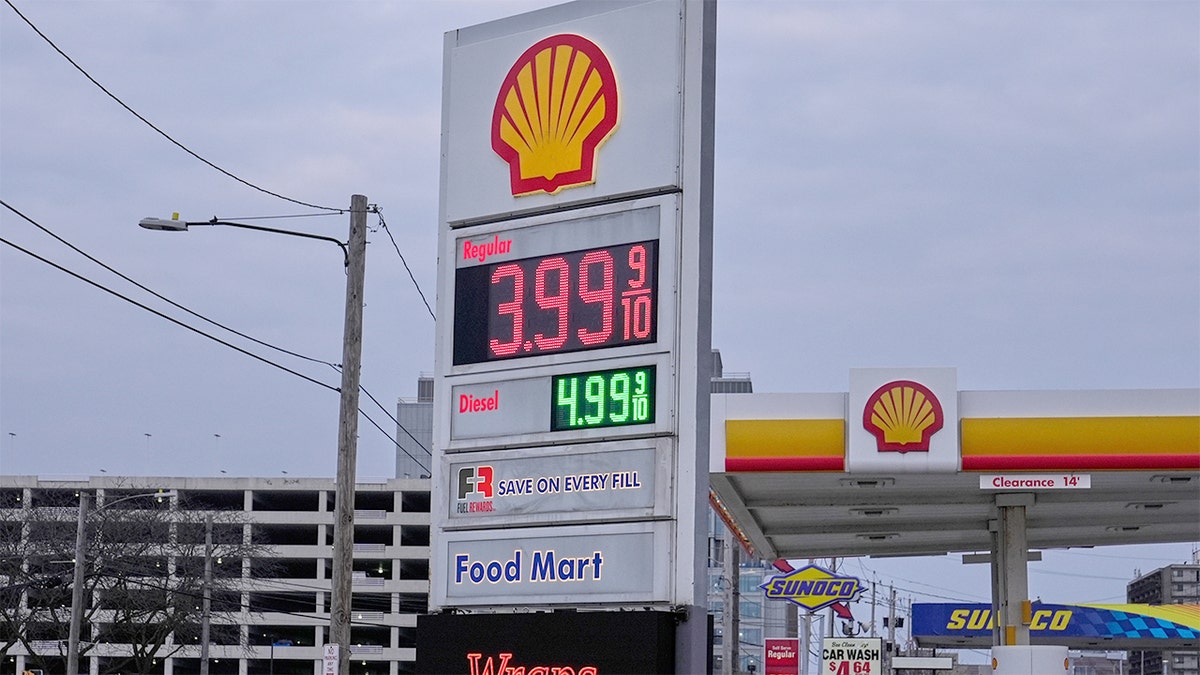
A gas station displays a sign for $3.999 for regular gasoline, in Cleveland, Monday, March 30, 2026. (Sue Ogrocki/AP Photo)
That has only exacerbated Trump’s polling woes when it comes to his performance on the economy, amid public dissatisfaction with high prices and the cost of living.
A spotlight on inflation helped fuel sweeping victories by Trump and Republicans in the 2024 elections, when they won back the White House and Senate and successfully defended their slim House majority.
DEMOCRATS TARGET TRUMP, GOP, OVER SURING GAS PRICES
But a laser focus on affordability by Democrats, amid persistent inflation, has fueled a slew of victories and overperformances in 2025’s off-year elections and in special elections in the more than 14 months since Trump returned to the White House.
According to the Fox News poll, 80% of respondents said they were concerned about gas prices, and 86% concerned about inflation and high prices. And the CNN survey spotlighted that the president’s approval rating for handling the economy sank to 31%, Trump’s lowest level ever in their polling.
The White House says the surge in prices is temporary.
«When Operation Epic Fury is complete, gas prices will plummet back to the multiyear lows American drivers enjoyed before these short-term disruptions,» White House press secretary Karoline Leavitt said in a statement on Tuesday.
Leavitt emphasized that «President Trump remains committed to fully unleashing American energy dominance, lowering costs, and putting more money back in the pockets of hardworking American families.»
OIL HAS SURGED SINCE THE IRAN CONFLICT BEGAN, BUT GAS PRICES MAY NOT BE DONE RISING
The gas price surge is giving Democrats more political ammunition to target the GOP.
«BREAKING: National Gas Prices Skyrocket to $4 Per Gallon,» read the headline from an email Tuesday morning from the Democratic National Committee.
The House Democrats’ campaign committee last week launched digital ads showing prices at the pump rising and an image saying «D.C. Republicans Did That!» Sources say to expect another round of ads on gas prices in the coming weeks.
But Democrats have their own polling problems, as the party’s brand image has cratered to historic lows in a slew of polls over the past year.
Shaw, pointing to the so-called double-haters, voters who disapprove of both Trump and the Democrats, said that group hasn’t «really swung dramatically to the Democrats» as the midterms approach.
Republican Sen. Ted Cruz of Texas emphasized in a recent Fox News Digital interview that, in his opinion, Trump’s «decision to launch this military action is the most consequential decision» of his presidency.
Such perceptions only increase what’s at stake when Trump addresses the nation in prime time.
CLICK HERE TO DOWNLOAD THE FOX NEWS APP
«The American people want to hear what the off-ramp for the war is and when it will end,» Dan Eberhart, an oil drilling chief executive officer and prominent Republican donor told Fox News Digital.
Eberhart, who is supportive of the president, said: «Trump’s base is with him, but many ordinary Americans feel the war is unnecessary. Tonight is Trump’s opportunity to explain why this war matters to everyday Americans.»
donald trump, war with iran, iran, polls, midterm elections, inflation, politics
INTERNACIONAL
Ciudadanía por nacimiento: Trump asiste a la Corte para defender su decreto, pero se encuentra con un tribunal en duda


INTERNACIONAL
Iran’s ceasefire push may be a ‘cycle of deception,’ analysts warn as shadowy figure gains power

NEWYou can now listen to Fox News articles!
President Donald Trump suggested Wednesday that Iran may be seeking a ceasefire, but analysts say real power lies with hardline figures inside the Islamic Revolutionary Guard Corps, including newly prominent commander Ahmad Vahidi.
Trump did not name the Iranian figure he was referring to, but his comment likely pointed to President Masoud Pezeshkian, writing: «Iran’s New Regime President, much less Radicalized and far more intelligent than his predecessors, has just asked the United States of America for a CEASEFIRE! We will consider when Hormuz Strait is open, free, and clear. Until then, we are blasting Iran into oblivion or, as they say, back to the Stone Ages!!!»
Experts caution, however, that Iran’s president does not control decisions of war and peace.
«He clearly does not have the authority to turn on or turn off a major military conflict with the United States,» Behnam Ben Taleblu, a senior fellow at the Foundation for Defense of Democracies, told Fox News Digital.
TRUMP’S IRAN STRATEGY SHOWCASES ‘DOCTRINE OF UNPREDICTABILITY’ AMID STRIKE THREATS AND SUDDEN PAUSE
Iranian Interior Minister Ahmad Vahidi speaks during a press conference after the parliamentary elections in Tehran, Iran, March 4, 2024. (Majid Asgaripour/WANA (West Asia News Agency) via Reuters)
Instead, analysts say real power lies with senior figures tied to the Islamic Revolutionary Guard Corps, including Vahidi, parliamentary speaker Mohammad Bagher Ghalibaf, and security official Mohammad Zolghadr, all of whom operate within overlapping centers of influence.
Attention is turning to the new terror chief seen as an extremist pulling strings, Vahidi — a longtime Islamic Revolutionary Guard Corps commander whose reemergence highlights a broader shift underway inside Iran’s leadership.
Beni Sabti, an Iran expert at the Israeli Institute for National Security Studies, warned that even when Iran signals interest in a «ceasefire,» it may not reflect a Western understanding of the term.
He pointed to the concept of «hudna,» describing it as «a ceasefire with deception — they stop when they are weak, rebuild their strength, and then attack again, whether against Israel or the United States.»
Sabti added that such pauses can become «a cycle of violence that does not end,» driven by ideological motivations, and should not be interpreted as a genuine end to hostilities.
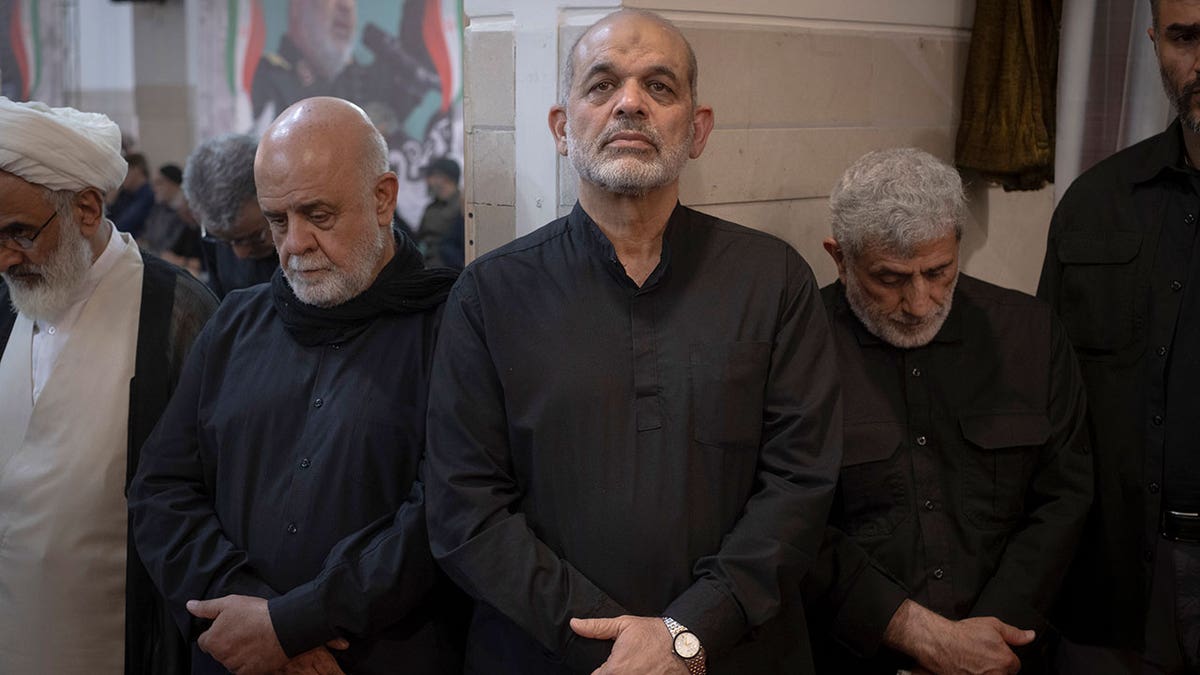
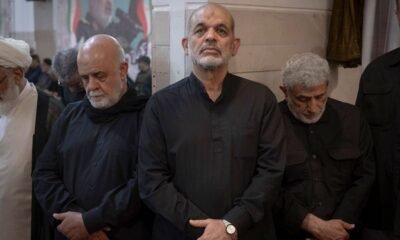
Ahmad Vahidi, commander of the Islamic Revolutionary Guard Corps Quds Force, Esmail Qaani, and Iraj Masjedi, Deputy Coordinator of the Islamic Revolutionary Guard Corps (IRGC) Quds Force, participate in a ceremony to mark the memory of former IRGC commander, Hossein Salami, who is killed in Israeli attacks, at a mosque in an IRGC organizational house complex in Tehran, Iran, on July 25, 2025. (Morteza Nikoubazl/Nur Photo via Getty Images)
From covert operations to global attacks
At the center of that uncertainty is Ahmad Vahidi, the new Islamic Revolutionary Guard Corps (IRGC) commander.
«He is a very violent man and belongs to a generation that fought in guerrilla warfare,» Sabti told Fox News Digital.
Sabti described Vahidi as part of an early cadre of Iranian operatives who built ties with militant groups in Lebanon before and after the 1979 revolution, relationships that later became central to Iran’s regional strategy. Some accounts suggest Vahidi trained in camps linked to Palestinian and Lebanese factions in southern Lebanon, helping lay the groundwork for Iran’s long-standing alliance with Lebanon-based terror group Hezbollah.
DESTROY THE REGIME’S POWER WITHOUT OCCUPYING IRAN: A SMARTER WAR PLAN
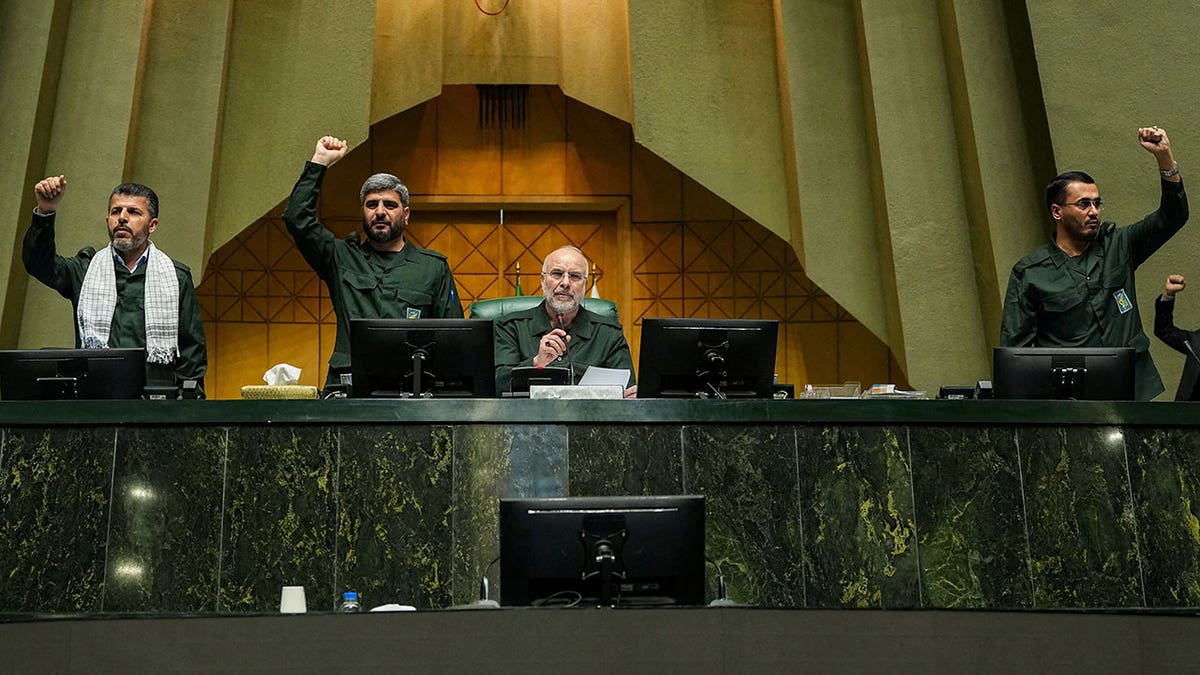
Iranian Parliament Speaker Mohammad-Bagher Ghalibaf looks on as parliament members chant in support of the IRGC while wearing military uniforms in Tehran, Iran, Feb 1, 2026. (Hamed Malekpour/Islamic consultative assembly news agency/WANA (West Asia News Agency)/Handout via Reuters)
Vahidi rose through the ranks of the Islamic Revolutionary Guard Corps and went on to serve as commander of its elite Quds Force in the 1990s, a unit responsible for overseas operations.
He has been linked to some of the deadliest attacks attributed to Iranian-backed networks abroad, including the 1992 bombing of the Israeli Embassy in Argentina and the 1994 bombing of the AMIA Jewish community center in Buenos Aires.
Sabti said Vahidi was also accused of maintaining connections with al Qaeda figures following the Sept. 11 attacks, reflecting what he described as Iran’s willingness to cooperate with groups targeting Western and Israeli interests.
Despite later holding positions that appeared political or bureaucratic, Sabti said Vahidi never truly stepped away from the Revolutionary Guards, Iran’s powerful military and intelligence arm, meaning his role remained closely tied to the regime’s security and operational apparatus.
«He always remained part of the Revolutionary Guards — even wearing uniform,» he said. «That’s common in Iran. Even when they move into politics, they stay within the force.»
Sabti also pointed to Vahidi’s alleged role in suppressing Kurdish uprisings in northwestern Iran in the aftermath of the 1979 Islamic Revolution, underscoring his longstanding involvement in internal security operations.
HEGSETH REVEALS COVERT VISIT TO TROOPS FIGHTING IN OPERATION EPIC FURY
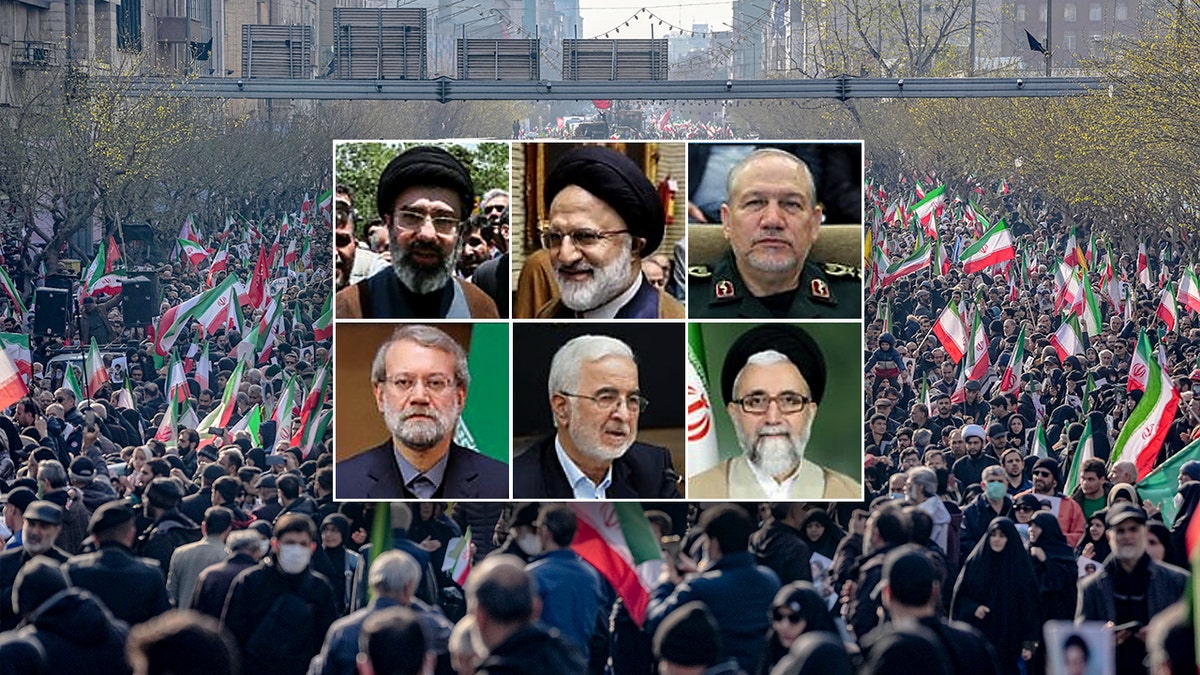
A composite image shows several Iranian leaders named in the State Department’s Rewards for Justice program offering up to $10 million for information on key figures tied to Iran’s Islamic Revolutionary Guard Corps (IRGC), including Mojtaba Khamenei, top left. (State Department / Rewards for Justice; Khoshiran / Middle East Images / AFP via Getty Images)
A system driven by power, not position
Vahidi’s renewed prominence comes as Iran’s internal structure appears increasingly fragmented, with authority concentrated in overlapping and sometimes competing networks.
«It’s not clear how coordinated either the military or political actions of the government of the Islamic Republic is today,» Ben Taleblu said.
He described Iran as «a system of men, not a system of laws,» where personal ties and informal influence often outweigh formal titles.
That dynamic has intensified as the war continues.
«We are seeing the IRGC ascendancy… across a host of Iranian political and security institutions,» he said.
«This IRGC ascendancy will mean a more crass Islamic Republic, but it comes at a time when this regime is militarily less capable than ever before,» he added.
More power, less restraint
Sabti said Vahidi may now be more influential than other prominent figures in Tehran, including parliamentary speaker Mohammad Bagher Ghalibaf and Supreme Leader Ali Khamenei’s son, Mojtaba Khamenei.
«In my view, he is more dominant right now, even if they are coordinated. This is not a time for internal competition,» Sabti said.
He warned that Vahidi’s rise could further harden Iran’s posture.
«He brings even more radicalization into the system and may not want to stop the war, because it serves the interests of the Revolutionary Guards to continue,» Sabti said.
«They could become masters of the region if the United States folds — and that is very much in his interest.»
Trump’s suggestion that Iran is seeking a ceasefire has raised hopes of a potential diplomatic opening, but experts caution that such signals may not reflect a unified position inside Iran.
«The question is what was shared with President Trump genuine, or is it wheeling and dealing of just one ambitious person?» Ben Taleblu said.
CLICK HERE TO DOWNLOAD THE FOX NEWS APP
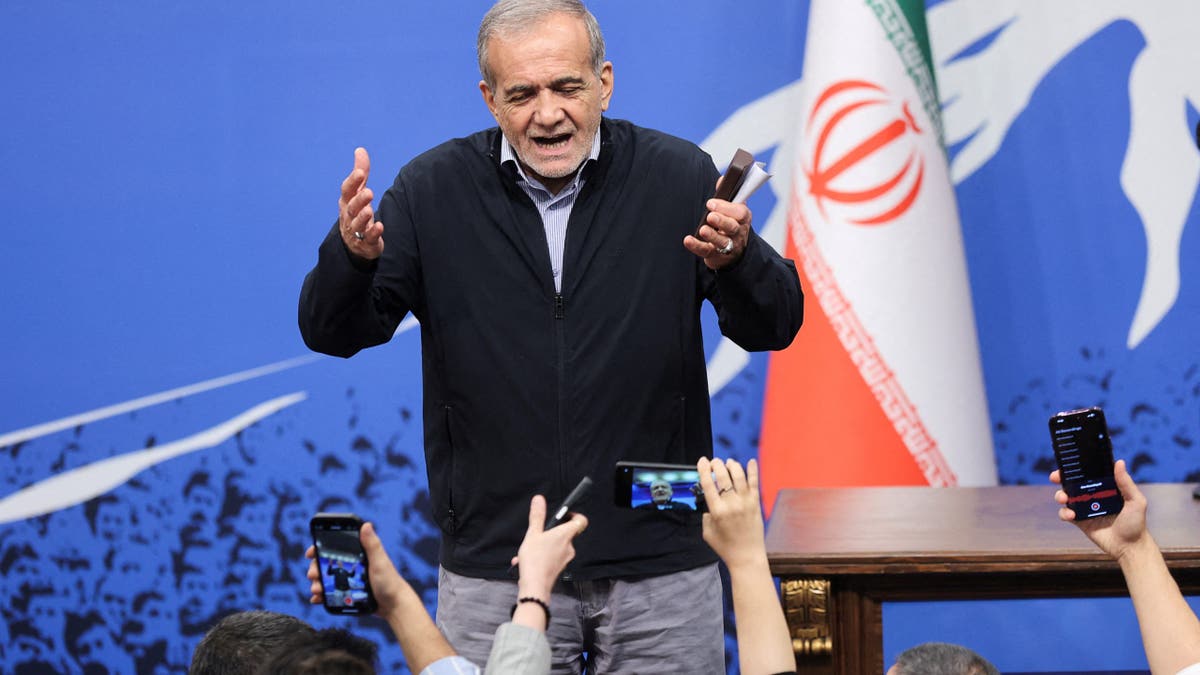
Iran’s President Masoud Pezeshkian attends a press conference in Tehran, Iran, Sep. 16, 2024. (WANA (West Asia News Agency)/Majid Asgaripour via Reuters)
«Pezeshkian clearly does not have the authority to turn on or turn off a major military conflict with the United States,» Ben Taleblu said.
That leaves open the possibility that any outreach could be tactical, fragmented, or even contradictory.
Fox News Digital reached out to the White House for comment but did not receive a response in time for publication.
war with iran, donald trump, mojtaba khamenei, terrorism

Se confirmó la lesión de un futbolista de la selección argentina luego de los amistosos ante Mauritania y Zambia

El Gobierno le dio un bono de $40.000 y otro de hasta $300.000 a las fuerzas de seguridad

Poll position: Where Trump stands among Americans as he faces the nation in primetime

Allanaron a los médicos Delfina Lanusse y Hernán Boveri, los acusados de robar propofol y fentanilo: “Anestesia, jeringas, sondas, sedantes”

«Operativo surtidor»: Caputo frena impuestos y resigna u$s150 millones para contener precio de nafta

Abortos clandestinos, robos en hospitales y el caso Billiris: el lado oscuro del propofol en Argentina

Máximo Kirchner salió al cruce de Milei y Macri tras el fallo por YPF a favor de la Argentina

El Gobierno cambia su propuesta de reforma: endurece penas para delitos comunes, pero no para los casos de corrupción

Nuevas críticas de Marcela Pagano contra los Milei: “Karina es la que gobierna”, aseguró

Dos jubiladas que le habrían prestado dinero a Manuel Adorni negaron conocerlo

 POLITICA3 días ago
Nuevas críticas de Marcela Pagano contra los Milei: “Karina es la que gobierna”, aseguró
- POLITICA1 día ago
Dos jubiladas que le habrían prestado dinero a Manuel Adorni negaron conocerlo
- POLITICA2 días ago
Quiénes son las dos acreedoras del préstamo con el que Adorni compró su departamento en Caballito