
INTERNACIONAL
Guerra en Oriente Medio: cómo podría responder Irán tras los ataques de Estados Unidos a su programa nuclear


INTERNACIONAL
“La gente está agotada y ansiosa”: así se vive en Irán después del alto el fuego y ante el diálogo con EE.UU.
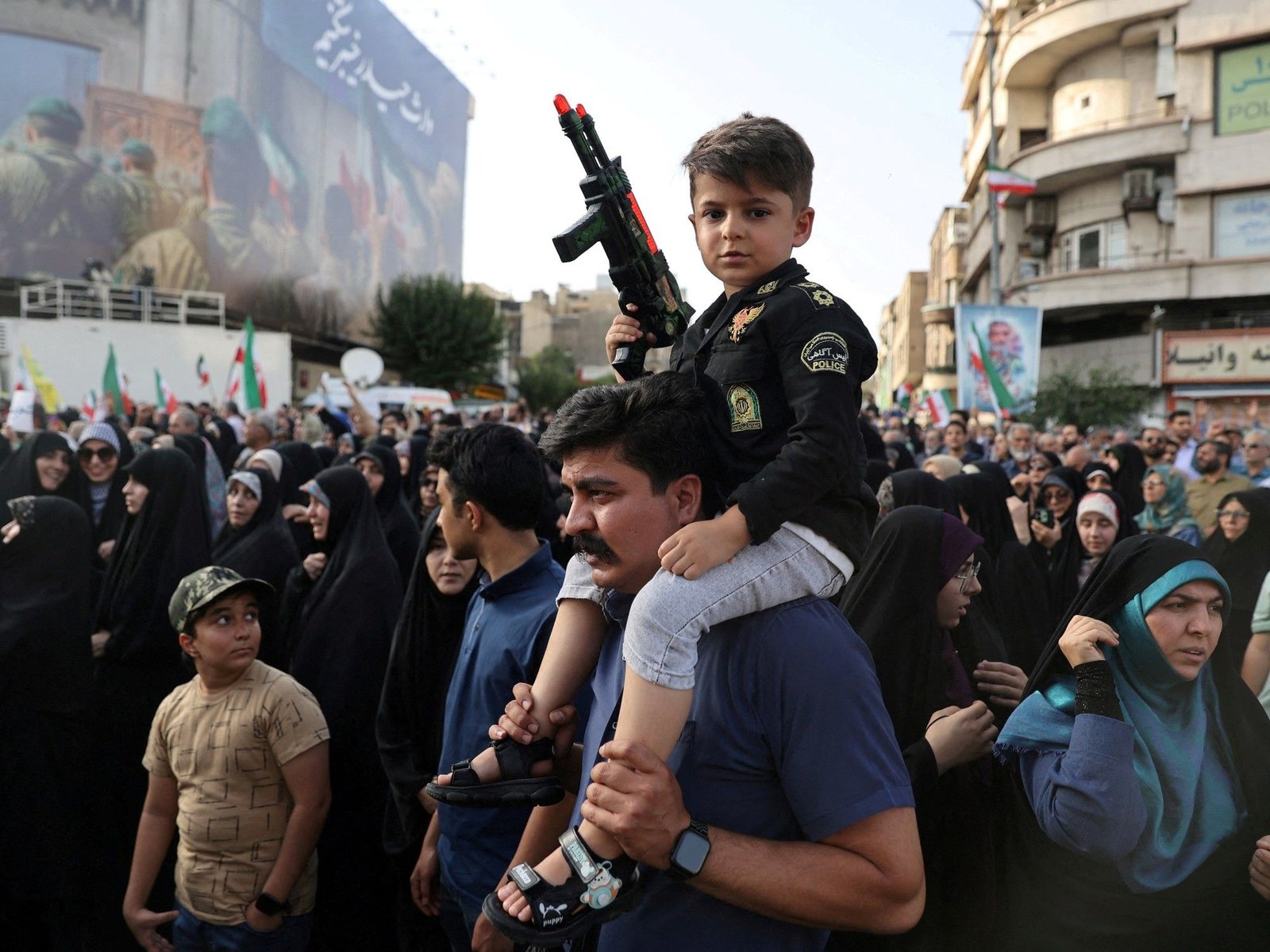
Horas después de que Estados Unidos e Irán acordaran un alto al fuego –lo que puso fin a la amenaza inmediata de ataques aéreos con la que los iraníes han convivido durante casi seis semanas–, algunos iraníes lidiaban con una confusa mezcla de emociones: alivio, conmoción y presentimiento.
“En estos momentos, parece una especie de limbo: no sé cómo acabará, pero la guerra iba en direcciones que me parecían aterradoras”, dijo el miércoles Iraj, residente en Teherán. “Solo sé que hoy me siento mejor que ayer”.
Cuando se le preguntó qué le parecía el alto al fuego, Mohammad, quien también vive en Teherán, dijo que no estaba contento porque, según dio entender, el gobierno autoritario de Irán seguía en funciones. “Pero no quería que la guerra llegara a un punto en que perjudicara gravemente la vida de todos nosotros”, dijo. “Me preocupa que la situación económica y cultural de la sociedad empeore”.
Comunicándose a través de mensajes de texto y notas de voz, enviados durante un corte de internet en curso, los iraníes reflexionaron sobre lo que les habían hecho pasar y a lo que podrían enfrentarse a continuación. Al igual que Mohammad e Iraj, todos pidieron ser identificados solo por su nombre de pila o no ser identificados en absoluto, por temor a represalias del gobierno.
“La gente está conmocionada, mirándose unos a otros con incredulidad”, dijo Maryam, una empleada de banca de 43 años de Teherán, quien dijo que creía que la guerra se reanudaría en dos semanas. “La gente está agotada y ansiosa”.
Muchos expresaron su preocupación por la ruina económica del país. Se han destruido escuelas, hospitales, viviendas, puentes y carreteras, así como importantes empresas que empleaban a decenas de miles de personas y eran el combustible de la economía nacional de Irán.
Un puente cerca de Karaj, Irán, que fue alcanzado por un ataque aéreo el día anterior, el viernes 3 de abril de 2026. (Foto: Arash Khamooshi/The New York Times)
“Los precios se han disparado”, dijo Maryam. “Hoy fui a comprar conservas y el tendero me aconsejó que me abasteciera. ‘Pronto subirán un 40 por ciento’, me dijo”.
A Iraj le preocupaba que los agravios populares, que dieron lugar a una oleada de protestas en enero, volvieran a acumularse pronto ante la falta de acción del gobierno para atender esas quejas. “Seguimos sin disponer de mecanismos adecuados para protestar, y hay mucha gente descontenta”, dijo.
Pero dijo que nunca le habían gustado Estados Unidos e Israel, y que seguía pensando lo mismo. “Espero que otras personas también lleguen a comprender que no son salvadores”, afirmó.
Los iraníes contrarios al gobierno dijeron que estaban consternados de que este hubiera sobrevivido, a pesar de la muerte de sus principales dirigentes y de las declaraciones de dirigentes estadounidenses e israelíes, al principio de la guerra, de que querían un cambio político drástico en Irán.
En las semanas anteriores al comienzo de los bombardeos, algunos iraníes habían expresado su esperanza de que la intervención extranjera condujera al derrocamiento del régimen.
Varias personas contactadas el miércoles dijeron que temían que, en las semanas y meses venideros, el gobierno ejerciera su poder en el país para reafirmar su autoridad. En los últimos días, Irán ha llevado a cabo una serie de ejecuciones de personas que habían sido detenidas durante las protestas de enero. La semana pasada fue detenido un destacado abogado de derechos humanos, y se ha detenido a decenas de personas, algunas de ellas por enviar información a medios de comunicación extranjeros.
En los días previos al alto al fuego, la guerra había trastocado la capacidad de los iraníes para planificar sus vidas. Era difícil encontrar somníferos y ansiolíticos, según declaró Mehrshad, de 41 años, empresario de Teherán, en una entrevista realizada a finales de marzo.
“En Teherán, la gente está sufriendo demasiado”, dijo. “Psicológicamente, muchos se encuentran en un lugar muy oscuro. Incluso quien tenía grandes esperanzas políticas las está perdiendo”.
Además, las milicias progubernamentales armadas han establecido puestos de control en las calles de Teherán, dijo Mehrshad, lo que ha creado “una atmósfera de miedo”.
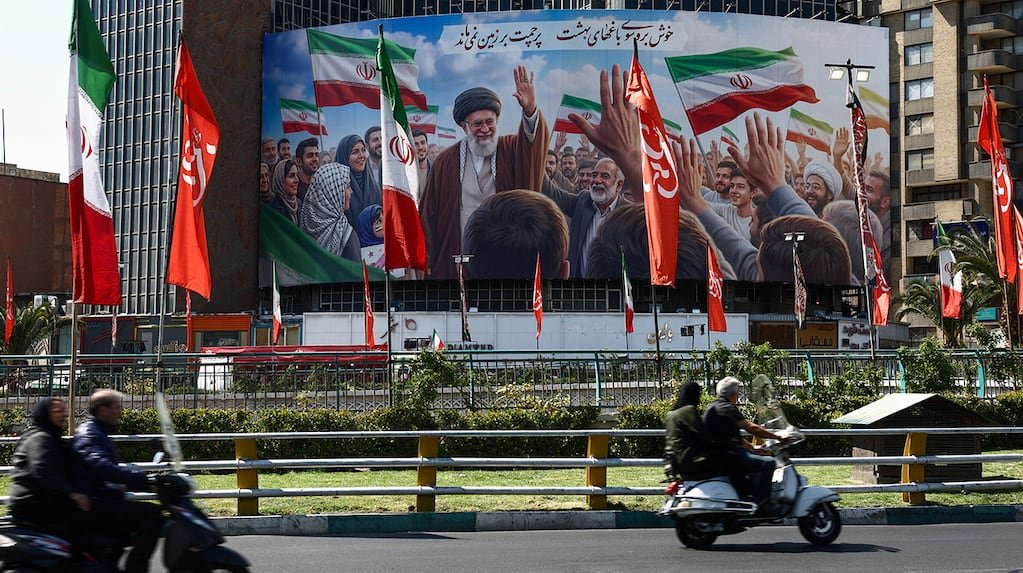
Él y otros dos iraníes describieron concentraciones callejeras regulares e informales a favor del régimen en Teherán y otras ciudades durante la guerra, realizadas a menudo por la noche. Los partidarios del gobierno ondeaban banderas, dijo, gritaban eslóganes como “Dios es grande, Jameneí es el líder” y emitían cánticos religiosos por los altavoces.
Los tres interpretaron las manifestaciones como una demostración de fuerza, destinada a asustar a la gente para que no aprovechara el caos bélico para protestar en las calles, como habían hecho grandes multitudes de iraníes hace solo tres meses.
“El alto al fuego se anunció de forma que parecía que la gente se quedaba sola, enfrentándose sola a un régimen represivo”, dijo Mojtaba, médico de 40 años que vive en el noreste del país. “La gente corriente está muy preocupada por el futuro y tiene menos esperanzas de cambio que antes de que empezara la guerra”.
Leé también: Divulgaron un nuevo mensaje escrito del líder supremo de Irán: “No buscamos la guerra y no la queremos”
Mostafa, ingeniero informático que vive en Rasht, dijo que los habitantes de las zonas que habían sufrido bombardeos diarios estaban contentos con el alto al fuego. Muchos se sentían aliviados de que no les cortaran el agua, la electricidad y el gas, dijo, dadas las amenazas del presidente Donald Trump a las infraestructuras iraníes.
“La cuestión, sin embargo, es que la República Islámica sigue en el poder”, dijo Mostafa, y añadió que pensaba que el gobierno utilizaría fondos públicos para reconstruir su arsenal de misiles.
Para muchos habitantes de Teherán, las últimas semanas de guerra han supuesto una reducción de sus mundos y prioridades. Empezaron a permanecer más tiempo en casa, dedicando horas al día y valiosos fondos a intentar sortear el cierre de internet, y a comprobar cómo se encontraban sus amigos y familiares tras los ataques. Las explosiones nocturnas les destrozaban el sueño.
Un hombre de unos 20 años que vive en Teherán describió su reciente día a día: luchando durante horas para encontrar una conexión a internet, siendo detenido en los controles callejeros para registrar su coche, teléfono y pertenencias personales, y por la noche despertándose con frecuencia cuando toda su casa temblaba a causa de las explosiones cercanas.
Dijo que, meses atrás, había apoyado la idea de una intervención militar extranjera en Irán, motivado por la desesperación ante el estado del país. Pero recientemente había llegado a la conclusión de que la guerra se había salido de control.
Con el alto al fuego en vigor, dijo que pensaba aprovechar la estabilidad que pudiera aportar para hacer planes para abandonar el país. Y, añadió, no tenía pensado mirar atrás.
*Por Yeganeh Torbati, corresponsal en Irán para el Times.
The New York Times, Irán
INTERNACIONAL
Chief prosecutor behind Israel war crimes charges faces disciplinary action amid sexual misconduct allegations

NEWYou can now listen to Fox News articles!
The International Criminal Court’s Chief Prosecutor, who brought charges against Israel’s prime minister and former defense minister on war crimes and crimes against humanity, is facing disciplinary proceedings against him over allegations of sexual misconduct.
After more than a year-long process of investigating the claims that Karim Khan engaged in sexual misconduct with a subordinate staffer, the Bureau of the Assembly of States Parties (ASP) has voted in favor of pursuing disciplinary proceedings against Khan, Reuters reported.
According to The New York Times, the alleged victim revealed the sexual contact with Khan to her husband and several colleagues in April 2024. After colleagues confronted Khan in May, the judges’ report cites a witness who noted that Khan «jumped at the ‘lifeline’ of an alternative narrative when another colleague present said he ‘suspected whether Mossad played a role behind the scenes.’»
ICC PROSECUTOR BEHIND NETANYAHU ARREST WARRANTS STEPS ASIDE AMID SEXUAL MISCONDUCT PROBE
International Criminal Court Prosecutor Karim Khan poses during an interview with AFP at the Cour d’Honneur of the Palais Royal in Paris on February 7, 2024. (Dimitar Dilkoff/AFP)
Just weeks later, Khan filed arrest warrants against Israeli Prime Minister Benyamin Netanyahu and former Israeli Defense Minister Yoav Gallant. The Trump administration sanctioned Khan in February 2025 as a response to the war crimes warrants against the Israeli officials.
Eugene Kontorovich, a professor at George Mason University, told Fox News Digital that the fact that Khan «specifically blamed the Mossad for his problems shows he is fundamentally compromised and the investigation that he launched… in any normal legal system would be dismissed with extreme prejudice.»
He said it was a sign of «how broken» the ICC is «that such a politicized investigation would be allowed to proceed.»
The disciplinary action came as 15 member states voted in favor of moving forward to discipline Khan, with four votes against and two abstentions. In a letter read aloud during the meeting, prosecutors’ office officials noted they were not in favor of Khan remaining in his position as chief prosecutor.
SCANDAL LEAVES INTERNATIONAL CRIMINAL COURT GRASPING FOR LEGITIMACY AMID PROBE OF ISRAEL
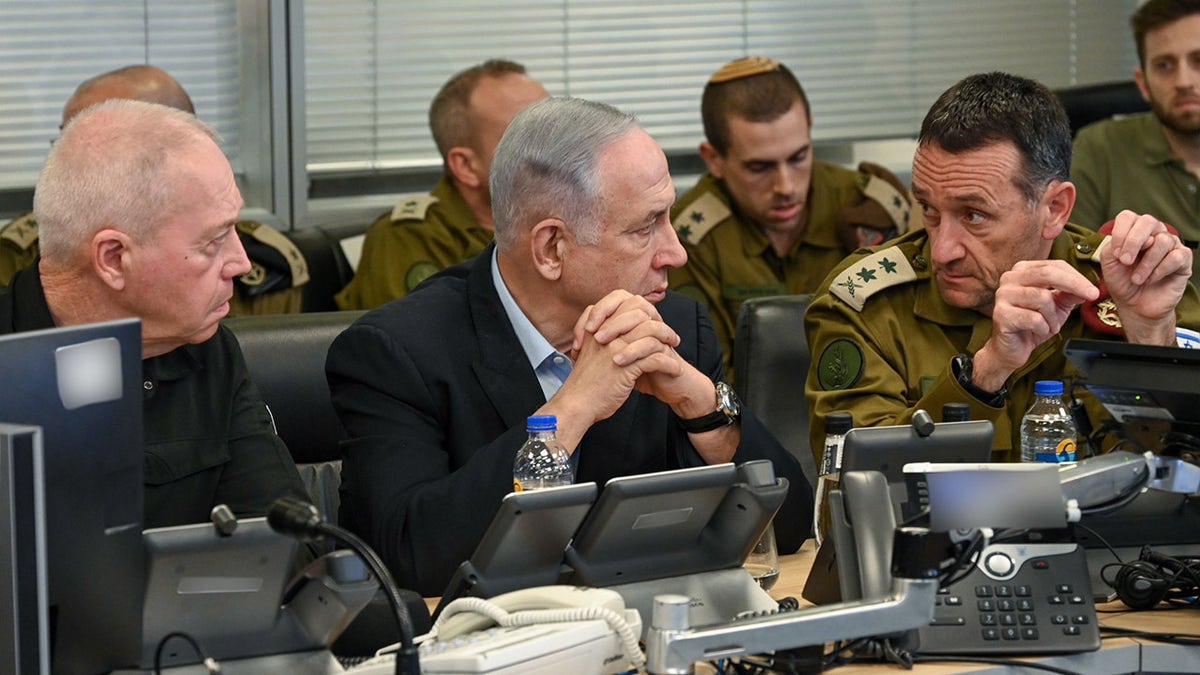
Israeli Prime Minister Benjamin Netanyahu (C), Chief of the General Staff of the Israel Defense Forces Herzi Halevi (R), and Israeli Defense Minister Yoav Gallant (L) follow the attack by Israeli warplanes on Hudaydah Port in Yemen, controlled by the Iran-backed Houthis on the Red Sea coast, from the operations center in Jerusalem on July 20, 2024. (Israeli Prime Minister’s Office/Anadolu)
The vote represented a change from the consensus of three judges who determined last month there was insufficient evidence to prove the allegations against Khan «beyond a reasonable doubt,» according to the New York Times report. The judges based their findings on a United Nations’ investigation done by the Office of Internal Oversight Services (OIOS) turned up more than 5,000 pages of evidence. While the U.N. investigation report determined that Khan had «non-consensual sexual contact» with the employee, the judges’ report found there was no evidence of misconduct.
In a press release, the Association of International Criminal Law Prosecutors (AICLP) noted «structural deficiencies» made clear through the proceedings against Khan.
Among these are an Independent Oversight Mechanism whose processes were «inadequate to the task» when it closed an inquiry into the assault after the alleged victim «declined to file a formal complaint» and claimed she feared retaliation. «The Court cannot credibly prosecute the gravest crimes against persons while tolerating a culture in which its own staff are inadequately protected,» the AICLP argued.
Khan’s alleged retaliation against the staff who supported the complainant further concerned the AICLP. «We observe that the standard for fitness to lead the world’s foremost international criminal prosecution office is not simply the absence of proven misconduct beyond reasonable doubt,» the AICLP wrote. «It also includes the demonstrated capacity to command the trust of the institution’s own staff, and that trust, on the evidence now before the Assembly of States Parties, appears to be deeply and publicly fractured.»
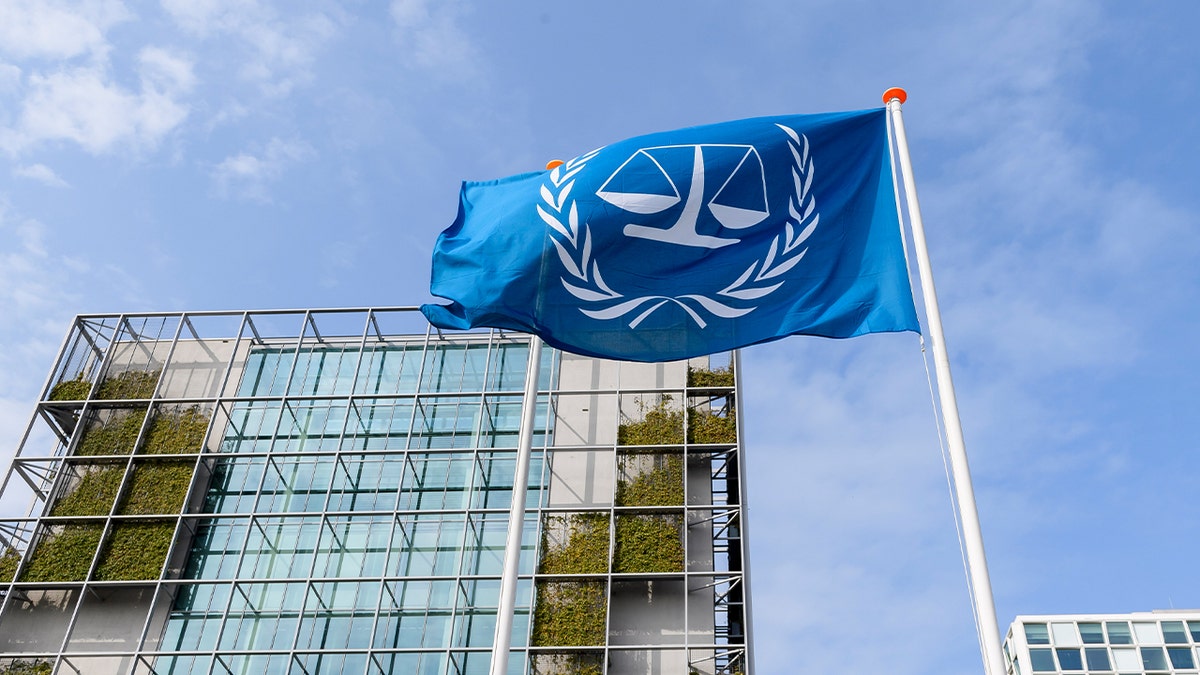
Flag with the logo of the International Criminal Court (ICC) on March 29, 2022, in Den Haag, Netherlands. (Alex Gottschalk/DeFodi Images)
The AICLP believes that «a prompt, principled, and transparent resolution is not only a matter of fairness to the individuals directly involved, but a prerequisite for restoring the operational integrity of an Office on which the cause of international criminal justice depends.»
Prior to the announcement of the Bureau’s decision to pursue disciplinary action against Khan, the ICC directed Fox News Digital to a press release in which the President of the ASP «expresse[d] concern at the recent media reporting concerning the ongoing disciplinary process regarding the Prosecutor of the International Criminal Court.» The ASP President called «for due respect for the privacy and the rights of all parties concerned, as well as the integrity of the ongoing process.»
Peter Gallo, formerly an investigator with the OIOS, told Fox News Digital that «trying to deflect attention away from the facts of the allegation by blaming Israel is an indication of the anti-Israel bias which clearly exists, and which reduces the ICC to a tool of political warfare rather than any kind of court of justice.»
Gallo noted that «the panel of judges appear to be hung up on there being insufficient evidence to meet the ‘beyond all reasonable doubt’ standard,» and questioned why «one particular international civil servant [should] be subjected to a ridiculously high standard of proof when lower ranking staff are not.»
CLICK HERE TO DOWNLOAD THE FOX NEWS APP
The ICC did not respond to follow-up questions about whether investigations into Gallant and Netanyahu will continue should Khan be removed from his post.
The OIOS did not respond to Fox News Digital’s request for comment on its report.
Reuters contributed to this report.
israel, anti semitism, investigations, sanctions, benjamin netanyahu
INTERNACIONAL
Bessent, Powell summon Wall Street CEOs for emergency meeting over Anthropic AI risks amid Pentagon dispute

NEWYou can now listen to Fox News articles!
Treasury Secretary Scott Bessent and Federal Reserve Chair Jerome Powell summoned Wall Street bank heads to Washington, D.C., on Tuesday for a flash meeting to warn them of cybersecurity threats posed by AI giant Anthropic, according to a Thursday night report from Bloomberg.
Bessent and Powell convened the last-minute meeting at Treasury’s D.C. headquarters in order to ensure the banks were ready to guard against risks from Anthropic’s latest model, Claude Mythos Preview, a powerful new AI model that experts warn marks a profound shift in the technology.
Each bank summoned is marked by the Fed as «structurally important» to the global financial system. The attendees included chief executives from Goldman Sachs, Citigroup, Morgan Stanley, Bank of America and Wells Fargo.
Bank of America CEO Brian Moynihan was in attendance, a source with knowledge of his schedule told Fox News Digital. Spokespeople for Goldman Sachs and Wells Fargo declined to comment. Citigroup and Morgan Stanley did not immediately respond to requests for comment.
PENTAGON’S AI BATTLE WILL HELP DECIDE WHO CONTROLS OUR MOST POWERFUL MILITARY TECH
JPMorgan Chase Chairman and CEO Jamie Dimon speaks onstage during day two of the America Business Forum at the Kaseya Center in Miami, Florida, on Nov. 6, 2025. (Alexander Tamargo/Getty Images)
JPMorgan Chase CEO Jamie Dimon was also summoned but was unable to attend, Bloomberg reported, citing sources familiar. JPMorgan, notably, is a member of Anthropic’s «Project Glasswing,» an initiative to use Mythos as a defense against future similar models. JPMorgan did not immediately respond to a request for comment.
Mythos has garnered a swell of intrigue online thanks to Anthropic’s claims that the AI can autonomously identify and exploit software weaknesses.
The company touted Mythos as a «frontier model» that can outperform «all but the most skilled humans at finding and exploiting software vulnerabilities.» It claimed the model has already identified thousands of software flaws previously unknown to their developers, including some that were decades old inside companies widely considered to be security strongholds.
«This could make cyberattacks of all kinds much more frequent and destructive, and empower adversaries of the United States and its allies,» Anthropic wrote in a blog post. «Addressing these issues is therefore an important security priority for democratic states.»
ANTHROPIC’S DEMOCRATIC TIES UNDER FIRE AS TRUMP ADMIN SEVERS PENTAGON CONTRACTS
In light of the security risks, a source close to Anthropic told Fox News Digital that the company has briefed senior U.S. government officials about Mythos, though did not specify which agencies.
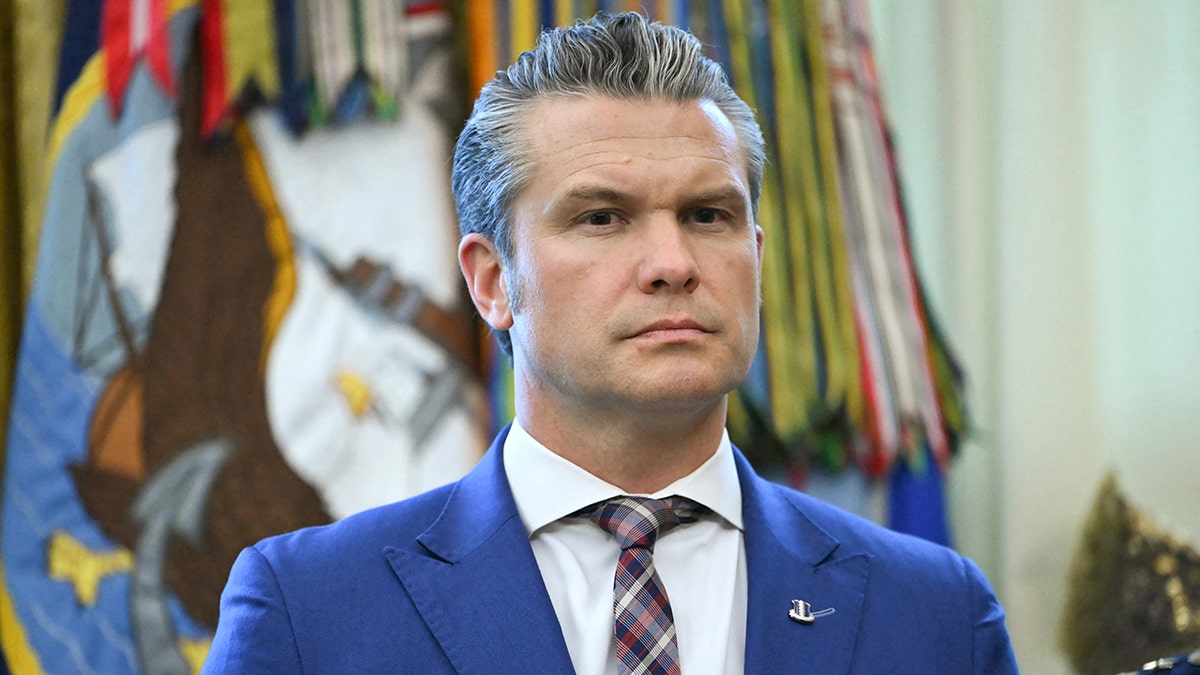
Secretary of War Pete Hegseth attends a Mexican Border Defense Medal presentation in the Oval Office of the White House in Washington, DC, on December 15, 2025. ( (Andrew Caballero-Reynolds/AFP)
The increasingly relevant AI titan was once a core partner of the U.S. military, securing a $200 million contract with the Pentagon in July 2025.
However, the partnership split open in February after the company drew redlines against the War Department using its technology for autonomous weapons and domestic surveillance. After issuing the company an ultimatum, Secretary of War Pete Hegseth designated Anthropic as a supply chain risk, barring federal contractors from using its products.

Dario Amodei, co-founder and chief executive officer of Anthropic, during the company’s Builder Summit in Bengaluru, India, on Monday, Feb. 16, 2026. (Samyukta Lakshmi/Bloomberg)
Anthropic sought to appeal that designation, but a federal appeals court rejected their plea Wednesday.
When asked to comment on the Treasury’s Tuesday meeting, the Department of War referred Fox News Digital to a statement in support of the Wednesday ruling from Acting Attorney General Todd Blanche.
CLICK HERE TO DOWNLOAD THE FOX NEWS APP
«Today’s D.C. Circuit stay allowing the government to designate Anthropic as a supply chain risk is a resounding victory for military readiness,» Blanche posted on X Wednesday. «Our position has been clear from the start — our military needs full access to Anthropic’s models if its technology is integrated into our sensitive systems. Military authority and operational control belong to the Commander-in-Chief and Department of War, not a tech company.»
The Department of Treasury and the Federal Reserve Board did not immediately return requests for comment.
scott bessent, pete hegseth, pentagon, federal reserve

Tensión en la Corte: Rosentrantz y Lorenzetti convocan a consejeros para aprobar su reforma a la selección de jueces

Patricia Bullrich habló sobre las denuncias que pesan sobre Manuel Adorni: pidió respetar “el principio de inocencia”

“La gente está agotada y ansiosa”: así se vive en Irán después del alto el fuego y ante el diálogo con EE.UU.

Bruselas acusa a Pornhub y otras tres plataformas de incumplir la ley “al permitir que los menores” consuman contenido pornográfico
EN VIVO – El PEOR ERROR para GANAR DINERO SIN TRABAJAR al invertir en FIBRAs Por Investing.com

Ramón Díaz reapareció en el estadio de Platense: del contundente apoyo a Coudet a una frase alentadora sobre su futuro

Mario Kart Tour avanza su siguiente temporada de primavera con ciudades europeas – Nintenderos

Melania Trump’s forceful Epstein denial draws bipartisan support from lawmakers

Un gobernador presentó un amparo contra la reforma de la Ley de Glaciares y pidió suspender su aplicación

Trump blasts Biden admin for releasing illegal immigrant now charged in fatal hammer attack on Florida mother
-
 SOCIEDAD14 horas ago
Mario Kart Tour avanza su siguiente temporada de primavera con ciudades europeas – Nintenderos
-
 INTERNACIONAL14 horas ago
Melania Trump’s forceful Epstein denial draws bipartisan support from lawmakers
-
 POLITICA13 horas ago
Un gobernador presentó un amparo contra la reforma de la Ley de Glaciares y pidió suspender su aplicación