INTERNACIONAL
Gulf shipping operations grind to halt near Iran; US quietly prepares for possible strike: ‘Heightened risk’

NEWYou can now listen to Fox News articles!
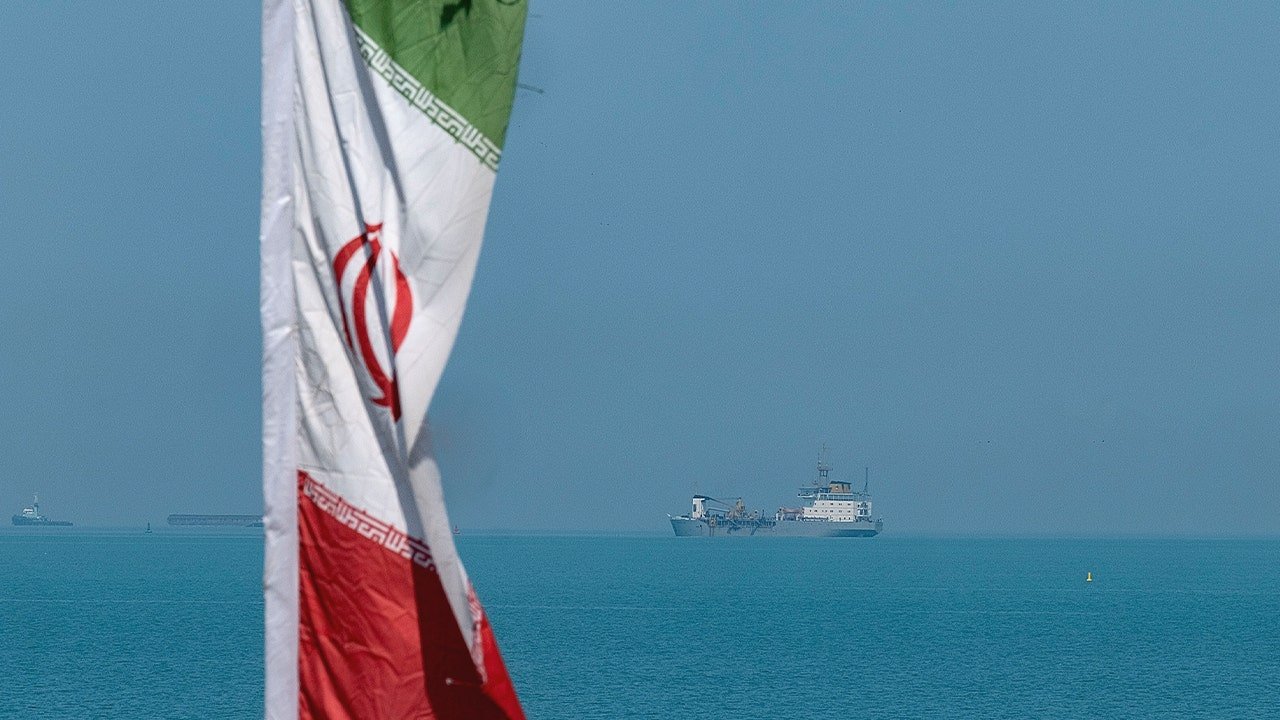
Shipping in the Persian Gulf dipped sharply Wednesday as tensions with Iran intensified amid signs the U.S. was positioning military forces for a potential strike, according to maritime intelligence assessments.
The U.S. Navy’s USS Abraham Lincoln Carrier Strike Group entered the U.S. Central Command area of responsibility Monday, a U.S. official confirmed to Fox News Digital, as President Donald Trump continued to keep military options on the table.
«At this stage, it remains ambiguous, and probably intentionally ambiguous, what the objectives and desired outcomes are of any U.S. military action,» Ambrey Intelligence’s Robert Peters told Fox News Digital.
«This means that there are a wider range of possibilities and retaliatory scenarios under consideration.
TRUMP ANNOUNCES ‘FINAL’ 25% TARIFF ON COUNTRIES DOING BUSINESS WITH IRAN REGIME
Persian Gulf tanker and cargo shipping dips as Trump positions military against Iran. (Morteza Nikoubazl/NurPhoto via Getty Images)
«That said, there are five U.S.-flagged merchant vessels, tankers and cargo ships in the Gulf today — two transited the Strait of Hormuz earlier without any apparent issues — but those already in the Gulf and destined for the U.S. are at heightened risk,» he added.
Trump, who earlier this week indicated «numerous» calls were received from Iran, also posted about the situation on Truth Social Wednesday morning.
«A massive Armada is heading to Iran. It is moving quickly, with great power, enthusiasm, and purpose. It is a larger fleet, headed by the great Aircraft Carrier Abraham Lincoln, than that sent to Venezuela,» he wrote.
IRAN POSES A FAR MORE DANGEROUS MILITARY TEST FOR THE US THAN VENEZUELA, EXPERTS WARN
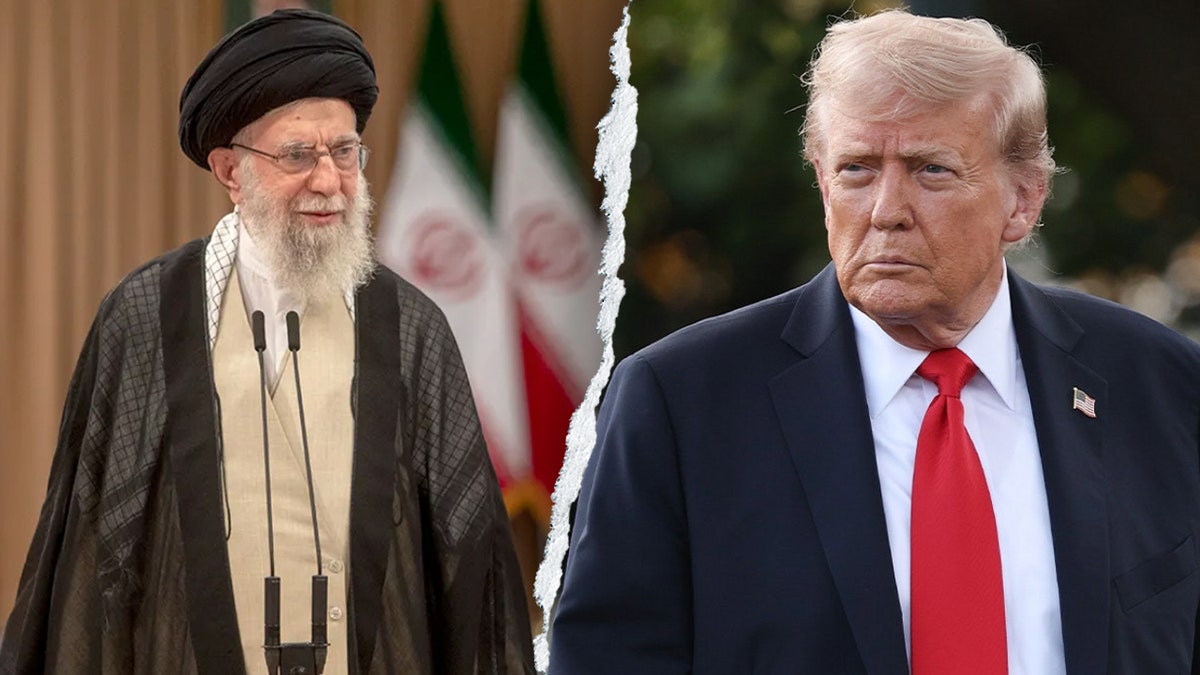
Iranian Supreme Leader Ayatollah Ali Khamenei says any action by the U.S. will be met with retaliation. (Getty Images)
«Like with Venezuela, it is ready, willing, and able to rapidly fulfill its mission, with speed and violence, if necessary. Hopefully Iran will quickly ‘Come to the Table’ and negotiate a fair and equitable deal — NO NUCLEAR WEAPONS — one that is good for all parties. Time is running out, it is truly of the essence! As I told Iran once before, MAKE A DEAL!»
The post came as the Human Rights Activists News Agency (HRANA) reported the death toll from nationwide protests in Iran has surpassed 6,200 since the outset Dec. 28.
The organization said nearly 17,100 more were under investigation with «a continuation of both scattered and mass arrests» as internet restrictions continue.
TRUMP THREATENS IRAN WITH CRUSHING RESPONSE AS TEHRAN DENIES HALTING PROTEST EXECUTIONS
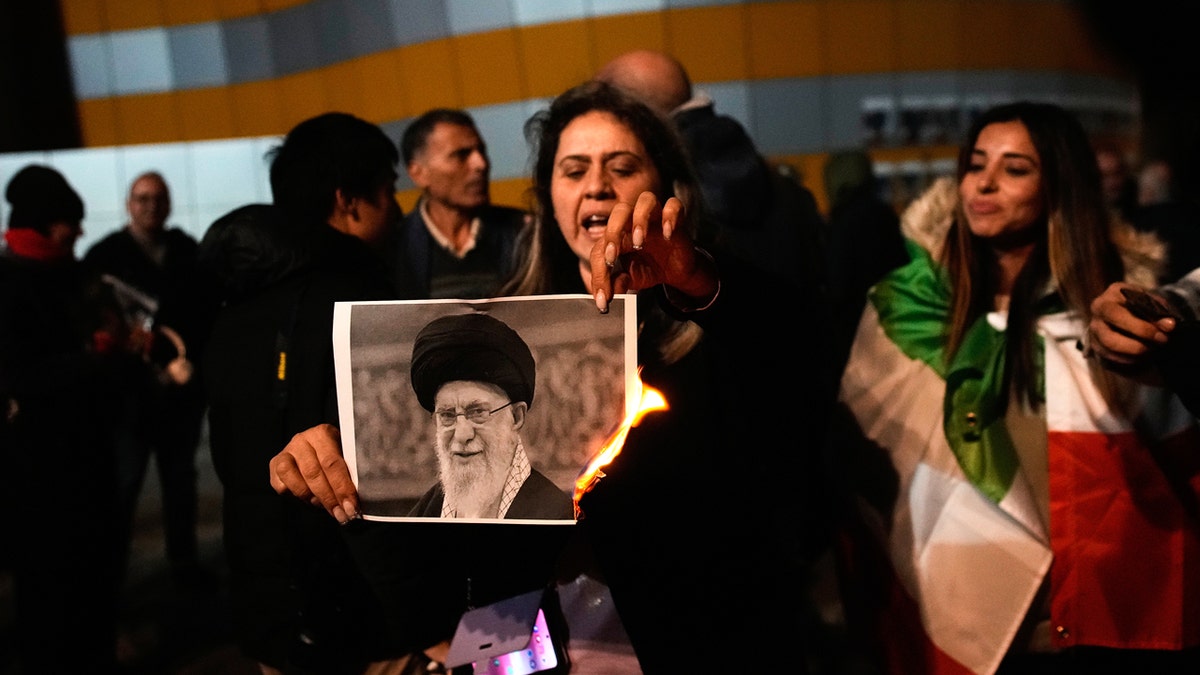
Demonstrators burn a poster depicting Iran’s Supreme Leader Ayatollah Ali Khamenei during a rally in support of anti-government protests in Iran Jan. 14., in Holon, Israel. (AP Photo/Ohad Zwigenberg)
Peters meanwhile, claimed that «shipping companies have been advised to reduce aggregate risk when operating in the Arabian/Persian Gulf.
«This means limiting the number of ships that could be exposed to retaliatory action, and sometimes ships will await further instructions closer to their next port in the Gulf,» he said. «At this point, it is more appropriate to wait further away in case of an escalation.»
Ali Shamkhani, an advisor to Iran’s Supreme Leader Ali Khamenei, warned Wednesday that any military action by the U.S. from any origin and at any level «will be regarded as the start of a war, and the response will be immediate, all-out, and unprecedented, targeting the heart of Tel Aviv and all those who support the aggressor,» according to Iran International.
IRAN STRIKES COULD SIGNAL LIMITS OF BEIJING, MOSCOW’S POWER AS US FLEXES STRENGTH
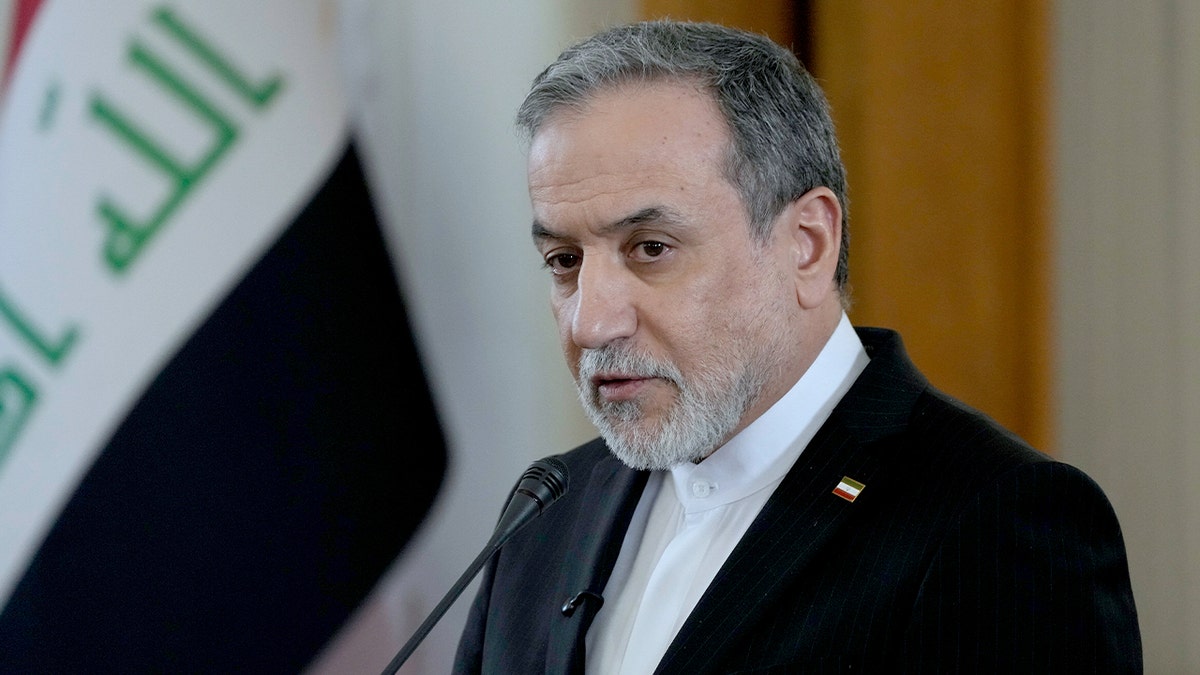
Iranian Foreign Minister Abbas Araghchi speaks during a news briefing Jan. 18, in Tehran, Iran. (Vahid Salemi/AP)
«Our brave Armed Forces are prepared — with their fingers on the trigger — to immediately and powerfully respond to ANY aggression against our beloved land, air, and sea,» Iran’s Foreign Minister Abbas Araghchi said in a post on X.
With tensions rising in the region, Peters described how shipowners may be approached by cargo charterers to load cargo in the Gulf.
«Then they will make the decision to avoid the Gulf for the time being until the tensions reduce,» Peters added. «Interestingly, last year the Iranians did not take retaliatory action in the maritime sphere. Israeli shipping was already avoiding the Gulf, and the U.S. military action was highly targeted at the nuclear capabilities.»
CLICK HERE TO DOWNLOAD THE FOX NEWS APP
But Peters warned that the situation «may see something similar again. If there is a much broader, regime-destabilizing operation, the effects could be considerable for wider shipping.
«During periods like this, we tend to see greater risk aversion and inquiries from those asked to pick up cargo for U.S. charterers and destined for the U.S.,» he added.
defense,iran,ali khamenei,us navy,middle east,donald trump,world









INTERNACIONAL
¿Hasta dónde pueden llegar las amenazas cruzadas entre Estados Unidos e Irán?: los expertos advierten sobre el peor escenario
NEWYou can now listen to Fox News articles!
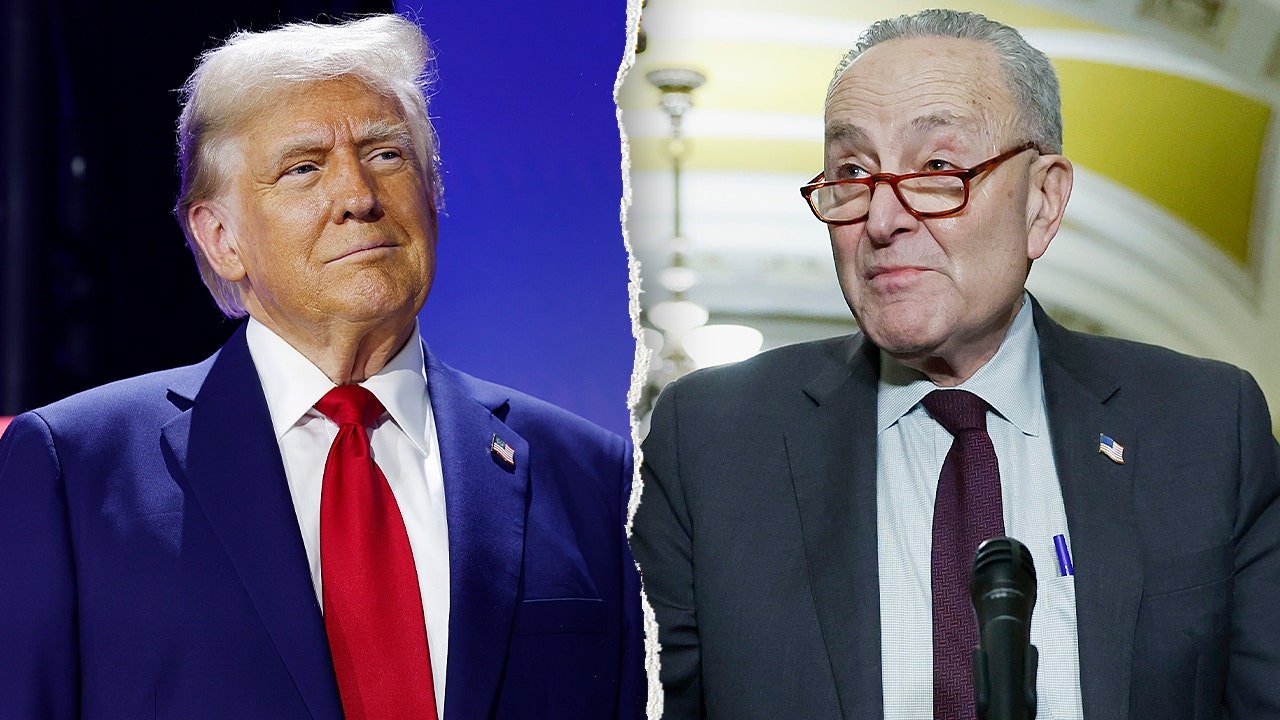
Senate Minority Leader Chuck Schumer, D-N.Y., condemned President Donald Trump’s plan to deploy U.S. Immigration and Customs Enforcement (ICE) agents to U.S. airports on Sunday.
Schumer made the comments while speaking on the Senate floor Sunday, saying Trump’s decision is «impulsive» and could make the situation at airports worse.
«Today, Donald Trump and [Tom] Homan are saying they will deploy ICE agents to airports starting on Monday. This is really disturbing. ICE agents who are untrained and have caused problems everywhere they’ve gone lurking at our airports. That’s asking for trouble, and it will certainly make the chaos at the airports even worse,» Schumer said.
«No one has any faith in ICE agents. They haven’t received training. They don’t know what it is to be a TSA person and do what you need to do,» he continued. «And the real problem here is they have no plan for using these ICE agents. Trump says, send them there. They send them there. And Homan says they’re still drawing up plans with less than a day’s notice. What is this? We know what it is. It’s another impulsive action by Donald Trump.»
SCHUMER GAMBIT FAILS AS DHS SHUTDOWN HITS 36 DAYS AND AIRPORT LINES GROW
President Donald Trump and Senate Minority Leader Chuck Schumer are clashing over funding plans for the DHS. (Anna Moneymaker/Getty Images; Kevin Dietsch/Getty Images)
«Some idea pops into his head and he announces it. And then the people working for him, a few of whom do have some degree of talent and ability. Not many underlings. They have to rush to try and implement what they know is an idiotic plan,» he said.
The ICE deployment is Trump’s latest move in the battle with Democrats over funding for the Department of Homeland Security.
Schumer also used his time on the Senate floor Sunday to criticize Trump’s actions in Iran.
«Donald Trump said, ‘you know, I may have a plan or I may not for a war,’» Schumer said. «There’s people’s lives are at stake. Billions are being spent on an almost daily basis. And he says, you know, ‘I may have a plan or I may not.’ These are the words of the commander in chief in the middle of a war involving one of the most dangerous regimes on Earth. ‘I have a plan, or I may not.’»
«That’s unhinged and dangerous. Lives are on the line. The president says he may not even have a plan. Tens of billions are being wasted. No plan. Troops being killed and injured, no plan. Civilians being killed and injured. No plan. Gasoline costs $3.94 a gallon on average. And Trump, ‘I have no plan’,» Schumer said.
Meanwhile, Schumer and his allies have refused to approve DHS funding without reforms to immigration enforcement.
TSA agents across the country have gone more than a month without a paycheck, with no clear end in sight.

Travelers wait in line at a TSA checkpoint at William P. Hobby Airport in Houston, Texas, on March 9, 2026. (Mark Felix/Bloomberg via Getty Images)
Trump first threatened to deploy ICE to airports on Saturday, demanding that Democrats «immediately sign an agreement» to fund DHS.
DHS SHUTDOWN TRIGGERS TSA ‘EMERGENCY MEASURES’ AS LAWMAKER WARNS AIRPORTS COULD FEEL ECONOMIC PAIN
Airports across the country have reported huge numbers of employees calling out sick or not showing up for work. More than 400 TSA employees have quit their jobs.
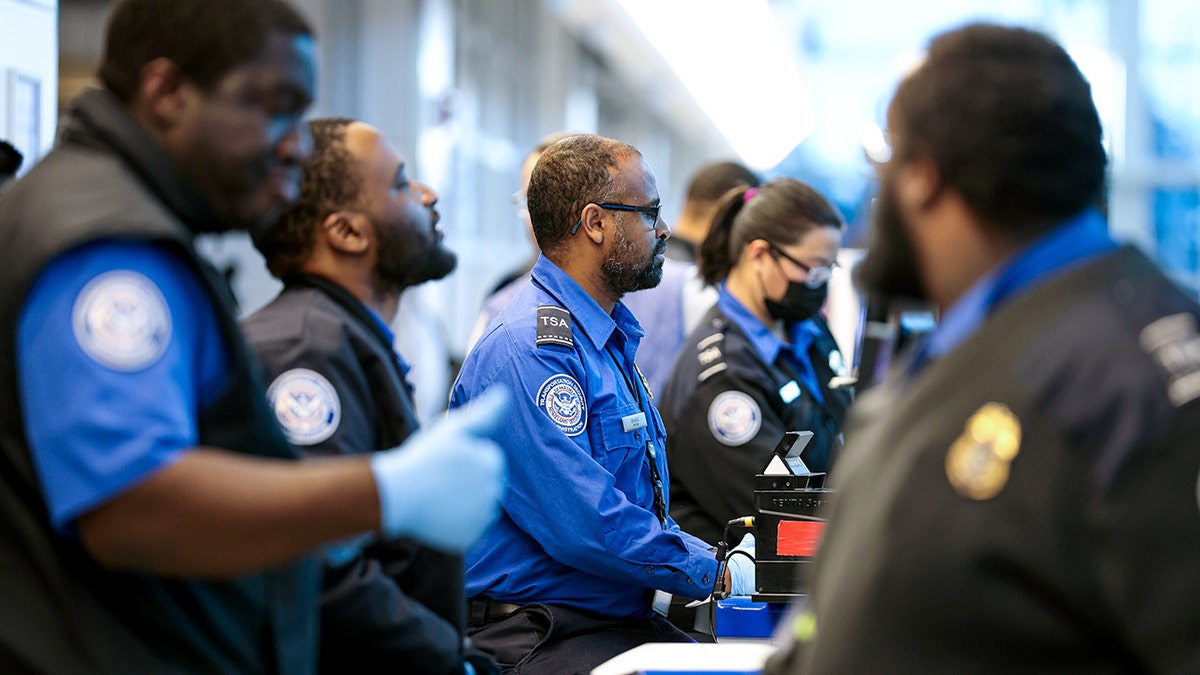
TSA Agents scan luggage at Ronald Reagan Washington National Airport in Arlington, Virginia. (Valerie Plesch/Getty Images)
«On Monday, ICE will be going to airports to help our wonderful TSA Agents who have stayed on the job despite the fact that the Radical Left Democrats, who are only focused on protecting hard-line criminals who have entered our Country illegally, are endangering the USA by holding back the money that was long ago agreed to with signed and sealed contracts, and all,» Trump wrote Sunday on Truth Social.
CLICK HERE TO DOWNLOAD THE FOX NEWS APP
Trump also predicted blowback from Democrats, saying they would complain «no matter how great a job ICE does.»
chuck schumer,donald trump,politics,travel
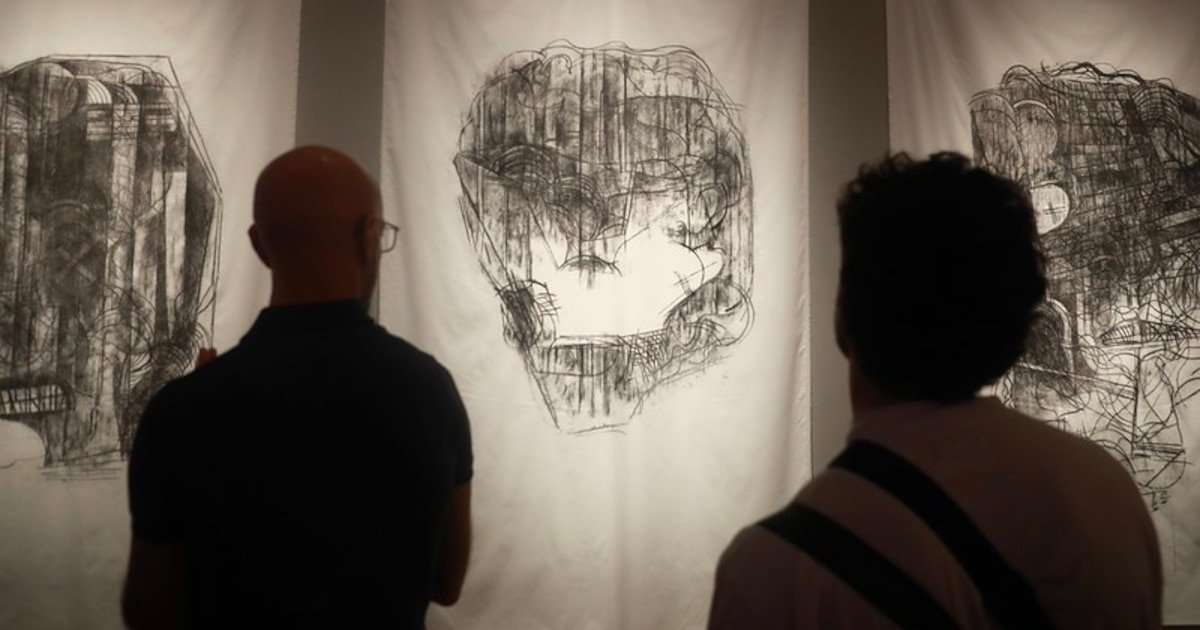
Eugenio Dittborn, figura central del arte contemporáneo en Chile, presenta por primera vez en la Argentina una muestra individual que reúne obras de distintas etapas de su carrera y expone su particular abordaje conceptual sobre la representación y circulación de las imágenes.
A diferencia de muestras retrospectivas convencionales, Historias del rostro, en el Museo Nacional de Bellas Artes, con curaduría de Justo Pastor Mellado, presenta solo dos piezas principales y un conjunto de documentos históricos fundamentales dentro del recorrido del artista. Este enfoque, según detalló Mellado, busca demostrar “la potencia conceptual del universo creativo” de Dittborn, utilizando recursos mínimos pero de gran densidad visual y simbólica.
La obra destacada de esta exposición, según Mellado, es “XXII Historia del rostro”, una pintura aeropostal realizada en 1998 que condensa veinte retratos impresos, conformando lo que el curador describe como “una pequeña enciclopedia de la representación del rostro”.

En la pieza convergen dibujos infantiles, caricaturas, retratos hablados, imágenes de personas con afecciones mentales, fichas de identificación policial y fotografías de pobladores originarios tomadas de un álbum etnográfico.
Esta obra, además de su contenido visual, integra el procedimiento singular que distingue al artista desde los años ochenta: la pintura se pliega, se envía en un sobre a diferentes destinos internacionales y se exhibe junto con su envoltura, cuestionando los sistemas tradicionales de circulación y legitimación de las obras de arte.
Las pinturas aeropostales constituyen una estrategia desarrollada por Dittborn a inicios de la década de 1980. A través de este formato, el artista no solo introduce métodos de experimentación gráfica y crítica visual, sino que también propone un sistema alternativo de circulación que desafía la noción de obra única y su permanencia física en el espacio expositivo. Cada pintura, compuesta por iconografías e inscripciones heterogéneas, es doblada y enviada físicamente a distintos países, donde se despliega temporalmente junto al sobre que la contiene.

La otra producción principal de la muestra, creada en 2022, es “Todas las caras del rostro”, que reúne diez dibujos en carboncillo sobre sudarios. Mellado describe que estos rostros aparecen “con sus cuencas vacías, mostrándonos con descaro sus dientes apretados, sus cráneos pelados o adornados con rizos, sus narices puntiagudas dispuestas sobre patrones de damero vistos en escorzo, combinando tramas que delatan la textura de la tela”. De este modo, la obra dialoga directamente con los materiales y gestos gráficos constitutivos de la trayectoria de Dittborn.
El recorrido de la exposición se completa con dos publicaciones producidas por Eugenio Dittborn entre 1976 y 1979, que según el director del Bellas Artes, Andrés Duprat, “se convirtieron en acontecimientos de la historia editorial y visual chilena”. Para Duprat, el gran mérito de la curaduría radica en que, mediante una selección precisa y acotada, se “logra reactualizar la escena de origen del artista, y subraya la persistencia de la línea como principio organizador de su práctica”.

Eugenio Dittborn nació en Santiago de Chile en 1943 y cuenta con obras en instituciones internacionales de relevancia. Esta exposición en el Museo Nacional de Bellas Artes, que cuenta con el apoyo del Centro Cultural Matta de la Embajada de Chile, constituye la primera oportunidad de observar de cerca algunos de los núcleos conceptuales y formales de su producción, a partir de piezas que exploran tanto la representación del rostro como los circuitos que permiten a la imagen persistir y desplazarse en el tiempo y el espacio.
*“Eugenio Dittborn. Historias del rostro” podrá visitarse hasta el 31 de mayo en la sala 33 del primer piso del Museo, de martes a viernes, de 11 a 19.30 (último ingreso), y los sábados y domingos, de 10 a 19.30.
Bellas Artes,Eugenio Dittborn

¿Hasta dónde pueden llegar las amenazas cruzadas entre Estados Unidos e Irán?: los expertos advierten sobre el peor escenario

Nicolás Massot: “Estamos en un gobierno lleno de amorales que creen que el voto a sus ideas avala cualquier cosa”

Bartolomé Abdala descartó una interpelación en el Congreso a Karina Milei y Manuel Adorni: “Tiran piedras a la luna”

Cumplió 100 años: el colegio de la zona norte que tiene un castillo y familias de hasta cuatro generaciones de alumnos

Banco Macro adquirió el 50% de Banco Sáenz para profundizar su estrategia digital junto a Personal Pay

La patada por la que Tagliafico fue expulsado por segunda vez consecutiva en el Olympique de Lyon

Senado: la oposición pidió explicaciones por $LIBRA y los vuelos de Adorni y Bullrich defendió al Gobierno

Kicillof desembarcó en CABA, lanzó su proyecto 2027 y empezará a ampliar su armado político en todo el país

¿DÓNDE ESTÁ ESMERALDA? El grito de una madre que sacude a la Argentina: «Me la arrebataron de la puerta»

¿MACRI 2027? El «operativo retorno» que sacude al PRO y los nombres que suenan para la vicepresidencia

 POLITICA3 días ago
Kicillof desembarcó en CABA, lanzó su proyecto 2027 y empezará a ampliar su armado político en todo el país
- POLITICA3 días ago
¿MACRI 2027? El «operativo retorno» que sacude al PRO y los nombres que suenan para la vicepresidencia
- POLITICA2 días ago
¿FIN DE CICLO? Escándalo por la mansión no declarada y viajes de lujo empujan a Manuel Adorni fuera del Gobierno: Su salida sería inminente