INTERNACIONAL
¿Hasta dónde pueden llegar las amenazas cruzadas entre Estados Unidos e Irán?: los expertos advierten sobre el peor escenario



INTERNACIONAL
El partido del canciller alemán Merz se perfila ganador de las elecciones regionales en Renania-Palatinado

La Unión Cristianodemócrata del canciller Friedrich Merz ganó este domingo las elecciones en Renania-Palatinado, estado federado del suroeste alemán que el Partido Socialdemócrata gobernó sin interrupción durante 35 años, mientras la ultraderechista Alternativa para Alemania duplicó su resultado de 2021 y se afianzó como tercera fuerza, según los sondeos a pie de urna.
De acuerdo con las primeras proyecciones de las cadenas públicas ZDF y ARD, los conservadores obtuvieron alrededor del 30,5% de los votos, seguidos de los socialdemócratas con entre 26,5% y 27%, la Alternativa para Alemania con el 20% y Los Verdes con entre 7,5% y 8,5%. Si se confirman estas cifras, la formación ultranacionalista habría pasado del 8,3% que logró hace cinco años a rozar el 20%, un salto histórico para una región occidental que nunca había registrado resultados tan elevados de la extrema derecha.
La victoria conservadora representa un alivio para Merz en un momento de presión acumulada. Dos semanas antes, su partido perdió la disputa por el primer puesto en Baden-Wurtemberg frente a Los Verdes, que obtuvieron el 30,2% ante el 29,7% de los democristianos. En ese estado, los socialdemócratas se desplomaron al 5,5%, su peor resultado histórico en unas elecciones regionales desde 1945. Según el barómetro ARD-DeutschlandTrend, apenas el 18% de los alemanes valora positivamente la gestión del gobierno Merz, mientras que el 79% la rechaza.

En Renania-Palatinado, la elección enfrentó al ministro-presidente en funciones, el socialdemócrata Alexander Schweitzer, y al candidato conservador Gordon Schnieder, de 50 años. Los sondeos le daban a Schweitzer una ventaja considerable en imagen: 41% de apoyo frente al 23% de Schnieder, según el Politbarometer de ZDF. Schweitzer asumió el cargo en julio de 2024 tras la renuncia por motivos de salud de Malu Dreyer, e intentó capitalizar esa popularidad personal frente a un rival de menor reconocimiento público. Sin embargo, los conservadores retuvieron una ventaja estructural al ser percibidos como más competentes en economía y seguridad, los dos temas prioritarios para el electorado regional.
La región es conocida por su tradición vinícola —concentra el 63% de los viñedos de Alemania— y es sede de importantes empresas como el gigante químico BASF, con la industria representando alrededor del 25% del valor añadido. Durante la campaña, los ejes centrales del debate fueron la política educativa, la infraestructura y la inmigración. Ambos partidos descartaron cualquier forma de cooperación con la Alternativa para Alemania, lo que en la práctica convierte la formación de gobierno en un asunto bilateral entre conservadores y socialdemócratas, con independencia de quién encabece la coalición.
Algunos expertos atribuyen el auge ultraderechista a que el partido logró canalizar el descontento de un electorado que se siente en situación de precariedad económica. En los comicios de 2021 la Alternativa para Alemania obtuvo el 8,3% en este estado; su instalación en torno al 20% en las encuestas de 2026 refleja un proceso de normalización del voto extremo también en los estados occidentales, históricamente más resistentes a ese fenómeno que los del este del país.

El resultado de Renania-Palatinado tiene implicaciones que van más allá de sus fronteras. El Partido Socialdemócrata, socio menor del gobierno Merz en Berlín bajo la figura del vicecanciller Lars Klingbeil, acumula una cadena de golpes electorales regionales que debilitan su posición dentro de la coalición. A nivel federal, el partido recibió apenas el 16% en las elecciones legislativas de febrero de 2025. En las regionales previstas para septiembre en Mecklemburgo-Pomerania Occidental y otras regiones del este, la Alternativa para Alemania parte como favorita o segunda fuerza, lo que podría agudizar la fragmentación del sistema político alemán y estrechar aún más el margen de los partidos establecidos para construir mayorías viables.
Europe,Government / Politics
INTERNACIONAL
Newsom’s claim Texas and Florida are the ‘real high tax states’ picked apart by expert: ‘Fatally flawed’

NEWYou can now listen to Fox News articles!
California Gov. Gavin Newsom’s repeated claims in recent weeks promoting his state as more tax-friendly than Florida and Texas don’t add up, according to an expert who ran the numbers.
«Texas and Florida are the REAL high-tax states,» Newsom recently posted on X, explaining onstage at SXSW in Austin, Texas that California has the most «progressive tax rates in America» while taking shots at the tax burden in Florida and Texas.
«Your middle class pays more taxes in Texas than our middle class in California,» Newsom said in Texas. «It’s a great mythology, it’s just ‘the richest of the rich come here because they can avoid paying a damn penny.’»
The comments drew pushback from conservatives on social media, including Florida Gov. Ron DeSantis, and from Just Facts President James Agresti, who says he looked into a «number of different angles» to determine the «validity» of Newsom’s claims.
FROM ‘JUMP ON A BUS’ TO TAX CRACKDOWNS: BLUE STATES CHASE WEALTHY RESIDENTS FLEEING TO RED HAVENS
California Gov. Gavin Newsom during a bill signing event on Aug. 21, 2025, in Sacramento. (Justin Sullivan/Getty Images)
«I looked at how much is each state taxing each of its citizens on average? So if you look at California, they collect about $10,000 a year in taxes for every person in the state, whereas the figures for Texas and Florida are only about $5,000, or about half as much,» Agresti told Fox News Digital.
«However, California is a higher-income state, so I also looked at it as a percentage of the states’ economies and what I found is that California taxes about 14% of its economy, as opposed to 9% for Texas and Florida.»
Just Facts broke those taxes down in a recent study and found that California imposes some of the highest taxes in the nation, with a top personal income tax rate of 13.3%, while both Texas and Florida have no state income tax.
Property taxes in California account for about 2.8% of personal income, slightly lower than Texas at 3.6% and close to Florida’s 2.6%, though measured as a share of home values, California’s rates are generally lower than both states, but in other tax areas, California is largely more burdensome.
The state’s unemployment insurance tax rate matches Texas at 6.2%, but is higher than Florida’s 5.4%. California also has a higher statewide sales tax at 7.2%, compared to 6.2% in Texas and 6.0% in Florida. Drivers in California face significantly higher gas taxes as well, paying 70.9 cents per gallon, more than triple Texas’ 20 cents and well above Florida’s 40.3 cents.
PROPOSED CALIFORNIA WEALTH TAX DRIVES BILLIONAIRE EXODUS TO FLORIDA REAL ESTATE, LOCALS CONFIRM
A Wallethub 2025 analysis ranking U.S. states by overall tax burden showed California coming in at 4th overall, behind Vermont, New York and Hawaii. On a per-capita basis, California also collects significantly more in state and local taxes than either state, according to data from the Tax Foundation.
At the heart of the issue is the data, Agresti says, making the case that Newsom is likely pulling from the Institute On Taxation & Economic Policy (ITEP) which Agresti said is widely used by mainstream news outlets and experts but is «fatally flawed» because «it does not account for all forms of income or all taxes.»
Agresti has been speaking out against ITEP’s methodology for over a decade, explaining in a 2015 post that the group «uses a partial measure of income in virtually all of its studies» and is «based on calculations that exclude certain taxes.»
CALIFORNIA BILLIONAIRES FLEE STATE’S WEALTH TAX IN THE MOST-PREDICTABLE RESULT EVER
ITEP’s analysis focuses on how tax burdens are distributed across income groups rather than overall tax levels. The group argues that states such as Texas and Florida look «low tax» largely because they do not levy a broad-based personal income tax, a structure that disproportionately benefits high earners.
To make up the difference, those states rely more heavily on sales, excise and property taxes, which tend to take a larger share of income from lower-income households. California, by contrast, uses a highly progressive income tax system that places more of the burden on top earners and helps offset regressive taxes lower down the income ladder.
Critics, however, say that framing captures only part of the picture because it focuses on tax burden by income group rather than overall tax climate, where California remains far more burdensome for top earners, investors and many businesses.
«It’s information from this group and others like it, by the way, that have misled people to believe that middle-income folks in the United States pay a higher federal tax rate than upper-income folks,» Agresti said.
«In fact, a survey done by Just Facts found that about 80% of America’s voters believe this fiction, even though the Congressional Budget Office, the U.S. Treasury, and the center-left Tax Policy Center all say that middle-income Americans pay an average effective federal tax rate of about 15% while upper income, or the top 1%, pay a rate of about 30%. And by the way, that includes all taxes and all income, all tax loopholes, it’s basically all taxes paid divided by all income earned or received.»
Fox News Digital reached out to ITEP for comment.
Agresti said Newsom is a «master of twisting statistics to paint a picture that is the exact inverse of reality» and pointed to the governor’s claim that the exodus of residents due to high taxes is a «myth.»
«Here’s the facts: According to his own Secretary of State, every year of Newsom’s governorship, more people have moved out of California into other states than have moved from other states into California,» Agresti, who has posted the data on his website, said. «In fact, over the time of his governorship, about 1.5 more million people have left California than moved in.»
«So how does Newsom get his claim, his evidence? Well, he looks at total population growth, which is dominated by immigrants moving in from other countries. The issue is not whether people would rather live in California than Mexico, but whether they would rather live in California than other states. And the data clearly show they do not.»
CLICK HERE TO DOWNLOAD THE FOX NEWS APP
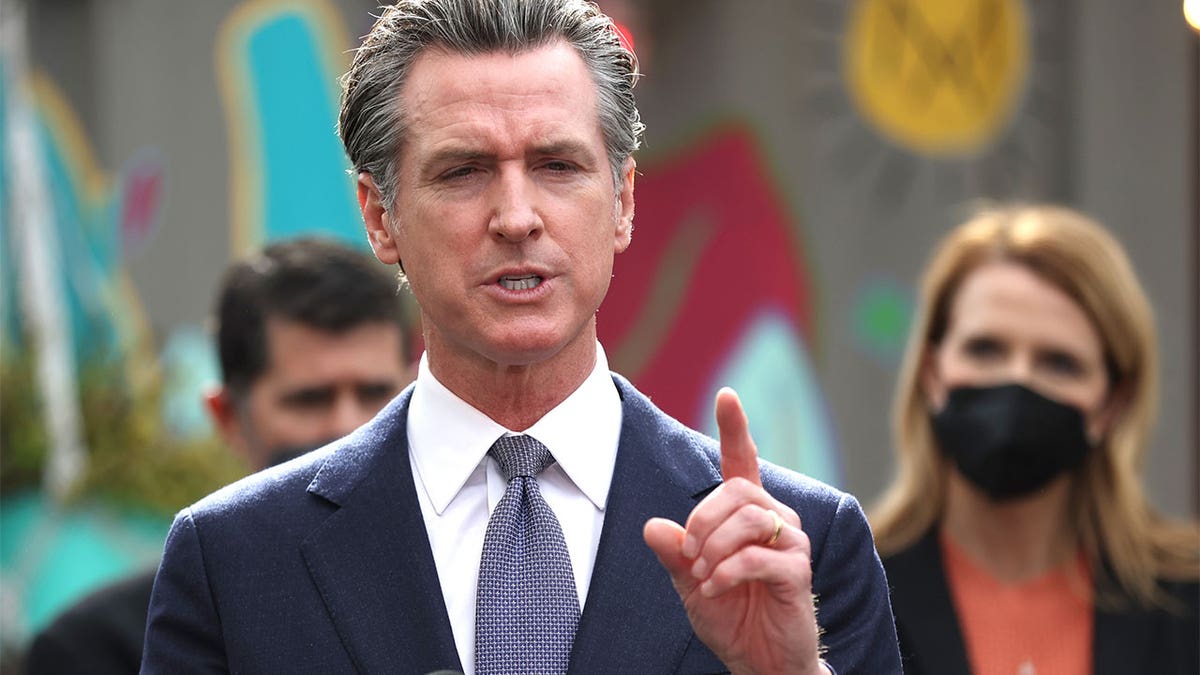
Democratic California Gov. Gavin Newsom (Justin Sullivan/Getty Images)
Newsom has also been touting data showing California now has the fourth-largest economy in the world, just surpassing Japan’s, which Agresti also took issue with and described as «fiction» according to his examination of the numbers.
«Here’s the fatal flaw in what he’s doing there,» Agresti said. «He is converting Japanese yen into U.S. dollars using a highly deceptive measure called foreign currency exchange rates. Scholars in this field warn explicitly: You are not to convert GDPs using exchange rates because it inflates the relative sizes of economies that have high prices, as California does. When you actually look at the proper way to transfer these exchange rates and account for them, Japan’s GDP is 56% larger than California’s.»
Additionally, Agresti pointed to data that shows California has a greater rate of poverty than any other state in the nation, as well as electricity prices that are more than twice the national average.
«When you look at California as a whole, it is one of the highest-tax states in the nation, and also there’s a lot of fallout from Newsom’s policies that make it one of the most expensive places to live in the entire United States,» Agresti said.
Fox News Digital reached out to Newsom’s office for comment.
Fox News Digital’s Bradford Betz contributed to this report.
politics,taxes,gavin newsom,california
NEWYou can now listen to Fox News articles!
Senate Minority Leader Chuck Schumer, D-N.Y., condemned President Donald Trump’s plan to deploy U.S. Immigration and Customs Enforcement (ICE) agents to U.S. airports on Sunday.
Schumer made the comments while speaking on the Senate floor Sunday, saying Trump’s decision is «impulsive» and could make the situation at airports worse.
«Today, Donald Trump and [Tom] Homan are saying they will deploy ICE agents to airports starting on Monday. This is really disturbing. ICE agents who are untrained and have caused problems everywhere they’ve gone lurking at our airports. That’s asking for trouble, and it will certainly make the chaos at the airports even worse,» Schumer said.
«No one has any faith in ICE agents. They haven’t received training. They don’t know what it is to be a TSA person and do what you need to do,» he continued. «And the real problem here is they have no plan for using these ICE agents. Trump says, send them there. They send them there. And Homan says they’re still drawing up plans with less than a day’s notice. What is this? We know what it is. It’s another impulsive action by Donald Trump.»
SCHUMER GAMBIT FAILS AS DHS SHUTDOWN HITS 36 DAYS AND AIRPORT LINES GROW
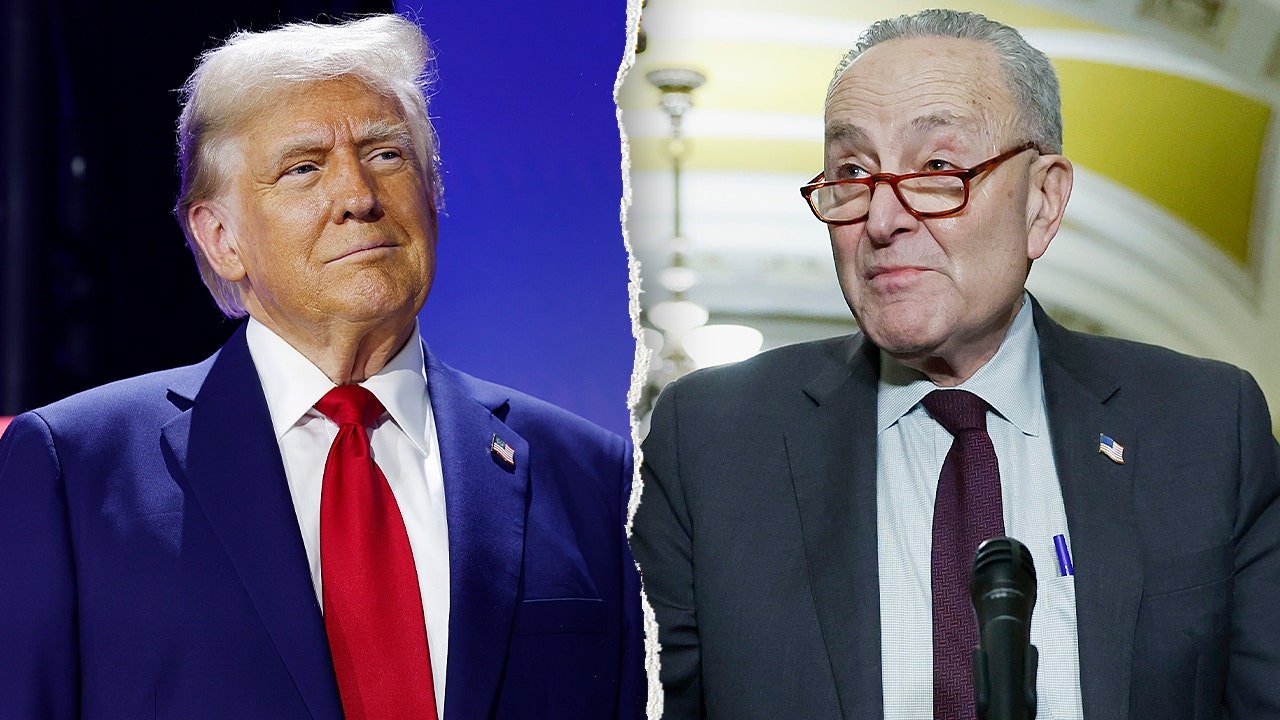
President Donald Trump and Senate Minority Leader Chuck Schumer are clashing over funding plans for the DHS. (Anna Moneymaker/Getty Images; Kevin Dietsch/Getty Images)
«Some idea pops into his head and he announces it. And then the people working for him, a few of whom do have some degree of talent and ability. Not many underlings. They have to rush to try and implement what they know is an idiotic plan,» he said.
The ICE deployment is Trump’s latest move in the battle with Democrats over funding for the Department of Homeland Security.
Schumer also used his time on the Senate floor Sunday to criticize Trump’s actions in Iran.
«Donald Trump said, ‘you know, I may have a plan or I may not for a war,’» Schumer said. «There’s people’s lives are at stake. Billions are being spent on an almost daily basis. And he says, you know, ‘I may have a plan or I may not.’ These are the words of the commander in chief in the middle of a war involving one of the most dangerous regimes on Earth. ‘I have a plan, or I may not.’»
«That’s unhinged and dangerous. Lives are on the line. The president says he may not even have a plan. Tens of billions are being wasted. No plan. Troops being killed and injured, no plan. Civilians being killed and injured. No plan. Gasoline costs $3.94 a gallon on average. And Trump, ‘I have no plan’,» Schumer said.
Meanwhile, Schumer and his allies have refused to approve DHS funding without reforms to immigration enforcement.
TSA agents across the country have gone more than a month without a paycheck, with no clear end in sight.

Travelers wait in line at a TSA checkpoint at William P. Hobby Airport in Houston, Texas, on March 9, 2026. (Mark Felix/Bloomberg via Getty Images)
Trump first threatened to deploy ICE to airports on Saturday, demanding that Democrats «immediately sign an agreement» to fund DHS.
DHS SHUTDOWN TRIGGERS TSA ‘EMERGENCY MEASURES’ AS LAWMAKER WARNS AIRPORTS COULD FEEL ECONOMIC PAIN
Airports across the country have reported huge numbers of employees calling out sick or not showing up for work. More than 400 TSA employees have quit their jobs.
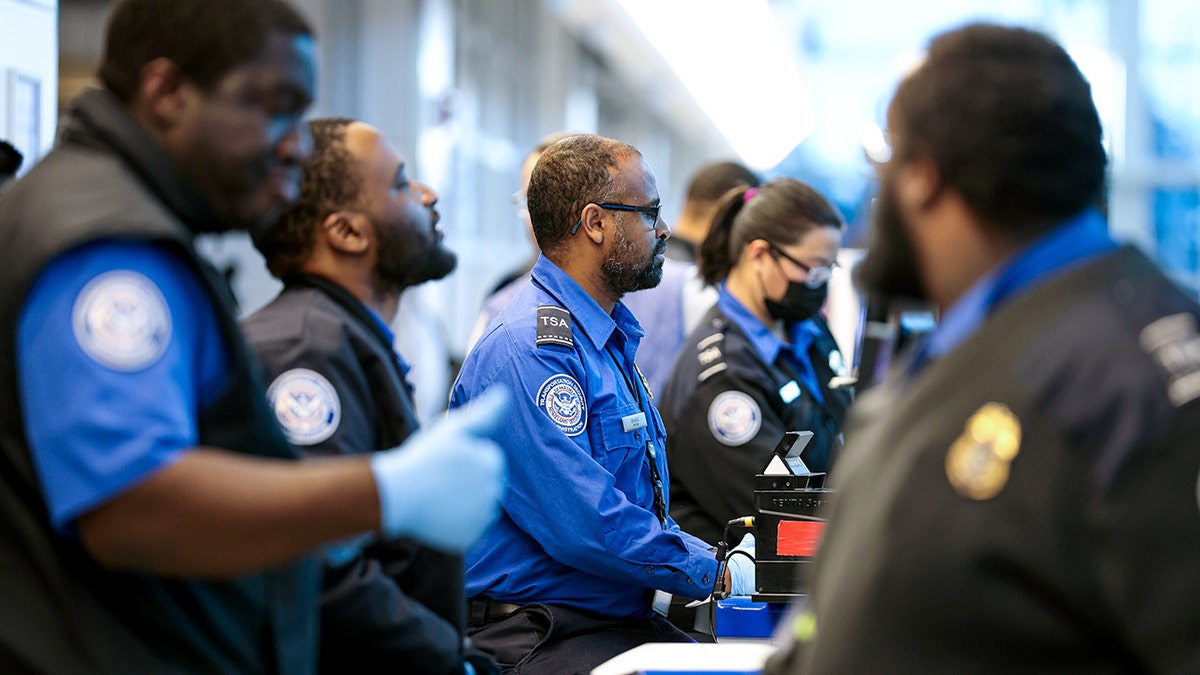
TSA Agents scan luggage at Ronald Reagan Washington National Airport in Arlington, Virginia. (Valerie Plesch/Getty Images)
«On Monday, ICE will be going to airports to help our wonderful TSA Agents who have stayed on the job despite the fact that the Radical Left Democrats, who are only focused on protecting hard-line criminals who have entered our Country illegally, are endangering the USA by holding back the money that was long ago agreed to with signed and sealed contracts, and all,» Trump wrote Sunday on Truth Social.
CLICK HERE TO DOWNLOAD THE FOX NEWS APP
Trump also predicted blowback from Democrats, saying they would complain «no matter how great a job ICE does.»
chuck schumer,donald trump,politics,travel

El partido del canciller alemán Merz se perfila ganador de las elecciones regionales en Renania-Palatinado

Cómo fue el accidente doméstico en el que el bebé de Muni se rompió el cráneo: «Me costó un montón contarlo»

Milei evalúa crear un fondo de compra de armamento para las FFAA con el 10% de la venta de activos del Estado

CD Projekt Red comparte el porcentaje de ventas en Nintendo Switch / Nintendo Switch 2 de The Witcher 3 y Cyberpunk 2077 – Nintenderos

Newsom’s claim Texas and Florida are the ‘real high tax states’ picked apart by expert: ‘Fatally flawed’

Kreplak cruzó a la Oficina de Respuesta Oficial en redes por las vacunas antigripales

Kicillof desembarcó en CABA, lanzó su proyecto 2027 y empezará a ampliar su armado político en todo el país

¿DÓNDE ESTÁ ESMERALDA? El grito de una madre que sacude a la Argentina: «Me la arrebataron de la puerta»

¿MACRI 2027? El «operativo retorno» que sacude al PRO y los nombres que suenan para la vicepresidencia

¿FIN DE CICLO? Escándalo por la mansión no declarada y viajes de lujo empujan a Manuel Adorni fuera del Gobierno: Su salida sería inminente

 POLITICA3 días ago
Kicillof desembarcó en CABA, lanzó su proyecto 2027 y empezará a ampliar su armado político en todo el país
- POLITICA3 días ago
¿MACRI 2027? El «operativo retorno» que sacude al PRO y los nombres que suenan para la vicepresidencia
- POLITICA2 días ago
¿FIN DE CICLO? Escándalo por la mansión no declarada y viajes de lujo empujan a Manuel Adorni fuera del Gobierno: Su salida sería inminente