INTERNACIONAL
Here’s what a post-Ayatollah Iran could look like if war with Israel leads to regime’s fall


NEWYou can now listen to Fox News articles!
As the Iranian regime reels from sustained Israeli strikes on military and nuclear infrastructure, debate is intensifying over what could come next.
Experts say the end of the Islamic Republic is no longer unthinkable — but warn that what replaces it could either lift the country toward a freer future or plunge it into instability.
Reza Pahlavi, the exiled crown prince of Iran and a prominent opposition figure, posted yesterday, «Sources inside Iran say that the regime’s command and control structures are collapsing at a rapid pace. Meanwhile, the international community is beginning to realize that the Islamic Republic has no future. Our discussions about a post-Islamic Republic Iran have begun.»
«The first thing is revolution is too broad a word,» said Behnam Taleblu, senior fellow at the Foundation for Defense of Democracies. «The better words are evolution and devolution, meaning if you get something better or something worse. Because this is the Middle East, and fundamentally, things can get worse, not better, when you introduce an exogenous shock.»
TRUMP TO MAKE IRAN DECISION ‘WITHIN THE NEXT TWO WEEKS’ GIVEN ‘CHANCE’ OF NEGOTIATIONS, LEAVITT SAYS
Iranian Supreme Leader Ayatollah Ali Khamenei meets with Iran’s acting President Mohammad Mokhber and cabinet members at the Imam Khomeini Husseiniya in Tehran, Iran, on July 7, 2024. (Iranian Leader Press Office / Handout/Anadolu via Getty Images)
Taleblu cautioned that both the Iranian opposition and Western governments have failed to prepare for regime collapse because of a long-standing reluctance to engage with the idea of regime change. «By not being able to articulate the necessary political strategy… we are most unprepared,» he said.
Beni Sabti, an Iran expert at Israel’s Institute for National Security Studies, sees four scenarios emerging from the current moment — one of which, he warns, is far worse than the others.
«The Iranian people are currently leaderless, low-energy, and disillusioned since the women’s protests,» Sveti told Fox News Digital. «One scenario is collapse from within, similar to the Soviet Union. A brigade commander inside the Revolutionary Guards, supported by a circle of loyalists, could decide to rebel from within the regime.»
Sabti said that after Israel eliminated many Islamic Revolutionary Guard Corps (IRGC) generals, Iran’s regular army may now be better positioned to rise. «It might even align with disillusioned elements of the revolutionary guards,» he said. «Because they know the system and its bureaucracy, insiders could quietly organize something from within. There would be casualties, but it could unfold as a relatively quiet historical event.»
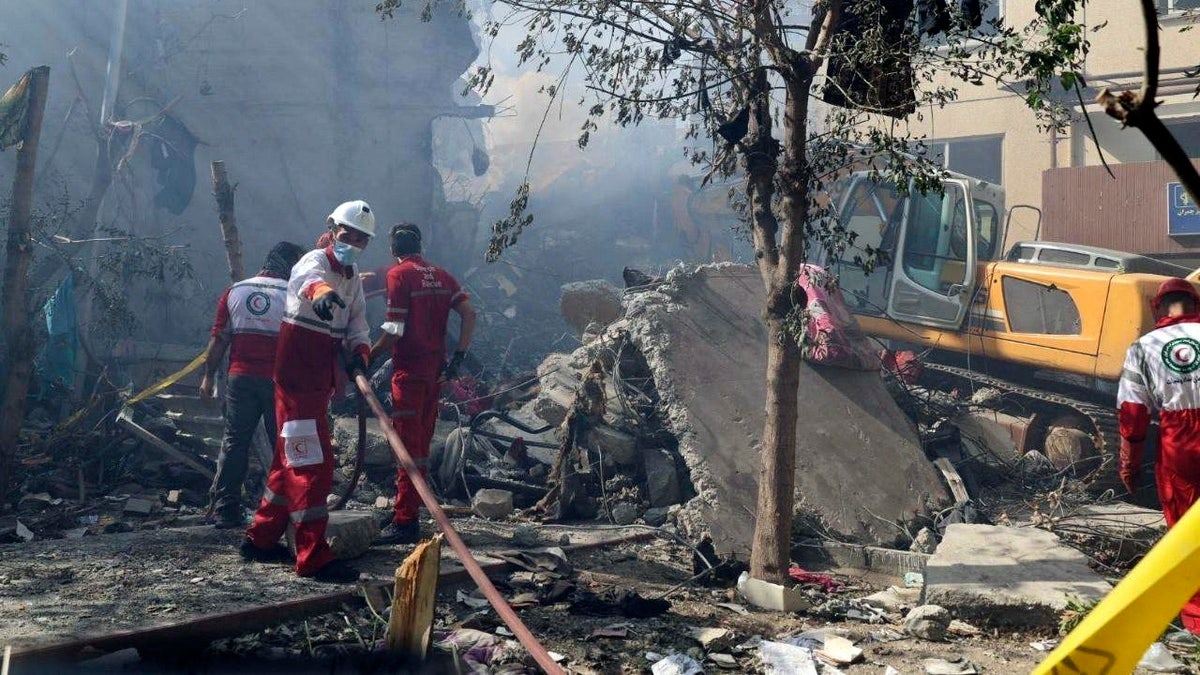
In this photo released by the Iranian Red Crescent Society, rescuers work at the scene of an explosion after an Israeli strike in Tehran, Iran, on Friday, June 13, 2025. (Iranian Red Crescent Society via AP)
Taleblu supports the idea that a regime transition could emerge from within, but notes that Iran has spent decades «coup-proofing.»
«It has promoted more based on zeal than capability. So it’s less likely that you could have a classic military coup d’état emerge,» he said. «That doesn’t mean it can’t happen, but it would take a significant amount of politicking and maneuvering.»
ISRAEL’S ‘RESOUNDING’ MILITARY CAMPAIGN AGAINST IRAN COULD BE HISTORIC TURNING POINT, EXPERTS SAY
The second scenario Sabti outlined is a popular uprising sparked by the release of political prisoners. «There are many political leaders in Iranian prisons,» he said. «If some are freed, they could rally the public. They were once part of the regime but tried to shift course and now support relations with the U.S. It would still be a very cold peace with Israel—but not hostile.»
Taleblu noted that Iranian society has already undergone a significant shift over the past decade. «Large swaths of the Iranian population—80% is probably a minimum number—hate this regime,» he said. «The protests since 2017, especially ‘Women, Life, Freedom,’ were triggered not just by politics, but by economic, social, even environmental issues.»
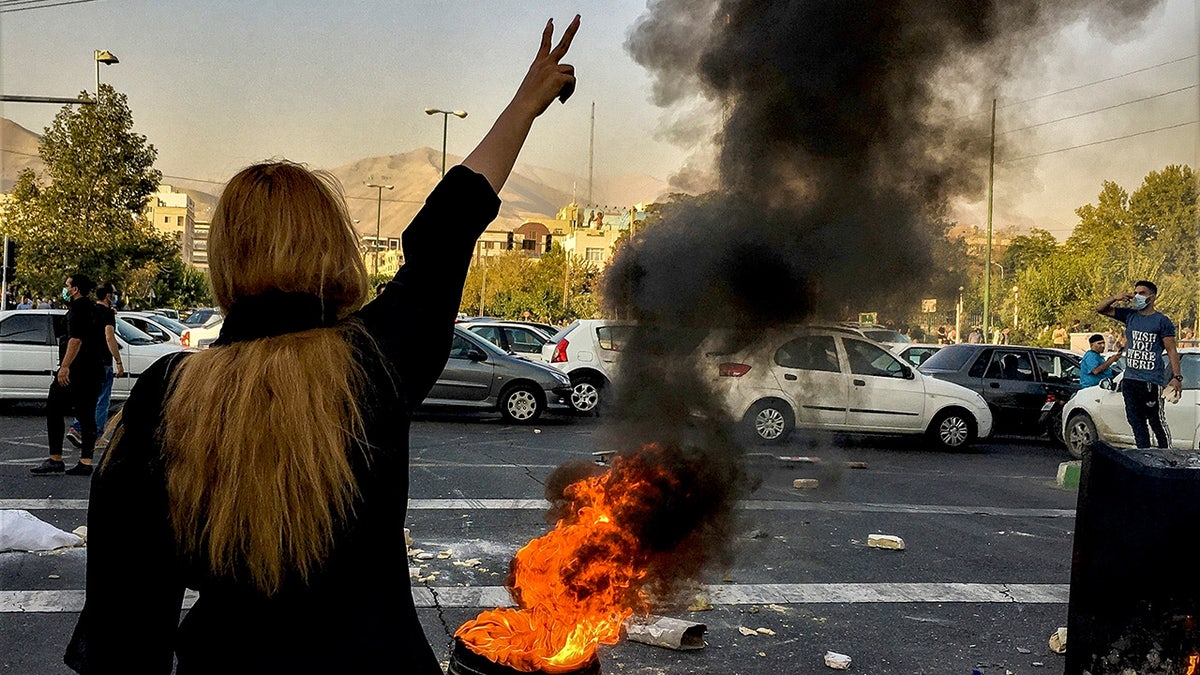
Iranians protest the death of 22-year-old Mahsa Amini after she was detained by the morality police, in Tehran, Iran, on Oct. 1, 2022. (The Associated Press)
A third possibility, Sabti said, is the return of exiled leaders. «There’s deep romantic nostalgia toward the monarchy,» he said. «Maybe in a later phase, if infighting breaks out, people might rally around a symbolic figure—‘Come back and be a symbol.’ That could strengthen the revolution.»
Taleblu acknowledged that figures like Crown Prince Reza Pahlavi could play a role, but not as rulers. «Think of the diaspora as a bridgehead into a new Iran—not the definers of the new Iran,» he said. «The people inside Iran should be the ones shaping the next Iran.»
The fourth — and worst — scenario, according to Sabti, is that the regime survives. «That’s the worst option,» he said bluntly.
EVERYTHING YOU NEED TO KNOW ABOUT AYATOLLAH ALI KHAMENEI, SUPREME LEADER OF IRAN
Taleblu agreed, warning that survival would bring an even more repressive future. «If the Islamic Republic survives, it will survive in a more radical fashion—more military, less clergy,» he said. «There’s debate: does it become like Turkey or Pakistan, or does it become even more messianic? The older IRGC are corrupt; the younger ones are messianic.»
One of the most contentious questions looming over all these scenarios is the future role of Iran’s non-Persian communities, including the Ahwazi, Baloch, Azeris, and Kurds. Aref Al-Kaabi, executive president of the State of Ahwaz, told Fox News Digital in a written statement that without trust-building between these communities and the Persian opposition, change will remain elusive.
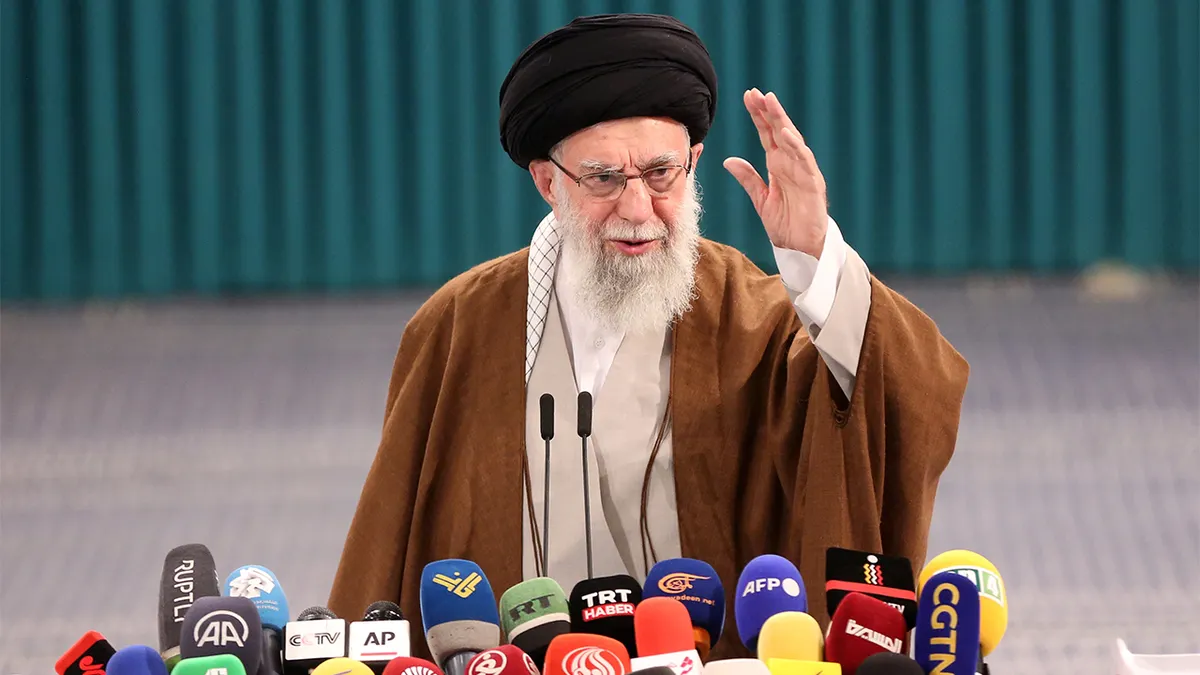
Iranian Supreme Leader Ali Khamenei addresses the media during the voting of parliament elections in Tehran, Iran, on May 10, 2024. (Photo by Fatemeh Bahrami/Anadolu via Getty Images)
«In my opinion, regime change in Iran is possible if the following conditions are met: continued Israeli strikes… support for non-Persian components… international will… and bridges of trust between Arabs, Kurds, Baloch, Azeris, and the Persian opposition,» Al-Kaabi said. «If these conditions are met, I believe the regime’s fall will only be a matter of days.»
He said that in recent days, the IRGC launched widespread arrests in Ahwaz to prevent mobilization. «Most of those arrested are Arabs from Abadan, Bushehr, Sheyban, and Shoaibiya,» he said.
Al-Kaabi also criticized the Persian opposition abroad. «They view us—Arabs, Kurds, Azeris, Baloch—as separatists and refuse to work with us. That stubbornness is one of the main reasons the regime is still in power.»
CLICK HERE TO GET THE FOX NEWS APP
Taleblu warned against Western attempts to divide the country. «The way to unite the Iranian population is not to talk about balkanization,» he said. «That would be an own goal of moral and strategic proportions.»

NEWYou can now listen to Fox News articles!
At least a dozen FBI employees were fired amid revelations the bureau under the Biden administration allegedly subpoenaed Kash Patel and Susie Wiles’ phone records in 2022 and 2023 as part of a federal probe into then-former President Donald Trump.
More than 10 FBI employees were fired Wednesday, and at least two more FBI employees were terminated Friday, Fox News has learned.
The FBI allegedly subpoenaed Patel’s and Wiles’ records in 2022 and 2023 while they were private citizens.
Patel now serves as the director of the FBI, and Wiles serves as the White House chief of staff.
The names of the fired bureau employees were not shared due to privacy reasons, and the FBI Agents Association (FBIAA) criticized the firings earlier in the week.
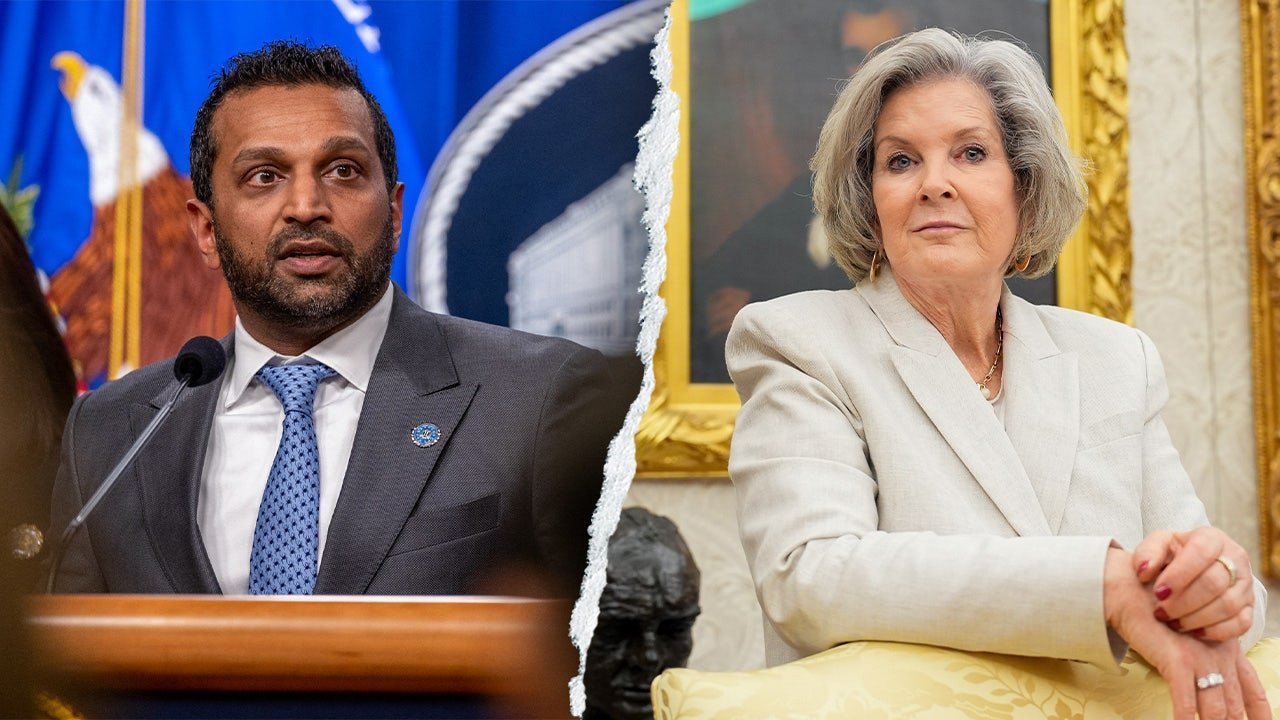
Kash Patel and Susie Wiles (Getty Images)
«The FBIAA condemns today’s unlawful termination of FBI special agents, which — like other firings by Director Patel — violates the due process rights of those who risk their lives to protect our country,» the organization said in a statement.
JACK SMITH TRACKED PRIVATE COMMUNICATIONS, CALLS OF NEARLY A DOZEN GOP SENATORS DURING J6 PROBE, FBI SAYS
«These actions weaken the bureau by stripping away critical expertise and destabilizing the workforce, undermining trust in leadership and jeopardizing the Bureau’s ability to meet its recruitment goals, ultimately putting the nation at greater risk.»
Reuters first disclosed the subpoenas, which were issued during the Biden administration while special counsel Jack Smith was investigating Trump’s alleged efforts to overturn the 2020 election and his handling of classified documents at Mar-a-Lago, Florida.
Smith ended up charging Trump in 2023 with multiple felony offenses related to alleged efforts to challenge the results of the 2020 election and Trump’s handling of the documents after he left office.
TOP 5 MOMENTS FROM JACK SMITH’S TESTIMONY ON CAPITOL HILL
A federal judge later dismissed the election interference case after Smith moved to drop it following Trump’s re-election, citing a Justice Department policy against prosecuting a sitting president.
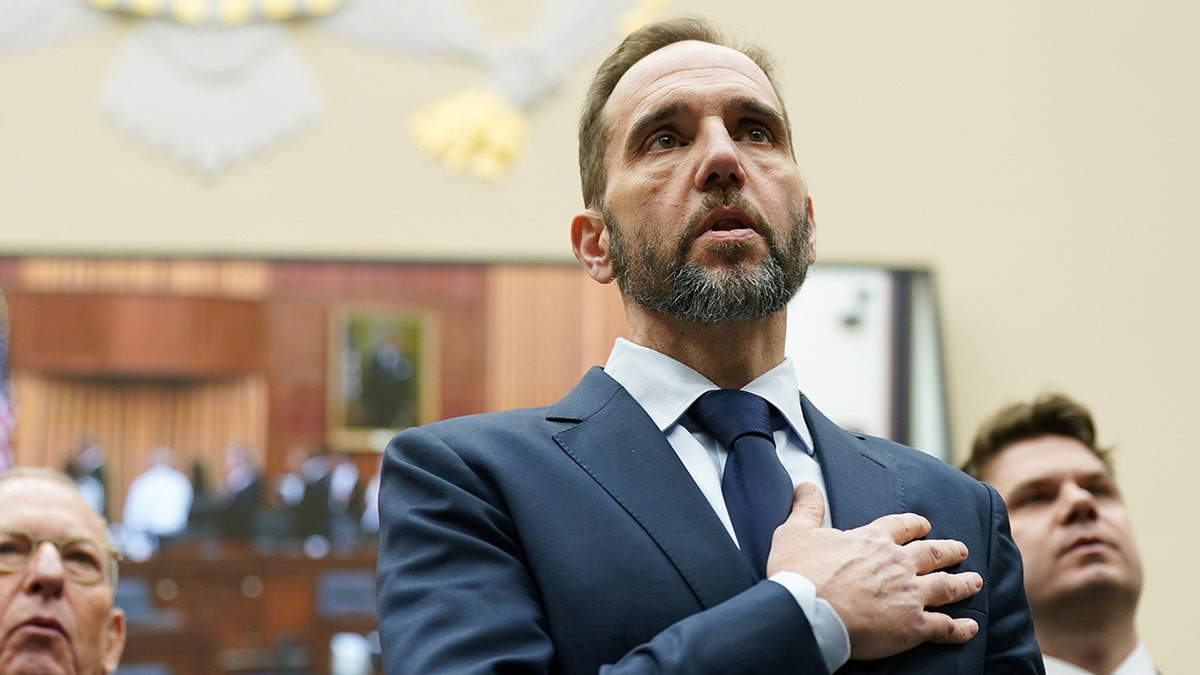
Former special counsel Jack Smith says the Pledge of Allegiance before he prepares to testify during a hearing before the House Judiciary Committee in the Rayburn House Office Building on Capitol Hill Jan. 22, 2026, in Washington, D.C. (Al Drago/Getty Images)
Smith also dropped the Justice Department’s appeal of a separate ruling that dismissed the classified documents case. Trump has denied any wrongdoing in both matters.
In a statement to Fox News Wednesday, Patel called the move to seize the phone records «outrageous and deeply alarming.»
«It is outrageous and deeply alarming that the previous FBI leadership secretly subpoenaed my own phone records — along with those of now White House chief of staff Susie Wiles — using flimsy pretexts and burying the entire process in prohibited case files designed to evade all oversight,» he said.
The FBI said it discovered the information in the bureau’s newly discovered «prohibited case file.»
FBI FIRES AGENTS, DISMANTLES CORRUPTION SQUAD AFTER PROBE UNVEILS MONITORING OF GOP SENATORS, PATEL SAYS
Patel also said he recently ended the FBI’s ability to categorize files as «prohibited.»
Fox News also learned from two FBI officials that, in 2023, FBI agents allegedly recorded a phone call between Wiles and her attorney.
According to those officials, Wiles’ attorney was aware the call was being recorded and consented, but Wiles was not informed.
Wiles’ 2023 attorney disputes those claims.
«If I ever pulled a stunt like that I wouldn’t — and shouldn’t — have a license to practice law,» the unidentified attorney said, according to Axios. «I’m as shocked as Susie.»
Smith testified in 2025 that records of members’ calls helped investigators verify the timeline of events surrounding the Jan. 6 Capitol riot.
CLICK HERE TO DOWNLOAD THE FOX NEWS APP
He said prosecutors «followed all legal requirements in getting those records» and told a House panel the records obtained from lawmakers did not include the content of conversations.
Fox News’ Emma Bussey and Emma Colton contributed to this report.
Related Article

fbi,white house,kash patel
INTERNACIONAL
El fin de la paciencia de Islamabad: por qué Pakistán decidió atacar Afganistán y qué rol juegan China y Rusia
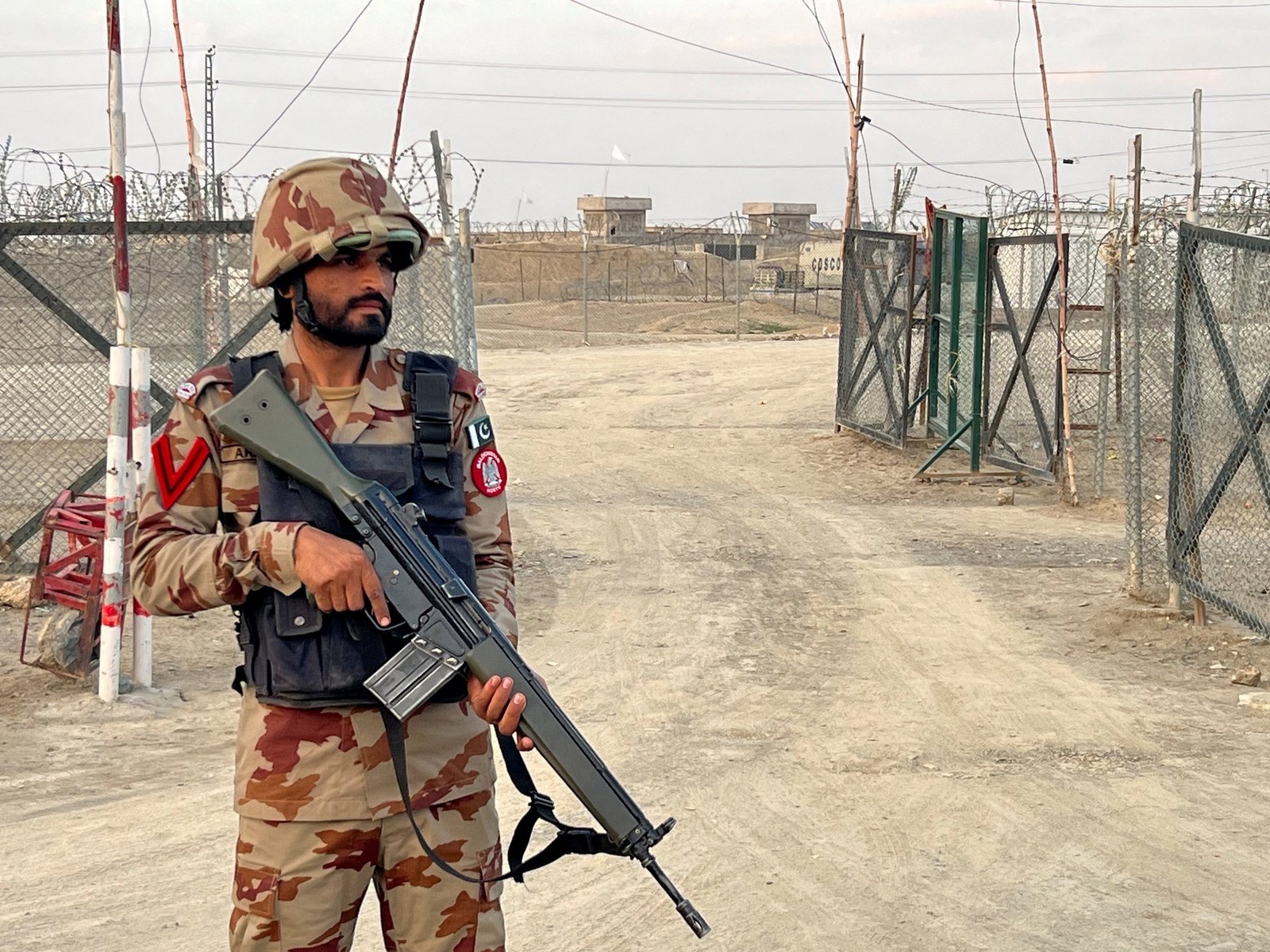

NEWYou can now listen to Fox News articles!
Israel launched a preemptive strike against Iran early Saturday, according to an announcement from Israeli Defense Minister Israel Katz.
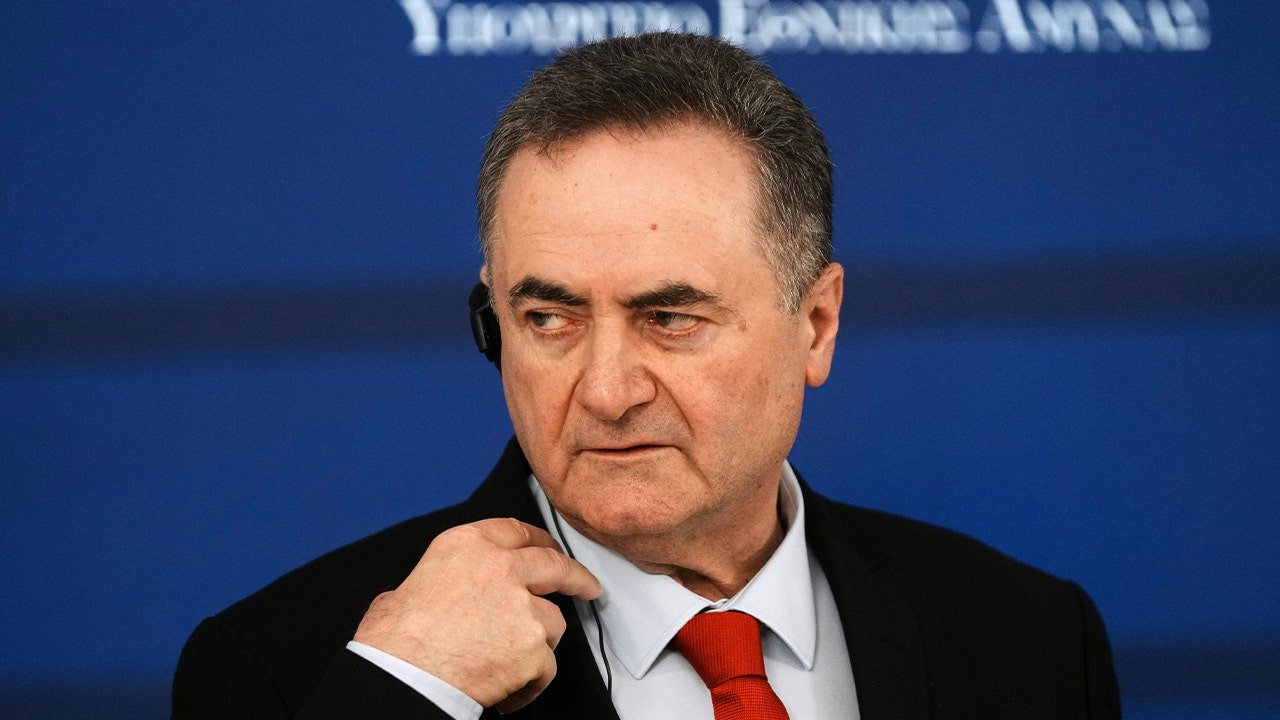
Israeli Defense Minister Israel Katz makes statements with his Greek counterpart Nikos Dendias after their meeting in Athens, Greece, Tuesday, Jan. 20, 2026. (AP Photo/Thanassis Stavrakis)
Katz declared a special and immediate state of emergency across the entire country.
He said the strike was «to remove threats» against the state of Israel.
This is a developing story; please check back for updates.
CLICK HERE TO DOWNLOAD THE FOX NEWS APP
israel,iran,world,conflicts

Cómo anotarse a los cursos gratuitos de la provincia de Buenos Aires con orientación laboral

FBI fires a dozen after Biden-era subpoenas of Patel, Wiles come to light

Cuándo se vota la reforma laboral de Javier Milei hoy, viernes 27 de febrero

El Gobierno evalúa gestos para las provincias de cara al 2027 y creen que podría haber más alianzas

El fin de la paciencia de Islamabad: por qué Pakistán decidió atacar Afganistán y qué rol juegan China y Rusia

Israel launches preemptive strike against Iran, defense minister says

Jorge Macri prepara su discurso para abrir el año legislativo: el deseo de reelección y el espejo en Bukele

Crisis en la industria: otra multinacional se achica y cierra una planta en la Argentina

Alarma por la salud de Divina Gloria tras salir de Gran Hermano: “La internaron directamente en terapia intensiva”

Uno por uno, todos los famosos que saludaron a Mirtha Legrand por sus 99 años

 POLITICA3 días ago
Jorge Macri prepara su discurso para abrir el año legislativo: el deseo de reelección y el espejo en Bukele
- ECONOMIA2 días ago
Crisis en la industria: otra multinacional se achica y cierra una planta en la Argentina
- CHIMENTOS1 día ago
Alarma por la salud de Divina Gloria tras salir de Gran Hermano: “La internaron directamente en terapia intensiva”