INTERNACIONAL
How Nazi war criminal Josef Mengele evaded capture in Latin America, revealed in declassified files

NEWYou can now listen to Fox News articles!
Documents revealing how infamous Nazi doctor Josef Mengele, known as the «Angel of Death,» led an open post-war life in Argentina were found among a massive trove of evidence released and declassified earlier this year by President Javier Milei.
Mengele was notorious for his role as a commander in Auschwitz, where he conducted brutal medical experiments on prisoners, especially twins, under the guise of scientific research. Eyewitnesses — including some contained in the declassified Argentine files — describe his extremely cold-blooded and macabre, sadistic nature, including torturing and testing on twins in front of one another after sending their parents to the gas chambers.
An entire binder is dedicated exclusively to following the footsteps of infamous Auschwitz doctor and SS commander Mengele.
ARGENTINA REVEALS SECRET WWII FILES ON HITLER’S HENCHMEN WHO FLED BEFORE, AFTER THE WAR
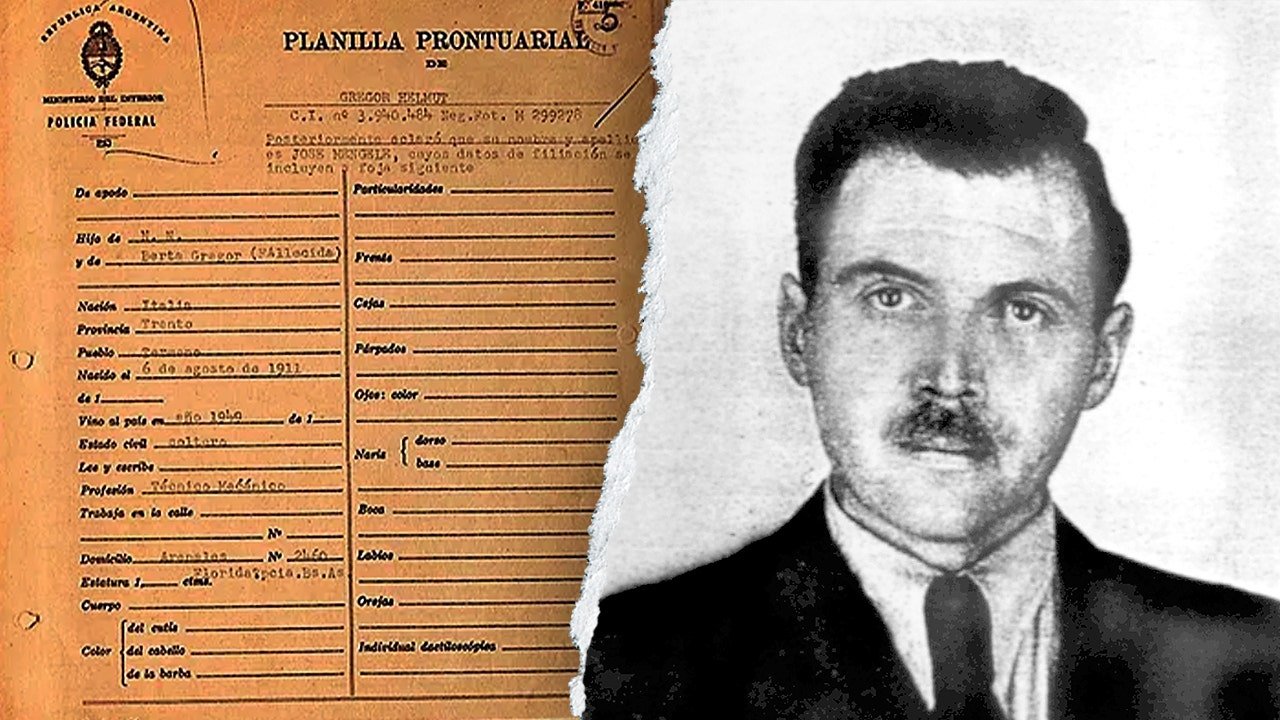
The declassified archives show Argentina clearly understood by the mid- to late 1950s who Mengele was and that he was actually present in the country. Authorities knew he had entered the country in 1949 using an Italian passport issued under the name Helmut Gregor, which he used as the basis for obtaining an official immigrant ID card in 1950.
Argentina’s archival material sheds light on the networks that sheltered Mengele. Though heavily fragmented and multilingual — featuring Spanish, German, Portuguese and English documents — the archive provides a snapshot of how authorities tracked, archived, mishandled and often took no action regarding the information they had about one of the world’s most wanted war criminals.
The collection contains photographs, intelligence notes, immigration records, surveillance reports and correspondence, reflecting decades of investigation and efforts to understand the network that helped him move across Argentina, Paraguay and ultimately Brazil. The presence of German-language documents indicates the incorporation of foreign intelligence or materials seized from émigré communities; Portuguese elements suggest cross-border coordination with Brazilian sources; English notes point to communication with U.S. or British agencies.
The files contain an undated press clipping of an Argentine citizen born in Poland, José Furmanski, who was a victim of Mengele, showing Argentinian intelligence were aware of the accusations against the Nazi criminal.
«I met Mengele. I knew him well. I saw him many times in the Auschwitz camp, with his SS colonel’s uniform and, on top of it, the white doctor’s coat,» says Furmanski in the interview.
An Argentine file on Josef Mengele, left, and a photo taken by a police photographer in 1956 in Buenos Aires for Mengele’s Argentine identification document. (General Archives of the Government of Argentina/Universal History Archive/Universal Images Group via Getty Images)
The interview goes on to explain that Furmanski, who had a twin, gave his vivid testimony of the experiences performed on them. The report labeled Mengele as a pathological sadist.
«He gathered twins of all ages in the camp and subjected them to experiments that always ended in death. Between the children, the elderly, and women… what horrors. I saw him separate a mother from her daughter and send one to certain death. We will never forget,» Furmanski said.
Dozens of scanned images without embedded text and internal labeling of hundreds of pages signal a systematic effort by Argentine intelligence to compile a complete personal file of Mengele, including copies of foreign passports under aliases, photographs of suspected associates, handwritten operational notes, immigration ledgers or border-crossing logs, investigative summaries prepared for political superiors and correspondence between Argentine officers and international investigators.
The files corroborate Argentina’s ambiguous postwar position of cooperating with Western democracies, extremely disjointed bureaucracy, lack of will or understanding regarding the serious nature of crimes committed by former Nazis in its territory, and a reluctance by higher-hierarchy authorities to confront how deeply Nazi fugitives were embedded within the country’s social and political landscape.
101-YEAR-OLD KRISTALLNACHT SURVIVOR WARNS CURRENT ERA ‘EQUIVALENT TO 1938’ ON ANNIVERSARY OF NAZI RIOT
In 1956, trying to expand his business partnership, he obtained a legalized copy of his original birth certificate from the West German Embassy in Buenos Aires, requested his ID be judicially amended to reflect his real biographical data and — surreally — began using his original legal name, a sign of how safe he felt in Argentina.
Argentine agencies by this point not only knew who he was, where he lived, and the fact that he married his brother’s widow and was raising their son, but also had full details regarding his business interests in the country. Reports in the files cite a possible visit by Mengele’s father to Argentina to help him financially, investing in a medical laboratory business in Buenos Aires.
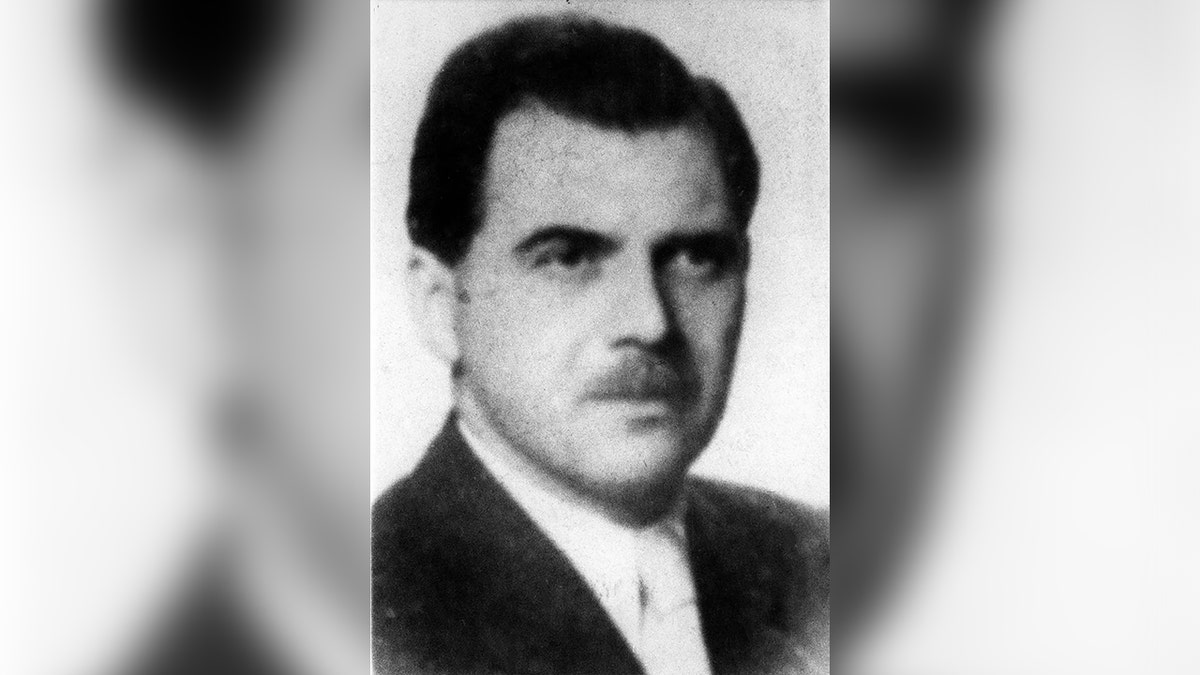
This file picture of 1956 shows the WWII war criminal Josef Mengele. Archaeologists in Berlin have unearthed a large number of human bones from a site close to where Nazi scientists carried out research on body parts of death camp victims sent to them by sadistic SS doctor Mengele. (AP Photo, file)
The overt nature of his life in the country prompted West Germany to issue an arrest warrant and request his extradition in 1959, which was denied without further action by a local judge, citing that the request was unofficially based on «political persecution» of Mengele, which didn’t allow for the case to be taken up.
Despite all the hard evidence accumulated, it is clear that the information was fragmented among various different agencies that did not fully communicate with one another. There was also a lack of direct communication with the country’s presidency and executive branches. This led to action on the case being decided in a disconnected manner, and often too late — or after press leaks had already alerted Mengele of possible concern by authorities — to yield fruitful results. Arrest warrants, searches, and surveillance requests were often carried out or decided after the fact, leading to dead ends.
NAZI OFFICER’S DAUGHTER CHARGED AFTER STOLEN WWII PAINTING SPOTTED IN REAL ESTATE LISTING
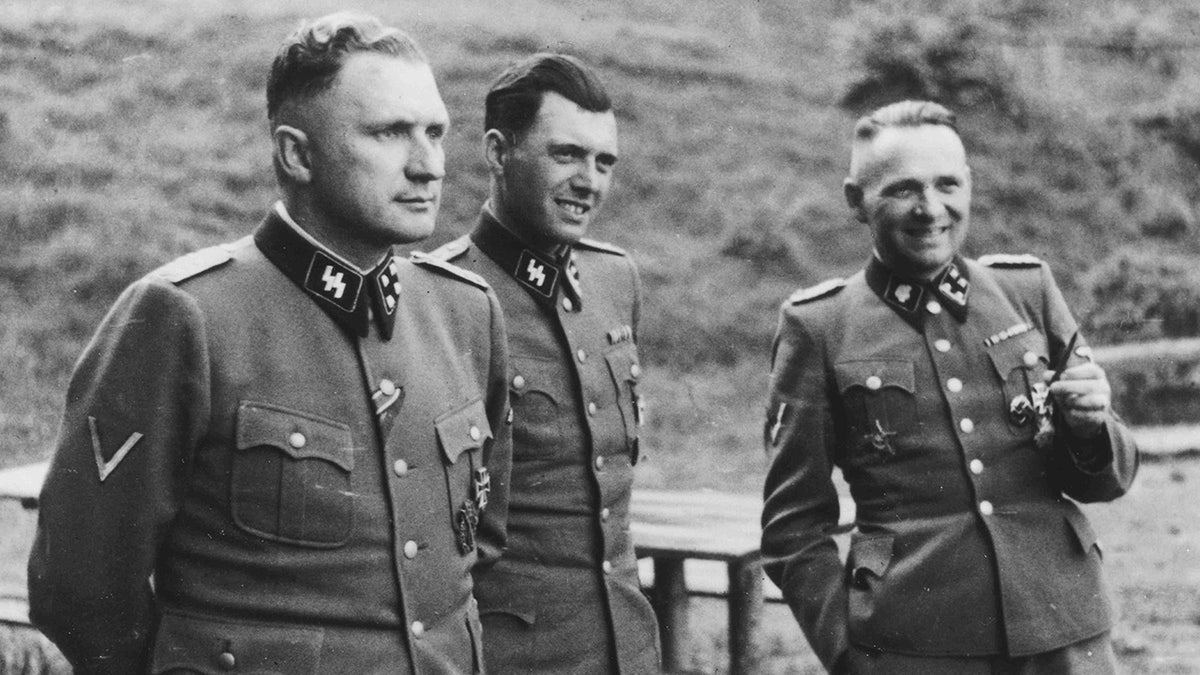
Dr. Josef Mengele, center, with Richard Baer, left, commandant of Auschwitz,and Rudolf Hoess, former Auschwitz commandant, outside the concentration camp in 1944. (Universal History Archive/Universal Images Group via Getty Images)
After the 1959 extradition request and with increased international pressure on Argentina, Mengele escaped the country to Paraguay, while his wife and stepson moved to Switzerland.
This is evident from a memo from the Federal Coordinate Directorate marked as strictly secret and confidential detailing a search for Mengele and his business interests dated July 12, 1960 — a point when Mengele had already left Argentina for Paraguay.
«I bring to the knowledge of the Chief that from the investigations carried out in order to fulfill the referenced O.B., it follows that JOSÉ MENGELE, served as a partner of the medical laboratories ‘FADRO-FARM’ located at Drysdale 3573 Street, in Carapachay, District of Vicente López, and with offices, since July of this year, at Cramer 860 Street, Capital. The subject, listed as a medical doctor, was entered into the firm on July 10, 1958, as a contributing partner of $10,000 pesos in capital, and withdrew from the partnership in April of 1959,» the report stated.
SIGN UP FOR ANTISEMITISM EXPOSED NEWSLETTER
«Since entering Argentina, the subject resided on the property of the Mengeles, using the name of Dr. GREGOR […], the subject manifested that he had arrived in Argentina using a different name and distinct from his profession […]. Thus, it appears that, while maintaining his real name, the subject belonged to the SS Society […] during which time he demonstrated being nervous, having stated that during the war he acted as a physician in the German S.S., in Czechoslovakia, where the Red Cross labeled him a ‘war criminal.’ He had studied Anthropology and was known to the Justice in the courts of Nuremberg, especially regarding the study of skulls and bones, but that union was considered a crime in National Socialist Germany,» the report states about Mengele when, in the course of changing his name from his fake alias to his real identity, the Nazi «explained» his motives for originally not using his real identity, it said.
Argentina’s intelligence community kept following Mengele, mostly through press reports and contacts with foreign agencies. Mengele acquired Paraguayan citizenship and was protected by the government of Paraguayan dictator Alfredo Stroessner, whose family originated in the same Bavarian town as him.
The archives reveal Mengele entered Brazil clandestinely at some point in 1960 through the tri-border area near Paraná state. He was helped by German Brazilian farmers who were Nazi sympathizers and provided multiple rural safehouses for several years.
Though the Argentine files are thin on details and rely heavily on media clippings at this point, Argentina was aware that Mengele had adopted the alias Peter Hochbichler, though sometimes he also used a Portuguese version of his real name — José Mengele. For the latter part of the 1960s and throughout the 1970s, he began living in properties belonging to the German Bossert and Stammer families in São Paulo state, Brazil.
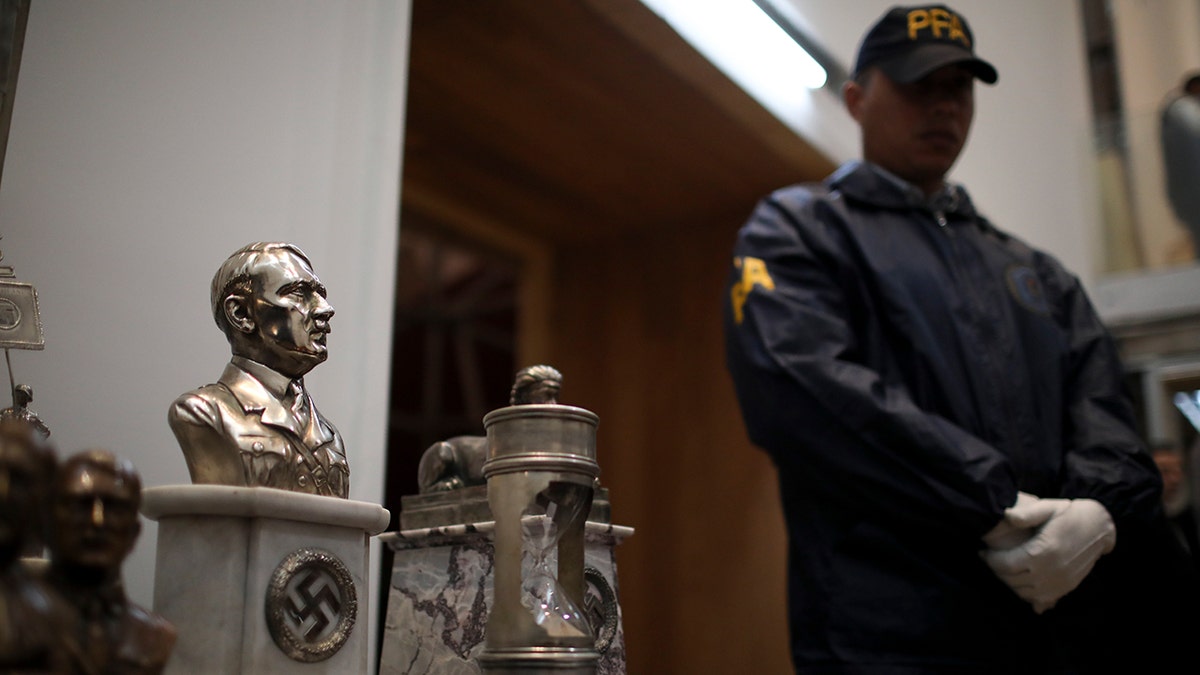
A police officer stands in front of a cache of Nazi artifacts discovered in 2017, during a press conference in Buenos Aires, Argentina, Oct. 2, 2019. (Natacha Pisarenko/AP Photo)
CLICK HERE TO DOWNLOAD THE FOX NEWS APP
Mengele died in 1979 when he suffered a stroke while swimming at sea in the coastal town of Bertioga. He was buried under the false name of Wolfgang Gerhardt, but multiple leads led to his body being exhumed and his remains being positively identified by Brazilian authorities in 1985. DNA testing further confirmed the findings in 1992.
anti semitism,latin america,holocaust,world war two







INTERNACIONAL
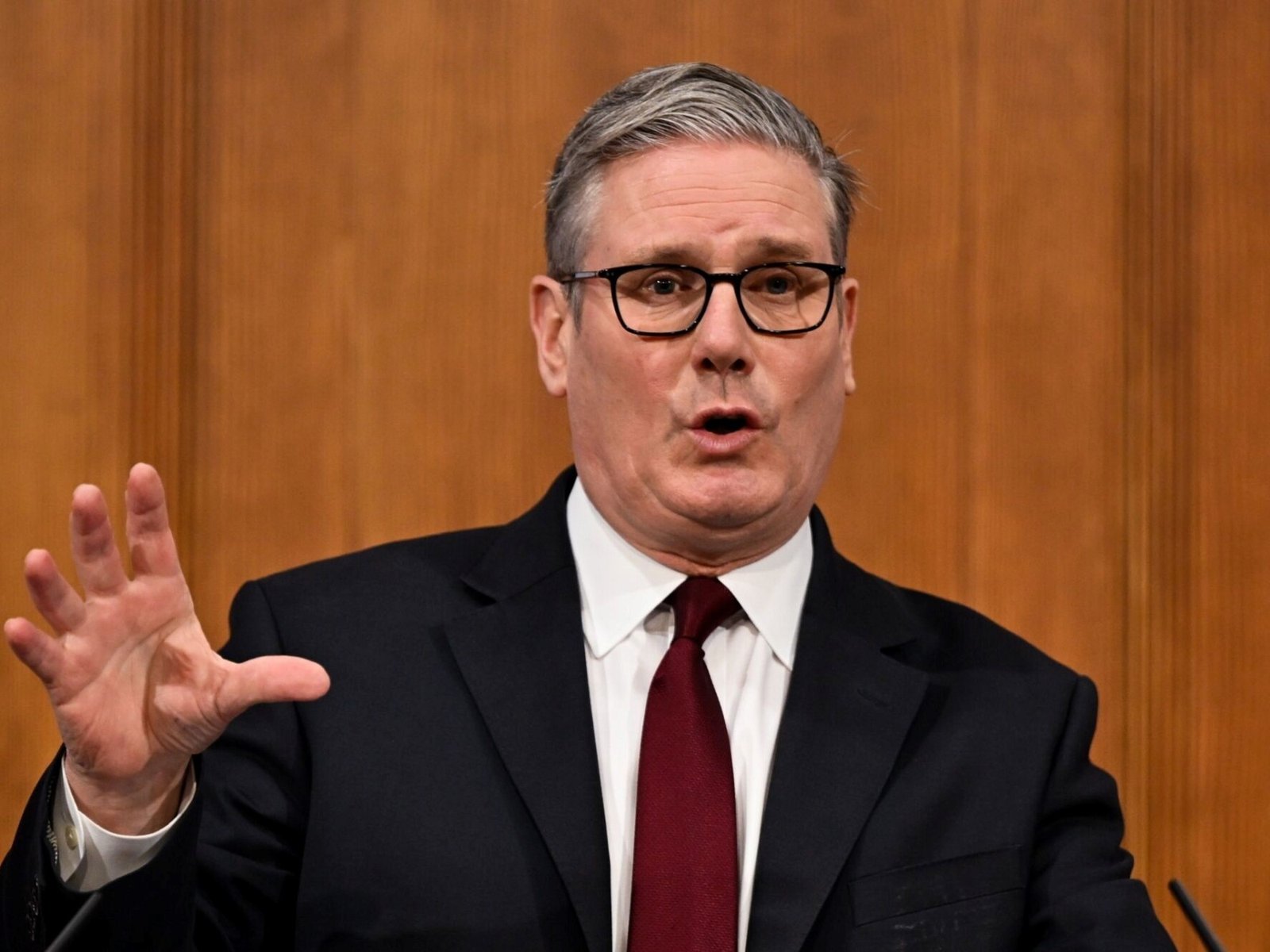
Starmer le responde a Trump por Ormuz: «Gran Bretaña no se verá envuelta en una guerra a gran escala con Irán»
Las amenazas de Trump
«No lo he decidido»
Alemania: «No es nuestra guerra»
El precio del petróleo
Ayudas para calefacción

NEWYou can now listen to Fox News articles!
President Donald Trump sent his clearest warning yet to the North Atlantic Treaty Organization (NATO) on Sunday: Stand with the U.S. for defense of the Strait of Hormuz or face a «very bad» future.
«It’s only appropriate that people who are the beneficiaries of the strait will help to make sure that nothing bad happens there,» Trump told The Financial Times in an interview Sunday. «If there’s no response, or if it’s a negative response, I think it will be very bad for the future of NATO.»
Trump echoed those remarks in a press gaggle aboard Air Force One on Sunday night, returning to Washington, D.C., from a weekend at Mar-a-Lago, saying it would «be nice to have other countries police that with us, and we’ll help – we’ll work militarily.»
«Remember, like as an example of many cases that NATO countries, we’re always there for NATO,» Trump told reporters, pointing to «helping them with Ukraine» even though «between us, it doesn’t affect us.»
US SIGNALS READINESS TO ESCORT TANKERS THROUGH HORMUZ AS TRAFFIC THINS BUT NO MISSION LAUNCHED
President Donald Trump issued some stern warnings for NATO to come to the world’s defense or face a «very bad» future. (SAUL LOEB / AFP)
«But we’ve helped them,» he added, repeating his comments to the United Nations General Assembly last fall, questioning whether NATO will «always be there for us.»
Trump is looking for NATO allies’ assistance in securing the oil tanker traffic through the Strait of Hormuz for the rest of the world. Trump administration officials have been repeating throughout the choking of the strait that the U.S. under Trump is a net exporter of oil and gets only a fraction of its oil from the Middle East – unlike the rest of the world, including NATO allies.
«It’d be interesting to see what country wouldn’t help us with a very small endeavor, which is just keeping the Strait open, and that, by comparison is a small [ask],» Trump added to reporters on Air Force One. «It’s small because Iran has very little firepower.»
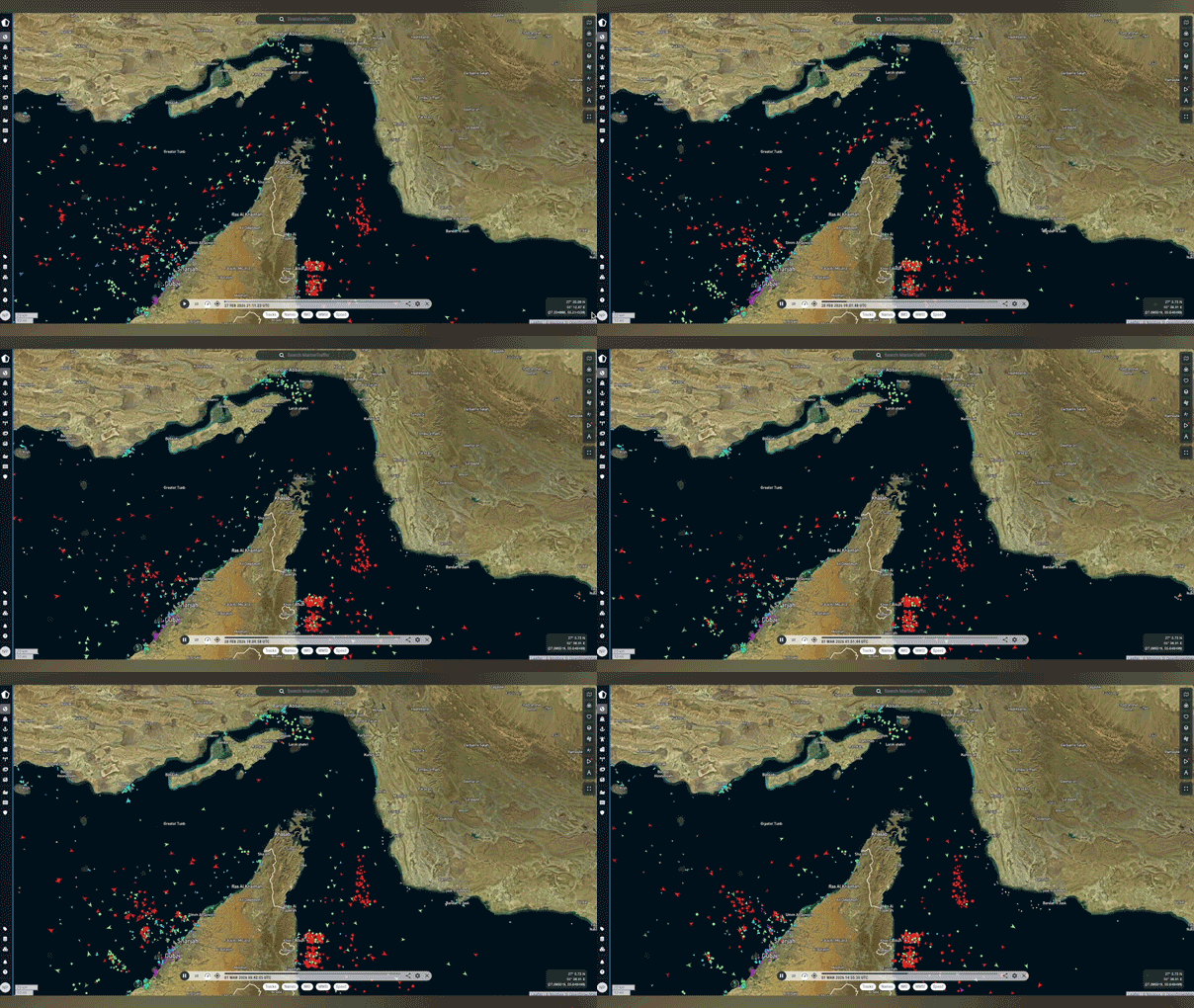
A time-lapse video shows marine traffic moving through the Strait of Hormuz. (Kpler/Marine Traffic)
TRUMP SAYS HE MIGHT HAVE ‘FORCED ISRAEL’S HAND’ IN IRAN STRIKE DECISION AS CRITICS QUESTION WAR POWERS
Trump remained optimistic that NATO allies will ultimately get on board.
«We are talking to other countries about working with us about the policing of the strait, and I think we’re getting a good response,» Trump told reporters on AF1. «If we do, that’s great – and if we don’t, that’s great.»
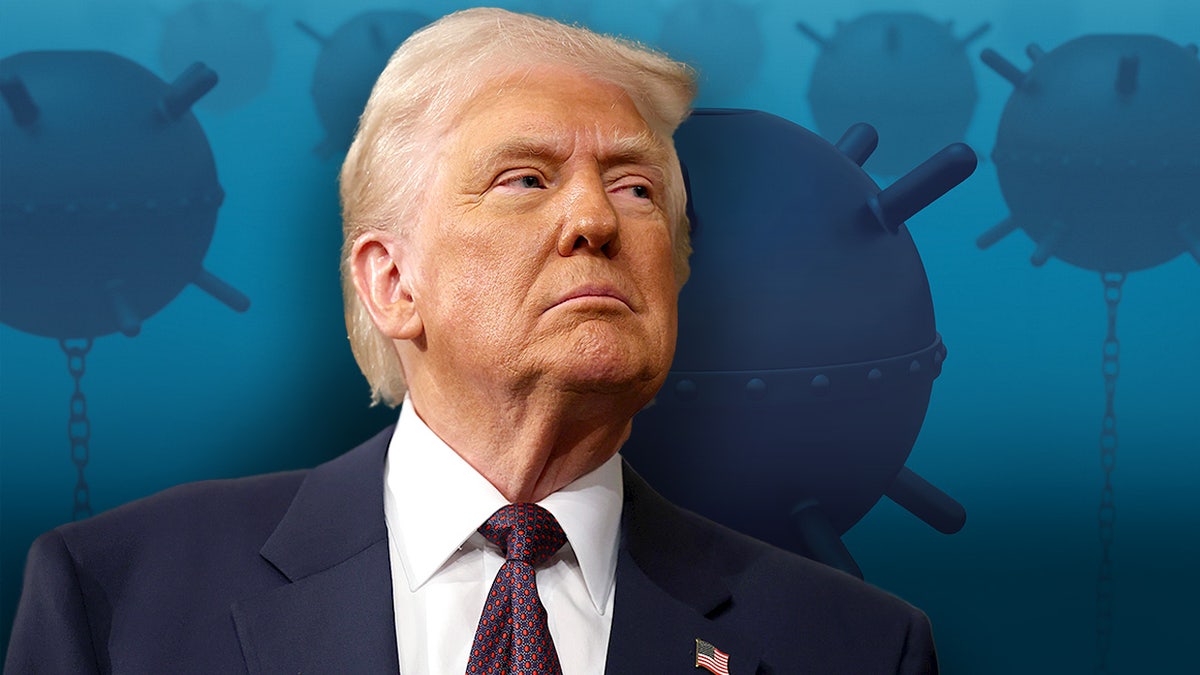
The Iranian regime is using sea mines, which it has stockpiled in the thousands, to make traversing the Strait of Hormuz difficult and deadly. (Win McNamee/Getty Images; Eranicle/iStock)
CLICK HERE TO DOWNLOAD THE FOX NEWS APP
NATO has long been a point of contention for Trump, who had to repeatedly call on member organizations to reach even the 2% of Gross Domestic Product (GDP) spending threshold during his first administration. Current Trump U.S. Ambassador to NATO Matt Whitaker has hailed this second administration in getting NATO to commit 5% of GDP in defense spending.
nato,world,war with iran,donald trump,europe

La reunión Shield of the Americas, recientemente celebrada en Miami, marca el regreso estratégico de Estados Unidos al hemisferio occidental. Convocada por el presidente Donald J. Trump, reunió a una docena de jefes de Estado y dos presidentes electos de la región con un objetivo explícito: construir una coalición hemisférica para enfrentar al crimen organizado transnacional y restablecer la estabilidad estratégica del continente. No se trató solo de una reunión protocolaria; fue el lanzamiento formal de una nueva etapa en la política hemisférica de Washington.
Por años, América Latina y el Caribe han ocupado un lugar secundario en la agenda geopolítica estadounidense. Ese ciclo ha terminado. El hemisferio occidental pasa a ser un espacio de interés vital.
La lógica que sustenta este cambio está claramente expresada en la Estrategia de Seguridad Nacional de los Estados Unidos, publicada en noviembre de 2025: “Estados Unidos debe mantener una posición preeminente en el hemisferio occidental, porque de ello dependen su seguridad y su prosperidad.” Hoy vemos esta premisa convertirse en un principio operativo de política exterior.
La reunión en Miami también refleja una preocupación geopolítica más amplia: la creciente presencia de China en sectores estratégicos de América Latina, desde infraestructura y energía hasta telecomunicaciones y puertos. Para Washington, la estabilidad del hemisferio no es solo una cuestión de seguridad interna. También forma parte de la competencia estratégica global por influencia económica, tecnológica y política.
Este giro comenzó con un episodio que envió una señal clara y fuerte la operación del 3 de enero de 2026 para la captura del dictador venezolano y su traslado a Estados Unidos para enfrentar cargos por narcotráfico y crimen organizado. El mensaje fue contundente. Washington está dispuesto a actuar cuando un régimen estatal se convierte en plataforma del crimen transnacional.
Venezuela no es necesariamente el centro de esta historia, sino un momento clave de la hoja de ruta resumida en “enlist” y “expand”, como lo expresa claramente la Estrategia de Seguridad Nacional de los Estados Unidos. Esta hoja de ruta combina dos instrumentos complementarios: disuasión frente a estructuras que amenazan la estabilidad regional y cooperación con los países que comparten valores y objetivos.
Ese enfoque estratégico se combina con una táctica claramente pragmática. El caso venezolano lo demuestra. Bajo el actual gobierno transitorio, Washington ha restablecido relaciones diplomáticas y ha promovido una acelerada transformación en la industria petrolera. Por ejemplo, la reforma de la Ley Orgánica de Hidrocarburos, aprobada hace unas semanas, reduce el control directo del Estado y permite una participación más amplia de capital privado nacional e internacional. El nuevo marco legal flexibiliza el régimen fiscal, abre espacio para contratos directos con inversionistas y restablece mecanismos de arbitraje internacional para resolver disputas, elementos indispensables para reconstruir confianza jurídica en el sector. El gobierno de transición también ha iniciado una revisión integral de los acuerdos petroleros firmados desde hace varios años para alinearlos con el nuevo marco regulatorio y con estándares internacionales de inversión.
En conjunto, estos acontecimientos son la evidencia de la consolidación de una nueva política hemisférica estadounidense basada en seguridad, estabilidad institucional, apertura económica y cooperación directa con los Estados Unidos. La reunión Shield of the Americas y la constitución de la Americas Counter Cartel Coalition representan el paso más reciente, y más ambicioso, en la implementación de esa estrategia. Todo esto nos pone ante un nuevo momento de la relación hemisférica.
América Latina y el Caribe tienen más de 600 millones de habitantes, abundantes recursos estratégicos, una población urbana creciente y una base de talento joven cada vez más conectada digitalmente. El potencial está ahí, sin duda alguna. Las ventajas competitivas de la región van desde la geografía y los recursos naturales hasta las bondades de la cercanía cultural y los valores compartidos, entre otras. Sin embargo, la dificultad de transitar hacia el desarrollo de la región sigue siendo real. La ventaja es que en el contexto actual, ese desarrollo no es solo un interés regional. Es también un interés estratégico para Estados Unidos y para la estabilidad del hemisferio.
La pregunta ya no es si América Latina y el Caribe tienen potencial para desarrollarse. La pregunta es si sus países serán capaces de construir las instituciones, la infraestructura y las alianzas necesarias para aprovechar el momento estratégico que el hemisferio tiene hoy frente a sí.
Después de décadas en las que Washington minimizó la importancia de la región, hoy se encuentra de regreso en su agenda estratégica. Y esta vez, todo indica que Estados Unidos actuará en consecuencia.
*El autor es empresario, estratega político y exdirector de Políticas Públicas de la Casa Blanca. Es el Director Fundador del Adam Smith Center for Economic Freedom de la Florida International University.

Starmer le responde a Trump por Ormuz: «Gran Bretaña no se verá envuelta en una guerra a gran escala con Irán»

El Gobierno le baja el tono a las revelaciones de la causa $Libra y asegura que debió cerrarse “hace tiempo”

$LIBRA: el diputado que encabeza la comisión investigadora pidió apartar al fiscal

Viene la lluvia y sigue el calor: este es el pronóstico del clima en el AMBA para esta semana

Bancos en alerta: la mora de las familias alcanzó su nivel más alto en 20 años

Michael Jordan ganó un Oscar y marcó un hecho inédito en la Premier League

El ex novio de Luana de Gran Hermano reveló información sensible sobre su relación: “El bolso tenía plata”

Morena Rial salió de la cárcel y se conoció escalofriante dato que involucra a Jorge Rial: «Me pidió que me hiciera cargo»

Emanuel Noir, de Ke Personajes, anunció que dejará las redes sociales: “Una búsqueda mayor a la que creí, apareció”

Cuánto subirán las jubilaciones y pensiones en abril después del dato de inflación que sorprendió

 CHIMENTOS2 días ago
La fuerte exigencia a Mauro Icardi para poder ver a sus hijas con Wanda Nara: “A Maurito se lo va a multar si no lleva a las menores al colegio”
- POLITICA2 días ago
BOMBAZO – Guerra abierta: Feinmann y Rossi contraatacan tras la denuncia de Victoria Villarruel
- POLITICA3 días ago
Milei llegó a Madrid para participar de un foro ultraliberal organizado por expertos en criptomonedas