INTERNACIONAL
Instead of impeachment, Dems are using Article II challenges to impede Trump this time

NEWYou can now listen to Fox News articles!
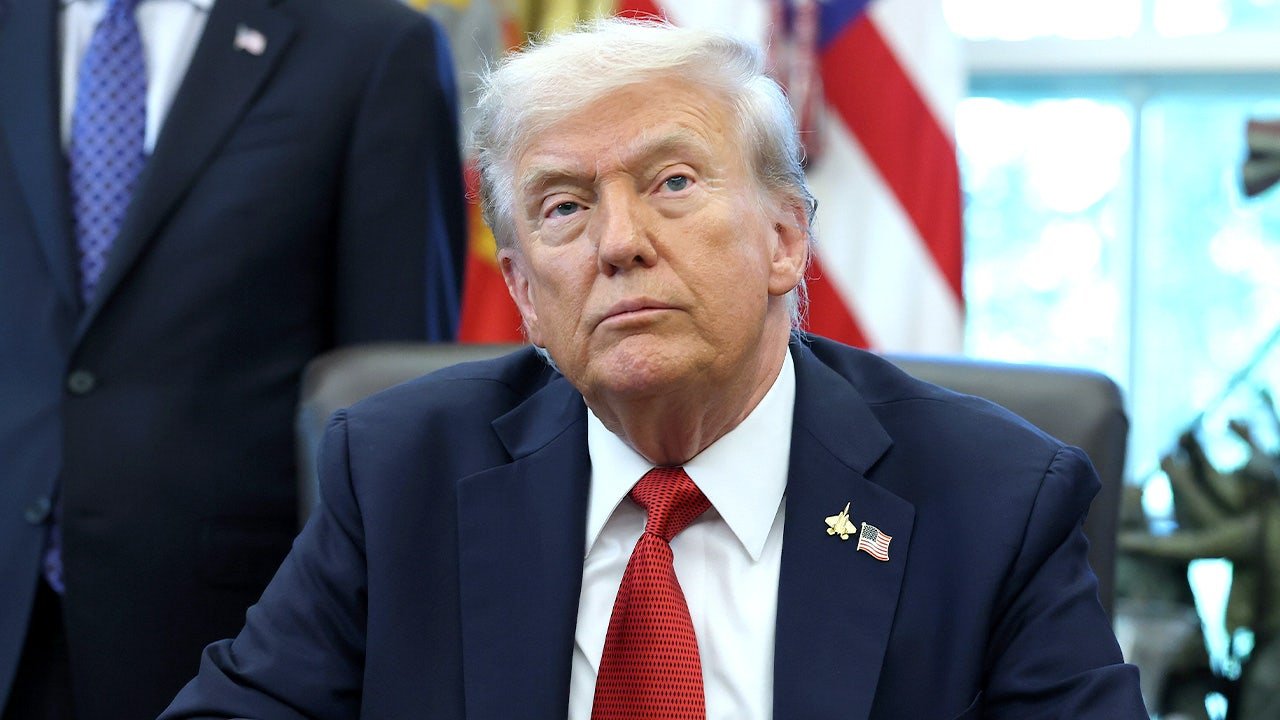
Democrats tenaciously working to thwart the second Trump administration seemingly have thrown out their playbook from the president’s first administration — abandoning repeated attempts to impeach President Donald Trump in favor of broadening their focus on leveraging Article II of the Constitution to impede MAGA policies.
Democrats, since the early days of Trump’s second presidency, have accused him of taking steps that amount to a «gross overreach of presidential authority» or launching «illegal power grabs,» most notably in response to some of the more than 200 executive orders the president has signed this term. Lawsuits challenging the administration also have focused language on claims Trump is exceeding his executive authority, sparking some policies to get tied up in the courts.
Article II of the Constitution lays out the foundation for the balance of power between the office of the president and other branches of the government, including establishing the executive branch. Section II of Article II details the duties and powers of a president.
WHITE HOUSE REBUKES ‘EGREGIOUS’ COURT ORDER BLOCKING TROOP DEPLOYMENTS AMID PORTLAND UNREST
Political foes have turned to Article II in their legal battles against President Donald Trump. (Alex Brandon/The Associated Press)
Political foes have turned to Article II in their legal battles against Trump, repeatedly claiming he has exceeded his authority. But the White House says that’s not true.
«Trump Derangement Syndrome takes on many forms — despite the Democrats’ failure to stop President Trump’s incredibly popular agenda in his first term, they’re trying a new strategy this time and failing again,» White House spokeswoman Abigail Jackson told Fox News Digital Thursday when asked about the increase in claims and cases claiming Trump is overstepping his presidential bounds.
«The Trump Administration’s policies have been consistently upheld by the Supreme Court as lawful despite an unprecedented number of legal challenges and unlawful lower court rulings from far-left liberal activist judges,» she continued. «The president will continue implementing the policy agenda that the American people voted for in November and will continue to be vindicated by higher courts when liberal activist judges attempt to intervene.»
First term impeachment efforts
Trump’s first administration was underscored by two impeachment efforts, which landed Trump as the first president in U.S. history to be impeached twice. Trump was acquitted by the Senate both times.
The first impeachment effort in 2019 accused Trump of abuse of power and obstruction of Congress related to allegedly seeking foreign interference from Ukraine to boost his re-election efforts in 2020.
The focus of that impeachment focused on a July 2019 phone call in which Trump pressed Ukrainian President Volodymyr Zelenskyy to launch investigations into the Biden family’s business dealings in Ukraine, including Hunter Biden’s business dealings with Burisma holdings company. Biden was under federal investigation at the time.
NEWSOM WARNS AMERICANS ‘YOU WILL LOSE YOUR COUNTRY’ UNDER TRUMP AT CALIFORNIA SUMMIT
The House impeached Trump on both articles of impeachment in December 2019, with the Senate voting to acquit Trump on both articles of impeachment in February 2020.
Months later, Democrats teed up another Trump impeachment after the breach of the U.S. Capitol on Jan. 6, 2021.
Trump notched another first, when the Senate tried a former president after the House voted to impeach him just a week before Joe Biden was inaugurated as the nation’s 46th president. The Senate ultimately acquitted Trump in the case.
The second impeachment focused on the breach of the U.S. Capitol by throngs of Trump supporters when the Senate and House convened to certify Biden’s 2020 election win. Trump was accused of working to overturn the results of the election and that he incited an insurrection with rhetoric regarding the election ahead of the Capitol breach.
«I will never forgive the people who stormed the Capitol for the trauma that they caused in our young people, our members of the press who were covering that day, our staffers, the maintenance crew, the people who keep the Capitol neat and clean,» then-Speaker of the House Nancy Pelosi said in an interview on MSNBC in 2022.
«This was a disgrace. And the president instigated an insurrection, refused to stop it and as those films show, would not, in a timely fashion, allow the National Guard to come in and stop it. And that is sinful,» she continued.
The Senate acquitted Trump of the impeachment charge of inciting an insurrection in February 2021.
The impeachment efforts followed Democrats threatening and vowing to impeach Trump at various points throughout his first administration.
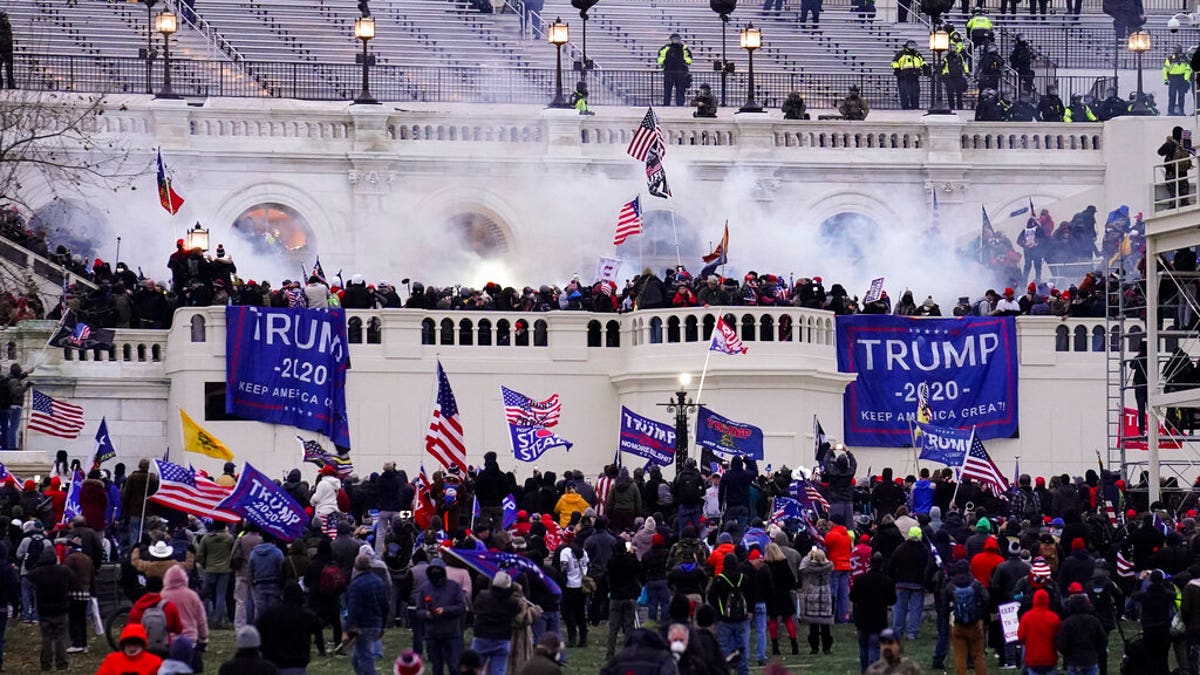
In this Jan. 6, 2021, file photo, rioters, loyal to President Donald Trump, storm the Capitol in Washington. (John Minchillo, File/The Associated Press)
«I rise today, Mr. Speaker, to call for the impeachment of the President of the United States of America for obstruction of justice. I do not do this for political purposes, Mr. Speaker. I do this because I believe in the great ideals that this country stands for — liberty and justice for all, the notion that we should have government of the people, by the people, for the people,» Texas Democratic Rep. Al Green declared in May 2017 in regard to former FBI Director James Comey’s investigation into former National Security Adviser Michael Flynn.
TRUMP HAS NOW BEEN IN OFFICE FOR SIX MONTHS, FOR THE SECOND TIME. HERE ARE THE HIGHLIGHTS
«The time has come to make clear to the American people and to this president that his train of injuries to our Constitution must be brought to an end through impeachment,» Tennessee Democrat Rep. Steve Cohen said in November 2017 over claims Trump obstructed justice when he fired Comey in May 2017.
Out of office court battles
Trump’s four years after his first administration were riddled with a handful of civil and criminal cases, including standing trial in New York when he was found guilty on 34 counts of falsifying business records in May 2024.
District Attorney Alvin Bragg’s office worked to prove that Trump falsified the business records to conceal a $130,000 payment to former porn star Stormy Daniels ahead of the 2016 election to quiet her claims of an alleged 2006 affair with Trump. Trump has maintained his innocence in the case, and was sentenced after his election win to an unconditional discharge, meaning he faced no prison time or fines.
Trump also was indicted in Georgia on racketeering charges over claims he attempted to overturn the state’s 2020 election results, which the president denied. That case was put on hold after District Attorney Fani Willis was disqualified from prosecuting it.
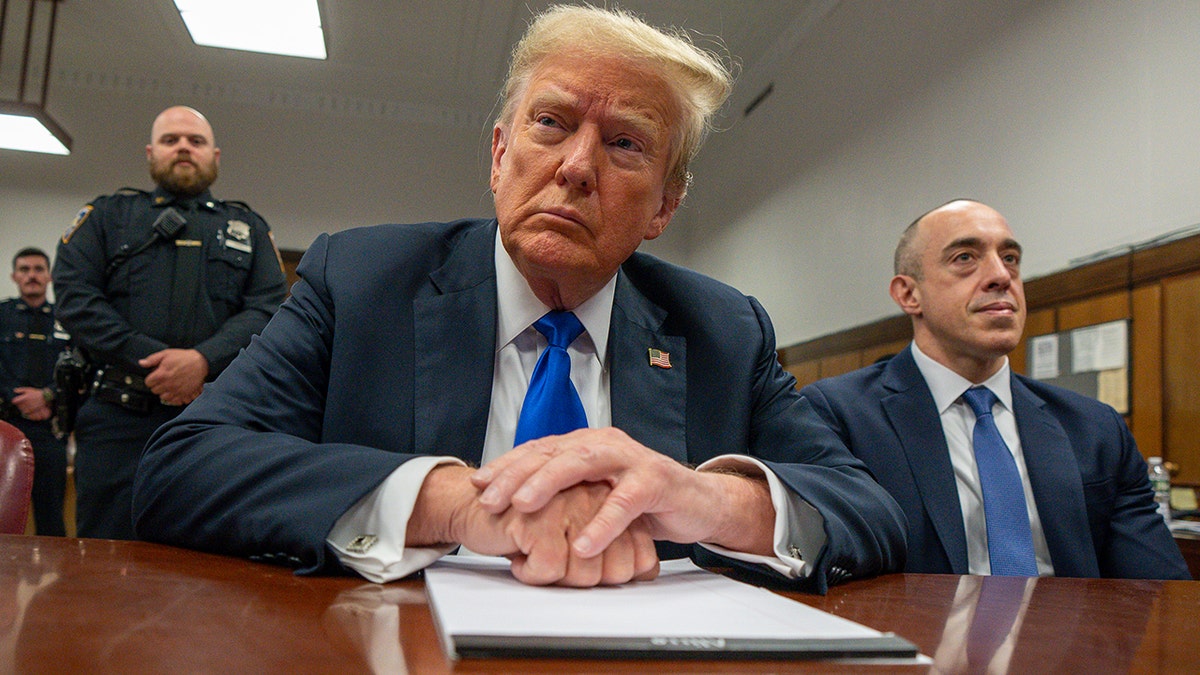
Then-former President Trump appears in Manhattan Criminal Court for his hush money trial in New York City. (Steven Hirsch-Pool/Getty Images)
A pair of federal criminal cases were dismissed, including one that alleged Trump mishandled sensitive government documents at his Florida Mar-a-Lago home after his first presidency, as well as another claiming Trump attempted to overturn the 2020 election results. Special counsel Jack Smith oversaw both cases.
Trump also faced civil cases, including New York Attorney General Letitia James accusing Trump and the Trump Organization of inflating asset values. In another case, E. Jean Carroll, a former columnist who alleges Trump raped her in a New York City department store dressing room in the 1990s, accused Trump of defamation in a 2022 case.
Trump railed against the accusations and cases as examples of lawfare to prevent him from winning a second presidency, taking a victory lap upon his 2024 win that the efforts failed.
«These cases, like all of the other cases I have been forced to go through, are empty and lawless, and should never have been brought,» Trump wrote on Truth Social in November 2024, when Smith announced he would drop the felony cases.
TRUMP IS ‘UNIQUELY POSITIONED TO AVOID’ FATE OF MOST TWO-TERM PRESIDENTS, WASHINGTON POST EDITORIAL EXPLAINS
«It was a political hijacking, and a low point in the History of our Country that such a thing could have happened, and yet, I persevered, against all odds, and WON. MAKE AMERICA GREAT AGAIN!» Trump added.
Second term Article II allegations
Trump’s second administration has faced more than 400 lawsuits, according to Just Security’s tracker, with many challenging his executive orders to reduce the size of the federal government, eliminate diversity, equity and inclusion programs, protect girls’ sports by barring biological male participation, and remove millions of illegal immigrants who have entered the U.S. in recent years.
Trump and his administration are in the midst of cleaning up U.S. cities that historically have been rocked by crime, including working to remove illegal immigrants residing in the cities. Most recently, Trump ordered the National Guard to Portland, Oregon, in response to «radical left terrorism» in the city, specifically members of the recently-designated domestic terrorism organization, Antifa.

Federal agents, including members of the Department of Homeland Security, the Border Patrol, and police officers, attempt to keep protesters back outside a downtown U.S. Immigration and Customs Enforcement (ICE) facility on Oct. 6, 2025, in Portland, Oregon. (Spencer Platt/Getty Images)
«The Radical Left’s reign of terror in Portland ends now, with President Donald J. Trump mobilizing federal resources to stop Antifa-led hellfire in its tracks. While Democrat politicians deny reality, it’s obvious what’s happening in Portland isn’t protest; it’s premeditated anarchy that has scarred the city for years — leaving officers battered, citizens terrorized, and property defaced,» the White House said in an announcement that Trump was deploying federal resources to Portland on Sept. 30.
WHITE HOUSE SAYS ‘THE REAL CONSTITUTIONAL CRISIS IS TAKING PLACE WITHIN OUR JUDICIAL BRANCH’
«What President Trump is trying to do is an abuse of power,» Democratic Oregon Gov. Tina Kotek said in September of Trump’s order to deploy the troops to Portland. «And it is a threat to our democracy. Governors should be in command of their National Guards, our citizens soldiers who sign up to stand up in an emergency to deal with real problems.»
Oregon sued the Trump administration over the order, claiming Trump lacked the authority to deploy the National Guard.
U.S. District Judge Karin Immergut issued a temporary restraining order halting Trump’s plan to deploy 200 Oregon National Guard troops, then again on Sunday expanded the order to bar the administration from deploying any National Guard units from any state to Oregon pending further proceedings. Immergut determined Trump’s order likely exceeded his presidential authority.
The White House has hit back that Trump is within his presidential limits.
«I think her opinion is untethered in reality and in the law,» Leavitt told reporters at a White House press briefing. «The president is using his authority as commander in chief, U.S. code 12 406, which clearly states that the president has the right to call up the National Guard and in cases where he deems it’s appropriate. … The ICE facility has been really under siege. And, by these anarchists outside, they have been, disrespecting law enforcement. They’ve been inciting violence.»
CLICK HERE TO GET THE FOX NEWS APP
The Ninth Circuit Court of Appeals lifted Immergut’s ruling that blocked the Oregon National Guard troops from deploying to Portland, but the other ruling barring any National Guard troops from deploying to Portland remains in effect.
white house,donald trump,federal courts,law














Las capacidades del sistema de posicionamiento global (GPS) de los buques de carga, petroleros y otros buques varados en Medio Oriente debido a la creciente guerra son probablemente peores que las de su celular.
Los expertos dicen que esta deficiencia explica por qué desde el comienzo de los ataques entre Estados Unidos e Israel, la interferencia de las señales de navegación por satélite ha dejado a unos 1.000 barcos en el Golfo y el Golfo de Omán incapaces de determinar su ubicación, ya sea momentánea o continuamente.
Dimitris Ampatzidis, analista senior de riesgos y cumplimiento de la firma de inteligencia del mercado energético Kpler, dijo a AFP que la cifra representa aproximadamente la mitad de los buques en la zona.
La gran mayoría de esos barcos se encuentran frente a los Emiratos Árabes Unidos y Omán.
Un sistema de navegación por satélite está formado por una constelación de satélites que envían señales con la hora a la Tierra, permitiendo al receptor determinar su ubicación precisa.
Los teléfonos inteligentes modernos reciben señales de cuatro grupos de satélites: el Sistema Global de Navegación por Satélite (GNSS) estadounidense, europeo (Galileo), ruso (GLONASS) y chino (BeiDou).

La mayoría de los teléfonos celulares utilizan ahora dos bandas de frecuencia GPS: una más antigua y más débil y una segunda más nueva y más fuerte.
Pero “muchos barcos solo escuchan la señal GPS civil original, llamada señal L1 C/A. Es la que existe desde principios de los años 90 para uso civil”, explicó a la AFP Todd Humphreys, profesor de ingeniería de la Universidad de Texas en Austin.
Por ello, la mayoría de los barcos no pueden confiar en los sistemas BeiDou o Galileo en caso de que se produzca un fallo en el GPS.
La situación es aún peor para los aviones, debido a las regulaciones de aviación.
“Hoy en día, no se encuentra ningún avión en el mundo cuyo receptor GPS integrado sea capaz de rastrear e interpretar señales distintas del GPS L1 C/A. Por lo tanto, está obsoleto desde hace 15 años”, afirmó Humphreys.
Interferir una señal GPS “no es tan complicado”, dijo Katherine Dunn, autora de un próximo libro sobre la historia del GPS, “Little Blue Dot”.
Lo único que se necesita es “otro transmisor de radio que pueda transmitir en la misma frecuencia, pero más fuerte”, dijo, lo que crea “un muro de confusión”.

La suplantación de identidad es más sofisticada y más peligrosa, y afecta al Sistema de Identificación Automática (AIS) de un barco.
Cada barco transmite un mensaje por segundo a través de una frecuencia de radio universal que anuncia su identidad, destino y posición.
La suplantación de identidad manipula ese sistema, provocando que el barco afectado envíe una ubicación falsa o incluso sin sentido, lo que significa que los barcos podrían parecer estar en tierra en Irán o los Emiratos.
Hoy en día, las señales GPS no sólo se utilizan para determinar la ubicación; también alimentan relojes de a bordo, sistemas de radar y registros de velocidad, dijo Dunn.
Así que, incluso si los barcos frente a los Emiratos o Kuwait estuvieran protegidos del fuego de los drones y escoltados a través del Estrecho de Ormuz, navegar sin GPS sería peligroso.
“Dado el tamaño de los barcos, se ha hecho necesaria la asistencia electrónica para dirigirlos”, dijo un capitán de marina mercante que ha navegado en buques de carga alrededor del mundo.
Las tripulaciones “tienen que recurrir a instrumentos del siglo XX: radares o puntos de referencia visibles”, explicó a la AFP bajo condición de anonimato.

Sin duda, la interferencia de señales se utiliza tanto ofensiva como defensivamente. Los países del Golfo están dirigiendo sus sistemas hacia sus propias costas para repeler los drones iraníes Shahed guiados por satélite, a costa, considerada aceptable, de perturbar sus propias vidas.
Israel hizo lo mismo en 2024, al igual que Irán después de sus 12 días de conflicto con Israel el año pasado.
“Aunque su propio tráfico aéreo o marítimo, sus repartidores o sus aplicaciones de citas se vean afectados por interferencias y suplantación de GPS, lo harán, como hizo Israel. Israel lo hizo durante un año en 2024”, afirmó Humphreys.
Para la navegación aérea y marítima, las empresas emergentes están desarrollando tecnologías alternativas utilizando el campo magnético de la Tierra o la navegación inercial.
Pero para los barcos de hoy, navegar sin GPS todavía es algo muy lejano en el futuro.
(AFP)
Middle East
INTERNACIONAL
Newsom rips Noem as ‘Kosplay Barbie’ over $220M ad campaign, demands DHS release $500M for LA wildfires
NEWYou can now listen to Fox News articles!
California Gov. Gavin Newsom ripped outgoing Homeland Security Secretary Kristi Noem over her controversial ad campaign and demanded the agency immediately release more than $500 million in stalled FEMA funding for Los Angeles wildfire recovery.
Newsom, in a statement, labeled Noem «Kosplay Barbie» and accused her of prioritizing a $220 million taxpayer-funded ad campaign featuring herself over disaster relief for fire-ravaged communities.
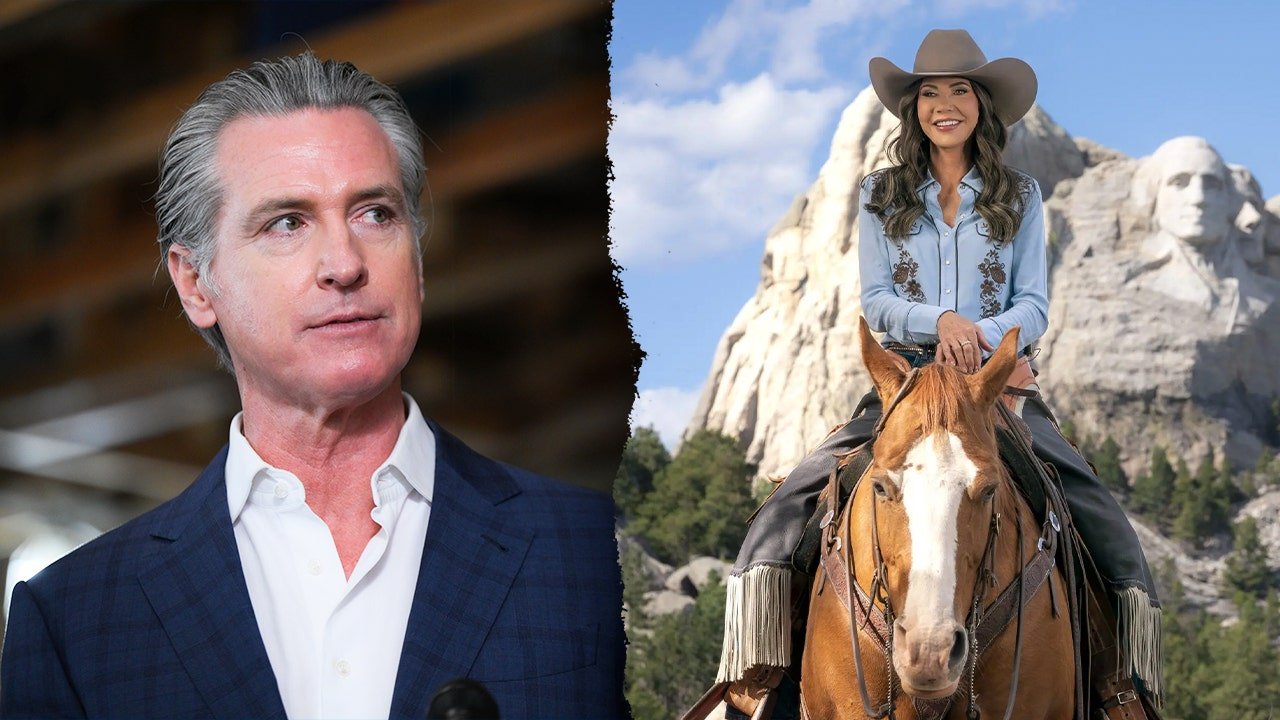
«While Kristi Noem poured $220 million of taxpayer money into a political ad campaign featuring herself on horseback, more than $500 million in FEMA funding for LA fire recovery sat stalled on her desk,» Newsom said in a statement alongside a still photo of Noem riding a horse from the widely publicized ad.
«Families in Los Angeles shouldn’t have to wait while she and Donald Trump play politics. Release the funding now and redirect those dollars to help communities rebuild.»
California Governor Gavin Newsom demands Kristi Noem immediately release more than $500 million in stalled FEMA funding for Los Angeles wildfire recovery. (Tayfun Coskun/Getty Images)
The Los Angeles wildfires burned for weeks in early 2025, destroying thousands of homes across areas including Pacific Palisades and Altadena and causing tens of billions of dollars in estimated damage.
Newsom’s office said DHS under Noem required her personal sign-off on every department contract, grant or disaster award exceeding $100,000, including FEMA public assistance and hazard mitigation grants. The governor said the policy created a backlog of awards that had already been vetted, awaiting final approval.
According to Newsom’s office, more than $500 million tied to Los Angeles fire recovery remains stalled, along with roughly $94 million in hazard mitigation funding for the region. Those funds typically support rebuilding schools, repairing roads and strengthening infrastructure against future disasters.
KRISTI NOEM’S FIRING FAILS TO SWAY DEMOCRATS AS DHS SHUTDOWN DRAGS ON
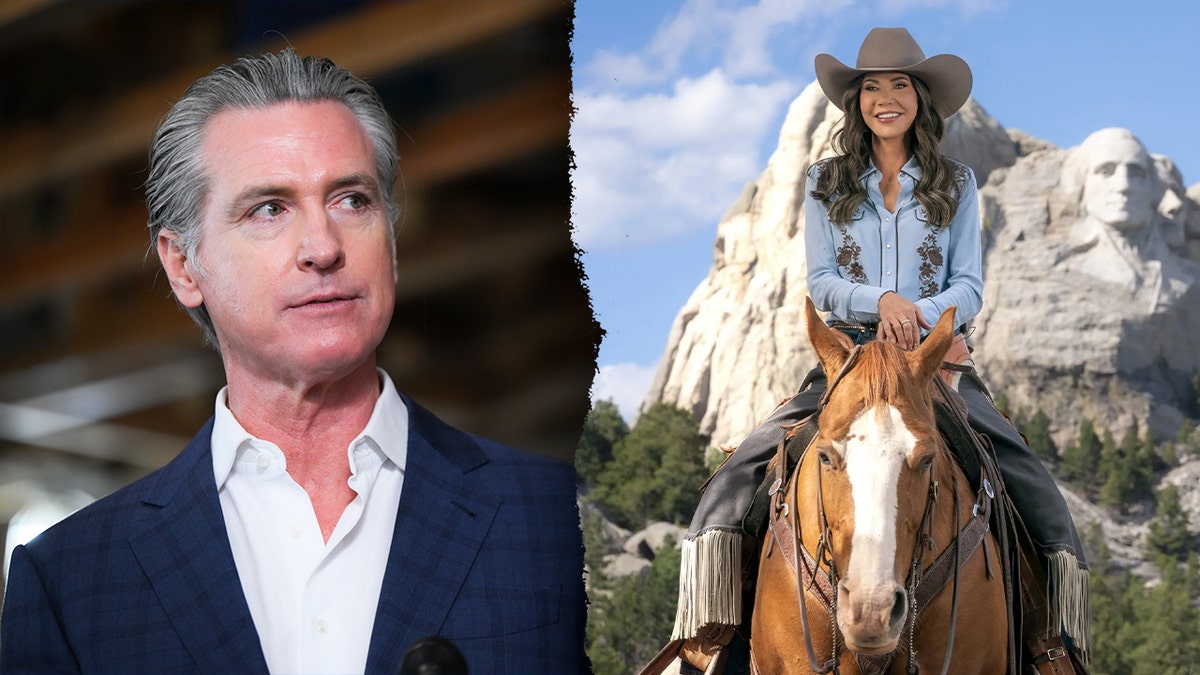
California Gov. Gavin Newsom, left, criticized former Homeland Security Secretary Kristi Noem over a $220 million ad campaign that featured her riding a horse, as he called for the release of stalled FEMA funds for Los Angeles wildfire recovery. (Tayfun Coskun/Anadolu via Getty Images; DHS photo by Tia Dufour/Released)
The delays are affecting rebuilding efforts in canyon and foothill neighborhoods, including areas above Pasadena and Altadena, where damaged park facilities, fenced-off trailheads and temporary road repairs remain in place while local agencies await federal reimbursement, his office said.
President Donald Trump cut short Noem’s tenure at the Department of Homeland Security after weeks of internal turmoil and named her «Special Envoy for the Shield of the Americas,» a newly created role he described as part of a broader Western Hemisphere security initiative. The White House has not yet detailed the scope of the position.
Noem was removed as the nation’s immigration chief after a turbulent stretch marked by internal clashes and two contentious congressional hearings where even some Republicans pressed her over alleged leadership missteps, including the ad campaign, which she said the president had signed off on.
CLICK HERE TO DOWNLOAD THE FOX NEWS APP

A woman pours water on a neighbor’s fire-ravaged property in the aftermath of the Palisades Fire in the Pacific Palisades neighborhood of Los Angeles, on Jan. 9, 2025 (AP/Jae C. Hong)
Trump announced on Truth Social that Sen. Markwayne Mullin, R-Okla., will replace her effective March 31, while Noem shifts to the newly created envoy role, which the president said he will detail this weekend.
Fox News’ Charles Creitz and Paul Steinhauser contributed to this report.
Related Article

kristi noem,donald trump,gavin newsom,homeland security,la fires,wildfire,politics

El humano es el único animal que sabe que va a morir. La muerte es una experiencia universal, pero su comprensión y su vivencia están profundamente condicionadas por factores culturales, históricos y personales. En las últimas décadas, el concepto de bien morir ha cobrado relevancia en el campo de la medicina, la bioética, la filosofía y las ciencias sociales. Este enfoque propone humanizar el final de la vida, promoviendo la dignidad, el alivio del sufrimiento y la autonomía del paciente. A diferencia de la visión tradicional centrada exclusivamente en la prolongación de la vida, el bien morir invita a reflexionar sobre la calidad del proceso de morir.
“Quiero que me prolonguen la vida, no la muerte”, me dijo un paciente. La medicina no debe buscar solamente evitar la muerte, sino evitar el sufrimiento innecesario. Esta perspectiva implica reconocer que el cuidado y el acompañamiento son tan importantes como la intervención terapéutica.
La idea de morir bien no es reciente. En la Edad Media, los tratados conocidos como “ars moriendi” ofrecían orientaciones espirituales para afrontar la muerte con serenidad y sentido. El historiador Philippe Ariès sostiene que las sociedades tradicionales vivían la muerte como un acontecimiento familiar y comunitario, en el que el moribundo ocupaba un lugar central. Podía despedirse, reconciliarse, repartir sus bienes, transmitir enseñanzas y preparar su espíritu.

Sin embargo, con el avance de la modernidad, la muerte fue progresivamente desplazada hacia el ámbito hospitalario. Según Ariès, este proceso condujo a una “muerte prohibida”, caracterizada por el silencio social, la negación y la pérdida de rituales. Una muerte con sondas, máscaras y sedantes. El bien morir, en la actualidad, busca recuperar la dimensión humana y relacional de este proceso sin renunciar a los avances médicos.
No existe una definición única de bien morir, pero diversos autores coinciden en algunos elementos fundamentales. En primer lugar, la dignidad. Desde la perspectiva filosófica de Emmanuel Kant, la dignidad es un valor intrínseco de la persona que no puede ser instrumentalizado. En el final de la vida, esto implica respetar la identidad, los valores y los deseos de cada individuo.
En segundo lugar, el alivio del sufrimiento. Cicely Saunders, fundadora del movimiento moderno de cuidados paliativos, introdujo el concepto de “dolor total”, que integra las dimensiones físicas, emocionales, sociales y espirituales del sufrimiento. Esta visión transformó la práctica médica, ya que mostró que tratar únicamente el dolor físico no es suficiente.

En tercer lugar, la autonomía. Beauchamp y Childress, en sus principios de bioética, destacan que el respeto por la autonomía exige que la persona pueda tomar decisiones informadas sobre su tratamiento, expresar sus voluntades anticipadas y rechazar intervenciones desproporcionadas.
Finalmente, el acompañamiento. Elisabeth Kübler-Ross mostró que uno de los mayores temores de las personas que se acercan a la muerte no es el morir en sí, sino hacerlo en soledad.
Durante gran parte del siglo XX, la medicina estuvo orientada hacia la curación y el control de la enfermedad. La muerte era vista como un fracaso terapéutico, lo que llevó en muchos casos a la obstinación terapéutica, es decir, la prolongación de la vida biológica mediante intervenciones que no mejoran la calidad de vida. Los cuidados paliativos surgieron como una respuesta a esta problemática. Saunders afirmaba que no siempre es posible curar, pero siempre es posible cuidar. Este cambio de paradigma implica acompañar al paciente, controlar síntomas, brindar apoyo emocional y espiritual y respetar las decisiones individuales. La Organización Mundial de la Salud ha destacado la importancia de integrar los cuidados paliativos en todos los niveles de atención sanitaria, reconociendo que estos mejoran la calidad de vida y reducen el sufrimiento.
Uno de los obstáculos para el bien morir en la sociedad contemporánea es el miedo a la muerte. El sociólogo Zygmunt Bauman señaló que la modernidad líquida busca eliminar la muerte del horizonte cultural. La obsesión por la juventud, el rendimiento y la productividad contribuye a negar la fragilidad. Y supone que con operaciones plásticas, botox y supuestos y rentables tratamientos rejuvenecedores podemos retrasar el tiempo. Las canas y las arrugas son delatoras a eliminar.

El filósofo Martin Heidegger propuso que el ser humano es un ser para la muerte. Reconocer la finitud no es un signo de pesimismo, sino una condición para la autenticidad. La conciencia de la muerte permite priorizar lo esencial, asumir responsabilidades y vivir de manera más plena. A pesar de ello, muchas personas evitan hablar sobre el final de la vida, tanto pacientes como familiares, lo que dificulta la planificación anticipada y genera conflictos en momentos críticos.
El bien morir también es un proceso relacional. Norbert Elias denunció que la sociedad moderna tiende a aislar a los moribundos, generando una experiencia de soledad que aumenta el sufrimiento. El acompañamiento familiar y social permite expresar afecto, resolver conflictos, compartir recuerdos y transmitir legado. Diversos estudios en psicología clínica muestran que la despedida facilita el duelo posterior y fortalece los vínculos. El cuidado, por lo tanto, no solo beneficia al paciente, sino también a quienes lo rodean. En este sentido, el final de la vida puede convertirse en un momento de profunda humanidad.
Morir es también un proceso psicológico. Las personas atraviesan emociones complejas como negación, ira, tristeza, miedo y aceptación. Aunque el modelo de Kübler-Ross ha sido revisado, continúa siendo una referencia para comprender la diversidad de reacciones. La psicología contemporánea destaca que cada individuo construye su propio camino. Algunos buscan información y control, mientras que otros prefieren confiar en sus familiares o en los profesionales de la salud. La atención psicológica ayuda a reducir la ansiedad, fortalecer la resiliencia, facilitar la comunicación y elaborar el duelo anticipado.
La dimensión espiritual adquiere un papel central en el final de la vida. Viktor Frankl sostenía que el ser humano puede encontrar sentido incluso en el sufrimiento. Para muchas personas, la proximidad de la muerte despierta preguntas existenciales sobre el significado de la vida, el legado y la trascendencia. La espiritualidad no se limita a la religión; incluye valores, vínculos y proyectos. Frankl afirmaba que el sentido puede encontrarse en el amor, la creación y la actitud frente al sufrimiento. Numerosos estudios muestran que el apoyo espiritual, se sea o no religioso, reduce la angustia y mejora el bienestar.

El bien morir también está vinculado a debates bioéticos contemporáneos. La limitación del esfuerzo terapéutico, las directivas anticipadas, la sedación paliativa y los derechos del paciente son temas centrales. La bioética busca equilibrar principios como la beneficencia, la autonomía y la justicia. Existe un consenso creciente en que prolongar el sufrimiento sin beneficio es contrario a la ética médica. Autores como Daniel Callahan han subrayado la necesidad de reconocer los límites de la medicina y priorizar el cuidado.
Diversas corrientes filosóficas han vinculado la reflexión sobre la muerte con la calidad de la vida. Los estoicos, como Séneca, consideraban que pensar en la muerte permite vivir con mayor libertad. Aceptar la finitud ayuda a priorizar relaciones, reducir conflictos y valorar el presente. En este sentido, el bien morir comienza mucho antes del final. Implica vivir con conciencia, cultivar vínculos y expresar afecto. No se trata solo de prepararse para el momento de la muerte, sino de construir una vida coherente.
El envejecimiento poblacional plantea nuevos desafíos para las sociedades contemporáneas. Es necesario ampliar el acceso a cuidados paliativos, formar profesionales, promover la educación sobre la muerte y humanizar los sistemas de salud. La Comisión Lancet sobre cuidados paliativos ha advertido que millones de personas mueren cada año sin acceso al alivio del dolor, lo que constituye una forma de inequidad global.
El bien morir puede comprenderse como un derecho humano que integra dignidad, alivio del sufrimiento, autonomía, acompañamiento y sentido. No implica acelerar la muerte, sino humanizar el proceso. Cicely Saunders expresó esta idea al afirmar que cada persona importa hasta el último momento de su vida. Hablar de la muerte no disminuye la vida, sino que la profundiza.

Un cuento mío al estilo sufí expresa la importancia de la aceptación de la muerte:
Un discípulo fue a ver al sabio derviche Samir y le preguntó:—Maestro, ¿cómo puedo prepararme para la muerte?
Samir se quedó mirando al joven largo rato, sin decir palabra. Luego se levantó, entró en su casa y salió con una escoba. Sin explicación, comenzó a barrer con entusiasmo el camino frente a su puerta.
—¿Eso es una enseñanza sobre la muerte? —preguntó el discípulo, confundido.
—Claro —dijo Nasrudín, sin dejar de barrer—. ¿Qué haces cuando esperas un invitado importante?
—Limpio mi casa, pongo todo en orden, me preparo para recibirlo con dignidad.
—Exacto —dijo el sabio derviche, dejando caer la escoba—. Y sin embargo, tú vives como si la muerte fuera un ladrón, no un invitado. La temes, pero no te preparas. ¿No sería mejor vivir como si ya estuvieras a punto de ofrecerle té?
El discípulo bajó la cabeza.
Samir sonrió y añadió:—Además, si no viene hoy, ¡qué suerte! La casa quedó limpia para ti.
Prepararse para morir bien es, en última instancia, aprender a vivir con autenticidad, responsabilidad y amor hacia los demás.

Círculo rojo: afloran las diferencias en el Gobierno, crece la preocupación por la economía y se visibiliza la disputa por CABA

Alejandra Monteoliva reveló que Nahuel Galló habló con Claudio “Chiqui” Tapia previo a su regreso a la Argentina

El peronismo quiere trasladar al Congreso los intentos de unidad para construir una alternativa opositora

El contexto internacional profundiza los costos y reafirma el “trilema” de la política económica argentina

Escándalo en el fútbol peruano: acusan a un argentino de haber realizado un insulto racista en Sporting Cristal vs. Alianza Atlético

Julieta Cayetina y su regreso a las tablas: “No solo trabajo con el humor, es parte de mi vida”

El hijo adoptivo de José María Muscari tomó una tajante decisión de vida a los 18 años

¡Interna total! Pablo Layus explotó y blanqueó quiénes son los que arruinan Intrusos: «Te matan»

Javier Milei habló de la crisis con la vicepresidenta: “No quiero la renuncia de Victoria Villarruel”

El desafortunado comentario de Yanina Zilli contra Daniela de Lucía, tras la muerte de su padre: “Jugamos con lo personal”

 POLITICA2 días ago
Javier Milei habló de la crisis con la vicepresidenta: “No quiero la renuncia de Victoria Villarruel”
- CHIMENTOS2 días ago
Ian Lucas se hartó de las mentiras de Evangelina Anderson y confirmó que fueron novios: “Ella me da vergüenza”
- CHIMENTOS3 días ago
Fabi Cantilo festejó sus 67 años: invitados famosos, el regalo de Fito Páez y el susto que terminó en la guardia