INTERNACIONAL
Iran flips ‘kill switch’ to hide alleged crimes as death toll rises amid protests

NEWYou can now listen to Fox News articles!
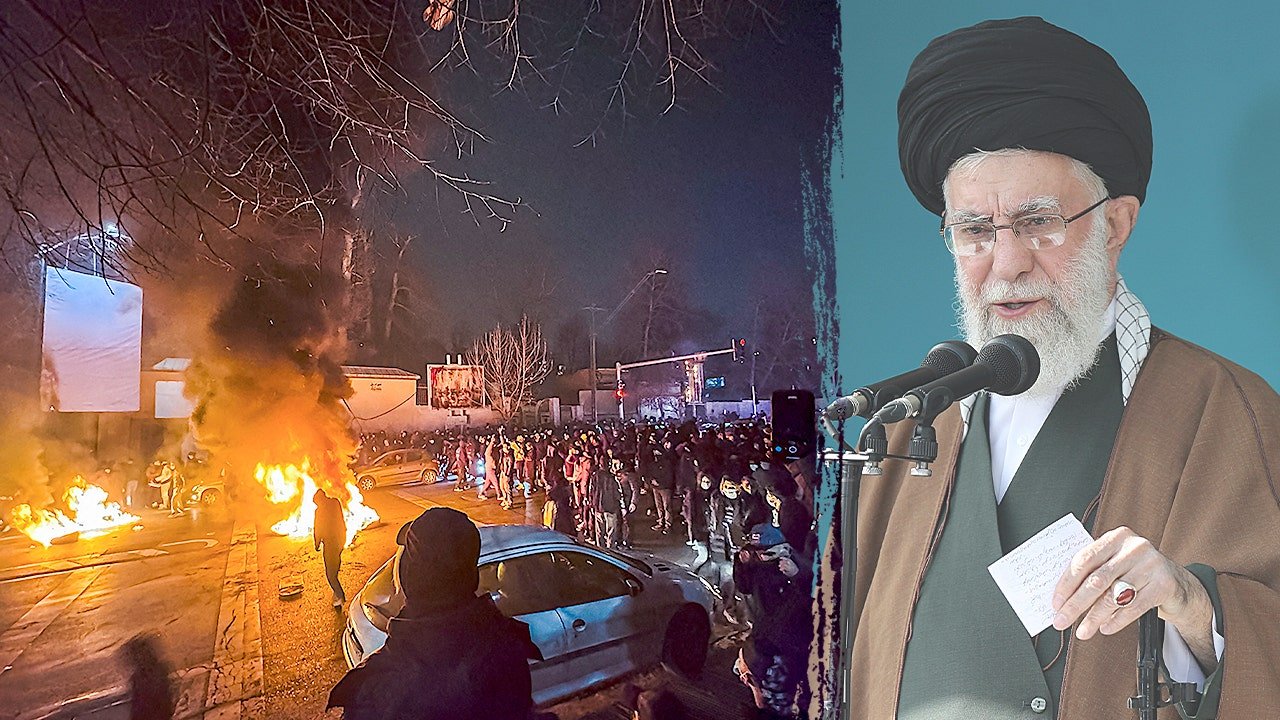
The Iranian regime triggered an internet «kill switch» in an apparent effort to hide alleged abuses by security forces and as protests against it surged nationwide, a cybersecurity expert has claimed.
The blackout slashed internet access to a fraction of normal levels on the 13th day of the protests as rights groups, including Amensty International, accused the regime of using lethal force against protesters.
«This is Iran’s war against its own population using digital means,» NetBlocks CEO Alp Toker told Fox News Digital.
«This was a piecemeal measure that eventually encompassed the entire country, with the government willing to use this kind of measure for an extended period of time,» he said.
«There would be an attempt by the regime to cover up crimes that it may have committed, so this blackout could potentially last for days or weeks,» Toker added.
PROTESTER SCALES IRANIAN EMBASSY IN LONDON, TEARS DOWN REGIME FLAG, HOISTS PRE-REVOLUTION SYMBOL
Protesters gather as vehicles burn, amid evolving anti-government unrest, in Tehran, Iran, in this screen grab obtained from a social media video released on Friday. (Social Media/via Reuters)
At least 65 people have been killed in the protests, according to Human Rights Activists in Iran, which said late Friday that the death toll had more than doubled since earlier in the week.
The group also reported that more than 2,300 people have been arrested and that demonstrations have spread to at least 180 cities nationwide. Most of those killed were protesters, the group said.
«People in Iran daring to express their anger at decades of repression and demand fundamental change are once again being met with a deadly pattern of security forces unlawfully firing at, chasing, arresting and beating protesters,» Amnesty International also said in a statement Thursday.
«The single kill switch is the censorship mechanism that is centrally controlled by the regime, so there are no legal procedures or mechanisms for people to push back,» Toker said.
«We know now that they’ve centralized all of this into a one-step operation,» he explained, calling it «very much a top-down mechanism.»
«It’s been in development since the Cold War, and it means they are able to triangulate the ground terminal in satellite transmissions. Some governments implement this kind of kill switch in their cyber operations rooms,» he said.
ARMED IRAN PROTESTERS BATTLE POLICE IN TEHRAN STREETS AS TRUMP WARNS OF FORCEFUL US RESPONSE
«We know that in 2019, for example, it used to be a painstaking measure when the government had to switch off businesses one by one, city by city.»
NetBlocks said the current blackout is among the most severe it has ever recorded in Iran.
«We are tracking near-total disconnection of internet service across Iran right now, and connectivity is below 2% of ordinary levels,» Toker said.
«This is a nationwide disruption that is impacting almost all services, all connectivity and all avenues of life, extending beyond just mobile phones and computers,» he said.
«It’s impacting banks, essential services, and there’s very little communication within the country, so people are unable to reach the outside world and nobody has the ability to communicate.»
EXILED IRANIAN CROWN PRINCE URGES TRUMP TO HELP AS PROTESTS AGAINST ISLAMIC REGIME INTENSIFY: ‘MAN OF PEACE’
Despite the sweeping restrictions, some limited communication channels remain available, Toker revealed.
«There are a few gaps, so it’s possible to communicate with those close to the borders through Wi-Fi or mobile service that crosses borders,» he said.
«It’s also occasionally possible to find a part in the service, in a fixed-line service, where they can tunnel through all those, but that is increasingly rare and no longer an option.
«Another mechanism we’ve seen is access via satellite internet, namely the Starlink network, but the equipment is banned by the Iranian regime.»
«The technology that the Iranian regime uses to trace links is essentially anti-espionage technology,» he said.
«These measures are typically imposed by the most authoritarian regimes, the most controlling governments that seek to silence and oppress their own populations,» Toker said.
«NetBlocks tracked very similar multi-week disruption in 2019, during which thousands were killed, and this was also done in 2022 when people were protesting the killing of Mahsa Amini.»
IRANIAN MILITARY LEADER THREATENS PREEMPTIVE ATTACK AFTER TRUMP COMMENTS
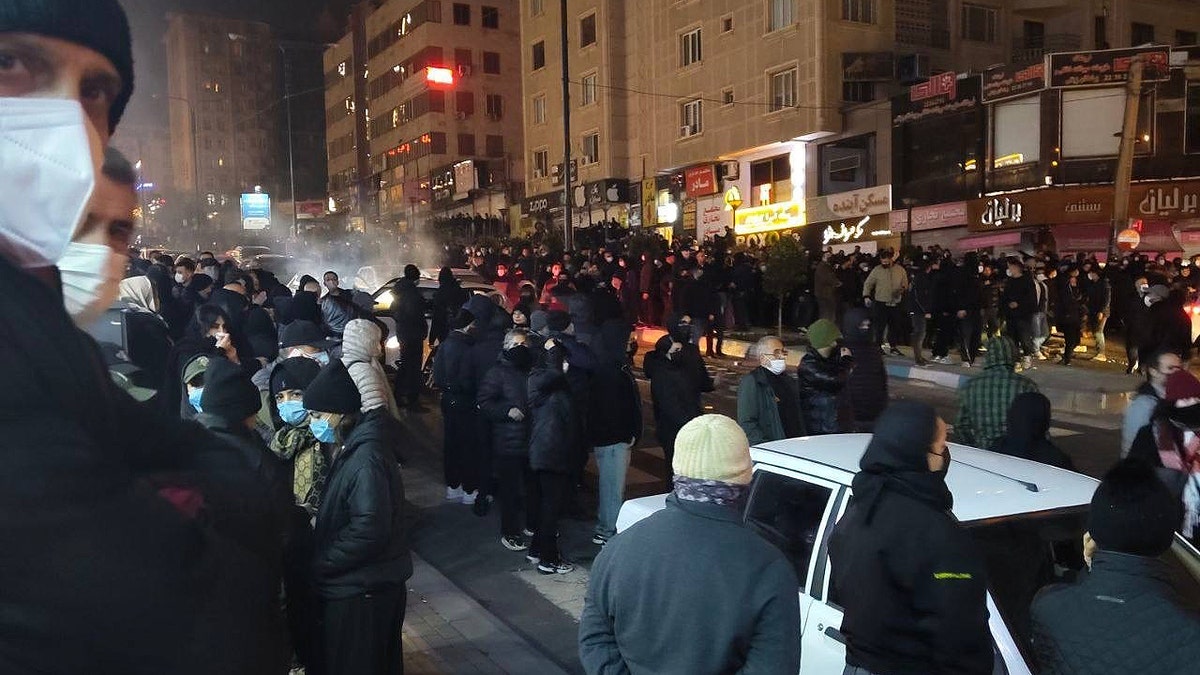
Iranian demonstrations have intensified in recent days with the sounds of gunfire in the streets. (National Council of Resistance of Iran)
«In past incidents, we did observe that the government attempted to keep a baseline of service available.
«In this recent case, they pulled the plug, so there’s a far more extreme measure in place here, which suggests that the regime is scared and isn’t taking risks when it comes to the possibility of information reaching the outside world.»
President Donald Trump warned Iran’s leaders Friday against using force on protesters.
Speaking to reporters at the White House, he warned Iran was in «big trouble.»
«I just hope the protesters in Iran are going to be safe, because that’s a very dangerous place right now,» Trump said. «You’d better not start shooting, because we’ll start shooting, too.»
CLICK HERE TO DOWNLOAD THE FOX NEWS APP
«The U.S. has encouraged democracy in Iran, and that’s a positive thing at this point,» Toker said.
«There’s very little that can be done from the outside, but it’s important to continue to support positive efforts.
«A free and open internet in Iran, and indeed in other countries, can encourage democracy and support basic liberties,» he added.
iran,world protests,donald trump,cybercrime,privacy,persecutions,personal freedoms










INTERNACIONAL
La guerra en Medio Oriente redujo el tránsito por el Estrecho de Ormuz a 77 barcos en marzo
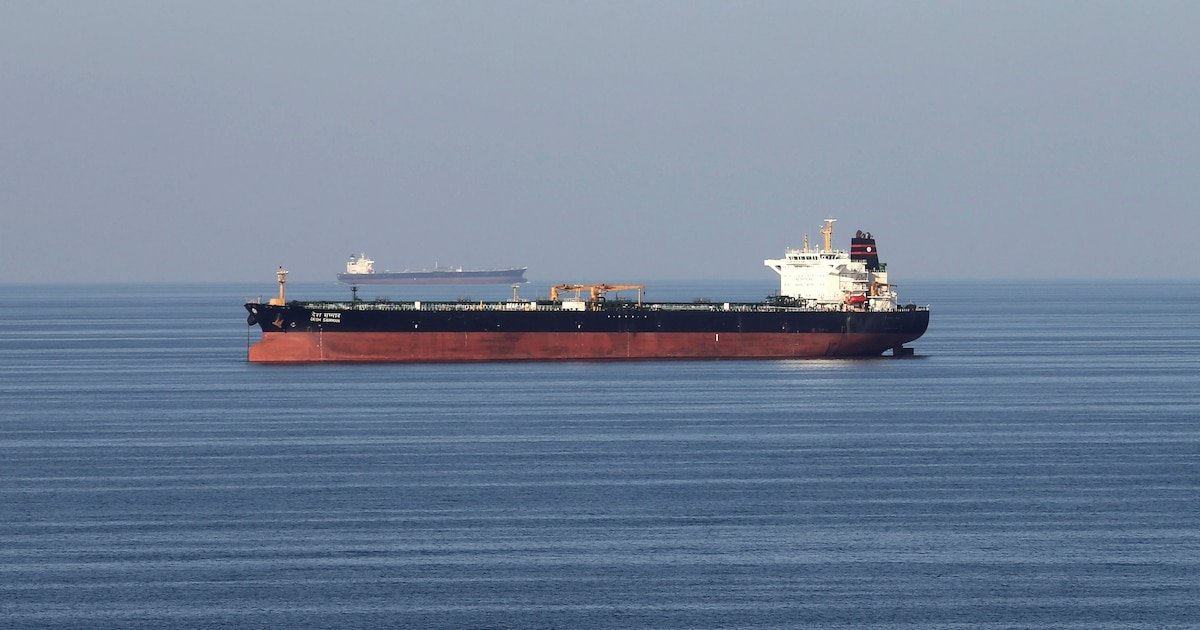
Sólo 77 barcos atravesaron el Estrecho de Ormuz en marzo, una cifra muy inferior a los 1.229 tránsitos registrados en el mismo período del año anterior, según datos de Lloyd’s List Intelligence.
La guerra en Medio Oriente provoca una fuerte caída en el paso de embarcaciones por una de las vías marítimas más relevantes para el transporte de energía a nivel mundial.
De acuerdo con Lloyd’s List Intelligence, la mayoría de los buques que lograron cruzar pertenecen a la denominada flota fantasma, integrada por barcos antiguos, con condiciones deficientes, sin seguro adecuado y propietarios poco identificables, generalmente asociados a Rusia e Irán.
La consultora marítima precisó que los buques vinculados al régimen iraní representan el 26% del tráfico en la zona, seguidos por embarcaciones de Grecia con el 13% y de China con el 12%.
“Más de la mitad de los buques cisterna y gaseros que transitan por la zona son flotas paralelas”, afirmó Bridget Diakun, analista senior de Lloyd’s List Intelligence. “Estos barcos están muy acostumbrados a las interrupciones”, añadió Diakun, y sostuvo que por ese motivo “es más probable que intenten la travesía”.

El Cuerpo de la Guardia Revolucionaria Islámica (CGRI) del país persa mantiene prácticamente cerrado el estrecho, que limita con Irán y por donde circula aproximadamente el 20% del suministro mundial de petróleo. Desde comienzos de mes, 20 buques comerciales —nueve de ellos petroleros— fueron atacados o sufrieron incidentes, de acuerdo con la Agencia Británica de Operaciones de Comercio Marítimo. La Organización Marítima Internacional confirmó 16 incidentes en la región, de los cuales ocho involucran a petroleros.
El nuevo líder supremo de Irán, Mojtaba Khamenei, manifestó el jueves: “Sin duda alguna, hay que recurrir al bloqueo del estrecho de Ormuz”. Esta decisión pretende afectar la economía global y ejercer presión sobre Estados Unidos. Según Diakun, “la principal conclusión es que… Irán sigue exportando”.
Por otra parte, la agencia de noticias AFP contabilizó cerca de 40 embarcaciones que cruzaron el Estrecho de Ormuz desde el inicio del conflicto, tomando en cuenta solo aquellos buques que mantuvieron encendidos sus transpondedores AIS, el sistema de identificación automática.
El jefe de asuntos humanitarios de las Naciones Unidas, Tom Fletcher, exigió el viernes que se autorice el tránsito seguro de ayuda humanitaria a través del estrecho, afectado por las interrupciones en el tráfico marítimo durante el conflicto.

“Se debe permitir el paso seguro de la ayuda humanitaria a través del estrecho de Ormuz”, afirmó Fletcher en un comunicado, y advirtió que “millones de personas corren peligro” si continúan las restricciones.
Un buque de propiedad turca logró atravesar la zona con autorización de las autoridades iraníes, informó el viernes el ministro de Transportes de Turquía, Abdulkadir Uraloglu. “Tenemos 15 buques de propiedad turca en el estrecho de Ormuz y pudimos permitir el paso de uno de ellos tras obtener el permiso de las autoridades iraníes”, declaró Uraloglu a periodistas el jueves por la noche, según declaraciones difundidas el viernes.
El estrecho de Ormuz constituye una ruta marítima central para el comercio global y permanece cerrado por decisión de Irán tras el ataque de Israel y Estados Unidos el 28 de febrero.
A su vez, la angustia de los marineros que esperan pasar por la zona en conflixto se apoderó de las redes sociales. “Todos los días en el barco veo lanzamientos de misiles y oigo explosiones, lo que me hace sentir en peligro”.
Así describió Wang Shang, marinero chino de 32 años, la situación en la que permanece varado en el Golfo Pérsico. Su embarcación se encuentra imposibilitada de cruzar el estrecho de Ormuz, bloqueado desde hace casi dos semanas después de los ataques de Estados Unidos e Israel contra Irán.
Wang Shang relató sus experiencias a través de vídeos publicados en Douyin, la versión china de TikTok. “Estoy preocupado porque ayer la sala de máquinas de un buque fue alcanzada por un dron iraní a solo dos millas náuticas de mi embarcación, aproximadamente a 3.600 metros, lo cual es muy cerca”, expresó Wang.
(Con información de AFP)
Crime,Government / Politics,Military Conflicts
NEWYou can now listen to Fox News articles!
As Iranian-designed Shahed drones proliferate across battlefields from Ukraine to the Middle East, relatively cheap unmanned aircraft are forcing the use of some of the world’s most expensive air defense systems, raising questions about the long-term sustainability of that approach.
The issue has taken on new urgency in the wake of Operation Epic Fury, as Iranian drones — widely estimated to cost $20,000 to $50,000 to manufacture — target U.S. forces and allied Gulf states across the region.
U.S. and partner forces have relied on a mix of Patriot missiles, Terminal High Altitude Area Defense batteries, naval interceptors and other systems to blunt the attacks.
While many of the incoming drones have been intercepted, the strikes have still exacted a cost, killing six U.S. service members in Kuwait and damaging civilian infrastructure, including airports and hotels in the United Arab Emirates and Bahrain.
TOMAHAWKS SPEARHEADED US STRIKE ON IRAN — WHY PRESIDENTS REACH FOR THIS MISSILE FIRST
Iranian-made unmanned aerial vehicles (UAV), the Shahed-136, are carried by a truck during a military parade in south Tehran on Sept. 21, 2024. (Morteza Nikoubazl/NurPhoto via Getty Images)
The mounting toll has intensified concerns over how to counter drone swarms without depleting interceptor stockpiles that cost millions of dollars each to replace.
Ukraine has been at the forefront of modern drone warfare since Russia’s 2022 invasion, rapidly adapting its tactics and emerging as a leader in battlefield drone technology.
Alex Roslin, a spokesman for the Ukrainian nonprofit miltech company Wild Hornets, told Fox News Digital in an interview that interceptor drones developed in Ukraine offer a dramatically cheaper alternative to traditional air defense systems.
HERE COME THE BIG BOMBS AS US ESCALATES STRIKES ON IRAN’S HUGE MILITARY ARSENAL
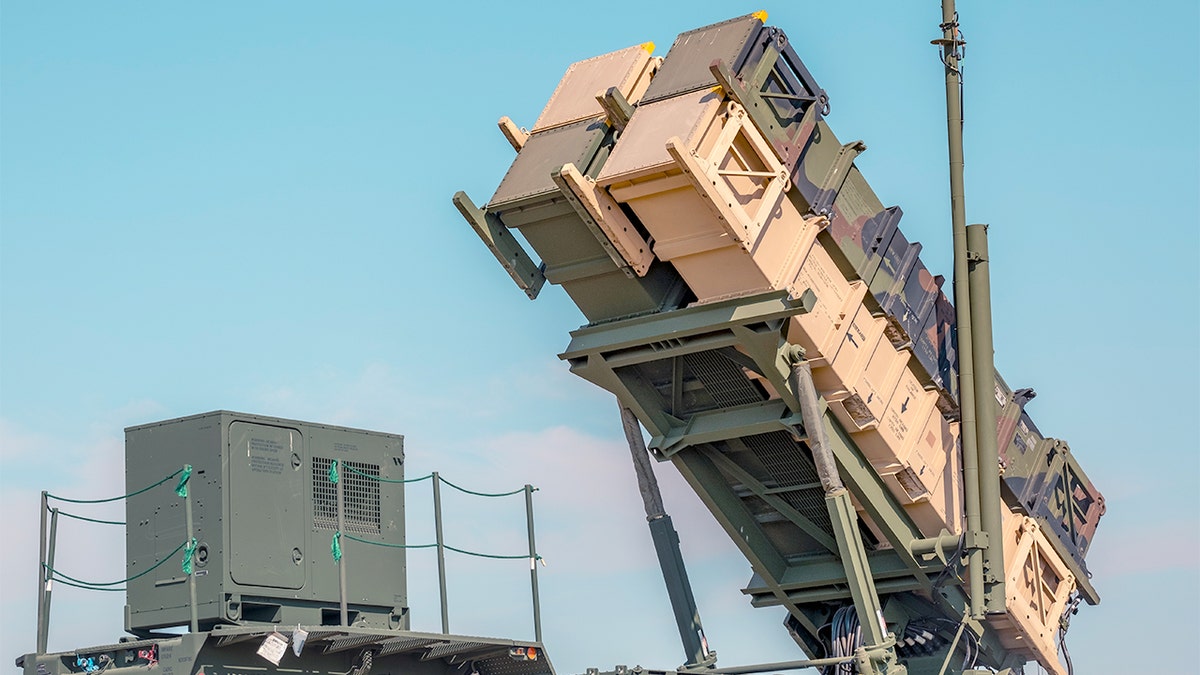
A U.S. Army Patriot launcher from the 5th Battalion, 7th Air Defense Artillery Regiment is deployed in southeast Poland on Sept. 4, 2024. (U.S. Army photo by Capt. Leara Shumate)
While a U.S. Patriot missile can cost roughly $4 million, Roslin said his organization’s interceptor drones can be produced for as little as $1,400 apiece.
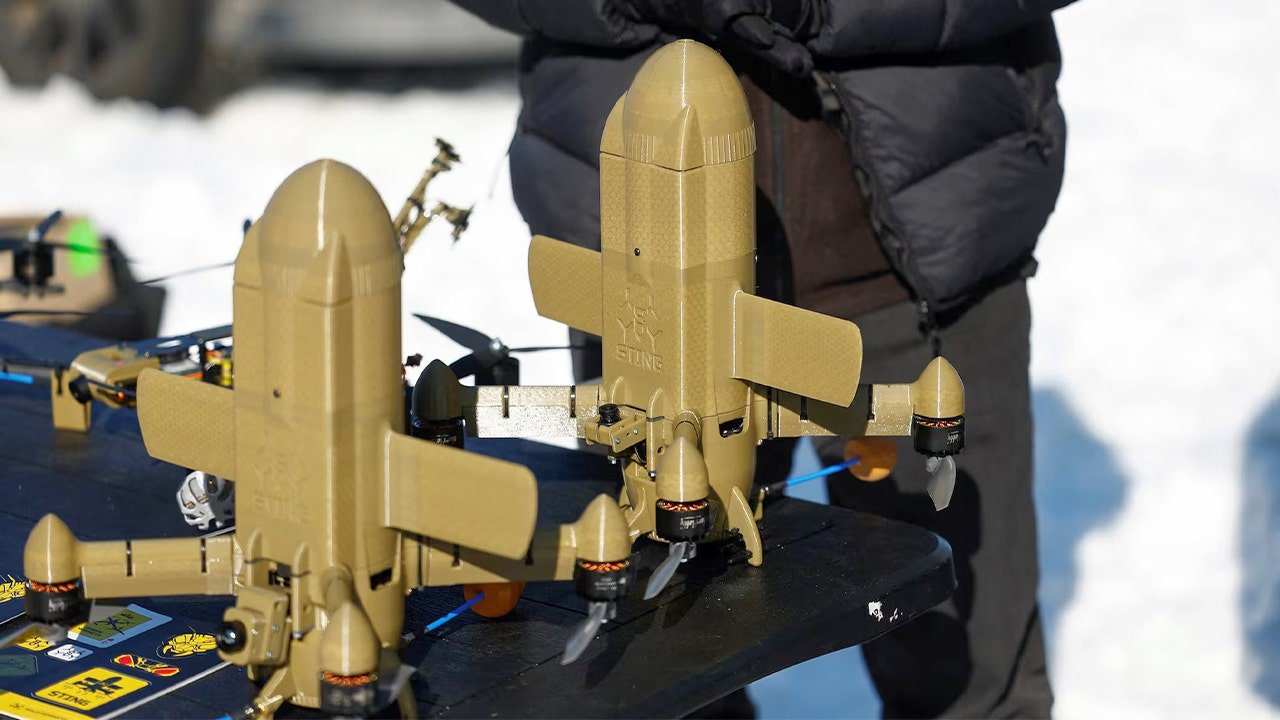
Wild Hornets’ so-called «Sting» interceptors have downed thousands of Russian-made Shahed-type drones and now achieve a 90% effectiveness rate, according to the group, up from roughly 70% last fall as pilots and radar teams gained experience and adopted improved ground control systems.
«Ukraine had to fight smart and didn’t have rocket-propelled grenades and anti-tank missiles, stuff like that, so they turned to these kinds of drones to sort of equalize the battlefield,» Roslin told Fox News Digital.
IRAN WAR, 11 DAYS IN: US CONTROLS SKIES, OIL SURGES AND THE REGION BRACES FOR WHAT’S NEXT

A pair of «Sting» interceptor drones, developed by the Ukrainian group Wild Hornets, are displayed at a training facility. (Credit: Wild Hornets)
The Financial Times reported the Pentagon and at least one Gulf government are in talks to buy Ukrainian-made interceptors amid Iran’s retaliatory attacks.
President Donald Trump told Reuters in a phone interview in early March that he would be open to assistance from any country, when asked about an offer from Ukrainian President Volodymyr Zelenskyy to help defend against Iranian drones.
Zelenskyy said Friday in a post on X that Kyiv was sending a team of experts and military personnel to three countries in the Gulf region to help counter Tehran’s drones.
US DIPLOMATIC FACILITY IN IRAQ STRUCK BY DRONE
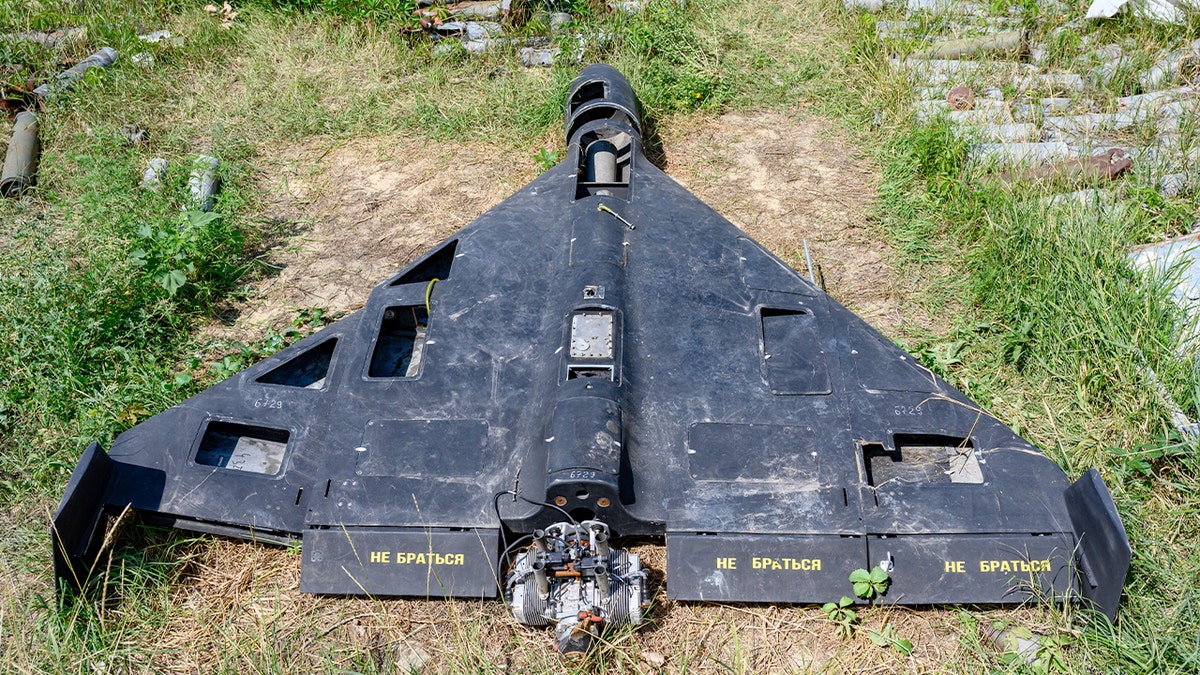
The remains of a Russian-made, Iran-designed Shahed-136 drone, known in Russia as a Geran-2, are displayed with other recovered drones, glide bombs, missiles and rockets in Kharkiv on July 30, 2025. (Scott Peterson/Getty Images)
«We know that in Middle Eastern countries, in the U.S., and in European states, there is a certain number of interceptor drones. But without our pilots, without our military personnel, without specialized software, none of this works,» he wrote.
Tom Karako, director of the Missile Defense Project at the Center for Strategic and International Studies, said the focus on air defense price tags can obscure the more pressing constraint.
«Capacity is even more important than cheap,» he told Fox News Digital.
US SCRAMBLES AS DRONES SHAPE THE LANDSCAPE OF WAR: ‘THE FUTURE IS HERE’
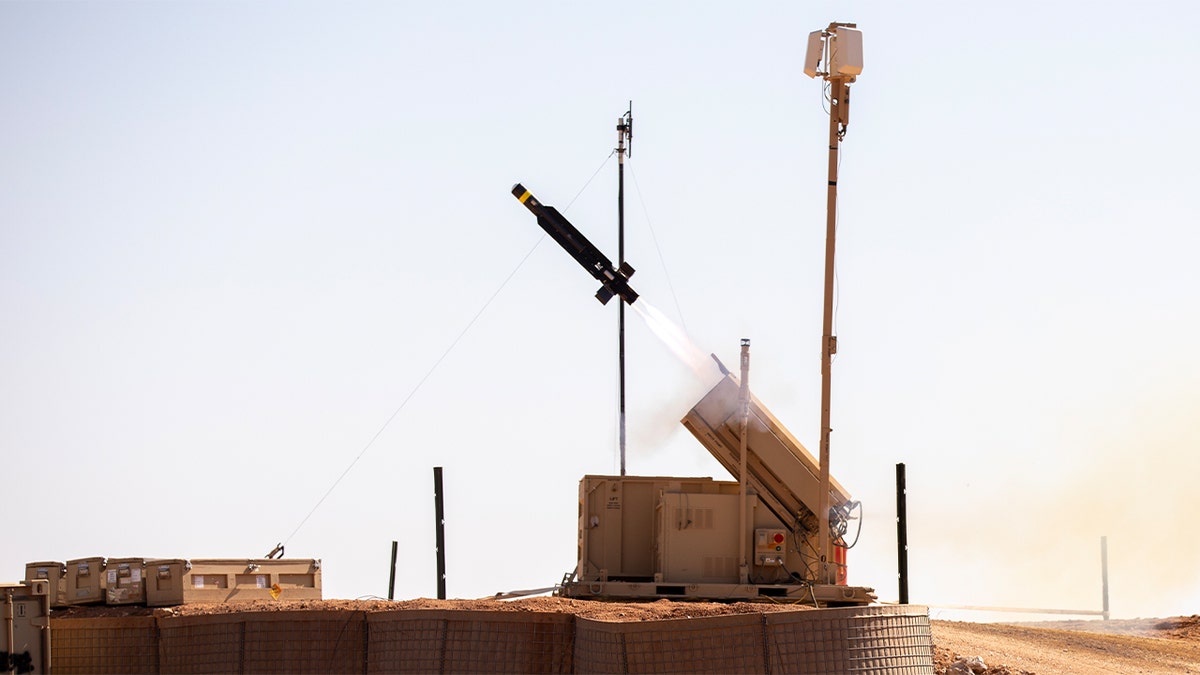
Coalition Forces fire a Coyote Block 2C interceptor during a base defense exercise at Al-Tanf Garrison, Syria, on March 12, 2025. (U.S. Army photo by Staff Sgt. Fred Brown)
CLICK HERE TO DOWNLOAD THE FOX NEWS APP
Karako cited lower-cost counter-drone systems, including the Coyote interceptor and the Army’s Low, Slow, Small Unmanned Aircraft Integrated Defeat System, or LIDS, as examples of capabilities already fielded to address many drone threats without relying exclusively on high-end air defense systems such as the Patriot.
As Iran’s drone campaign widens, the debate is no longer just about the cost gap between missiles and drones, but about whether traditional air defenses can sustain a new era of mass, low-cost aerial warfare.
military tech,drones,middle east,ukraine,war with iran
INTERNACIONAL
Virginia Dems send sweeping gun ban to Spanberger as West Virginia weighs expanding machine-gun access
NEWYou can now listen to Fox News articles!
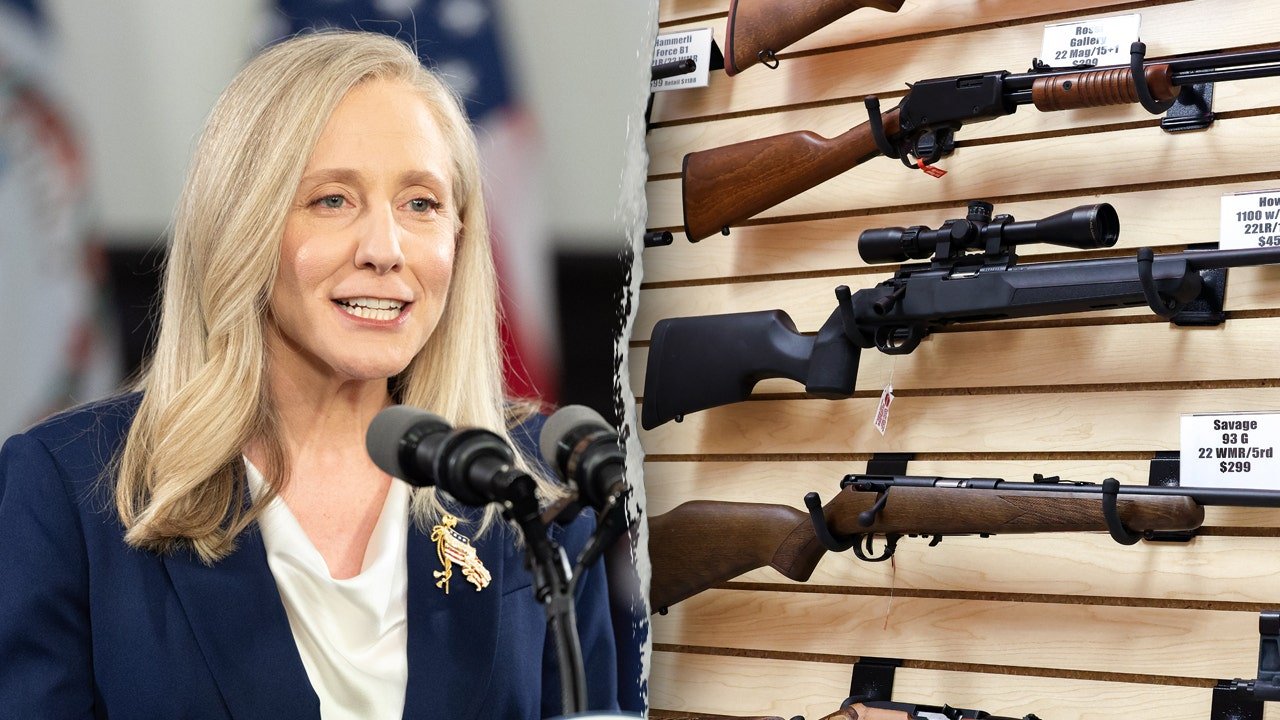
Virginia Democrats have sent a sweeping gun-control package to Gov. Abigail Spanberger’s desk, while West Virginia lawmakers are debating the opposite approach — a proposal that would allow residents to lawfully obtain machine guns.
The dueling efforts highlight how sharply gun policy is diverging across the old Virginia border. More than 160 years after West Virginia split from Virginia during the Civil War, the two states are again charting very different political paths — with Democrats in Richmond advancing new firearm restrictions while Republicans in Charleston explore expanding Second Amendment rights.
Virginia Gov. Abigail Spanberger signaled she looks forward to «reviewing» the sweeping firearms ban from state Sen. Saddam Salim, D-Dunn Loring, when it reaches her desk next week.
«As the mother of three daughters in Virginia public schools and a former federal law enforcement officer who carried a gun every day, Governor Spanberger knows how important it is to make sure kids and families are safe,» Spanberger’s office said in a statement to Richmond’s ABC affiliate.
GUN RIGHTS ON PRIVATE PROPERTY DEBATED AT SUPREME COURT
«The governor is grateful for the efforts of legislators and advocates to address gun violence in Virginia communities, and she looks forward to reviewing all legislation that comes to her desk.»
Fox News Digital reached out to Spanberger’s office to ask whether she plans to sign Salim’s bill but did not receive a response before publication.
The push comes as the political landscape in the two states continues to diverge. Republicans dominate West Virginia’s legislature with 31-2 and 91-9 supermajorities, and the Mountain State is one of just two states — along with Oklahoma — with no Democrat-majority counties. Democrats, meanwhile, strengthened their hold on Virginia’s government in 2025 and captured the governor’s mansion.
The assault weapons ban was introduced in January at the very start of the expanded Democratic majority’s rule in Richmond. Salim told FairfaxNow that there are «so many assault weapons in circulation» and that his bill will «gradually» take them off the street but stop short of retroactively criminalizing possession of any of the slew of newly-categorized «assault weapons.»
The Bangladesh-born lawmaker has also questioned how schools can remain safe spaces for children without requiring active-shooter drills.
His proposal would ban a wide range of firearms and features, including semi-automatic center-fire pistols with magazines exceeding 15 rounds, rifles with detachable magazines and weapons with certain characteristics such as collapsible or thumbhole stocks and threaded barrels.
The scope of the proposed restrictions drew criticism from Republican lawmakers.
State Sen. Mark Obenshain, R-Harrisonburg, assembled a mashup video of Virginia Democrats describing the need for the bill, captioning the clip: «Clueless Confident Dangerous and still writing the law.»
MIKE LEE UNVEILS NATIONAL CONSTITUTIONAL CARRY BILL TO OVERRIDE ‘HOSTILE’ STATE GUN LAWS
Country roads take West Virginians home across the Virginia State Line near Charles Town. (Charlie Creitz/Fox News)
«On this list, pretty much everything is a bad firearm,» said state Sen. Bill Stanley Jr., R-Rocky Mount. «We should stop harming the people who are law-abiding citizens, especially in my region.»
During floor debate, Senate Majority Leader Scott Surovell, D-Mount Vernon, said: «The only way you can see if something has a threaded barrel or not is to look inside it. Your assault rifle with its telescopes and tripods and lasers and everything else …»
Stanley responded by reminding lawmakers that «millions of Virginians own firearms» and «billions of pieces of ammunition.»
«If we were the problem, you would know about it,» he said, as debate veered into quips about «turkey rifles» — a phrase that quickly circulated on X — before Sen. Bryce Reeves, R-Orange, said it was «evident» that Democrats «have a hard time understanding [gun] nomenclature.»
Fox News Digital reached out to Surovell for comment.
RELATED IMAGE: https://cms.foxnews.com/wp/wp-admin/upload.php?item=7225208
Meanwhile, on the other side of the Allegheny Front, lawmakers were instead debating how best to expand the Second Amendment rights of Mountaineers.
West Virginia State Sens. Chris Rose, R-Monongalia, and Zachary Maynard, R-Chapmanville, drafted the Public Defense and Provisioning Act — which would permit the transfer of machine guns to residents, among other provisions.
The lawmakers cited the Second Amendment’s language and said the favorable decision in D.C. v. Heller «clarifying» «unrestricted access» under the militia clause to «resist tyranny,» among other reasons — while citing Washington administration official Tench Coxe’s assertion, «Congress has no power to disarm the militia.»
APPEALS COURT DECLARES DC BAN ON CERTAIN GUN MAGAZINES UNCONSTITUTIONAL
«It therefore is in the public interest that the State provide a means whereby machine guns may be obtained by citizens.»
Rose told Fox News Digital the bill would address «a longstanding issue in federal firearms law and to reaffirm the constitutional protections afforded to West Virginians under the Second Amendment and Article III, Section 22 of the West Virginia Constitution.»
«I have long been clear that I am a Second Amendment absolutist, and I believe the Constitution means exactly what it says when it states that the right of the people to keep and bear arms shall not be infringed,» Rose said Friday, adding the bill showed states can assert their role in protecting constitutional rights and examining federal laws that have gone untested.
Rose’s bill hit a roadblock as West Virginia’s legislative session winds down, with Senate President Randy Smith, R-Blackwater Falls, deciding the full chamber would not take it up after it advanced through the Judiciary Committee, citing potential legal challenges.
«With an issue as critical as the protection of our Second Amendment rights, we must ensure the legislation we pass will survive legal challenge. This would not have,» said Smith, who also serves as lieutenant governor.
The proposal raises questions about the federal 1986 Hughes Amendment, which prohibits civilian transfers of machine guns manufactured after that year. A Judiciary Committee attorney told West Virginia Watch the restriction may not apply if the transfer were conducted through a state agency such as the West Virginia State Police.
During a hearing, Sen. Joey Garcia, D-Fairmont, also questioned whether the proposal could conflict with federal firearms laws.
Gun Owners of America reportedly worked with Rose on the legislation and has defended its legal footing.
With Smith’s decision and the session nearing its end, lawmakers are expected to revisit the proposal next year. A West Virginia House Republican source told Fox News Digital that chatter is already building around reviving the bill.

Harpers Ferry, West Virginia, is located at the confluence of West Virginia and Virginia’s Shenandoah River and Maryland’s Potomac River. (Chip Somodevilla/Getty Images)
«As the lobbyists and Senate advocates are saying, there will be a huge push in the off-season to build this coalition and make this happen.»
Smith told WVW that he welcomes a new bill next year, but that proponents should pay closer attention to the legislative calendar to avoid last-minute issues.
CLICK HERE TO DOWNLOAD THE FOX NEWS APP
«For now, [we’re] probably going to have to let this stand,» a West Virginia Senate Republican source told Fox News Digital.
On Friday, Charleston did, however, approve a bill from Del. Charles Horst, R-Falling Waters, providing license-free concealed carry for 18-20-year-olds.
second amendment,west virginia,abigail spanberger,virginia,democrats senate

El Gobierno apoya que todos los bolsonaristas condenados por golpistas pasen a ser refugiados y se tensa el vínculo con Brasil

Adidas abrió un megaoutlet con zapatillas desde $40 mil y un 70% de descuento en la segunda unidad

Atento Scaloni: gol de un argelino para el Marsella

La imparable caída de Mickey Rourke: malas decisiones, violencia doméstica y cómo se quedó sin vivienda

La crió la esposa de su padre y a los 26 años pidió ser adoptada por ella: “Tener que demostrar que era mi mamá fue fuerte y raro”

Lo mejor de Lollapalooza día 1: del guiño de Tyler, The Creator a la Selección al magnetismo de Lorde y la teatralidad de Turf

Muni Seligmann respondió las críticas tras el accidente de su bebé y su viaje a Miami: “Hay que contarlo y naturalizarlo”

El ex novio de Luana de Gran Hermano reveló información sensible sobre su relación: “El bolso tenía plata”

Sorpresa en Gran Hermano tras la expulsión de Carmiña: la reacción de la producción y las dudas sobre su reemplazo

Emanuel Noir, de Ke Personajes, anunció que dejará las redes sociales: “Una búsqueda mayor a la que creí, apareció”

 CHIMENTOS2 días ago
El ex novio de Luana de Gran Hermano reveló información sensible sobre su relación: “El bolso tenía plata”
- CHIMENTOS2 días ago
Sorpresa en Gran Hermano tras la expulsión de Carmiña: la reacción de la producción y las dudas sobre su reemplazo
- CHIMENTOS2 días ago
Emanuel Noir, de Ke Personajes, anunció que dejará las redes sociales: “Una búsqueda mayor a la que creí, apareció”