INTERNACIONAL
Iran’s shadowy chemical weapons program draws scrutiny as reports allege use against protesters


NEWYou can now listen to Fox News articles!
A new report from the Foundation for Defense of Democracies (FDD) raises concerns about Iran’s opaque chemical weapons program, which argues policymakers have paid little attention to compared with Iran’s more scrutinized nuclear weapons program.
The FDD report outlines how the Iranian regime may have resorted to the unconventional use of chemical weapons while it faced an unprecedented uprising beginning in December 2025, a wave of unrest Tehran has not seen since the 1979 Islamic revolution. Any use of chemical weapons by Iran would be in defiance of their obligations under the 1997 Chemical Weapons Convention.
«The United States, its allies and the Organization for the Prohibition of Chemical Weapons (OPCW) should investigate credible claims that Iran’s regime used chemical weapons against its own people,» Andrea Stricker, deputy director of FDD’s nonproliferation program and author of the report, told Fox News Digital.
An Iranian military truck carries surface-to-air missiles past a portrait of Iran’s supreme leader, Ayatollah Ali Khamenei, during a parade on April 18, 2018, in Tehran. (Atta Kenare/AFP via Getty Images)
Iran’s illicit chemical weapons program is under renewed scrutiny as the Trump administration appears closer to taking military action against Iran and its nuclear weapons program.
While the U.S. has been engaged in indirect talks with Iranian officials mediated by Oman in Geneva, the U.S. has increased its military presence in the Persian Gulf, sending the USS Gerald R. Ford to join dozens of other warships to the region.
On Tuesday, Iranian Foreign Minister Seyed Abbas Araghchi posted on X that «Iran will resume talks with the U.S. in Geneva with a determination to achieve a fair and equitable deal—in the shortest possible time.»
The foreign minister claimed that Iran will not pursue nuclear weapons under any circumstances but emphasized that Iran will not forgo its right to harness peaceful nuclear technology.
ISRAELI OFFICIALS REPORTEDLY WARN IRAN’S BALLISTIC MISSILES COULD TRIGGER SOLO MILITARY ACTION AGAINST TEHRAN
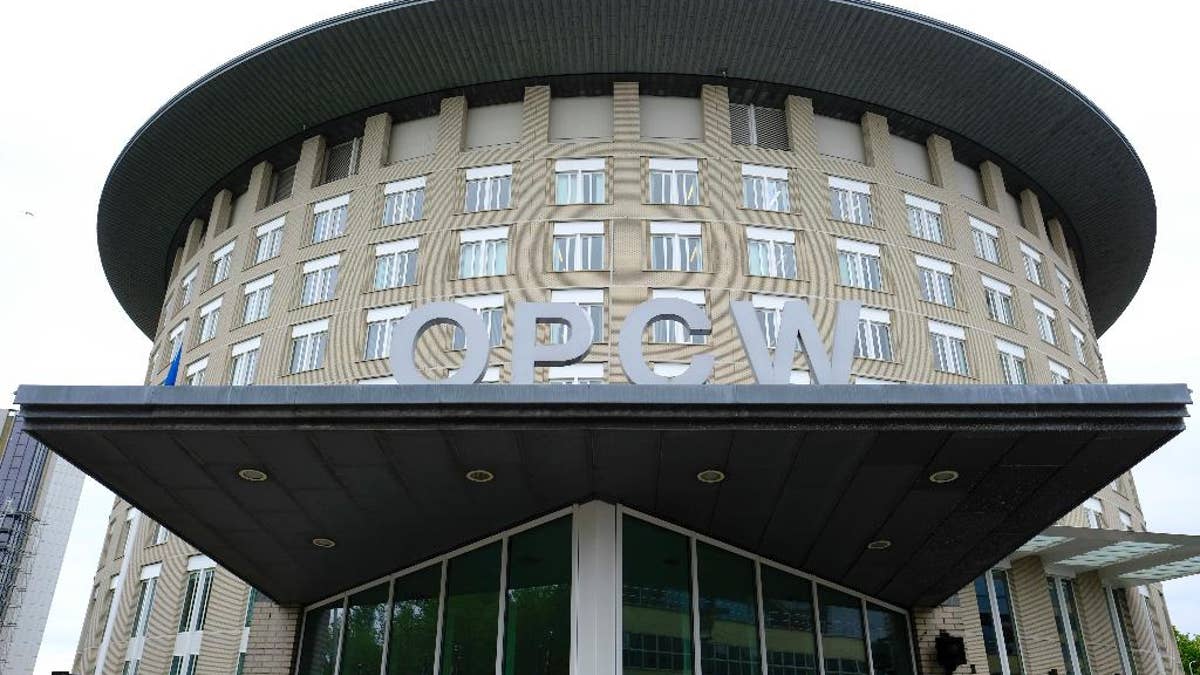
The headquarters of the Organization for the Prohibition of Chemical Weapons (OPCW) in The Hague, Netherlands, May 5, 2017. (Peter Dejong/The Associated Press)
«A deal is within reach, but only if diplomacy is given priority,» he added.
Despite the optimism and push for continued talks, there remain fears that Iran will not make any meaningful concessions on their nuclear program, which could lead to U.S. military strikes on the nation.
A broader regime change campaign to topple the Islamic republic’s government, led by Ayatollah Ali Khamenei, is also not off the table, according to some reports.
«If Washington launches strikes against Iran, it should give serious consideration to targeting the regime’s chemical weapons research and production facilities. Such action would help halt further development and potential use of these weapons while sending a clear message that the regime cannot commit atrocities with impunity,» Stricker said.
The Chemical Weapons Convention (CWC), which Iran is party to, upholds the norms against state-held chemical weapons, specifically, banning states’ development, stockpiling, production and use of chemical weapons, even for retaliatory reasons, as well as their receipt from or transfer to anyone.
US ASSETS IN MIDDLE EAST POSITIONED FOR ‘HIGHLY KINETIC’ WAR, EX-PENTAGON OFFICIAL WARNS
Israel’s deputy ambassador to the Netherlands, Yaron Wax, said in July 2025 before a special meeting of the OPCW that «over the past two decades Iran has been developing a chemical weapons program based on weaponized pharmaceutical agents.»
These agents, Wax said, impact the central nervous system and can be fatal even in small doses.
The ambassador said at the Shahid Meisami Research Complex, destroyed by Israel in June 2025, Iran’s Shahid Meisami Group (SMG) was working on fentanyl opioid-derived tactical munitions for military use. Israel believes the pharmaceutical-based agents were transferred to Syria’s longtime and now deposed dictator, Bashar al-Assad, and Iraqi Shia militias as well.
Iran began developing its chemical weapons program in 1983 during its war with Iraq in response to chemical attacks from the regime of Saddam Hussein, according to the U.S. Intelligence Community.
As recently as 2024, the U.S. has repeatedly found Iran in noncompliance with its obligations under the CWC.
In a post on X in November 2024, the Iranian mission to the United Nations pushed back on the charges against it. «A victim of Western-donated chemical weapons employed by the Saddam regime, Iran stands as a responsible member of the Chemical Weapons Convention (CWC). Over the past several decades, not a single instance of Iranian violation has been recorded. The current unfounded reports are merely an outgrowth of psychological warfare propagated by the Zionist regime in the wake of its recent defeat on the Lebanese front.»

Cars burn in a street during a protest over the collapse of the currency’s value in Tehran, Iran, Jan. 8, 2026. (Stringer/West Asia News Agency via Reuters)
TRUMP WARNS IRAN, DELAYS STRIKES AS RED LINE DEBATE ECHOES OBAMA’S SYRIA MOMENT
Stricker says the U.S. and international community have failed to hold Iran accountable for its illegal chemical weapons program, and meaningful action must be taken to prevent Iran from transporting banned substances to Iran’s nefarious proxy actors in the Middle East.
The report notes that the U.S. and OPCW should launch a pressure campaign against Iran, calling out the regime and publicizing any violations. The Trump administration, the report recommends, should demand a formal ultimatum to demonstrate compliance with the convention and accept monitoring and verification mechanisms.
FDD also suggests Israel should ratify the CWC and work within the OPCW, which would give Israel more credibility in combating Iranian violations.
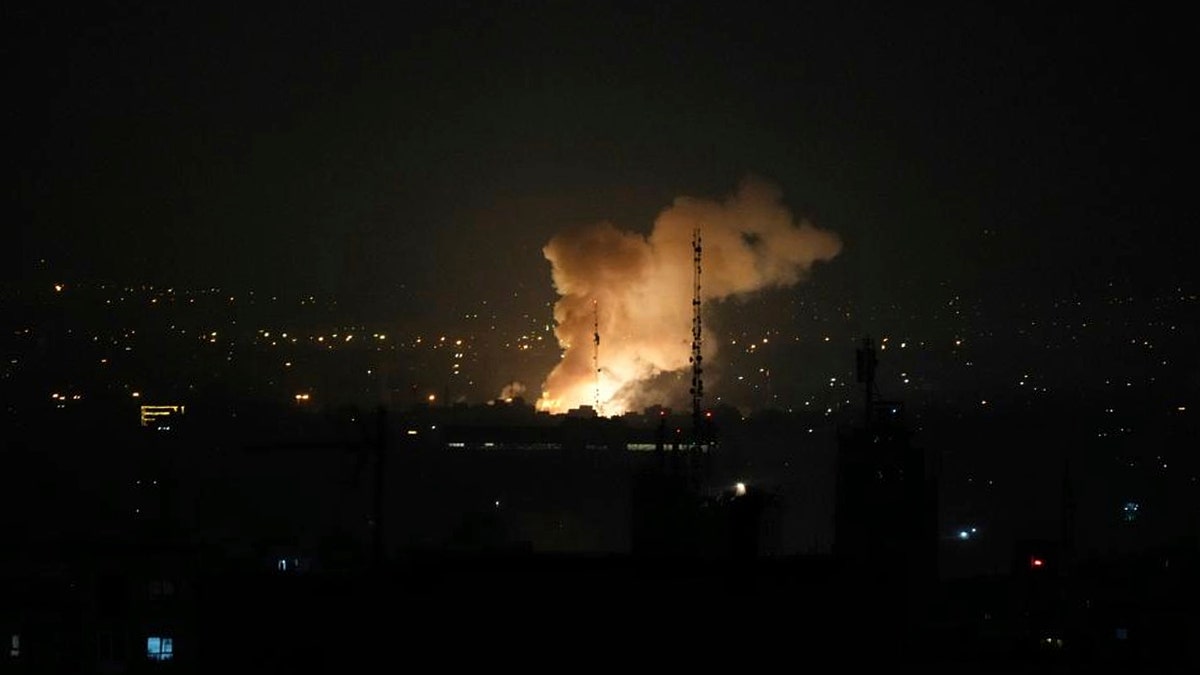
Smoke rises after an explosion in Tehran, Iran, June 13, 2025, during an attack by Israel. (Getty Images)
CLICK HERE TO DOWNLOAD THE FOX NEWS APP
The report says that, as a last resort, the U.S. should consider launching strikes targeting regime chemical weapons facilities, or support Israeli efforts, if actionable intelligence indicates movement on Iran’s chemical weapons efforts or a renewed push by the regime to use such illegal weapons to crack down on anti-government protests.
«The only solution to Iran’s persistent WMD threat is for the United States and Israel to undermine the regime’s grip on power. Until then, the two nations will periodically be forced to play whack-a-mole with Tehran’s capabilities whenever they endanger regional peace,» Stricker said.
Related Article

iran,israel,conflicts,ali khamenei,national security










INTERNACIONAL
El partido del canciller alemán Merz se perfila ganador de las elecciones regionales en Renania-Palatinado

La Unión Cristianodemócrata del canciller Friedrich Merz ganó este domingo las elecciones en Renania-Palatinado, estado federado del suroeste alemán que el Partido Socialdemócrata gobernó sin interrupción durante 35 años, mientras la ultraderechista Alternativa para Alemania duplicó su resultado de 2021 y se afianzó como tercera fuerza, según los sondeos a pie de urna.
De acuerdo con las primeras proyecciones de las cadenas públicas ZDF y ARD, los conservadores obtuvieron alrededor del 30,5% de los votos, seguidos de los socialdemócratas con entre 26,5% y 27%, la Alternativa para Alemania con el 20% y Los Verdes con entre 7,5% y 8,5%. Si se confirman estas cifras, la formación ultranacionalista habría pasado del 8,3% que logró hace cinco años a rozar el 20%, un salto histórico para una región occidental que nunca había registrado resultados tan elevados de la extrema derecha.
La victoria conservadora representa un alivio para Merz en un momento de presión acumulada. Dos semanas antes, su partido perdió la disputa por el primer puesto en Baden-Wurtemberg frente a Los Verdes, que obtuvieron el 30,2% ante el 29,7% de los democristianos. En ese estado, los socialdemócratas se desplomaron al 5,5%, su peor resultado histórico en unas elecciones regionales desde 1945. Según el barómetro ARD-DeutschlandTrend, apenas el 18% de los alemanes valora positivamente la gestión del gobierno Merz, mientras que el 79% la rechaza.

En Renania-Palatinado, la elección enfrentó al ministro-presidente en funciones, el socialdemócrata Alexander Schweitzer, y al candidato conservador Gordon Schnieder, de 50 años. Los sondeos le daban a Schweitzer una ventaja considerable en imagen: 41% de apoyo frente al 23% de Schnieder, según el Politbarometer de ZDF. Schweitzer asumió el cargo en julio de 2024 tras la renuncia por motivos de salud de Malu Dreyer, e intentó capitalizar esa popularidad personal frente a un rival de menor reconocimiento público. Sin embargo, los conservadores retuvieron una ventaja estructural al ser percibidos como más competentes en economía y seguridad, los dos temas prioritarios para el electorado regional.
La región es conocida por su tradición vinícola —concentra el 63% de los viñedos de Alemania— y es sede de importantes empresas como el gigante químico BASF, con la industria representando alrededor del 25% del valor añadido. Durante la campaña, los ejes centrales del debate fueron la política educativa, la infraestructura y la inmigración. Ambos partidos descartaron cualquier forma de cooperación con la Alternativa para Alemania, lo que en la práctica convierte la formación de gobierno en un asunto bilateral entre conservadores y socialdemócratas, con independencia de quién encabece la coalición.
Algunos expertos atribuyen el auge ultraderechista a que el partido logró canalizar el descontento de un electorado que se siente en situación de precariedad económica. En los comicios de 2021 la Alternativa para Alemania obtuvo el 8,3% en este estado; su instalación en torno al 20% en las encuestas de 2026 refleja un proceso de normalización del voto extremo también en los estados occidentales, históricamente más resistentes a ese fenómeno que los del este del país.

El resultado de Renania-Palatinado tiene implicaciones que van más allá de sus fronteras. El Partido Socialdemócrata, socio menor del gobierno Merz en Berlín bajo la figura del vicecanciller Lars Klingbeil, acumula una cadena de golpes electorales regionales que debilitan su posición dentro de la coalición. A nivel federal, el partido recibió apenas el 16% en las elecciones legislativas de febrero de 2025. En las regionales previstas para septiembre en Mecklemburgo-Pomerania Occidental y otras regiones del este, la Alternativa para Alemania parte como favorita o segunda fuerza, lo que podría agudizar la fragmentación del sistema político alemán y estrechar aún más el margen de los partidos establecidos para construir mayorías viables.
Europe,Government / Politics
INTERNACIONAL
Newsom’s claim Texas and Florida are the ‘real high tax states’ picked apart by expert: ‘Fatally flawed’

NEWYou can now listen to Fox News articles!
California Gov. Gavin Newsom’s repeated claims in recent weeks promoting his state as more tax-friendly than Florida and Texas don’t add up, according to an expert who ran the numbers.
«Texas and Florida are the REAL high-tax states,» Newsom recently posted on X, explaining onstage at SXSW in Austin, Texas that California has the most «progressive tax rates in America» while taking shots at the tax burden in Florida and Texas.
«Your middle class pays more taxes in Texas than our middle class in California,» Newsom said in Texas. «It’s a great mythology, it’s just ‘the richest of the rich come here because they can avoid paying a damn penny.’»
The comments drew pushback from conservatives on social media, including Florida Gov. Ron DeSantis, and from Just Facts President James Agresti, who says he looked into a «number of different angles» to determine the «validity» of Newsom’s claims.
FROM ‘JUMP ON A BUS’ TO TAX CRACKDOWNS: BLUE STATES CHASE WEALTHY RESIDENTS FLEEING TO RED HAVENS
California Gov. Gavin Newsom during a bill signing event on Aug. 21, 2025, in Sacramento. (Justin Sullivan/Getty Images)
«I looked at how much is each state taxing each of its citizens on average? So if you look at California, they collect about $10,000 a year in taxes for every person in the state, whereas the figures for Texas and Florida are only about $5,000, or about half as much,» Agresti told Fox News Digital.
«However, California is a higher-income state, so I also looked at it as a percentage of the states’ economies and what I found is that California taxes about 14% of its economy, as opposed to 9% for Texas and Florida.»
Just Facts broke those taxes down in a recent study and found that California imposes some of the highest taxes in the nation, with a top personal income tax rate of 13.3%, while both Texas and Florida have no state income tax.
Property taxes in California account for about 2.8% of personal income, slightly lower than Texas at 3.6% and close to Florida’s 2.6%, though measured as a share of home values, California’s rates are generally lower than both states, but in other tax areas, California is largely more burdensome.
The state’s unemployment insurance tax rate matches Texas at 6.2%, but is higher than Florida’s 5.4%. California also has a higher statewide sales tax at 7.2%, compared to 6.2% in Texas and 6.0% in Florida. Drivers in California face significantly higher gas taxes as well, paying 70.9 cents per gallon, more than triple Texas’ 20 cents and well above Florida’s 40.3 cents.
PROPOSED CALIFORNIA WEALTH TAX DRIVES BILLIONAIRE EXODUS TO FLORIDA REAL ESTATE, LOCALS CONFIRM
A Wallethub 2025 analysis ranking U.S. states by overall tax burden showed California coming in at 4th overall, behind Vermont, New York and Hawaii. On a per-capita basis, California also collects significantly more in state and local taxes than either state, according to data from the Tax Foundation.
At the heart of the issue is the data, Agresti says, making the case that Newsom is likely pulling from the Institute On Taxation & Economic Policy (ITEP) which Agresti said is widely used by mainstream news outlets and experts but is «fatally flawed» because «it does not account for all forms of income or all taxes.»
Agresti has been speaking out against ITEP’s methodology for over a decade, explaining in a 2015 post that the group «uses a partial measure of income in virtually all of its studies» and is «based on calculations that exclude certain taxes.»
CALIFORNIA BILLIONAIRES FLEE STATE’S WEALTH TAX IN THE MOST-PREDICTABLE RESULT EVER
ITEP’s analysis focuses on how tax burdens are distributed across income groups rather than overall tax levels. The group argues that states such as Texas and Florida look «low tax» largely because they do not levy a broad-based personal income tax, a structure that disproportionately benefits high earners.
To make up the difference, those states rely more heavily on sales, excise and property taxes, which tend to take a larger share of income from lower-income households. California, by contrast, uses a highly progressive income tax system that places more of the burden on top earners and helps offset regressive taxes lower down the income ladder.
Critics, however, say that framing captures only part of the picture because it focuses on tax burden by income group rather than overall tax climate, where California remains far more burdensome for top earners, investors and many businesses.
«It’s information from this group and others like it, by the way, that have misled people to believe that middle-income folks in the United States pay a higher federal tax rate than upper-income folks,» Agresti said.
«In fact, a survey done by Just Facts found that about 80% of America’s voters believe this fiction, even though the Congressional Budget Office, the U.S. Treasury, and the center-left Tax Policy Center all say that middle-income Americans pay an average effective federal tax rate of about 15% while upper income, or the top 1%, pay a rate of about 30%. And by the way, that includes all taxes and all income, all tax loopholes, it’s basically all taxes paid divided by all income earned or received.»
Fox News Digital reached out to ITEP for comment.
Agresti said Newsom is a «master of twisting statistics to paint a picture that is the exact inverse of reality» and pointed to the governor’s claim that the exodus of residents due to high taxes is a «myth.»
«Here’s the facts: According to his own Secretary of State, every year of Newsom’s governorship, more people have moved out of California into other states than have moved from other states into California,» Agresti, who has posted the data on his website, said. «In fact, over the time of his governorship, about 1.5 more million people have left California than moved in.»
«So how does Newsom get his claim, his evidence? Well, he looks at total population growth, which is dominated by immigrants moving in from other countries. The issue is not whether people would rather live in California than Mexico, but whether they would rather live in California than other states. And the data clearly show they do not.»
CLICK HERE TO DOWNLOAD THE FOX NEWS APP
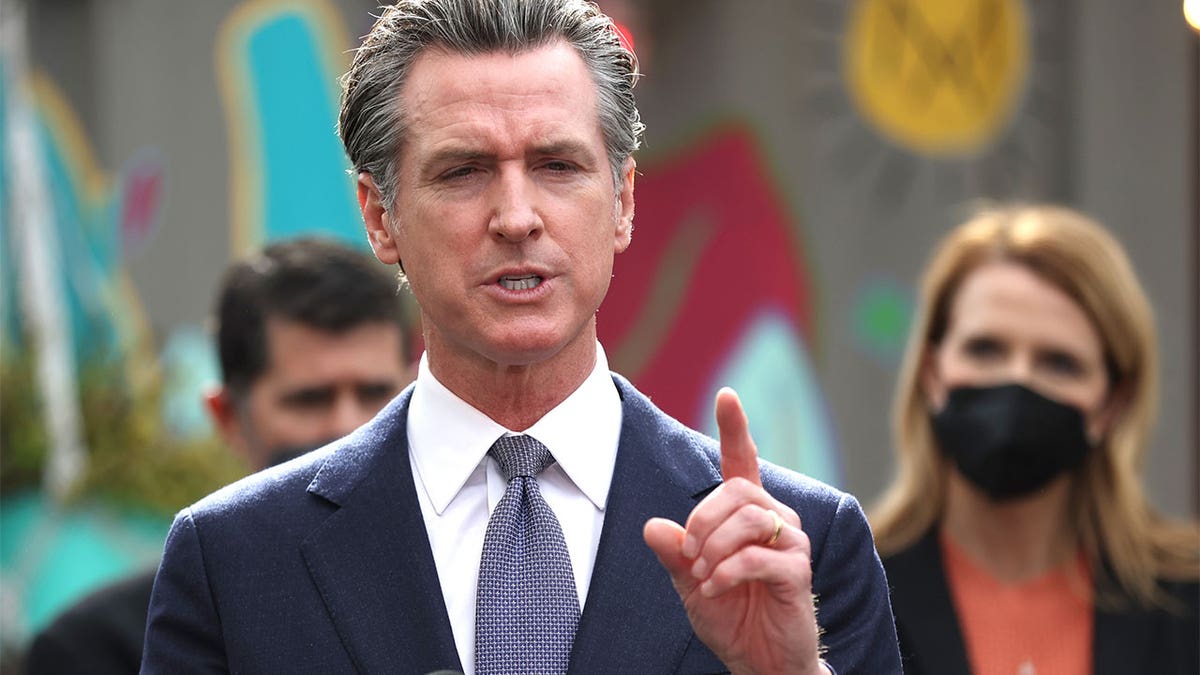
Democratic California Gov. Gavin Newsom (Justin Sullivan/Getty Images)
Newsom has also been touting data showing California now has the fourth-largest economy in the world, just surpassing Japan’s, which Agresti also took issue with and described as «fiction» according to his examination of the numbers.
«Here’s the fatal flaw in what he’s doing there,» Agresti said. «He is converting Japanese yen into U.S. dollars using a highly deceptive measure called foreign currency exchange rates. Scholars in this field warn explicitly: You are not to convert GDPs using exchange rates because it inflates the relative sizes of economies that have high prices, as California does. When you actually look at the proper way to transfer these exchange rates and account for them, Japan’s GDP is 56% larger than California’s.»
Additionally, Agresti pointed to data that shows California has a greater rate of poverty than any other state in the nation, as well as electricity prices that are more than twice the national average.
«When you look at California as a whole, it is one of the highest-tax states in the nation, and also there’s a lot of fallout from Newsom’s policies that make it one of the most expensive places to live in the entire United States,» Agresti said.
Fox News Digital reached out to Newsom’s office for comment.
Fox News Digital’s Bradford Betz contributed to this report.
politics,taxes,gavin newsom,california
INTERNACIONAL
¿Hasta dónde pueden llegar las amenazas cruzadas entre Estados Unidos e Irán?: los expertos advierten sobre el peor escenario


El partido del canciller alemán Merz se perfila ganador de las elecciones regionales en Renania-Palatinado

Cómo fue el accidente doméstico en el que el bebé de Muni se rompió el cráneo: «Me costó un montón contarlo»

Milei evalúa crear un fondo de compra de armamento para las FFAA con el 10% de la venta de activos del Estado

CD Projekt Red comparte el porcentaje de ventas en Nintendo Switch / Nintendo Switch 2 de The Witcher 3 y Cyberpunk 2077 – Nintenderos

Newsom’s claim Texas and Florida are the ‘real high tax states’ picked apart by expert: ‘Fatally flawed’

Kreplak cruzó a la Oficina de Respuesta Oficial en redes por las vacunas antigripales

Kicillof desembarcó en CABA, lanzó su proyecto 2027 y empezará a ampliar su armado político en todo el país

¿DÓNDE ESTÁ ESMERALDA? El grito de una madre que sacude a la Argentina: «Me la arrebataron de la puerta»

¿MACRI 2027? El «operativo retorno» que sacude al PRO y los nombres que suenan para la vicepresidencia

¿FIN DE CICLO? Escándalo por la mansión no declarada y viajes de lujo empujan a Manuel Adorni fuera del Gobierno: Su salida sería inminente

 POLITICA3 días ago
Kicillof desembarcó en CABA, lanzó su proyecto 2027 y empezará a ampliar su armado político en todo el país
- POLITICA3 días ago
¿MACRI 2027? El «operativo retorno» que sacude al PRO y los nombres que suenan para la vicepresidencia
- POLITICA2 días ago
¿FIN DE CICLO? Escándalo por la mansión no declarada y viajes de lujo empujan a Manuel Adorni fuera del Gobierno: Su salida sería inminente