INTERNACIONAL
Jeb Bush heaps praise on Trump’s ‘unprecedented support’ for Iranians 10 years after heated primary


NEWYou can now listen to Fox News articles!
Former Florida Gov. Jeb Bush credited his former political foe President Donald Trump’s «historic leadership» on pushing for a denuclearized and democratized Iran, saying that his current organization — United Against Nuclear Iran (UANI) — stands ready to help Trump and the people of Iran against Ayatollah Ali Khamenei.
With Trump’s emergence into presidential politics in 2015, he found his top rival in the former Florida governor, notably dubbing him «Low-Energy Jeb» — as the Republican scion hit back that the mogul could not «insult his way to the presidency.»
This week, détente appeared to emerge between the two as Bush heaped praise on Trump’s position after the president urged Iranian «patriots [to] keep protesting.»
EXILED IRANIAN CROWN PRINCE APPEALS TO TRUMP AS IRAN PROTESTS MARK ‘DEFINING’ MOMENT
Republican presidential candidates Donald Trump (L) and Jeb Bush take part in the presidential debates at the Reagan Library on September 16, 2015, in Simi Valley, California. (Justin Sullivan/Getty Images)
«Take over your institutions. Save the names of the killers and abusers. They will pay a big price,» Trump wrote on Truth Social on Tuesday.
«President Trump continues to demonstrate historic leadership on Iran, with unprecedented support for the Iranian people as they face bullets for freedom. We at UANI join him in standing with the brave people of Iran.»
Bush leads UANI alongside former Ambassador Mark Wallace, the ex-husband of MS-NOW host Nicolle Wallace and a key diplomat in Bush’s brother’s White House.
FREED IRANIAN PRISONER SAYS, ‘IN TRUMP, THE ISLAMIC REPUBLIC HAS MET ITS MATCH’
«UANI applauds President Trump’s unprecedented support of the people of Iran as they fight to reclaim their country,» Bush and Wallace said in a statement.
«For far too long, the United States and the West have equivocated in expressing support for the people of Iran in the face of the Ayatollah’s violence and repression.»
«President Trump’s post made clear that no longer will the United States and the West lack the moral clarity to support the people of Iran as they face bullets for freedom. That change is historic.»
TRUMP CREDITS IRAN NUCLEAR STRIKES FOR KICKSTARTING ISRAEL-HAMAS PEACE DEAL
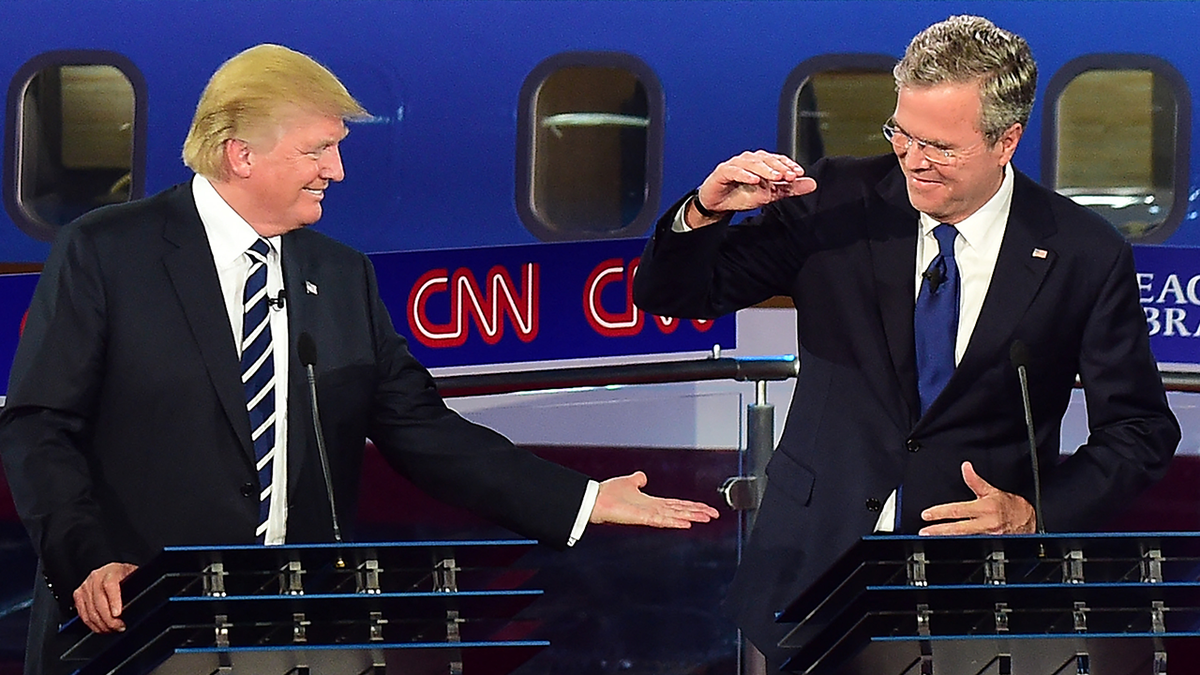
Donald Trump, left. Jeb Bush, right. (Frederic Brown/Getty Images)
Trump has been praised for taking a harder line than recent presidents against Iran, cancelling talks with Tehran leaders after reports surfaced that they were shooting and killing protesters in the streets.
«UANI joins with President Trump and stands with the brave people of Iran in their struggle against the Ayatollah,» Bush and Wallace added.
Their group is a nonprofit, nonpartisan one, formed to combat threats posed by Iran.
POMPEO SAYS IRANIAN REGIME HAS ARRIVED AT ‘NATURAL TERMINUS’: ‘LET’S NOT WASTE THIS HISTORIC OPPORTUNITY’
The tenor between the two Republican stalwarts is a marked change from the turbulent 2016 sweeps.
At the time, Trump often mocked Bush for his family’s involvement in the race, reportedly saying, «Your mom can’t help you with ISIS» after former first lady Barbara Bush cut a campaign ad for her son.
CLICK HERE TO DOWNLOAD THE FOX NEWS APP
«Donald is great at the one-liners,» Bush quipped during a 2015 debate. «But he’s a chaos candidate.»
Fox News Digital reached out to the White House for comment on the two leaders’ new common ground.
On Iran, a senior administration official said the administration supports the people of Iran against the regime’s continued human rights abuses and authoritarian repression, and that the regime is one of the world’s worst violators of human rights, oppressing its people to maintain its grip on power.
donald trump,george w bush,white house,iran,elections










INTERNACIONAL
Un misil iraní alcanzó una refinería estratégica en Israel y provocó cortes eléctricos en el norte del país

Un misil disparado por fuerzas iraníes alcanzó este jueves la refinería de Haifa, principal centro de procesamiento de petróleo en el norte de Israel.
El Ministerio de Energía confirmó que el ataque causó una interrupción en el suministro eléctrico en parte de la ciudad portuaria, aunque destacó que no hubo daños estructurales graves ni víctimas.
“El daño a la red eléctrica en el norte es localizado y no significativo”, declaró el ministro Eli Cohen, quien aseguró que la electricidad fue restablecida a casi todos los afectados en menos de una hora.
La ofensiva fue reivindicada por la Guardia Revolucionaria iraní, que aseguró haber lanzado misiles de precisión contra la instalación energética y otras infraestructuras estratégicas en Israel, incluyendo la ciudad de Ashdod y centros militares.
Equipos de bomberos y especialistas en explosivos acudieron a distintos puntos del área metropolitana de Haifa para evaluar la presencia de fragmentos interceptados y posibles riesgos por materiales peligrosos.

La policía local señaló que no se registraron heridos y que la situación estaba bajo control tras el operativo de emergencia.
El ataque ocurre en un contexto de escalada regional, donde la infraestructura energética se ha convertido en objetivo prioritario tanto para Irán como para sus rivales.
La refinería de Haifa ya había sido alcanzada en episodios anteriores, como en junio de 2025, cuando un misil iraní provocó la muerte de tres personas y suspendió temporalmente las operaciones. Desde entonces, la instalación ha reforzado sus protocolos de seguridad, pero la amenaza de nuevos ataques se mantiene alta, especialmente ante la intensificación de bombardeos en la zona norte de Israel por parte del grupo terrorista Hezbollah.
En los últimos días, esta organización extremista ha incrementado sus ataques contra comunidades fronterizas, obligando a las autoridades locales a reforzar la presencia militar y a mantener protocolos de alerta permanente para la población civil.

En paralelo, la campaña de ataques contra infraestructuras energéticas se ha extendido a otras partes del Golfo. Misiles y drones iraníes causaron incendios en la mayor planta de gas natural licuado de Qatar, así como en refinerías de Arabia Saudita y Kuwait.
El gobierno de Doha denunció “daños extensos” en la zona industrial de Ras Laffan, mientras que Riad y Kuwait reportaron incendios en instalaciones clave para la exportación de crudo.
Las autoridades saudíes advirtieron que se reservan el derecho a responder militarmente, mientras la comunidad internacional sigue con preocupación el impacto de los ataques sobre el suministro energético global.
El precio del petróleo experimentó una fuerte volatilidad tras los incidentes, con el crudo Brent llegando a cotizar por encima de los 110 dólares por barril, antes de estabilizarse. Los mercados de gas en Europa también registraron subidas de hasta 35%, reflejo del temor a una interrupción prolongada del flujo de hidrocarburos a raíz de la escalada militar.

Las reacciones políticas tampoco se hicieron esperar. El presidente de Estados Unidos, Donald Trump, sostuvo que no existe un plazo definido para el fin de la guerra y advirtió que su gobierno responderá “con furia” si Irán continúa atacando infraestructuras energéticas en el Golfo.
“Obviamente, toma dinero matar a los malos”, señaló el secretario de Defensa estadounidense, aludiendo al posible aumento del presupuesto militar para sostener la campaña.
Por su parte, las principales potencias europeas manifestaron su preocupación ante el riesgo de una crisis energética global y se comprometieron a reforzar la protección del tráfico marítimo en el estrecho de Ormuz.
Francia, Reino Unido, Alemania, Italia, Japón y los Países Bajos anunciaron su disposición a participar en una misión conjunta para garantizar el paso seguro de los buques, en un contexto donde el cierre parcial del estrecho por Irán ya ha provocado largas filas en las estaciones de servicio en Asia y un aumento de los costos de transporte a nivel mundial.
(Con información de EFE, AFP y Reuters)
Top Pictures,Civil Unrest
NEWYou can now listen to Fox News articles!
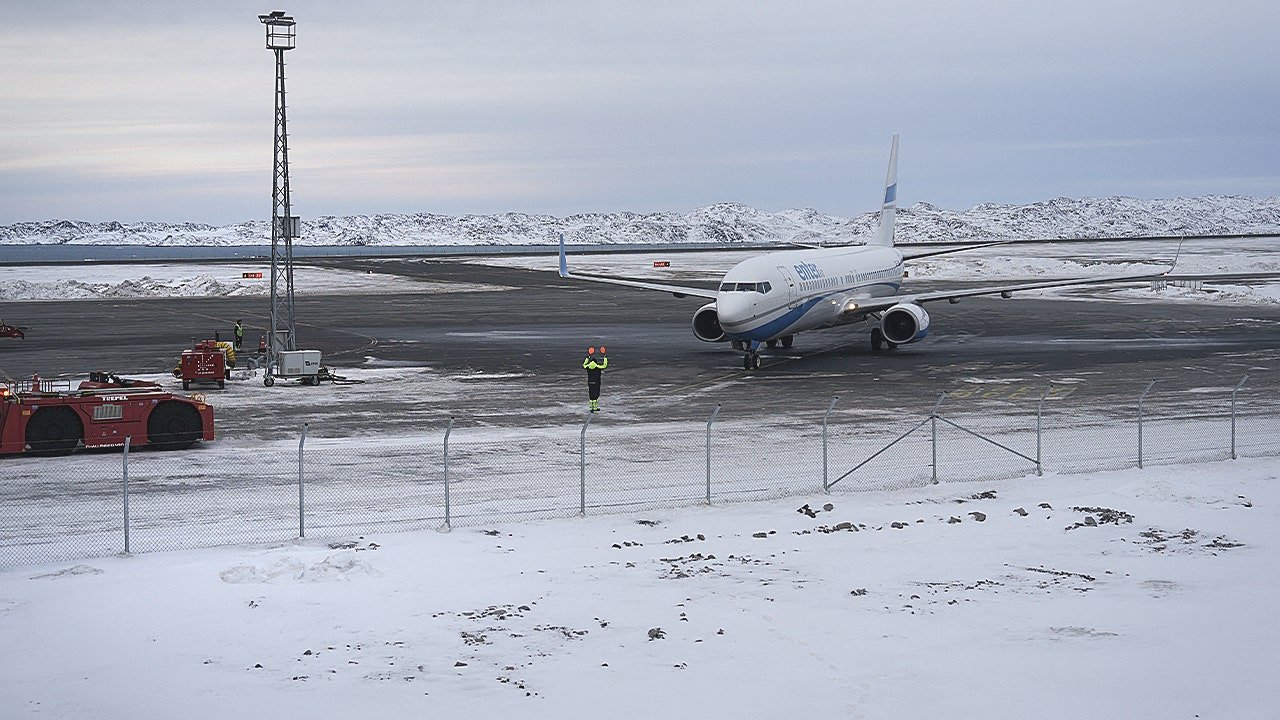
Denmark prepared to sabotage Greenland’s airstrips using explosives and flew in blood supplies amid fears of a potential U.S. invasion earlier this year, according to a new report by Danish public broadcaster DR.
The measures were said to be part of a contingency plan that included deploying troops to the island in January with explosives for possible runway demolition, aimed at preventing U.S. aircraft from landing, EuroNews said.
The measures were outlined in a Danish military operations order dated Jan. 13, which DR said it had reviewed.
RUSSIA, CHINA SQUEEZE US ARCTIC DEFENSE ZONE AS TRUMP EYES GREENLAND
The Greenlandic flag flies in Nuuk, Greenland, Jan. 20, 2026. (Sean Gallup/Getty Images)
The preparations came as tensions escalated over President Donald Trump’s statement that the U.S. should control Greenland for national security reasons.
Greenland Prime Minister Jens-Frederik Nielsen and Danish Prime Minister Mette Frederiksen repeatedly rejected Trump’s demands to acquire the island.
DR said it based its report on 12 sources within the highest levels of the Danish government and military, as well as sources among Denmark’s allies in France and Germany, the BBC said.
TRUMP’S GREENLAND PUSH DRIVES DANISH PM TO CALL EARLY ELECTION
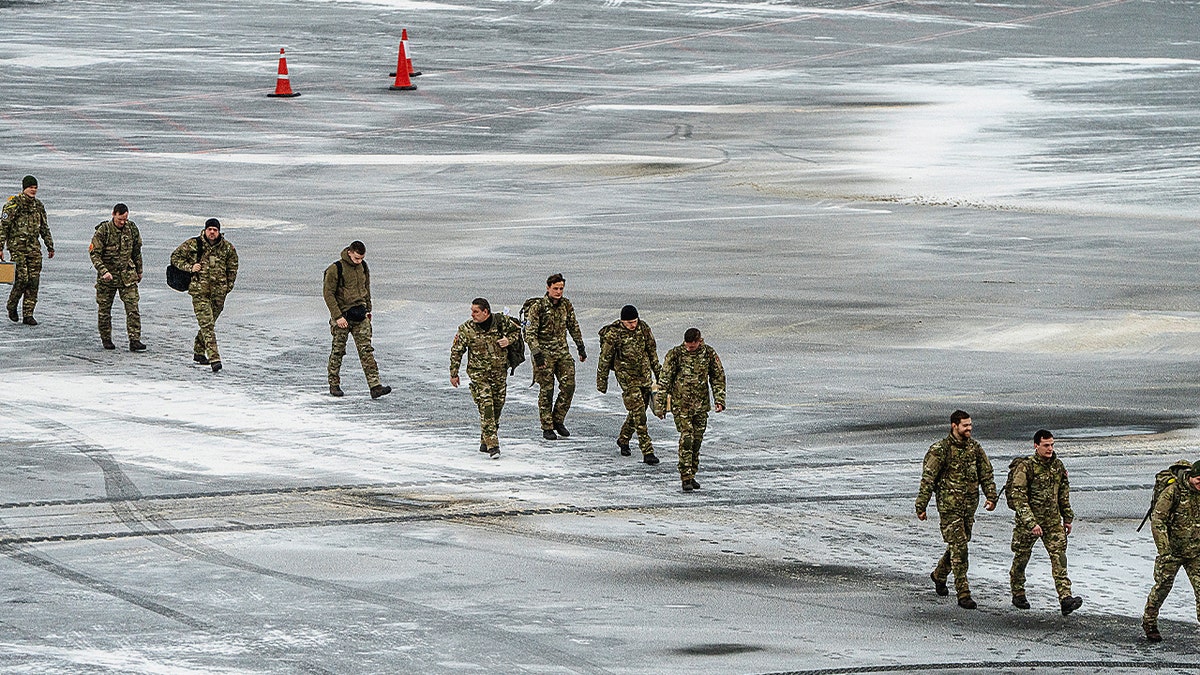
More Danish soldiers land at Nuuk airport, Greenland, Jan. 19, 2026. (Mads Claus Rasmussen/Ritzau Scanpix/via REUTERS)
«When Trump says all the time that he wants to buy Greenland … we had to take all possible scenarios seriously,» an unnamed Danish military official told DR.
Denmark and several European allies also deployed troops to Greenland under what was a NATO exercise called Arctic Endurance.
In reality, according to the sources cited by DR, the deployment was operational.
Soldiers arrived equipped not only with standard military gear but also with the medical supplies and the explosives, the report said. France, Germany and Sweden also took part in the January deployment.
Despite the preparations, Danish authorities sought to avoid escalation with Washington.
Trump announced a vague «framework» agreement on Greenland with NATO Secretary-General Mark Rutte on Jan. 21, though details remain unclear.
TRUMP SENDING US MILITARY HOSPITAL SHIP TO GREENLAND TO ‘TAKE CARE’ OF SICK
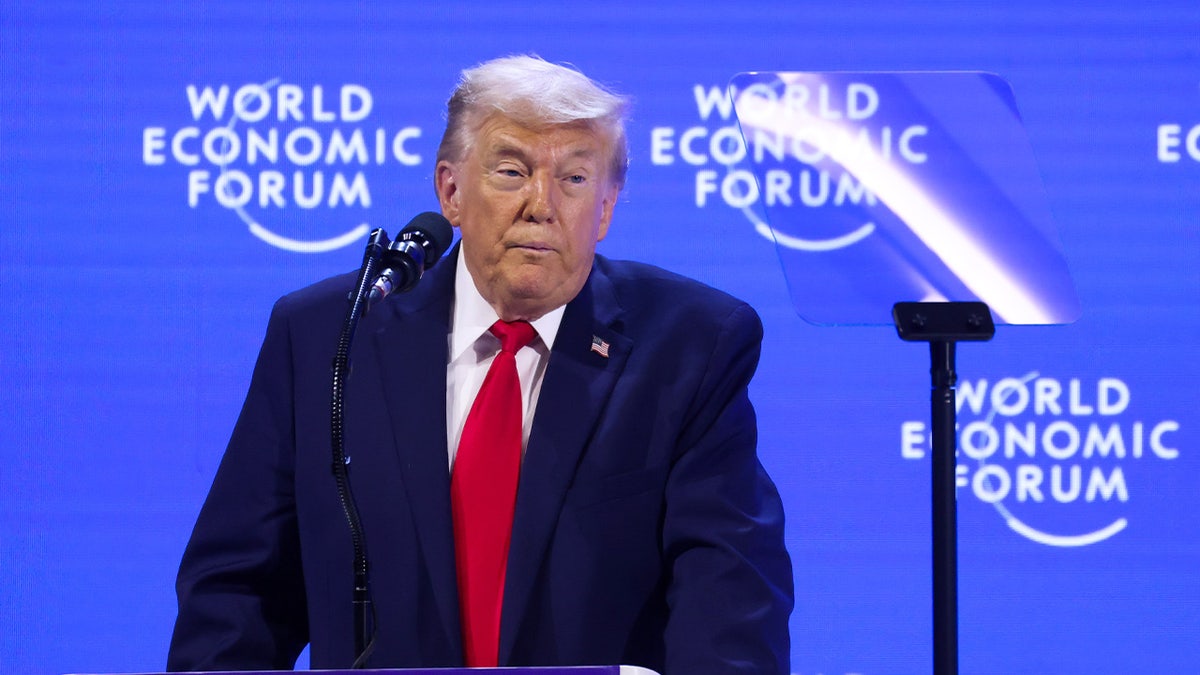
President Donald Trump said from Davos, Switzerland, Jan. 21 that the U.S. is the only nation that is able to control and secure Greenland. (Krisztian Bocsi/Bloomberg via Getty Images)
At the World Economic forum in Davos Trump said: «I don’t want to use force. I won’t use force. All the United States is asking for is a place called Greenland.»
On March 17, the commander of U.S. Northern Command (NORTHCOM), Gen. Gregory Guillot, said, «We are working with Denmark through the Department of State to expand some of the authorities that are in the 1951 treaty to give increased access to different bases across Greenland.»
CLICK HERE TO DOWNLOAD THE FOX NEWS APP
«As we look at the increasing threat and the strategic importance of Greenland. But everything that we’re doing through NORTHCOM is through Greenland and through Denmark,» he added at the House Armed Services hearing on U.S. military posture and national security challenges in North and South America.
greenland,donald trump,nato,europe,military,armed forces
NEWYou can now listen to Fox News articles!
Nuclear fusion originates in our sun and other stars. Immense pressure and high temperatures in the core create a reaction, ultimately preventing it from collapsing under the force of gravity.
«The fusion here on Earth has a lot of corollaries to how we understand how the stars work in things like astrophysics. They both rely on studying plasma, the fourth state of matter. They both have the same types of reactions, and we use some of what we learn in how the stars work to inform how to build better fusion machines on Earth,» Commonwealth Fusion Systems CEO Bob Mumgaard said.
The company is working to replicate the sun’s fusion energy here on earth, a quest that has been long in the making.
«When it first started out, it was as much a science experiment as fission was. The question at that time was, is this possible?» said Adam Stein, director of nuclear energy innovation at the Breakthrough Institute. «There was more scientific curiosity than optimism, this would ever become a source of power for the world.»
US POWER CRUNCH LOOMS AS OKLO CEO SAYS GRID CAN’T KEEP UP WITHOUT NEW INVESTMENT
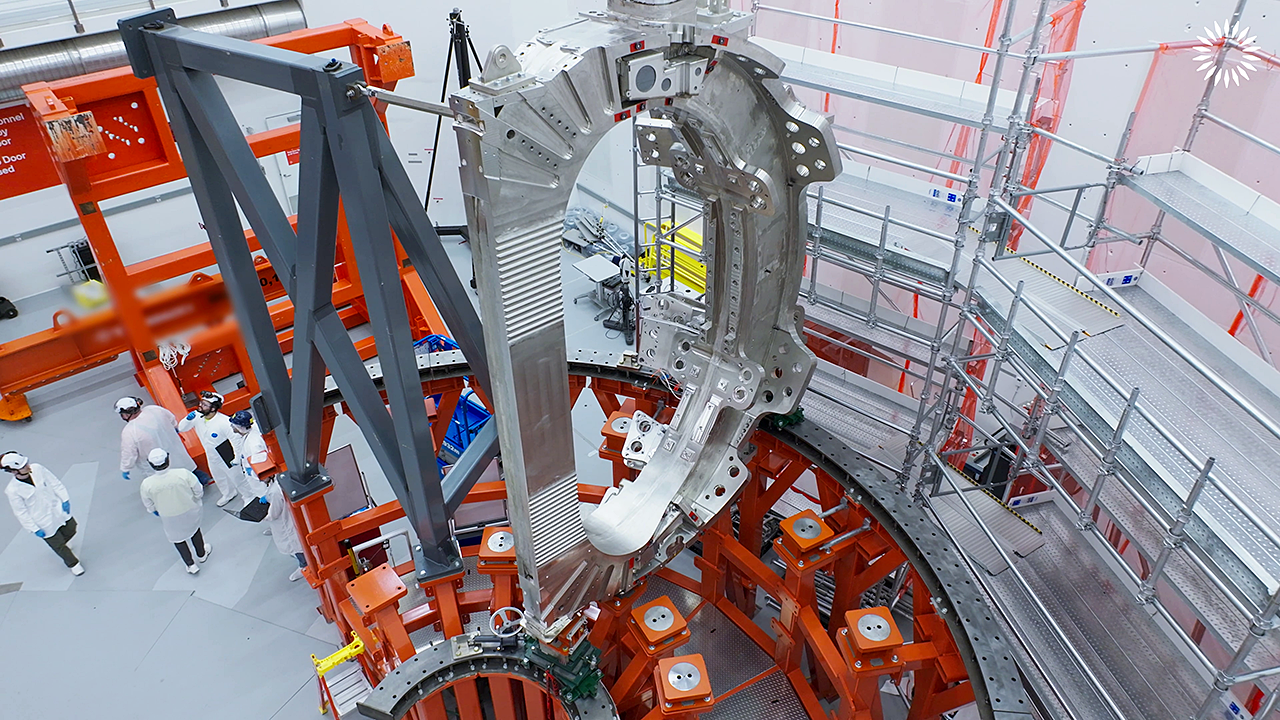
Commonwealth Fusion Systems is hoping to have a viable nuclear fusion reactor by the early 2030s. (Commonwealth Fusion Systems)
The quest for nuclear power began in the 1950s when scientists started designing machines to conduct their experiments. More than 70 years later, scientists have not been able to make fusion power viable for electricity.
«The biggest misconception is thinking that fusion is right around the corner. Or that people think, on the other hand, that it’s a total failure. And it’s neither. It’s real progress combined with real uncertainty,» Stein said.
As the demand for energy continues to rise, fusion scientists believe fusion power plants could help ease some of the strain.
«We need every electron on this system. And if and when fusion becomes commercially viable, it should also be in that equation because it’s that important,» Exelon CEO Calvin Butler said. «If you increase the supply and the demand is there, costs will go down. And I think fusion being in that equation is a good.»
To create nuclear fusion on earth, a lot of power is needed to generate plasmas which reach temperatures hotter than the sun. Scientists have spent decades developing the right environment for fusion reactions but building materials that can endure the intense heat, while keeping the plasma stable are among the many challenges.
IN 2026, ENERGY WAR’S NEW FRONT IS AI, AND US MUST WIN THAT BATTLE, API CHIEF SAYS
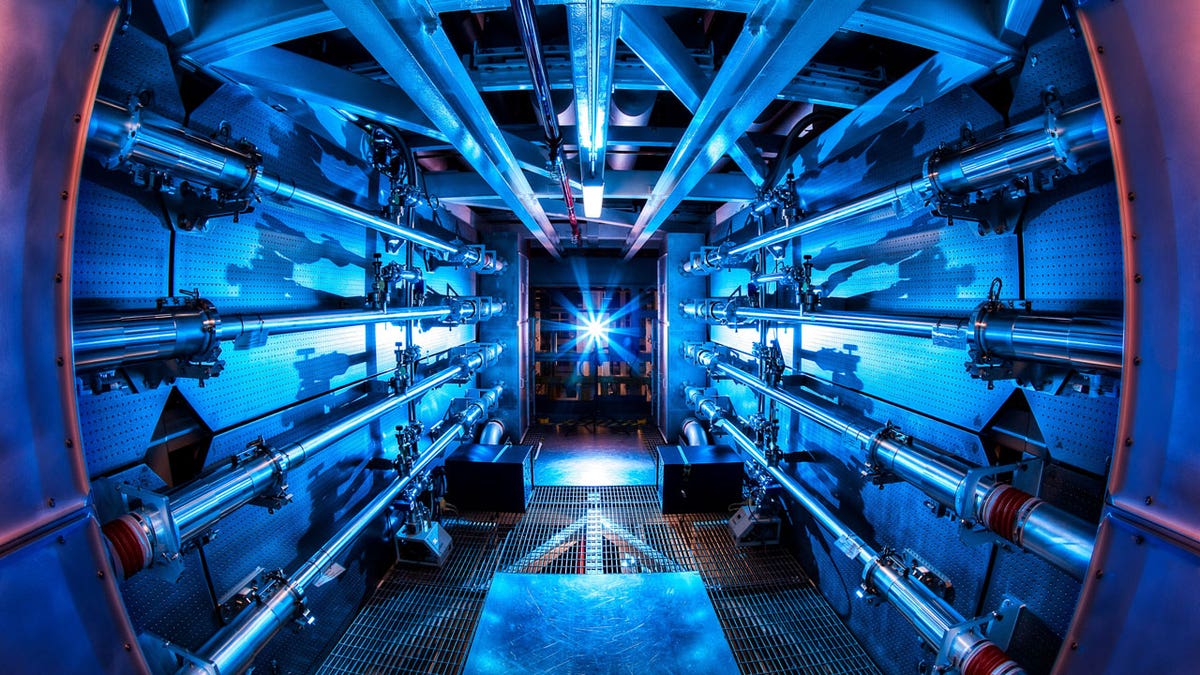
The National Ignition Facility’s preamplifier module increases the laser energy as it travels to the Target Chamber in an undated photograph at Lawrence Livermore National Laboratory federal research facility in Livermore, California. (Damien Jemison/Lawrence Livermore National Laboratory/Handout via REUTERS/File Photo)
«Right now, the machines consume more energy than they produce. So that’s not a power plant. You don’t want to build that as a power plant. That’s a power user. But the output of that is learning, right? And we’re getting better and better at it,» Mumgaard said.
Critics say fusion power has been 20-30 years away for decades now but Commonwealth Fusion Systems is hoping to change that timeline, saying they could have a viable reactor by the early 2030s.
«We’ve learned a lot about what it takes to make these machines,» Mumgaard said. «The scientific advance has happened. And we’re now at the stage where we have confidence in that science, that you know, fusion is turning more to an engineering problem.»
In 2022, the National Ignition Facility at the Lawrence Livermore National Laboratory demonstrated fusion could generate more energy than it used, but it was just a small amount, about enough power to keep a small LED Light Bulb on for 20 hours. Scientists also estimate it takes about 100 times more energy to run the facility than the amount used in the experiment.
«NIF (National Ignition Facility) put in enough energy to power roughly a thousand homes and got enough out to power an LED. Because the overall system has inefficiency,» Stein said.
Fusion and other energy sources have seen advancements in the past decade thanks to artificial intelligence.
ARTIFICIAL INTELLIGENCE HELPS FUEL NEW ENERGY SOURCES
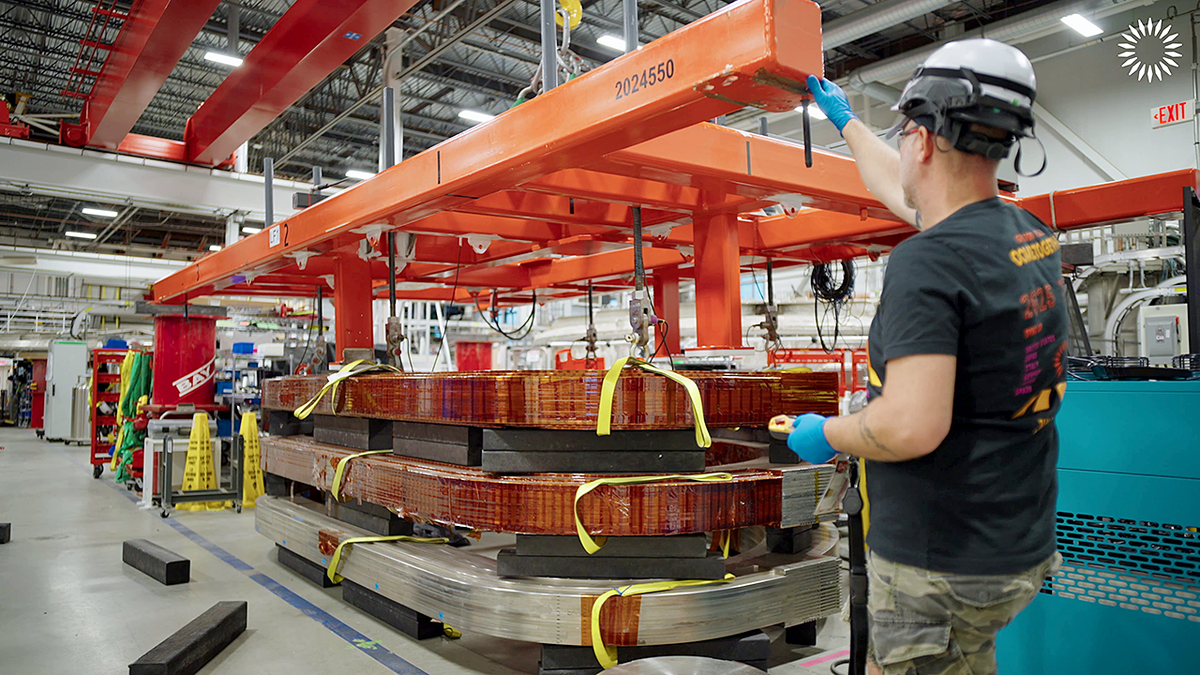
Commonwealth Fusion Systems is hoping to have a viable nuclear fusion reactor by the early 2030s. (Commonwealth Fusion Systems)
«I think A.I. in and of itself is a good thing. Economic developments, growth, all good things. What we have to do is get the policy right,» Butler said. «We’ve also learned a lot from our technology partners in how to use technology to deliver energy more efficiently. Are we using grid enhancing technology to increase the capacity of the transmission system? What are we doing to serve our customers more intuitively? All of that is coming with the advent of A.I. and the technology, and we need to utilize that as energy companies.»
At Commonwealth Fusion Systems, NVIDIA software monitors and maps fusion plants in real time. Google Deepmind’s technology helps better control plasma.
«Whether that’s to make the computer simulations run faster or to make the control systems for the plasma able to react faster, gain insights in how to build the machines. And so you see that in our company but in fusion labs around the world that A.I. is having an accelerating factor in this whole field,» Mumgaard said.
The fusion industry has seen increased interest and funding. Companies raised $2.6 billion in private and public funding in the 12 months leading to July 2025. But that is just a fraction of the amount invested in energy already on the grid. In 2025, spending on nuclear was estimated at $70 billion. Solar was expected to reach $450 billion.
«Fusion isn’t a near-term energy solution. It’s not science fiction either, but it’s a long-horizon, high-risk, high-reward option with unavoidable uncertainty,» Stein said. «The near-term solution is fission and other energy sources that we already know how to build. But that does not mean that we shouldn’t pursue fusion for mid to long-term energy needs.»
Some fusion critics have speculated that the energy source could never be viable for the electric grid. Elon Musk has called the effort a «pet science project» and called for further investments in solar energy. But some energy companies, lawmakers in both parties and the Trump administration are expressing optimism.
CLICK HERE TO DOWNLOAD THE FOX NEWS APP
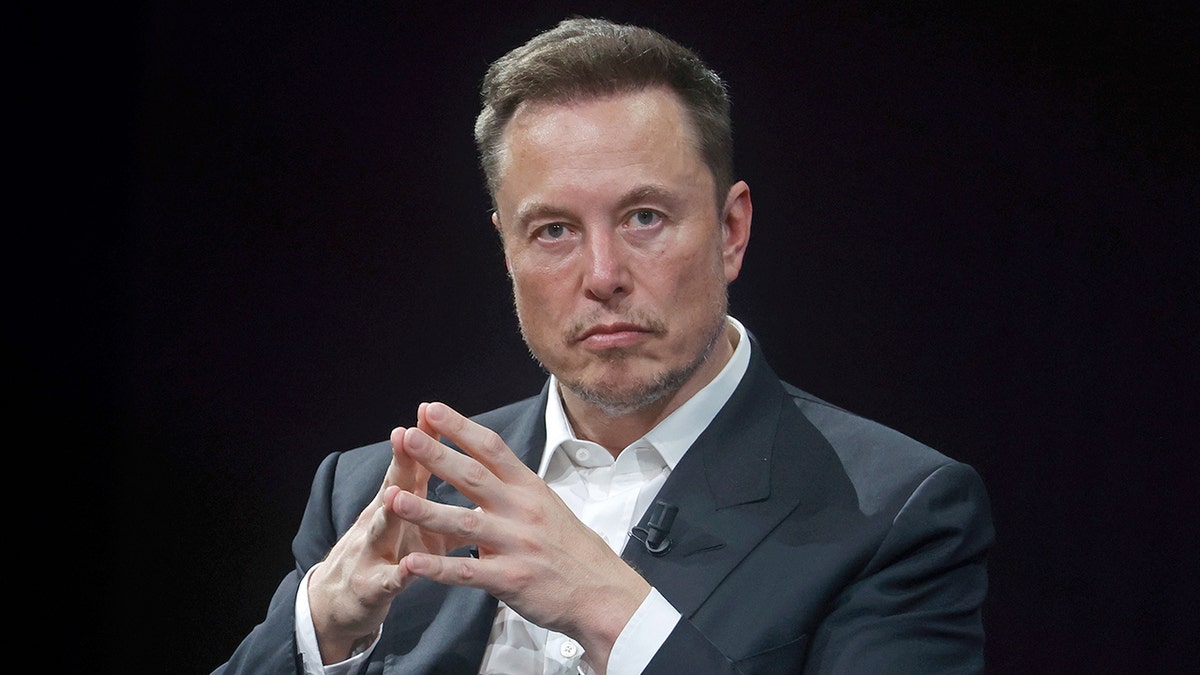
Elon Musk speaks at the Viva Technology conference focused on innovation and startups at the Porte de Versailles exhibition center in Paris on June 16, 2023. (Chesnot/Getty Images)
«Definitely in the next several years, we’re gonna see at scale much more energy come out than goes in in fusion devices. It’s a little bit of time after that to make it commercial and machines and all that, but it’s coming,» Energy Secretary Chris Wright said at Semafor’s World Economy Summit in April 2025. «It’s not a maybe someday always 20 years away thing. Watch the news. Fusion energy in the next four years can be very exciting.»
politics,energy,energy planet earth,special report

Un misil iraní alcanzó una refinería estratégica en Israel y provocó cortes eléctricos en el norte del país

Jornada financiera: las acciones argentinas esquivaron la volatilidad global y subieron hasta 6% en Wall Street

Así quedaron formados los grupos de la Copa Sudamericana ¿Cuáles son los rivales de los argentinos?

Economía, escándalos y mal humor social

Referentes sindicales, empresariales y judiciales analizaron el impacto de la Ley de Modernización Laboral

Denmark secretly prepared to blow up Greenland’s runways to stop U.S. aircraft: report

TRAICIÓN Y ÉXODO: La promesa rota de Monteoliva que desató una ola masiva de bajas en la Policía Federal

Adorni se disculpó por el viaje de su esposa: “Fue una pésima decisión, más allá de que no generó gasto para el Estado”

Horacio Rodríguez Larreta reapareció y lanzó “Metrópolis”, su nuevo espacio en la Ciudad de Buenos Aires

Insólito: un esquiador británico terminó la Copa del Mundo de Oslo bajo los efectos del alcohol

 POLITICA3 días ago
TRAICIÓN Y ÉXODO: La promesa rota de Monteoliva que desató una ola masiva de bajas en la Policía Federal
- POLITICA3 días ago
Adorni se disculpó por el viaje de su esposa: “Fue una pésima decisión, más allá de que no generó gasto para el Estado”
- POLITICA3 días ago
Horacio Rodríguez Larreta reapareció y lanzó “Metrópolis”, su nuevo espacio en la Ciudad de Buenos Aires