INTERNACIONAL
Judge Boasberg to weigh Trump contempt in deportation case this week

NEWYou can now listen to Fox News articles!
U.S. District Judge James Boasberg ordered lawyers for the Trump administration and for a class of deported Venezuelan migrants to come to court Wednesday to discuss the case’s status and the long-stalled question of whether the administration willfully defied his earlier court order and acted in contempt.
The new updates, codified in a minute order on Monday, are almost certain to spark fresh ire from President Donald Trump and his allies in a major immigration fight that has stretched on for more than nine months.
At issue is the Trump administration’s use of the Alien Enemies Act, a 1798 wartime immigration law, to deport 252 Venezuelan migrants from the U.S. to a maximum-security prison in El Salvador in March.
Boasberg had issued an emergency order in March blocking the Trump administration’s use of the law to immediately deport migrants to a third country, and ordered officials to return any planes that had already left US soil.
WHO IS JAMES BOASBERG, THE US JUDGE AT THE CENTER OF TRUMP’S DEPORTATION EFFORTS?
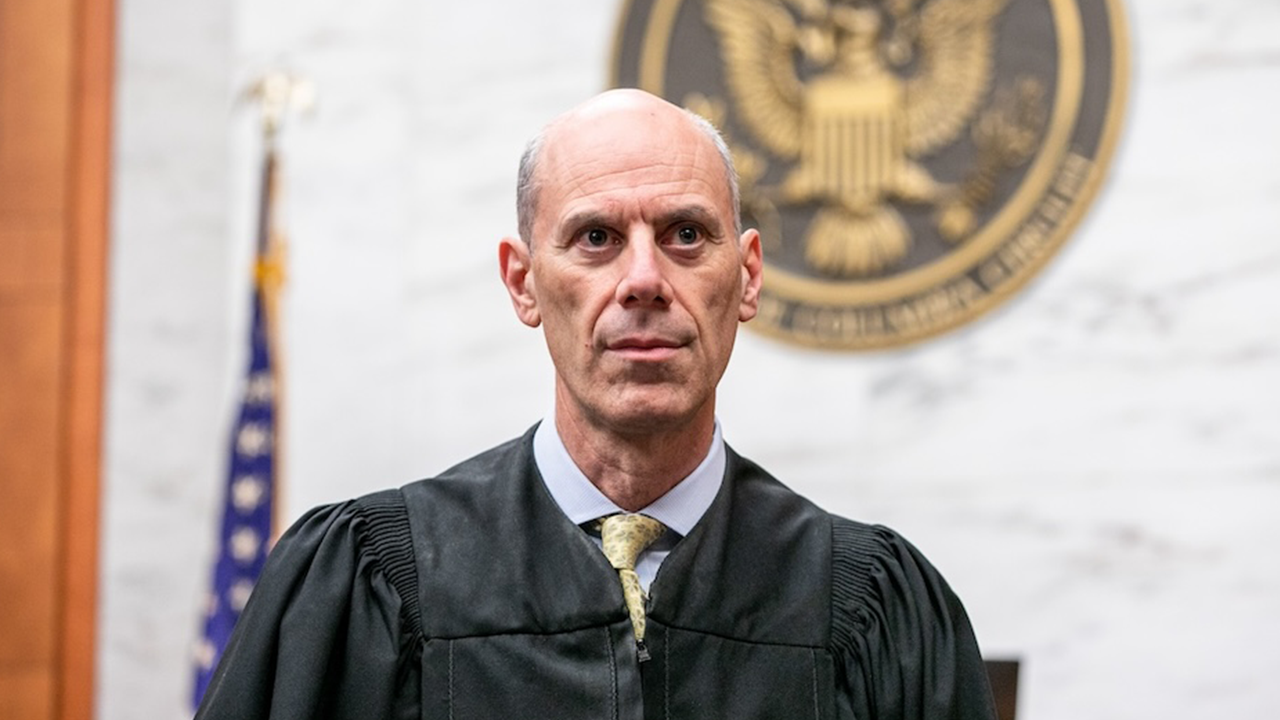
WASHINGTON, DC- Judge James E. Boasberg, chief judge of the Federal District Court in DC, stands for a portrait at E. Barrett Prettyman Federal Courthouse in Washington, DC on March 16, 2023. (Photo by Carolyn Van Houten/The Washington Post via Getty Images) (Washington Post via Getty)
Despite his order, hundreds of migrants arrived in El Salvador hours later — where they remained until July, when they were removed again from CECOT to Venezuela as part of a broader prisoner exchange that involved the return of at least 10 Americans and permanent U.S. residents detained in Venezuela.
Trump officials have argued that the individuals removed were alleged members of the Venezuelan gang, Tren de Aragua. But lawyers for the ACLU and other groups representing the migrants have vehemently disputed that claim, citing several reports from major news outlets that separately concluded that just a handful of individuals deported under the 18th century law had serious criminal records.
The Alien Enemies Act has been used three times previously in U.S. history, and most recently during World War II.
Boasberg tried for months without success to obtain information about the individuals who were deported to CECOT, and to obtain information about who in the Trump administration had ordered the flights in violation of his temporary restraining order.
In April, Boasberg ruled that the court had found «probable cause» to move on criminal contempt proceedings against the Trump administration for failing to return the migrants to U.S. soil, citing what he described as the administration’s «willful disregard» of the court.
Boasberg’s finding that the Trump administration likely acted in contempt of his March 15 emergency order had been halted for months, after a three-judge panel for the appeals court issued an emergency stay halting his order.
EX-JUDGES BLAST TOP TRUMP DOJ OFFICIAL FOR DECLARING ‘WAR’ ON COURTS
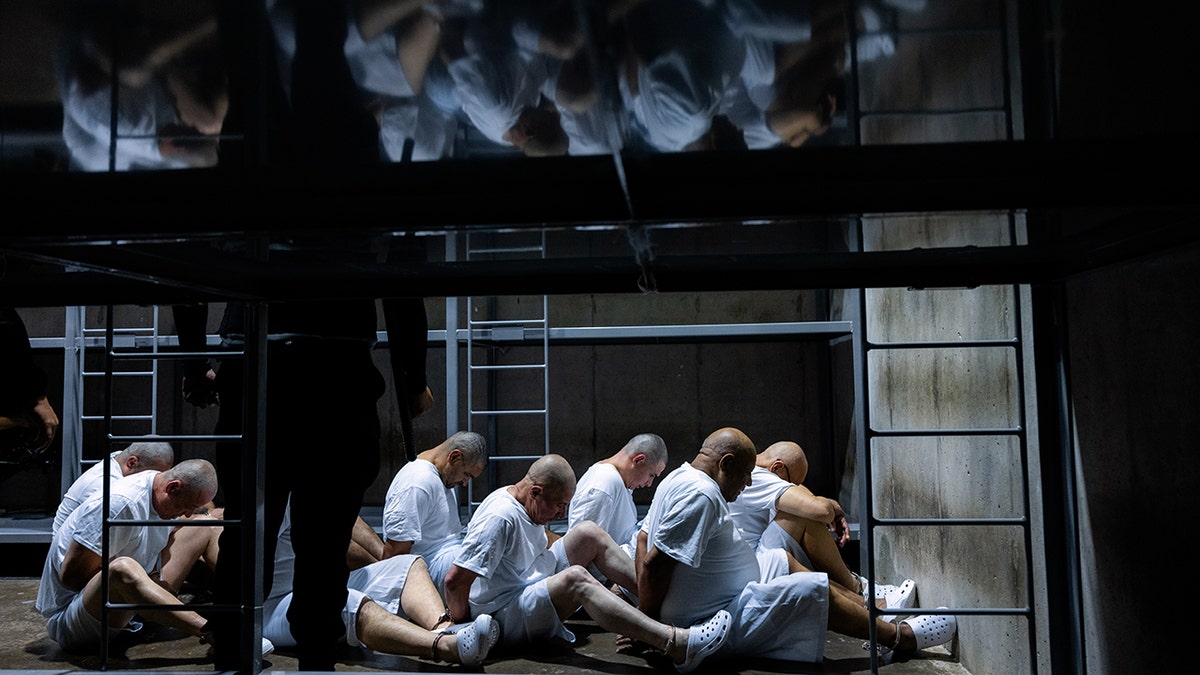
Migrants deported from the U.S. to El Salvador are seen in this March 31, 2025, photo provided by the Salvadoran government. (El Salvador Press Presidency Office/Anadolu via Getty Images)
In August, the judges ruled 2-1 to toss it completely. Their decision was appealed to all eleven judges for the U.S. Court of Appeals for the D.C. Circuit to review the matter en banc.
On Friday, judges on the panel declined by an 8-3 vote to further review Boasberg’s ruling, which in theory would have kept the lower court’s ruling in place. They did not, as some of the judges explained, because the two majority judges for the panel had split in August over the reasons for tossing Boasberg’s opinion.
Therefore, the court said, «the writ of mandamus issued by the panel has no ongoing practical or precedential effect.»
The update from the en banc panel effectively clears the way for Boasberg to consider the contempt proceedings, giving him jurisdiction over the issue again for the first time in more than 200 days.
TRUMP FOE BOASBERG ORDERS DOJ TO DETAIL STATUS OF CECOT MIGRANTS SENT TO VENEZUELA

This split image shows President Donald Trump and a group of protesters demonstrating against the Trump administration’s removal of hundreds of migrants to El Salvador’s CECOT prison in March 2025. (Getty Images)
Boasberg, for his part, quickly clarified that he intends to move on the contempt question imminently.
In a minute order issued Monday morning, Boasberg ordered lawyers for the Trump administration and the ACLU, who represent the deported class of Venezuelan migrants, to appear in court Wednesday for a previously scheduled motions hearing prepared to discuss case updates and next steps in the contempt inquiry.
The Trump administration has not provided, as of this writing, a list of the migrants sent to CECOT in March, or details of their immigration status in the U.S. prior to removal.
CLICK HERE TO GET THE FOX NEWS APP
Boasberg’s emergency order in March touched off a complex legal saga that ultimately spawned dozens of federal court challenges across the country – though the one brought before his court was the very first.
His role overseeing the case has also landed him squarely in the crosshairs of the Trump administration and the president himself, who has repeatedly excoriated Boasberg as an «activist judge.»
donald trump,federal courts,immigration,judiciary,politics






INTERNACIONAL
Insólito: un esquiador británico terminó la Copa del Mundo de Oslo bajo los efectos del alcohol

Gabriel Gledhill, esquiador británico de 23 años, cruzó la meta en la Copa del Mundo de Oslo tras aceptar bebidas alcohólicas del público durante toda la prueba. En los cincuenta kilómetros estilo libre de esquí de fondo, terminó en el puesto 67 y el deportista reconoció que bebió entre diez y doce cervezas antes de llegar a la meta. El incidente cobró notoriedad viral y desató un debate sobre los límites del espectáculo en el ámbito profesional.
El atleta, nacido en Inglaterra y residente en Noruega desde hace cinco años, explicó el contexto de su accionar a la agencia noruega de noticias NTB. Durante la competencia, aceptó todas las bebidas que recibió, consciente de que podría tratarse de la última vez que participaba en el circuito noruego de esquí de fondo por razones vinculadas a su situación migratoria. El atleta admitió: “Me ofrecieron mucha cerveza y alcohol durante el recorrido, por lo que terminé bastante borracho, pero fue muy divertido”. Además, reveló que también aceptó snus —un tipo de tabaco húmedo sueco— y hasta enjuague bucal, lo que le provocó vómitos durante buena parte del recorrido.
La permanencia del esquiador en Noruega se encuentra en riesgo, ya que las autoridades locales rechazaron su solicitud de residencia permanente por motivos económicos. El deportista enfrenta la posibilidad de abandonar el país antes del 28 de marzo, fecha en la que vencerá su permiso actual. Según sus propias palabras: “Significaría el fin de mi carrera. Mi entorno de entrenamiento se encuentra íntegramente en Lillehammer. Si tengo que irme del país ahora, tendría que abandonar el esquí de fondo y retirarme de este deporte”, declaró a NTB.

El comportamiento del atleta provocó duras críticas entre colegas y seguidores del deporte. Durante la carrera, el esquiador fue adelantado por competidoras de la rama femenina, algo poco frecuente en la competencia masculina debido a las diferencias de desarrollo y ritmo entre los circuitos masculinos y femeninos, lo que intensificó las dudas sobre su desempeño y actitud.
El portal deportivo español MARCA recogió la opinión de Petter Soleng Skinstad, exesquiador y comentarista de televisión: “A Gledhill le encanta ser el centro de atención en las redes sociales y la televisión. Pero hay un límite para lo que resulta entretenido. Creo que ese límite se ha alcanzado”.
Por su parte, el británico defendió que su comportamiento no perjudicó a los demás ni alteró el desarrollo de la jornada. Destacó que para él la carrera representó un momento especial vinculado a una posible despedida y “podría ser mi última carrera aquí, así que tuve que aceptar todas las ofertas de cerveza y alcohol que hicieron”, sentenció ante NTB.
La jornada no estuvo exenta de polémica entre seguidores y responsables del circuito internacional: la controversia alcanzó a entrenadores y dirigentes deportivos, quienes insistieron en la necesidad de preservar la integridad y el respeto en el esquí de fondo profesional.

La red social Instagram, a través de la cuenta oficial de la Copa del Mundo de Esquí de Fondo, publicó un video del atleta británico con una cerveza en la mano. En el mensaje, se optó por destacar su humor y la visibilidad que aportó al circuito internacional: “Hoy también fueron los últimos 50 km para un chico que se ha convertido en alguien reconocido en el esquí de fondo. Gracias por destacar esta actitud, Gabriel, y por traer tu humor, aura y visibilidad al esquí de fondo”.
Según MARCA, el incidente llevó al británico a convertirse en un personaje mediático dentro de la disciplina, tanto por su desempeño como por el episodio protagonizado en Oslo, lo que reavivó el debate sobre la profesionalidad y los límites del espectáculo en la alta competencia.
La conducta de Gledhill abrió interrogantes sobre posibles sanciones o futuras regulaciones relativas al consumo de alcohol en las pruebas de esquí de fondo. Hasta ahora, no se han anunciado medidas específicas.
El deportista, mientras tanto, enfrenta un futuro incierto ante la posibilidad de dejar Noruega en los próximos días. Agradeció el apoyo recibido y manifestó su intención de continuar en el esquí de fondo, ya sea en Noruega o en otro país, si no logra revertir su situación migratoria.
deportes de invierno,Juegos Olímpicos,Milano Cortina 2026,esquí,atleta,celebración,nieve,competencia,pista,aficionados
INTERNACIONAL
Google Gemini declares only GOP senators violate hate speech policy, zero Democrats, author claims

Google admits role in Biden censorship push
Rep. John Cornyn, R-Texas, joins ‘The Faulkner Focus’ to react after Google acknowledged pressure from the Biden administration to censor accounts over political views, and weighs in on anti-ICE rhetoric following a violent attack in Dallas.
NEWYou can now listen to Fox News articles!
EXCLUSIVE: Google’s AI chatbot Gemini flagged several Republicans — but no Democrats — when asked to identify senators who have made statements that violate its hate speech policies, author Wynton Hall told Fox News Digital. It’s just one example of what the author believes is a deeply ingrained bias against conservatives found in artificial intelligence tools.
Hall used the «deep research» function on Google’s Gemini Pro. Fox News Digital reviewed a screen recording of Hall’s prompt and findings. Google did not immediately respond to Fox News Digital’s request for comment.
One of the Republicans flagged by Gemini in Hall’s research, Sen. Marsha Blackburn, of Tennessee, was listed for characterizing «transgender identity as a harmful cultural ‘influence’ and has used ‘woke’ as a derogatory slur against protected groups.» Another, Arkansas’ Sen. Tom Cotton, was cited for cosponsoring legislation «to exclude transgender students from sports.»
MUSK, XAI TOUT NEWEST GROK UPDATE AS ONLY ‘NON-WOKE’ PLATFORM: ‘DOESN’T EQUIVOCATE’
Hall argues that artificial intelligence is biased in his new book «Code Red: The Left, The Right, China and the Race to Control AI.» (Wei Leng Tay/Bloomberg/Getty Images)
The finding stood out against a backdrop of inflammatory rhetoric from some Democrats in recent years.
In 2023, Rep. Dan Goldman, D-N.Y., warned that then-candidate Donald Trump was «destructive to our democracy» and needed to be «eliminated.» However, he quickly apologized for his comments, claiming that it was a «poor choice of words.»
Last year, Texas Democratic House candidate Rep. Jolanda Jones made a throat-slashing gesture while rejecting former first lady Michelle Obama’s famous mantra, «when they go low, we go high,» on CNN’s «Outfront.»
«If you hit me in my face, I’m not going to punch you back in your face. I’m going to go across your neck,» Jones said while making a slashing motion across her neck. «We can go back-and-forth, fighting each other’s faces. You’ve got to hit hard enough where they won’t come back,» she added.
But for Hall, Gemini’s seemingly partisan answer underscored the central argument of his new book, «Code Red: The Left, The Right, China and the Race to Control AI.» In it, he argues that AI systems marketed as neutral are increasingly shaped by the ideological assumptions of the people and institutions who create them, which are far from neutral.
His book starts out with a clear example.
Less than 10 weeks before the 2024 election, a series of viral videos appeared to expose a strange double standard in American homes. When users asked Amazon’s Alexa why they should vote for Kamala Harris, the device delivered a polished endorsement. When asked why they should vote for Donald Trump, Alexa declined, citing a policy of neutrality.
«I cannot provide content that promotes a specific political party or a specific candidate,» Alexa said.
Hall says the concern extends beyond a single Gemini output.
«AI’s Silicon Valley architects lean left politically, and their lopsided political donations to Democrats underscore their ideological aims,» Hall told Fox News Digital.
To Hall, episodes like this show how AI can shape political perceptions while maintaining the appearance of objectivity. «Through algorithm throttling and shadow bans, Big Tech centralized control over which voices soar and sink across social networks. Now AI has put Big Tech’s consolidating control on steroids,» he writes.
WHAT IS ARTIFICIAL INTELLIGENCE?

Hall alleges Google Gemini flagged Republican senators’ rhetoric as hate speech while identifying no Democratic violations, raising questions about AI bias. (Andrey Rudakov/Bloomberg via Getty Images)
He argues that this imbalance reflects the politics of the people building the systems. The billionaires driving the AI revolution, he says, invest their money and political energy where their values lie. As PayPal co-founder Peter Thiel once put it, «Silicon Valley is a one-party state.»
The money appears to bear that out. According to Hall, 85% of political donations from employees at Apple, Meta, Amazon and Google go to Democrats.
After Trump’s 2024 victory, major tech companies made the customary $1 million inauguration donations. But Hall argues those gestures did little to hide where Silicon Valley’s loyalties had long been. Aside from Elon Musk, he says, most of Big Tech’s leading figures remained firmly on the left.
Hall points to Democratic fundraising in 2024 as evidence of Silicon Valley’s political influence, citing major support from figures including Bill Gates, Melinda French Gates, Reid Hoffman and Laurene Powell Jobs.
But Hall argues the bigger issue is not campaign money.
It is the growing influence of AI systems that many people assume are neutral and objective. He warns that users often trust those answers too much, even when they may be biased.
CLICK HERE TO DOWNLOAD THE FOX NEWS APP
To Hall, this bias is reinforced by the relationship between tech companies and legacy media. He argues AI systems are trained on enormous amounts of content from outlets such as The New York Times, The Atlantic and Reuters, while conservative outlets are largely excluded.
The result, he says, is a closed loop: AI absorbs the assumptions of legacy media and repackages them as objective truth. Hall argues conservatives must respond by demanding transparency in training data and ending taxpayer-funded contracts for vendors whose systems show political bias.
«Whoever wins the AI fairness battle,» Hall concludes, «will shape the minds and political attitudes of future generations. The time to act is now.»
technology,artificial intelligence,politics
INTERNACIONAL
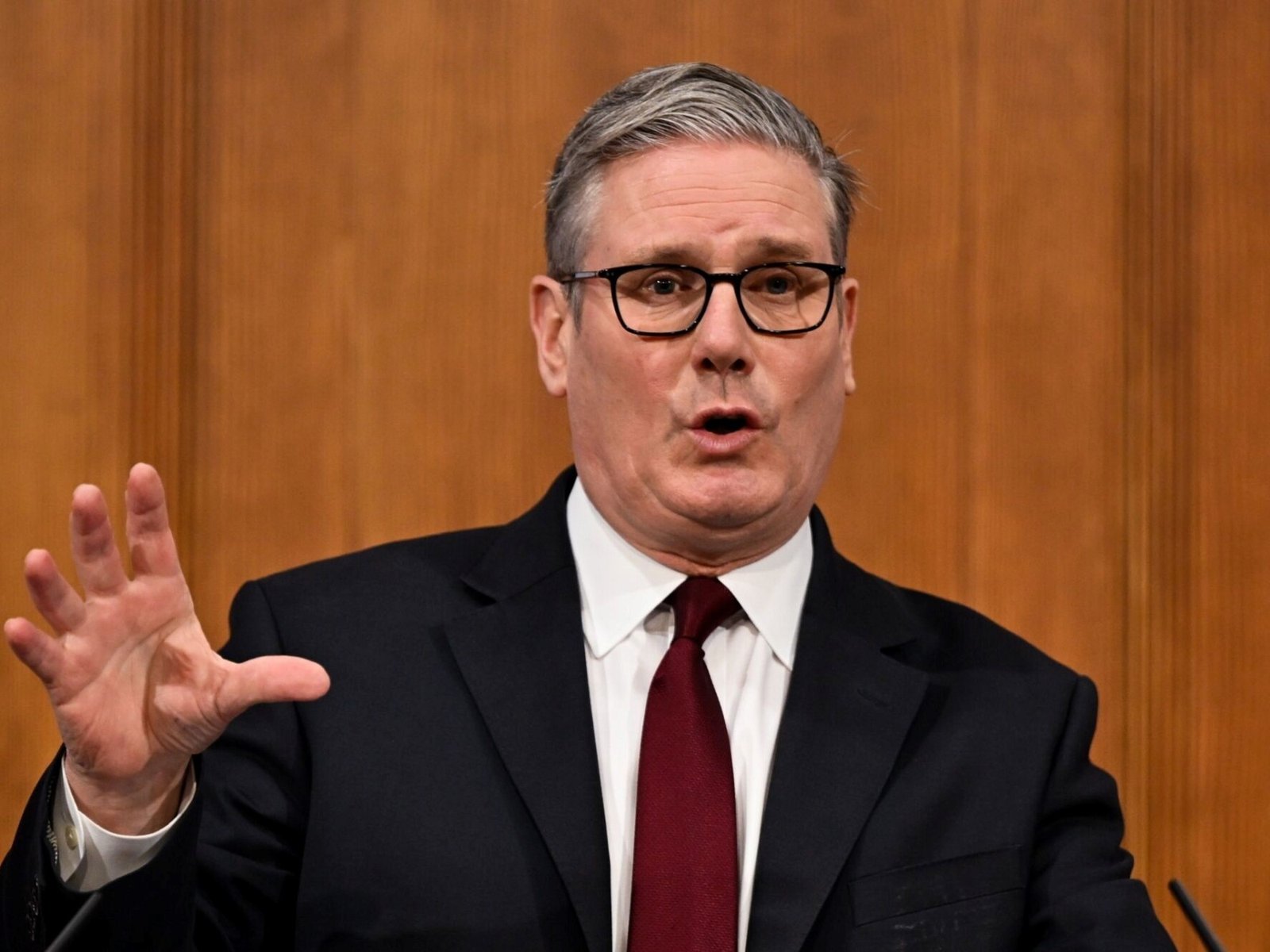
Starmer le responde a Trump por Ormuz: «Gran Bretaña no se verá envuelta en una guerra a gran escala con Irán»
Las amenazas de Trump
«No lo he decidido»
Alemania: «No es nuestra guerra»
El precio del petróleo
Ayudas para calefacción

Javier Milei defendió su plan económico y aseguró: «Tarde o temprano se va a acelerar el crecimiento y va a caer la inflación»

Adorni denunció un complot interno y Santiago Caputo teme que le quiten el control de la SIDE y ARCA

El Gobierno registró un nuevo superávit financiero en febrero

Sergio Romero, el portero con más partidos en la selección argentina, se retira del fútbol

Argentina reclamó ante la ONU la liberación inmediata de Germán Giuliani tras casi 300 días de detención en Venezuela

Nico Occhiato anunció la noticia más linda de su vida a sus 33 años: «Nuevo capítulo, en la historia de NDN»

Morena Rial salió de la cárcel y se conoció escalofriante dato que involucra a Jorge Rial: «Me pidió que me hiciera cargo»

Emanuel Noir, de Ke Personajes, anunció que dejará las redes sociales: “Una búsqueda mayor a la que creí, apareció”

Cuánto subirán las jubilaciones y pensiones en abril después del dato de inflación que sorprendió

La fuerte exigencia a Mauro Icardi para poder ver a sus hijas con Wanda Nara: “A Maurito se lo va a multar si no lleva a las menores al colegio”

 CHIMENTOS2 días ago
La fuerte exigencia a Mauro Icardi para poder ver a sus hijas con Wanda Nara: “A Maurito se lo va a multar si no lleva a las menores al colegio”
- POLITICA2 días ago
BOMBAZO – Guerra abierta: Feinmann y Rossi contraatacan tras la denuncia de Victoria Villarruel
- SOCIEDAD3 días ago
Video: así fue el feroz temporal que azotó Tucumán y causó inundaciones, rutas cortadas y suspensión de clases