INTERNACIONAL
Judge clears way for Minnesota welfare fraud ringleader to forfeit Porsche, millions held in accounts


NEWYou can now listen to Fox News articles!
Aimee Bock, the alleged mastermind behind Minnesota’s $250 million Feeding Our Future fraud scandal tied to the Somali community, is facing forfeiture of a Porsche, property, designer handbags and millions of dollars after a federal judge approved a preliminary order.
A judge signed off on the preliminary forfeiture order last week, clearing the way for the government to seize assets that prosecutors say were purchased with ill-gotten taxpayer funds, according to MPR News, a Minnesota-based news outlet.
The assets include about $3.7 million in bank accounts and cash, a 2013 Porsche and luxury items taken from her home, according to MPR News. The U.S. attorney’s office listed the total forfeiture judgment at $5.2 million. Federal agents seized the assets in 2022, and the judge has now approved their forfeiture on a preliminary basis following Bock’s conviction.
A federal jury in March found Bock guilty on all counts she faced, including wire fraud, conspiracy and bribery. She is currently awaiting sentencing.
REP TOM EMMER: WALZ OVERSAW BILLIONS IN STOLEN TAXPAYER MONEY — NOW COMES ACCOUNTABILITY
A split image shows defendant Aimee Bock in the Feeding Our Future fraud case, left, and a separate photo introduced as evidence during the trial depicting luxury spending allegedly tied to people in her network, right. (Sherburne County Sheriff’s Office; Department of Justice)
Bock founded the Feeding Our Future nonprofit in 2016, and, for years, it operated modestly, handling roughly $3 million to $4 million annually in federal child nutrition reimbursements, according to prosecutors.
That trajectory changed abruptly during the COVID-19 pandemic, when emergency rule changes loosened oversight and allowed sponsors to submit claims without normal verification.
As executive director of Feeding Our Future, Bock approved meal sites, some of which were fake, and then certified the claims, signing off on the reimbursements from the Minnesota Department of Education (MDE).
MEET MINNESOTA’S FRAUD ‘MASTERMIND’ ACCUSED OF PLAYING ‘GOD,’ WIELDING ‘FAKE’ RACISM CLAIMS IN SOMALI SCANDAL
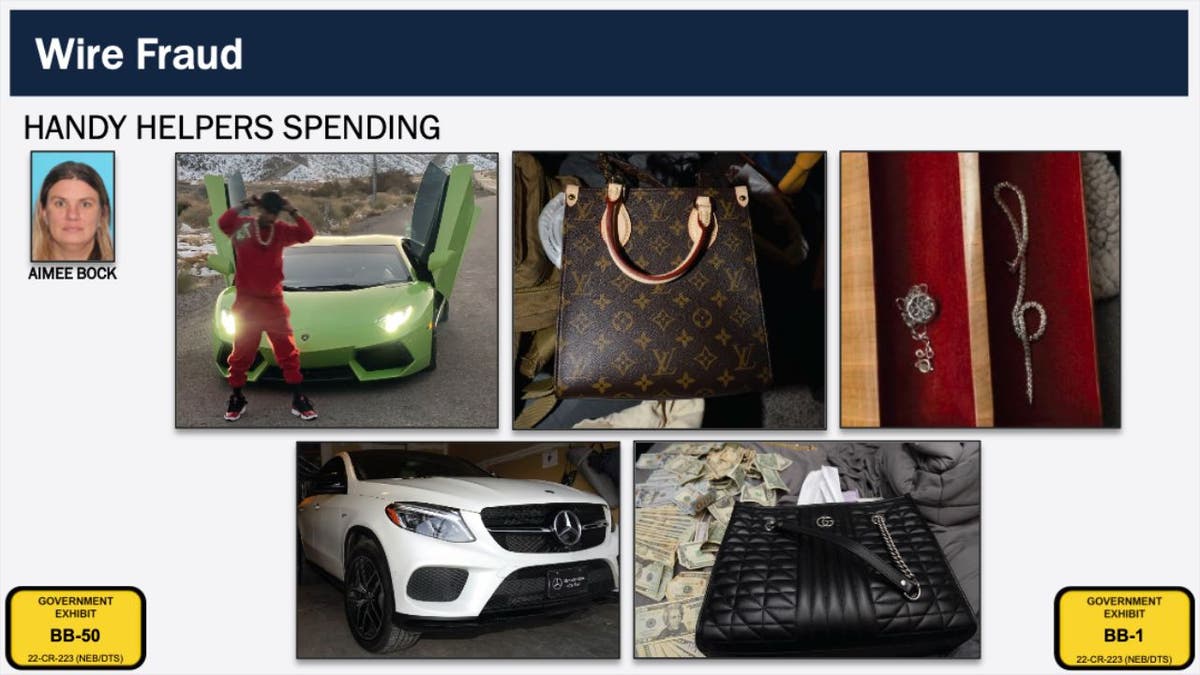
Government Exhibits BB-50 and BB-1 show designer bags, jewelry, cash piles, a Lamborghini photo and a white Mercedes prosecutors labeled as «Handy Helpers Spending» to illustrate the lavish lifestyle inside the network surrounding Aimee Bock. Prosecutors made no claim that Bock personally bought these items. (Department of Justice)
She would soon preside over a network that claimed to have served 91 million meals, for which prosecutors say the scammers fraudulently received nearly $250 million in federal funds, a scale of growth that far outpaced the nonprofit’s pre-pandemic size and internal capacity.
Later filings and sentencing releases described the total impact as closer to $300 million. Attorney General Pam Bondi has suggested it may reach $400 million.
Prosecutors described Bock as the scheme’s gatekeeper who wielded near-total control over approvals and reimbursements that allowed the fraud to expand at a staggering pace.
CLICK HERE TO DOWNLOAD THE FOX NEWS APP
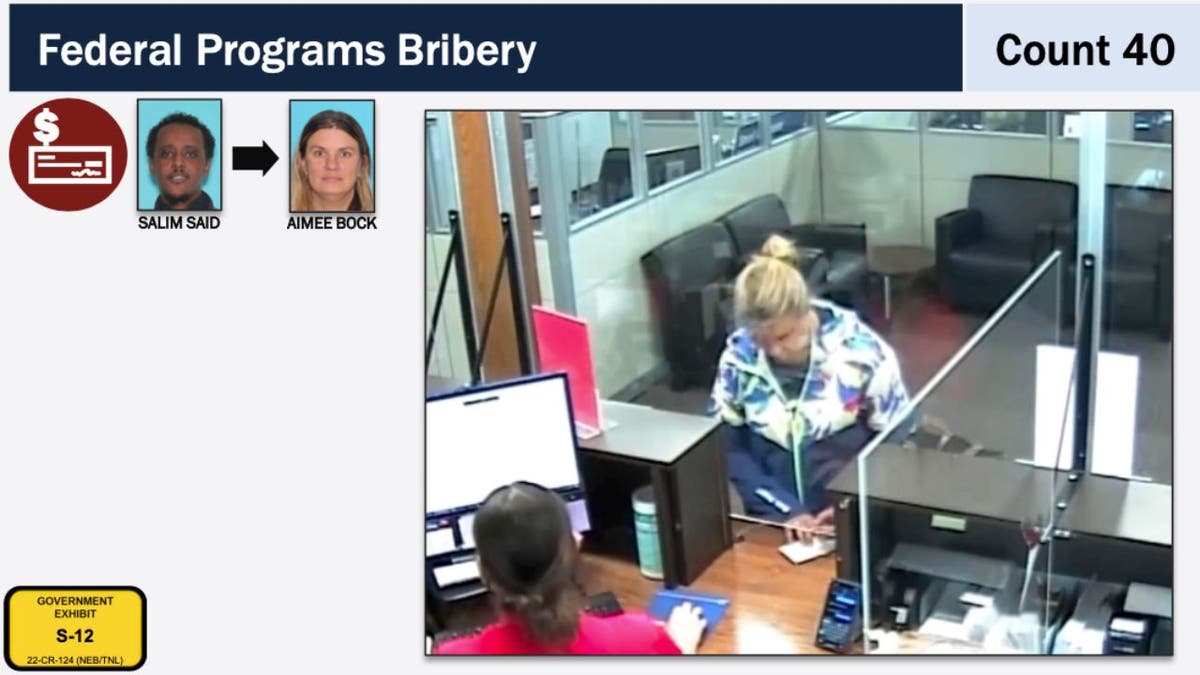
Government Exhibit S-12 shows Aimee Bock at a bank counter making a $30,000 cash withdrawal, evidence prosecutors said was tied to the bribery and kickback allegation in Count 40. (Department of Justice)
She was also involved in a kickback scheme by accepting cash payments from meal site operators in exchange for site approvals and reimbursements, prosecutors said.
In 2021, when the MDE grew suspicious and tried to stop the flow of funds, Feeding Our Future sued, alleging racial discrimination.
Of the 78 defendants charged to date, 57 have been convicted, according to Bondi, who said that 72 of the defendants are of Somalian descent, while five defendants are «currently fugitives in Africa.»
politics,crime world,us,minnesota fraud exposed,minneapolis st paul,somali immigrant community







INTERNACIONAL
El régimen de Corea del Norte se sumó a Rusia y respaldó la elección del nuevo líder supremo de Irán, Mojtaba Khamenei
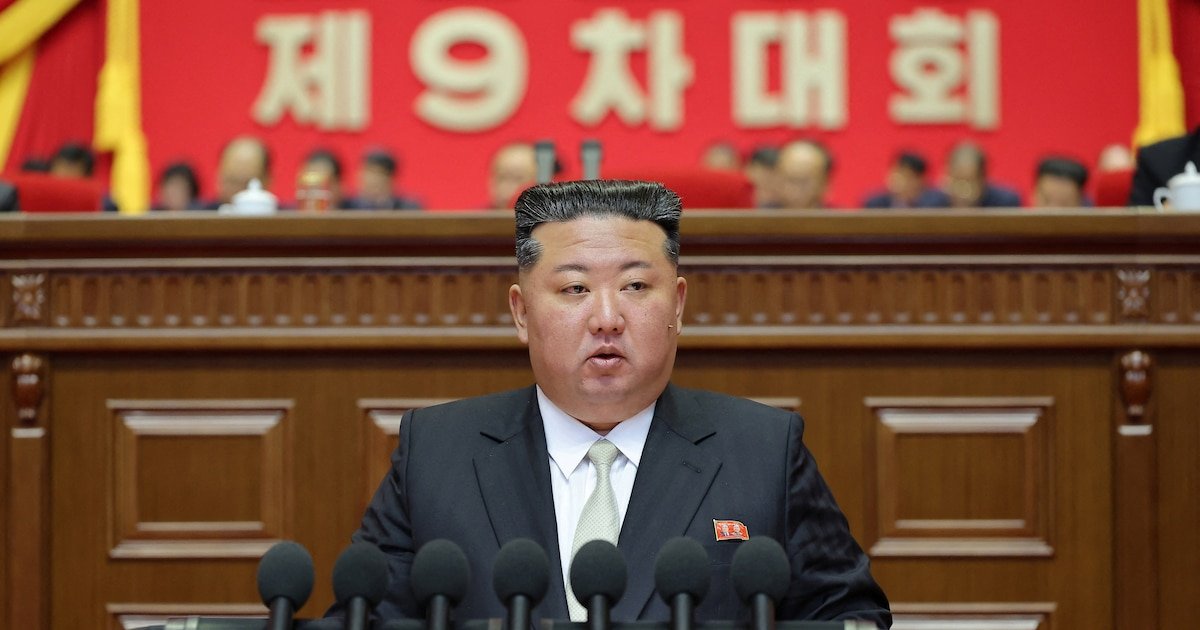
Las autoridades de la dictadura norcoreana expresaron este miércoles su apoyo a la elección del nuevo líder supremo de Irán, Mojtaba Khamenei, tras la muerte de su padre, Ali Khamenei, durante el primer día de los bombardeos de Estados Unidos e Israel a Teherán.
Un portavoz del Ministerio de Exteriores de Corea del Norte afirmó que, “ante el reciente anuncio oficial de la Asamblea de Expertos iraní”, Pyongyang respalda “el derecho y la libertad del pueblo iraní de elegir a su propio líder supremo”, según recogió la agencia estatal KCNA.
El portavoz manifestó además su “profunda preocupación” y condenó enérgicamente lo que calificó como agresión “ilegal” por parte de las fuerzas estadounidenses e israelíes, a quienes acusó de “socavar los cimientos de la paz y la seguridad regionales, y aumentar la inestabilidad en el panorama internacional”.
En ese sentido, el funcionario del régimen liderado por Kim Jong-Un señaló que “todas las formas de amenazas retóricas y acciones militares que socaven el sistema político y la integridad territorial del país en cuestión, interfieran en sus asuntos internos y aboguen abiertamente por el derrocamiento son inaceptables bajo cualquier circunstancia y deben ser condenadas y rechazadas”.

La semana pasada, Corea del Norte calificó los ataques militares de Estados Unidos e Israel contra Irán como “un acto de agresión totalmente ilegal” y “la forma más despreciable de violación de la soberanía”, en medio del estancamiento de las conversaciones nucleares indirectas entre Washington y Teherán.
Pyongyang y Teherán mantienen una relación histórica de cooperación en materia de defensa y tecnología militar, y el conflicto en Medio Oriente podría reforzar la postura norcoreana de que su arsenal nuclear es fundamental para garantizar la supervivencia del régimen.
Entre otras personalidades internacionales que apoyaron la asunción política de Mojtaba Khamenei se encontró el líder del movimiento hutí de Yemen, Abdelmalek al Hutí, quien calificó el lunes el nombramiento como “una bofetada enorme” para Estados Unidos e Israel.
En una carta de felicitación publicada por medios hutíes, Al Hutí elogió la transición de liderazgo en Irán como una victoria para la Revolución Islámica. “Esta exitosa elección fortalece los cimientos del sistema islámico y asesta una bofetada a los tiranos de esta era: Estados Unidos e Israel”, expresó el líder hutí.

A su vez, enmarcó la resiliencia de Irán como parte de una lucha más amplia contra “el plan sionista para cambiar Medio Oriente” y añadió que “la firmeza y la resistencia eficaz de Irán contra la agresión conducirán a la victoria”. El politburó hutí elogió el nombramiento como “una nueva victoria para la Revolución Islámica” y celebró la sucesión como “un golpe rotundo” para los adversarios de Irán.
El comunicado subrayó “la fe, la sabiduría y el coraje” de Mojtaba Khamenei y expresó confianza en que su liderazgo fortalecerá el papel de Irán en la lucha contra la “agresión estadounidense-israelí” y la “arrogancia global”. La transición marca la primera sucesión hereditaria en la historia de la República Islámica.
El presidente de Rusia, Vladimir Putin, también expresó el apoyo “inquebrantable” de su país a Irán tras la elección de Mojtaba como sucesor en el liderazgo supremo iraní.
“Rusia ha sido y seguirá siendo un socio fiable de la República Islámica. Le deseo éxito en las tareas difíciles que enfrenta”, señaló Putin en su mensaje de felicitación difundido por la Presidencia rusa. El mandatario reafirmó la solidaridad de Moscú con Teherán y sus “amigos iraníes”.

Putin subrayó que el nuevo mandato requiere “gran coraje y dedicación” en un contexto de agresión armada. “Confío en que continuará con honor la labor de su padre y que unirá al pueblo iraní durante estas duras pruebas”, concluyó el presidente ruso.
La Asamblea de Expertos, compuesta por 88 miembros, eligió a Khamenei como sucesor, respaldado por autoridades políticas, parlamentarias y militares de Irán, que defendieron la designación como una medida para garantizar la estabilidad del país en el contexto de la guerra con Estados Unidos e Israel.
(Con información EFE)
defence,domestic politics
INTERNACIONAL
US strike on key Iran oil hub would fit Trump’s ‘energy dominance doctrine,’ expert says

NEWYou can now listen to Fox News articles!
Kharg Island, which handles the bulk of Iran’s crude exports and was once floated by President Donald Trump as a potential target could spark broader regional instability and attacks on energy infrastructure if struck by the U.S., a leading energy security expert has warned.
Reports indicate the Trump administration is weighing options that could include a direct attack on Kharg Island.
Discussing the possibility of boots on the ground amid Operation Epic Fury on «The Claman Countdown,» retired Army Brig. Gen. Mark Kimmitt also told Liz Claman striking Kharg could be in the «offing.»
«I don’t think a significant number of boots on the ground, other than the chance of an assault on Kharg Island, is in the offing,» he said March 9.
TRUMP IS REALIGNING WORLD ENERGY MARKETS, AND THE IRAN STRIKES ARE ACTUALLY HELPING
The Kharg Island Oil Terminal brings Iranian oil to the world market. The oil terminal is the world’s largest open oil terminal, with 95% of Iran’s crude oil exports coming through it. (Fatemeh Bahrami/Anadolu Agency/Getty Images)
Trump’s interest in the island dates back to a 1988 interview in which he reportedly suggested targeting Kharg in response to Iranian aggression, according to reports.
«I’d be harsh on Iran. They’ve been beating us psychologically, making us look like a bunch of fools,» Trump said. «One bullet shot at one of our men or ships, and I’d do a number on Kharg Island. I’d go in and take it.»
Sara Vakhshouri, a global energy analyst, said striking Kharg aligns squarely with Washington’s «energy dominance» doctrine and spoke as U.S. and Israeli military action in Iran rattles energy markets and disrupts oil flows through the Strait of Hormuz.
«Kharg currently acts as a strategic restraint point in the conflict,» Vakhshouri, founder and president of SVB Energy International, told Fox News Digital.
«Interrupting Iran’s main export terminal would likely trigger a major oil price spike, market instability and regional retaliation against energy infrastructure.»
TRUMP SAYS IT’S AN ‘HONOR’ TO KEEP STRAIT OF HORMUZ OPEN FOR CHINA AND OTHER COUNTRIES

Reports indicate President Donald Trump’s administration is considering a direct attack on Iran’s Kharg Island, which handles 90% of Iranian oil exports near Strait of Hormuz. (Fatemeh Bahrami/Anadolu Agency/Getty Images)
Kharg’s significance is not only tactical but strategic, she added, arguing that it fits squarely within Trump’s long-touted doctrine.
The policy, central to Trump’s first term, prioritized maximizing U.S. oil and gas production, expanding exports and leveraging U.S. energy strength as a geopolitical tool.
«But when we talk about Kharg, the most important factor is that it fits within the U.S. energy dominance concept,» Vakhshouri said, suggesting that holding the island in reserve as a pressure point — rather than immediately striking it — may be a more strategic option.
Kharg sits in the northern Persian Gulf, roughly 15 miles off Iran’s mainland. Tankers leaving the terminal pass through the Strait of Hormuz, the narrow choke point that handles about one-fifth of global oil trade.
KEANE WARNS IRAN STRIKE BECOMING ‘REGIONAL WAR,’ SAYS THREE GULF STATES PREPARING FOR COMBAT
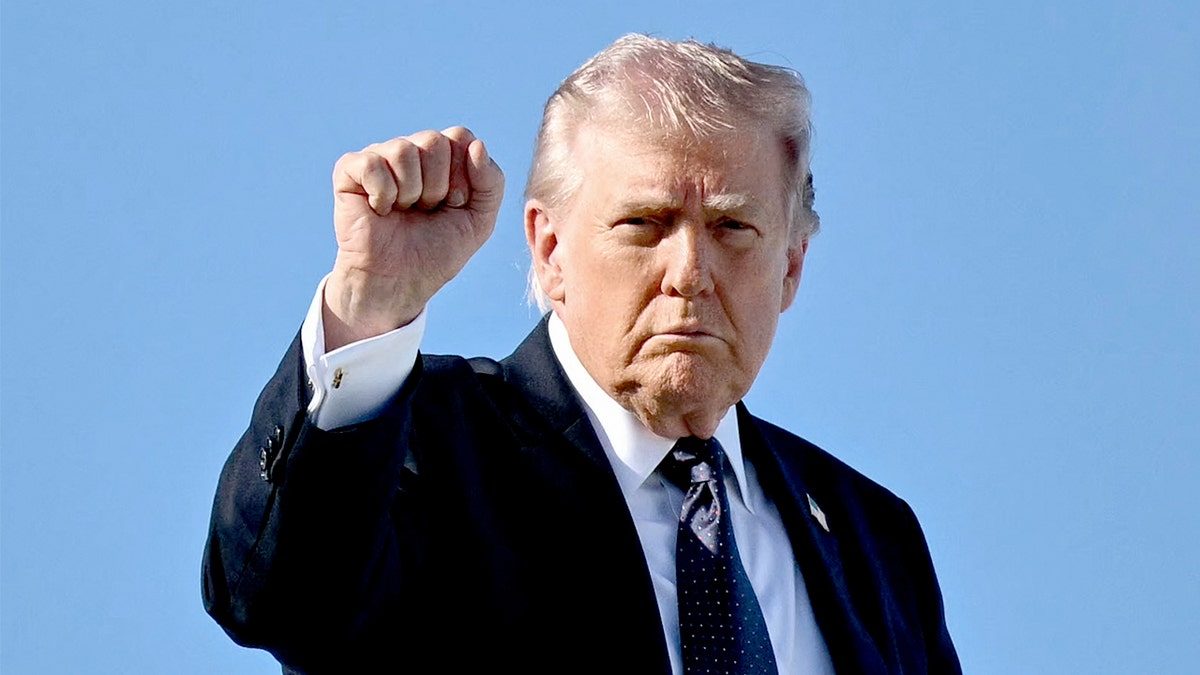
President Donald Trump gestures as he boards Air Force One before departing Palm Beach International Airport in West Palm Beach, Fla., March 1, 2026. (Mandel Ngan/AFP via Getty Images)
Around 90% to 95% of Iran’s crude and petroleum exports pass through Kharg, making it the regime’s primary oil revenue hub.
«Roughly 15 to 20 million barrels may be in storage, with around 1.5 to 3 million barrels per day exported through the terminal during the sanctions, with export capacity up to 5 million barrels per day,» Vakhshouri said.
«If the export capability from Kharg were lost, this restraint could diminish, shifting the risk toward further strikes on regional energy facilities and, more importantly, prolonged disruption of oil flows and tanker traffic through the Strait of Hormuz,» she warned.
CLICK HERE TO DOWNLOAD THE FOX NEWS APP
«Putting a price ceiling on such a scenario would depend largely on Iran’s retaliatory actions,» Vakhshouri added.
«The certain outcome, however, would be prolonged volatility and uncertainty in the market, driven by fears of further retaliation or an extended cycle of disruption.»
Fox News Digital has reached out to the White House for comment.
war with iran,iran,middle east,donald trump,wars,energy,geopolitics
NEWYou can now listen to Fox News articles!
Senate Democrats are preparing a series of war powers votes aimed at curbing President Donald Trump’s authority to continue military operations against Iran — and forcing the administration to publicly defend its actions.
Several Senate Democrats filed war powers resolutions last week meant to handcuff Trump and his continued conflict in the Middle East. It’s a power play by the group, who say the administration has not shown enough evidence that the U.S. should have struck Iran in the first place, much less continue fighting in the region.
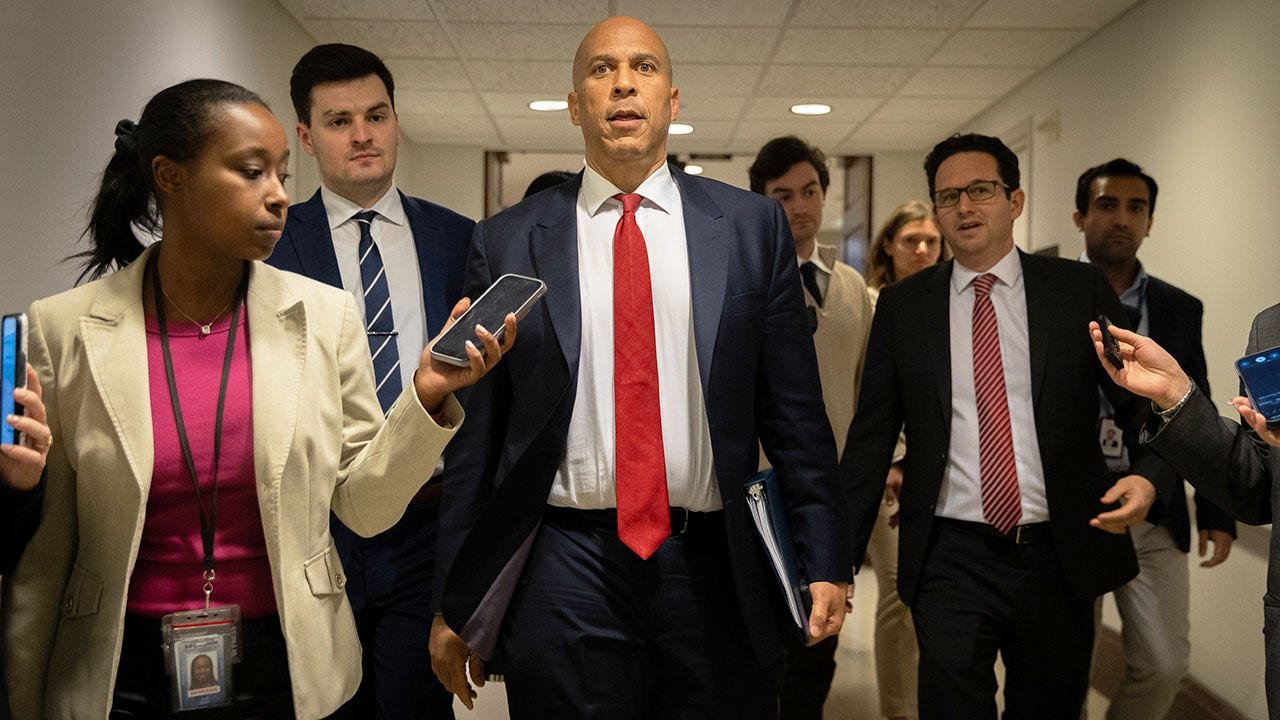
Sens. Chris Murphy, D-Conn., Cory Booker, D-N.J., Adam Schiff, D-Calif., and Tammy Baldwin, D-Wis., collectively filed five war powers resolutions last week, and they’re joined by Sens. Tammy Duckworth, D-Ill., and Tim Kaine, D-Va. Kaine has filed resolution after resolution to curb Trump’s war authority since he took office for his second term.
SCHUMER ONCE BLOCKED TRUMP’S MOVE TO FILL THE NATION’S OIL RESERVES, NOW HE WANTS THEM OPENED
Sen. Cory Booker, D-N.J., and five other Senate Democrats are planning to dominate the Senate floor with war powers votes, unless Secretary of State Marco Rubio and Secretary of War Pete Hegseth publicly testify on the war in Iran. (Nathan Posner/Anadolu via Getty Images)
Those resolutions, barring an official slate of hearings with Secretary of State Marco Rubio and Secretary of Defense Pete Hegseth, could hit the Senate next week and grind down floor time.
«This Congress should be focused on the biggest military action since the Afghanistan war, and we’re not even holding hearings on that,» Booker told Fox News Digital.
Murphy said that the resolutions could hit the Senate floor as soon as next week, and warned that if hearings are set in motion, Democrats would be able to «call up a vote every day on war powers and force at least a short debate and vote every day.»
«There’s no excuse to hide what the administration is doing from the public,» Murphy said.
STATE DEPARTMENT DEFENDS ‘PROACTIVE’ EVACUATION EFFORTS AGAINST DEMS’ CLAIMS OF DIPLOMATIC CHAOS
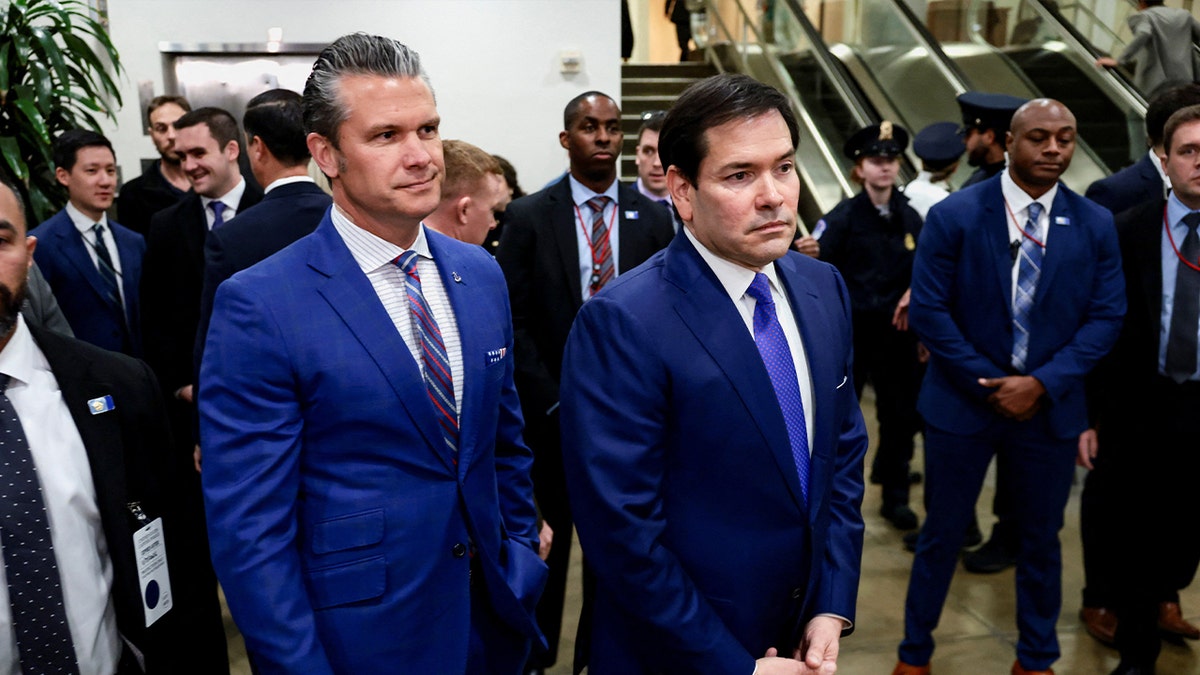
Senate Democrats are planning to grind the Senate to a halt unless Secretary of War Pete Hegseth and Secretary of State Marco Rubio testify publicly on the war in Iran. (Evelyn Hockstein/Reuters)
While the group wouldn’t reveal exactly what their gridlock-inducing floor strategy would look like, they contended that the chairs of the Senate Armed Services and Senate Foreign Relations committees had already requested that Rubio and Hegseth testify.
Senate Foreign Relations Committee Chair Jim Risch, R-Idaho, wouldn’t say whether he had requested Rubio to appear before his panel but blamed Senate Democrats for helping the Iranian Revolutionary Guard.
«You’ll notice the Democrats are the only entity on this planet who are helping the IRGC,» Risch told Fox News Digital, referring to the Islamic Revolutionary Guard Corps.
OPERATION EPIC FURY SURVIVES SENATE CHALLENGE AS REPUBLICANS CLOSE RANKS BEHIND TRUMP
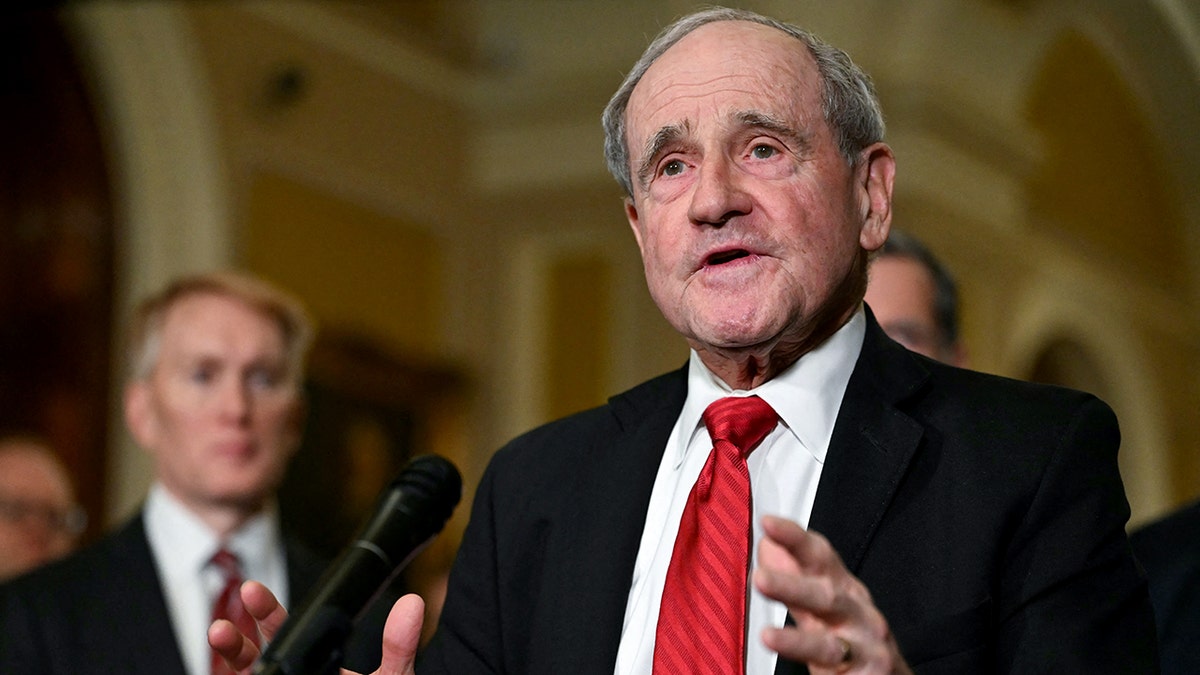
Sen. James Risch, Republican from Idaho, speaks to reporters following the weekly Senate Republicans policy luncheon, at the U.S. Capitol in Washington, Jan. 28, 2025. (Andrew Caballero-Reynolds/AFP via Getty Images)
The group argued that Rubio and Hegseth should make the case for the war in Iran to the public and that closed-door, classified briefings on the matter weren’t enough to convince them that the war was necessary.
«I was absolutely not convinced. In fact, nothing was offered to show me that we were under imminent attack,» Baldwin said. «That we were under imminent attack, or that it was reasonable to believe that we were at risk — and that’s what would trigger the president’s authority to use military force without coming to Congress first.»
Senate Majority Leader John Thune, R-S.D., acknowledged that Democrats’ strategy would eat away at floor time but cautioned that «we’ll see how the next few days in the conflict go.»
CLICK HERE TO DOWNLOAD THE FOX NEWS APP
«I’m sure there’ll be some decisions made around that, but maybe that’ll affect whether or not they try to trigger all those,» Thune said.
Thune said that «there always are» hearings and noted that the Senate Armed Services Committee would be holding hearings soon on the annual National Defense Authorization Act.
«So they’re going to have all those folks coming through on a fairly routine basis anyway, and I’m sure this will be a subject of discussion,» Thune said.
politics,senate,democrats senate,war with iran,john thune,marco rubio,pete hegseth

Empleados de comercio negocian nuevo aumento de sueldo: qué pasa con el bono

Pasó de la D a Primera, jugó en San Lorenzo y en España, lo dirigió Ruggeri y se retiró a los 45 años: “Fue como si me apagaran la luz”

Legislatura porteña: La Libertad Avanza y Fuerza Patria presionan a Jorge Macri y desplazan a Pro de las principales comisiones

Debaten si el caso contra el ex gobernador Sergio Urribarri por enriquecimiento ilícito llega a juicio oral

El régimen de Corea del Norte se sumó a Rusia y respaldó la elección del nuevo líder supremo de Irán, Mojtaba Khamenei

US strike on key Iran oil hub would fit Trump’s ‘energy dominance doctrine,’ expert says

La cruda confesión de Amalia Granata por el trastorno que sufre su hijo Roque: “Le hicimos estudios y salió que tiene TDAH, dislexia y disgrafia”

El mercado le está corriendo el arco a Caputo y el riesgo país no baja: en la City palpitan medidas

Jenny Mavinga angustiada tras una quemadura en Gran Hermano 2026: “¡Ay, me quemó!

Trump anunciará la creación del Escudo de las Américas, una alianza regional que integrará Milei para enfrentar al narcoterrorismo y a China

 CHIMENTOS3 días ago
La cruda confesión de Amalia Granata por el trastorno que sufre su hijo Roque: “Le hicimos estudios y salió que tiene TDAH, dislexia y disgrafia”
- ECONOMIA2 días ago
El mercado le está corriendo el arco a Caputo y el riesgo país no baja: en la City palpitan medidas
- CHIMENTOS2 días ago
Jenny Mavinga angustiada tras una quemadura en Gran Hermano 2026: “¡Ay, me quemó!