INTERNACIONAL
Kamala Harris cuestionó el rumbo institucional de EEUU en una aparición clave tras su salida del gobierno


La ex vicepresidenta Kamala Harris regresó a la escena política con un discurso enfocado en el estado de las instituciones democráticas en Estados Unidos y en la necesidad de mantener la participación ciudadana activa frente a los desafíos del momento.
Su intervención tuvo lugar este miércoles en San Francisco, durante la gala por el 20° aniversario de la organización Emerge America, dedicada a formar mujeres demócratas para cargos públicos.
En su discurso, Harris sostuvo que el país atraviesa una etapa que requiere atención a la solidez de los mecanismos de control del poder.
“Cuando colapsan por completo —si el Congreso no cumple con su función, o si la Corte falla en hacer la suya, o incluso si ambos hacen su parte, pero el Presidente los desafía de todos modos— eso se llama una crisis constitucional”, afirmó.
La ex vicepresidenta, que mantiene su residencia en Los Ángeles y evalúa distintas alternativas políticas para el futuro, se refirió al contexto actual como un momento de definiciones institucionales. En ese marco, remarcó la importancia de sostener “los valores fundacionales de igualdad y derechos inalienables” frente a decisiones de gobierno que, en su visión, ponen a prueba esos principios.

A propósito de los primeros cien días del segundo mandato del presidente Donald Trump, Harris advirtió que se está produciendo una serie de cambios orientados a reformular el rol del Estado federal.
“Lo que estamos viendo no es solo desorden”, dijo. “Lo que en realidad estamos presenciando es un vehículo que está siendo utilizado para implementar rápidamente una agenda que lleva décadas en construcción”.
Con esa frase, hizo alusión al Project 2025, una hoja de ruta promovida por sectores conservadores que propone una reorganización profunda del gobierno federal.
Trump ha intentado distanciarse públicamente de ese plan, pero Harris sugirió que algunas acciones recientes coinciden con sus lineamientos, como los recortes a estructuras gubernamentales y las modificaciones a políticas de diversidad e inclusión.
También expresó su preocupación por el rumbo económico y el impacto de las tarifas comerciales, afirmando que esas decisiones “claramente invitan a una recesión”.

Harris destacó el rol de distintos actores que, según dijo, han contribuido a preservar el equilibrio institucional.
“Los jueces que sostienen el Estado de derecho frente a quienes querrían encarcelarlos, las universidades que desafían demandas inconstitucionales, y los ciudadanos que se organizan para proteger la seguridad social”, afirmó.
La ex vicepresidenta hizo referencia a legisladores como Cory Booker, quien pronunció un discurso de 25 horas en el Senado para expresar su desacuerdo con algunas políticas recientes, y Chris Van Hollen, que intervino en el caso de un ciudadano deportado a El Salvador.
También mencionó el recorrido de Bernie Sanders y Alexandria Ocasio-Cortez, quienes están promoviendo un mensaje contra la concentración de poder económico.
“Lo que han pasado por alto es que el miedo no es lo único que se contagia. El coraje también lo es”, afirmó Harris, en un llamado a la acción colectiva.

Harris evitó entrar en detalles personales, aunque su discurso llegó un día después de que la administración actual removiera a su esposo, Doug Emhoff, del consejo del Museo Conmemorativo del Holocausto.
Días antes, el bufete donde trabaja Emhoff alcanzó un acuerdo con el Ejecutivo tras negociaciones por un posible decreto.
Sin aludir directamente al tema, Harris comentó: “Estamos viendo a quienes están capitulando ante amenazas claramente inconstitucionales”.
El cierre del discurso tuvo un tono esperanzador. Harris relató un episodio ocurrido durante un reciente sismo en California, en el que un grupo de elefantes en el zoológico de San Diego formó un círculo para proteger a los más vulnerables.

Doug Emhoff
“Es un símbolo poderoso de lo que significa el esfuerzo colectivo”, dijo.
Con las elecciones legislativas de 2026 en el horizonte, Harris instó a los ciudadanos a seguir participando activamente, presentarse como candidatos y defender el sistema democrático.
“Este país sigue siendo de todos nosotros”, concluyó.
(Con información de EFE)
North America,Government / Politics,San Francisco









NEWYou can now listen to Fox News articles!
President Donald Trump touted the «historic» rescue of the downed F-15E airmen behind enemy lines and issued a warning to Iran to make a deal before Tuesday night’s 8 p.m. ET deadline or face being «taken out.»
«This is a rescue that’s very historic,» Trump told the White House press corps in a Monday news conference. «It’ll go down to the books.»
«Late Thursday night, an American F-15 fighter jet went down deep inside enemy territory in Iran while participating in Operation Epic Fury, where we’re doing unbelievably well. Well, at a level that nobody’s ever seen before.»
Trump quickly paused his hailing of the rescue to add a warning for Iran to come to peace.
TRUMP REVEALS IRAN MADE ‘SIGNIFICANT PROPOSAL’ AFTER ULTIMATUM, BUT ‘NOT GOOD ENOUGH’
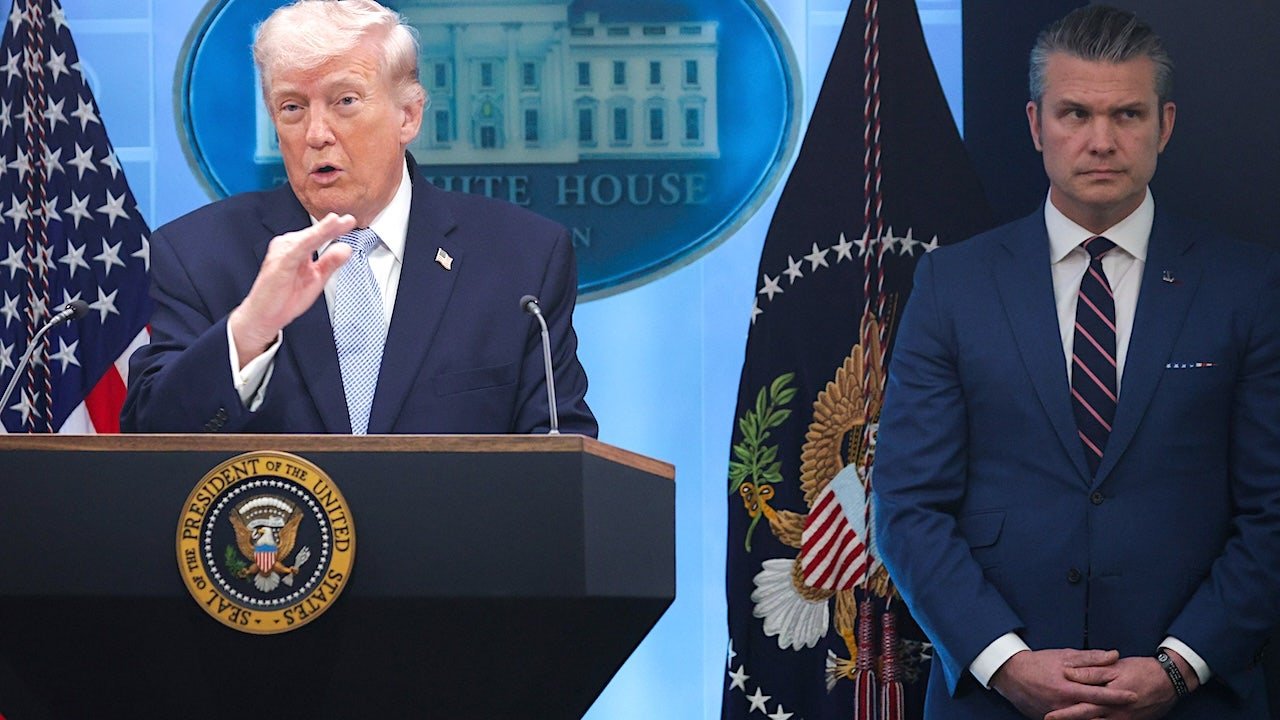
President Donald Trump describes the ‘historic’ mission to rescue two stranded airmen behind enemy lines. (Alex Wong/Getty Images)
«The entire country can be taken out in one night, and that night might be tomorrow night,» Trump said.
Trump continued to press Iran to come to a peace deal, hours after saying the offers thus far are «not enough,» and War Secretary Pete Hegseth vowed the heaviest bombing of Iran to date.
TRUMP SAYS IRAN ‘NO LONGER A THREAT’ AFTER 32 DAYS — OUTLINES NEXT PHASE OF US WAR
«By the way, per the president’s direction, [Monday] will be the largest volume of strikes since day one of this operation,» Hegseth vowed, taking the mic just before Chair of the Joint Chiefs of Staff Gen. Dan «Raizin’» Caine.
«Tomorrow, even more than today. And then Iran has a choice,» Hegseth added. «Choose wisely, because this president does not play around. You can ask Soleimani, you can ask Maduro. You can ask Khamenei.»
Trump, responding to a question from Fox News, noted there were military leaders warning against the dangerous exfiltration of the two airmen, citing the risks to a multitude of troops.
«There were military people, very professional, that preferred not doing it: These two were totally on board, which was very important,» Trump said, noting Hegseth and Gen. Caine.
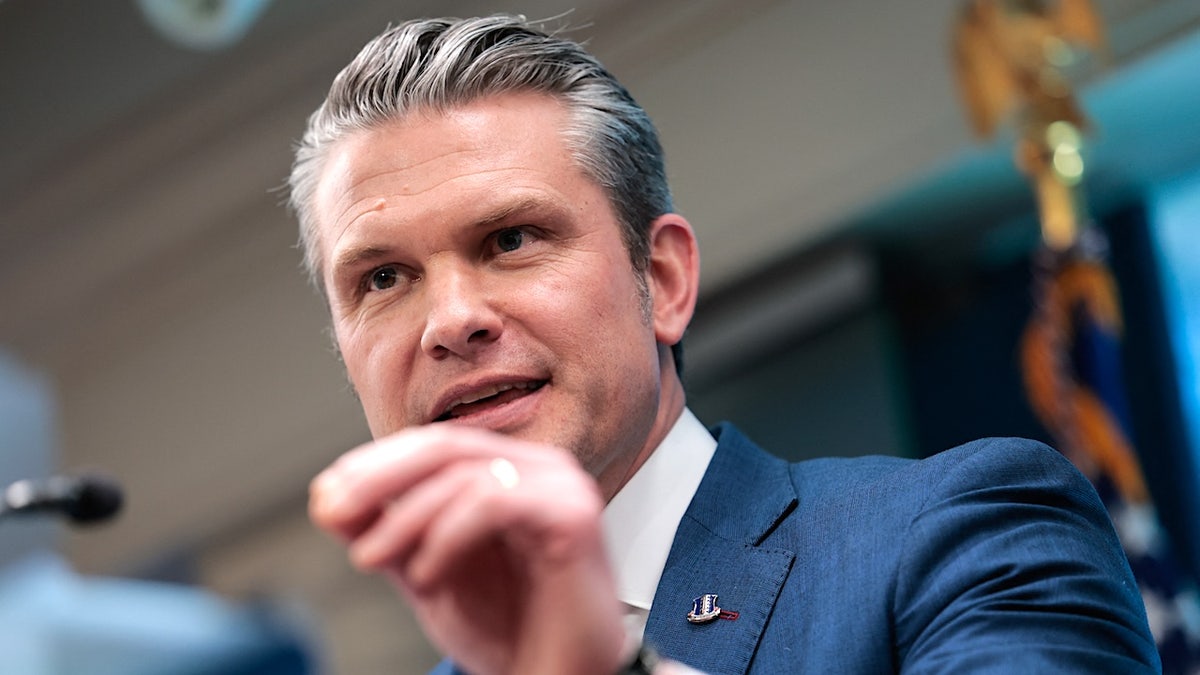
War Secretary Pete Hegseth warned Iran to ‘choose wisely’ as President Donald Trump has ordered the two heaviest days of bombings on the regime. (Kent Nishimura / AFP)
IDF CONFIRMS IRGC INTEL CHIEF KILLED; QUDS FORCE COMMANDER ALSO ELIMINATED IN STRIKE
«But, no, there were military people that said, ‘You just don’t do this; you don’t go into the heart of a very powerful military.»
Trump noted that «half the people are wearing uniforms» in Iran, exacerbating the challenges of extracting the American airmen.
«I was surprised somebody said it’s the only time it’s ever been done,» Trump continued. «I said, that’s not possible, but it is possible because you’re going into hundreds of thousands of soldiers along the path. I mean, look at some of the helicopters, how they got hit.»
Trump, in a moment that went from serious to lighter, asked Caine «how many» people conducted the rescue.
INSIDE THE DARING RESCUE OF AIRMAN BEHIND ENEMY LINES: HOW CIA ASSISTED WITH ‘DECEPTION CAMPAIGN’
«I’d love to keep that a secret,» Caine shot back.
«I’ll keep it a secret, but it was hundreds and hundreds of these people,» Trump said.
«Hundreds of people went into this journey. Hundreds of people could have been killed. Forget about the equipment. A lot of equipment. Nobody cares of it. Hundreds of people could have been killed,» Trump added.
«So we had people that were within the military that said, ‘This is not a wise move,’» Trump said.
«And I understood that, but I decided to do it.»
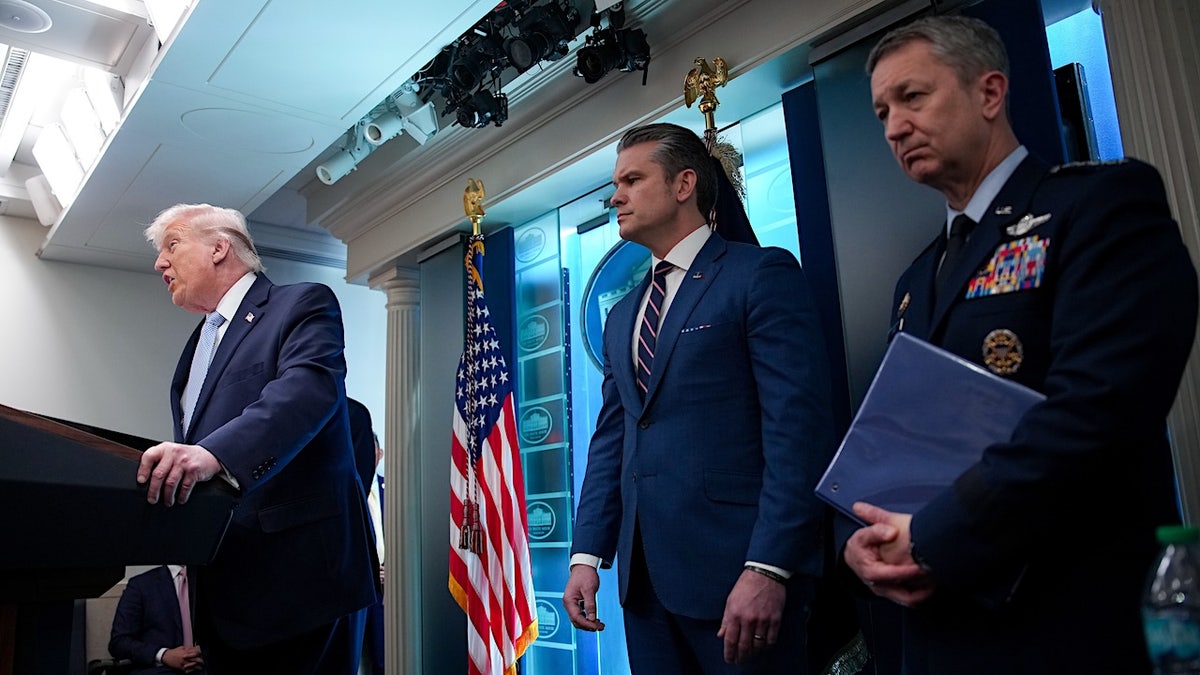
Gen. Dan Caine (right) said he wanted to keep some details of the historic rescue secret to preserve future missions as President Donald Trump (left) and War Secretary Pete Hegseth (center) vowed the two heaviest days of bombing to come in Iran. (Andrew Harnik)
US ‘OBLITERATED’ IRGC HEADQUARTERS WITH BUNKER BUSTER BOMBS DURING RESCUE
For now, Tuesday night’s 8 p.m. ET deadline looms for Iran to make a deal to Trump’s satisfaction.
«I can’t talk about ceasefire, but I can tell you that we have an active, willing participant on the other side,» Trump said, acknowledging Iran has been «excellent negotiators» because they have been able to delay peace for decades. «They would like to be able to make a deal. I can’t say any more than that.»
«I can tell you they’re negotiating, we think, in good faith,» Trump said. «We’re going to find out. We’re getting the help of some incredible countries that want this to be ended, because it affects them.
HEGSETH REVEALS COVERT VISIT TO TROOPS FIGHTING IN OPERATION EPIC FURY
The «plan,» short of an imminent peace deal, Trump expounded, would be devastating for a country that would require a century to rebuild.
«We have a plan, because of the power of our military, where every bridge in Iran will be decimated by 12 tomorrow night, where every power plant in Iran will be out of business, burning, exploding, and never to be used again,» Trump vowed. «I mean, complete demolition by 12, and it’ll happen over a period of four hours if we wanted to. «We don’t want that to happen.»
CLICK HERE TO DOWNLOAD THE FOX NEWS APP
«So do I want to do that? No. Do I want to destroy their infrastructure? No,» Trump concluded. «It will take them 100 years to rebuild. Right now, if we left today, it would take them 20 years to rebuild their country. And it would never be as good as it was. And the only way they’re going to be able to rebuild their country is to utilize the genius of the United States of America.»
heroism, donald trump, us air force, war with iran, iran
INTERNACIONAL
Cómo fue el operativo secreto que montó Estados Unidos para rescatar a su piloto derribado en Irán
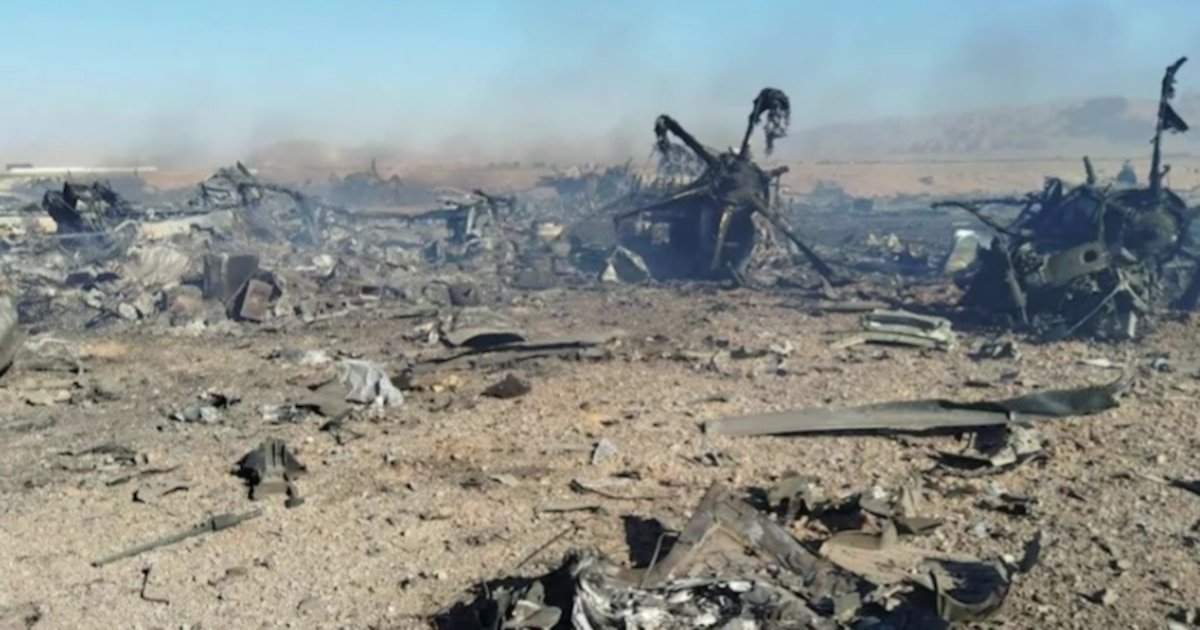
En Infobae al Mediodía, el analista Andrei Serbin Pont detalló cómo Estados Unidos llevó adelante una de sus operaciones más arriesgadas desde la guerra de Vietnam: la extracción de un piloto que permaneció 36 horas escondido en las montañas iraníes, luego de que su F-15 fuera derribado cerca de la central nuclear de Isfahán.
Durante el programa junto a Maru Duffard, Jimena Grandinetti, Fede Mayol y Facundo Kablan, Serbin Pont relató: “No se piloteó mucho la nave, fue derribada y vimos lo que fue un rescate absolutamente de película. No solo el derribo de la aeronave, también el despliegue de inteligencia, una instalación nuclear de por medio y una ciudad de más de dos millones de habitantes al lado. Todo eso ocurrió en 48 horas”.
La trastienda del rescate: comandos, engaño y una base improvisada
El especialista ubicó el episodio en las inmediaciones de Isfahán, uno de los focos del programa nuclear iraní. “Fue en las proximidades de Isfahán que cae el F-15, derribado por misiles de defensa. La aeronave logra avanzar unos 70 kilómetros antes de impactar, y ahí empieza la operación de rescate”, explicó.
El piloto, parte de una tripulación de dos, fue rescatado rápidamente, pero el WSO —encargado de navegación y armas— debió sobrevivir 36 horas oculto, mientras fuerzas iraníes lo buscaban intensamente. “Estados Unidos arma una base aérea transitoria a 50 kilómetros de una central nuclear. Utilizan una pista que estaba en la zona, aterrizan aviones de transporte con helicópteros adentro y despliegan comandos para ir a buscar al piloto”, narró Serbin Pont.
El despliegue incluyó fuerzas especiales estadounidenses y de Israel, pararescatistas y un impresionante apoyo aéreo: “Tuvieron que enfrentar armamento antiaéreo y hasta hubo enfrentamientos armados desde el aire. El piloto logra subir más de dos mil metros para activar el localizador y ser encontrado”.
La operación, además, incluyó un elemento clave de guerra de información. “Estados Unidos y la CIA fueron proactivos en desinformar. Hicieron creer a Irán que el oficial estaba en el sur del país. Filtraron videos, difundieron rumores y manipularon la opinión pública para que Irán concentrara sus fuerzas lejos del verdadero punto donde ocurría el rescate”, expuso el analista.

Problemas logísticos, destrucción de evidencia y un escape al límite
El operativo no estuvo exento de inconvenientes técnicos. Serbin Pont describió: “Los aviones de transporte quedaron varados en la tierra blanda de la pista improvisada. Hubo que llamar a aeronaves más pequeñas para evacuar al personal, incluido el rescatado. Cuando logran salir, aviones de combate estadounidenses destruyen los equipos y los restos de las aeronaves y helicópteros que no pudieron despegar, para evitar que caigan en manos iraníes”.
La magnitud del despliegue dejó imágenes impactantes de restos calcinados, que generaron especulaciones sobre el verdadero objetivo de la misión. El conductor subrayó: “Surge la pregunta de si esta operación fue solo para rescatar al tripulante, o si había un objetivo mayor, considerando la cercanía con la central nuclear y el uranio enriquecido iraní, uno de los puntos que Estados Unidos exige negociar”.
El contexto internacional agregó presión: el rescate coincidió con un ultimátum de la Casa Blanca para reabrir el estrecho de Ormuz y con una escalada de amenazas cruzadas. “Se está hablando tanto de diálogo como de ultimátums. Trump insiste en que Estados Unidos puede destruir Irán en una noche. Todo en un momento donde la negociación está trabada y hay movimientos militares que generan sospechas”, resumió Serbin Pont.

Estrategia, desinformación y la guerra que sigue sin resolverse
El bloque cerró con un análisis sobre la guerra informativa y las consecuencias para el conflicto. “La campaña de desinformación fue deliberada. Manipularon a los medios y a la opinión pública para asegurar el éxito de la operación de extracción. Solo necesitaban ganar tiempo”, sostuvo el conductor.
La descentralización del mando iraní, según Serbin Pont, permite que el régimen siga operando incluso tras la muerte de altos jefes militares. “Irán aprendió de los bombardeos del año pasado y descentralizó su estructura de comando. Eso les permite seguir dando batalla y resistiendo”, explicó.
Por último, el impacto económico y político no es menor: “El barril de petróleo superó los 110 dólares. La situación afecta a los mercados y a la campaña electoral estadounidense, donde las divisiones internas entre republicanos se hacen cada vez más visibles. El frente interno preocupa tanto como el externo”.
—
Infobae te acompaña cada día en YouTube con entrevistas, análisis y la información más destacada, en un formato cercano y dinámico.
• De 7 a 9: Infobae al Amanecer: Nacho Giron, Luciana Rubinska y Belén Escobar.
• De 9 a 12: Infobae a las Nueve: Gonzalo Sánchez, Tatiana Schapiro, Ramón Indart y Cecilia Boufflet.
• De 12 a 15: Infobae al Mediodia: Maru Duffard, Andrei Serbin Pont, Jimena Grandinetti, Fede Mayol y Facundo Kablan.
• De 15 a 18: Infobae a la Tarde: Manu Jove, Maia Jastreblansky y Paula Guardia Bourdin; rotan en la semana Marcos Shaw, Lara López Calvo y Tomás Trapé
• De 18 a 21: Infobae al Regreso: Gonzalo Aziz, Diego Iglesias, Malena de los Ríos y Matías Barbería; rotan en la semana Gustavo Lazzari, Martín Tetaz y Mica Mendelevich
Seguinos en nuestro canal de YouTube @infobae.
guerra
INTERNACIONAL
Mauro compares Iran rescue of missing colonel to Maduro capture, credits intelligence preparation
CIA deception operation rescues missing US airman in Iran
Paul Mauro, Fox News contributor, explains the intricate Central Intelligence Agency (CIA) deception operation that rescued a U.S. airman missing for over 36 hours in Iran. The CIA used fabricated information to mislead Iranian searchers while precisely locating and extracting the airman. Mauro emphasizes the crucial role of human intelligence (HUMINT) and synchronized efforts, underscoring that intelligence, despite technological advances, fundamentally relies on people.
NEWYou can now listen to Fox News articles!
U.S. intelligence agencies had already done the groundwork needed to locate a missing colonel inside Iran, Paul Mauro said Monday, arguing the operation relied on intelligence gathered well before the mission began.
«You’ve got to collect, you collect, you collect and a lot of it sometimes you’re never going to use,» Mauro told «Fox & Friends.»
«The key is when you need it, it has to be there.»
Mauro pointed to the Maduro case, which unfolded at the behest of the Trump administration in January, noting U.S. forces’ ability to pinpoint where the Venezuelan dictator and his wife were going to be at the time in order to make an effective capture.
RESCUE EXPERT SAYS MOST DANGEROUS MOMENT COMES AFTER ‘JACKPOT’ CALL IN RECOVERY BEHIND ENEMY LINES
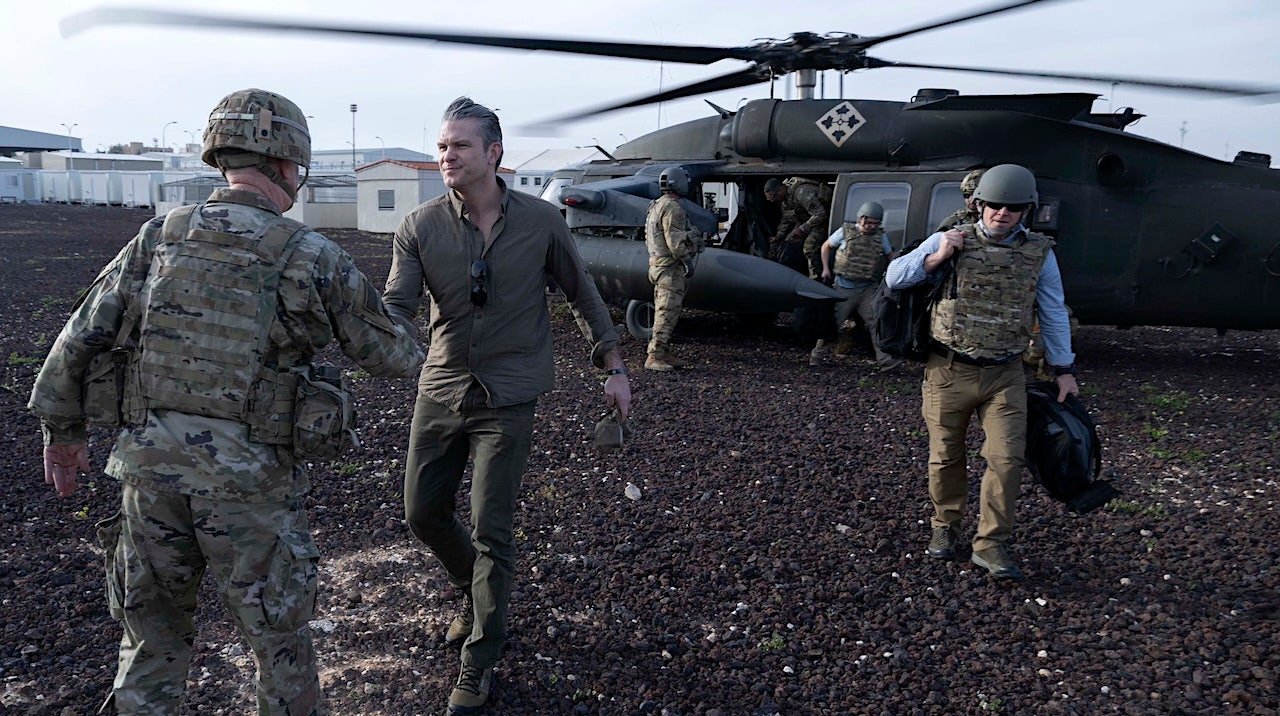
War Secretary Pete Hegseth shakes the hand of a American airman on a covert CENTCOM visit with troops in ‘theater.’ (War Secretary/X)
«They got him as they were running to a safe room without a scratch. Everybody comes out without a scratch,» he said.
«They got them as they were fleeing. That’s how detailed the messaging was, and that’s how synchronized the operation was.»
Mauro said that same level of preparation and coordination was on display in the Iran mission, where U.S. forces rescued a missing U.S. weapons systems officer from a downed F-15E following a multi-day search inside enemy territory.
TRUMP CALLS RESCUE OF DOWNED AIR FORCE PILOT AN ‘EASTER MIRACLE’
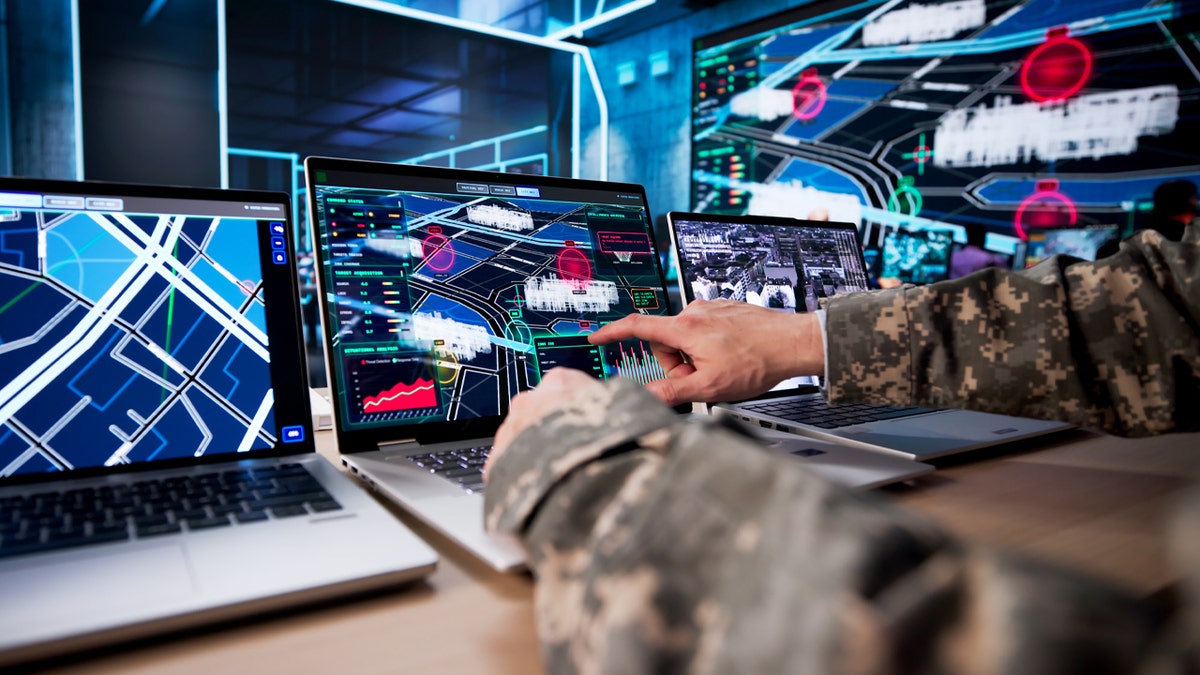
Artificial intelligence is a big factor in the Iran war and Iran realizes it. (iStock)
U.S. intelligence was able to act quickly to retrieve the missing colonel once his location was confirmed.
«[This] was one of those situations where the bell rang. ‘Guys, what [have] you got?’ President turns around, [War Secretary] Hegseth turns around, [and] they all talk to Ratcliffe and they say, ‘What [have] you got, director?’ and fortunately it was there.»
Mauro said the operation highlights a broader fact about intelligence work that is apparent to those working within its community: its success comes down to the people running the sources.
CLICK HERE TO DOWNLOAD THE FOX NEWS APP
«At the end of the day… it comes down to people,» he said.
«If you think that you can sit in a cubicle someplace and get everything you need to be done, that’s not how it’s going to go. You need people in country, in dangerous areas, Americans working on our behalf that you’ll never hear about… they’re running the sources so that, again, when you need it, they say, ‘My source is good.’«
fox news media, national security, cia, pentagon, war with iran

Video: el llamativo entrenamiento con bolígrafos de los jugadores del Arsenal ante la atenta mirada de Heinze

El oficialismo pidió sesionar el miércoles en Diputados para sancionar la reforma de la Ley de Glaciares

Una Pyme del campo debutó en el mercado de capitales: colocó su primera ON por casi u$s4 millones

El lore que sacude a la alta sociedad: la hija de Juliana Awada le habría icardeado el novio a la influencer de modas más querida del país

La Casa Rosada le prohibió el acceso a periodistas de medios involucrados en una campaña de espionaje ruso contra Milei

Trump touts airman rescue mission, boasts Iran could be ‘taken out in 1 night’

La Armada sorteará 30 lugares en el buque que escoltará la salida de la Fragata Libertad: cómo anotarse

La nueva advertencia de Donald Trump a Irán: «El tiempo se acaba, quedan 48 horas antes del infierno»

Círculo rojo: intrigas en el gabinete, desgaste por el caso Adorni y movimientos inquietantes en el Poder Judicial

AFAgate: el juez Armella le derivó la causa a su colega González Charvay, como pretendían Tapia

 INTERNACIONAL2 días ago
La nueva advertencia de Donald Trump a Irán: «El tiempo se acaba, quedan 48 horas antes del infierno»
- POLITICA2 días ago
Círculo rojo: intrigas en el gabinete, desgaste por el caso Adorni y movimientos inquietantes en el Poder Judicial
- ECONOMIA9 horas ago
Caputo habló sobre los créditos del Banco Nación que tomaron sus funcionarios: “No hay nada ilegal ni inmoral”