INTERNACIONAL
La Eurocámara reanudó la tramitación del acuerdo comercial con Estados Unidos tras el repliegue de Trump sobre Groenlandia


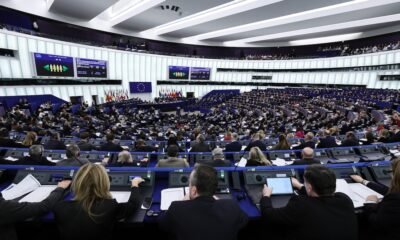
La Comisión de Comercio Internacional del Parlamento Europeo anunció este miércoles la reanudación de los trabajos para aprobar el acuerdo comercial con Estados Unidos, congelado desde enero tras las amenazas del presidente Donald Trump de anexionar Groenlandia. La decisión llega después de que el mandatario estadounidense abandonara públicamente su presión sobre el territorio autónomo danés, aunque los eurodiputados han establecido nuevas salvaguardas para proteger la soberanía europea frente a futuras tensiones con Washington.
“Los miembros de la comisión de comercio siguen comprometidos con el avance expedito de las dos propuestas legislativas, siempre que Estados Unidos respete la integridad territorial y la soberanía de la Unión y sus Estados miembros”, declaró Bernd Lange, presidente del comité parlamentario, en un comunicado oficial. El legislador alemán precisó que la comisión podría decidir sobre la implementación del acuerdo en su próxima reunión, prevista para el 24 de febrero, antes de someterlo a votación en el pleno de la Eurocámara.
El pacto comercial entre Bruselas y Washington, alcanzado en julio de 2025 tras meses de negociaciones tensas, contempla la eliminación de aranceles sobre productos industriales estadounidenses. Sin embargo, el Parlamento Europeo paralizó su ratificación en enero cuando Trump intensificó su campaña para hacerse con el control de Groenlandia, territorio autónomo danés de importancia estratégica en el Ártico. La ofensiva diplomática del presidente estadounidense incluyó amenazas arancelarias contra ocho países europeos que se negaron a respaldar sus reivindicaciones territoriales.
El cambio de postura de Trump se produjo el mes pasado, cuando anunció haber alcanzado un “acuerdo marco” con el secretario general de la OTAN, Mark Rutte, para garantizar una mayor influencia estadounidense en la región ártica sin necesidad de alterar la soberanía danesa sobre Groenlandia. Este repliegue abrió la puerta a que los legisladores europeos reconsideraran el bloqueo del acuerdo comercial, aunque con nuevas condiciones de seguridad.

EFE/EPA/Rune Stoltz Bertinussen NORWAY OUT
La Eurocámara incorporará en las enmiendas al texto “motivos de suspensión” que permitirían paralizar automáticamente el acuerdo en caso de futuras amenazas a la integridad territorial de Estados miembros de la Unión Europea. “El mensaje a Washington es claro: el respeto a la soberanía de Europa y el cumplimiento total del acuerdo UE-EEUU son innegociables”, subrayó Lange en su declaración.
El contexto de este pacto se remonta a la escalada arancelaria iniciada por la administración Trump en su segundo mandato. En los meses previos al acuerdo de julio, Washington impuso aranceles del 15% sobre productos europeos, provocando represalias de Bruselas y temores de una guerra comercial transatlántica en toda regla. Las negociaciones finales permitieron un compromiso que eliminaba trabas comerciales para bienes industriales, aunque dejó pendientes cuestiones sensibles como los metales.
Precisamente, el tratamiento del acero y el aluminio europeos sigue siendo un punto de fricción crítico. Estados Unidos mantiene aranceles del 50% sobre estos productos procedentes de la Unión Europea, una medida que Bruselas considera incompatible con el espíritu del acuerdo comercial. Lange fue categórico al advertir que “mientras estos aranceles no se reduzcan al 15%, no puede haber acceso libre de aranceles para el acero y el aluminio estadounidenses al mercado europeo”.
Esta posición representa un endurecimiento de la estrategia europea frente a Washington. Aunque la Eurocámara ha desbloqueado el proceso de ratificación, los legisladores están utilizando su poder de aprobación final como palanca de presión para conseguir concesiones adicionales de la administración Trump. La UE ha solicitado formalmente a Estados Unidos que recorte los aranceles sobre metales, pero hasta ahora no ha obtenido una respuesta satisfactoria.
El calendario previsto por la Comisión de Comercio Internacional apunta a una resolución relativamente rápida del proceso, con la reunión decisiva fijada para finales de febrero y una posible votación en el pleno parlamentario en las semanas siguientes. Sin embargo, el resultado final dependerá tanto de la evolución de la postura estadounidense sobre los aranceles metálicos como del cumplimiento efectivo de los compromisos sobre respeto territorial.
diplomacy,eu,visit








INTERNACIONAL
Guerra contra Irán: Para China, miles de millones de dólares están en riesgo por un conflicto que se extiende


NEWYou can now listen to Fox News articles!
«Think of Mojtaba Khamenei as his father on steroids.»
That is how Kasra Aarabi, director of Islamic Revolutionary Guard Corps research at the advocacy group United Against Nuclear Iran, described Iran’s new supreme leader in comments to Fox News Digital following reports that the son of Ayatollah Ali Khamenei has been selected to lead the Islamic Republic.
«Mojtaba was already operating as a ‘mini supreme leader’ in the Bayt-e Rahbari — his father’s office and the core nucleus of power in the regime,» Aarabi said.
IF KHAMENEI FALLS, WHO TAKES IRAN? STRIKES WILL EXPOSE POWER VACUUM — AND THE IRGC’S GRIP
File photo shows Mojtaba Khamenei, son of Iran’s late Supreme Leader Ayatollah Ali Khamenei, attending a demonstration to mark Jerusalem day in Tehran. (Morteza Nikoubazl/NurPhoto via Getty Images)
«His father had created the Bayt’s extensive apparatus as a hidden power structure to ensure continuity should he be eliminated — and through Mojtaba’s appointment, this is exactly what we will get,» Aarabi said.
President Donald Trump also reacted to Mojtaba Khamenei’s rise. In an interview with the New York Post, Trump said he was «not happy with» the younger Khamenei replacing his father as leader of Iran’s theocratic system but declined to elaborate on how the United States might respond. «Not going to tell you,» Trump said when asked about his plans regarding the new supreme leader. «Not going to tell you. I’m not happy with him.»
An Iranian source with knowledge of the leadership transition told Fox News Digital that earlier speculation Mojtaba might pursue reforms now appears unlikely given the circumstances surrounding his appointment.
«Previously there were whispers suggesting that if Mojtaba were to become the leader, he might introduce reforms that would both open up the domestic political space and bring a more interactive approach to foreign policy,» the source said.
«However, now this possibility seems very weak.»
Mojtaba was chosen «amid disputes, controversies, and pressure from the IRGC,» according to the source, meaning he «owes his appointment to their support and therefore cannot act against their wishes.»
TRUMP SAYS IRAN’S SUCCESSION BENCH WIPED OUT AS ISRAELI STRIKE HITS LEADERSHIP DELIBERATIONS
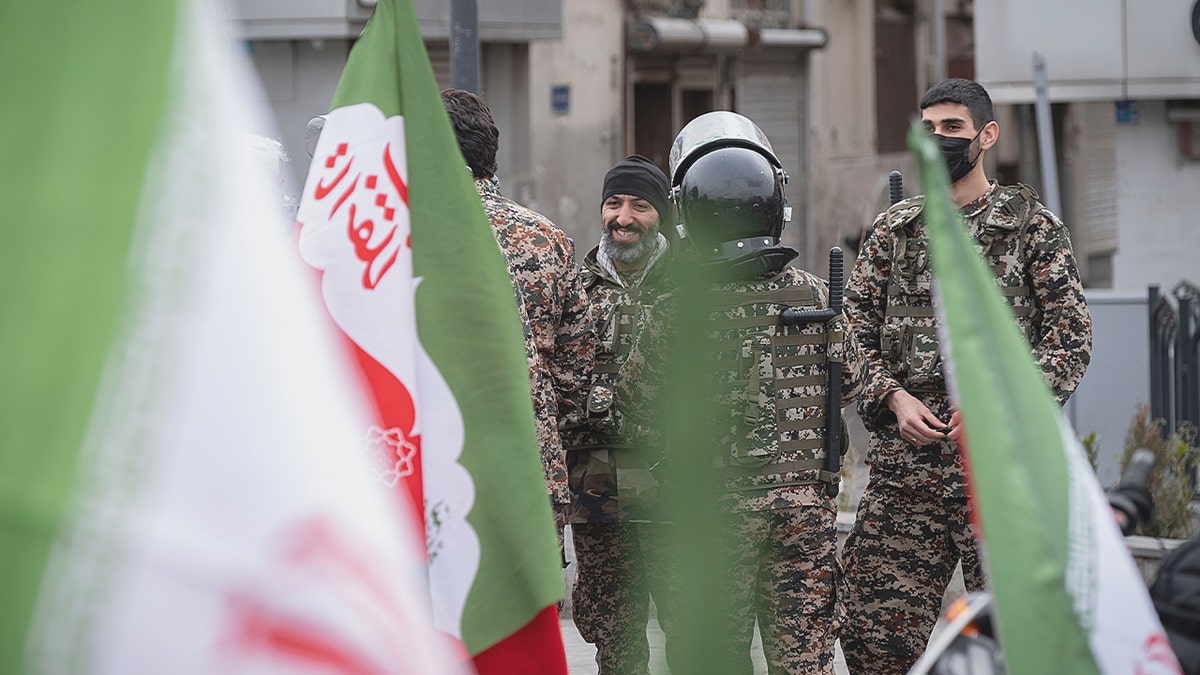
Military members of the Islamic Revolutionary Guard Corps (IRGC) in western Tehran, Iran (Morteza Nikoubazl/NurPhoto via Getty Images)
Built inside Iran’s security state
Mojtaba Khamenei, 56, has spent decades building influence inside the power structures surrounding Iran’s supreme leader.
Born in 1969 in Mashhad, he pursued clerical studies in Tehran, Iran, after the 1979 Islamic Revolution that brought his father to prominence. Over time, however, analysts say his influence developed less through traditional clerical authority and more through Iran’s security institutions.
In 2019, the United States sanctioned Mojtaba under Executive Order 13867. The U.S. Treasury Department said he had been «representing the supreme leader in an official capacity despite never being elected or appointed to a government position aside from work in the office of his father.»
Behnam Ben Taleblu, senior director of the Foundation for Defense of Democracies’ Iran Program, said Mojtaba’s background reflects a broader shift inside the Islamic Republic.
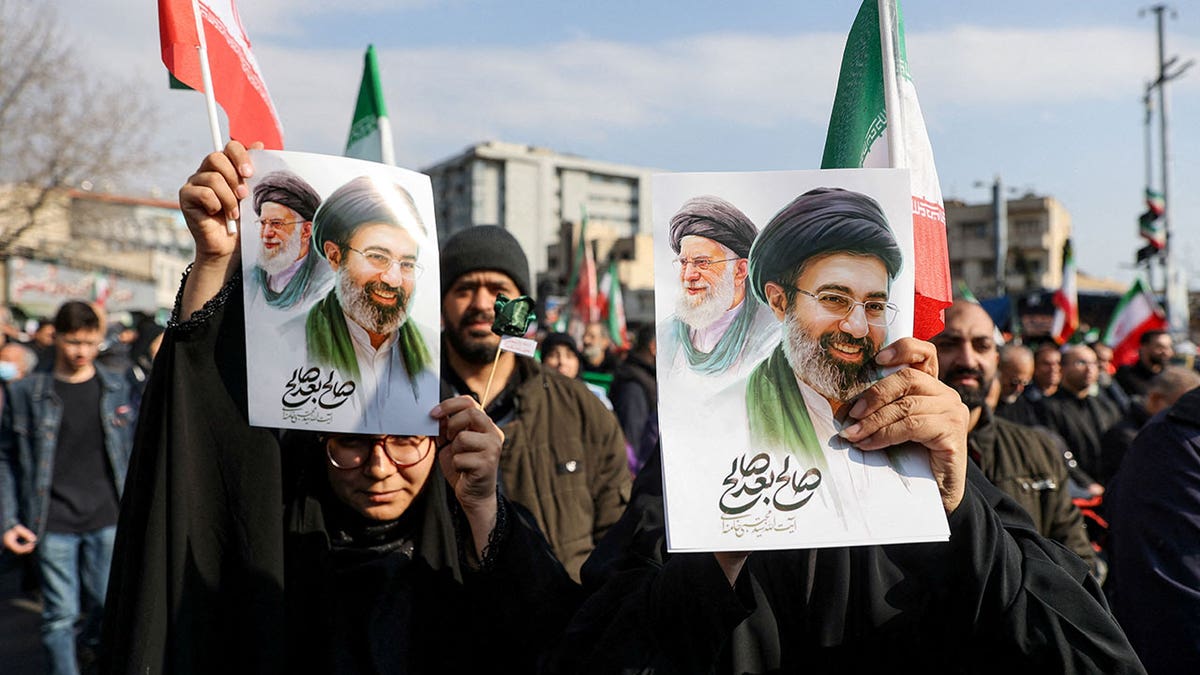
People hold placards with an image of Iran’s new supreme leader Mojtaba Khamenei with late Iranian Supreme Leader Ayatollah Ali Khamenei, during a gathering to support Mojtaba Khamenei, amid the U.S.-Israeli conflict with Iran, in Tehran, Iran, March 9, 2026. (Majid Asgaripour/WANA (West Asia News Agency) Via Reuters)
«Despite donning a turban, Mojtaba is the product of the regime’s national security deep state,» Ben Taleblu told Fox News Digital. «Expect him to work with and through the IRGC to keep his hold on power.»
Aarabi said Mojtaba has spent years consolidating influence behind the scenes.
«His past tells us he enjoys micromanaging every aspect of authority to satisfy his thirst for power,» Aarabi said, describing how Mojtaba allegedly relocated IRGC command centers to his office during protests, engineered election outcomes and installed loyalists across state institutions.
Since 2019, Aarabi added, Mojtaba has also been implementing what he described as his father’s effort to «purify» the regime by promoting ideological loyalists across the political system.
«Mojtaba is a deeply antisemitic, anti-American, and anti-Western ideologue,» Aarabi said. «He has personally been involved in repression in Iran and terror plots abroad.»
IRAN’S SENIOR CLERICS ‘EXPOSED’ AFTER BUILDING STRIKE IN QOM, SUCCESSION CHOICE LOOMS
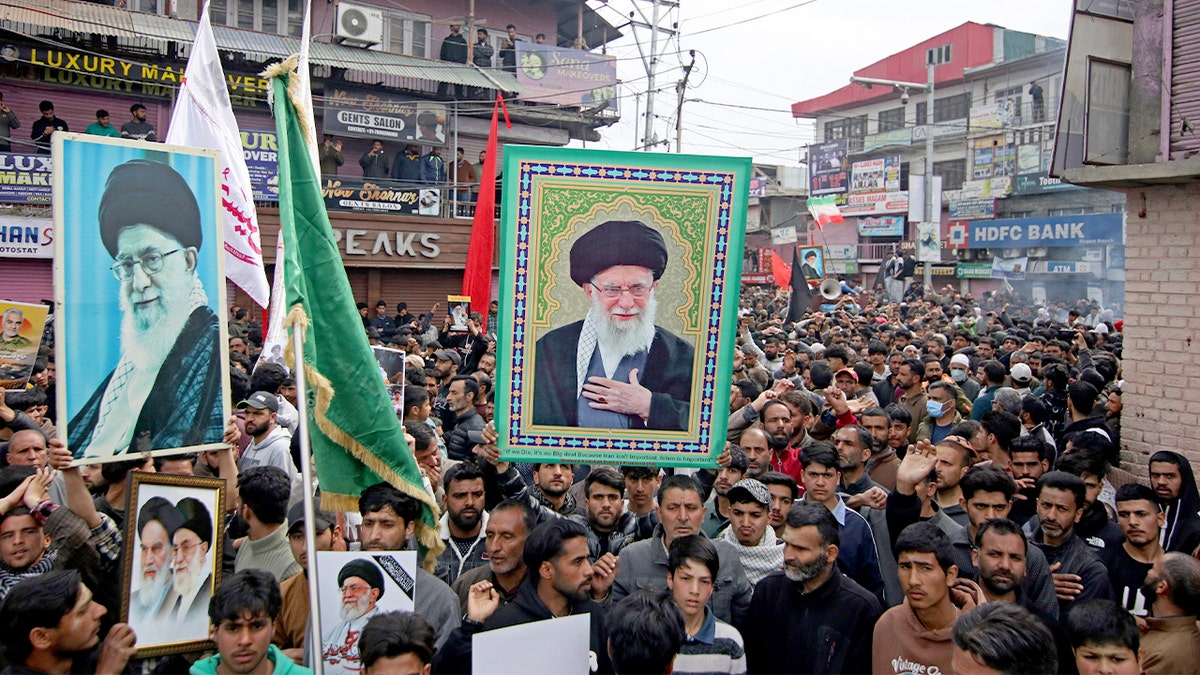
Kashmiri Shiite Muslims carry pictures of Iran’s Supreme Leader Ayatollah Ali Khamenei as they march in a protest rally on the fourth day of mourning in Magam, Jammu and Kashmir, on March 4, 2026. (Faisal Khan/Anadolu/Getty Images)
Analysts see harder line ahead
Analysts say Mojtaba’s rise may further strengthen the role of Iran’s security institutions.
«The rise of the younger Khamenei expedites trendlines seen in Iranian politics and national security for years,» Ben Taleblu said. «From one Khamenei to another, things in Iran can be expected to go from bad to worse if this regime survives.»
«And like the elder Khamenei, corruption runs in the family,» he added.
Ben Taleblu warned that the regime may also escalate tensions externally as a survival strategy.
«The regime knows it is weak, but believes it can extract a price and widen a crisis in order to survive,» he said.
For opposition groups inside Iran, the leadership transition signals continuity rather than reform.
«He’s the son of Khamenei and they have same ideology and they same strategy and they try to continue the same policy,» said Khalid Azizi, spokesperson for the Kurdistan Democratic Party of Iran.
«So far it’s very difficult to say what he will be done and is he going to have a different policy? I don’t expect this.»
The Iranian source who spoke with Fox News Digital said that while engagement with the United States and the West is theoretically possible in the future, the chances remain slim.
CLICK HERE TO DOWNLOAD THE FOX NEWS APP

On March 1, 2026, in Sana’a, Yemen. pro-Iran protesters brandish billboards depicting the Iranian Supreme Leader Ali Hosseini Khamenei, flags of Yemen and Iran, weapons, and chant slogans at a rally held to condemn the U.S.-Israel aerial attacks on Iran and the killing of Khamenei and several military officials. (Mohammed Hamoud/Getty Images)
«As I mentioned,» the source said, «this possibility is very weak.»
«In short,» Aarabi said, «Mojtaba is his father on steroids. He’s certainly no MBS.»
ali khamenei,war with iran,iran,terrorism
INTERNACIONAL
Hegseth once warned against endless wars. Now he’s leading Trump’s strike-first doctrine

NEWYou can now listen to Fox News articles!
In a little over a year, the United States has carried out dozens of airstrikes on vessels in the Caribbean tied to alleged narco-trafficking networks, launched sustained operations against Houthi forces in the Red Sea, captured Venezuelan President Nicolás Maduro, struck Iranian nuclear facilities and now embarked on an extended military campaign aimed at degrading Tehran’s missile, drone and command infrastructure.
The tempo marks one of the most assertive stretches of American force projection in recent years, spanning Latin America, the Middle East and critical maritime corridors.
For War Secretary Pete Hegseth, it also represents a striking turn.
HEGSETH BLASTS BRITS, SAYS IRAN’S CHAOTIC RETALIATION HAS DRIVEN ITS OWN ALLIES ‘INTO THE AMERICAN ORBIT’
Just before the 2024 presidential election, he described himself as a «recovering neocon,» expressing regret over his support for Iraq-era interventionism and warning against open-ended wars.
Several analysts say the defining feature of the administration’s approach may be less about ideological evolution and more about alignment and execution.
«Unlike in Trump one, everyone in Trump’s cabinet now — Hegseth, Rubio, etc. — understands that the president is the boss,» said Matthew Kroenig, a defense strategist at the Atlantic Council. «In Trump 1.0 you had some Cabinet officials who thought their job was to save the Republic from Trump, the so-called adults in the room. And so I think it’s pretty clear the president wanted to go in this direction, and I think Hegseth sees himself as supporting the president’s vision.»
‘Validation of … leadership’
That cohesion has coincided with a pattern of risk-taking.
Several of the administration’s most consequential military moves, from Venezuela to the Houthis to the current Iran campaign, carried the potential for escalation.
«Unlike in Trump one, everyone in Trump’s cabinet now — Hegseth, Rubio, etc. — understands that the President is the boss,» said Matthew Kroenig, a defense strategist at the Atlantic Council. (The White House/Handout via Reuters)
Some strategists say the relative absence of early blowback from those interventions may have reinforced the administration’s willingness to escalate into the Iranian theater.
PENTAGON POLICY CHIEF GRILLED AS DEM CLAIMS TRUMP BROKE PROMISE ABOUT GOING TO WAR WITH IRAN
«I’m not sure I would have advised this,» Kroenig said of the Iran operation. «It is pretty risky, but it’s going well so far.»
Iranian missile launches have declined in volume. Regional allies have not broken ranks. Whether that constitutes strategic success, however, depends on the metric.
Justin Fulcher, a former Pentagon adviser to Hegseth, argued the early phases of the campaign reflect what he described as a «return to strategic clarity.»
«Deterrence is only credible when our allies actually believe that if President Trump says something, we will back it up,» Fulcher said. «This is a validation of Secretary Hegseth and President Trump’s leadership.»
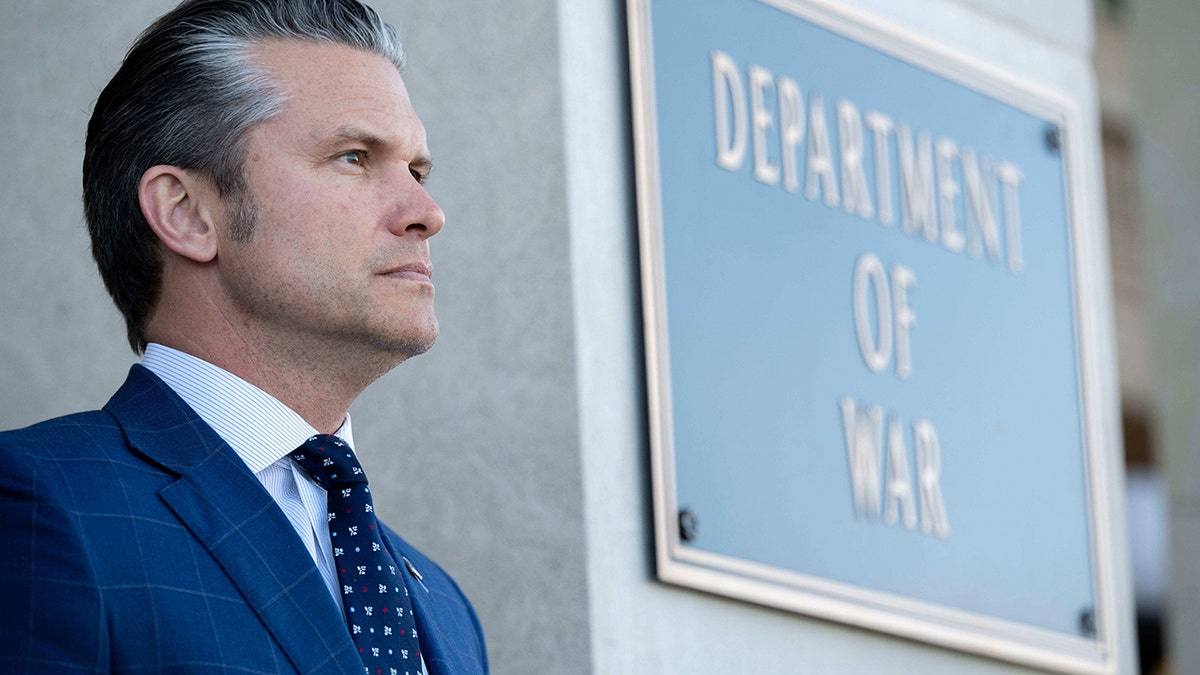
«Deterrence is only credible when our allies actually believe that if President Trump says something, we will back it up,» former Pentagon advisor Justin Fulcher said. «This is a validation of Secretary Hegseth and President Trump’s leadership.» (Kevin Wolf, File/The Associated Press )
TRUMP SAYS IRAN’S SUCCESSION BENCH WIPED OUT AS ISRAELI STRIKE HITS LEADERSHIP DELIBERATIONS
Hegseth, a former Army officer who served in both Iraq and Afghanistan, has argued that the current campaign bears little resemblance to those conflicts.
«This is not Iraq. This is not endless. I was there for both,» Hegseth said at a press conference in early March. «Our generation knows better and so does this president.»
In a separate interview, he added, «This is not a remaking of Iranian society from an American perspective. We tried that. The American people have rejected that.»
Danielle Pletka, a senior fellow at the right-leaning American Enterprise Institute think tank, said the campaign has unfolded largely as expected.
«I think things have gone reasonably well,» Pletka said, pointing to degraded air defenses and what she described as repeated miscalculations by Iran. «All they’ve really done is made everybody quite mad, and that was a really bad calculation on their part.»
At the same time, she cautioned against interpreting the administration’s actions as part of a fixed doctrine.
«I don’t think that it is doctrinal,» Pletka said. «I think this is ad hoc.»
Some longtime Trump supporters have said the current conflict is not what they expected from Trump, who campaigned on ending wars and «America First.»
«It feels like the worst betrayal this time because it comes from the very man and the admin who we all believed was different and said no more,» Rep. Marjorie Taylor Greene, R-Ga., wrote on X. «Instead, we get a war with Iran on behalf of Israel that will succeed in regime in Iran. Another foreign war for foreign people for foreign regime change. For what?»
In Pletka’s view, the president has shown a pattern of attempting diplomacy first and shifting to force only when he concludes negotiations are unserious. She argues that posture distinguishes the current moment from past interventions.
She also emphasized that much of the operational credit belongs to the professional military.
«The planning behind this is credit to the U.S. military and to the CENTCOM commander and to the Chairman of the Joint Chiefs,» she said.
That distinction complicates efforts to attribute the current posture solely to Hegseth’s personal worldview. While the defense secretary has become a public face of the administration’s deterrence messaging, the execution of high-tempo campaigns rests heavily with career military leadership.
Some critics argue the administration has yet to clearly articulate an end state for the Iran campaign.
«Pete Hegseth needs to check with his boss on what the objective is,» former national security advisor John Bolton recently said on CNN. «How does Hegseth explain that we’ve already changed the regime, which wasn’t our objective? I think the Pentagon top leadership, civilian top leadership, needs some attitude adjustment. I think the military’s doing fine, but I wonder about the civilian leadership.»
The White House pushed back forcefully on criticism of the campaign.
Anna Kelly, a White House spokesperson, said Monday that Hegseth «is doing an incredible job leading the Department of War,» pointing to what she described as the «ongoing success of Operation Epic Fury» and other missions.
Kelly said Iranian retaliatory attacks «have declined by 90 percent because the Department of War is destroying Iran’s ballistic missile capabilities,» and added that Hegseth works «in lockstep with President Trump every day» to ensure the U.S. military «continues to be the greatest, most powerful fighting force in the world.»
The Pentagon echoed that assessment.
«Operation Epic Fury continues to advance with overwhelming success and precision,» Chief Pentagon Spokesman Sean Parnell said, describing a «resolute, full-spectrum campaign» aimed at the «total dismantlement of Iran’s terrorist network or its unconditional surrender.»
Others see the moment in broader historical terms.
Peter Doran, a foreign policy analyst, described the campaign as a potential attempt to «end a 47-year war» waged by the Islamic Republic against the United States, but on Washington’s terms.
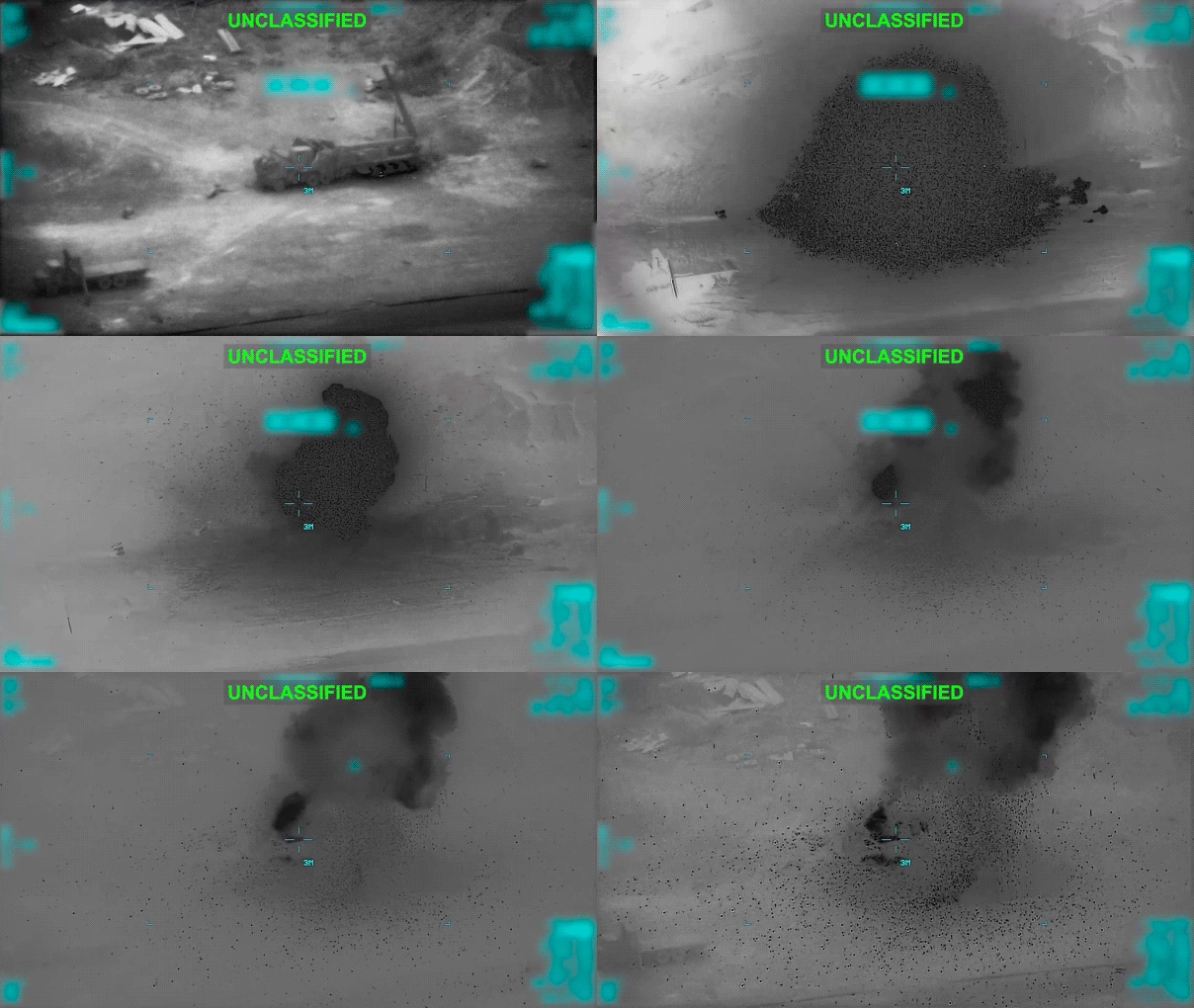
U.S. Central Command released footage showing strikes on Iranian mobile missile launchers. (@CENTCOM via X)
«This is a clear effort to end a 47-year war that Iran has been waging against the United States,» Doran said.
He argued that visible American military performance could reverberate beyond the Middle East, particularly in Beijing.
«They look good,» Doran said of U.S. forces. «That will serve, I hope, as a disincentive for adventurism.»
If the operation ultimately succeeds in significantly degrading Iran’s military infrastructure, Doran argued, it could reshape the Middle East and expand diplomatic opportunities such as broader Arab-Israeli normalization.
«It changes everything in the Middle East,» he said.
CLICK HERE TO DOWNLOAD THE FOX NEWS APP
Yet even supporters acknowledge that long-term effects remain uncertain. In Venezuela, Maduro’s removal marked a dramatic shift in U.S. policy, but the governing apparatus he built remains largely intact. Degrading missile stockpiles and drone infrastructure in Iran may buy time, but whether it produces durable deterrence or simply postpones reconstitution remains to be seen.
For now, the administration’s willingness to take calculated risks and its ability to avoid immediate escalation have reinforced the perception of restored American assertiveness. Whether that assertiveness translates into lasting strategic gains will likely define Hegseth’s tenure far more than the rhetoric that preceded it.
Hegseth and the Pentagon did not respond to requests for comment.
war with iran,donald trump,pete hegseth,iran,pentagon

La agenda del ministro de Salud Mario Lugones en el Argentina Week

Gastón Edul peleará en la Velada del Año VI contra Edu Aguirre, el periodista amigo de Cristiano Ronaldo: el dardo de CR7

El juez federal de Campana quiere quedarse con todas las causas que investigan a la AFA

Revés para Chiqui Tapia y Pablo Toviggino: la Justicia rechazó sus pedidos de nulidad en la causa por evasión y deberán declarar esta semana

Guerra contra Irán: Para China, miles de millones de dólares están en riesgo por un conflicto que se extiende

Así es el hotel “fantasma” de Toviggino en las afueras de Santiago del Estero

Javier Milei habló de la crisis con la vicepresidenta: “No quiero la renuncia de Victoria Villarruel”

Ian Lucas se hartó de las mentiras de Evangelina Anderson y confirmó que fueron novios: “Ella me da vergüenza”

Wanda Nara involucrada en la separación de su hijo Valentino: su ex nuera contó toda la verdad

La cruda confesión de Amalia Granata por el trastorno que sufre su hijo Roque: “Le hicimos estudios y salió que tiene TDAH, dislexia y disgrafia”

 CHIMENTOS3 días ago
Wanda Nara involucrada en la separación de su hijo Valentino: su ex nuera contó toda la verdad
- CHIMENTOS1 día ago
La cruda confesión de Amalia Granata por el trastorno que sufre su hijo Roque: “Le hicimos estudios y salió que tiene TDAH, dislexia y disgrafia”
- ECONOMIA3 días ago
«Crisis industrial masiva»: alarmante informe de la UBA se mete en la pelea de Milei con la UIA