INTERNACIONAL
La mirada de un ex marine: “Trump no tiene una estrategia, busca ser el virrey de Irán”


Una guerra de poco tiempo
Trump no es el primero ni el último líder del mundo que vaya a contradecirse de hacer una cosa y decir otra. Pero Estados Unidos, que nunca ha sido un país perfecto, siempre ha sido un país líder
Molestias en Estados Unidos por la guerra
¿Una Delcy iraní?
No hay Delcy Rodríguez en Irán. Irán no era y no es un régimen basado en el crimen organizado
¿Trump, el virrey?
La espera de los republicanos
Para realmente cambiar un régimen, para instalar un gobierno títere, para controlar los recursos de un país, todavía se requiere lo que se requería en la época medieval y esos son soldados
El poder del Estrecho de Ormuz

INTERNACIONAL
Una nena de 12 años murió tras intentar proteger a su hermana del bullying escolar: la golpearon con una botella

Khimberly Zavaleta Chuquipa, una nena de 12 años, murió en Los Ángeles, Estados Unidos, tras agonizar 10 días después de recibir un botellazo en la cabeza dentro de una escuela. Este viernes, una menor de edad fue detenida y acusada de homicidio.
El hecho ocurrió el 17 de febrero en una escuela de Reseda, cuando, según la familia, Khimberly intentó proteger a su hermana mayor, Sharon, de una situación de acoso. En ese momento, otro alumno le tiró una botella de metal que la golpeó en la cabeza.
Khimberly Zavaleta Chuquipa con su papá, su hermana y su hermano. (Foto: gentileza GoFundMe).
La nena empezó a sufrir fuertes dolores y, aunque sus padres la llevaron al hospital, les dijeron que le dieran paracetamol para el dolor de cabeza y que volviera si los síntomas empeoraban.
Días después, Khimberly sufrió convulsiones y se descompensó por una hemorragia cerebral. Cuando llegó al hospital, estaba en paro cardíaco.
Tras reanimarla y estabilizarla, le realizaron una resonancia magnética y fue trasladada de urgencia al UCLA Children’s Hospital, donde los médicos la sometieron a una cirugía de emergencia. A pesar de los esfuerzos, la nena murió el 25 de febrero a las 3:30 de la madrugada. Khimberly Zavaleta Chuquipa murió días después del ataque. (Foto: gentileza GoFundMe).
La familia de Khimberly presentó una demanda contra el Distrito Escolar Unificado de Los Ángeles (LAUSD) en marzo. Denuncian que la escuela no intervino a tiempo, a pesar de que la hermana de la víctima ya había sido víctima de bullying.
“Estaban golpeando a su hermana, mi hija mayor”, dijo la madre de Khimberly, Elma Chuquipa. La nena se interpuso “para que no golpearan a su hermana”,
“En un momento dado, la golpearon con fuerza en la cabeza, lo que la llevó a donde está ahora: a la morgue”, declaró la mujer.
“Ese día, Khimberly intentó proteger a su hermana. Ella intervino cuando la escuela no lo hizo”, remarcó Glassman en una conferencia de prensa. “Esta tragedia muestra las consecuencias devastadoras del bullying sin control”.
Una chica fue detenida y la investigación por homicidio
El jueves 2 de abril, la Policía de Los Ángeles (LAPD) confirmó la detención de una menor de edad acusada de homicidio en el marco de la causa. La investigación apunta a esclarecer cómo se desencadenó el ataque y qué responsabilidad tuvieron los adultos a cargo.
Sin embargo, la familia de Khimberly afirmó que son cuatro más los alumnos que agredieron a sus hijas, y que todos deberían enfrentar la justicia. “No solamente es ella la que la agredió, pues también hay un muchacho que la estaba ahorcando a mi Sharon . Y yo tan solo de pensar, ¿qué tal si a él se le pasaba la mano y no solamente mataba a una, sino también mataba a mi otra hija?”, dijo Elma entre lágrimas. Khimberly Zavaleta Chuquipa tenía 12 años y fue víctima de los acosadores de su hermana. (Foto: gentileza GoFundMe).
“Este arresto es un paso importante hacia la rendición de cuentas, pero no equivale a justicia ni responde a la pregunta de cómo se permitió que esto ocurriera”, sostuvo el abogado de la familia, Robert Glassman. “No se puede poner el foco solo en un estudiante. Hay que analizar qué sabían los adultos, cuándo lo supieron y por qué no actuaron antes”, agregó.
El dolor de la mamá de Khimberly
El abogado insistió en que las escuelas tienen la obligación legal de proteger a los chicos y que, ante señales de violencia, la intervención “no es opcional, es obligatoria”. La familia exigió una investigación completa y transparente, no solo sobre los involucrados directos, sino también sobre el sistema que, según ellos, falló en proteger a la nena.
“Siento que parte de mi vida se fue con ella. Siento que la mitad de mi vida se fue con ella. La vida ya no es igual para mí. Es difícil. Es difícil”, dijo llorando la madre de la nena. Elma Chuquipa con sus hijas. (Foto: gentileza GoFundMe).
“Me siento tan mal. Al despertar no poder ver a tu hija, no poderla abrazar, no poderla acariciarla. No poderle decir lo mucho que la amas. Extraño mucho a Khimberly, la extraño mucho. Y aún me duele no verla, veo su cuarto, su cama vacía. La extraño mucho a mijita, a mi tesoro, como le decía. Uno ya no queda igual, ya no queda igual”, afirmó Chuquipa.
La mujer reclamó que haya “más seguridad para los niños” y dijo que ahora tiene miedo de mandar a su hija mayor a la escuela. “Tengo mucho miedo de que le pase algo. Ya perdí a una hija y no quiero perderla también”, afirmó.
La muerte de Khimberly generó conmoción en la comunidad educativa de Reseda. Desde el distrito escolar expresaron su pesar y aseguraron que están colaborando con la policía. “Nuestros pensamientos y condolencias están con la familia, los amigos y toda la comunidad escolar”, señalaron en un comunicado. Por cuestiones de confidencialidad, no brindaron más detalles.
“La seguridad y el bienestar de nuestros estudiantes es una prioridad. Estamos cooperando con las autoridades en la investigación”, agregaron.
Mientras tanto, la familia de Khimberly sigue pidiendo justicia y reclama que se tomen medidas para que ninguna otra familia pase por una tragedia similar.
Bullying, acoso escolar, Estados Unidos
INTERNACIONAL
UK prosecutors charge 3, including dual Pakistani citizen, in arson attack on Jewish ambulances in London
NEWYou can now listen to Fox News articles!
British prosecutors have charged three suspects — ages 17, 19 and 20 — in connection with a disturbing arson attack targeting Jewish community ambulances in north London.
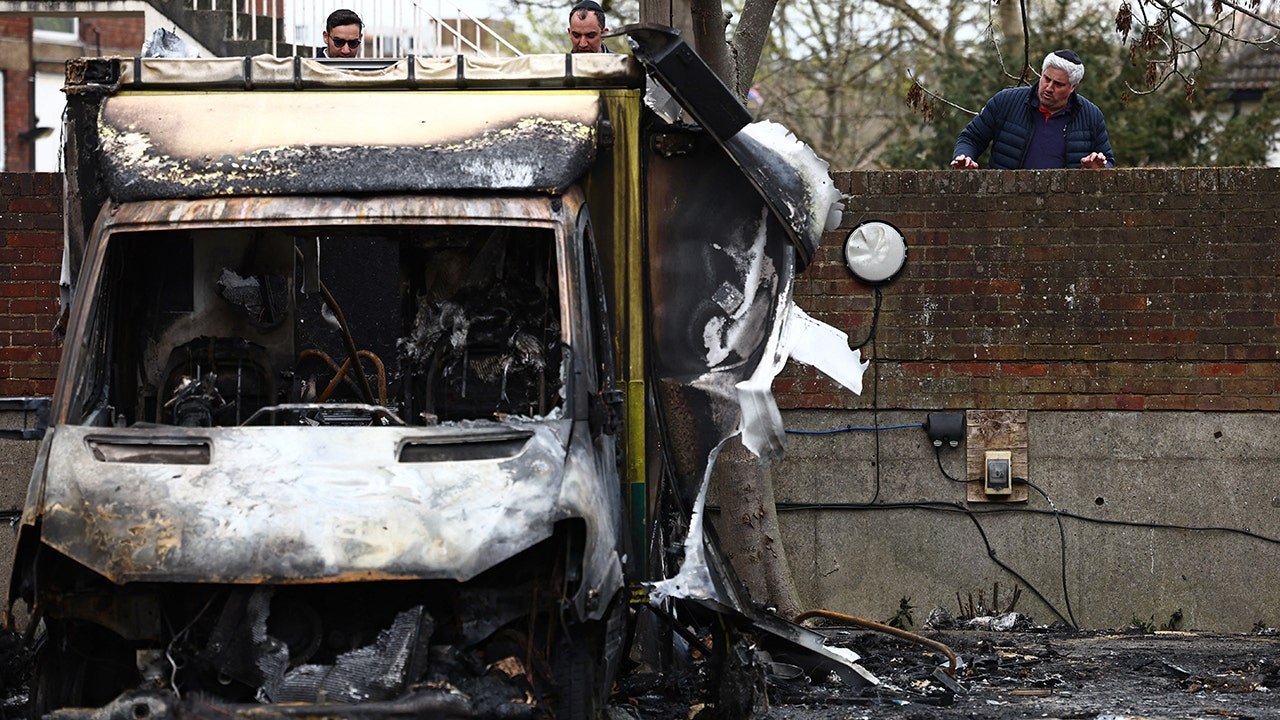
The March 23 incident unfolded at around 1:45 a.m. in the Golders Green neighborhood, where four ambulances operated by Hatzola, a volunteer emergency service serving the Jewish community, were deliberately set ablaze in a synagogue parking lot.
Hamza Iqbal, 20, Rehan Khan, 19, and a 17-year-old boy are accused of arson with intent to damage property while recklessly endangering life, according to the Metropolitan Police. Officials said two of the suspects are British citizens, while one holds dual British and Pakistani citizenship.
GUILTY VERDICTS IN ISIS PLOT POLICE SAY COULD HAVE BEEN ‘THE DEADLIEST TERRORIST ATTACK IN UK HISTORY’
Members of the Jewish community view the scene of an antisemitic arson attack in the Golders Green neighborhood of north London, on Tuesday, March 24, 2026.
(Henry Nicholls/AFP)
All three were arrested Wednesday at separate locations across London.
They did not enter pleas and were remanded in custody following a roughly 45-minute hearing Saturday afternoon at Westminster Magistrates’ Court, according to The Standard.
Prosecutors said a fourth suspect was also arrested and taken into custody at the courthouse where the three charged men were appearing, according to Reuters.
UK COUNTERTERRORISM POLICE PROBE ANTISEMITIC ARSON ATTACK AS IRAN-LINKED GROUP CLAIMS RESPONSIBILITY
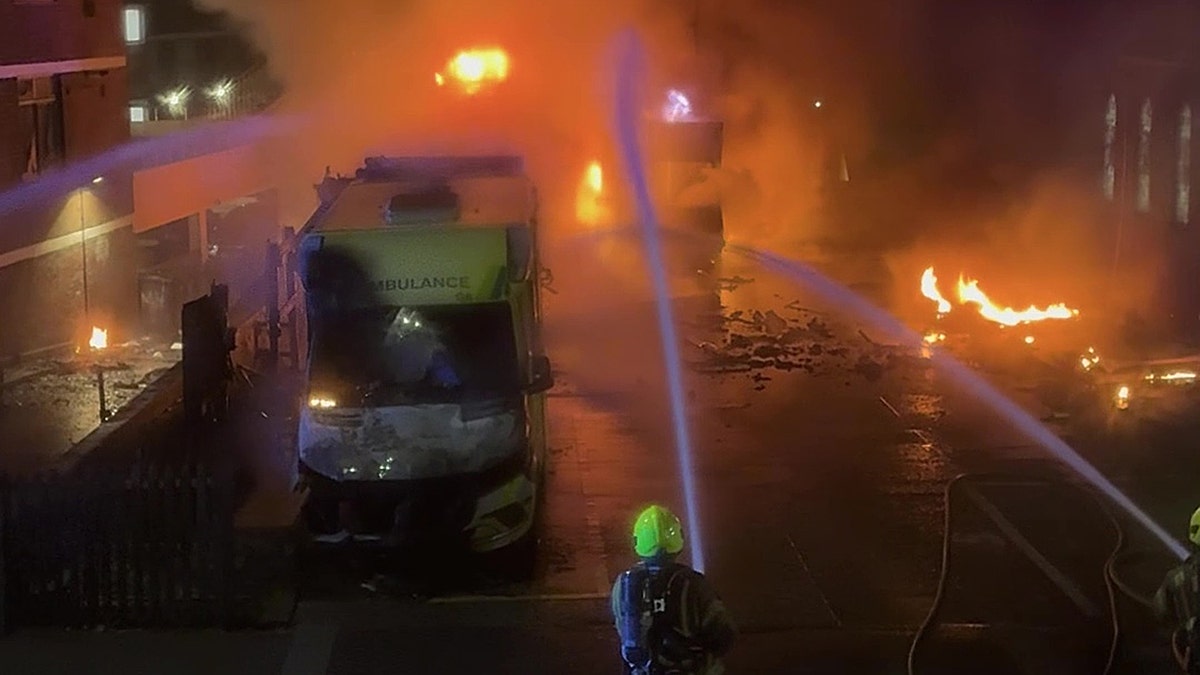
Firefighters are seen tackling a blaze at Highfield Road in the Golders Green neighborhood of London, following an apparent arson attack on four ambulances belonging to the Jewish Community Ambulance Service. (PA/PA Images via Getty Images)
U.K. Prime Minister Keir Starmer previously condemned the attack as a «horrifying» antisemitic act.
«An attack on our Jewish community is an attack on us all. We will fight the poison that is antisemitism,» Starmer wrote on X on March 23.
A report from the SITE Intelligence Group says an Iran-backed network calling itself the Islamic Movement of the People of the Right Hand has claimed responsibility, according to Reuters.
UK ARRESTS 2 OVER ‘ANTISEMITIC ARSON ATTACK’ AS POLICE INVESTIGATE POSSIBLE IRAN LINK

Shadow Foreign Secretary Priti Patel visits the scene after four ambulances belonging to Hatzola, a Jewish community organisation, were set on fire in an incident that the police say is being treated as an antisemitic hate crime, in northwest London, Britain, March 23, 2026. (Isabel Infantes/Reuters)
Despite the claim, officials have not formally classified the case as terrorism. However, counterterrorism police are leading the investigation, Metropolitan Police said.
CLICK HERE TO DOWNLOAD THE FOX NEWS APP
Police in the United Kingdom previously arrested two additional men, ages 45 and 47, in the days following the attack. They were later released on bail, according to the Metropolitan Police.
«I want to reiterate that the support we had from the local community since this attack took place has been incredible, and we will continue to work closely with local policing colleagues to do everything we can to keep the public safe,» Commander Helen Flanagan, head of Counter Terrorism Policing London, said in a statement.
The Metropolitan Police did not immediately respond to Fox News Digital’s request for comment.
Fox News Digital’s Efrat Lachter and Greg Norman, as well as Reuters contributed to this report.
fires disasters, anti semitism, counter terrorism, iran, united kingdom
INTERNACIONAL
Trump unveils $1.5T defense surge, deep domestic cuts — what’s on the budget chopping block

NEWYou can now listen to Fox News articles!
The White House on Friday proposed a sweeping fiscal year 2027 budget that would dramatically increase military spending to roughly $1.5 trillion while cutting billions from domestic programs, marking a sharp shift in federal priorities toward national security and border enforcement.
The proposal outlines roughly $1.5 trillion in total defense resources, a figure the administration says is needed to address growing threats from China, Russia and other adversaries.
The request includes about $1.1 trillion in base discretionary funding for the Department of War, along with an additional $350 billion in mandatory funding to support priorities such as munitions production and expansion of the defense industrial base.
TRUMP REWRITES NATIONAL SECURITY PLAYBOOK AS MASS MIGRATION OVERTAKES TERRORISM AS TOP US THREAT
If enacted, the plan would represent one of the largest increases in U.S. defense spending in decades, though the total includes a mix of discretionary funding and mandatory resources that are not typically combined in standard Pentagon budget comparisons.
The White House on Friday proposed a sweeping fiscal year 2027 budget that would dramatically increase military spending to roughly $1.5 trillion while cutting billions from domestic programs, marking a sharp shift in federal priorities toward national security and border enforcement. (AP photo)
Weapons production, ships and emerging technologies
The budget places heavy emphasis on rebuilding weapons stockpiles and strengthening domestic manufacturing capacity, areas that defense officials have identified as key vulnerabilities in recent years.
It calls for accelerated procurement of critical munitions and expanded investments in the defense industrial base, alongside increased funding for nuclear modernization.
Shipbuilding is another major focus, with $65.8 billion requested to procure 18 Navy battle force ships and 16 non-battle force vessels as part of a broader effort to expand maritime capacity.
The proposal also continues funding for the «Golden Dome» missile defense system, which aims to develop a layered homeland defense using space-based sensors and interceptors.
Emerging technologies play a central role in the plan.
The budget highlights investments in artificial intelligence, drones and counter-drone systems, and next-generation aircraft, including continued development of the F-47 — a sixth-generation fighter designed to operate alongside autonomous systems — with the program targeting a first flight as early as 2028.

The proposal also continues funding for the «Golden Dome» missile defense system, which aims to develop a layered homeland defense using space-based sensors and interceptors. (Chip Somodevilla/Getty Images)
Defense increases paired with domestic cuts
TRUMP NATIONAL SECURITY BLUEPRINT DECLARES ‘ERA OF MASS MIGRATION IS OVER,’ TARGETS CHINA’S RISE
The increase in defense spending is paired with a proposed 10% reduction in nondefense discretionary spending.
Budget tables show nondefense funding dropping to about $660 billion, while defense-related funding rises significantly, with base defense funding reaching roughly $1.15 trillion.
The fiscal year 2026 National Defense Authorization Act (NDAA) authorized approximately $890 billion to $901 billion in defense spending.
The administration also is proposing continued reductions in nondefense spending in future years, signaling a longer-term effort to rebalance federal spending toward national security priorities.
Several major agencies would see significant reductions under the plan, including: NASA, cut by about $5.6 billion, or 23%, State Department and international programs, down roughly $15.5 billion, or 30%, Environmental Protection Agency, cut by more than half, Department of Labor, reduced by about $3.5 billion and Department of Housing and Urban Development, down $10.7 billion.
The reductions are likely to face pushback from lawmakers, particularly over cuts to scientific research, housing programs and foreign aid.
«Donald Trump’s budget is rotten to the core, and Democrats will make sure it never passes,» Senate Majority Leader Chuck Schumer, D-N.Y., said in a statement. «Trump is already spending massive sums on never-ending wars abroad, and now he’s pushing for a record-breaking $1.5 trillion in defense spending while slashing programs that Americans and seniors care about and rely on.»

Several major agencies would see significant reductions under the plan, including NASA, cut by about $5.6 billion. (Austin DeSisto/NurPhoto via Getty Images)
Border security and law enforcement funding expands
The budget also increases funding tied to immigration enforcement and domestic security.
The Department of Homeland Security would continue to rely on more than $190 billion in multiyear funding provided through prior legislation to support border wall construction, detention capacity and enforcement operations, including tens of thousands of detention beds.
PENTAGON SEEKS AT LEAST $200B FROM CONGRESS FOR IRAN WAR
At the same time, the Department of Justice would receive $40.8 billion in discretionary funding, a 13% increase, with additional resources aimed at addressing violent crime, drug trafficking and cartel activity.
The proposal also includes continued support for military involvement in border operations, as well as expanded funding for the Coast Guard.
Foreign aid reduced as priorities shift
The budget proposes a roughly 30% reduction in funding for the State Department and international programs, including cuts to humanitarian aid, global health initiatives and contributions to international organizations.
At the same time, it creates a new $5 billion fund intended to support strategic partnerships and national security priorities, along with expanded financing for allied nations purchasing U.S. defense equipment.
The changes reflect a broader shift toward prioritizing security-focused spending over traditional foreign assistance programs.
Industrial policy tied to national security
Beyond military spending, the budget links national security more directly to economic and industrial policy.
It includes funding to expand domestic production of critical minerals and support supply chains, alongside investments in advanced computing, including artificial intelligence supercomputers at national laboratories.
Officials say those efforts are intended to reduce reliance on foreign suppliers and improve the United States’ ability to sustain long-term competition with adversaries.
Economic assumptions and next steps
The budget is based on projections that assume steady economic growth of about 3% annually and inflation stabilizing near 2%, estimates that could face scrutiny from outside analysts.
The proposal now moves to Congress, where it is expected to face significant debate over both the scale of defense spending and the extent of domestic cuts.
CLICK HERE TO DOWNLOAD THE FOX NEWS APP
Lawmakers also will likely scrutinize the administration’s use of mandatory funding and reconciliation to support defense increases, an approach that differs from traditional budget negotiations.
While presidential budgets are rarely enacted as written, the proposal provides a clear outline of the administration’s priorities heading into the next fiscal year, with a focus on military strength, border enforcement and a reduced role for many domestic programs.
homeland security, national security, border security, state department, spending

En el estreno de su nuevo estadio, el Inter Miami de Lionel Messi recibirá a Austin FC: hora, TV y formaciones

El hijo de Julián Weich mostró cómo funciona la biopiscina de su casa sustentable: “No tiene bomba ni filtro”

Una nena de 12 años murió tras intentar proteger a su hermana del bullying escolar: la golpearon con una botella

Impresionante: las fotos del Artemis delatan la masiva presencia de buques chinos pescando al borde del Mar Argentino

El exministro Julio De Vido permanece bajo cuidados intensivos tras sufrir un problema cardíaco

UK prosecutors charge 3, including dual Pakistani citizen, in arson attack on Jewish ambulances in London

El Gobierno reevalúa la estrategia de comunicación por el caso Adorni y mide el impacto en la imagen de Milei

Milei se pone al frente de la defensa de Adorni y lo suma a un acto por Malvinas en una nueva muestra de respaldo

Oriana Sabatini sorprendió al elegir a una famosa como madrina de Gia, su hija con Paulo Dybala

La Armada sorteará 30 lugares en el buque que escoltará la salida de la Fragata Libertad: cómo anotarse

 POLITICA2 días ago
Milei se pone al frente de la defensa de Adorni y lo suma a un acto por Malvinas en una nueva muestra de respaldo
- CHIMENTOS2 días ago
Oriana Sabatini sorprendió al elegir a una famosa como madrina de Gia, su hija con Paulo Dybala
- POLITICA2 días ago
La Armada sorteará 30 lugares en el buque que escoltará la salida de la Fragata Libertad: cómo anotarse