INTERNACIONAL
Latin America fractures over Trump’s Maduro capture as regional allies shift right

NEWYou can now listen to Fox News articles!
UNITED NATIONS: A deepening political realignment across Latin America came into focus over the weekend at a summit of the Community of Latin American and Caribbean States (CELAC) and sharpened further Monday at the United Nations Security Council, where governments publicly split over the U.S. role in the capture of Venezuelan strongman Nicolás Maduro.
At CELAC, several leftist governments attempted to push through a joint statement condemning Maduro’s detention. The effort failed after a bloc of countries consisting of Argentina, Bolivia, Paraguay, Peru, Ecuador, El Salvador, Panama, the Dominican Republic, and Trinidad and Tobago blocked consensus, preventing the regional body from issuing a unified defense of the Venezuelan leader, Merco Press agency reported.
The breakdown exposed growing fractures within what has long been a left-leaning regional forum and underscored the erosion of automatic solidarity with Caracas.
CUBA’S SHADOW IN VENEZUELA: HAVANA’S INTELLIGENCE AND MILITARY TIES EXPOSED AFTER MADURO RAID
President Donald Trump greets Argentinian President Javier Milei, at the White House in Washington D.C., Oct. 14, 2025. (Celal Gunes/Anadolu via Getty Images)
Melissa Ford Maldonado, director of the Western Hemisphere Initiative at the America First Policy Institute, said the fractures reflect a broader regional reckoning with the consequences of socialist and narco-authoritarian rule.
«We are witnessing a regional awakening across Latin America,» Maldonado told Fox News Digital. «The failure of socialism, communism and narco-authoritarian rule has become impossible to ignore.»
The shift is increasingly visible at the ballot box, where voters in several countries — last month alone in Chile and Honduras — have moved away from entrenched left-wing governments and toward right-of-center leaders campaigning on themes of security, sovereignty, border control and law and order — messages that echo aspects of President Donald Trump’s political approach in the United States.
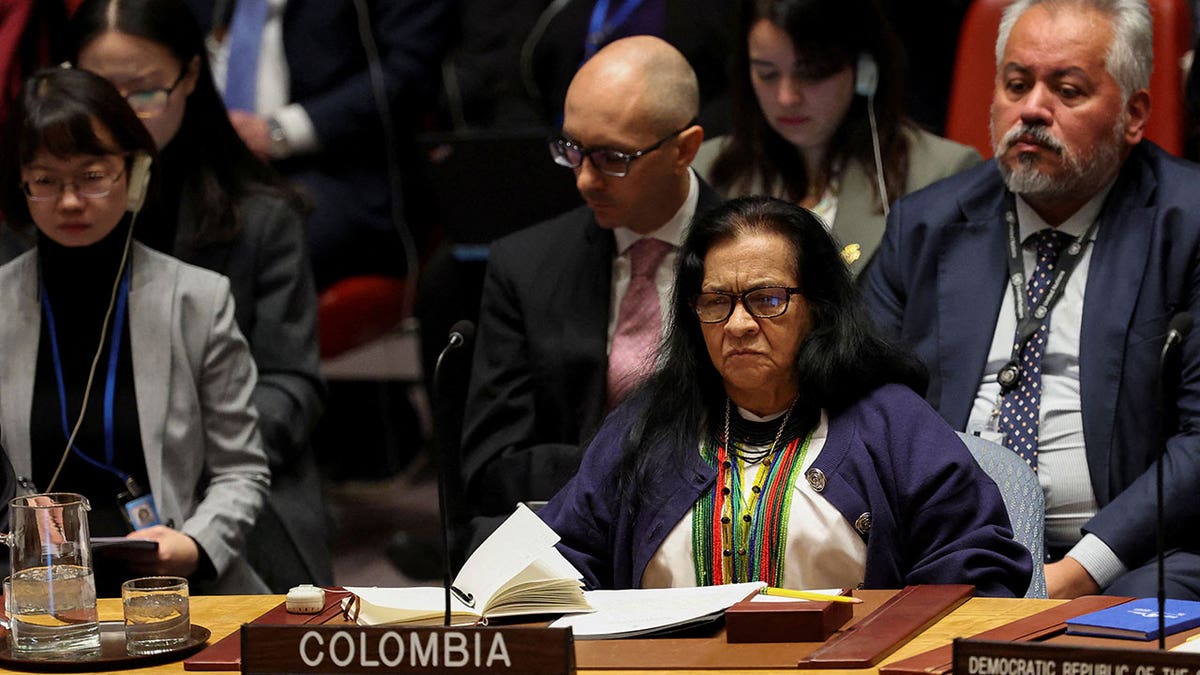
Colombian U.N. Ambassador Leonor Zalabata Torres attends a U.N. Security Council meeting on U.S. strikes and the capture of Venezuelan President Nicolás Maduro and his wife, Cilia Flores, at the United Nations headquarters in New York, U.S., Jan. 5, 2026. (Brendan McDermid/Reuters)
«The developments at CELAC this weekend reflect that reality,» Maldonado said. «The fact that several governments blocked a collective defense of Nicolás Maduro shows how divided the authoritarian left has become. Venezuela has become a cautionary tale.»
That division carried over into the Security Council on Monday, when Latin American and Caribbean states took sharply different positions, with some openly backing Washington and others denouncing the U.S. action as a violation of international law.
Argentina emerged as the most forceful regional supporter of the United States, praising President Donald Trump and framing Maduro’s capture as a decisive blow against organized crime.
«The Government of the Argentine Republic values the decision and determination demonstrated by the President of the United States of America and his government, and the recent actions taken in Venezuela that resulted in the capture of dictator Nicolás Maduro, leader of the Cartel of the Suns,» Argentina’s representative Francisco Fabián Tropepi told the council, adding the Maduro regime «has not only constituted a direct threat to the citizens systematic violation of human rights in the state appropriation of the country’s resources and destruction of democratic institutions, but also to the entire region by leading and exploiting its networks of drug trafficking and organized crime.»
VENEZUELA ORDERS NATIONWIDE MANHUNT FOR SUPPORTERS AFTER MADURO’S ARREST BY US FORCES
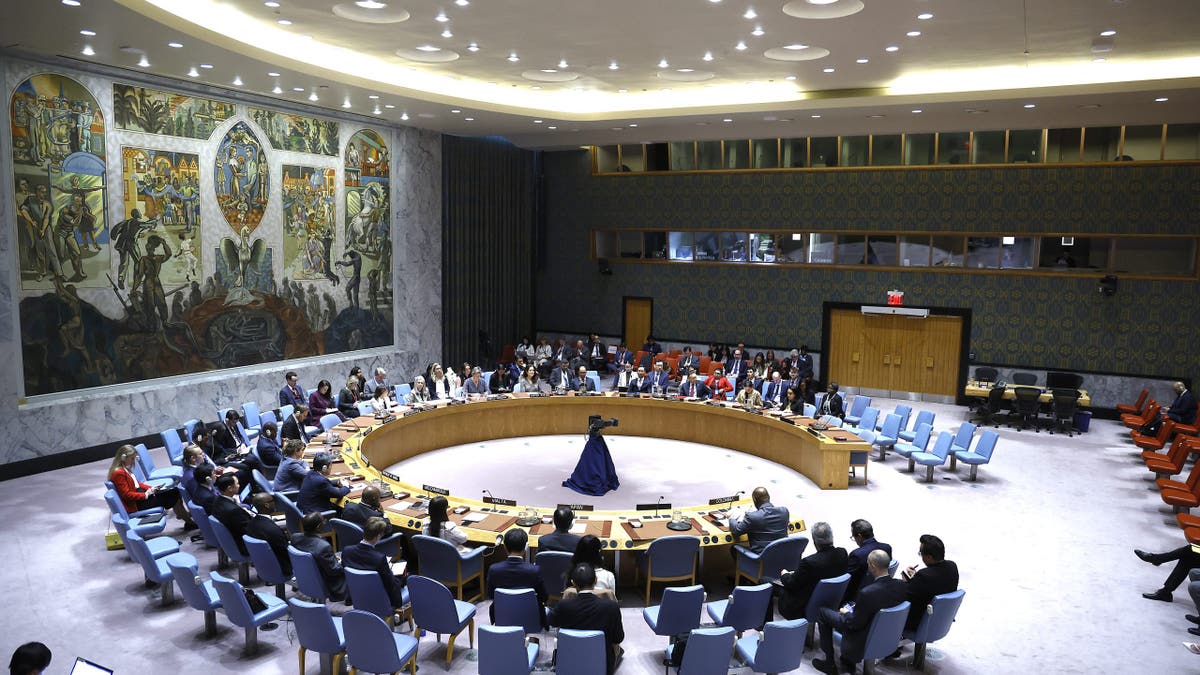
UN Security Council meeting. (Photo by John Lamparski/Getty Images)
Paraguay echoed that framing, claiming Maduro’s continued presence «was a threat to the region,» adding that «the removal of the leader of a terrorist organization should immediately lead to the restoration of democracy and the rule of law in Venezuela, making it possible for the will of the people, expressed at the ballot box, to become the foundation for the country’s reconstruction,» its representative Marcelo Eliseo Scappini Ricciardi said.
DEFIANT MADURO DECLARES HE IS A ‘PRISONER OF WAR’ IN FIRST US COURT APPEARANCE
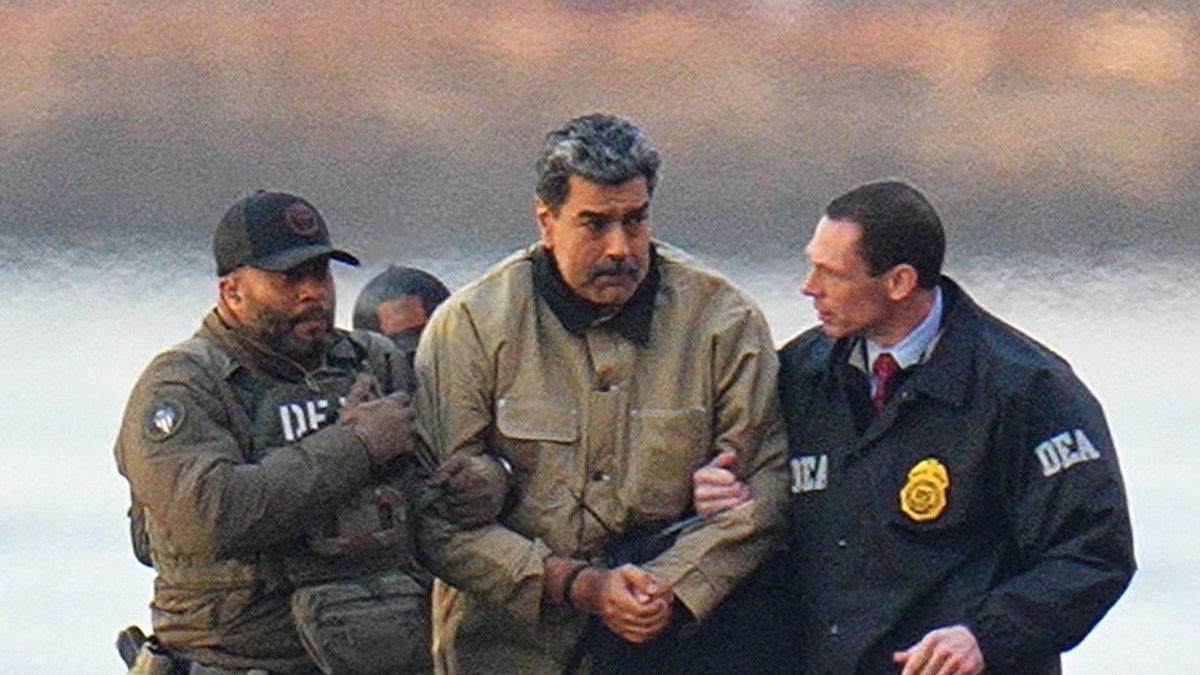
Nicolás Maduro is seen in handcuffs after landing at a Manhattan helipad, escorted by heavily armed federal agents as they make their way into an armored car en route to a federal courthouse in Manhattan on Jan. 5, 2026 in New York City. (XNY/Star Max/GC Images)
Other CELAC members took the opposite view, condemning the U.S. action and warning that it set a dangerous precedent.
Brazil «categorically and firmly» rejected what it called armed intervention on Venezuelan territory, describing the capture of Maduro as «a very serious affront to the sovereignty of Venezuela and an extremely dangerous precedent for the entire international community.»
FETTERMAN DEFENDS TRUMP’S VENEZUELA MILITARY OPERATION AGAINST CRITICISM FROM FELLOW DEMOCRATS
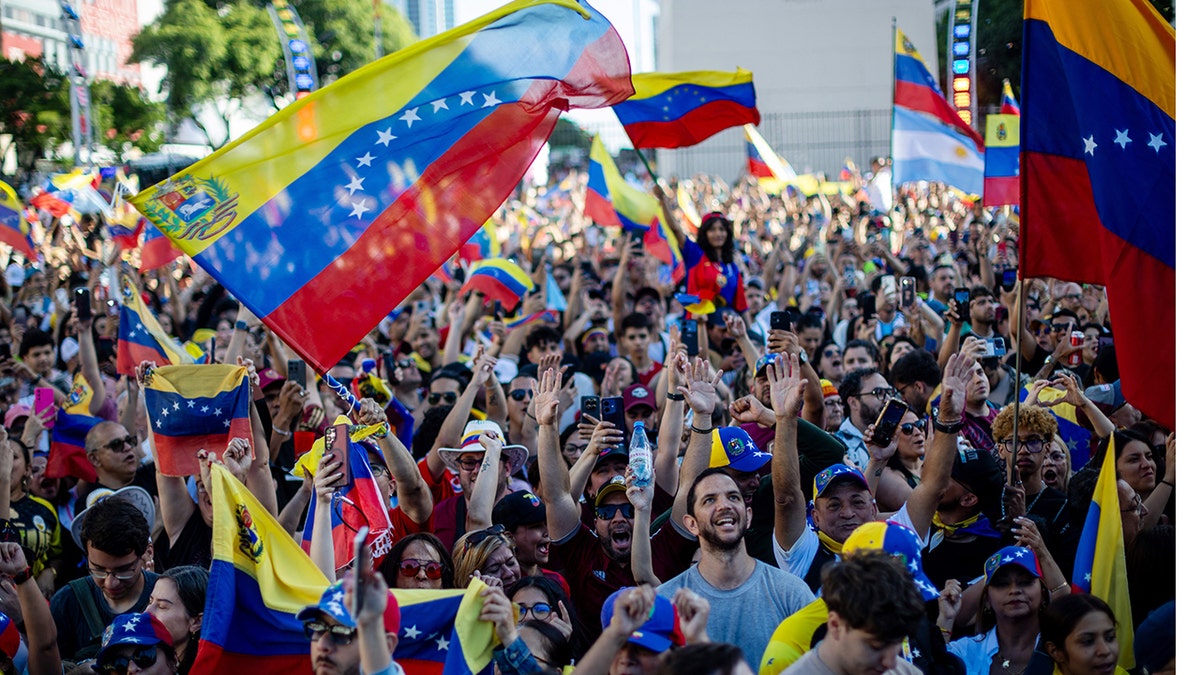
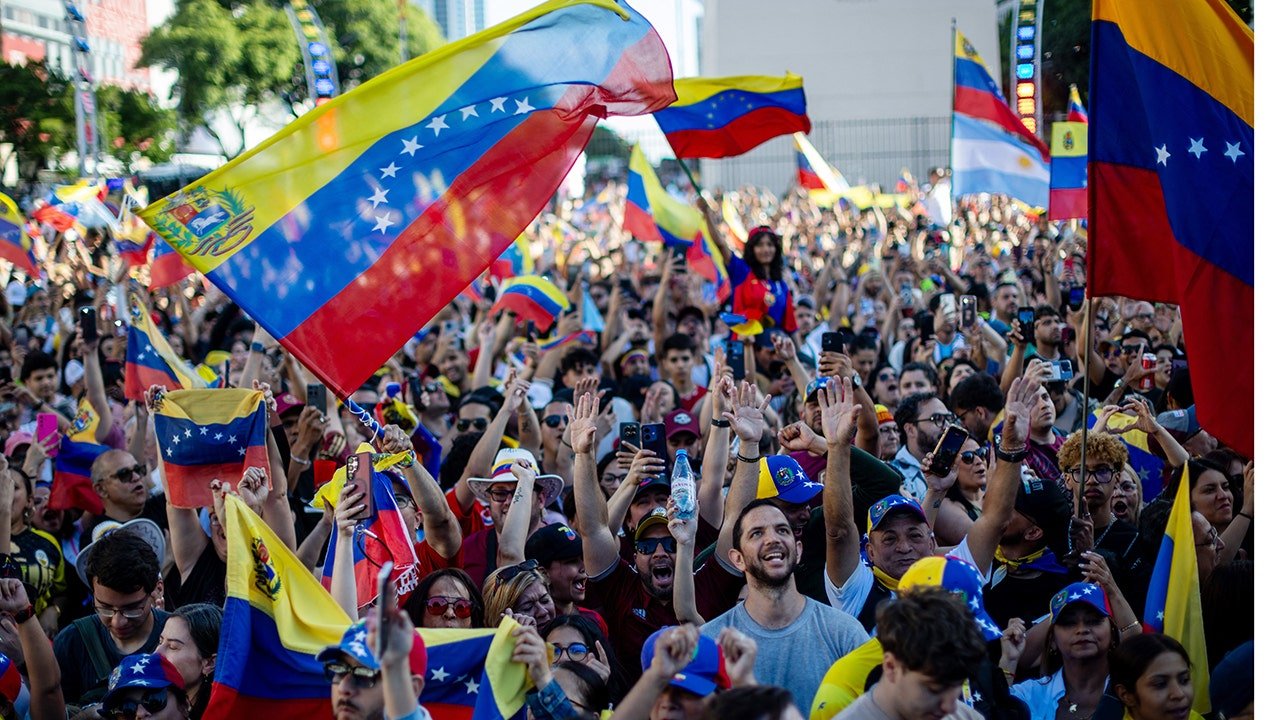
Venezuelans living in Argentina celebrate at the Obelisk in Buenos Aires on Jan. 3, 2026, after U.S. forces captured Venezuelan leader Nicolás Maduro. (Tomas Cuesta/AFP via Getty Images)
Mexico denounced the operation as a violation of the U.N. Charter, arguing that external efforts to impose political change historically worsen conflicts and destabilize societies. Chile also condemned what it called unilateral military action and warned against foreign interference, while Cuba and Nicaragua delivered blistering denunciations of Washington, accusing the United States of imperial aggression and calling for Maduro’s immediate release.
The split at the U.N. mirrored the breakdown at CELAC, where governments increasingly appear unwilling to speak with one voice on Venezuela, even as they stop short of endorsing U.S. military force.
According to Maldonado, «Governments are increasingly forced to choose between defending failed autocracies, corruption and repression or responding to their own citizens,» she said. «More governments are unwilling to carry that burden.»
DEMOCRATS LABEL TRUMP’S VENEZUELA OPERATION AN ‘IMPEACHABLE OFFENSE’
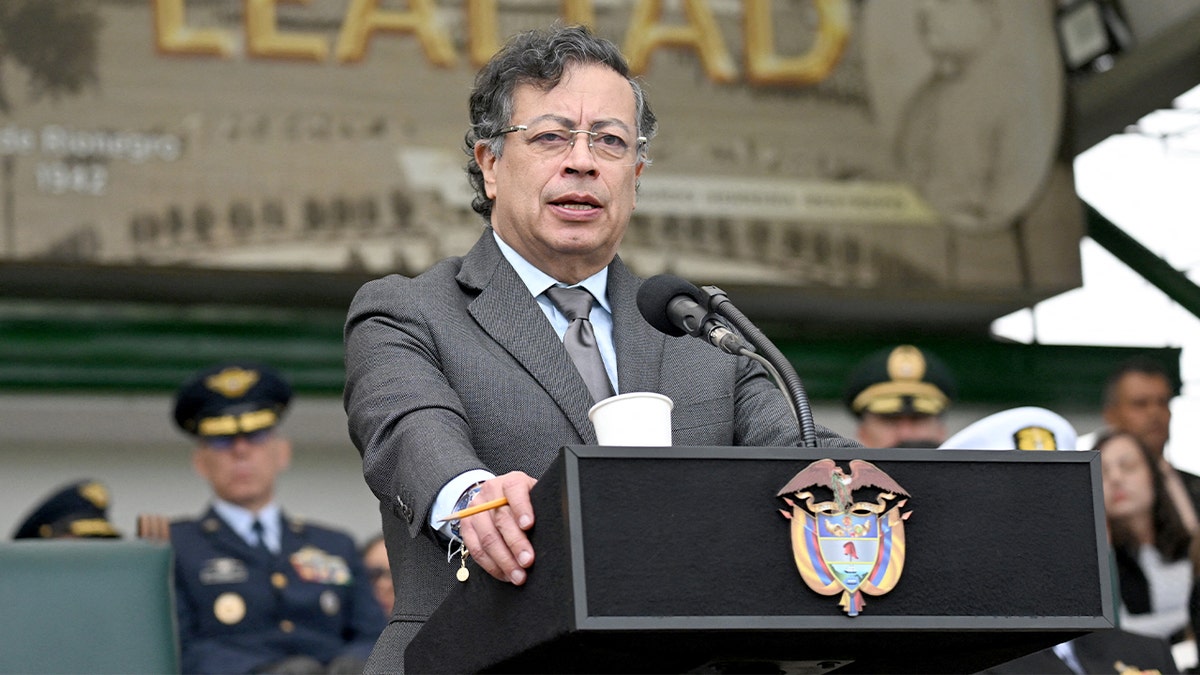
Colombia’s President Gustavo Petro delivers a speech during a troop recognition ceremony at the Jose Maria Cordova Military Cadet School in Bogota on March 11, 2025. At the United Nations, countries split sharply after the capture of Nicolás Maduro, with some backing U.S.-led action while others warned it set «an extremely dangerous precedent for the entire international community.» (Raul Arboleda/AFP via Getty Images)
Maldonado described Maduro’s capture as a break with decades of U.S. restraint in the region, «It shows that the United States is deadly serious about defending itself and the hemisphere, about stopping the flow of drugs, dismantling cartel-state alliances and about fighting back against the influence of China, Russia and Iran in our neighborhood.»
She argued that the regional reaction, split though it is, reflects a broader ideological shift.
«There is a clear rightward shift underway in the region, and it is a healthy one,» Maldonado said. «It reflects a growing alignment around the core principles of freedom, liberty, personal responsibility, national sovereignty and prosperity.»
CLICK HERE TO DOWNLOAD THE FOX NEWS APP
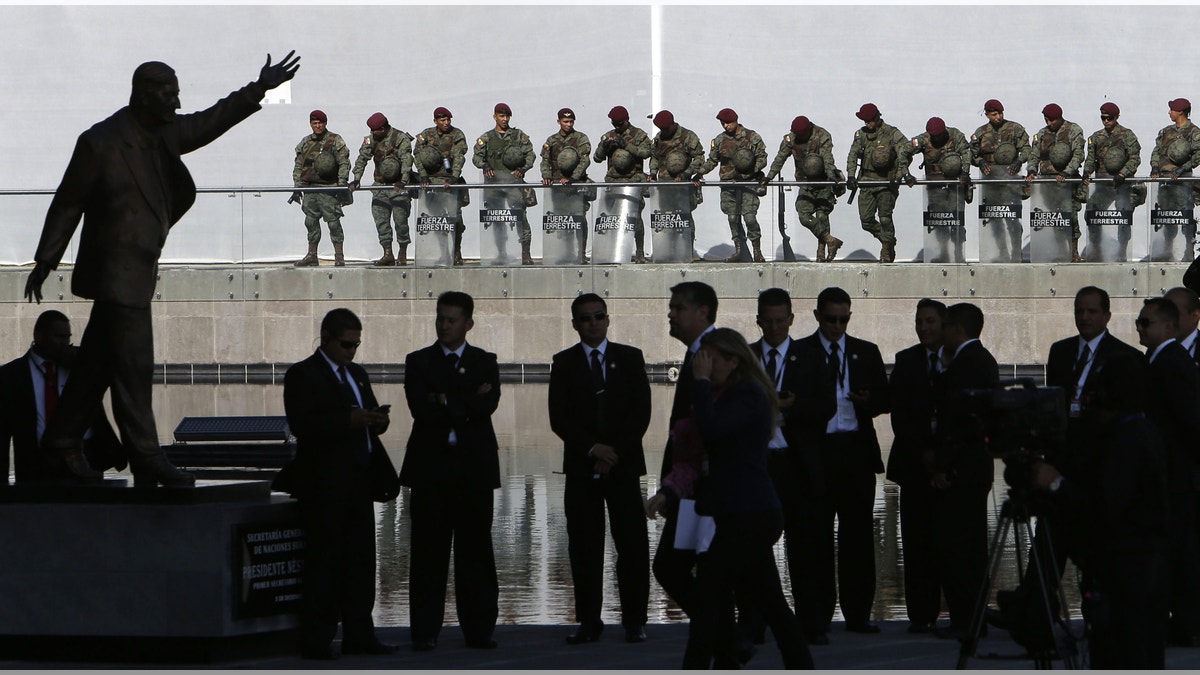
Security personnel guard the Unasur building during the IV Summit of the Community of Latin American and Caribbean States, CELAC, in Quito, Ecuador, Wednesday, Jan. 27, 2016. (AP Photo/Dolores Ochoa)
While critics at the U.N. warned that U.S. action risks undermining international law, supporters argue the status quo had already collapsed under the weight of Venezuela’s humanitarian and security crisis.
«Venezuela’s collapse has taught the region what happens when the state becomes your everything,» Maldonado said. «When the state controls your job, your housing, your healthcare, your education, your courts and your information, freedom becomes conditional.»
latin america,venezuelan political crisis,donald trump,national security,united nations,security council








INTERNACIONAL
Cómo fue el operativo secreto que montó Estados Unidos para rescatar a su piloto derribado en Irán
En Infobae al Mediodía, el analista Andrei Serbin Pont detalló cómo Estados Unidos llevó adelante una de sus operaciones más arriesgadas desde la guerra de Vietnam: la extracción de un piloto que permaneció 36 horas escondido en las montañas iraníes, luego de que su F-15 fuera derribado cerca de la central nuclear de Isfahán.
Durante el programa junto a Maru Duffard, Jimena Grandinetti, Fede Mayol y Facundo Kablan, Serbin Pont relató: “No se piloteó mucho la nave, fue derribada y vimos lo que fue un rescate absolutamente de película. No solo el derribo de la aeronave, también el despliegue de inteligencia, una instalación nuclear de por medio y una ciudad de más de dos millones de habitantes al lado. Todo eso ocurrió en 48 horas”.
La trastienda del rescate: comandos, engaño y una base improvisada
El especialista ubicó el episodio en las inmediaciones de Isfahán, uno de los focos del programa nuclear iraní. “Fue en las proximidades de Isfahán que cae el F-15, derribado por misiles de defensa. La aeronave logra avanzar unos 70 kilómetros antes de impactar, y ahí empieza la operación de rescate”, explicó.
El piloto, parte de una tripulación de dos, fue rescatado rápidamente, pero el WSO —encargado de navegación y armas— debió sobrevivir 36 horas oculto, mientras fuerzas iraníes lo buscaban intensamente. “Estados Unidos arma una base aérea transitoria a 50 kilómetros de una central nuclear. Utilizan una pista que estaba en la zona, aterrizan aviones de transporte con helicópteros adentro y despliegan comandos para ir a buscar al piloto”, narró Serbin Pont.
El despliegue incluyó fuerzas especiales estadounidenses y de Israel, pararescatistas y un impresionante apoyo aéreo: “Tuvieron que enfrentar armamento antiaéreo y hasta hubo enfrentamientos armados desde el aire. El piloto logra subir más de dos mil metros para activar el localizador y ser encontrado”.
La operación, además, incluyó un elemento clave de guerra de información. “Estados Unidos y la CIA fueron proactivos en desinformar. Hicieron creer a Irán que el oficial estaba en el sur del país. Filtraron videos, difundieron rumores y manipularon la opinión pública para que Irán concentrara sus fuerzas lejos del verdadero punto donde ocurría el rescate”, expuso el analista.

Problemas logísticos, destrucción de evidencia y un escape al límite
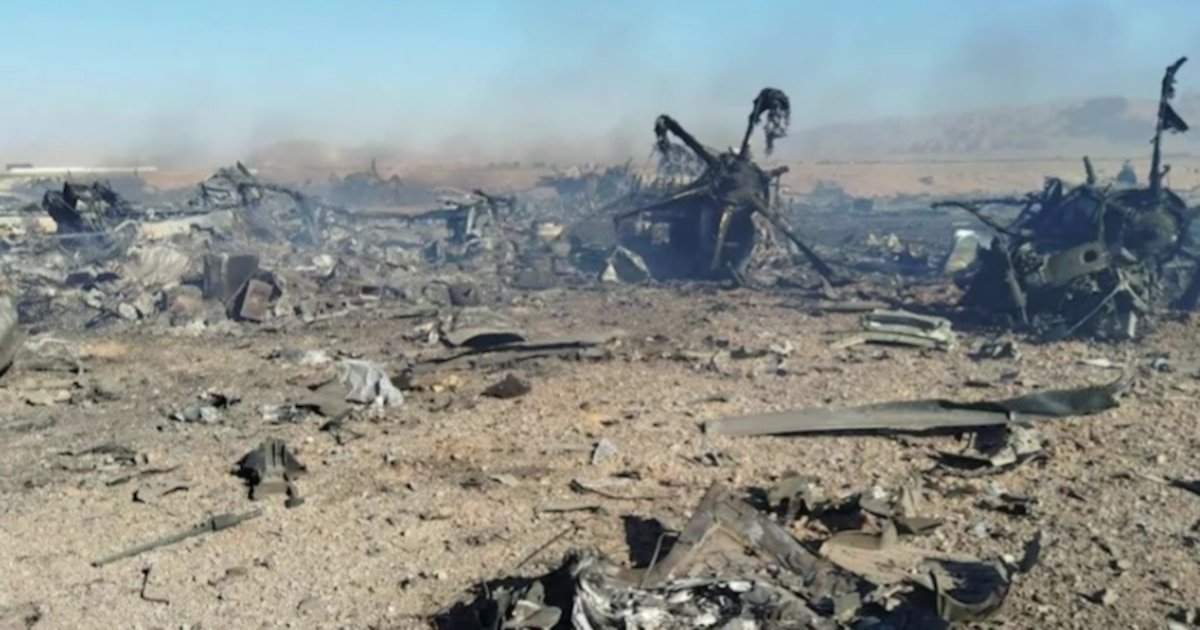
El operativo no estuvo exento de inconvenientes técnicos. Serbin Pont describió: “Los aviones de transporte quedaron varados en la tierra blanda de la pista improvisada. Hubo que llamar a aeronaves más pequeñas para evacuar al personal, incluido el rescatado. Cuando logran salir, aviones de combate estadounidenses destruyen los equipos y los restos de las aeronaves y helicópteros que no pudieron despegar, para evitar que caigan en manos iraníes”.
La magnitud del despliegue dejó imágenes impactantes de restos calcinados, que generaron especulaciones sobre el verdadero objetivo de la misión. El conductor subrayó: “Surge la pregunta de si esta operación fue solo para rescatar al tripulante, o si había un objetivo mayor, considerando la cercanía con la central nuclear y el uranio enriquecido iraní, uno de los puntos que Estados Unidos exige negociar”.
El contexto internacional agregó presión: el rescate coincidió con un ultimátum de la Casa Blanca para reabrir el estrecho de Ormuz y con una escalada de amenazas cruzadas. “Se está hablando tanto de diálogo como de ultimátums. Trump insiste en que Estados Unidos puede destruir Irán en una noche. Todo en un momento donde la negociación está trabada y hay movimientos militares que generan sospechas”, resumió Serbin Pont.

Estrategia, desinformación y la guerra que sigue sin resolverse
El bloque cerró con un análisis sobre la guerra informativa y las consecuencias para el conflicto. “La campaña de desinformación fue deliberada. Manipularon a los medios y a la opinión pública para asegurar el éxito de la operación de extracción. Solo necesitaban ganar tiempo”, sostuvo el conductor.
La descentralización del mando iraní, según Serbin Pont, permite que el régimen siga operando incluso tras la muerte de altos jefes militares. “Irán aprendió de los bombardeos del año pasado y descentralizó su estructura de comando. Eso les permite seguir dando batalla y resistiendo”, explicó.
Por último, el impacto económico y político no es menor: “El barril de petróleo superó los 110 dólares. La situación afecta a los mercados y a la campaña electoral estadounidense, donde las divisiones internas entre republicanos se hacen cada vez más visibles. El frente interno preocupa tanto como el externo”.
—
Infobae te acompaña cada día en YouTube con entrevistas, análisis y la información más destacada, en un formato cercano y dinámico.
• De 7 a 9: Infobae al Amanecer: Nacho Giron, Luciana Rubinska y Belén Escobar.
• De 9 a 12: Infobae a las Nueve: Gonzalo Sánchez, Tatiana Schapiro, Ramón Indart y Cecilia Boufflet.
• De 12 a 15: Infobae al Mediodia: Maru Duffard, Andrei Serbin Pont, Jimena Grandinetti, Fede Mayol y Facundo Kablan.
• De 15 a 18: Infobae a la Tarde: Manu Jove, Maia Jastreblansky y Paula Guardia Bourdin; rotan en la semana Marcos Shaw, Lara López Calvo y Tomás Trapé
• De 18 a 21: Infobae al Regreso: Gonzalo Aziz, Diego Iglesias, Malena de los Ríos y Matías Barbería; rotan en la semana Gustavo Lazzari, Martín Tetaz y Mica Mendelevich
Seguinos en nuestro canal de YouTube @infobae.
guerra
INTERNACIONAL
Mauro compares Iran rescue of missing colonel to Maduro capture, credits intelligence preparation
CIA deception operation rescues missing US airman in Iran
Paul Mauro, Fox News contributor, explains the intricate Central Intelligence Agency (CIA) deception operation that rescued a U.S. airman missing for over 36 hours in Iran. The CIA used fabricated information to mislead Iranian searchers while precisely locating and extracting the airman. Mauro emphasizes the crucial role of human intelligence (HUMINT) and synchronized efforts, underscoring that intelligence, despite technological advances, fundamentally relies on people.
NEWYou can now listen to Fox News articles!
U.S. intelligence agencies had already done the groundwork needed to locate a missing colonel inside Iran, Paul Mauro said Monday, arguing the operation relied on intelligence gathered well before the mission began.
«You’ve got to collect, you collect, you collect and a lot of it sometimes you’re never going to use,» Mauro told «Fox & Friends.»
«The key is when you need it, it has to be there.»
Mauro pointed to the Maduro case, which unfolded at the behest of the Trump administration in January, noting U.S. forces’ ability to pinpoint where the Venezuelan dictator and his wife were going to be at the time in order to make an effective capture.
RESCUE EXPERT SAYS MOST DANGEROUS MOMENT COMES AFTER ‘JACKPOT’ CALL IN RECOVERY BEHIND ENEMY LINES
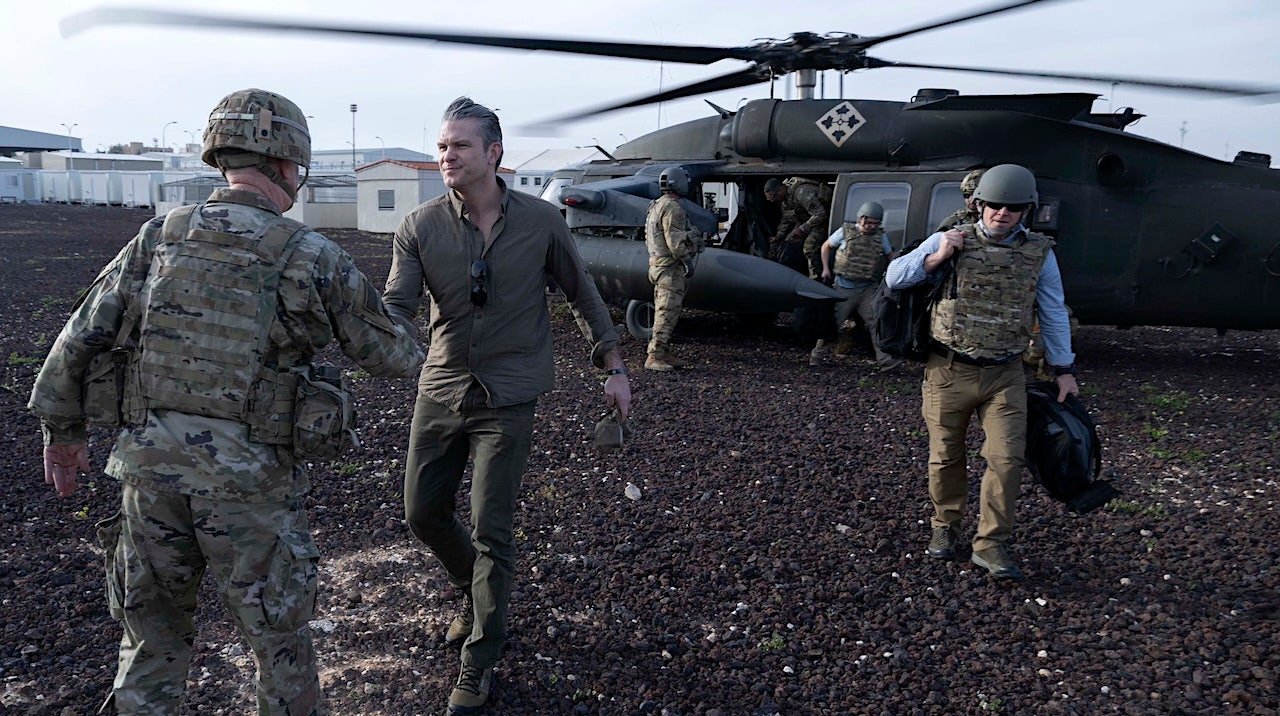
War Secretary Pete Hegseth shakes the hand of a American airman on a covert CENTCOM visit with troops in ‘theater.’ (War Secretary/X)
«They got him as they were running to a safe room without a scratch. Everybody comes out without a scratch,» he said.
«They got them as they were fleeing. That’s how detailed the messaging was, and that’s how synchronized the operation was.»
Mauro said that same level of preparation and coordination was on display in the Iran mission, where U.S. forces rescued a missing U.S. weapons systems officer from a downed F-15E following a multi-day search inside enemy territory.
TRUMP CALLS RESCUE OF DOWNED AIR FORCE PILOT AN ‘EASTER MIRACLE’
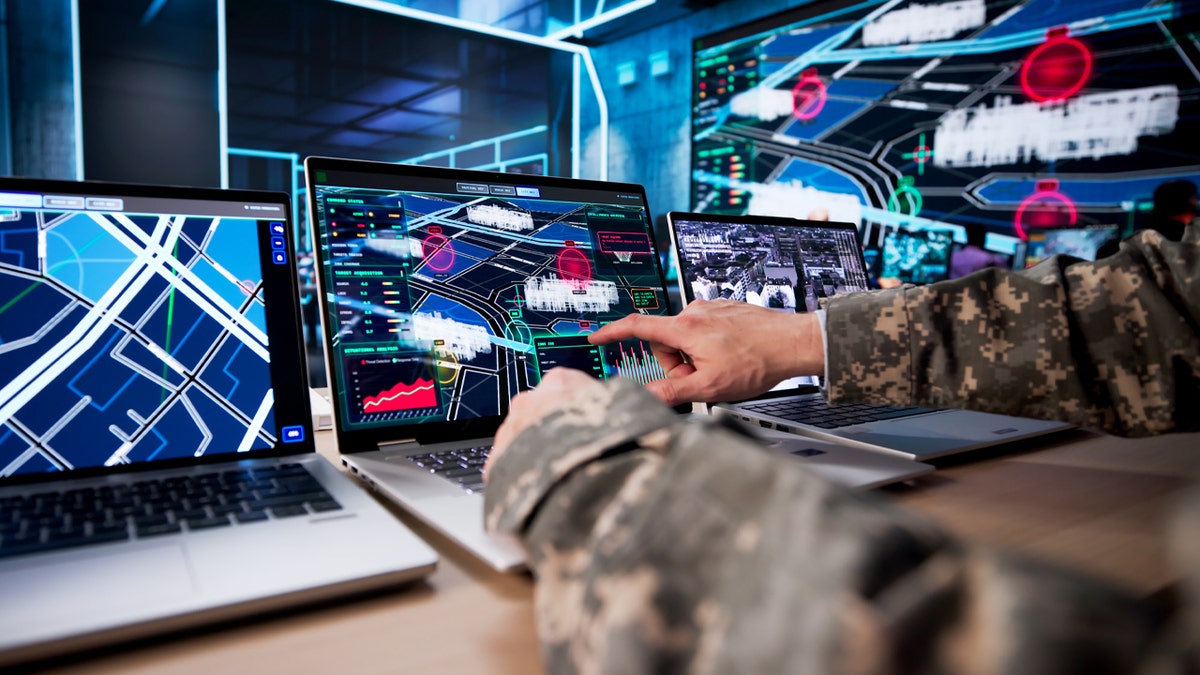
Artificial intelligence is a big factor in the Iran war and Iran realizes it. (iStock)
U.S. intelligence was able to act quickly to retrieve the missing colonel once his location was confirmed.
«[This] was one of those situations where the bell rang. ‘Guys, what [have] you got?’ President turns around, [War Secretary] Hegseth turns around, [and] they all talk to Ratcliffe and they say, ‘What [have] you got, director?’ and fortunately it was there.»
Mauro said the operation highlights a broader fact about intelligence work that is apparent to those working within its community: its success comes down to the people running the sources.
CLICK HERE TO DOWNLOAD THE FOX NEWS APP
«At the end of the day… it comes down to people,» he said.
«If you think that you can sit in a cubicle someplace and get everything you need to be done, that’s not how it’s going to go. You need people in country, in dangerous areas, Americans working on our behalf that you’ll never hear about… they’re running the sources so that, again, when you need it, they say, ‘My source is good.’«
fox news media, national security, cia, pentagon, war with iran
NEWYou can now listen to Fox News articles!
A custody hearing in Ada, Oklahoma, last month took a turn for the unexpected — and the incredibly loud — after an attorney who identified himself as transgender was arrested and dragged from the courtroom where he had appeared to represent his client just minutes before.
The exchange occurred during a custody hearing in Pontotoc County, Oklahoma, some 90 minutes southeast of Oklahoma City. The attorney, Rob Hopkins, was jailed for contempt after sparring repeatedly with the judge, Lori Jackson, during an otherwise unremarkable proceeding.
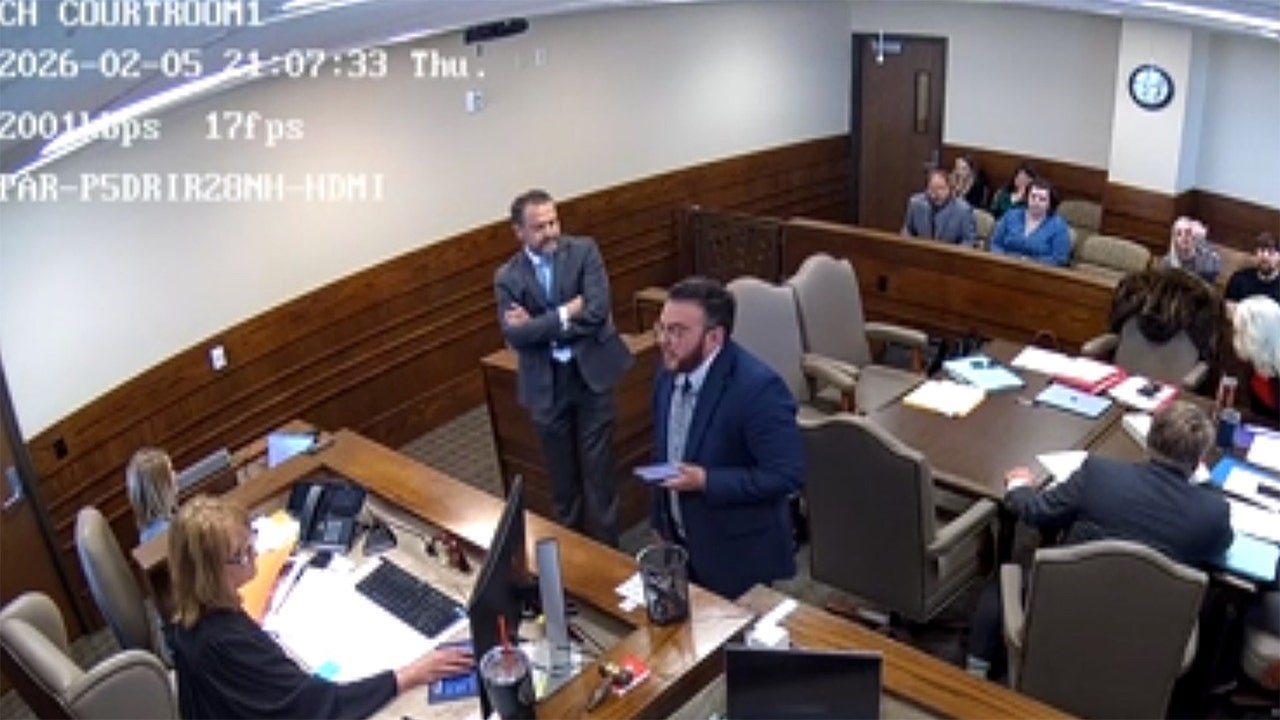
Surveillance footage, audio, and body camera footage reviewed by Fox News Digital has shed new light on the extraordinary confrontation, in which Hopkins can be seen actively resisting arrest by bailiffs. At one point, Hopkins can be seen splaying his body across the judge’s bench, resulting in a pile of documents being swept off its finely polished wood surface.
«You’re HURTING ME!» Hopkins bellowed, as bystanders looked on. «I can’t BREATHE!» he shrieked again, louder.
Attendees in the courtroom could be seen looking on quietly as Hopkins twisted, turned, and contorted his body to evade the handcuffs that officers used to restrain him.
«I felt very threatened by this person,» one individual could be heard telling the judge.
SHELTERS, JESUS, AND MISS PAC-MAN: US JUDGE GRILLS DOJ OVER TRANS POLICY IN DIZZYING LINE OF QUESTIONING
(Surveillance footage provided to Fox News Digital by the Oklahoma District Attorney’s Office, 22nd District.)
The meltdown in question, and the arrest, occurred during a custody hearing punctuated by repeated interruptions from Hopkins and warnings from Jackson that he would be held in contempt.
Hopkins then suggested she was discriminating against him for his transgender status, escalating tensions inside the courtroom.
«It’s because I’m a transgender attorney practicing all over the state,» Hopkins leveled sharply, to which Jackson shot back: «I don’t know what you are.»
«I don’t know you from Adam,» Jackson said later, describing his conduct as «entirely inappropriate.»
Shortly after, bailiffs entered the courtroom, prompting the hearing to descend into complete chaos.
«Do NOT HURT ME!» Hopkins yelled at the officers.
«I’m being thrown down!» he bellowed, as he threw himself on the bench before the officers eventually forced him onto the floor.
‘BLANKIES,’ ICE TACTICS AND LUXURY JETS: TOP MOMENTS FROM NOEM’S HOUSE TESTIMONY
More officers streamed in to help restrain Hopkins, whose uproarious exclamations had, at that point, drawn a crowd — not only in the courtroom, but also in the hallways surrounding it, as the body camera footage shows.
«Get a female officer, now!» Hopkins demanded. «Call 911!» he shrieked, as the officers attempted to place him in handcuffs.
«I can’t breathe! I can’t breathe!» he declared.
From the floor of the court, Hopkins accused the officers of «throwing his glasses» onto the floor — a claim that surveillance footage reviewed by Fox News Digital appears to refute — and ordered the officers to place them back on his face.
«Put them on my face,» Hopkins demanded repeatedly, as the officers attempted to place Hopkins into a seated position and escort him from the court. «PUT THEM ON MY FACE!» Hopkins screamed once more, the volume and urgency unchanged from his request for emergency services just seconds before.
‘YOU SHOULD BE ASHAMED!’: PROTESTER DRAGGED FROM KRISTI NOEM’S SENATE HEARING
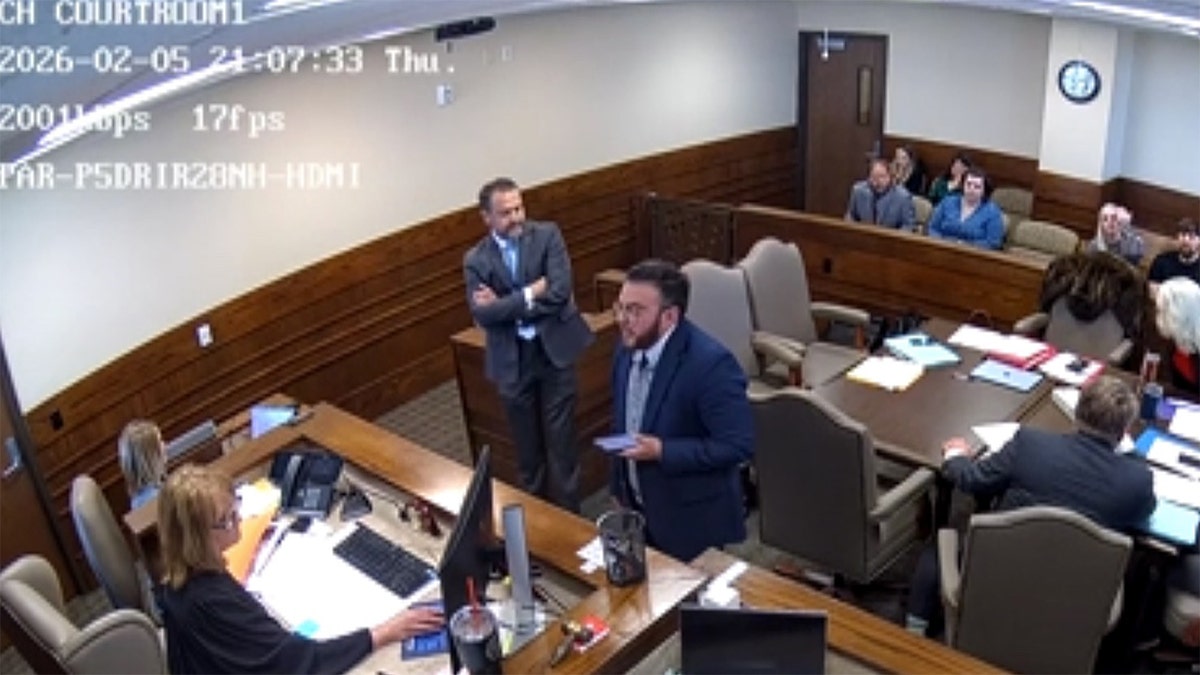
Rob Hopkins, a transgender lawyer in Oklahoma, was jailed for contempt during a procedural hearing in Ada, Oklahoma, last month after a viral meltdown. ( Oklahoma District Attorney’s Office, 22nd Prosecutorial District.)
Hopkins said he has since shuttered his law firm following the contempt charge and fallout from the hearing.
CLICK HERE TO DOWNLOAD THE FOX NEWS APP
He did not respond to Fox News Digital’s requests for comment regarding either the proceedings in question or the reason for his firm’s closure.
politics, crime world, donald trump, federal judges, us, fox news media, federal courts, judiciary

Los piqueteros anuncian cortes en los accesos a la Ciudad y en puntos de todo el país para pedir que no anulen un plan

Se vendió Loma Negra: Mindlin y fondos globales toman el control de la mayor cementera del país e invertirán USD 110 millones

Cómo fue el operativo secreto que montó Estados Unidos para rescatar a su piloto derribado en Irán

Fernando Diniz debuta en Corinthians contra Platense

Los empleados de la construcción recibirán un aumento alineado con la pauta del Gobierno: los detalles del acuerdo

Procesaron a Marcelo Porcel por los abusos sexuales a alumnos del colegio Palermo Chico

La Armada sorteará 30 lugares en el buque que escoltará la salida de la Fragata Libertad: cómo anotarse

La nueva advertencia de Donald Trump a Irán: «El tiempo se acaba, quedan 48 horas antes del infierno»

Círculo rojo: intrigas en el gabinete, desgaste por el caso Adorni y movimientos inquietantes en el Poder Judicial

AFAgate: el juez Armella le derivó la causa a su colega González Charvay, como pretendían Tapia

 INTERNACIONAL2 días ago
La nueva advertencia de Donald Trump a Irán: «El tiempo se acaba, quedan 48 horas antes del infierno»
- POLITICA1 día ago
Círculo rojo: intrigas en el gabinete, desgaste por el caso Adorni y movimientos inquietantes en el Poder Judicial
- POLITICA2 días ago
Créditos del Banco Nación: el Gobierno reveló que Pettovello echó a Massaccesi porque “mintió”