INTERNACIONAL
Law students eager to fight corrosive campus ‘cancel culture’ spreading nationwide

NEWYou can now listen to Fox News articles!
The Federalist Society’s National Lawyers Convention kicks off this week in Washington, D.C., where this year’s theme, «New Frontiers,» espouses everything from technological advances and the rise of AI to young people at the forefront of the conservative legal movement — hoping to underscore the importance of open debate, free speech and earnest engagement across the political aisle.
The event will spotlight law students from universities across the country, who are standing up for free speech and viewpoint diversity amid what they say is a rise in «cancel culture,» censorship issues and incidents of campus unrest that have prompted a crackdown on event speakers, or led to ostracization by peers or professors.
The students, who head up their local Federalist Society chapters at law schools across the U.S., face very different obstacles in advocating for free speech and open debate, though some more subtle than others.
As the next generation of lawyers prepares to join hundreds of fellow law students, future peers, and judges in D.C. for Thursday’s conference, each told Fox News Digital that they see the same challenge ahead for young conservatives: not just defending free speech, but redefining it — in an academic environment they say too often punishes dissent instead of encouraging open discussion.
CONTINUED COURT FIGHTS COULD PUT HARVARD IN UNWINNABLE POSITION VS TRUMP
An image of slain conservative commentator Charlie Kirk is placed at a memorial in his honor, at Utah Valley University in Orem, Utah. The State Department said it has revoked the visas of several foreigners over negative comments about Kirk’s assassination. (Jim Urquhart/Reuters)
Each of the students cited different attempts to intimidate speech or detract from attempts to engage with others in good faith that they’ve encountered — part of a broader pattern playing out at campuses nationwide.
Last month, administrators for New York University Law School canceled a pro-Israel legal scholar, Ilya Shapiro, from speaking at an event hosted by the Federalist Society chapter on Oct. 7.
Administrators had originally suggested that the group postpone the event date, citing concerns of protest and anticipated unrest. The students resisted and insisted on keeping the date, saying instead that relocating or postponing would amount to «giving in to the heckler’s veto.»
Public backlash ensued, and eventually administrators agreed to allow Shapiro to speak at the event as planned.
The unrest has only intensified in recent years, and the students cited instances of attempts to intimidate them or ostracize members, ranging from the subtle to overt.
At the University of Michigan, students gathered outside a Federalist Society event «taking notes of who was coming and going,» said Matthew Holmes, president of the chapter at the University of Michigan School of Law.
‘UNPRECEDENTED’ ANTISEMITISM PANEL TACKLES SURGING NATIONAL ISSUE
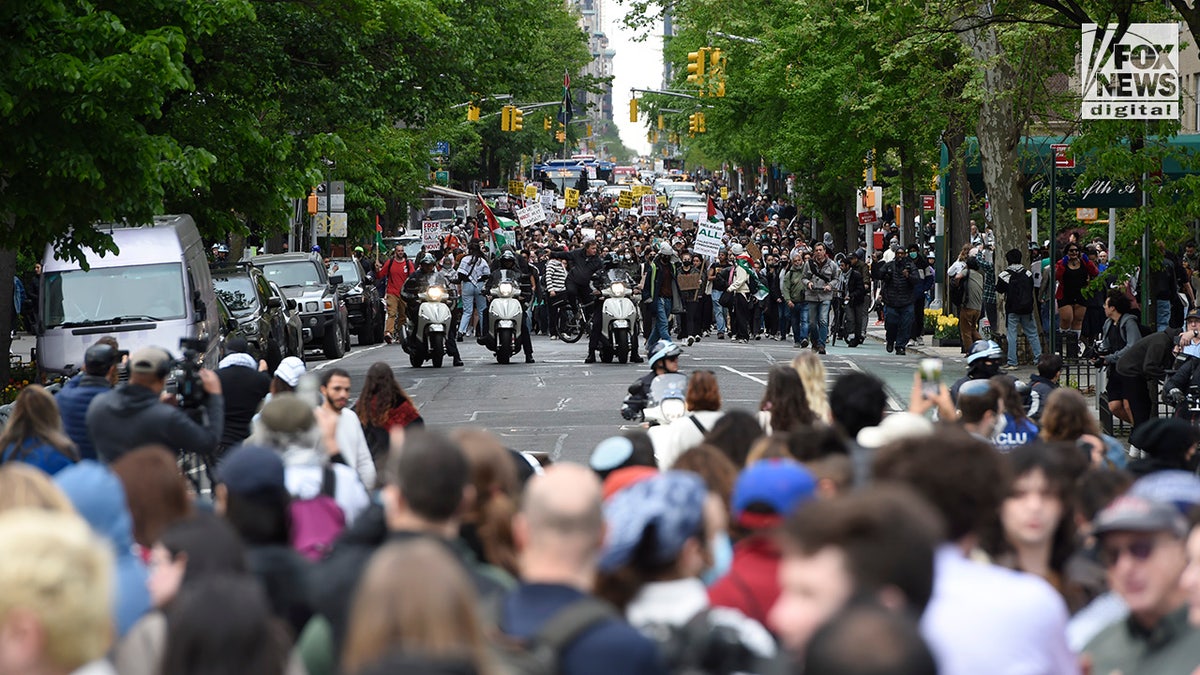
Anti-Israel protesters make their way down Fifth Avenue toward Washington Square Park in New York City on Friday, May 3, 2024. (Rashid Umar Abbasi for Fox News Digital)
«There are groups that tell their members, ‘If you go there, you’re not welcome at ours,’» he added.
Other incidents have targeted Jewish speakers and conservative viewpoints, prompting some to call it a growing culture of intolerance.
«We’re entering a new legal frontier,» said Jordan Holmes, a law student at the University of Texas at Austin, in a nod to this year’s convention theme.
«From AI to the courts, everything’s changing,» said Holmes, who heads up the university’s Federalist Society chapter. «But if people stop talking to each other, that’s when violence starts. We can’t let that happen.»
David Huang, who leads the Federalist Society chapter at Yale, echoed much of the same. Each of the law students separately spoke about the impact of Charlie Kirk’s assassination. Kirk was killed while speaking onstage at a university in Utah. His death sent shockwaves across the U.S., and especially on college campuses nationwide, where administrators and students alike cited increased fears of an uptick in violence.
Federalist Society presidents and other young conservatives interviewed after Kirk’s death cited concerns for their own safety and fears of a broader chilling effect if they avoid hosting controversial speakers or events that invite spirited debate.
NYU BLOCKS OCT. 7 CAMPUS TALK BY JEWISH CONSERVATIVE, CITING SECURITY CONCERNS
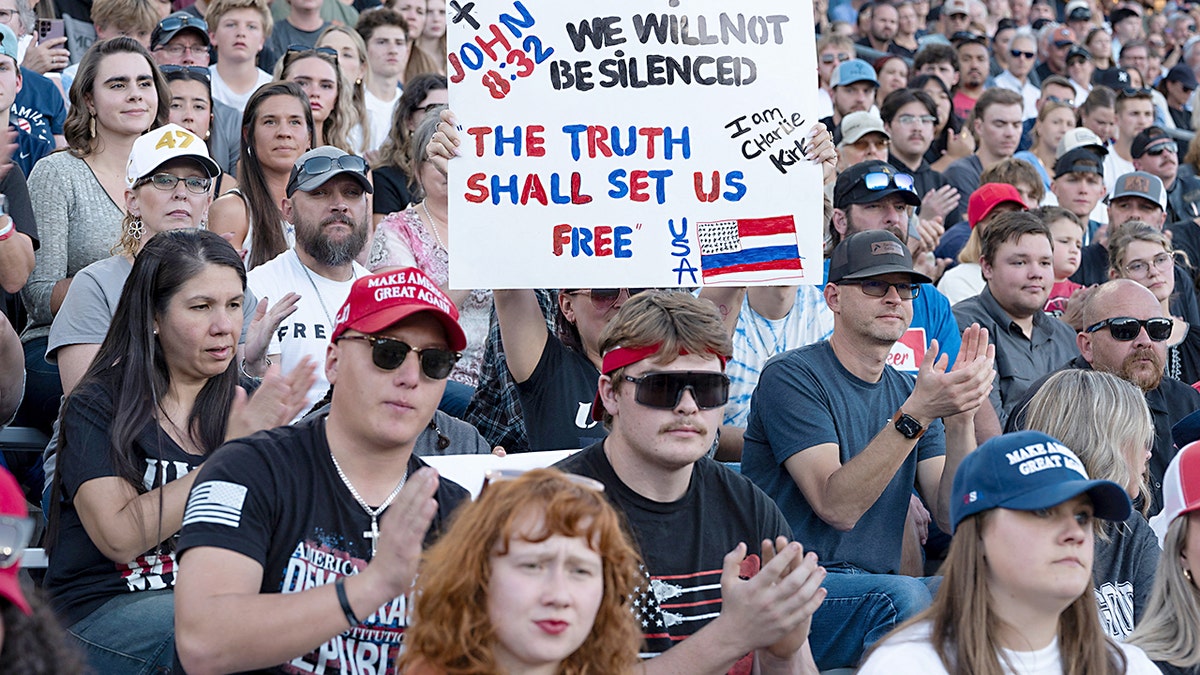
A woman holds a sign as people attend a vigil hosted by Turning Point USA for slain conservative activist Charlie Kirk at Colorado State University, on what was supposed be the next stop on his speaking tour, in Fort Collins, Colorado, U.S. September 18, 2025. (Cheney Orr/Reuters)
«I think that’s something that struck us all deeply,» Huang said of Kirk’s death, and the environment on campus. «The threat of political violence — especially against conservatives in law school, and college campuses — it’s something that’s very troubling to have in the back of your mind.»
But, he added, those fears were quickly put to rest by an event that the Yale Federalist Society chapter hosted just one day later, focused on the contentious topic of birthright citizenship. «It was one of our most controversial events of the semester,» Huang said. «I was worried. I asked for more security, but things went well, and we actually had the highest attendance we’ve had in years.»
«There’s this sentiment that attendance equals endorsement,» said Holmes.
He said of Kirk, «I think one of his best quotes is, ‘When people stop talking, that’s when violence starts.’ And I see a lot of people that are just unwilling to engage, that they don’t even see the opposition’s ideas of worthy of legitimacy, worthy of acknowledgment.»
At the end of the day, Holmes said, «this idea that I can’t even talk to you because your ideas are so repulsive — that just can’t last if we’re going to have a democratic republic.»
«I think other FedSoc presidents are reporting similar things happening, as people are realizing the importance of channeling our disagreements — into debates, into events, into speech — as opposed to violence.»
To be sure, students say these efforts still have a ways to go.
Still, they struck an optimistic tone about the future. Lamb noted her dean’s leadership and Texas’s political climate, while Holmes pointed to new civil discourse funding at the University of Michigan aimed at bringing students from across the ideological spectrum together for structured, earnest dialogue.
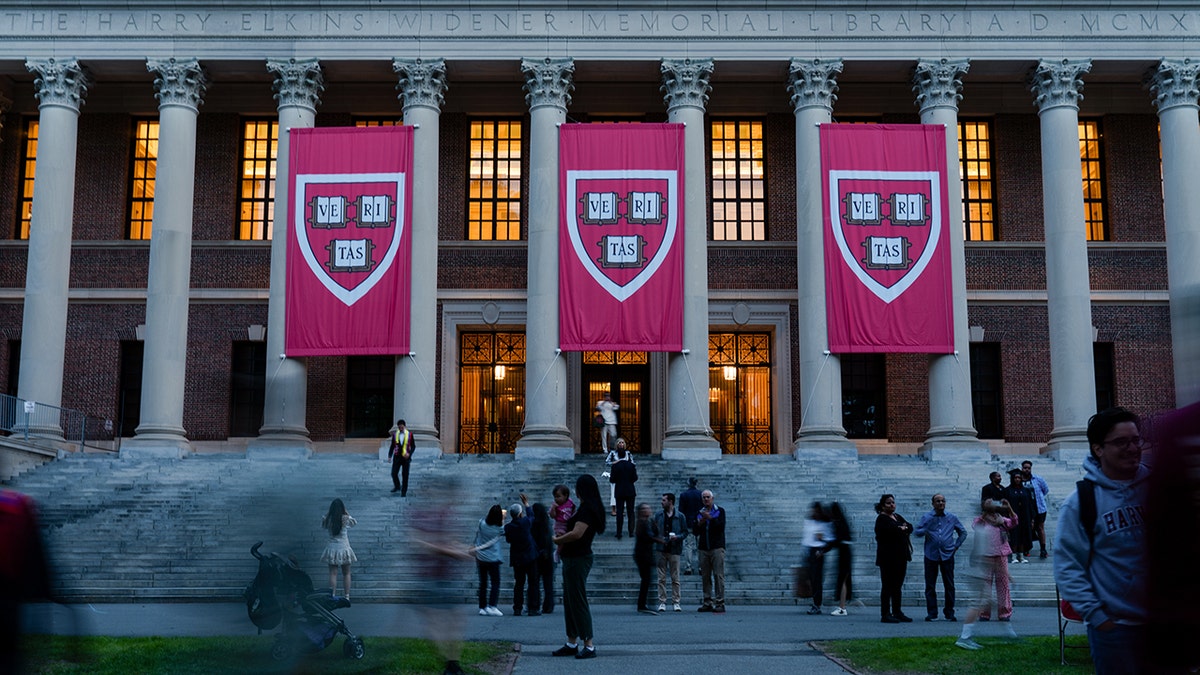
Banners on the Harry Elkins Widener Memorial Library at the Harvard University campus in Cambridge, Massachusetts, on May 27, 2025. (Sophie Park/Bloomberg)
«[What’s] so unique about the Federalist Society and its community is that people aren’t cynical towards looking towards the future,» Lamb said. «They’re energized. And in a world that so often tells young people to find something to be outraged about, it’s really refreshing to be around folks and students, attorneys, who are genuinely eager to think deeply about where the law is going and where we should go next.»
«Just this last week, we brought the Attorney General of Tennessee, Jonathan Scrametti, who had just won a landmark Supreme Court case regarding gender transition, surgeries, and chemicals for children,» Huang said.
«People hung up posters, brought them to events, saying Fed Soc invites child killers, and you know, people are well within their rights to express that disagreement — but that kind of irresponsible rhetoric is the sort of thing that raises the temperature in the national political sphere,» he continued.
«And I think we’re all too well aware of the consequences that can follow. How I’d prefer people to express their disagreement is simple,» Huang said. «Come, show up to the event and ask hard questions.»
CLICK HERE TO GET THE FOX NEWS APP
That was echoed by each of the students, who will each be participating in this year’s conference in public-facing ways.
The Federalist Society’s student division and rotating student chapter president will host a live event at this year’s conference where they interview judges about a passion, hobby, or interest — and its relation to the law. Holmes and Caroline Martin, the head of the Federalist Society’s chapter at the University of North Carolina School of Law, will host this year’s sit-downs.
The hope, organizers said, is to help personalize judges beyond their day jobs, and drive home the fact that they are people, underneath the strict courtroom procedures and heavy black robes.
«Come to the events, have your ideas challenged,» Holmes said of the Federalist Society chapters nationwide. «Feel free to push back. We really, really want to scrutinize ideas. Because when we do that, that’s when we draw the best conclusions.»
campus controversy,first amendment,donald trump,politics,supreme court





INTERNACIONAL
Insólito: un esquiador británico terminó la Copa del Mundo de Oslo bajo los efectos del alcohol
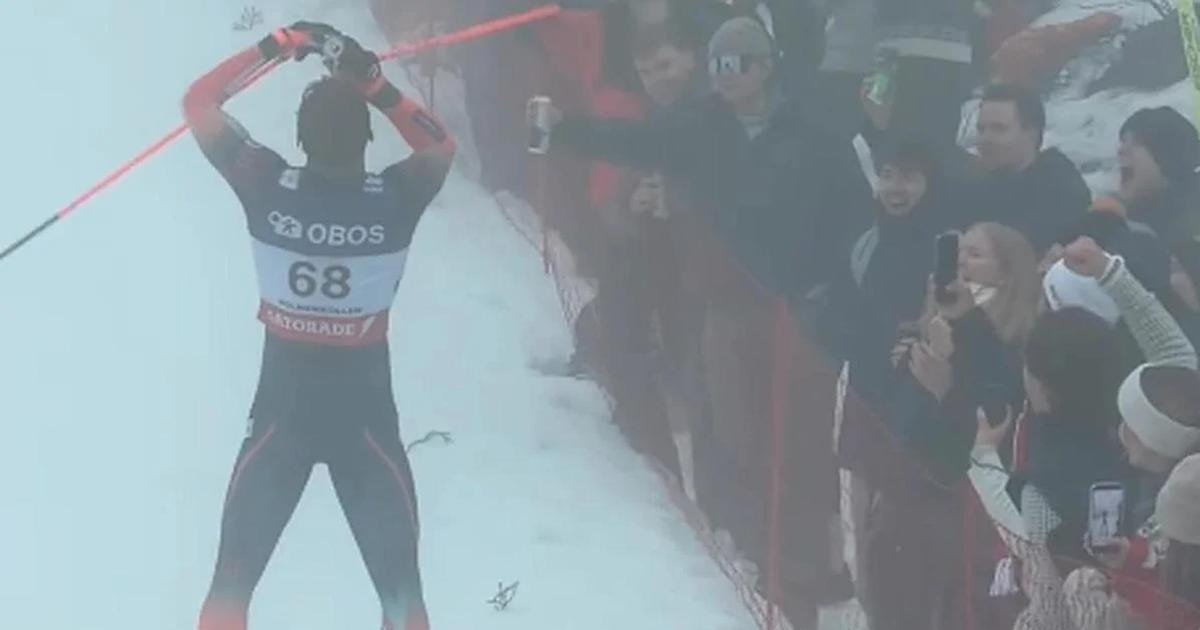
Gabriel Gledhill, esquiador británico de 23 años, cruzó la meta en la Copa del Mundo de Oslo tras aceptar bebidas alcohólicas del público durante toda la prueba. En los cincuenta kilómetros estilo libre de esquí de fondo, terminó en el puesto 67 y el deportista reconoció que bebió entre diez y doce cervezas antes de llegar a la meta. El incidente cobró notoriedad viral y desató un debate sobre los límites del espectáculo en el ámbito profesional.
El atleta, nacido en Inglaterra y residente en Noruega desde hace cinco años, explicó el contexto de su accionar a la agencia noruega de noticias NTB. Durante la competencia, aceptó todas las bebidas que recibió, consciente de que podría tratarse de la última vez que participaba en el circuito noruego de esquí de fondo por razones vinculadas a su situación migratoria. El atleta admitió: “Me ofrecieron mucha cerveza y alcohol durante el recorrido, por lo que terminé bastante borracho, pero fue muy divertido”. Además, reveló que también aceptó snus —un tipo de tabaco húmedo sueco— y hasta enjuague bucal, lo que le provocó vómitos durante buena parte del recorrido.
La permanencia del esquiador en Noruega se encuentra en riesgo, ya que las autoridades locales rechazaron su solicitud de residencia permanente por motivos económicos. El deportista enfrenta la posibilidad de abandonar el país antes del 28 de marzo, fecha en la que vencerá su permiso actual. Según sus propias palabras: “Significaría el fin de mi carrera. Mi entorno de entrenamiento se encuentra íntegramente en Lillehammer. Si tengo que irme del país ahora, tendría que abandonar el esquí de fondo y retirarme de este deporte”, declaró a NTB.

El comportamiento del atleta provocó duras críticas entre colegas y seguidores del deporte. Durante la carrera, el esquiador fue adelantado por competidoras de la rama femenina, algo poco frecuente en la competencia masculina debido a las diferencias de desarrollo y ritmo entre los circuitos masculinos y femeninos, lo que intensificó las dudas sobre su desempeño y actitud.
El portal deportivo español MARCA recogió la opinión de Petter Soleng Skinstad, exesquiador y comentarista de televisión: “A Gledhill le encanta ser el centro de atención en las redes sociales y la televisión. Pero hay un límite para lo que resulta entretenido. Creo que ese límite se ha alcanzado”.
Por su parte, el británico defendió que su comportamiento no perjudicó a los demás ni alteró el desarrollo de la jornada. Destacó que para él la carrera representó un momento especial vinculado a una posible despedida y “podría ser mi última carrera aquí, así que tuve que aceptar todas las ofertas de cerveza y alcohol que hicieron”, sentenció ante NTB.
La jornada no estuvo exenta de polémica entre seguidores y responsables del circuito internacional: la controversia alcanzó a entrenadores y dirigentes deportivos, quienes insistieron en la necesidad de preservar la integridad y el respeto en el esquí de fondo profesional.

La red social Instagram, a través de la cuenta oficial de la Copa del Mundo de Esquí de Fondo, publicó un video del atleta británico con una cerveza en la mano. En el mensaje, se optó por destacar su humor y la visibilidad que aportó al circuito internacional: “Hoy también fueron los últimos 50 km para un chico que se ha convertido en alguien reconocido en el esquí de fondo. Gracias por destacar esta actitud, Gabriel, y por traer tu humor, aura y visibilidad al esquí de fondo”.
Según MARCA, el incidente llevó al británico a convertirse en un personaje mediático dentro de la disciplina, tanto por su desempeño como por el episodio protagonizado en Oslo, lo que reavivó el debate sobre la profesionalidad y los límites del espectáculo en la alta competencia.
La conducta de Gledhill abrió interrogantes sobre posibles sanciones o futuras regulaciones relativas al consumo de alcohol en las pruebas de esquí de fondo. Hasta ahora, no se han anunciado medidas específicas.
El deportista, mientras tanto, enfrenta un futuro incierto ante la posibilidad de dejar Noruega en los próximos días. Agradeció el apoyo recibido y manifestó su intención de continuar en el esquí de fondo, ya sea en Noruega o en otro país, si no logra revertir su situación migratoria.
deportes de invierno,Juegos Olímpicos,Milano Cortina 2026,esquí,atleta,celebración,nieve,competencia,pista,aficionados
INTERNACIONAL
Google Gemini declares only GOP senators violate hate speech policy, zero Democrats, author claims

Google admits role in Biden censorship push
Rep. John Cornyn, R-Texas, joins ‘The Faulkner Focus’ to react after Google acknowledged pressure from the Biden administration to censor accounts over political views, and weighs in on anti-ICE rhetoric following a violent attack in Dallas.
NEWYou can now listen to Fox News articles!
EXCLUSIVE: Google’s AI chatbot Gemini flagged several Republicans — but no Democrats — when asked to identify senators who have made statements that violate its hate speech policies, author Wynton Hall told Fox News Digital. It’s just one example of what the author believes is a deeply ingrained bias against conservatives found in artificial intelligence tools.
Hall used the «deep research» function on Google’s Gemini Pro. Fox News Digital reviewed a screen recording of Hall’s prompt and findings. Google did not immediately respond to Fox News Digital’s request for comment.
One of the Republicans flagged by Gemini in Hall’s research, Sen. Marsha Blackburn, of Tennessee, was listed for characterizing «transgender identity as a harmful cultural ‘influence’ and has used ‘woke’ as a derogatory slur against protected groups.» Another, Arkansas’ Sen. Tom Cotton, was cited for cosponsoring legislation «to exclude transgender students from sports.»
MUSK, XAI TOUT NEWEST GROK UPDATE AS ONLY ‘NON-WOKE’ PLATFORM: ‘DOESN’T EQUIVOCATE’
Hall argues that artificial intelligence is biased in his new book «Code Red: The Left, The Right, China and the Race to Control AI.» (Wei Leng Tay/Bloomberg/Getty Images)
The finding stood out against a backdrop of inflammatory rhetoric from some Democrats in recent years.
In 2023, Rep. Dan Goldman, D-N.Y., warned that then-candidate Donald Trump was «destructive to our democracy» and needed to be «eliminated.» However, he quickly apologized for his comments, claiming that it was a «poor choice of words.»
Last year, Texas Democratic House candidate Rep. Jolanda Jones made a throat-slashing gesture while rejecting former first lady Michelle Obama’s famous mantra, «when they go low, we go high,» on CNN’s «Outfront.»
«If you hit me in my face, I’m not going to punch you back in your face. I’m going to go across your neck,» Jones said while making a slashing motion across her neck. «We can go back-and-forth, fighting each other’s faces. You’ve got to hit hard enough where they won’t come back,» she added.
But for Hall, Gemini’s seemingly partisan answer underscored the central argument of his new book, «Code Red: The Left, The Right, China and the Race to Control AI.» In it, he argues that AI systems marketed as neutral are increasingly shaped by the ideological assumptions of the people and institutions who create them, which are far from neutral.
His book starts out with a clear example.
Less than 10 weeks before the 2024 election, a series of viral videos appeared to expose a strange double standard in American homes. When users asked Amazon’s Alexa why they should vote for Kamala Harris, the device delivered a polished endorsement. When asked why they should vote for Donald Trump, Alexa declined, citing a policy of neutrality.
«I cannot provide content that promotes a specific political party or a specific candidate,» Alexa said.
Hall says the concern extends beyond a single Gemini output.
«AI’s Silicon Valley architects lean left politically, and their lopsided political donations to Democrats underscore their ideological aims,» Hall told Fox News Digital.
To Hall, episodes like this show how AI can shape political perceptions while maintaining the appearance of objectivity. «Through algorithm throttling and shadow bans, Big Tech centralized control over which voices soar and sink across social networks. Now AI has put Big Tech’s consolidating control on steroids,» he writes.
WHAT IS ARTIFICIAL INTELLIGENCE?
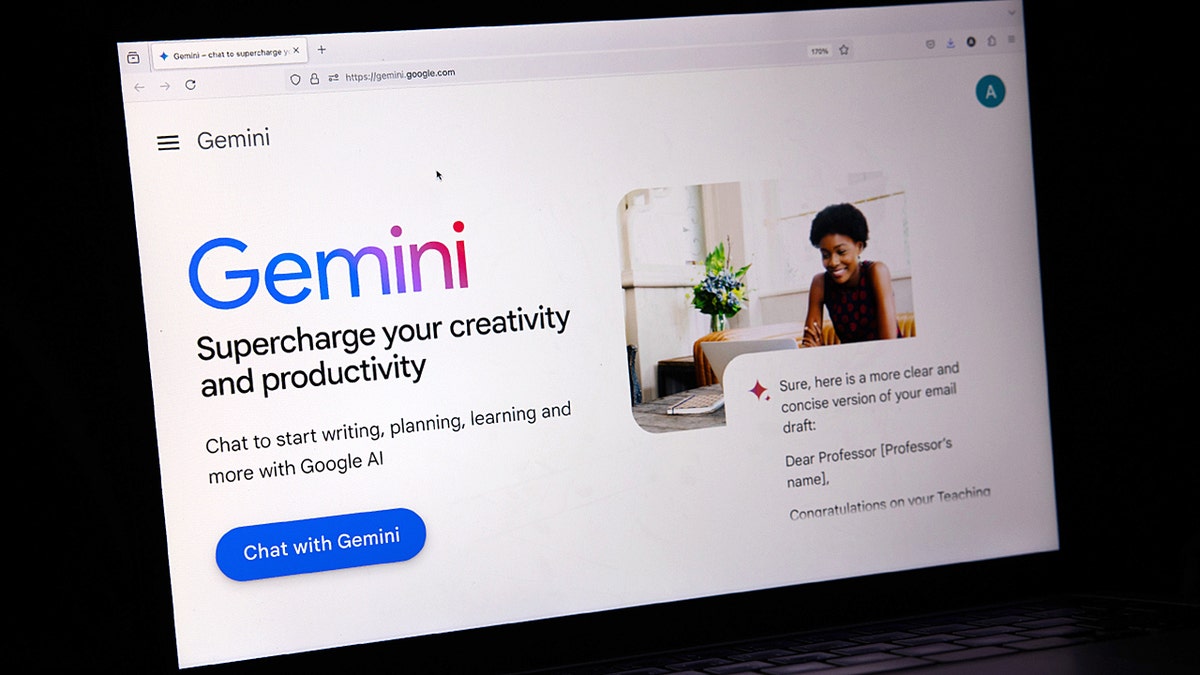
Hall alleges Google Gemini flagged Republican senators’ rhetoric as hate speech while identifying no Democratic violations, raising questions about AI bias. (Andrey Rudakov/Bloomberg via Getty Images)
He argues that this imbalance reflects the politics of the people building the systems. The billionaires driving the AI revolution, he says, invest their money and political energy where their values lie. As PayPal co-founder Peter Thiel once put it, «Silicon Valley is a one-party state.»
The money appears to bear that out. According to Hall, 85% of political donations from employees at Apple, Meta, Amazon and Google go to Democrats.
After Trump’s 2024 victory, major tech companies made the customary $1 million inauguration donations. But Hall argues those gestures did little to hide where Silicon Valley’s loyalties had long been. Aside from Elon Musk, he says, most of Big Tech’s leading figures remained firmly on the left.
Hall points to Democratic fundraising in 2024 as evidence of Silicon Valley’s political influence, citing major support from figures including Bill Gates, Melinda French Gates, Reid Hoffman and Laurene Powell Jobs.
But Hall argues the bigger issue is not campaign money.
It is the growing influence of AI systems that many people assume are neutral and objective. He warns that users often trust those answers too much, even when they may be biased.
CLICK HERE TO DOWNLOAD THE FOX NEWS APP
To Hall, this bias is reinforced by the relationship between tech companies and legacy media. He argues AI systems are trained on enormous amounts of content from outlets such as The New York Times, The Atlantic and Reuters, while conservative outlets are largely excluded.
The result, he says, is a closed loop: AI absorbs the assumptions of legacy media and repackages them as objective truth. Hall argues conservatives must respond by demanding transparency in training data and ending taxpayer-funded contracts for vendors whose systems show political bias.
«Whoever wins the AI fairness battle,» Hall concludes, «will shape the minds and political attitudes of future generations. The time to act is now.»
technology,artificial intelligence,politics
INTERNACIONAL
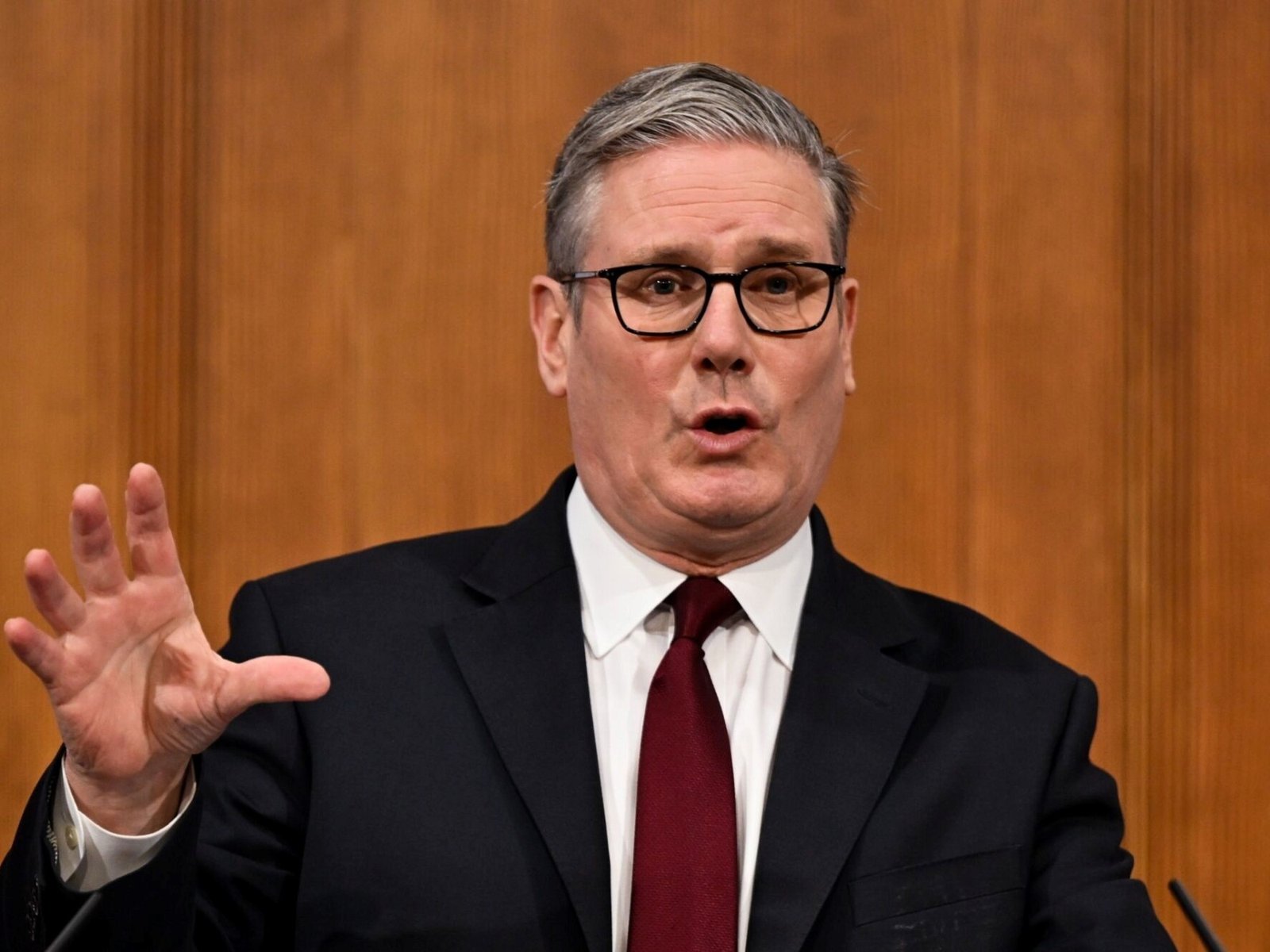
Starmer le responde a Trump por Ormuz: «Gran Bretaña no se verá envuelta en una guerra a gran escala con Irán»
Las amenazas de Trump
«No lo he decidido»
Alemania: «No es nuestra guerra»
El precio del petróleo
Ayudas para calefacción

Adorni denunció un complot interno y Santiago Caputo teme que le quiten el control de la SIDE y ARCA

El Gobierno registró un nuevo superávit financiero en febrero

Sergio Romero, el portero con más partidos en la selección argentina, se retira del fútbol

Argentina reclamó ante la ONU la liberación inmediata de Germán Giuliani tras casi 300 días de detención en Venezuela

Nico Occhiato anunció la noticia más linda de su vida a sus 33 años: «Nuevo capítulo, en la historia de NDN»

Insólito: un esquiador británico terminó la Copa del Mundo de Oslo bajo los efectos del alcohol

Morena Rial salió de la cárcel y se conoció escalofriante dato que involucra a Jorge Rial: «Me pidió que me hiciera cargo»

Emanuel Noir, de Ke Personajes, anunció que dejará las redes sociales: “Una búsqueda mayor a la que creí, apareció”

Cuánto subirán las jubilaciones y pensiones en abril después del dato de inflación que sorprendió

La fuerte exigencia a Mauro Icardi para poder ver a sus hijas con Wanda Nara: “A Maurito se lo va a multar si no lleva a las menores al colegio”

 CHIMENTOS2 días ago
La fuerte exigencia a Mauro Icardi para poder ver a sus hijas con Wanda Nara: “A Maurito se lo va a multar si no lleva a las menores al colegio”
- POLITICA2 días ago
BOMBAZO – Guerra abierta: Feinmann y Rossi contraatacan tras la denuncia de Victoria Villarruel
- SOCIEDAD3 días ago
Video: así fue el feroz temporal que azotó Tucumán y causó inundaciones, rutas cortadas y suspensión de clases