INTERNACIONAL
Leading Canadian conservative says Ottawa should remove all tariffs as ‘Liberation Day’ arrives

OTTAWA – As Canadians brace themselves for President Donald Trump’s «Liberation Day» of reciprocal tariffs on Wednesday, one political leader in Canada believes it could spark the start of a new era of Canada-U.S. relations free of cross-border taxes.
Maxime Bernier, who served as foreign affairs minister in former Prime Minister Stephen Harper’s Conservative government and now heads the right-wing People’s Party of Canada (PPC), told Fox News Digital in an interview from Halifax that it is «absolutely» the time for Canada to remove all tariffs against the U.S.
He said the 25% duties the Canadian government, under then-Liberal Prime Minister Justin Trudeau, imposed on the U.S. in early February to counter Trump’s 25% tariffs against Canada «won’t hurt the Americans – it is hurting Canadians.»
New Canadian Prime Minister Mark Carney said in a statement following his March 28 call with the president – the first contact between both leaders since Carney was elected Liberal leader by his party nearly three weeks before – that Canada would implement retaliatory tariffs in response to Wednesday’s U.S. «trade actions.»
TRUMP’S 11TH WEEK IN OFFICE SET TO FOCUS ON TARIFFS AS PRESIDENT TOUTS ‘LIBERATION DAY’
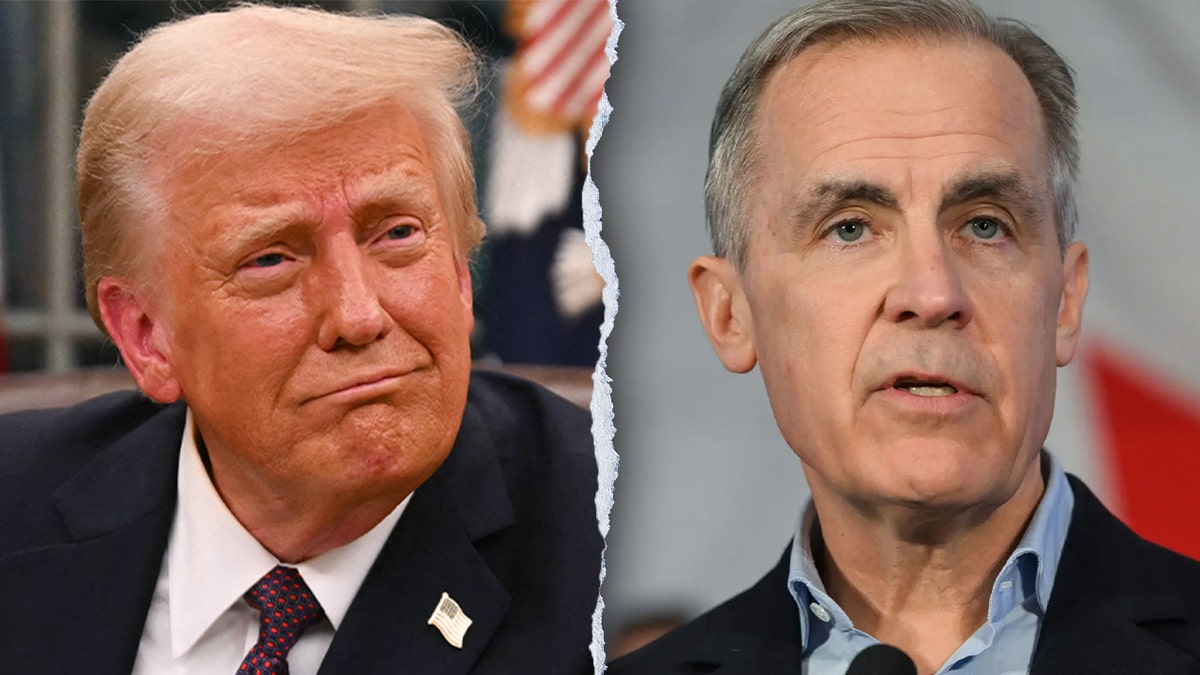
President Donald Trump, left, and Canadian Prime Minister Mark Carney. (Getty Images)
The PPC leader said that Trump should be told that «the real reciprocal response» to tariffs is «zero on our side, zero on your side.»
Bernier said that instead, Carney and his main rival, Conservative Party Leader Pierre Poilievre, are being «fake patriots using a dollar-for-dollar trade war against Trump» and telling Canadians: «That’s the best thing to do.»
«We cannot impose counter-tariffs,» said Bernier, who also served as industry minister in the Harper government.
«The Americans are 10 times bigger than us. We won’t win a trade war,» he said, underscoring that retaliation will lead to a recession in Canada.
Former Canadian Conservative politician Tony Clement, who served alongside Bernier in Harper’s Cabinet, told Fox News Digital that «from an economic point of view,» removing Canadian tariffs «makes a lot of sense» and «may come to that at some point, but the public isn’t there right now.»
«From a point of view of the emotional wounds of Canadians created by Trump and his annexation talk and tariffs, I’m not sure that a political voice would survive if it went down that public-policy route,» said Clement, a former Canadian industry minister in the Harper government.
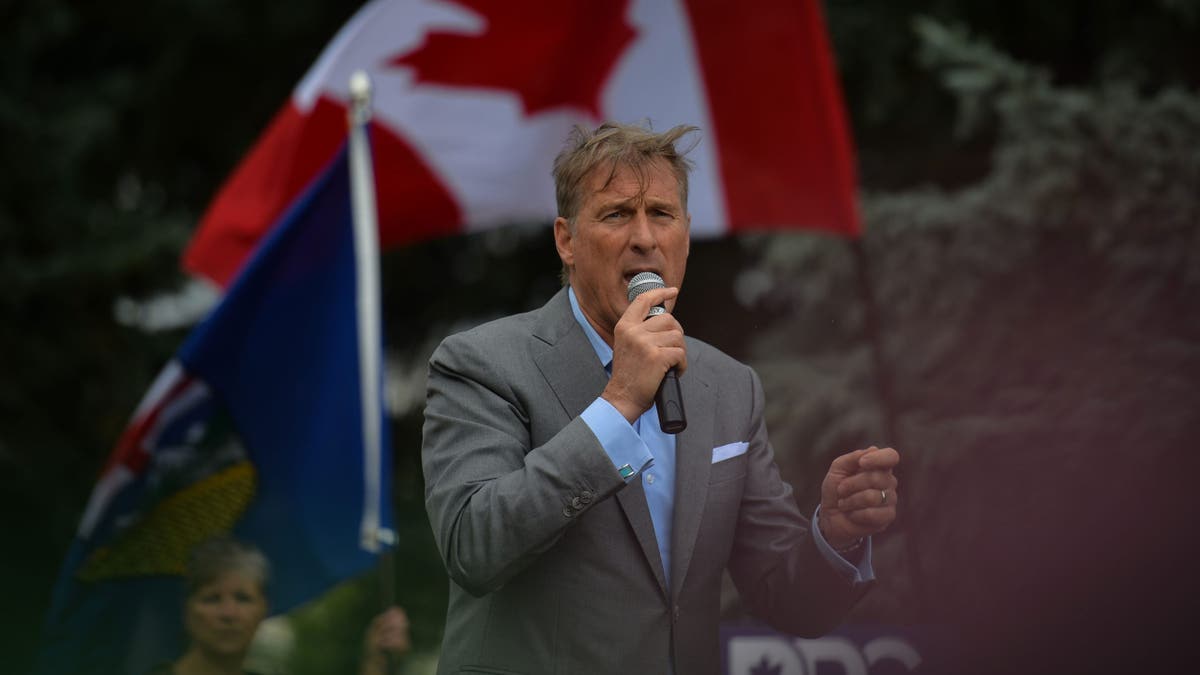
Maxime Bernier, leader of the People’s Party of Canada, meets with his supporters at an election rally in Borden Park on Saturday, Sept. 11, 2021 in Edmonton, Alberta, Canada. (Artur Widak/NurPhoto via Getty Images)
«The mood of the people is outrage. I’ve never seen people in Canada this incandescently mad at the United States,» he said, who is campaigning in the Toronto area for Poilievre’s Conservative Party ahead of the April 28 general election. «There is complete distrust of whatever Trump says because it can change within 24 hours.»
He said that both Poilievre and Carney have highlighted the importance of removing «the specter of tariffs for a long period of time – if you can trust Trump to be a bona fide negotiator.»
Eliminating Canadian tariffs, without a quid pro quo from Trump, could «show weakness to a bully,» added Clement, who, prior to entering federal politics in 2006, served as a Cabinet minister in former Ontario Premier Mike Harris’ Progressive Conservative government.
MARK CARNEY WINS LIBERAL PARTY NOMINATION TO REPLACE TRUDEAU AS CANADA’S NEXT PM
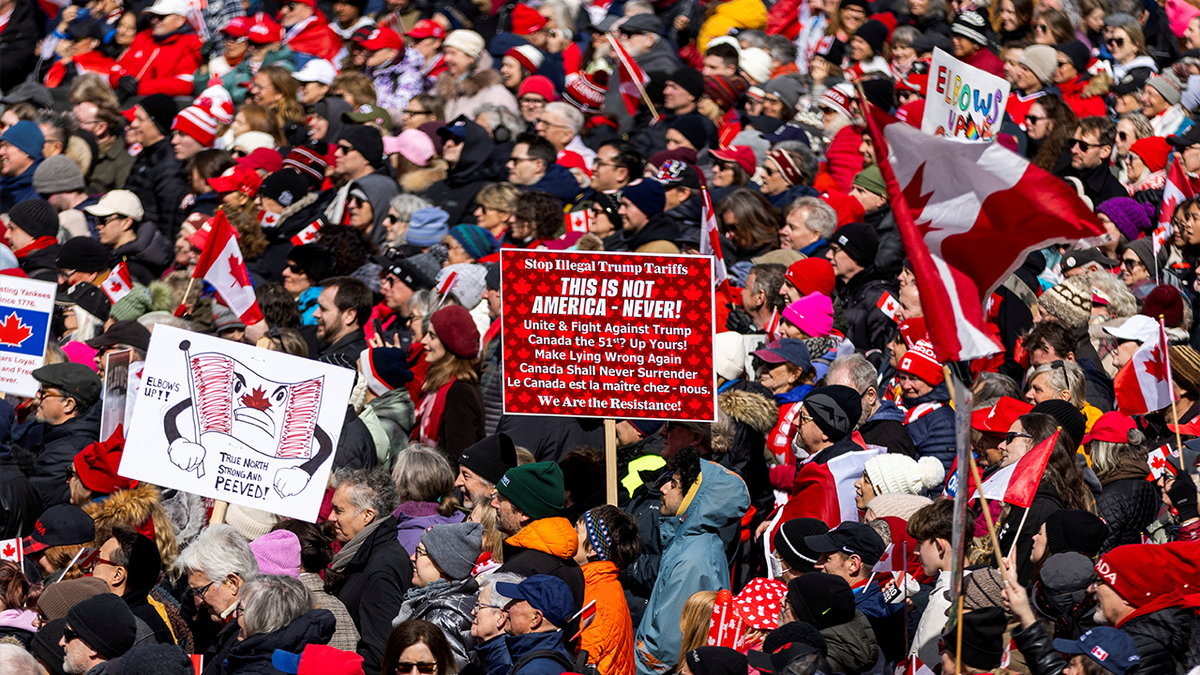
Canadians hold an «Elbows Up» protest against U.S. tariffs and other policies by U.S. President Donald Trump, at Nathan Phillips Square in Toronto on March 22, 2025. (REUTERS/Carlos Osorio)
In the statement released following his recent conversation with Trump, Carney said that both leaders «agreed to begin comprehensive negotiations about a new economic and security relationship immediately following the election.»
Conservative strategist Yaroslav Baran, who served as communications chief for Harper’s successful Conservative 2004 leadership campaign, and director of war room communications for the Harper-led Tories during the 2004, 2006 and 2008 federal election campaigns, told Fox News Digital that under the United States-Mexico-Canada Agreement (USMCA), «trade in goods and services ought to be tariff-free» between Canada and the U.S., excluding carveouts on the Canadian side for dairy, eggs, poultry and softwood lumber.
However, Baran added that he «can’t see the removal of all Canadian tariffs on U.S. products as long as the U.S. has tariffs on Canadian products.»
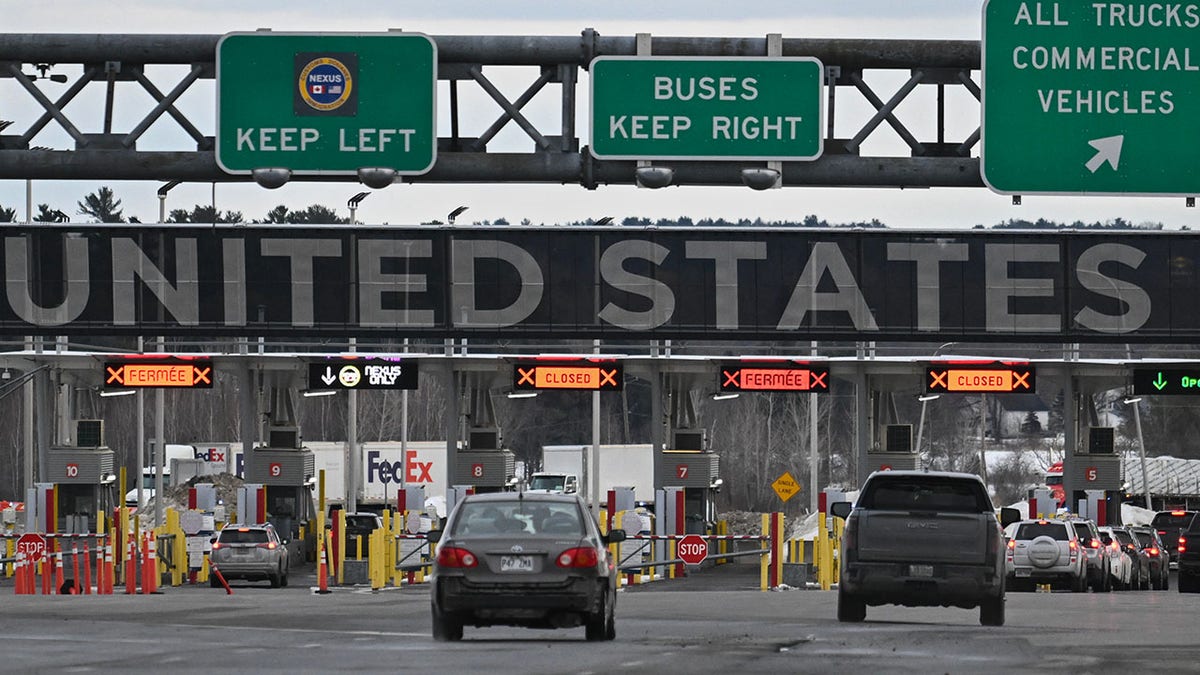
Vehicles in line to cross into the United States at the Canada-U.S. border in St-Bernard-de-Lacolle, Quebec, Canada, on Thursday, March 6, 2025. President Donald Trump exempted Canadian goods covered by the USMCA from his 25% tariffs, offering major reprieves to the U.S.’ two largest trading partners. (Graham Hughes/Bloomberg via Getty Images)
Bernier acknowledged that while Trump’s tariffs will hurt Canadian exporters to the U.S., «the solution is to have a more productive economy with real free-market reforms» in Canada through such measures as lowering corporate taxes, promoting internal trade and fostering growth in the country’s oil and gas industry, all of which are featured in the PPC’s election platform that includes the establishment of a «Department of Government Downsizing» to abolish «ideologically motivated programs that promote wokeism,» not unlike the Elon Musk-led Department of Government Efficiency.
The PPC leader also said that Canada should be willing to «put everything on the table» under the USMCA «right now» and before the trilateral trade deal is scheduled for a joint review next year.
CLICK HERE TO GET THE FOX NEWS APP
According to Bernier, that should include ending the «cartel» of supply management that sets quotas and prices, and protects Canada’s dairy, poultry and eggs sectors from foreign competition, which he described as «a communist system» that finds Canadians paying twice the price of those agricultural products than Americans do in the U.S., and which also imposes duties – ranging from 150% to 300% — on U.S. imports of the same products beyond limits agreed to but yet to be reached under the USMCA.
During the renegotiation of the North American Free Trade Agreement in 2018 that led to the USMCA, the first Trump administration sought to have Canada’s supply management system eliminated.


Trump pressures Iran amid Strait of Hormuz tensions, calls for ‘real agreement’
President Trump pressures Iran as traffic slows in the Strait of Hormuz, emphasizing that a ‘REAL AGREEMENT’ is needed. VP Vance, Witkoff, and Jared Kushner are set to hold peace talks with Iran in Pakistan this Saturday, April 11, 2026. The administration explores potential punishment for NATO allies that did not support the Iran war effort, amid concerns about a fragile Mideast ceasefire and ongoing regional instability.
NEWYou can now listen to Fox News articles!
Israeli authorities arrested a 22-year-old Haifa resident for his involvement in an Iranian-backed plot to assassinate a high-ranking Israeli official, with the intended target believed to be former Prime Minister Naftali Bennett, reports say.
Ami Gaydarov, 22, was arrested last month on suspicion that he was working with an Iranian agent to gather intelligence and build a bomb for use in a terror plot against a high-ranking Israeli official. Gaydarov was unaware of the target’s identity. A gag order on his arrest was recently lifted, allowing Israeli media outlets to report on the case.
Authorities said Gaydarov first made contact with his Iranian handler in August 2025 and was paid roughly $23,000 — most of it in cryptocurrency — to carry out tasks in preparation for the assassination plot.
Gaydarov allegedly rented an apartment in the city’s downtown area to serve as a laboratory for the bombs.
TOP IRANIAN OFFICIAL, COMMANDER KILLED IN STRIKE, ISRAEL DEFENSE MINISTER SAYS
Ami Gaydarov was arrested on March 9 by Israeli authorities on suspicion of working with Iranian handlers to harm a high-ranking official. (Israeli Police)
«To facilitate the contacts with his handlers, Gaidarov purchased dedicated phones and rented an apartment in Haifa where he produced the explosive substance, while documenting his activities in videos and photos that were sent to his handler as proof of compliance,» the Israeli police force said.
In connection with the plot, Israeli authorities have also arrested three other suspects, including Sergey Leibman and Edward Shovtiuk. The fourth suspect has not been named. Authorities said indictments for the four suspects should occur in the «coming days.»
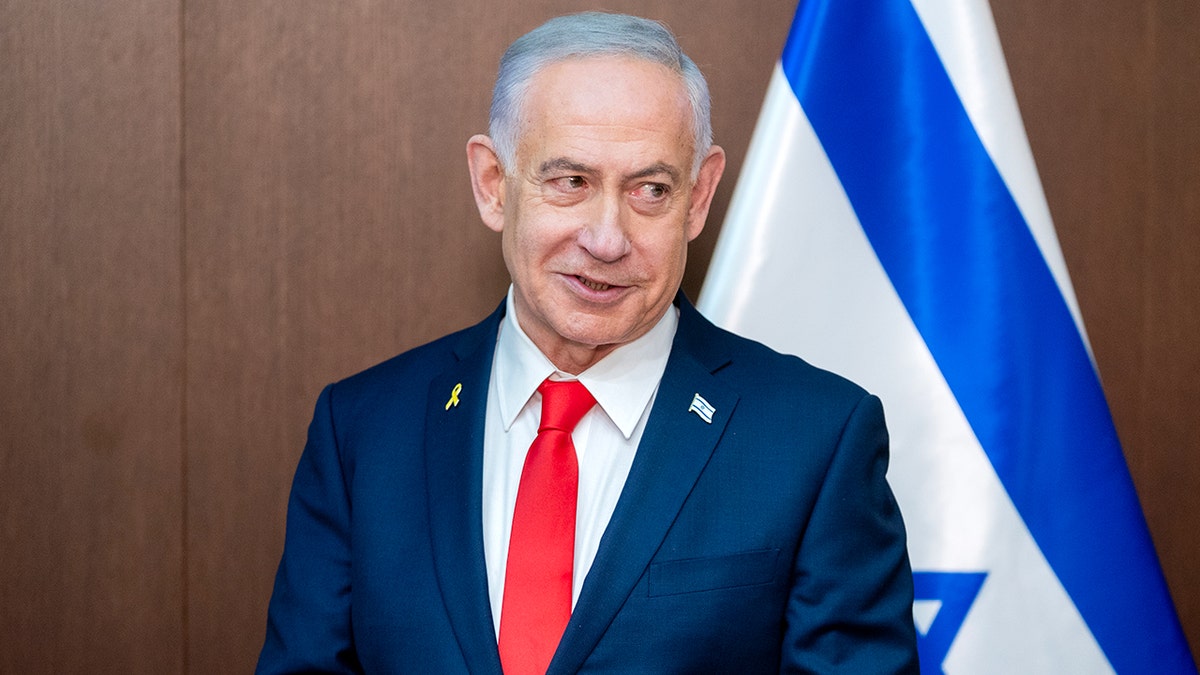
Israeli Prime Minister Benjamin Netanyahu meets with U.S. Vice President J.D. Vance at the Prime Minister’s Office on October 22, 2025, in Jerusalem, Israel. (Nathan Howard/Pool/Getty Images)
The terror plot was uncovered as part of Israel’s «Operation Roaring Lion,» a major military campaign launched against Iran on February 28, coinciding with the start of the war with Iran.
The arrest of the four men comes as Israeli authorities have won more than 40 indictments against more than 60 defendants working on behalf of the Iranian government. Just two months ago, Israeli Prime Minister Benjamin Netanyahu ordered that the citizenship of Israelis convicted of espionage for Iran be stripped of their citizenship.

Illustration shows a missile launch from Iran with the country’s flag in the background. (iStock)
CLICK HERE TO DOWNLOAD THE FOX NEWS APP
Since the outbreak of the war with Iran, pro-Iranian attacks linked to radical groups have been on the rise. Just last week, French officials reported that a pro-Iran group was behind a failed bomb plot on a Bank of America office in Paris.
israel, world, benjamin netanyahu, counter terrorism, terrorism, iran
INTERNACIONAL
ICE says more criminal migrants arrested on 1-year anniversary of program to support victims of migrant crime
Angel families speak out at ICE event
WARNING – GRAPHIC FOOTAGE: Fox News congressional correspondent Bill Melugin reports on the pain the relatives of victims of violent crimes by illegal immigrants still feel as expressed at an event marking the relaunch of a family support program on
NEWYou can now listen to Fox News articles!
Immigration and Customs Enforcement announced on Thursday it had arrested more alleged illegal migrants who have been convicted of various crimes, which coincides with the one-year anniversary of the agency reopening its program to support victims of migrant crime. The arrests and convictions described by ICE have not been independently verified.
ICE’s Victims of Immigration Crime Engagement (VOICE) Office was relaunched on April 10, 2025, aiming to offer resources to victims of crimes committed by illegal migrants and the victims’ families.
The program was first launched in 2017 under President Donald Trump’s first administration but was replaced in 2021 by the Victims Engagement and Services Line, a different program under the Biden administration before it was relaunched last year after Trump returned to office.
ICE said the anniversary of the program’s reopening comes just after multiple arrests were made on Wednesday of suspected illegal migrants convicted of crimes such as injury to a child, assault and robbery. ICE did not specify whether the individuals were newly arrested or transferred from local custody following prior convictions, nor did it provide dates for the underlying convictions.
ICE DETAINER LODGED FOR ILLEGAL MIGRANT ACCUSED OF MURDERING 15-YEAR-OLD MISSOURI BOY WHO BEGGED FOR HIS LIFE
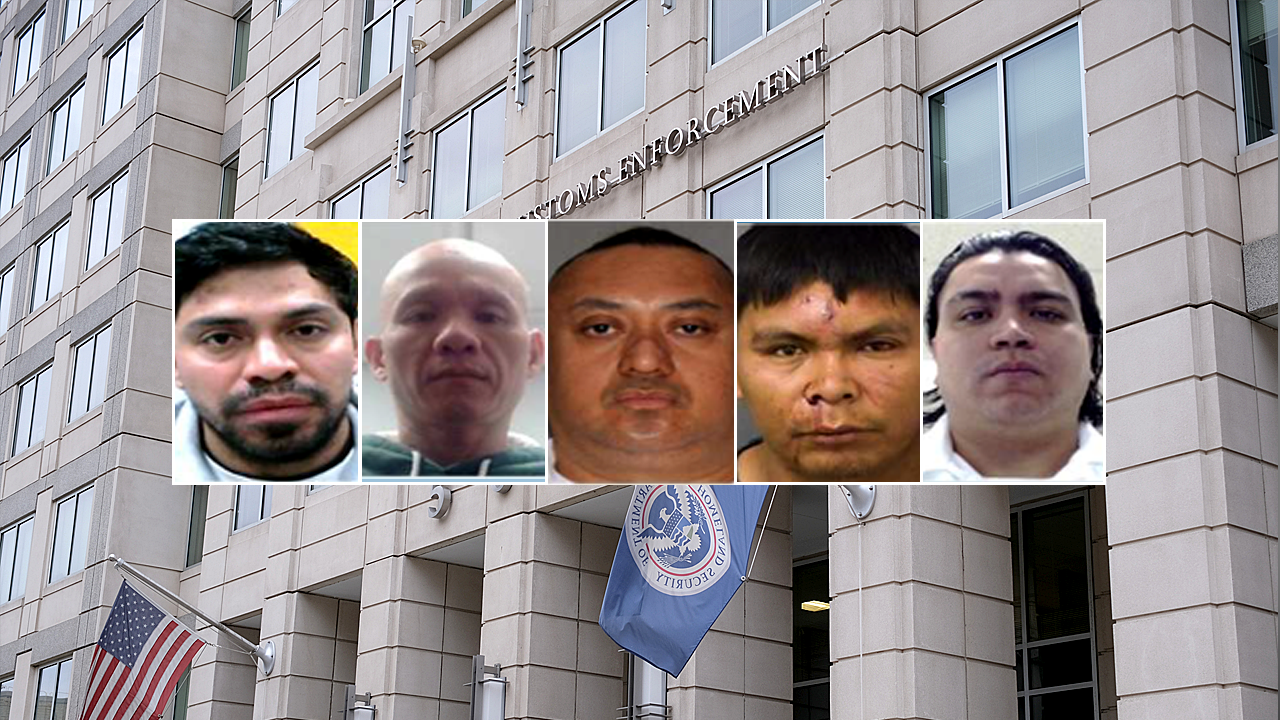
Juan Lorenzo Hurtado-Flores, Vu Nguyen, Omar Alexander Rodriguez-Grande, Oscar Fransisco and Josue Coreas-Chavez. (ICE:Getty Images)
«The brave men and women of ICE law enforcement continue to target criminal illegal aliens in our communities to prevent another American from being raped, maimed, or murdered by an illegal alien who should have NEVER been in our country. The American victims are [why] we fight,» Department of Homeland Security Acting Assistant Secretary of Public Affairs Lauren Bis said in a statement to Fox News Digital.
«Yesterday, ICE arrested multiple violent assailants, including one depraved monster who injured a CHILD. With every arrest, ICE is making American communities safer. We will never stop fighting for justice for the victims of illegal alien crime,» Bis continued.
The agency offered a sample of some of the arrests. ICE did not say how many total individuals were arrested nationwide as part of this announcement.
DHS PREPS DEPORTATION OF ALLEGED MS-13 GANG MEMBER WANTED FOR PASTOR’S MURDER IN EL SALVADOR
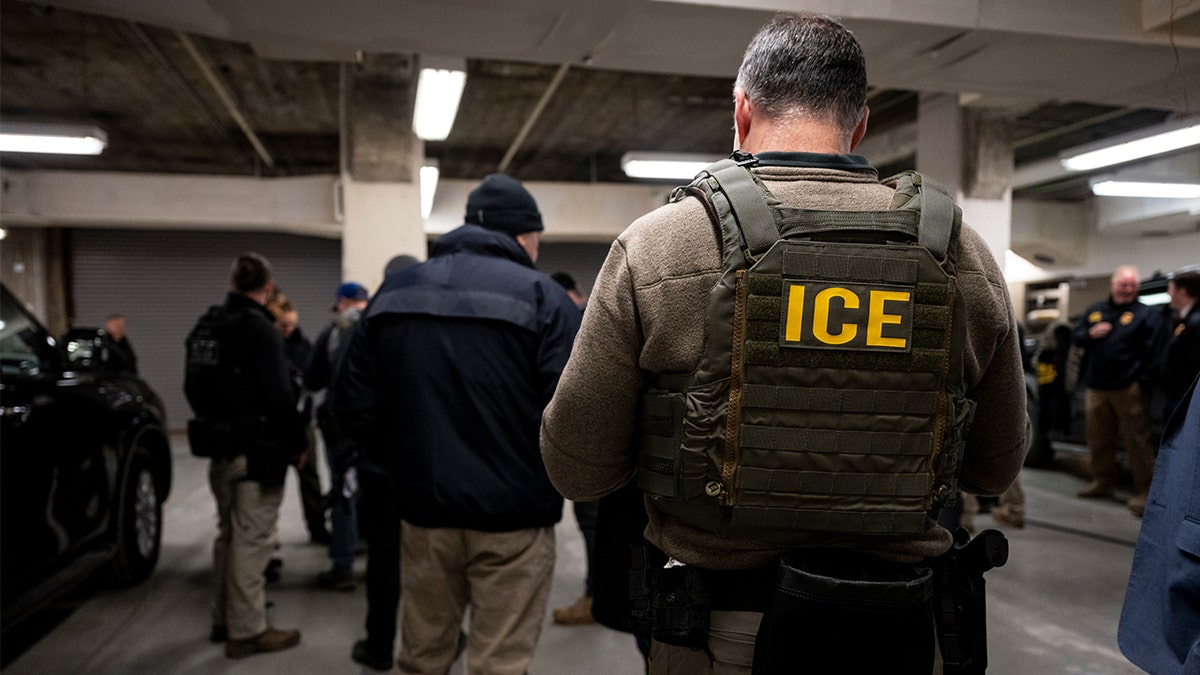
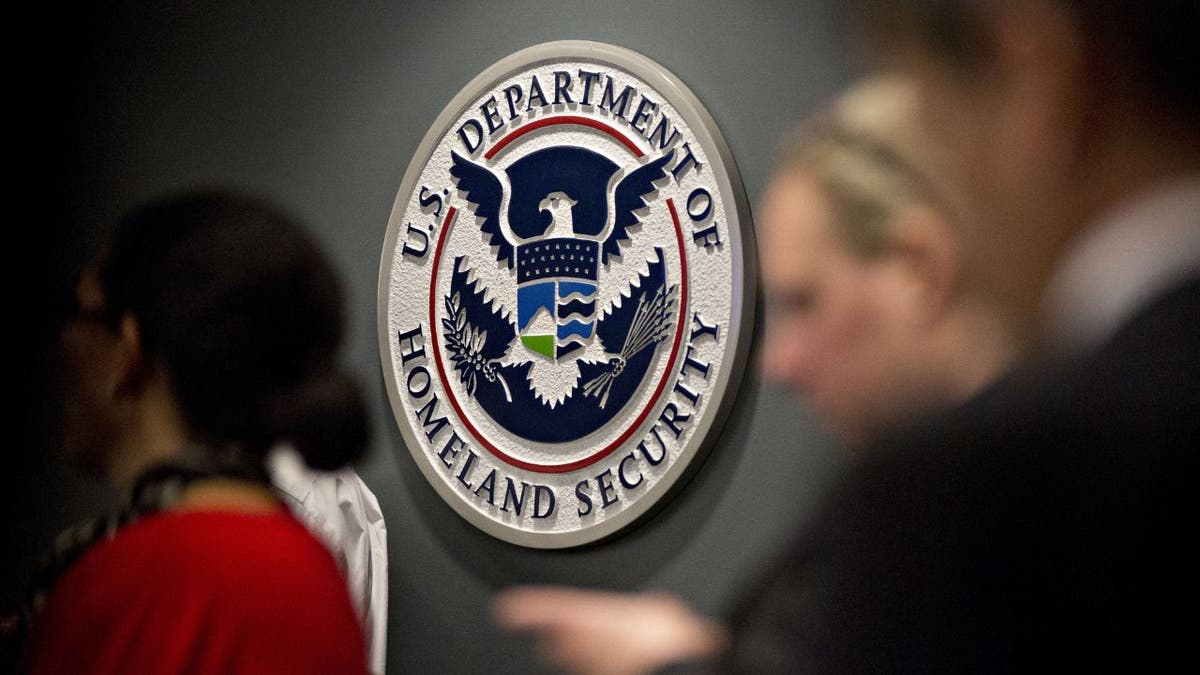
ICE’s Victims of Immigration Crime Engagement (VOICE) Office was relaunched on April 10, 2025. (Christopher Dilts/Bloomberg via Getty Images)
Juan Lorenzo Hurtado-Flores, from Peru, was convicted of criminal obstruction of breathing or blood circulation and injury to a child in White Plains, New York, according to ICE.
Vu Nguyen, from Vietnam, was convicted of assault with a semiautomatic firearm in Pasadena, California, the agency said.
The agency said Omar Alexander Rodriguez-Grande, from El Salvador, was convicted of aggravated assault with a deadly weapon in Harris County, Texas.
Oscar Fransisco, from Guatemala, was convicted of aggravated assault with a deadly weapon in Palm Beach, Florida, according to the agency.
VOICE was first launched under President Donald Trump’s first administration but was replaced in 2021 by another victim services program under the Biden administration. (Andrew Harrer/Bloomberg via Getty Images)
CLICK HERE TO DOWNLOAD THE FOX NEWS APP
ICE said Josue Coreas-Chavez, from El Salvador, was convicted of robbery in Riverhead, New York.
«Illegal aliens harming American citizens is unconscionable. But now, thanks to President Trump, we’re able to help people victimized by criminal aliens through the VOICE Office,» ICE Acting Director Todd Lyons said when the relaunch of the program was announced last year. «I’m extremely proud of ICE’s entire workforce — the officers and agents on the ground who are enforcing immigration law fairly, the support staff who pull these operations together and handle logistics, and those who help shine a light on those who have suffered harm at illegal aliens’ hands.»
VOICE was replaced in 2021 during the Biden administration with the Victims Engagement and Services Line to «serve as a more comprehensive and inclusive victim support system offered by ICE that will ensure services are offered to all victims regardless of immigration status of the victim or perpetrator.»
«Providing assistance to society’s most vulnerable is a core American value. All people, regardless of their immigration status, should be able to access victim services without fear,» then-DHS Secretary Alejandro Mayorkas said at the time.
immigration, illegal immigrants, us, politics, markwayne mullin, donald trump, migrant crime
INTERNACIONAL
Donald Trump vuelve a amenazar a Irán, mantiene sus tropas en la zona y no es claro cómo sigue la tregua


“No hicimos nada ilegal ni inmoral”: dos funcionarios de Economía hablaron sobre los créditos que tomaron del Banco Nación

¿Continuará la apreciación?: proyectan que el dólar seguirá perdiendo contra la inflación y afectará más a la industria

Jugó con Cristiano, enfrentó a Messi, fue campeón en Inglaterra y debutó contra Platense en la Libertadores

Charlie y la fábrica de chocolate convirtió la calle Corrientes en un musical: el adelanto de magia, dulces y canto

Israeli man built bomb lab for Iranian plot targeting ex-PM Bennett, authorities say

Cuadernos de las coimas: dos exfuncionarios y un empresario apelaron al mismo argumento para defenderse en el juicio

Trump blasts Biden admin for releasing illegal immigrant now charged in fatal hammer attack on Florida mother

Se viene el buen clima: el pronóstico del clima para este fin de semana de abril

Elecciones en Hungría: después de 16 años en el poder, Viktor Orbán busca otro mandato frente a un rival en ascenso

El Gobierno enviará al Congreso una reforma para eliminar y fusionar varios organismos públicos

 INTERNACIONAL3 horas ago
Trump blasts Biden admin for releasing illegal immigrant now charged in fatal hammer attack on Florida mother
- 4 horas ago
Se viene el buen clima: el pronóstico del clima para este fin de semana de abril
- INTERNACIONAL3 horas ago
Elecciones en Hungría: después de 16 años en el poder, Viktor Orbán busca otro mandato frente a un rival en ascenso