INTERNACIONAL
Macron struts on world stage as revolt over France’s soaring debt puts his PM on the brink


NEWYou can now listen to Fox News articles!
President Emmanuel Macron isn’t just France’s head of state. He’s also looking like he wants to be the spokesman for the whole of Europe. He’s sought to lead Europe’s response to the Russia-Ukraine war, opposed the U.S. by supporting Palestinian statehood, and weighed in on former President Donald Trump’s desire to buy Greenland. Yet critics say he should be focusing on issues closer to home.
In Macron’s France, there is real turmoil in the country’s parliament over how to fix the massive debt load. And Prime Minister François Bayrou faces a vote of no confidence as early as Monday, which he will likely lose. Bayrou was appointed by Macron in December last year, following three other prime ministers who resigned during 2024. In many ways, what happens next is a Déjà vu scenario where the president appoints yet another prime minister as he did last December when Michel Barnier quit.
Late last month, Bayrou highlighted that France is deep in debt despite being the second-largest economy in the European Union, behind Germany. In addition to being a large economy, France is also an important U.S. trading partner.
Because of the pending fiscal crisis, Bayrou developed a plan to reduce the fiscal deficit to 4.6% of GDP next year by making savings of 44 billion euros ($51 billion) and cutting two public holidays. That would be a smaller deficit than in any of the years from 2020 through 2024.
FRANCE WARNS OF GLOBAL ‘BRUTALIZATION’ AMID TRUMP ARCTIC DISPUTE OVER GREENLAND
French President Emmanuel Macron gestures as he stands on the glacier Mont Nunatarsuaq during a visit to Greenland, on June 15, 2025. (Ludovic Marin/AFP via Getty Images)
However, the budget-cutting plan hasn’t gone down well with other parties in the French Parliament, and Bayrou faces a vote of no confidence there. Organized labor unions are incensed by the prime minister’s plans and are threatening work-stoppage strikes. Leo Barincou, a senior economist at Oxford Economics in Paris, told Fox News Digital that any union strikes likely won’t last long, nor will they be significantly disruptive to the economy like the Yellow Vest protests in the winter of 2018-2019.
If Bayrou loses, there are alternatives. «Macron can call a snap election or appoint a new prime minister, but that will be hard given the current situation,» says Elias Haddad, senior markets strategist at Brown Brothers Harriman in London. «Bayrou is expected to lose, and all the other parties have vowed to topple the government.»
FROM GAZA TO GREENLAND, MACRON BREAKS WITH TRUMP ON GLOBAL FLASHPOINTS
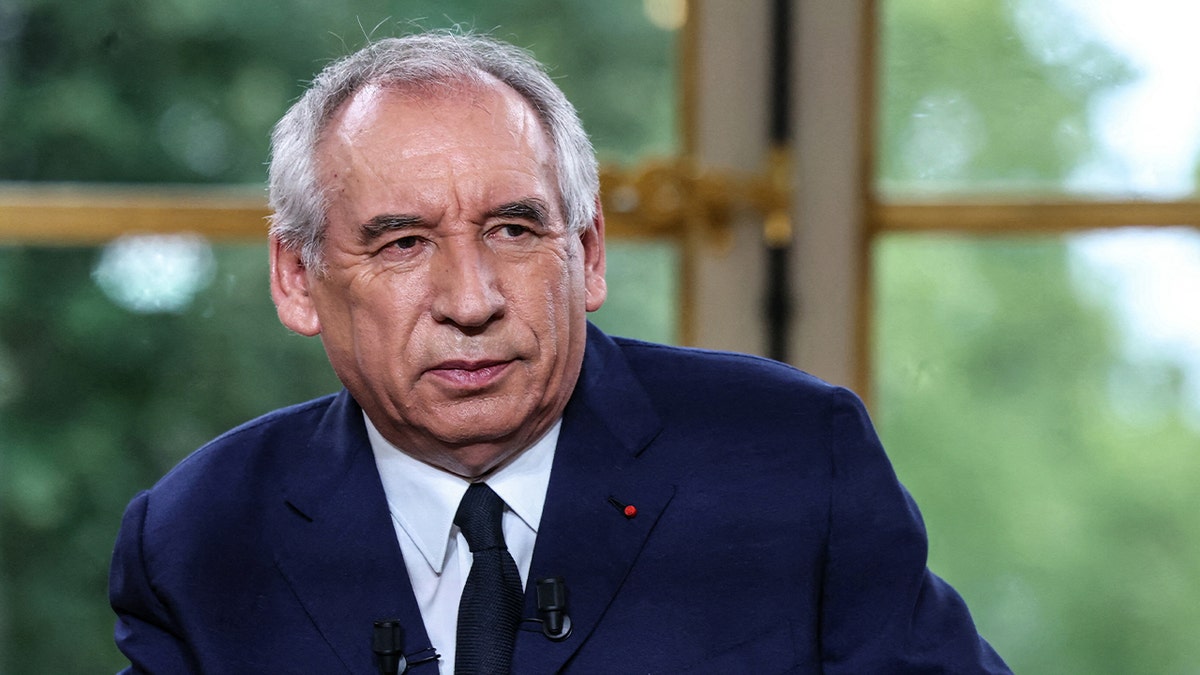
France’s Prime Minister Francois Bayrou speaks during a live televised interview broadcast in Paris on Aug. 31, 2025. (Alain Jocard/AFP via Getty Images)
One thing that almost certainly won’t happen is a resignation by Macron. «Most likely, Macron appoints another prime minister and makes a minimal budget that won’t be too scary,» Barincou says. In other words, there may be some budget cutting, but it won’t be anywhere near what the current prime minister proposed in August.
Although it seems extremely unlikely that there will be a snap election, the populist National Rally (RN) said it is preparing for one and is reviewing a potential list of candidates. The RN’s president, Jordan Bardella, said last week, «We can and must be ready for anything, including a return to the ballot box with a dissolution of the National Assembly,» according to a report in Reuters.

Marine Le Pen, left, and National Rally president Jordan Bardella during a political meeting on June 2, 2024, in Paris. (AP/Thomas Padilla)
Bardella spoke ahead of a meeting aimed at preparing the RN for parliamentary elections and said the party had already chosen 85% of its candidates, Reuters reported.
TRUMP SHRUGS OFF FRANCE’S RECOGNITION OF PALESTINE AS RUBIO, PROMINENT REPUBLICANS BLAST MOVE
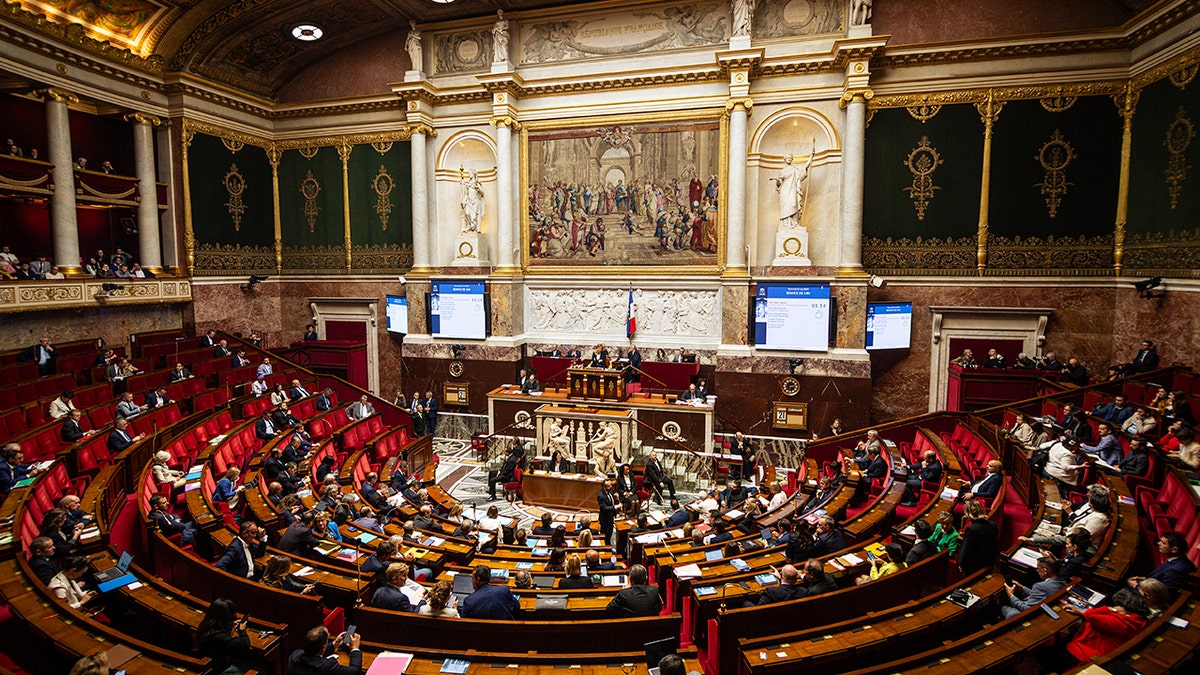
Prime Minister François Bayrou could face a no-confidence vote as early as Monday, as France’s parliament wrestles with how to address the nation’s mounting debt crisis. (Telmo Pinto/NurPhoto)
A collapse of the French Parliament has apparently worried the European Central Bank, which oversees monetary policy for the single currency area known as the eurozone. Already, the yields on French bonds have risen by one-tenth of a percentage point, making the cost of borrowing higher than it is in neighboring Germany.
However, while France’s debt problem isn’t going away any time soon, it is unlikely to weigh on the broader eurozone, Haddad says. He also notes that despite a recent fall in demand to buy French bonds, there is little to panic about. «The underlying demand is still good and unlikely to see a destabilizing situation in the financial markets,» he says. «The bonds are relatively healthy.»
CLICK HERE TO GET THE FOX NEWS APP
Part of the overall problem facing France is that, culturally, the West has changed for the worse, says Ben Habib, who is now preparing to register Advance U.K., a new right-leaning political party in Britain. «The dependency culture has been embedded in Europe, including the U.K.,» he says. In other words, too many people are relying on government handouts rather than generating income through their own efforts.
In turn, that’s led to slower-growing economies and massive increases in government debt loads. That includes the U.K., France, Italy and other countries. «It’s remarkable to me that we haven’t already hit the skids,» Habib says.
Reuters contributed to this report.
france,emmanuel macron,finance global economy,global economy









INTERNACIONAL
Iran’s ‘basement’ Chinese drone networks spark fears of sleeper cell attacks on US soil

NEWYou can now listen to Fox News articles!
Iran is building a decentralized drone warfare capability in Tehran’s apartment building basements, powered by inexpensive technology sourced from China, a leading defense expert has warned.
Draganfly’s Cameron Chell also said that this emerging system — centered on first-person-view (FPV) drones — could pose a threat not only across the Middle East but potentially to the U.S. homeland itself.
«The FPVs are Iran’s Hail Mary because they are very hard to defend, are incredibly effective, and can be delivered in a manner without having to have a central command,» Chell told Fox News Digital.
«So whether it’s the Iranian army, whether it’s militia groups or Iranian patriots, they can all create or procure their own FPVs and get offensive,» Chell said.
EX-CIA STATION CHIEF WARNS US TROOP DEPLOYMENT TO KEY IRANIAN ISLAND COULD BE ‘EXTREMELY RISKY’
Smoke rises after an Iranian drone was intercepted over the Bahrain Financial Harbour towers, which houses the Israeli embassy, amid the U.S.-Israeli conflict with Iran, in Manama, Bahrain, March 6, 2026. Picture taken on a mobile phone. (Stringer/Reuters)
He added that «Iran could be reiterating FPVs and churning out more than 100,000 a month over time.»
«Iran’s got either militias or sleeper cells in the States who can, in my estimation, already build this equipment,» Chell clarified.
Chell’s warning comes as recent incidents in Iraq highlight the growing use of FPVs.
At Baghdad International Airport, Iranian-backed militias operating under the «Iraqi Islamic Resistance» umbrella have launched multiple FPV drone attacks.
Footage released in March 2026 allegedly shows an FPV drone striking a U.S. UH-60M or HH-60M Black Hawk helicopter, while another attack successfully hit a U.S. AN/MPQ-64 Sentinel radar unit at the same base.
«FPVs are a central core theme, and Iran is building these itself, suspecting they’re pulling parts in from China and getting the parts through some pretty porous borders, so it is very difficult to stop that,» Chell said.
IRAN’S DRONE SWARMS CHALLENGE US AIR DEFENSES AS TROOPS IN MIDDLE EAST FACE RISING THREATS
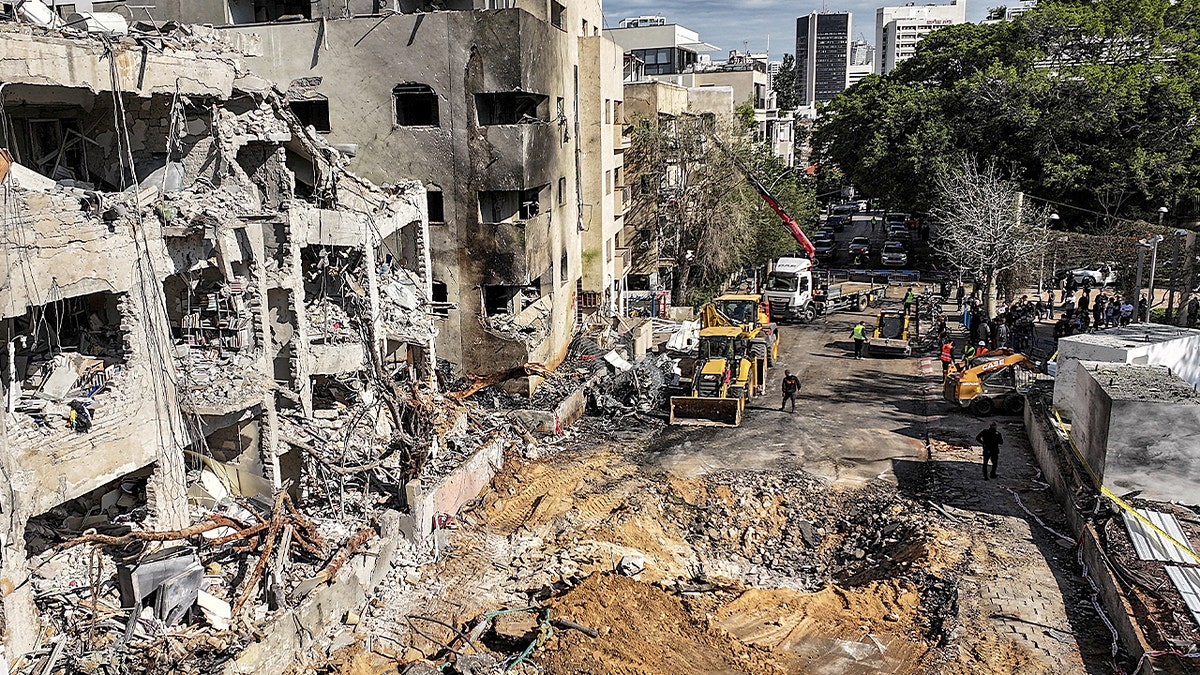
A drone view of the site of an Iranian missile strike on a residential building, after Iran launched missile barrages following attacks by the U.S. and Israel, in Tel Aviv (REUTERS/Roei Kastro)
He warned that Iran’s strategy mirrors what has already occurred in Ukraine, where decentralized drone manufacturing has flourished.
«There will be, or already is, an underground industry for FPV and drone manufacturing, which will or is swelling up inside Iran, the exact same way that we saw it swell up inside Ukraine,» he explained.
«This is going to be happening in people’s homes in Iran, people’s basements, the basements of apartment blocks, where they can construct makeshift assembly lines.»
«I am confident China and Russia are shipping in parts to help support the development of drone assembly or manufacturing capability – which is a de facto decentralized cottage industry,» he warned.
Concerns extend beyond overseas battlefields as about 1,500 Iranians were intercepted at the U.S. border during the Biden administration.
Officials warn the unknown number who evaded detection raises fears of potential «sleeper cells.»
MORE THAN 90% OF IRANIAN MISSILES INTERCEPTED, BUT A DANGEROUS IMBALANCE IS EMERGING

Iran drone swarms threaten U.S. military assets in Middle East region (Iranian Army/WANA (West Asia News Agency)/Handout via REUTERS)
President Trump acknowledged the issue on March 11, saying, «A lot of people came in through Biden with his stupid open border, but we know where most of them are: We’ve got our eye on all of them, I think.»
«It is the beginning of an asymmetric capability that the Iranians will use against their neighbors and U.S. assets in the region, but also the U.S. homeland,» Chell said.
«We may even want to call it terrorist attacks, using FPV’s against their neighbors and practically anywhere in the world,» he added.
«It’s a matter of when we see FPV attacks, probably swarm, probably sophisticated, on U.S. soil.»
«Within the next eight months, the Iranians are going to have sophisticated drone systems that can defeat some RF/radio frequency jamming. They will start to use tactics like swarming or spoofing,» he warned.
CLICK HERE TO DOWNLOAD THE FOX NEWS APP
«It will be very, very difficult for the U.S. to take out these little drone factories in the basements of apartment blocks where civilians help. Cutting supply chains will also be difficult.»
«The primary choke point for the Iranians is to establish supply chains from China to have enough supply to constitute precision mass capability and/or consistent, pervasive asymmetric capability,» Chell said before stating that if this happens, «the war between Iran and the U.S. just gets a lot longer.»
war with iran, iran, wars, military tech, military


NEWYou can now listen to Fox News articles!
Justice Ketanji Brown Jackson drew fire from an unlikely colleague on Tuesday over her lone dissent in the Supreme Court’s 8-1 decision finding Colorado’s ban on so-called «conversion therapy» for minors violated free speech rights.
Fellow liberal Justice Elena Kagan criticized Jackson for failing to acknowledge case law that governs when speech can be regulated in the medical field, marking a rare public break between two justices typically aligned in cases centered on high-profile cultural issues.
«Justice Jackson’s dissenting opinion claims that this is a small, or even nonexistent, category,» Kagan wrote in a footnote of a concurring opinion, which Justice Sonia Sotomayor joined. «But even her own opinion, when listing laws supposedly put at risk today, offers quite a few examples.»
Kagan, an Obama appointee, said Jackson’s view «rests on reimagining—and in that way collapsing—the well-settled distinction between viewpoint-based and other content-based speech restrictions.»
SUPREME COURT SKEPTICAL OF «CONVERSION THERAPY» LAW BANNING TREATMENT OF MINORS WITH GENDER IDENTITY ISSUES
Supreme Court nominee Ketanji Brown Jackson testifies during her Senate Judiciary Committee confirmation hearing on Capitol Hill in Washington, Wednesday, March 23, 2022. (AP Photo/Alex Brandon)
The 8-1 decision on Tuesday arose from a lawsuit brought by Kaley Chiles, a licensed Christian therapist, who argued her conversations with youth clients were a form of protected speech. The Colorado government had said the conversations amounted to professional conduct that the state was allowed to regulate.
Jackson’s fiery 35-page dissent, which she read from the bench when the high court announced the opinion, was longer than the majority opinion and Kagan’s concurrence combined.
«Professional medical speech does not intersect with the marketplace of ideas: ‘In the context of medical practice we insist upon competence, not debate,’» Jackson, a Biden appointee wrote, later adding, «Treatment standards exist in America.»
Jackson issued an ominous warning about national implications of the case, as about two dozen other states have laws similar to Colorado’s and will now need to take into account the high court’s ruling.
SUPREME COURT BLOCKS COLORADO’S SO-CALLED ‘CONVERSION THERAPY’ BAN ON FIRST AMENDMENT GROUNDS
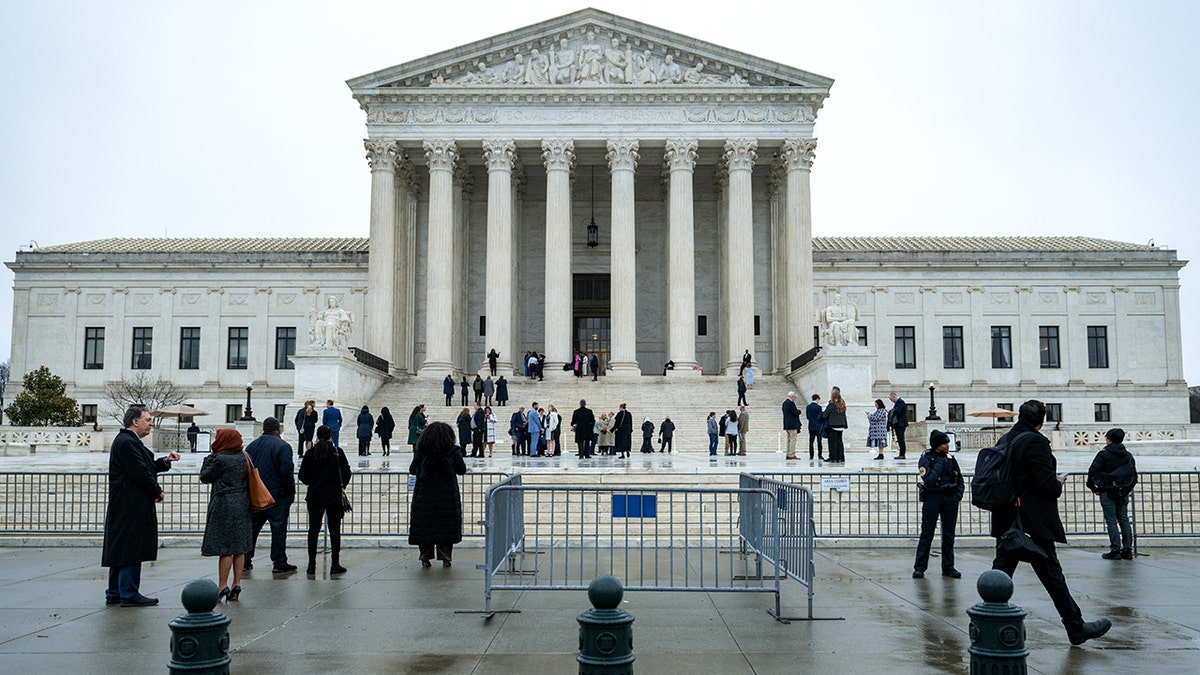
The Supreme Court is seen on Friday, Feb. 20, 2026. (Annabelle Gordon/Bloomberg via Getty Images)
«Ultimately, because the majority plays with fire in this case, I fear that the people of this country will get burned,» Jackson said. «Before now, licensed medical professionals had to adhere to standards when treating patients: They could neither do nor say whatever they want.»
One conservative lawyer on social media observed that Kagan seemed «exasperated» by Jackson, who has become known as a verbose justice inclined to tack on lengthy solo dissents to the majority’s opinions in prominent cases. Manhattan Institute’s Ilya Shapiro agreed.
«That should be a separate descriptor of an opinion: concurring, dissenting, expressing exasperation with Justice Jackson,» Shapiro wrote on X.

Justice Elena Kagan (Reuters/Jonathan Ernst)
Kagan joined the eight justices in finding that the Colorado government erred in regulating Chiles’ practice because the state used a 2019 law that only banned therapists from counseling minors if the therapy entailed advising them on how to resist becoming transgender or gay. That amounted to restricting one viewpoint, in violation of the First Amendment, the majority said.
Kagan said that if the law were «content-based» rather than «viewpoint-based,» it would present less of a free speech problem.
«Because the State has suppressed one side of a debate, while aiding the other, the constitutional issue is straightforward,» Kagan said. «It would, however, be less so if the law under review was content-based but viewpoint neutral.»
Jackson argued that Chiles was «not speaking in the ether; she is providing therapy to minors as a licensed healthcare professional.»
CLICK HERE TO GET THE FOX NEWS APP
The Supreme Court’s ruling was narrow, as Justice Neil Gorsuch explained in the majority opinion, as it directed the lower court to reexamine the Colorado law and ensure it did not interfere with Chiles’ speech rights.
«The First Amendment stands as a shield against any effort to enforce orthodoxy in thought or speech in this country,» Gorsuch wrote. «It reflects instead a judgment that every American possesses an inalienable right to think and speak freely, and a faith in the free marketplace of ideas as the best means for discovering truth. However well-intentioned, any law that suppresses speech based on viewpoint represents an ‘egregious’ assault on both of those commitments.»
supreme court, colorado, federal judges, first amendment

Las radios AM y FM que transmiten el Argentina vs. Zambia por el duelo internacional

ANSES le devolverá a Chubut 48 mil millones de pesos

Iran’s ‘basement’ Chinese drone networks spark fears of sleeper cell attacks on US soil

La oposición a Kicillof refuerza su intento de modificar la forma de votar en la provincia

Las acciones argentinas subieron con fuerza detrás del extraordinario rebote de Wall Street

Fue una famosa feminista millennial. Sus memorias sobre el poliamor son desgarradoras

Máximo Kirchner salió al cruce de Milei y Macri tras el fallo por YPF a favor de la Argentina

La secretaria del piloto denunció que el amigo de Adorni la hostiga y la justicia dispuso medidas

El Gobierno cambia su propuesta de reforma: endurece penas para delitos comunes, pero no para los casos de corrupción

Nuevas críticas de Marcela Pagano contra los Milei: “Karina es la que gobierna”, aseguró

 POLITICA3 días ago
Máximo Kirchner salió al cruce de Milei y Macri tras el fallo por YPF a favor de la Argentina
- POLITICA3 días ago
El Gobierno cambia su propuesta de reforma: endurece penas para delitos comunes, pero no para los casos de corrupción
- POLITICA2 días ago
Nuevas críticas de Marcela Pagano contra los Milei: “Karina es la que gobierna”, aseguró