INTERNACIONAL
Maxine Waters torched by feds for ‘taunting’ guardsmen and ‘spewing lies’ about riots, trying to enter jail


NEWYou can now listen to Fox News articles!
A top Homeland Security official lambasted Rep. Maxine Waters for «lies» about the peacefulness of the riots and her efforts to force entry into a detention center to meet a detained union leader.
DHS spokesperson Tricia McLaughlin told Fox News Digital on Monday that access to the Los Angeles detention facility was «temporarily restricted» to ensure the safety of both detainees and uniformed personnel – when Waters hurried toward a group of guardsmen entering a plywood-protected door to the building over the weekend.
The 86-year-old, 18-term Democrat approached the guardsmen saying, «Hello, hello, hello — I’m Congresswoman Waters,» but the last one bluntly told her to talk to «public affairs» and slammed the door.
«As a result, Congresswoman Maxine Waters was denied entry,» McLaughlin said of that exchange.
MAXINE WATERS TAUNTS ARMED AGENTS AFTER FEDS SLAM DOOR ON HER DURING LA RIOTS: ‘YOU BETTER SHOOT STRAIGHT’
«The safety and security of DHS personnel, ICE agents, and those in our custody remain our top priority.»
Going on to reference when Waters, D-Calif., hollered at assembled armed guardsmen on the street and asked if they planned to shoot her, McLaughlin said the lawmaker’s efforts could be better used elsewhere.
«Instead of taunting national guard members, the congresswoman should be trying to defuse these violent riots,» she said.
«Elected officials need to tone down their dangerous rhetoric about ICE law enforcement.»
President Donald Trump had federalized the California National Guard, and Waters accused him of not properly informing Gov. Gavin Newsom, in one clip of comments to reporters.
DHS also rebuked Waters’ summary appearance on TV following clips of her various confrontations going viral:
«This morning on CNN, the congresswoman spewed lies that these riots have not been violent,» McLaughlin said.
MCCARTHY: MAXINE WATERS FINDS ‘VALUE IN VIOLENCE’
Maxine Waters gets a door slammed in her face by National Guardsmen in Los Angeles. (Reuters)
«The American people can see with their own eyes the truth. Rioters have assaulted law enforcement officers, thrown rocks, burned American flags, set cars on fires, slashed tires, defaced buildings, and taxpayer-funded property.»
«The violent targeting of law enforcement in Los Angeles by lawless rioters is despicable and Congresswoman Waters must call for it to end.»
Waters had told anchor Wolf Blitzer that «everybody was wondering what happened to» David Huerta, the SEIU leader detained during one of the immigration raids that sparked the violence.
She said she was wearing a congressional emblem on her jacket but lamented that the guardsmen still didn’t allow her in.
She called protests in the immediate area «very small and very peaceful – there was no animosity.»
Waters also expressed concern that the assembled guardsmen were armed, saying that «Trump has instigated all of this.»

Los Angeles riots continue. (Getty)
«My message to Donald Trump, you are a cruel human being — and you are using the poorest people in the land… to promote your politics,» Waters said separately.
«His ridiculousness has taken over the armed services to celebrate his birthday coming up,» Waters added, referring to the president’s planned military parade to signify the 250th birthday of the U.S. Army – which will also coincide with Flag Day and his 79th birthday.
In a statement on the incident, Waters said she went to the Metropolitan Detention Center to check on Huerta – whom the SEIU said was «caught» in one of a series of ICE raids in Los Angeles County the union described as «a violent sweep.»
Waters also alluded to another viral clip she produced, which showed her taunting armed agents standing in formation in another part of the city.
CLICK HERE TO GET THE FOX NEWS APP
«I pled [sic] with the National Guard, which was heavily armed, not to use their weapons against peaceful demonstrators who were simply exercising their rights to freedom of speech and protest,» Waters said in a statement posted to X, formerly Twitter.
«All people deserve to be treated with dignity and due process under the law: Peaceful, nonviolent demonstrations are critical to protecting our constitutional rights.»
«The President of the United States is a cruel, dishonorable human being,» she said, adding that he and others would «just as soon» like to see agents «shoot somebody down.»
When filmed confronting National Guardsmen on the street, Waters shouted, «You’re gonna shoot an elected official? If you shoot me, you better shoot straight.»
Fox News Digital reached out to Waters’ office for additional comment, but she could not immediately be reached.

INTERNACIONAL
El Congreso de Guatemala reanudará este 6 de abril el debate sobre subsidio a combustibles
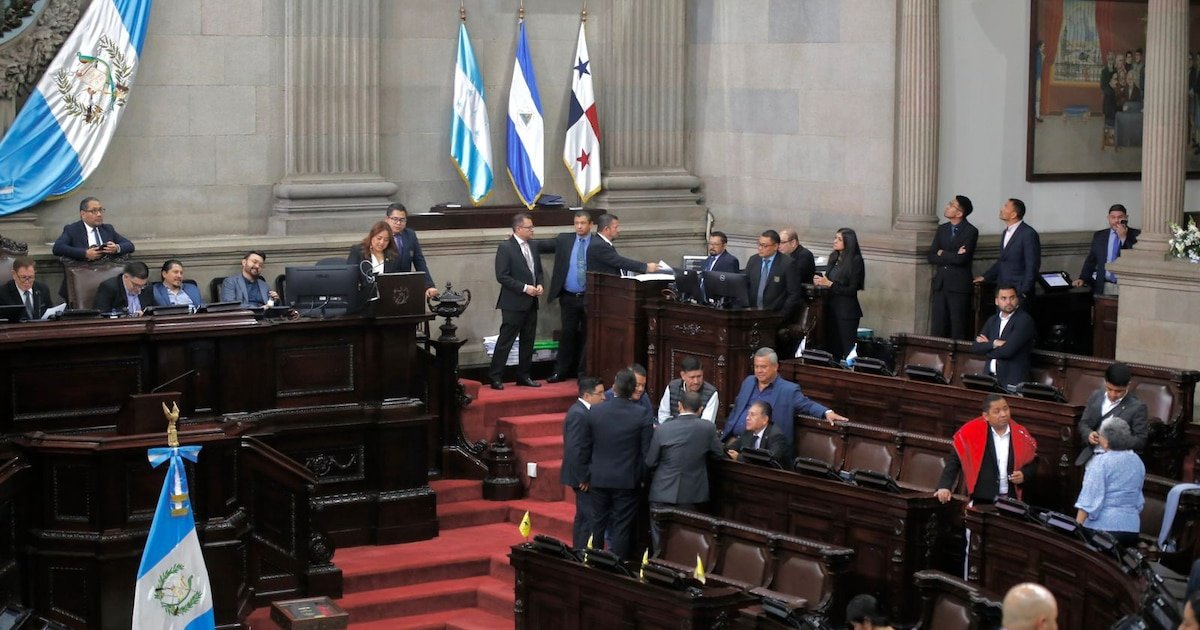
El Congreso de la República de Guatemala retomará el lunes 6 de abril la discusión sobre el subsidio a los combustibles, una medida que se ha convertido en eje de tensión política tras el incremento de precios registrado durante las últimas semanas. La urgencia de este debate radica en la presión social y económica que implica el mantenimiento de los costos actuales, así como en la persistencia de desacuerdos internos que han paralizado la aprobación del proyecto en sesiones anteriores, según reporta Prensa Libre.
Durante la última sesión ordinaria, realizada el 25 de marzo, la iniciativa enviada por el Organismo Ejecutivo para subsidiar el precio de los combustibles estuvo a punto de ser aprobada de urgencia nacional. Sin embargo, los acuerdos políticos se quebraron después de que el bloque oficialista condicionara su voto a la aprobación simultánea de una ampliación presupuestaria por Q1.500 millones ($196,516,500.00), lo que llevó a la ruptura del quórum, informó Prensa Libre.
La reanudación de las actividades legislativas está acompañada por la expectativa de concretar el subsidio al combustible, avanzar en la ley de lavado en segundo debate, y aprobar en tercera lectura la ley de puertos. Así lo declaró Luis Contreras, presidente del Congreso y líder del bloque Compromiso Renovación y Orden (Creo), al medio Prensa Libre.
“Queremos aprobar el subsidio al combustible, queremos aprobar la ley de lavado en segundo debate y queremos aprobar la ley de puertos en tercer debate y redacción final, esa es la agenda país”, dijo.
Contreras anunció además que ha invitado a los representantes de los transportistas a reunirse con la instancia de jefes de bloque, con el objetivo de escuchar sus demandas y buscar una solución urgente para el precio del diésel. Subrayó la importancia de mantener la negociación continua, señalando: “Estoy invitando a los transportistas con los cuales ya tuve un diálogo para que vengan y nos digan, y estamos en constante negociación, para poder aprobar el subsidio al diésel que es tan necesitado en este momento”.

El bloqueo político y el deterioro de la productividad legislativa
La décima legislatura, bajo la dirección de Contreras, ha sido criticada por expertos como Pablo Alejandro Solórzano, analista del Observatorio Legislativo, quien indicó a Prensa Libre que el trabajo parlamentario ha estado marcado por el cálculo político y las necesidades partidarias, lo que ha conducido a una baja productividad.
Solórzano enfatizó que “las decisiones que han tenido que tomar se basan precisamente en intereses que tienen que ver de cara a sus futuras decisiones políticas, sus futuras participaciones y en un año preelectoral estamos viendo cómo el Congreso de la República se está ordenando políticamente, lo cual lo ha hecho improductivo”.
La agenda legislativa enfrenta riesgos adicionales debido a la coyuntura preelectoral, que según estimaciones de analistas puede reducir tanto la cantidad como la calidad de los decretos promulgados este año.
La causa central de la reciente alza en los combustibles, según el diputado Orlando Blanco, cuarto secretario de la Junta Directiva, no es únicamente externa: “Lamentable esta situación, pero todo esto tiene un punto de origen y es la debilidad, el contubernio de las autoridades del Ministerio de Energía y Minas por no sancionar a toda esta gente que se ha encargado de especular. Llevamos ya más de un mes de una política de especulación”, declaró Blanco a Prensa Libre. Exigió, además, la comparecencia del ministro de Energía y Minas en el Congreso y pidió al presidente Bernardo Arévalo su destitución, ante lo que calificó de colusión con empresarios del sector.

La gravedad de la crisis se extiende al impacto en la canasta básica, un factor que el diputado Juan Carlos Rivera, primer secretario de la Junta Directiva, destacó como un problema que requiere la evaluación de múltiples propuestas legislativas para enfrentar la escasez de soluciones frente a la escalada de los precios, especialmente porque “la guerra continúa – en el medio oriente – y el alza en los precios también y el tema de la canasta básica se complica para los guatemaltecos”.
Los desafíos en la calidad normativa y la representación social
El trabajo legislativo reciente ha sido objeto de críticas no solo por la parálisis en torno al subsidio, sino también por decretos que han fallado en precisión técnica. Francisco Quezada, del Centro de Investigaciones Económicas Nacionales (Cien), evaluó para Prensa Libre que las reformas al Código Municipal y la derogatoria de la Ley de Herencias, Legados y Donaciones carecieron de una redacción adecuada: “Probablemente había ideas buenas, lamentablemente no se materializó en una redacción precisa, entonces es un contrasentido”.
En los procesos de elección de magistrados demandados por la Constitución, el Congreso ha cumplido formalmente sus funciones, aunque Quezada condenó el modo en que “pisotearon la dignidad de una altísima investidura como es una magistratura de la CC y eso pues sí dejó realmente una nota muy negativa por parte del Congreso y de los que se prestaron a este tipo de temas”.
El estancamiento en la aprobación del subsidio a los combustibles ha ampliado la percepción de distancia entre el Legislativo y las necesidades sociales y económicas de la población.
INTERNACIONAL
Inside Iran’s ruling ideology: How a ‘holy mission’ and messianic doctrine fuel regime extremism
NEWYou can now listen to Fox News articles!
For Mehdi Ghadimi, the ideology behind Iran’s ruling system is not theoretical. It was something he was taught from childhood.
«You were told you are a part a small group chosen by God… to revive God’s religion and fight to defend it,» the Iranian journalist told Fox News Digital, describing the message repeated in schools, mosques and state media.
That early indoctrination, he said, framed the world in stark terms: a divine struggle between good and evil, with Iran’s leadership positioned at the center of a religious mission.
Iran’s ruling system is often described in political terms, but critics and former insiders say its core is far more radical — a belief structure rooted in religious absolutism, messianic expectation and a worldview that leaves little room for compromise.
IRAN’S SUPREME LEADER MOJTABA KHAMENEI ‘MISFUNCTIONING,’ NOT CONTROLLING REGIME: SOURCES
A banner featuring Iran’s new supreme leader, Mojtaba Khamenei, and senior commanders of the Islamic Revolutionary Guard Corps (IRGC) is displayed in Tehran, March 14, 2026. (Fatemeh Bahrami/Anadolu)
As a new generation of commanders rises within the Islamic Revolutionary Guard Corps following recent military blows under Operation Epic Fury, analysts warn that this ideology may become even more entrenched.
Figures such as Mohammad Bagher Ghalibaf and Ahmad Vahidi are often cited as part of a cohort shaped by years of conflict in Iraq and across the region — one that sees religion, security and survival as inseparable.
A belief system, not just a government
At the center of that worldview is the belief in the Mahdi — a messianic figure in Shiite Islam whose return is expected to usher in a final era of justice after chaos.
Twelver Shiism is the dominant belief for Shias, the Mahdi, identified as the 12th Imam, is alive but hidden and will one day return. Iran’s political system positions the supreme leader as his caretaker.
Critics say that framework gives political authority a religious dimension that can make it difficult to challenge.
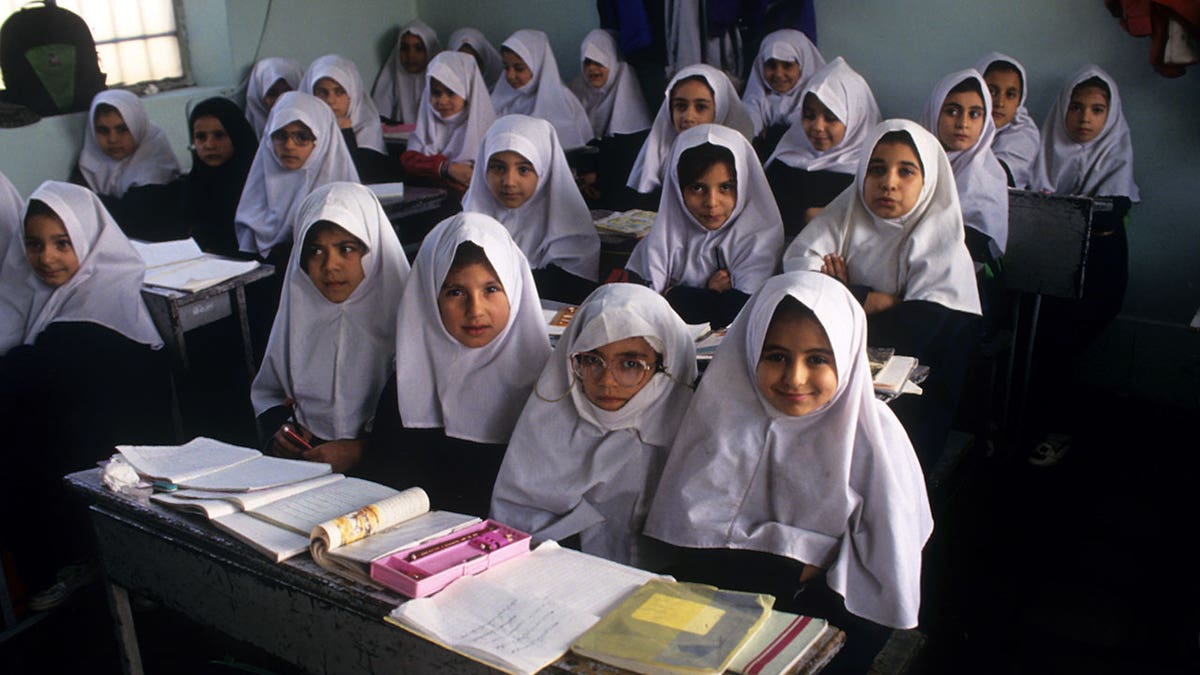
Primary school girls in traditional headscarves sit in a classroom, Tehran, Iran, Oct. 1, 1997. (Kaveh Kazemi/Getty Images)
«For the mullahs in Iran, the Mahdi idea is less about personal faith and more about power,» said Lisa Daftari, foreign policy analyst and editor-in-chief at The Foreign Desk. «They use it to suggest that the supreme leader’s views are not just political opinions, but carry a kind of divine weight.»
«The system is set up so that disagreeing with the leader can be portrayed as questioning the Hidden Imam himself,» she said.
«That turns ordinary policy debates into something almost untouchable… you’re no longer arguing with a politician, you’re seen as pushing back against a sacred figure.»
IRAN’S CEASEFIRE PUSH MAY BE A ‘CYCLE OF DECEPTION,’ ANALYSTS WARN AS SHADOWY FIGURE GAINS POWER
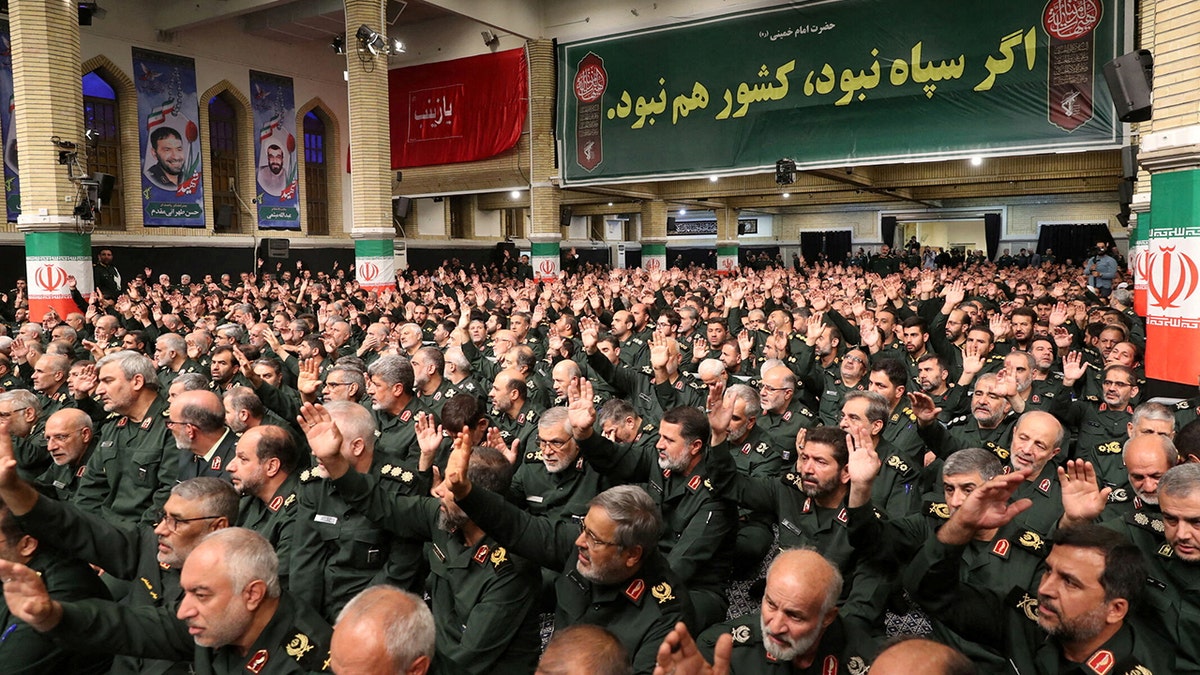
Commanders and members of the Islamic Revolutionary Guard Corps meet with Iran’s Supreme Leader Ayatollah Ali Khamenei in Tehran on Aug. 17, 2023. (Office of the Iranian Supreme Leader/WANA/Reuters)
No real moderates
Ghadimi argues that this structure leaves little room for genuine political diversity.
«Groups labeled as ‘moderate,’ ‘reformist,’ or ‘pro-Western’ are created so that the West can negotiate with them,» he said.
«No one within the structure of the Islamic Republic thinks about anything other than defeating the Western world and establishing Islamic dominance globally.»
From belief to action
For Iran expert Daftari, the Mahdi doctrine also provides a flexible justification for policy.
«A lot of insiders know perfectly well that this language is being used strategically,» she said. «The Mahdi story gives the leadership a way to claim moral and religious cover for decisions that are often about preserving the regime or expanding its reach.»
«When they talk about ‘preparing the ground’ for the Mahdi, that phrase can be stretched to cover almost anything — crushing protests, backing militias abroad or asking people to accept more economic pain.»
«This religious framing makes compromise much harder,» she added. «If you convince your base that you are carrying out a holy mission… backing down can be painted as a betrayal of God’s plan.»
MEET IRAN’S HARDLINE SPEAKER WHO THREATENED TO BURN US FORCES — REPORTEDLY TEHRAN’S POINT MAN FOR TALKS
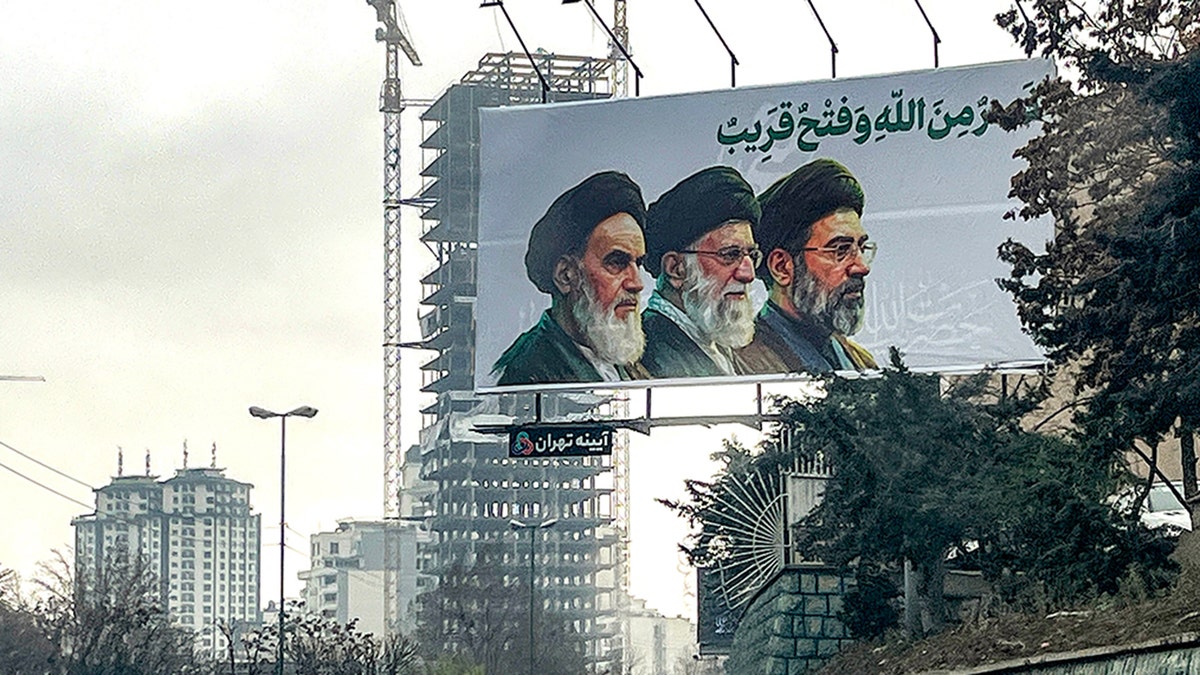
A billboard depicting Iran’s supreme leaders since 1979 is displayed above a highway in Tehran on March 10, 2026. (AFP/Via Getty Images)
A worldview shaped early
Ghadimi said that message is reinforced from childhood, shaping how generations understand their role in society.
In schools, media and mosques, he said, ideology was embedded into everyday life, leaving little space for alternative narratives.
That framing, analysts say, helps explain how the system sustains itself even under pressure.
It also contributes to a worldview in which conflict is not temporary, but part of a larger, ongoing struggle.
«The Islamic government, based on its own interpretation of the Quran, considers itself obligated to enforce Islamic law across the entire world,» Ghadimi told Fox News Digital, adding that the regime «sees itself as the leader of this belief globally.»
«They harbor hatred toward Iranians and Jews, whom they regard as enemies of Islam since its very beginning, and they consider killing them—such as on Oct. 7 and in the recent killings in Iran — to be divinely rewarded acts, much like the beliefs once held by Abu Bakr al-Baghdadi,» he said.
«No one within the structure of the Islamic Republic thinks about anything other than defeating the Western world and establishing Islamic dominance globally,» Ghadimi said.
In that framework, critics say, Iran is not simply pursuing national interests but acting within what it sees as a broader religious mandate.
INSIDE IRAN’S MILITARY: MISSILES, MILITIAS AND A FORCE BUILT FOR SURVIVAL
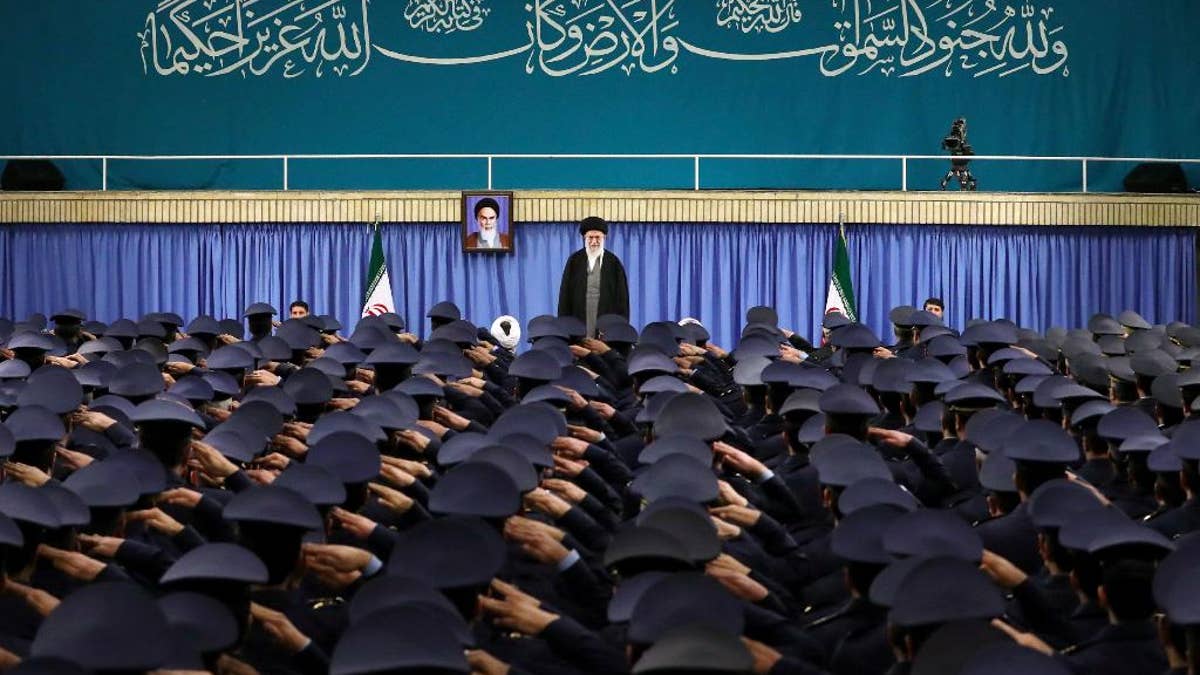
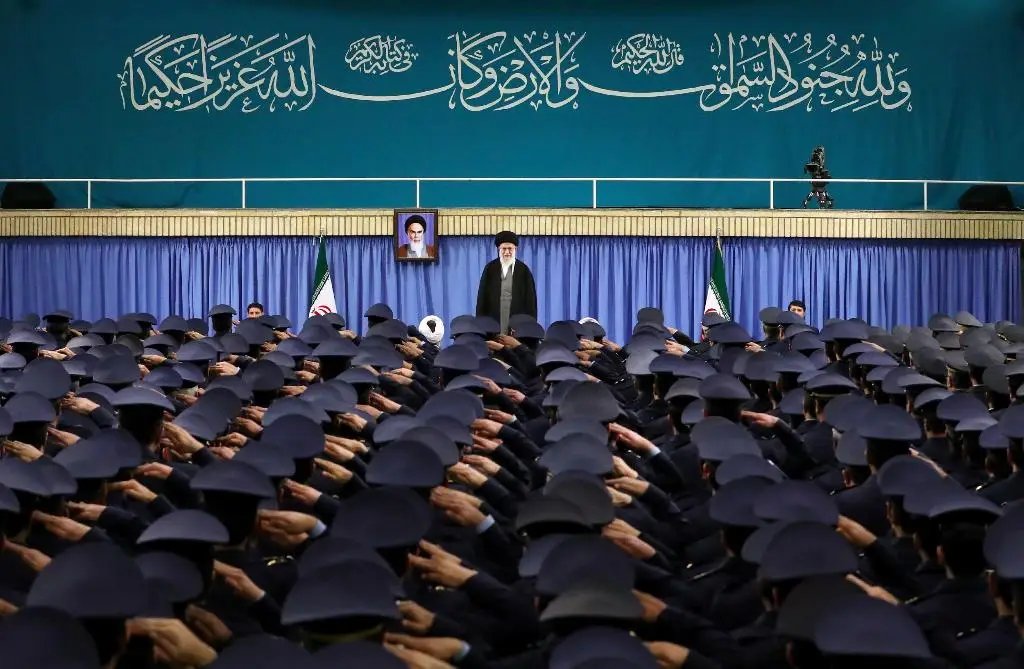
In this picture released by an official website of the office of the Iranian supreme leader, Ayatollah Ali Khamenei stands as air force commanders salute during their meeting in Tehran, Feb. 7, 2017. (Office of the Iranian Supreme Leader/AP)
Violence and belief
Some critics argue that within this framework, violence can take on religious meaning.
«They consider killing them… to be divinely rewarded acts,» Ghadimi said.
Still, analysts say the combination of messianic belief and absolutist ideology creates a system in which confrontation is not only expected, but justified.
A cycle with no easy exit
An Iranian official rejected those characterizations and warned that economic collapse and destruction caused by war could drive long-term resentment.
«If a country is turned into ruins, poverty spreads. Out of such poverty comes hatred, resentment and a desire for revenge, and this cycle of hostility can continue for years. It is not correct to think that everything will simply end the day after a ceasefire. Even if there were no hostile government left in place, people within society who have lost everything may still be driven to seek retribution.»
For Ghadimi, the issue is not just how Iran behaves, but how it understands itself.
CLICK HERE TO DOWNLOAD THE FOX NEWS APP
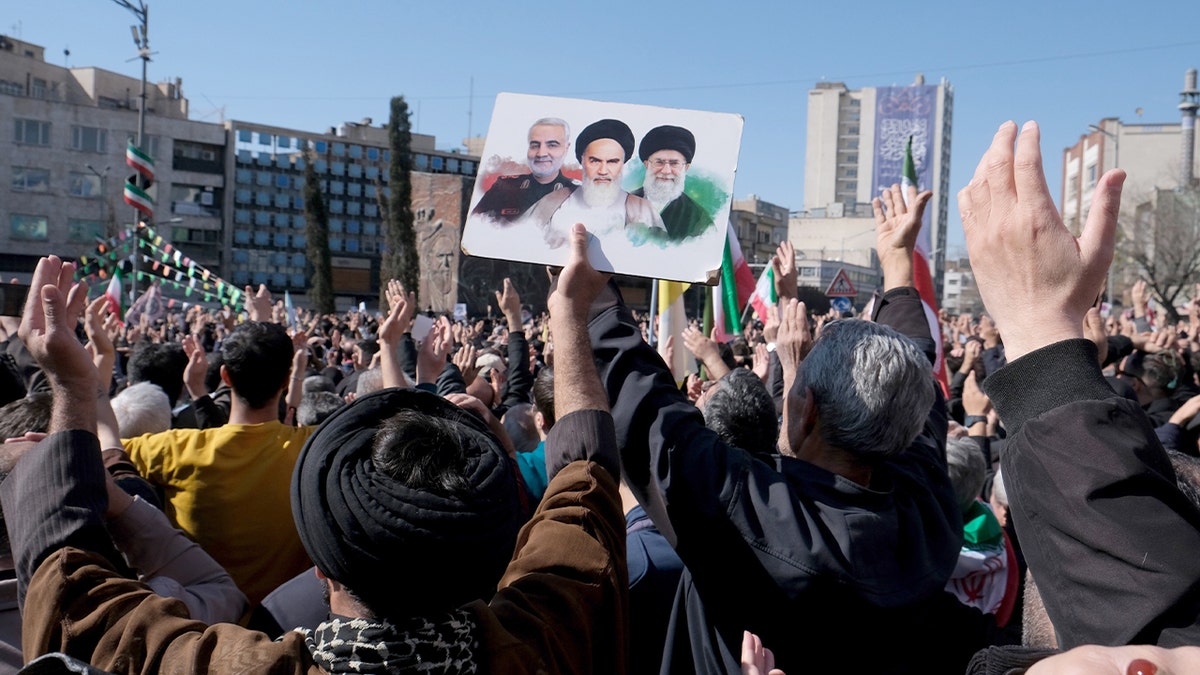
People gather in Revolution Square to mourn Ayatollah Ali Khamenei, who was killed Feb. 28 in a joint Israel-U.S. operation, in Tehran, Iran, on March 1, 2026. (Kaveh Kazemi/Getty Images)
If the system is rooted in a belief that blends religion, power and mission, critics say, then policies like repression at home and confrontation abroad may not be temporary tactics but structural features.
And if moderation within that system is limited, as some argue, then the challenge for policymakers is not simply negotiation, but understanding the ideology that drives it.
war with iran, ali khamenei, middle east, national security, iran, islam
INTERNACIONAL
Exponen los cuadernos inéditos de la internación “por una crisis mental” de Leonora Carrington
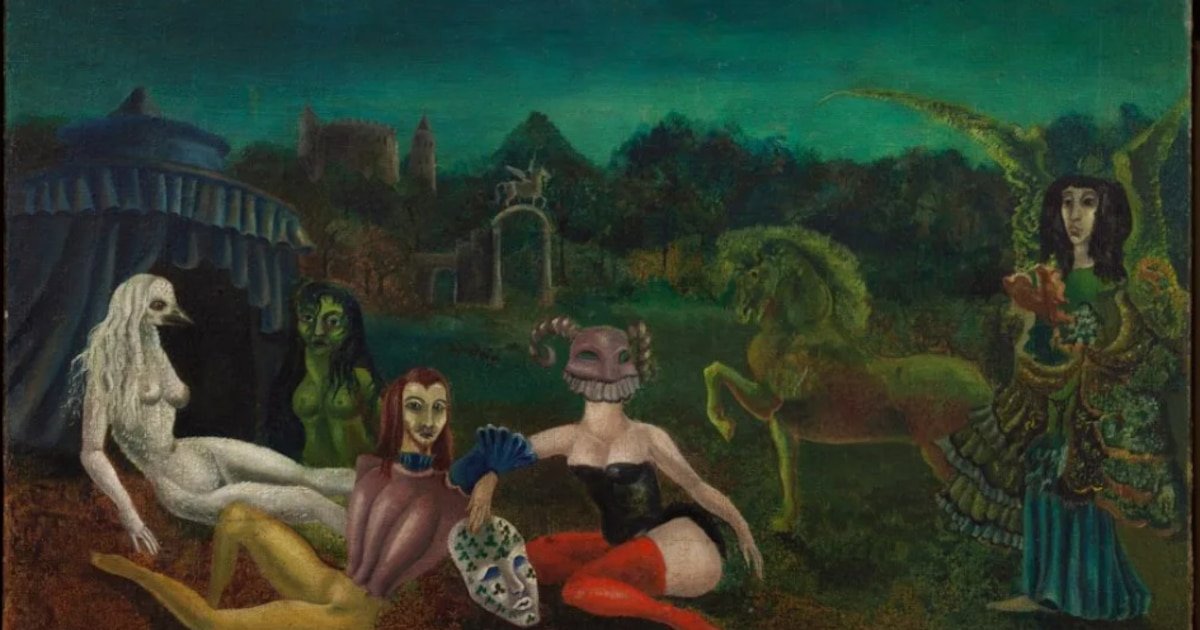
Las poco conocidas ilustraciones realizadas por Leonora Carrington durante su internación en un hospital psiquiátrico han sido reunidas y expuestas en la capital británica. El reencuentro de estos materiales en el Freud Museum de Londres, antigua residencia de Sigmund Freud, marca la primera exposición institucional en esa ciudad dedicada a la artista desde 1991 y subraya el vínculo entre su experiencia personal, la historia del arte y la psiquiatría.
La muestra incluye varias obras y cartas de Carrington pertenecientes al período de 1940, cuando fue tratada por una crisis mental en un sanatorio de Santander, en España. Según la curadora Vanessa Boni, consultada por el medio Artnet News, los dibujos contienen dos bocetos preparatorios para su pintura Down Below y exhiben la génesis de las criaturas híbridas que poblarían esa obra. El reingreso al circuito público de estos materiales se produce más de veinte años después de que los cuadernos fueran subastados y dispersados entre colecciones privadas en 2004.
Durante su internación, Leonora Carrington fue sometida a terapias de choque con Cardiazol bajo la supervisión del doctor Luis Morales, quien también la animó a dibujar compulsivamente. Esos cuadernos, con frecuentes apariciones de caballos en formas “inestables y cambiantes”, según Boni, nutrieron tanto su obra como el relato autobiográfico que la artista publicó en 1972. Para el surrealismo de Carrington, la iconografía surgía del ocultismo, la mitología y el tarot, lo que le permitió elaborar simbólicamente la experiencia traumática que describió como “muy parecida a haber estado muerta.”

En estos cuadernos, Carrington transformó la imagen del hospital en un “inframundo” habitado por bestias extrañas, fusionando su vivencia psiquiátrica con símbolos personales. Este enfoque conecta con el interés del surrealismo por los sueños y los deseos reprimidos, influido por la teoría psicoanalítica de Freud, aunque, como señala Boni en Artnet News, la artista también “resiste este tipo de lectura al convertir su conflicto interno en una mitología simbólica propia.”
La pertinencia del Freud Museum se acentúa al considerar que el propio Sigmund Freud, de origen judío, debió abandonar Viena tras el avance nazi en 1938. Su último año de vida transcurrió en la casa londinense que hoy alberga la muestra, hecho que, según Boni, otorga un significado adicional: “Ese contexto compartido de desplazamiento hace que el museo sea un escenario particularmente relevante para contemplar este trabajo.”
En la exhibición, los dibujos de Carrington dialogan con objetos de la colección de Freud, entre ellos una estatua egipcia de Anubis —deidad con cabeza de chacal, guardián del inframundo— y varias figuras de caballos, una referencia al interés del psicoanalista por los objetos que revelan aspectos profundos de la mente humana.

Al salir del sanatorio, Carrington viajó brevemente a Nueva York antes de establecerse en México, país donde residió la mayor parte de su vida adulta. Durante su paso por Estados Unidos, entregó los cuadernos de Santander al coleccionista Julien Levy, quien los custodió durante 60 años antes de su dispersión en subasta en 2004. El reagrupamiento de la mayor parte de estos materiales en el Freud Museum representa “la primera vez en más de dos décadas que este conjunto se exhibe reunido”, según Artnet News.
El corpus hospitalario de Carrington incluye piezas como Chambre D’enfants a Minuit (Nursery at Midnight) y More Frontiers of Space (ambas de 1941). Estos dibujos, realizados con trazos ligeros sobre papel, constituyen una ventana al proceso creativo y al impacto que el trauma ejerció sobre la artista. La presencia recurrente del caballo se interpreta como reflejo de inestabilidad y transformación psíquica, temas centrales tanto en sus obras de esta etapa como en su trayectoria ulterior.
La muestra “Leonora Carrington: The Symptomatic Surreal” reúne estos fragmentos de una de las etapas más complejas de la vida de la artista y redefine la relación entre arte, mente y memoria al situar las piezas junto a reliquias personales del propio Freud.

Escupitajos, empujones y agua hirviendo: así fue el violento cruce entre Tamara Paganini y Pincoya en Gran Hermano

El Gobierno debate el alcance y los tiempos de la reforma del Código Penal y dilata su envío al Congreso

Un prestigioso centro de estudios analizó las mediciones oficiales y sostuvo que el Indec exagera la baja de la pobreza

Axel Kicillof busca hacer pie en las universidades y también en ese ámbito deberá convivir con La Cámpora

El Congreso de Guatemala reanudará este 6 de abril el debate sobre subsidio a combustibles

Canales para ver el River vs. Belgrano por el Torneo Apertura

Milei se pone al frente de la defensa de Adorni y lo suma a un acto por Malvinas en una nueva muestra de respaldo

Oriana Sabatini sorprendió al elegir a una famosa como madrina de Gia, su hija con Paulo Dybala

Banco lanza un plazo fijo inédito: sigue a la inflación y permite retirar intereses todos los meses

La Armada sorteará 30 lugares en el buque que escoltará la salida de la Fragata Libertad: cómo anotarse

 POLITICA3 días ago
La Armada sorteará 30 lugares en el buque que escoltará la salida de la Fragata Libertad: cómo anotarse
- INTERNACIONAL1 día ago
La nueva advertencia de Donald Trump a Irán: «El tiempo se acaba, quedan 48 horas antes del infierno»
- POLITICA3 días ago
Jimena de la Torre respaldó la reforma de la Corte para la selección de jueces: “No estamos garantizando que lleguen los más idóneos”