INTERNACIONAL
NATO secretary general warns Russia could target alliance members next amid rising tensions

NEWYou can now listen to Fox News articles!
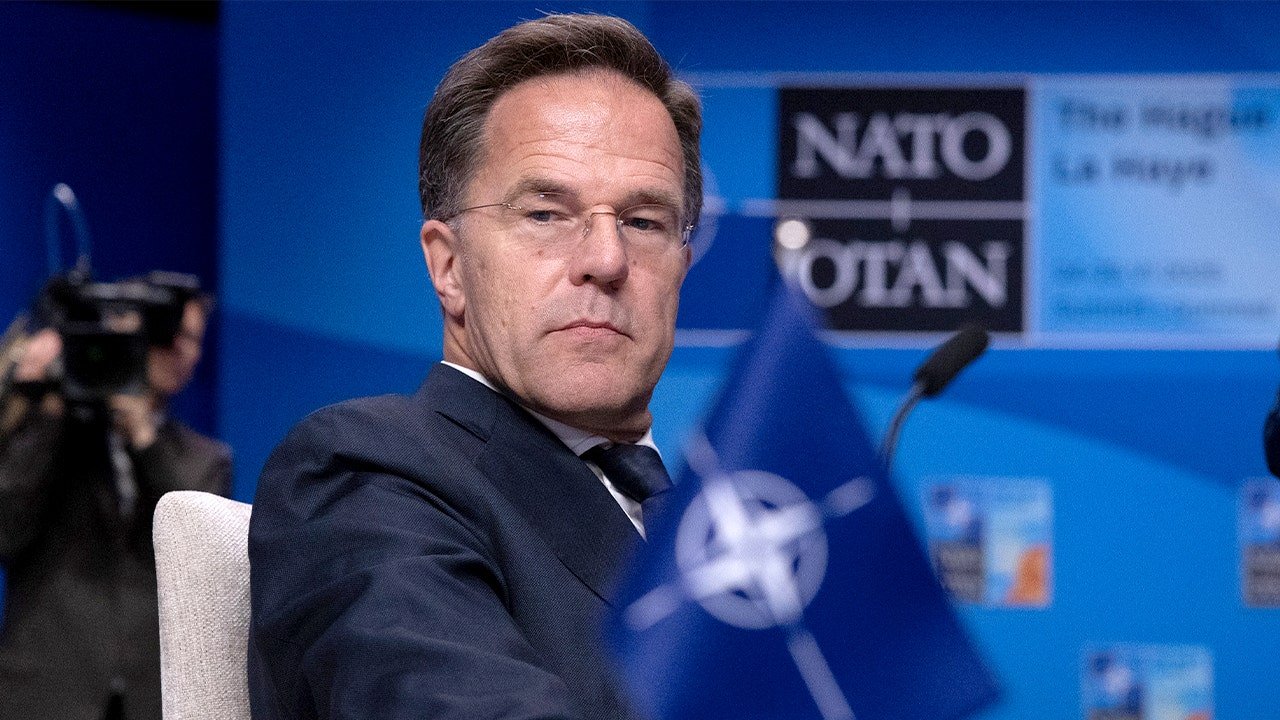
NATO Secretary General Mark Rutte warned members of the transatlantic alliance on Thursday that they could be Russia’s next target.
Rutte, delivering a keynote address at the Bavarian State Representation, hosted by the Munich Security Conference in Germany, evoked the night the Berlin Wall fell as a reminder of the power of unity.
«The dark forces of oppression are on the march again. I’m here today to tell you where NATO stands and what we must do to stop a war before it starts. And to do that, we need to be crystal clear about the threat. We are Russia’s next target. And we are already in harm’s way,» he said.
NATO members committed in June to increase defense spending to 5% of gross domestic product by 2035, heeding President Donald Trump’s calls to take more steps to bolster its security.
‘PUTIN IS PUSHING THE LIMITS’: EASTERN ALLIES WARN TRUMP NOT TO PULL US TROOPS
NATO leaders in June. (Reuters/Claudia Greco)
Rutte told attendees that the move wasn’t a moment for self-congratulations as Russia continues its large-scale drone and missile attacks on Ukraine.
«I fear that too many are quietly complacent. Too many don’t feel the urgency. And too many believe that time is on our side. It is not. The time for action is now,» he said.
The NATO chief urged allies to boost defense spending and production, saying their armed forces must have the resources needed to protect their homelands, and cautioning that Moscow could be ready to use military force against NATO within five years.
PUTIN WARNS RUSSIA ‘READY’ IF EUROPE ‘SUDDENLY WANTS TO WAGE WAR WITH US’ AMID UKRAINE TALKS
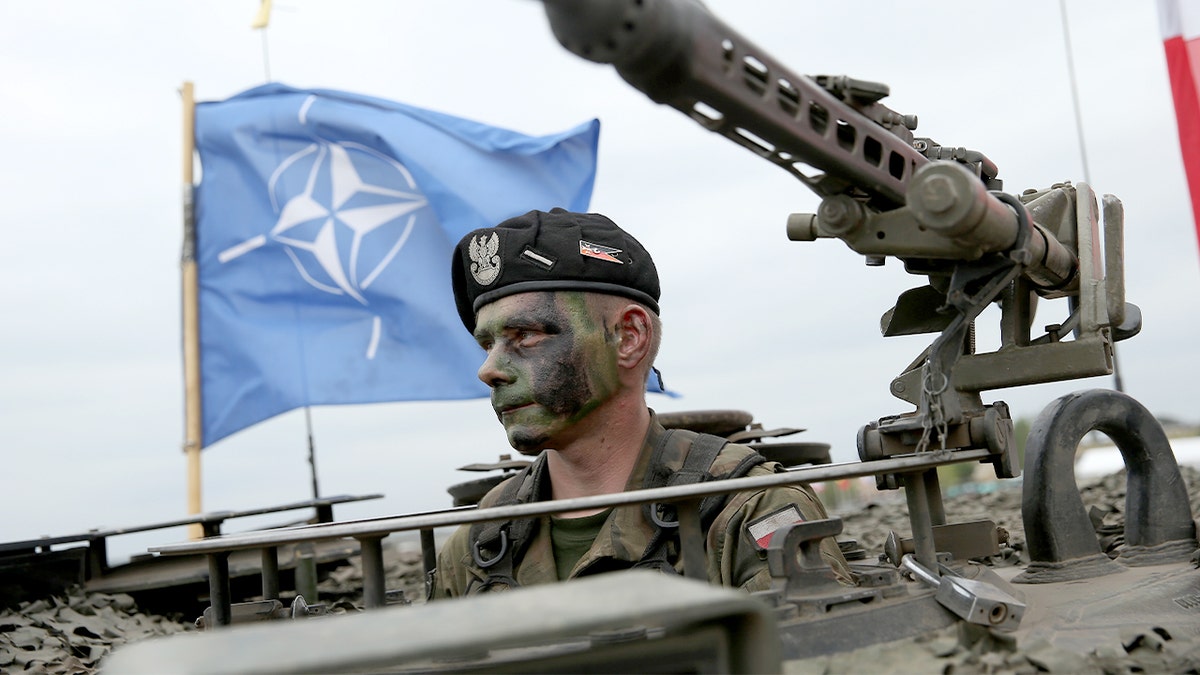
A Polish Army soldier sits in a tank as a NATO flag flies behind during the NATO Noble Jump VJTF exercises on June 18, 2015, in Zagan, Poland. (Sean Gallup/Getty Images)
«We must all accept that we must act to defend our way of life, now. Because this year, Russia has become even more brazen, reckless and ruthless towards NATO and towards Ukraine,» Rutte added. «During the Cold War, President Reagan warned about the aggressive impulses of an evil empire. Today, President Putin is in the empire building business again.»
TRUMP SAYS NATO COUNTRIES SHOULD SHOOT DOWN RUSSIAN JETS THAT VIOLATE AIRSPACE
Poland accused Russia of being responsible for a railway blast on its Warsaw-Lublin line in November.

A Koleje Mazowieckie train sits on the tracks with police tape nearby as Polish Prime Minister Donald Tusk visits the site of a blast on the Warsaw-Lublin line in Mika, Poland, Nov. 17, 2025. (KPRM/Handout via REUTERS)
CLICK HERE TO DOWNLOAD THE FOX NEWS APP
Prime Minister Donald Tusk said an investigation into the incident found that Russian Secret Services «commissioned the blast of the Polish railway and recruited two Ukrainians to do it.»
The railway blast was the latest in a string of security incidents in Eastern Europe, following airspace incursions in September that saw Russian drones enter Poland and three MiG-31 fighter jets cross into Estonia before being intercepted by NATO aircraft.
nato,europe,russia







INTERNACIONAL
Histórica liberación de reservas de petróleo: 32 países vuelcan 400 millones de barriles para frenar el precio del crudo
Alemania y Japón se adelantan
La mayor liberación de reservas
¿Qué pasa con China e India?
El efecto Ormuz
Reuniones preparatorias
INTERNACIONAL
Trump administration puts key Biden-era immigration policy on notice: ‘Unsustainable cycle’
NEWYou can now listen to Fox News articles!
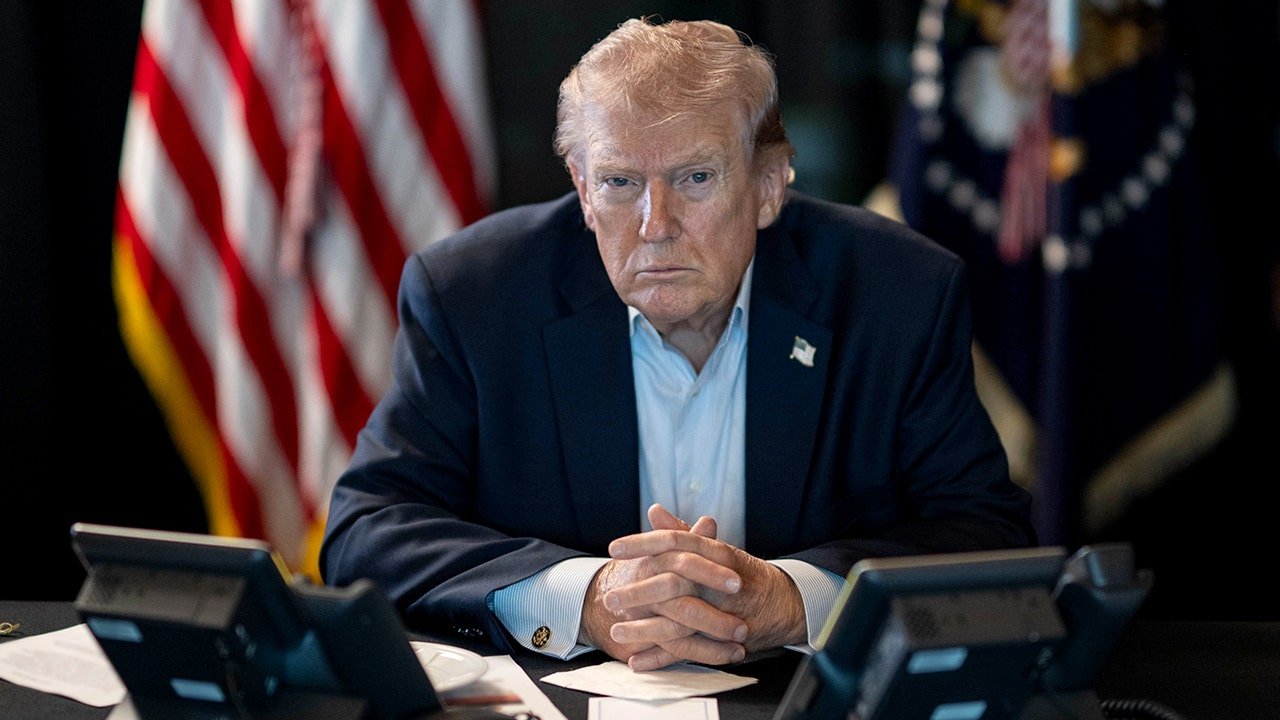
The Trump administration on Wednesday urged the Supreme Court to allow it to terminate the protected legal status of hundreds of thousands of Haitian migrants living in the U.S.
It’s the latest effort by the administration to unwind Biden-era protections of hundreds of thousands of migrants living in the U.S. as part of the president’s hard-line immigration enforcement agenda.
U.S. Solicitor General D. John Sauer urged the high court Wednesday to immediately intervene and overturn a lower court order that blocked the administration’s effort to immediately revoke the temporary protected status designation for some 350,000 Haitian migrants living in the U.S.
A majority of judges for the U.S. Court of Appeals for the D.C. Circuit also blocked the Trump administration’s bid to end the program, citing the «substantial» and «well-documented harms» the migrants would likely face as a result, clearing the way for the administration to appeal the case to the high court.
BIDEN-APPOINTED FEDERAL JUDGE RULES TRUMP’S ‘THIRD COUNTRY’ DEPORTATION POLICY IS UNCONSTITUTIONAL
The Supreme Court building in Washington, D.C. (AP Photo/J. Scott Applewhite, File)
In his filing Wednesday, Sauer urged the Supreme Court to review more broadly the issue of whether the Trump administration can revoke TPS protections for other migrants living in the U.S.
«Unless the court resolves the merits of these challenges — issues that have now been ventilated in courts nationwide — this unsustainable cycle will repeat again and again, spawning more competing rulings and competing views of what to make of this court’s interim orders,» Sauer said Wednesday. «This court should break that cycle.»
The TPS program in question allows individuals from certain countries to live and work in the U.S. legally if they cannot work safely in their home country due to a disaster, armed conflict or other «extraordinary and temporary conditions.»
Haitians were first granted TPS status in 2010 after the devastating earthquake that killed more than 200,000 people and left some 1.5 million in the country homeless.
The protections were extended several times, including under the Biden administration in 2021 after the July assassination of Jovenel Moïse, Haiti’s last democratically elected president.
‘BLANKIES,’ ICE TACTICS AND LUXURY JETS: TOP MOMENTS FROM NOEM’S HOUSE TESTIMONY
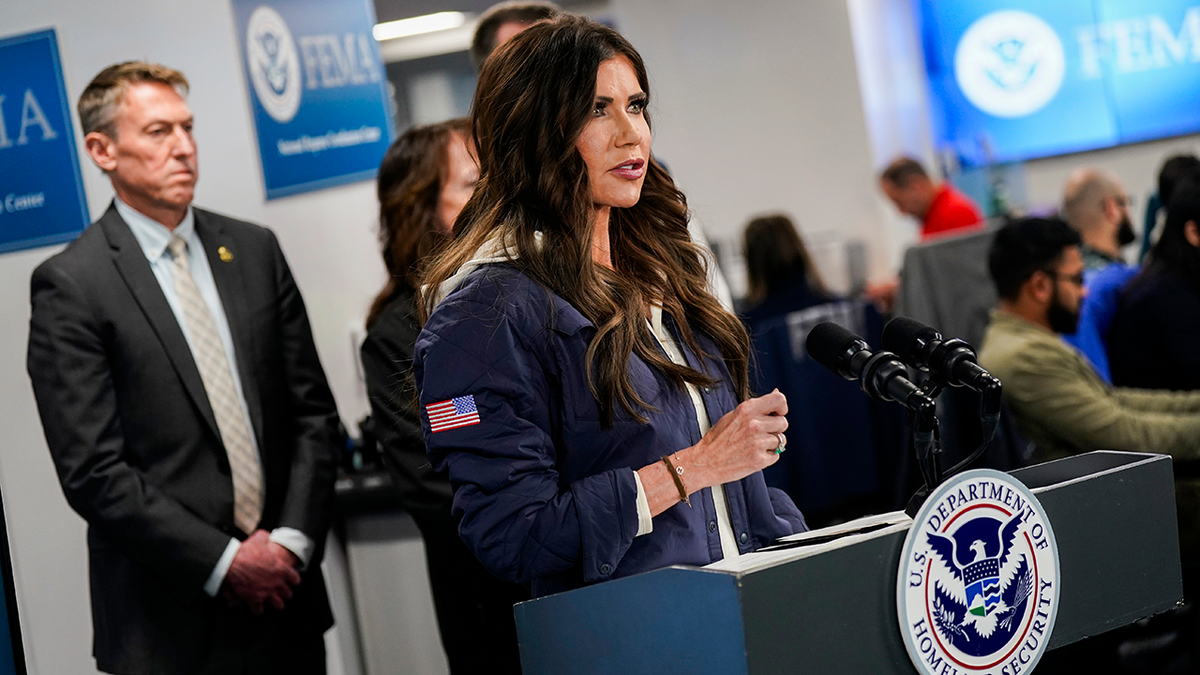
DHS Secretary Kristi Noem speaks from a podium as assembled DHS staff watch. (Al Drago/Getty Images)
DHS Secretary Kristi Noem announced in November that the U.S. would be ending TPS protections for Haitians in the U.S., prompting a group of individuals living in the U.S. with protected status to file suit.
The Trump administration’s Supreme Court filing marks the second time this year the administration has asked the high court to immediately intervene and allow it to strip TPS protections for certain migrants.
Lawyers for the Justice Department also asked the Supreme Court last month to allow it to revoke TPS designations for Syrian migrants in the U.S., though the high court has yet to rule on that request.
The appeal comes just weeks after U.S. District Judge Ana Reyes blocked the Department of Homeland Security from immediately revoking the TPS designations for Haitians in the U.S.
FEDERAL JUDGES IN NEW YORK AND TEXAS BLOCK TRUMP DEPORTATIONS AFTER SCOTUS RULING
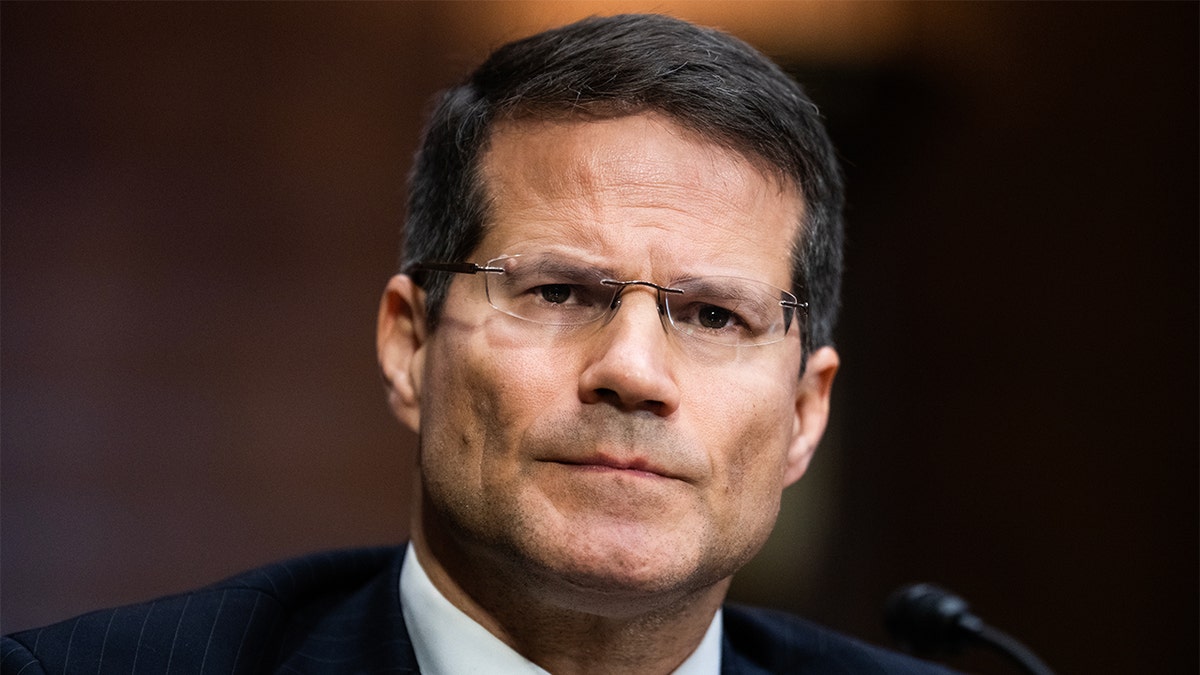
D. John Sauer, nominee to be solicitor general, testifies during his Senate Judiciary Committee confirmation hearing in Dirksen building Feb. 26, 2025. (Tom Williams/CQ-Roll Call, Inc via Getty Images)
Reyes described the administration’s effort to abruptly wind down the designation as «arbitrary and capricious» and accused DHS Secretary Kristi Noem of failing to consider the «overwhelming evidence of present danger» in Haiti, which she noted had prompted the Biden administration to extend TPS protections for Haitians in the first place.
«The government cannot name a single concrete harm from maintaining the status quo,» Reyes said. «And so instead it argues that the court’s decision is ‘an improper intrusion by a federal court into the workings of a coordinate branch of the government.’»
The appeal comes as the Trump administration has sought to wind down most TPS designations, arguing the programs have been extended for too long under Democratic presidents.
CLICK HERE TO GET THE FOX NEWS APP
Trump officials have also taken aim at lower courts that have sought to block or pause their efforts to wind down TPS protections, accusing the lower court judges of exceeding their authority and unlawfully intruding on the executive branch’s authority on immigration policy.
donald trump,supreme court,federal courts,politics,national security,immigration
INTERNACIONAL
Guerra en Medio Oriente: más de 30 países liberan 400 millones de barriles de petróleo para contener la suba de precios
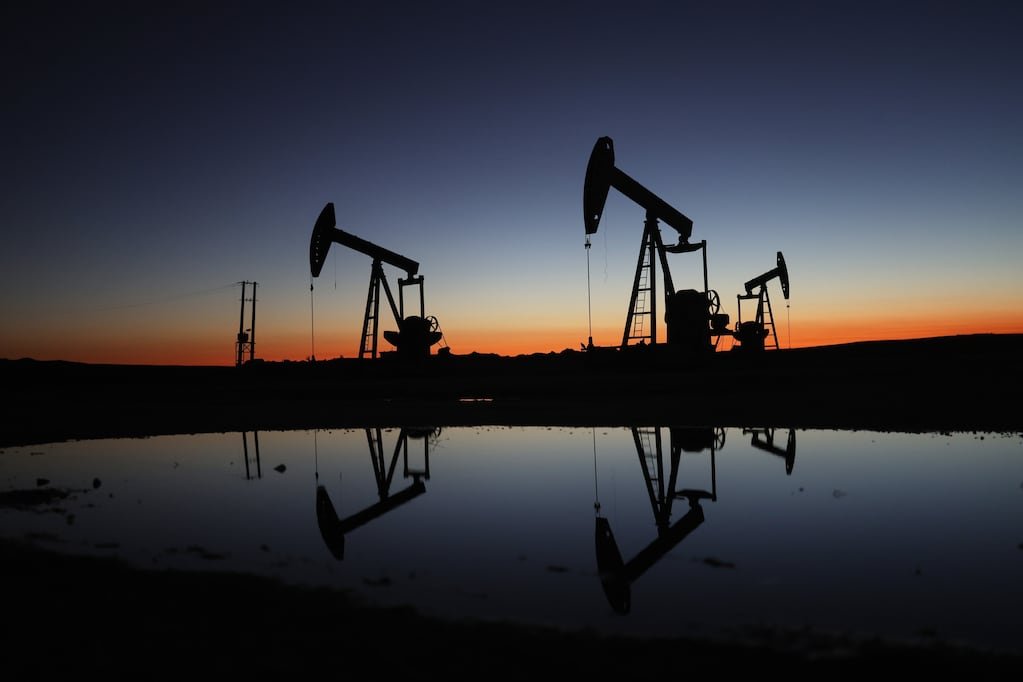
Más de 30 países acordaron por unanimidad liberar 400 millones de barriles de petróleo, que tenían en sus reservas, en un intento por frenar la escalada de precios originada por la guerra en Medio Oriente.
Así lo decidieron los 32 países miembros de la Agencia Internacional de la Energía (AIE), en lo que la entidad catalogó como el mayor desbloqueo de reservas de emergencia en su historia.
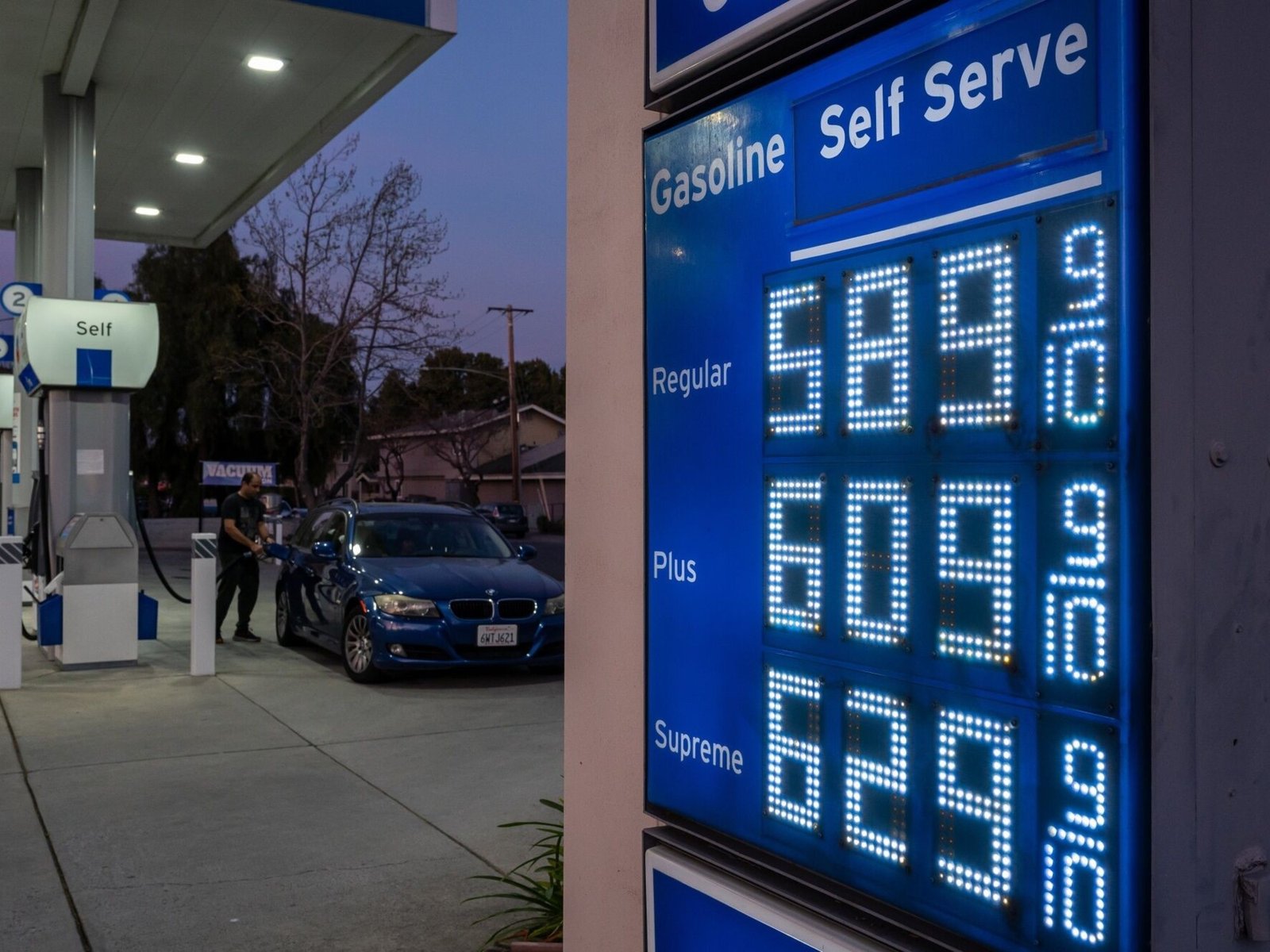
Este miércoles, el precio del petróleo Brent subía 4,7% y se acercaba a los US$92 por barril. Horas atrás de la medida de la AIE, Irán amenazó que el valor del crudo internacional rondaría los US$200.
Leé también: Irán se adjudicó el ataque a los barcos comerciales en el estrecho de Ormuz y envió otra advertencia: “Esperen un barril de petróleo a 200 dólares”
“Los países de la AIE pondrán 400 millones de barriles de petróleo (…) a disposición del mercado para compensar la pérdida de suministro por el cierre efectivo del estrecho de Ormuz”, anunció el director ejecutivo de la agencia, Fatih Birol.
“Se trata de una acción de gran envergadura que tiene como objetivo mitigar los efectos inmediatos de la perturbación de los mercados. Pero, para que quede claro, lo más importante para el retorno a unos flujos estables de petróleo y gas es la reanudación del tránsito por el estrecho de Ormuz”, afirmó el directivo.
Según Birol, las reservas de emergencia se pondrán a disposición del mercado según un calendario adaptado a la situación de cada país miembro y se complementarán con medidas de emergencia adicionales en algunas naciones. Nuevos recortes en la producción mundial de crudo (Foto: Reuters)
La guerra en Oriente Medio, que comenzó el 28 de febrero, afecta el comercio de petróleo a través del estrecho de Ormuz, un punto de paso crucial por el que transitan cada día 15 millones de barriles de petróleo y otros 5 millones de barriles diarios de productos petrolíferos, lo que representa aproximadamente el 25% del transporte mundial de petróleo por vía marítima.
Los miembros de la AIE poseen más de 1200 millones de barriles en sus reservas de emergencia, a los que se suman 600 millones de barriles de reservas en manos de la industria en virtud de obligaciones gubernamentales.
El anuncio de la AIE llegó mientras los líderes del G7, de las economías más avanzadas del mundo, estudian medidas para frenar las consecuencias económicas de la guerra entre Estados Unidos e Israel con Irán.
Leé también: Pese a la advertencia de Trump, Irán atacó barcos comerciales en el estrecho de Ormuz y crece la tensión
Los dirigentes del G7 tienen previsto reunirse por videoconferencia este miércoles para “tratar seguramente” el tema de las reservas energéticas, según el ministro francés de Economía, Roland Lescure.
En ese marco, Japón -cuyas reservas estratégicas de petróleo se encuentran entre las mayores del mundo- y Alemania afirmaron que también recurrirían a sus reservas de crudo.
La liberación coordinada de reservas de la AIE es la sexta en la historia de la institución, creada en 1974.
En 1991, antes de la guerra del Golfo, ya se llevaron a cabo acciones colectivas similares, así como en 2005, tras los huracanes Katrina y Rita, en 2011, con motivo de la guerra civil libia, y en dos ocasiones tras la invasión de Ucrania por parte de Rusia en 2022.
Nueva advertencia de Irán: “Esperen un barril de petróleo a US$200”
Irán advirtió este miércoles que no será posible bajar el precio del petróleo mediante “medidas artificiales” y que se puede esperar, por la presión que han impuesto en el estrecho de Ormuz, que el precio del barril suba a 200 dólares. Hoy, el barril Brent se ubicaba por encima de US$90.
“Deben saber que no podrán bajar el precio del petróleo y de la energía mediante medidas artificiales. Con la expansión de la guerra en la región, ya advertimos que pueden esperar un barril de petróleo de 200 dólares, porque el precio del petróleo depende de la seguridad en la región, y ustedes son la fuente de esa inseguridad», afirmó el portavoz del Cuartel General Central de Jatam al-Anbia, Ebrahim Zolfagari.
Petróleo, g7, Guerra en Medio Oriente

El primer 11 del Chacho: la formación de River Plate vs. Huracán, por la fecha 10 del Torneo Apertura

Chubut presentó su potencial productivo y tecnológico ante inversores internacionales en la Argentina Week en Nueva York

Qué dice el parte médico del diputado libertario que fue atacado de un cabezazo en Tucumán

¿Para qué usan la billetera virtual Mercado Pago los argentinos?

¿Cuándo es la revancha y qué necesita el Inter de Messi para avanzar a cuartos en la Concachampions?

Gran Hermano: quiénes fueron los siete participantes que salieron de placa antes de la gala de eliminación

La cruda confesión de Amalia Granata por el trastorno que sufre su hijo Roque: “Le hicimos estudios y salió que tiene TDAH, dislexia y disgrafia”

Jenny Mavinga angustiada tras una quemadura en Gran Hermano 2026: “¡Ay, me quemó!

El mercado le está corriendo el arco a Caputo y el riesgo país no baja: en la City palpitan medidas