INTERNACIONAL
New York subway hearing erupts as MTA boss snaps ‘shut up’ amid grilling over guards letting fare jumpers walk


NEWYou can now listen to Fox News articles!
A joint New York State budget hearing devolved into a shouting match when a Long Island Republican challenged the MTA’s Hochul-appointed chairman over a $35 million security deal, questioning why contracted guards appear to be letting fare evaders walk amid claims the agency is rife with waste.
State Sen. Mario Mattera, R-St. James, sharply questioned Janno Lieber over a $35 million contract for private security guards at subway stations as the transit authority grapples with rising fare evasion amid higher fares for paying straphangers.
Mattera previously spoke out in opposition to the major contract with Allied Security Services of Conshohocken, Pennsylvania, as the latest example of systemic waste from the transit agency’s coffers.
THE ROAD AHEAD FOR TRANSIT IN NEW YORK CITY IN 2026 INCLUDES FARE HIKES
Lieber initially objected to the line of questioning, saying that anyone working as a gate guard for Allied is a New Yorker.
«It’s not a bunch of Pennsylvanians,» he said.
New York State budget hearing erupts into shouting match (New York State Assembly)
Mattera pointed to reports in the New York Post and elsewhere saying guards are letting people essentially jump the turnstiles, including when riders have issues scanning in during the city’s post-Metro Card era.
«Why do we have people helping people avoid tolls? We have videos,» he said.
Lieber became similarly angry after Mattera spoke over him.
«Let me finish. Let me finish,» Lieber said.
«You’re rambling,» Mattera said. «Why do we have this?»
Lieber replied that Allied’s guards reduced fare evasion by more than one-third since the contract was signed, but the two kept shouting over each other before Lieber could be heard yelling, «Shut up.»
«Be quiet,» he said, before Mattera demanded — and received — an apology from the Hochul appointee.
NY GOVERNOR POURS COLD WATER ON MAMDANI FREE BUS PLAN
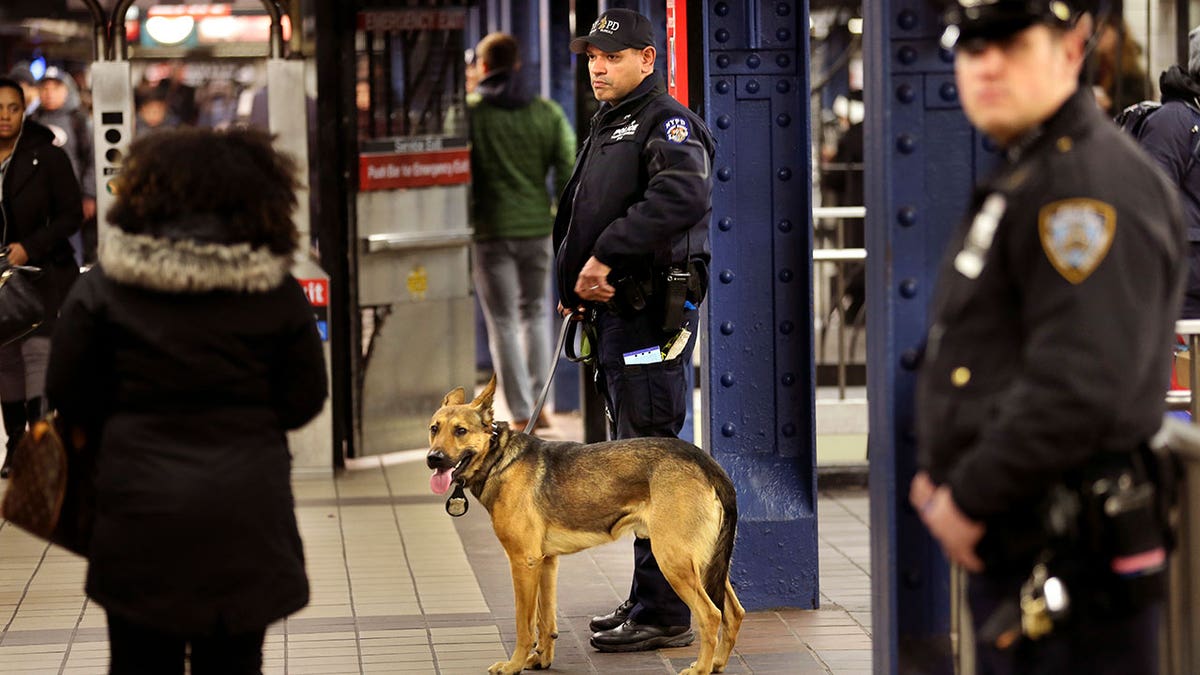
Police officers patrol the passageway connecting New York City’s Port Authority bus terminal and the Times Square subway station Dec. 12, 2017. (AP Photo/Seth Wenig, File)
Committee Chairman J. Gary Pretlow, D-Mount Vernon, soon slammed his gavel and also yelled «shut up,» admonishing both men.
«Raising voices will not be tolerated,» Pretlow was quoted as saying by the South Shore Press amid the crosstalk.
One guard interviewed by the New York Post said a lot of people don’t want to pay their fare.
«They say, ‘You’re not a cop, you can’t stop it’,» Romuald Zampou told the paper.
One of New York City’s few Republicans in the state Senate, Steve Chan of Bensonhurst, Brooklyn, said in a statement before the hearing that the guards are no better than «scarecrows.»
«Instead of paying outrageous salaries to people who stand around like scarecrows and do absolutely nothing to stop fare evasion, the MTA and the city must take the handcuffs off our police officers,» said Chan, a former cop.
«Let them issue summonses, make arrests and pressure district attorneys to prosecute fare evaders. We’ve done it before. We know it works.»
CLICK HERE TO DOWNLOAD THE FOX NEWS APP
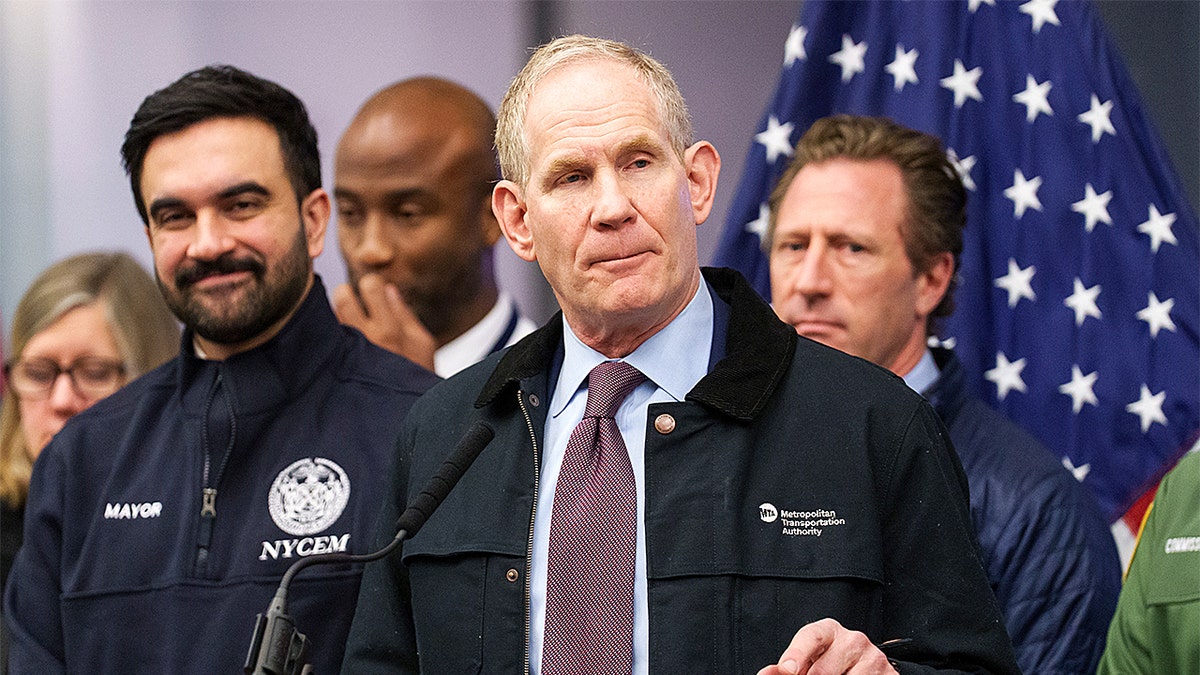
Zohran Mamdani, mayor of New York, left, and Janno Lieber, CEO of the Metropolitan Transportation Authority during a storm briefing at the New York City Emergency Management center in the Brooklyn borough of New York Jan. 23, 2026. (Adam Gray/Bloomberg via Getty Images)
State Sen. Bill Weber, R-Clarkstown, whose suburban commuters often rely on MTA heavy rail out of Suffern, Spring Valley and Tarrytown, said the security guard expenditure is just the latest transit boondoggle.
«It’s clear the MTA needs a full audit, and, now, so do its subcontractors,» Weber said in a statement.
new york,state and local,cops,politics,new york city










INTERNACIONAL
El petróleo sube mientras caen las bolsas globales y los futuros de Wall Street tras el discurso de Trump sobre la guerra
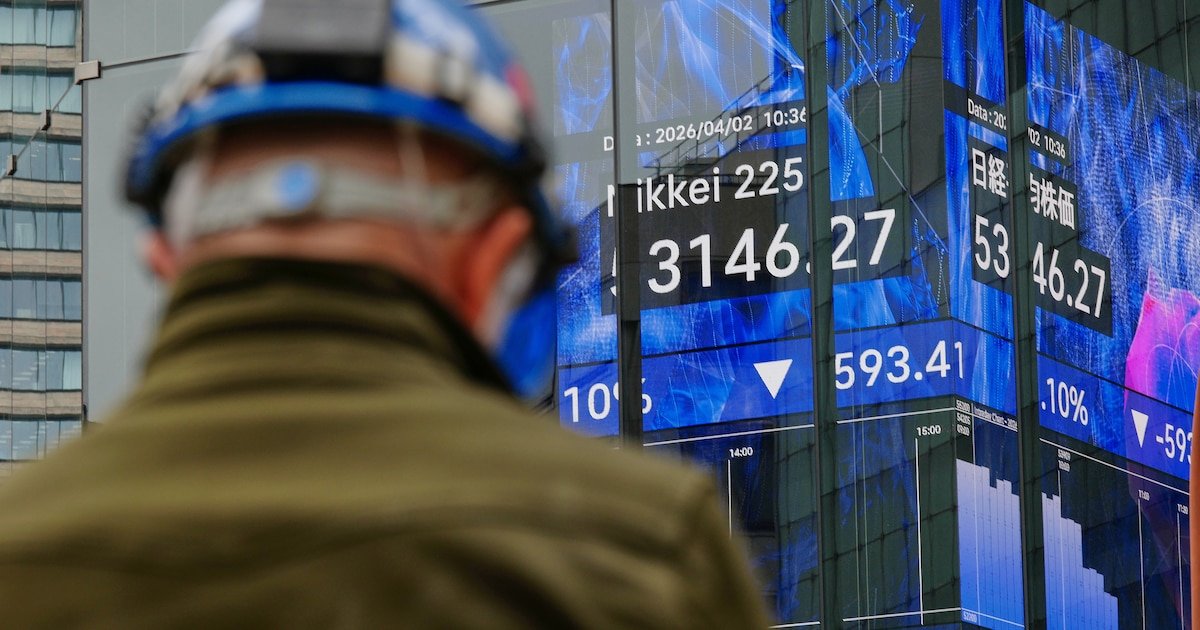
El petróleo subió más del 10% y los futuros estadounidenses se desplomaron el jueves después de que el presidente Donald Trump declarara en su primer discurso a la nación desde el inicio de la guerra con Irán que Estados Unidos intensificará su campaña en las próximas semanas.
Los futuros del S&P 500 cayeron un 1,5% antes de la apertura, mientras que los del Dow Jones perdieron un 1,4%. Los futuros del Nasdaq retrocedieron un 2%.
El jueves fue el último día de negociación de la semana debido al feriado del Viernes Santo. Los mercados no han registrado ganancias semanales desde que comenzó la guerra a finales de febrero.
Un portavoz del ejército iraní insistió el jueves en que Teherán mantiene depósitos ocultos de armas, municiones e instalaciones de producción.
“Los centros que creen haber atacado son insignificantes, y nuestra producción militar estratégica se lleva a cabo en lugares que desconocen y a los que jamás llegarán”, afirmó el teniente coronel Ebrahim Zolfaghari.
El precio del barril de petróleo brent, el de referencia en Europa, repuntaba un 7,63 % en la apertura del mercado de este jueves, después de que el presidente estadounidense, Donald Trump, se mostrara algo ambiguo sobre el futuro del conflicto en Irán.
Las palabras del republicano golpearon también a los futuros en Wall Street -con el Dow Jones de Industriales, el S&P 500 y el Nasdaq dejándose en torno a un 1 % cada uno– y a los parqués asiáticos, donde el Nikkei nipón perdía un 1,4 % y el Kospi surcoreano retrocedía un 3 %.
Cerca de una hora después del comienzo de la sesión, el precio del barril de brent era de 107,87 dólares, tras subir ese 7,63 %; asimismo, el petróleo de Texas (WTI, por sus sigla en inglés) también acusaba la incertidumbre sobre la reapertura del estrecho de Ormuz, por donde transita buena parte del crudundial.
El presidente estadounidense ha asegurado esta madrugada que, una vez que termine la guerra, el estrecho de Ormuz “se abrirá de forma natural” porque Irán requerirá de la venta de petróleo para reconstruirse, si bien no ofreció detalles precisos sobre cómo garantizar la reapertura de esta estratégica ruta.
El barril WTI se encarecía un 7,71 % hasta 106,58 dólares, del mismo modo que el gas natural para entregar a un mes en el mercado TTF de Países Bajos, el de referencia en Europa, repuntaba un 2,04 % hasta 49,14 euros el megavatio hora.
El petróleo intermedio de Texas (WTI, por sus siglas en inglés) volvió a escalar de manera contundente este miércoles, encareciéndose más de un 4 % hasta superar los 104 dólares.
Después de recortar su cotización en más de un 1 % durante la jornada del miércoles ante las expectativas de que Trump pudiera anunciar el fin de la guerra contra Irán, los contratos de futuros del WTI volvieron a dispararse en cuanto el republicano aseguró que EEUU buscará devolver a Irán “a la Edad de Piedra”.
Las principales bolsas de Asia abrieron este jueves con pérdidas, en un contexto de aumento de los precios del petróleo.
Trump afirmó la noche del miércoles que Estados Unidos completará sus objetivos militares en Irán en unas “dos o tres semanas”, periodo en el que aseguró que atacará “con mucha fuerza” a la república islámica, a la que amenazó con “devolverla a la Edad de Piedra”.
Ante este panorama de agitación internacional, el petróleo intermedio de Texas (WTI) subió un 6,4% y superó los 106,55 dólares el barril. El crudo Brent, de referencia internacional, aumentó un 6,9%, hasta los 108,15 dólares por barril.
“Si no se alcanza un acuerdo, atacaremos con fuerza todas sus centrales eléctricas, probablemente de forma simultánea”, fue otras de las declaraciones del inquilino de la Casa Blanca en su presentación, donde no mencionó el plazo límite que había fijado Irán para la reapertura del estrecho de Ormuz, la vía marítima fundamental para el transporte mundial de petróleo y gas.
Tampoco ofreció una solución clara para las interrupciones en el suministro que han provocado el alza de los precios de la energía.
Los principales índices bursátiles de Tokio y Seúl abrieron casi sin cambios este jueves, pero comenzaron a registrar caídas significativas tras las declaraciones del presidente estadounidense Donald Trump. Los sectores financiero, industrial y energético fueron los más afectados, dada su mayor exposición al encarecimiento del crudo.

Unas dos horas después del inicio de las operaciones en Japón, el índice Nikkei retrocedió un 2,4%, perdiendo 908,40 puntos, hasta situarse en 52.831,28 unidades. Este indicador había subido un 5,24% en la sesión previa, impulsado por expectativas de un posible fin cercano de la guerra en Medio Oriente.
El Topix, índice más amplio de la bolsa tokiota que agrupa a las firmas de mayor capitalización, bajaba un 1,22%, o 44,69 puntos, colocándose en 3.626,21 enteros.
En Corea del Sur, el Kospi cayó un 4,5%, hasta los 5.234,05 puntos, tras haber avanzado un 3,5% la víspera. El Kosdaq, índice de empresas tecnológicas y de mediana capitalización, se redujo un 3,79%, hasta situarse en 1.073,90 unidades.
Las principales bolsas de China continental, Hong Kong y Taiwán abrieron en rojo tras el discurso del presidente estadounidense, Donald Trump.
En los primeros minutos posteriores a la alocución, el índice Hang Seng de la Bolsa de Hong Kong cedió un 1,3%, mientras que los mercados de Shanghái y Shenzhen bajó un 0,32% y un 0,83 %, respectivamente. El CSI 300, que agrupa a los 300 principales valores de esos dos mercados, descendió un 0,44% a esa hora.
En la Bolsa de Beijing, con menor peso por su reciente creación y enfoque en pymes, la caída fue del 2,14 %. Al mismo tiempo, el Taiex de la Bolsa de Taipéi, en Taiwán, retrocedió un 1,9%.
Los principales índices bursátiles de India registraron caídas superiores al 2%, tras las advertencias del presidente estadounidense Donald Trump sobre la intensificación de la ofensiva contra Irán.
Dentro de la Bolsa de Bombay, el BSE Sensex retrocedió un 2%, situándose en un mínimo de 71.545,81 puntos, mientras que el Nifty 50 descendió en igual proporción, alcanzando los 22.182,55 enteros.

En el Sudeste Asiático también predominaban los retrocesos, con el índice de Yakarta (JCI) liderando las bajas al perder un 1,25%, seguido por el KLCI de Malasia, que caía un 0,96%. El índice S&P/ASX 200 de Australia cayó un 1,1%, hasta los 8.579,50 puntos.
El miércoles, la expectativa de un fin próximo de la guerra impulsó el optimismo en el mercado bursátil estadounidense: el S&P 500 subió 0,7% hasta 6.575,32 unidades, mientras que el Dow Jones avanzó 224 puntos y el Nasdaq ganó 1,2%.
(Con información de EFE)
Corporate Events,Government / Politics
NEWYou can now listen to Fox News articles!
The 48-day Department of Homeland Security shutdown is one step closer to ending after the Senate moved to fund most of the department Thursday morning.
The Senate agreed via voice vote to send a bipartisan deal funding the whole department except for President Donald Trump’s immigration enforcement and border security efforts to the House for consideration.
The chamber is not expected to vote on the legislation until House lawmakers return to Washington on April 13.
The Senate vote follows GOP leaders endorsing a two-track approach to funding DHS on Wednesday, with President Trump giving lawmakers a hard deadline to end the record-breaking funding lapse.
House Speaker Mike Johnson, R-La., is expected to take up the Senate’s DHS bill after rejecting it last week. (Getty Images)
HOUSE CONSERVATIVES RAGE AGAINST SENATE DHS SHUTDOWN DEAL
The Senate bill accomplishes the first phase of the plan by working with Democrats to fund as much of DHS as possible on a bipartisan basis. However, it would zero out funding for ICE and much of the Border Patrol, save for $11 billion in customs funding going to the agency. Additionally, $10 billion teed up for ICE won’t be funded under the measure.
As for ICE and the Border Patrol, Republicans have said they will seek three full years of funding for both of these agencies in a party-line budget reconciliation package that will bypass Democrats’ opposition. Trump says he wants the forthcoming bill on his desk by June 1.
«We are going to work as fast, and as focused, as possible to replenish funding for our Border and ICE Agents, and the Radical Left Democrats won’t be able to stop us,» Trump wrote on Truth Social on Wednesday.
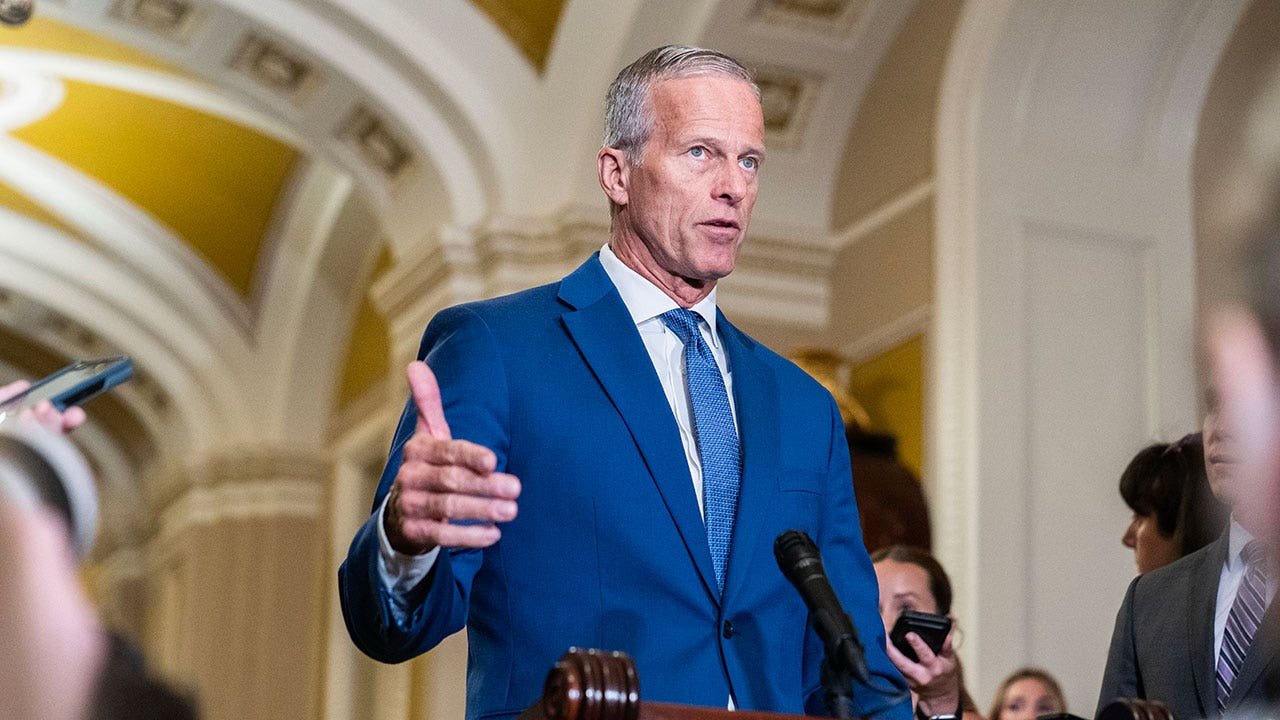
The Senate bill’s passage on Thursday was a déjà vu moment for Senate Majority Leader John Thune, R-S.D., who helped steer the same measure through the upper chamber last week.
But House GOP leadership sharply rejected it, calling the measure’s exclusion of ICE and CBP money a «crap sandwich» and warning about the risks of funding those entities using the budget reconciliation process. The chamber then put forward a rival proposal that Senate Minority Leader Chuck Schumer, D-N.Y., made clear was «dead on arrival» in the Senate.
House Speaker Mike Johnson, R-La., appeared to relent Wednesday after Trump issued a statement outlining an end to the shutdown that appeared to side with Thune’s two-part approach to funding the department.
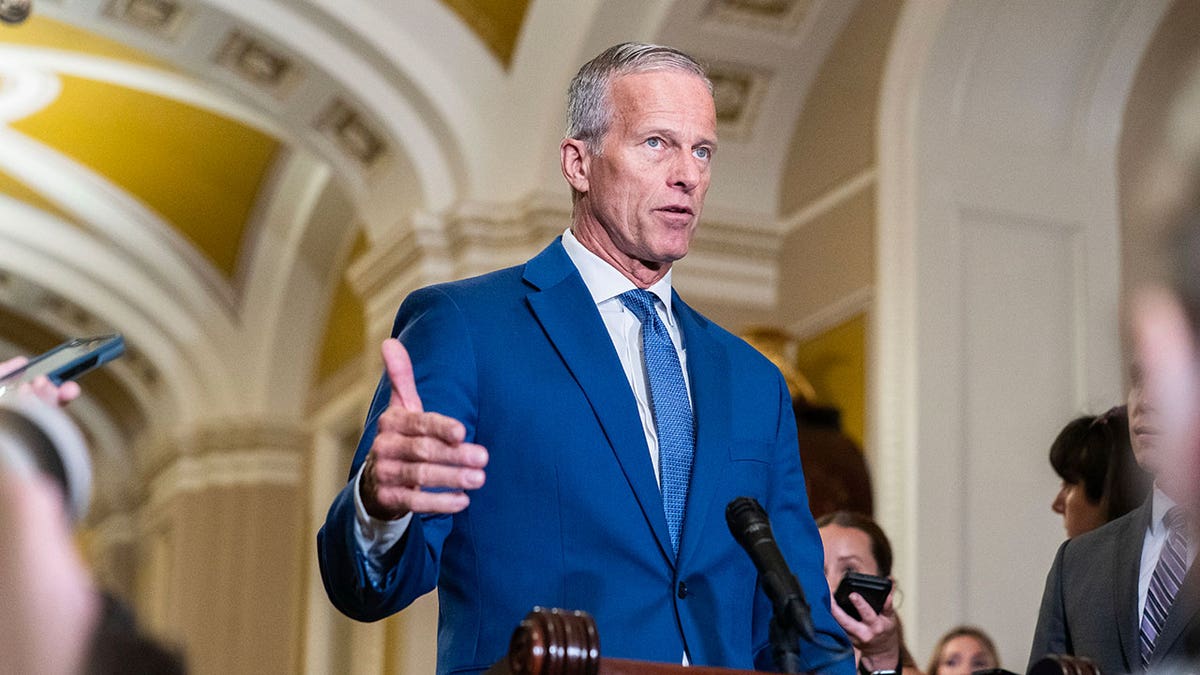
President Donald Trump has appeared to side with Senate Majority Leader John Thune’s two-track approach to funding the Department of Homeland Security and ending the record-breaking shutdown. (Maxine Wallace/The Washington Post via Getty Images)
GOP INFIGHTING, DEMOCRATS’ UNMET DEMANDS AND A CLEAR WINDFALL: WHO’S WINNING AND LOSING THE DHS SHUTDOWN
As the DHS shutdown drags on, Trump and congressional Republicans are gambling that budget reconciliation will be the way to fund immigration enforcement for several years to come. Some Republicans have floated funding ICE not just through Trump’s term, but for up to a decade.
The GOP used the same process to fund ICE last year, teeing up $75 billion for enforcement operations for the next four fiscal years.
But the party-line process comes with a host of challenges that could test Republican unity in an election year.
GOP lawmakers will have to identify spending cuts to pay for it. When Republicans used the process to pass Trump’s One Big Beautiful Bill Act in July 2025, lawmakers nearly stumbled at the finish line over disagreements on cuts to federal Medicaid spending and food assistance programs.
Without a looming deadline like the expiration of Trump’s 2017 tax cuts that Republicans extended in July 2025 through the «big, beautiful bill,» some GOP lawmakers have voiced concern that the party will stay unified.
Republicans have proposed adding other issues into the reconciliation mix, including supplemental funding for the Iran war, affordability measures, the president’s tariff regime and pieces of the election integrity-focused SAVE America Act.
The budget reconciliation process allows a party with control of the White House and both chambers of Congress to pass tax and spending priorities with a simple majority threshold, though the process is governed by stringent requirements for what is eligible to be included.
Punting ICE and CBP money to a future spending bill could also negatively affect support staff employed by both agencies who have not been paid during the seven-week shutdown.
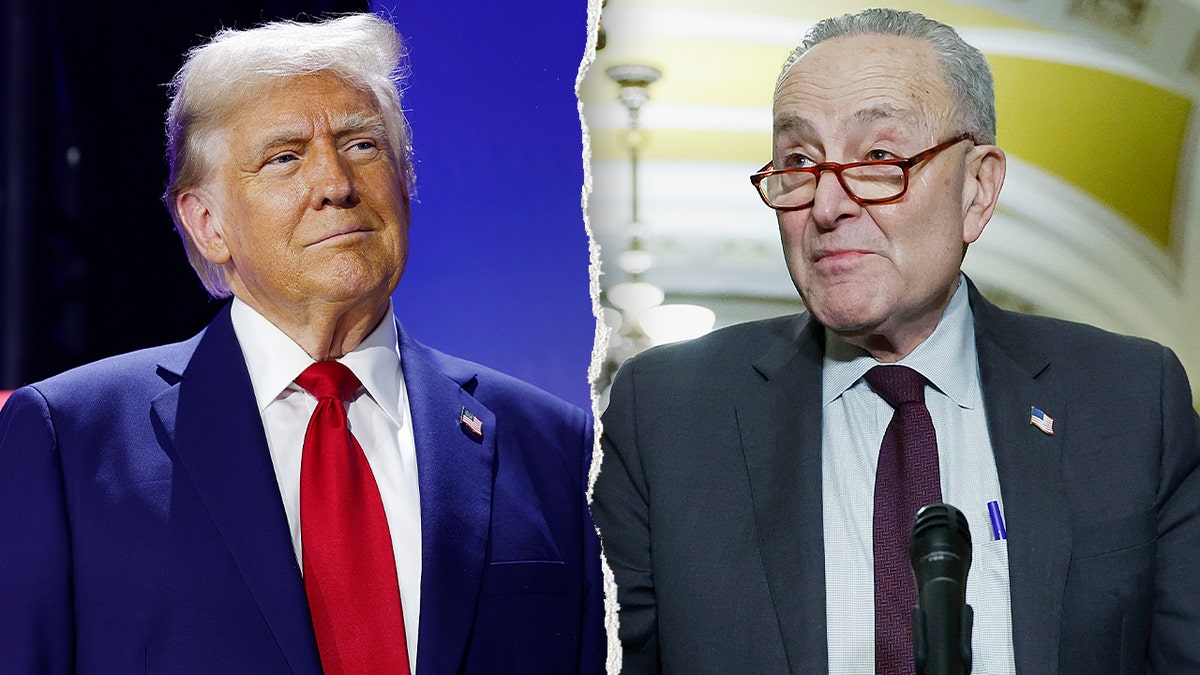
Senate Minority Leader Chuck Schumer, D-N.Y., claimed victory on Wednesday for forcing Republicans to fund President Donald Trump’s border security and immigration enforcement agenda outside the normal appropriations process. (Anna Moneymaker/Getty Images; Kevin Dietsch/Getty Images)
CLICK HERE TO DOWNLOAD THE FOX NEWS APP
Democrats have repeatedly blocked funding for ICE and the Border Patrol in the Senate since the beginning of the shutdown in mid-February. Though none of their proposals to reform immigration enforcement have been adopted, Democratic leaders claimed victory on Wednesday.
«Throughout this fight, Senate Democrats never wavered,» Senate Minority Leader Chuck Schumer, D-N.Y., said Wednesday. «We were clear from the start: fund critical security, protect Americans, and no blank check for reckless ICE and Border Patrol enforcement.
«We were united, held the line, and refused to let Republican chaos win.»
The Senate deal funding most of DHS could still face roadblocks in the House. A handful of conservatives have already said they will vote «no» while using the same messaging employed by House GOP leadership to oppose the bill last week.
«Let’s make this simple: caving to Democrats and not paying CBP and ICE is agreeing to defund Law Enforcement and leaving our borders wide open again,» Rep. Scott Perry, R-Pa., wrote on social media Wednesday. «If that’s the vote, I’m a NO.»
government shutdown, homeland security, john thune, mike johnson, republicans



Multitudinaria vigilia por Malvinas en Río Grande: viajaron gobernadores y referentes del oficialismo y la oposición

Arranca el frío y siguen las lluvias: así estará el clima en el AMBA este fin de semana extralargo de Pascuas

La luna de miel de Coco Sily y Chimi Meza en Brasil: “Sos todo lo que alguna vez soñé”

Guardiola, el sueño imposible de Italia

La Justicia ordenó detener a Apablaza por el crimen de Jaime Guzmán y Chile pidió “mayores esfuerzos” para encontrarlo

El petróleo sube mientras caen las bolsas globales y los futuros de Wall Street tras el discurso de Trump sobre la guerra

Nuevas críticas de Marcela Pagano contra los Milei: “Karina es la que gobierna”, aseguró

Dos jubiladas que le habrían prestado dinero a Manuel Adorni negaron conocerlo

Quiénes son las dos acreedoras del préstamo con el que Adorni compró su departamento en Caballito

El incómodo momento que Wanda Nara y Martín Migueles le habrían hecho pasar a los japoneses en el tren bala: la foto

 POLITICA2 días ago
Dos jubiladas que le habrían prestado dinero a Manuel Adorni negaron conocerlo
- POLITICA3 días ago
Quiénes son las dos acreedoras del préstamo con el que Adorni compró su departamento en Caballito
- POLITICA1 día ago
El Gobierno reevalúa la estrategia de comunicación por el caso Adorni y mide el impacto en la imagen de Milei