INTERNACIONAL
Newsom’s claim Texas and Florida are the ‘real high tax states’ picked apart by expert: ‘Fatally flawed’


NEWYou can now listen to Fox News articles!
California Gov. Gavin Newsom’s repeated claims in recent weeks promoting his state as more tax-friendly than Florida and Texas don’t add up, according to an expert who ran the numbers.
«Texas and Florida are the REAL high-tax states,» Newsom recently posted on X, explaining onstage at SXSW in Austin, Texas that California has the most «progressive tax rates in America» while taking shots at the tax burden in Florida and Texas.
«Your middle class pays more taxes in Texas than our middle class in California,» Newsom said in Texas. «It’s a great mythology, it’s just ‘the richest of the rich come here because they can avoid paying a damn penny.’»
The comments drew pushback from conservatives on social media, including Florida Gov. Ron DeSantis, and from Just Facts President James Agresti, who says he looked into a «number of different angles» to determine the «validity» of Newsom’s claims.
FROM ‘JUMP ON A BUS’ TO TAX CRACKDOWNS: BLUE STATES CHASE WEALTHY RESIDENTS FLEEING TO RED HAVENS
California Gov. Gavin Newsom during a bill signing event on Aug. 21, 2025, in Sacramento. (Justin Sullivan/Getty Images)
«I looked at how much is each state taxing each of its citizens on average? So if you look at California, they collect about $10,000 a year in taxes for every person in the state, whereas the figures for Texas and Florida are only about $5,000, or about half as much,» Agresti told Fox News Digital.
«However, California is a higher-income state, so I also looked at it as a percentage of the states’ economies and what I found is that California taxes about 14% of its economy, as opposed to 9% for Texas and Florida.»
Just Facts broke those taxes down in a recent study and found that California imposes some of the highest taxes in the nation, with a top personal income tax rate of 13.3%, while both Texas and Florida have no state income tax.
Property taxes in California account for about 2.8% of personal income, slightly lower than Texas at 3.6% and close to Florida’s 2.6%, though measured as a share of home values, California’s rates are generally lower than both states, but in other tax areas, California is largely more burdensome.
The state’s unemployment insurance tax rate matches Texas at 6.2%, but is higher than Florida’s 5.4%. California also has a higher statewide sales tax at 7.2%, compared to 6.2% in Texas and 6.0% in Florida. Drivers in California face significantly higher gas taxes as well, paying 70.9 cents per gallon, more than triple Texas’ 20 cents and well above Florida’s 40.3 cents.
PROPOSED CALIFORNIA WEALTH TAX DRIVES BILLIONAIRE EXODUS TO FLORIDA REAL ESTATE, LOCALS CONFIRM
A Wallethub 2025 analysis ranking U.S. states by overall tax burden showed California coming in at 4th overall, behind Vermont, New York and Hawaii. On a per-capita basis, California also collects significantly more in state and local taxes than either state, according to data from the Tax Foundation.
At the heart of the issue is the data, Agresti says, making the case that Newsom is likely pulling from the Institute On Taxation & Economic Policy (ITEP) which Agresti said is widely used by mainstream news outlets and experts but is «fatally flawed» because «it does not account for all forms of income or all taxes.»
Agresti has been speaking out against ITEP’s methodology for over a decade, explaining in a 2015 post that the group «uses a partial measure of income in virtually all of its studies» and is «based on calculations that exclude certain taxes.»
CALIFORNIA BILLIONAIRES FLEE STATE’S WEALTH TAX IN THE MOST-PREDICTABLE RESULT EVER
ITEP’s analysis focuses on how tax burdens are distributed across income groups rather than overall tax levels. The group argues that states such as Texas and Florida look «low tax» largely because they do not levy a broad-based personal income tax, a structure that disproportionately benefits high earners.
To make up the difference, those states rely more heavily on sales, excise and property taxes, which tend to take a larger share of income from lower-income households. California, by contrast, uses a highly progressive income tax system that places more of the burden on top earners and helps offset regressive taxes lower down the income ladder.
Critics, however, say that framing captures only part of the picture because it focuses on tax burden by income group rather than overall tax climate, where California remains far more burdensome for top earners, investors and many businesses.
«It’s information from this group and others like it, by the way, that have misled people to believe that middle-income folks in the United States pay a higher federal tax rate than upper-income folks,» Agresti said.
«In fact, a survey done by Just Facts found that about 80% of America’s voters believe this fiction, even though the Congressional Budget Office, the U.S. Treasury, and the center-left Tax Policy Center all say that middle-income Americans pay an average effective federal tax rate of about 15% while upper income, or the top 1%, pay a rate of about 30%. And by the way, that includes all taxes and all income, all tax loopholes, it’s basically all taxes paid divided by all income earned or received.»
Fox News Digital reached out to ITEP for comment.
Agresti said Newsom is a «master of twisting statistics to paint a picture that is the exact inverse of reality» and pointed to the governor’s claim that the exodus of residents due to high taxes is a «myth.»
«Here’s the facts: According to his own Secretary of State, every year of Newsom’s governorship, more people have moved out of California into other states than have moved from other states into California,» Agresti, who has posted the data on his website, said. «In fact, over the time of his governorship, about 1.5 more million people have left California than moved in.»
«So how does Newsom get his claim, his evidence? Well, he looks at total population growth, which is dominated by immigrants moving in from other countries. The issue is not whether people would rather live in California than Mexico, but whether they would rather live in California than other states. And the data clearly show they do not.»
CLICK HERE TO DOWNLOAD THE FOX NEWS APP
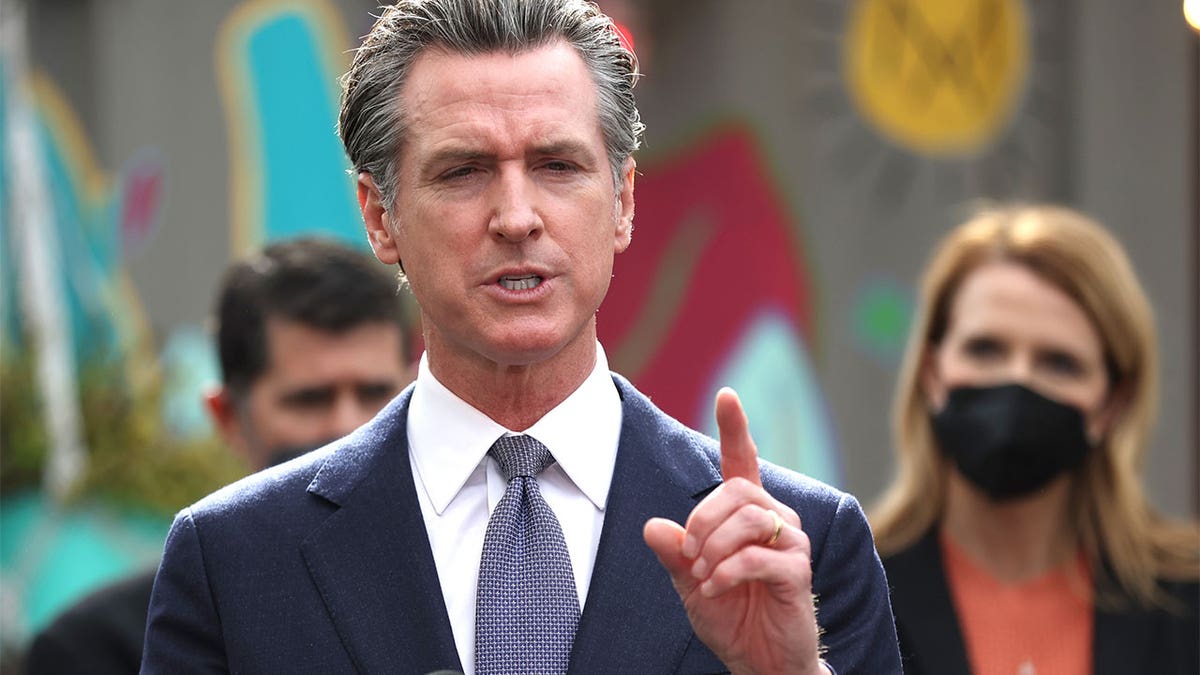
Democratic California Gov. Gavin Newsom (Justin Sullivan/Getty Images)
Newsom has also been touting data showing California now has the fourth-largest economy in the world, just surpassing Japan’s, which Agresti also took issue with and described as «fiction» according to his examination of the numbers.
«Here’s the fatal flaw in what he’s doing there,» Agresti said. «He is converting Japanese yen into U.S. dollars using a highly deceptive measure called foreign currency exchange rates. Scholars in this field warn explicitly: You are not to convert GDPs using exchange rates because it inflates the relative sizes of economies that have high prices, as California does. When you actually look at the proper way to transfer these exchange rates and account for them, Japan’s GDP is 56% larger than California’s.»
Additionally, Agresti pointed to data that shows California has a greater rate of poverty than any other state in the nation, as well as electricity prices that are more than twice the national average.
«When you look at California as a whole, it is one of the highest-tax states in the nation, and also there’s a lot of fallout from Newsom’s policies that make it one of the most expensive places to live in the entire United States,» Agresti said.
Fox News Digital reached out to Newsom’s office for comment.
Fox News Digital’s Bradford Betz contributed to this report.
politics,taxes,gavin newsom,california











INTERNACIONAL
Una carta inédita de Howard Carter reveló el verdadero origen del mito de la maldición de Tutankamón

El contenido de una carta inédita escrita por Howard Carter, el arqueólogo que descubrió la tumba de Tutankamón, arroja luz sobre el origen real del mito de la “maldición de los faraones”. La misiva, subastada el 18 de marzo de 2026 en Boston por 16.643 dólares, revela que la leyenda nació a raíz de tensiones personales y no por hechos sobrenaturales.
Según la carta de Carter, la llamada “maldición de los faraones” no surgió de eventos inexplicables ni de tragedias misteriosas. Carter sostiene que el mito fue obra de Arthur Weigall, periodista y egiptólogo, quien lo habría difundido por resentimiento tras quedar excluido de la cobertura del hallazgo. El arqueólogo responsabiliza a Weigall de haber creado el relato para perjudicarle, debido a rivalidades surgidas luego de que el acceso exclusivo a la información fuera concedido al Times de Londres.
La verdadera raíz del mito radica, según Carter, en disputas profesionales. El descubridor de la tumba niega en la carta cualquier justificación sobrenatural y afirma que Weigall fue el “inventor” de la “maldición de Tutankamón”.
Carter describe cómo la exclusividad periodística negociada por Lord Carnarvon—quien fue el financista del proyecto—conllevó el pago de 5.000 libras esterlinas y el 75% de los beneficios, lo que generó tanto animadversión en otros medios como frustración entre los corresponsales, incluido Weigall, quien trabajaba para el Daily Mail.

En la carta, Carter acusa abiertamente a Weigall de haber creado la famosa leyenda: “La ‘maldición de Tutankamón’ fue su invención”. El arqueólogo reprocha a Weigall el haber privilegiado la “emoción y diversión a corto plazo a costa de los demás” y lo califica de “amenaza para la arqueología”.
Estas afirmaciones ilustran la tensión profesional derivada del acceso restringido que tuvo la prensa al descubrimiento, señalando que la “maldición” fue alimentada por rencillas personales más que por hechos misteriosos, de acuerdo con Artnet.
La misiva indica que Weigall ni siquiera estuvo presente durante la apertura inicial de la tumba, llegando minutos más tarde que el resto de los periodistas. Ese malestar, según Carter, desencadenó una intención de venganza que acabaría propagando el mito a escala internacional.

El acuerdo exclusivo entre Lord Carnarvon y el Times de Londres avivó desconfianza entre otros medios, exacerbando el clima de competencia. Weigall, relegado a un segundo plano en su papel para el Daily Mail, es presentado como el origen del relato sensacionalista que terminó consolidándose como mito universal. La reacción del arqueólogo recoge tanto el descontento por la manipulación mediática como la preocupación por las consecuencias de leyendas fabricadas.
El mito cobró fuerza tras el fallecimiento de varias personas implicadas en la excavación, como la muerte de Lord Carnarvon cuatro meses después de la apertura de la tumba. Sin embargo, interpretaciones científicas actuales explican estos hechos por causas naturales, alejando la idea de un castigo sobrenatural.

El texto también revela impresiones personales de Carter. El arqueólogo lamenta la reciente muerte de la duquesa de Alba, menciona su admiración por Ruth Draper, actriz estadounidense a quien define como encantadora, y plasma cierta nostalgia por el entorno social surgido tras el hallazgo.
La destinataria de la carta, Helen Ionides, era hija de Constantine Alexander Ionides y se distinguió por su labor con la Cruz Roja durante la Segunda Guerra Mundial.
El documento subastado en 2026 ya había sido vendido en 2022 por 10.000 dólares, reflejando el renovado interés por documentos históricos y el aumento de su valor.

La importancia del escrito de Carter radica en el retrato que ofrece de las intrigas y el ambiente cultural alrededor del descubrimiento, así como en la confirmación del papel de las disputas personales y de la prensa en la construcción de mitos duraderos.
Junto a los reproches, la carta evidencia el reconocimiento afectuoso del arqueólogo hacia personas cercanas, dejando ver su faceta humana en uno de los episodios más recordados de la historia egipcia.
INTERNACIONAL
Dems block DHS funding after GOP rejects their counter, Thune says Schumer ‘going in circles’
NEWYou can now listen to Fox News articles!
Senate Democrats blocked a last-minute attempt by Republicans to end the Homeland Security shutdown after the GOP rejected their «unserious» counteroffer.
Senate Majority Leader John Thune, R-S.D., forced a vote on the Department of Homeland Security (DHS) funding bill after swiftly killing Democrats’ offer earlier Wednesday afternoon. He accused their latest counter as «not even close to being real.»
«They know better,» Thune said. «They’re asking for things that have already been turned down. So it just seems like they’re going in circles.»
The spur-of-the-moment test vote on Wednesday was designed to see whether Republicans could splinter any support from Senate Minority Leader Chuck Schumer, D-N.Y., and Senate Democrats’ unified front to support their own framework to reopen the agency, which Democrats already rejected on Tuesday.
DHS DEAL IN LIMBO AS DEMOCRATS DEMAND TOUGHER ICE CRACKDOWN DESPITE GOP COMPROMISE
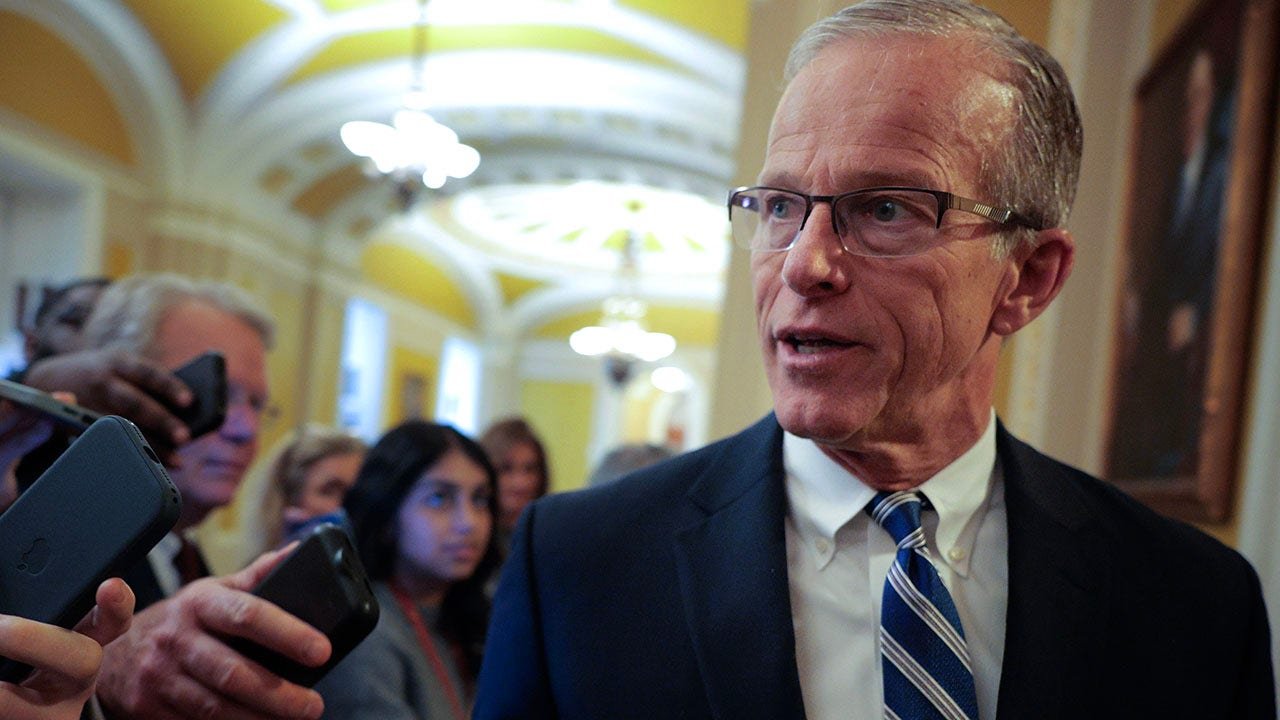
Senate Majority Leader John Thune, R-S.D., told Fox News Digital that it was Democrats’ far-left base that was preventing them from reopening DHS. (Chip Somodevilla/Getty Images)
But like the five times prior, the latest attempt was blocked by nearly every Senate Democrat.
Republicans are sticking by their initial offer, which would carve out Immigration and Customs Enforcement (ICE) funding in exchange for reopening other agencies under the Homeland Security umbrella, including the Transportation Security Administration (TSA) and the Federal Emergency Management Agency (FEMA), among others.
Republicans were already fuming that Democrats did not take the deal, noting that sidelining immigration enforcement funding was one of their key demands. They also charged that Schumer and his caucus were backing away from previously negotiated positions.
Still, Senate Democrats are pushing for stringent reforms to ICE, including requiring judicial warrants for agents and banning DHS agents from wearing masks. Those provisions were among nine total demands added to the GOP framework. Those asks, in particular, have been firm red lines for Republicans throughout the shutdown.
SENATE REPUBLICANS MOVE TO REOPEN DHS WITH NEW PLAN, WAIT FOR DEMOCRATIC BUY-IN
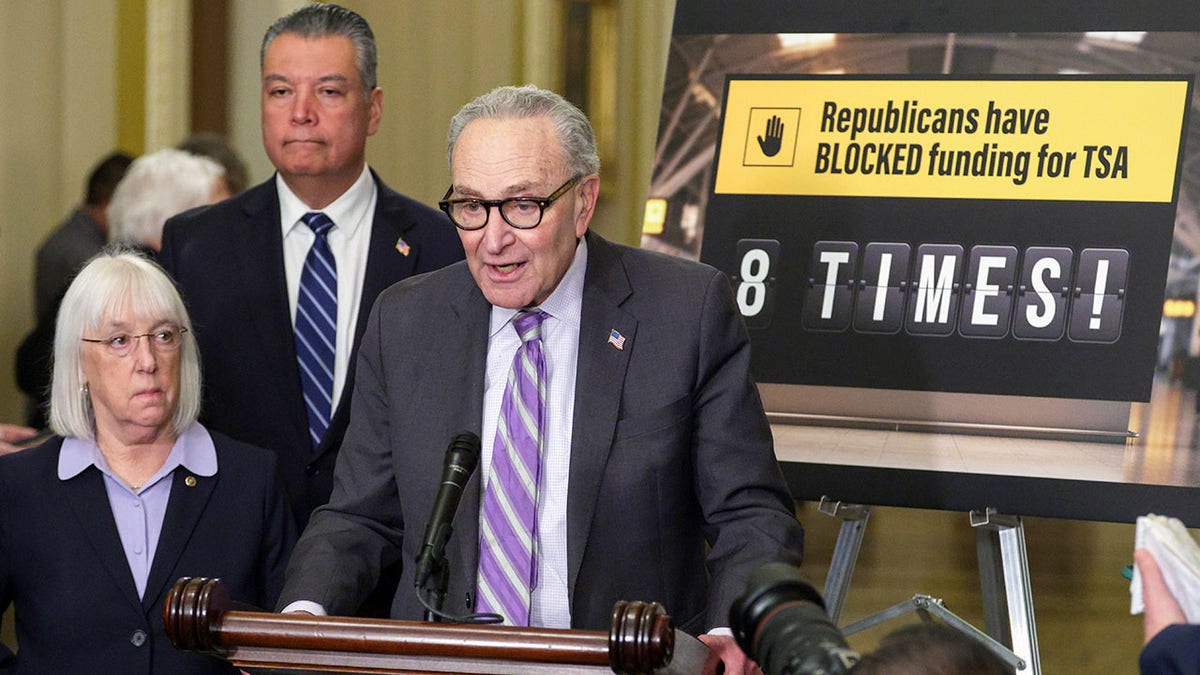
Senate Minority Leader Chuck Schumer, D-N.Y., and Democrats rejected Republicans’ latest deal to reopen DHS and have promised a counteroffer with reforms in return. (Alex Wong/Getty Images)
Republicans have also consistently argued that if Democrats want reforms, they must be willing to fund immigration enforcement.
Schumer pushed back on the Senate floor shortly after announcing he had sent Republicans the latest offer, calling their accusations «bad faith» that «will only slow things down.»
«In fact, over the weekend, Democrats had constructive conversations in person with our Republican colleagues,» Schumer said. «They — the Republican colleagues — conceded that some of the reforms, verbally, that we have been looking for, they said these make sense.»
«We thought there might be a path forward on some of the ways to reform ICE and to get some of the things everybody knows ought to be in federal legislation,» he continued. «We thought there had been some progress. But then Republicans sent us their offer yesterday, and it contained none of what had been talked about.»
But Sen. Bernie Moreno, R-Ohio, who was part of the White House meeting that produced the DHS framework, accused Democrats of «backing up.»
CORNYN TARGETS LAWMAKERS’ AIRPORT FAST PASS AS TSA LINES GROW DURING DHS SHUTDOWN
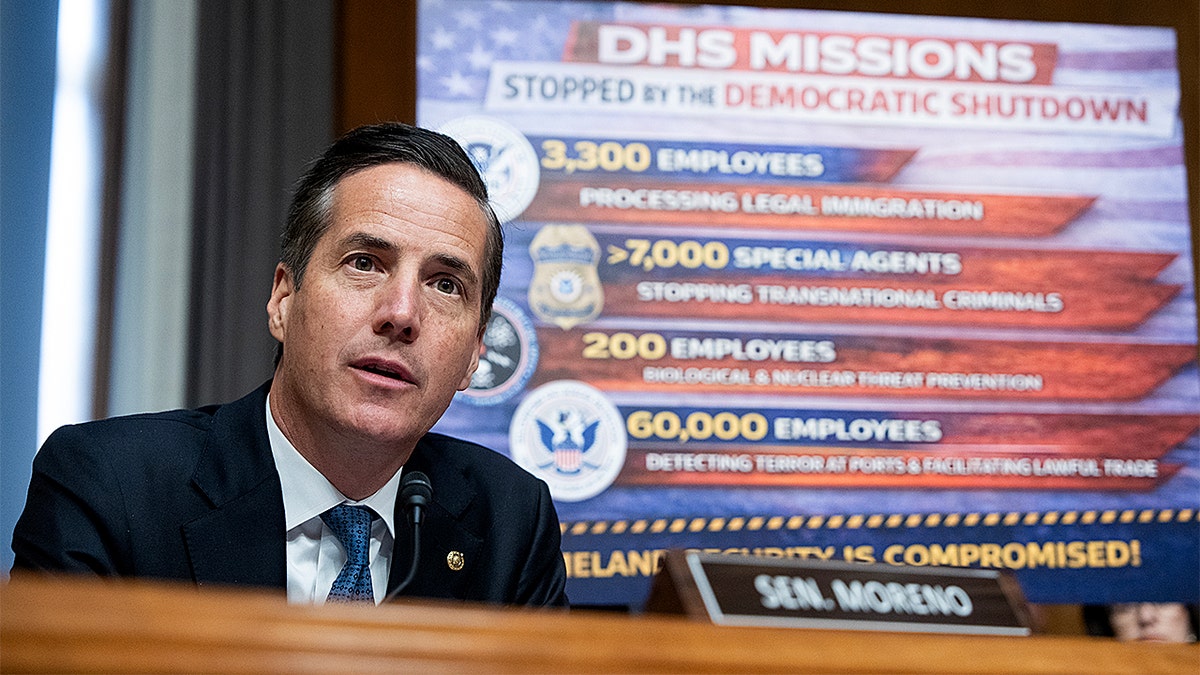
Sen. Bernie Moreno, R-Ohio, references a government shutdown sign while questioning Sen. Markwayne Mullin, R-Okla., during his DHS confirmation hearing in the Dirksen building on Wednesday, March 18, 2026. (Tom Williams/CQ-Roll Call, Inc. via Getty Images)
«If you really want to cut to the chase — take all the [expletive] aside — here’s where we’re at,» Moreno said. «Democrats made an offer. Want to know what the offer is? They don’t want us to deport anybody who entered this country illegally or overstayed their visa unless that person committed a serious crime. That’s what they want. That’s obviously insane, because that’s the base that they deal with.»
Thune also argued that Republicans and the Trump administration have given Democrats much of what they wanted, including replacing former DHS Secretary Kristi Noem with newly confirmed Secretary Markwayne Mullin, ramping down immigration operations in Minnesota, and providing several other reforms.
CLICK HERE TO DOWNLOAD THE FOX NEWS APP
Some Democrats want additional guardrails on how funding in the GOP framework would be handled — specifically to prevent money from being shifted within the agency and redirected to immigration operations.
Thune said there could be some room for that concession but reiterated that Democrats’ other demands were «unserious.» He also said there was «no point» in Republicans offering another counterproposal.
«This is, honestly, retreading ground that we’ve been treading for weeks,» Thune said.
politics, senate, government shutdown, john thune, chuck schumer, homeland security
INTERNACIONAL
EN VIVO: El régimen de Irán lanzó un ataque con misiles contra Israel: al menos 6 heridos
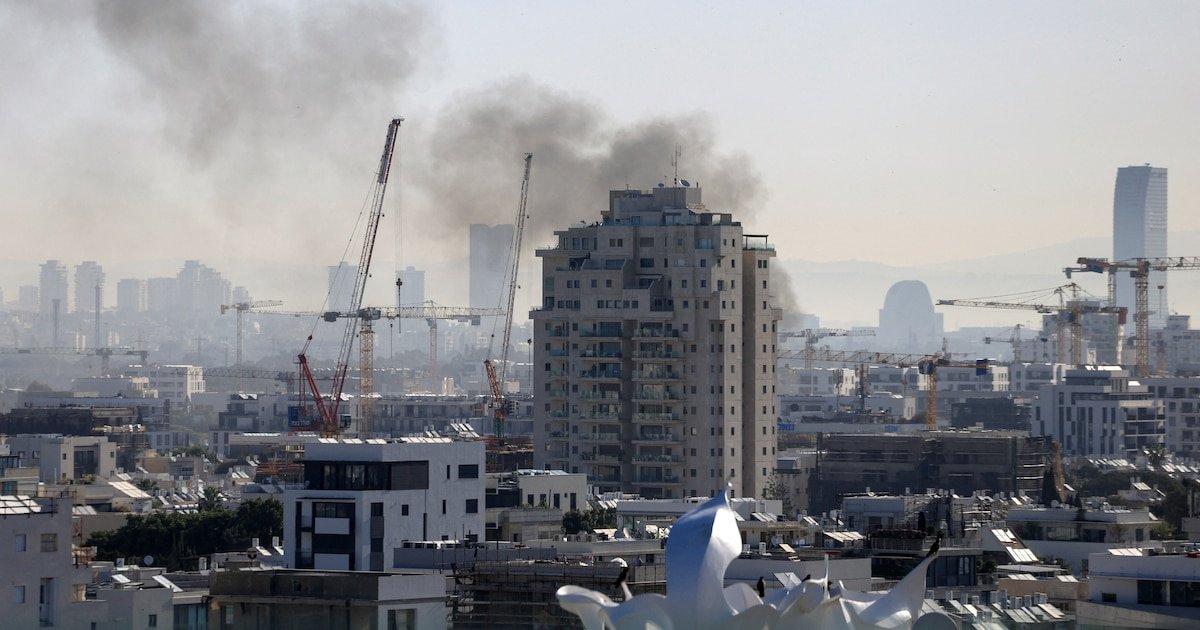

La guerra en Medio Oriente ha puesto de relieve la alianza recién descubierta entre el sector tecnológico y el ejército estadounidense tras décadas de relaciones tensas, demostrando una sinergia que los inversores ven como una mina de oro potencial.
Las aerolíneas asiáticas aumentan sus rutas a Europa a raíz de la guerra

Las principales aerolíneas asiáticas incrementaron sus rutas hacia Europa en el último mes, buscando consolidarse como alternativa en las conexiones intercontinentales ante la creciente inestabilidad en Medio Oriente, región que hasta el inicio de la guerra en Irán funcionaba como centro de la conexión aérea global.
Aunque las grandes compañías del Golfo Pérsico, como Emirates, Qatar Airways y Etihad Airways, con base en Dubái, Doha y Abu Dhabi respectivamente, continúan operando, han debido modificar sus servicios con cancelaciones y suspensiones frecuentes en respuesta a los ataques iraníes en la región.
Otras aerolíneas asiáticas, que no dependen del tránsito por Oriente Medio, aprovechan la situación para reforzar su posición en el mercado, compensar el aumento del precio del combustible y ganar cuota frente a sus competidores.
Cathay Pacific, con sede en Hong Kong, anunció nuevas suspensiones de vuelos a Dubái, Riad y Tel Aviv, y al mismo tiempo reforzó sus conexiones con Europa mediante la incorporación de viajes adicionales entre Hong Kong y París y Zúrich.
Israel confirmó que un soldado murió en un combate en el sur del Líbano

El sargento Ori Greenberg, de 21 años, que prestaba servicio en el batallón de reconocimiento de la Brigada Golani, cayó en combate en el sur del Líbano, según confirmó el Ejército de Israel el jueves por la mañana.
Atacan un petrolero operado por Turquía en el Mar Negro

Un petrolero operado por una compañía turca fue atacado la madrugada del jueves en el Mar Negro, posiblemente por un vehículo de superficie no tripulado, según informó el ministro de Transportes de Turquía, Abdulkadir Uraloglu.
“Puedo decir que un buque con bandera extranjera, operado por una compañía turca, que había cargado petróleo crudo procedente de Rusia, informó de una explosión en su sala de máquinas pasada la medianoche a nuestro centro de llamadas de emergencia”, declaró el ministro en una entrevista televisiva.
Uraloglu señaló que se cree que la sala de máquinas fue el objetivo específico del ataque y que no fue ejecutado por un dron, sino por un vehículo de superficie no tripulado a nivel del agua.
Al menos dos muertos y tres heridos en Emiratos Árabes Unidos tras la interceptación de un misil
Dos personas murieron y otras tres resultaron heridas en Abu Dhabi el jueves tras la caída de escombros provocada por la interceptación de un misil balístico. La Oficina de Prensa de Abu Dhabi informó que el incidente tuvo lugar en la carretera Sweihan, donde varios vehículos resultaron dañados.
Las identidades de los fallecidos no han sido confirmadas hasta el momento. Las autoridades instaron al público a confiar en fuentes oficiales y a no difundir información no verificada.
El ejército de Estados Unidos informó que atacó a más de 10.000 objetivos militares en Irán desde el inicio de la guerra
En un mensaje en video de tres minutos, el jefe del Comando Central, el almirante Brad Cooper, indicó que los bombardeos dañaron o destruyeron más de dos tercios de las instalaciones iraníes dedicadas a la producción de misiles, drones y armamento naval


El jefe del Comando Central de Estados Unidos (CENTCOM), el almirante Brad Cooper, informó este miércoles que las fuerzas estadounidenses atacaron más de 10.000 objetivos militares en Irán desde el inicio del conflicto el 28 de febrero.
Las bolsas europeas vuelven al terreno negativo ante mensajes contradictorios sobre el fin de la guerra

Los futuros de las principales bolsas europeas retroceden este jueves, mientras el precio del petróleo vuelve a subir en medio de mensajes contradictorios entre Estados Unidos e Irán sobre posibles negociaciones para poner fin al conflicto bélico.
Según datos de mercado recogidos por EFE, a las 7:30 horas (6:30 GMT), los futuros de la Bolsa de Fráncfort caen un 0,96%, los de París un 0,71% y los de Londres un 0,43%. Los futuros del índice Euro Stoxx 50, que agrupa a las 50 firmas más capitalizadas de la zona euro, bajan un 0,84%. En Estados Unidos, los futuros de los principales indicadores también anticipan una jornada en rojo, con descensos del entorno del 0,5%.
En paralelo, el precio del crudo brent para entrega en mayo se incrementa un 2,44% en el mercado de futuros de Londres, hasta los 104,69 dólares por barril, después de que Irán rechazara el plan estadounidense para poner fin a la guerra. De igual manera, el petróleo de Texas (WTI), referencia en EE.UU., sube un 2,24% antes de la apertura oficial del mercado, hasta los 92,52 dólares por barril.
La negativa de Irán a aceptar el plan de alto el fuego propuesto por Estados Unidos impacta nuevamente en los mercados, tras varias jornadas positivas para la renta variable. Los inversores también analizan la propuesta del Parlamento iraní para aprobar una ley que permita cobrar peaje a los buques que transiten por el estrecho de Ormuz, un paso estratégico por el que circula el 20 % del petróleo mundial.
En Asia predominan las pérdidas: el Nikkei de Tokio cede un 0,68%; la Bolsa de Shanghái baja un 1,17%; y el Hang Seng de Hong Kong pierde un 1,99%.
El euro baja a 1,155 dólares. La onza troy de oro cae un 1,95%, hasta 4.433,6 dólares. El bitcóin baja un 1,83% y cotiza en 70.000,31 dólares.
Asciende a seis la cifra de heridos en los ataques de Irán contra Israel
El ejército israelí informó que sus defensas aéreas respondieron el jueves a ataques con misiles lanzados desde Irán, que, según los servicios médicos, dejaron seis personas levemente heridas y causaron algunos daños materiales.
Un portavoz del servicio médico de emergencias Magen David Adom indicó que los paramédicos atendieron a seis personas con heridas leves provocadas por las explosiones, actualizando la cifra anterior de dos heridos.
El jueves por la mañana, un portavoz de la MDA declaró a la radio pública que varias casas en la ciudad central de Kafr Qassem resultaron dañadas. El alcalde, Haitham Taha, afirmó que los daños fueron causados por municiones en racimo.
El estrecho de Ormuz permaneció paralizado durante la tercera semana de la guerra

Según el servicio de inteligencia marítima Windward, a pesar del cierre del estrecho, hay 686 barcos en el Golfo Pérsico. La mayoría de las embarcaciones, cerca de 400, se encuentran en el Golfo de Omán.
Windward afirmó que esta acumulación sugiere que “muchos operadores han optado por mantener su posición fuera del estrecho de Ormuz en lugar de comprometerse de inmediato con un cambio de ruta de larga distancia”.
Entre el 15 y el 22 de marzo, solo se observaron 16 travesías de buques con su Sistema de Identificación Automática (AIS) activado en el estrecho de Ormuz.
Un ataque iraní dejó dos heridos y causó daños en la ciudad israelí Kfar Qasim
La ciudad central de Kfar Qasim resultó dañada por lo que parecen ser submuniciones provenientes de la ojiva de una bomba de racimo, tras el último ataque con misiles balísticos lanzado por Irán, según informó un corresponsal de Times of Israel.
Equipos de rescate se desplazaron rápidamente al lugar. El hospital Magen David Adom informó que atendió a un hombre y una mujer, ambos de 55 años, que resultaron heridos tras una explosión ocurrida luego de que una pequeña bomba impactara contra un edificio en el centro de la ciudad.
Domestic,Politics,North America,Government / Politics

El Gobierno trata de no mostrar fisuras y se alinea detrás del discurso oficial en defensa de Manuel Adorni

Descubrieron el anillo de compromiso que lleva Viviana Canosa y ella contó toda la verdad

ANSES: quiénes cobran hoy jueves 26 de marzo de 2026

Di María, en duda para el debut en la Libertadores

Una carta inédita de Howard Carter reveló el verdadero origen del mito de la maldición de Tutankamón

Manuel Adorni buscará retomar su agenda y hará conferencias de prensa todas las semanas

»¡VAN A FUNDIR A MEDIO PAÍS!»: El lapidario diagnóstico de Roberto Cachanosky sobre el plan de Milei

ALERTA FINANCIERA: 4 de cada 10 argentinos ya no pueden pagar sus deudas. ¡Caputo debe actuar ya!

¡VERGÜENZA NACIONAL! Humillan a la Policía Federal mandándolos a un merendero antes de darles un aumento de sueldo digno

El mensaje de Milei sobre la “traición” que llamó la atención en el Gobierno y también en la oposición

 POLITICA11 horas ago
¡VERGÜENZA NACIONAL! Humillan a la Policía Federal mandándolos a un merendero antes de darles un aumento de sueldo digno
- POLITICA3 días ago
El mensaje de Milei sobre la “traición” que llamó la atención en el Gobierno y también en la oposición
- POLITICA2 días ago
24 DE MARZO: La historia completa que el relato omitió sobre el golpe de 1976 y el Juicio a las Juntas