INTERNACIONAL
Nonprofit uses underwater technology to search for missing service members


NEWYou can now listen to Fox News articles!
More than 80,000 service members who went missing in action in previous conflicts are still unaccounted for. However, through research and new technology, the Defense POW/MIA Accounting Agency estimates the remains of 38,000 fallen veterans could be recoverable. Nonprofit organization Project Recover is working with the agency to bring some of those service members home through complex underwater missions.
«This is a great American story here,» Former Navy Rear Admiral Tim Gallaudet said. «Our work is to use technology, like underwater drones and scuba diving gear, to find the platforms that these members perished on, and then do the DNA analysis of detecting and recovering their remains and matching them to those that are missing.»
Project Recover members stand with folded American flags during a ceremony honoring fallen World War II aviators. (Project Recover)
Gallaudet also serves as a project recover advisory council member. The group was founded by Dr. Patrick Scannon. He came up with the idea in 1993 when he was touring the Palau islands with his wife and discovered a downed plane from World War II.
«That 65-foot wing essentially changed my life,» Scannon said in an interview with GoPro.
NEWLY RELEASED AMELIA EARHART DOCUMENTS REVEAL VIVID DETAILS OF JAPAN’S ROLE IN SEARCH FOR DOOMED AVIATOR
Project Recover teams have now located dozens of aircraft sites around the Palau Islands associated with nearly 100 service members who went missing in action.
«The recovery is difficult. We first have to find the aircraft or ships,» Gallaudet said. «And then we’ve got to go determine if there are any remains there, and then ID them, match them to the service members. «
In 1944, U.S. officials determined the Palau islands were a crucial part of a larger mission to liberate the Philippines. The effort to capture the island of Peleliu ended up being a costly effort for the U.S. Located around 500 miles away from the Philippines, the island held an airfield, which U.S. officials believed could be used to launch an attack during their larger mission. More than 10,000 Japanese troops were stationed on Peleliu at the time.

U.S. Air Force B-52 bombers are parked on a military airfield. (B-52 Bomber Down)
The battle was expected to last just a few days but ended up going on for 74. The U.S. began its bombardment by dropping more than 600 tons of bombs but the marines had little intelligence on enemy positions. Japanese troops hid in coral caves and mine shafts around the islands. The initial aerial attacks had little impact unless pilots flew dangerously close to the island.
SEARCH FOR MISSING MALAYSIA AIRLINES FLIGHT 370 TO RESUME AFTER MORE THAN A DECADE
On Peleliu 1,800 Americans were killed in action and more than 8,000 were wounded or missing. Nearly all the 10,000 Japanese troops were killed in action. Across the Palau Islands, the U.S. had carried out nine major air campaigns in which around 200 aircraft were lost.
Now Project Recover is working to bring some of those service members home.
«There were three service members on the aircraft that perished, a lieutenant and then two enlisted crew members. And over the last few years, we were able to recover the remains of all three. And we didn’t identify them all at the same time. It took forensic analysis and DNA. Technology. But the last one was finally identified,» Gallaudet said.
Lt. Jay Manown, AOM1c Anthony Di Petta and ARM1c Wilbur Mitts took off for a bombing mission in September 1944. They were conducting pre-invasion strikes in preparation for the invasion of Peleliu when their plane spun out of control and crashed into surrounding waters.
«The plane was hit by enemy fire and it burst into flames,» Di Petta’s niece Suzanne Nakamura said in an interview with Media Evolve.
Project Recover located the plane in 2015. After more than a dozen dives to investigate the wreckage, teams began removing the remains of the three service members. Lt. Manown was the last to be repatriated.
«We held the ceremony in his hometown in West Virginia and the relatives of all three service members came to that final ceremony,» Gallaudet said.
The three nieces of the men have become especially close.
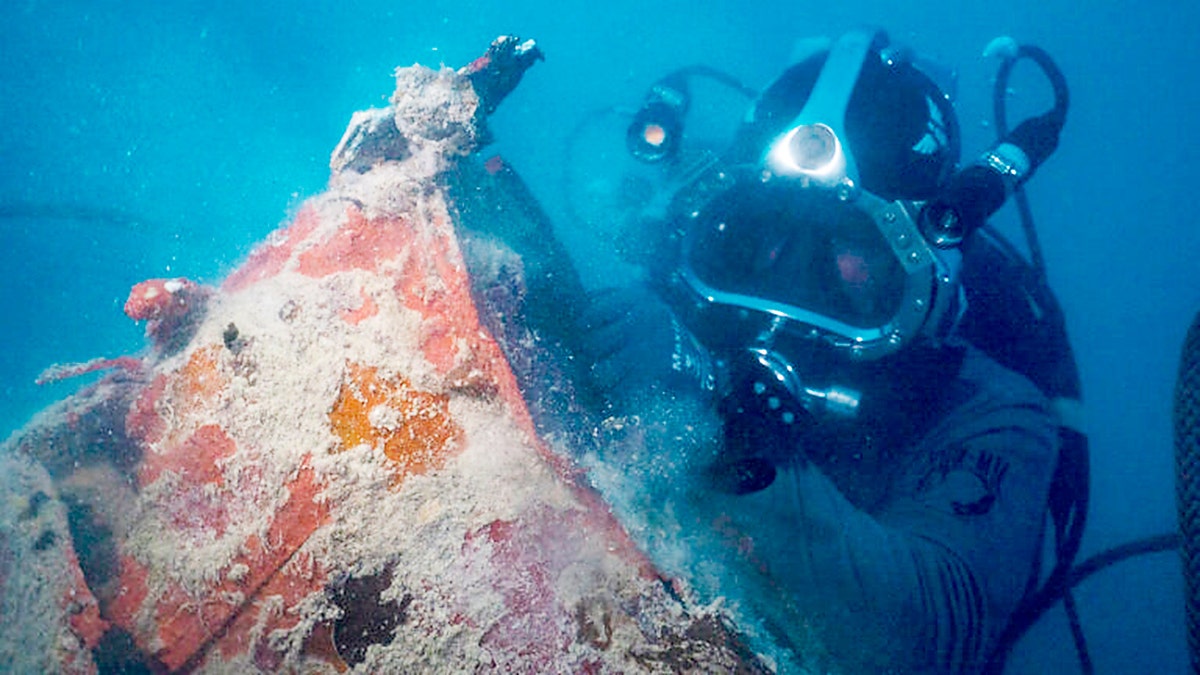
A diver examines a wreck during an underwater mission to locate and recover missing U.S. service members. (Project Recover)
WWII HERO’S REMAINS FINALLY COMING HOME AFTER 80-YEAR MYSTERY IS SOLVED THROUGH MILITARY DEDICATION
«We’ve communicated beautifully and become friends through this experience and almost a sisterhood of type,» Manown’s niece Rebecca Sheets said in an interview with Media Evolve.
«We’ve talked so much by phone and feel so close,» Mitt’s niece Diana Ward told Media Evolve. «This is just a joy to meet each other in person and we’re just sharing the emotion we’ve felt about bringing our uncles home.»
The three women have also connected over how their grandmothers, or the mothers of Manown, Di Petta and Mitts may have felt about their sons finally coming home.
«We have a connection because our uncles were involved in not only defending the freedom of the United States, but as human beings who fought together and died together,» Nakamura said.
AMELIA EARHART MYSTERY EXPEDITION HALTED AS RESEARCHERS SEEK ANSWERS ON MISSING PLANE
Including their work in Palau, Project Recover has completed more than 100 missions across 25 countries. They have repatriated 24 missing Americans and have located more than 200 missing in action awaiting further recovery efforts. Right now the group is fundraising for a mission it hopes to complete in 2026 – the search for a B-52 aircraft that disappeared during a training accident.
«It’s off the coast of Texas. We’ve not yet found the aircraft. And of those eight service members, They all had families,» Gallaudet said. «There are about 32 of those family members still alive today who want the answers to know what happened to their loved ones.»
In addition to the more than 80,000 missing in action servicemembers, 20,000 are missing from training accidents. The Defense POW/MIA Accounting Agency is not permitted to allocate funds towards a search effort for the eight men who disappeared along with their B-52 because the crash occurred during a non-conflict training accident.
«Not having found the wreck yet, we don’t know what the cause of the failure was. And so it’s our goal to find that wreckage and then take the remains and repatriate them to the families,» Gallaudet said.
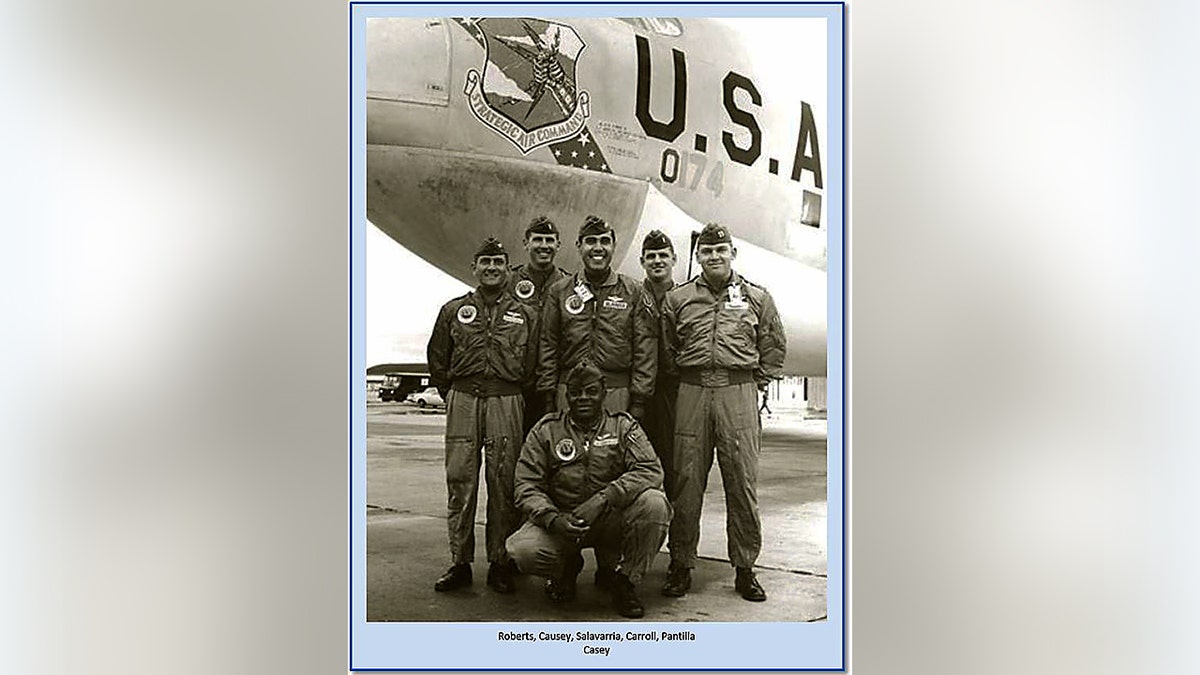
U.S. Air Force B-52 crew members pose for a group photo. (B-52 Bomber Down)
The Air Force Bomber was on a routine training mission in February 1968 when it disappeared from radar and radio contact. The Air Force immediately conducted an extensive nine-day search of the flight path but found no trace of the bomber. As the military concluded its search, determining it went down in an unknown location, three pieces of debris washed ashore in Corpus Christi, TX.
«This B-52 off the Texas cost hasn’t been located yet, but we think we know where the area is, we’re going to find it,» Gallaudet said.
CLICK HERE TO DOWNLOAD THE FOX NEWS APP
More than $300,000 has been rasied for the mission so far. Project Recover estimates another $200,000 is needed to search for the eight men. If they can locate the remains, the Defense POW/MIA Accounting Agency will be able to allocate resources for a recovery effort.
You can learn more about Project Recover, the missing B-52 and donate to help with the search on Project Recover’s website.
missing persons,military families,veterans








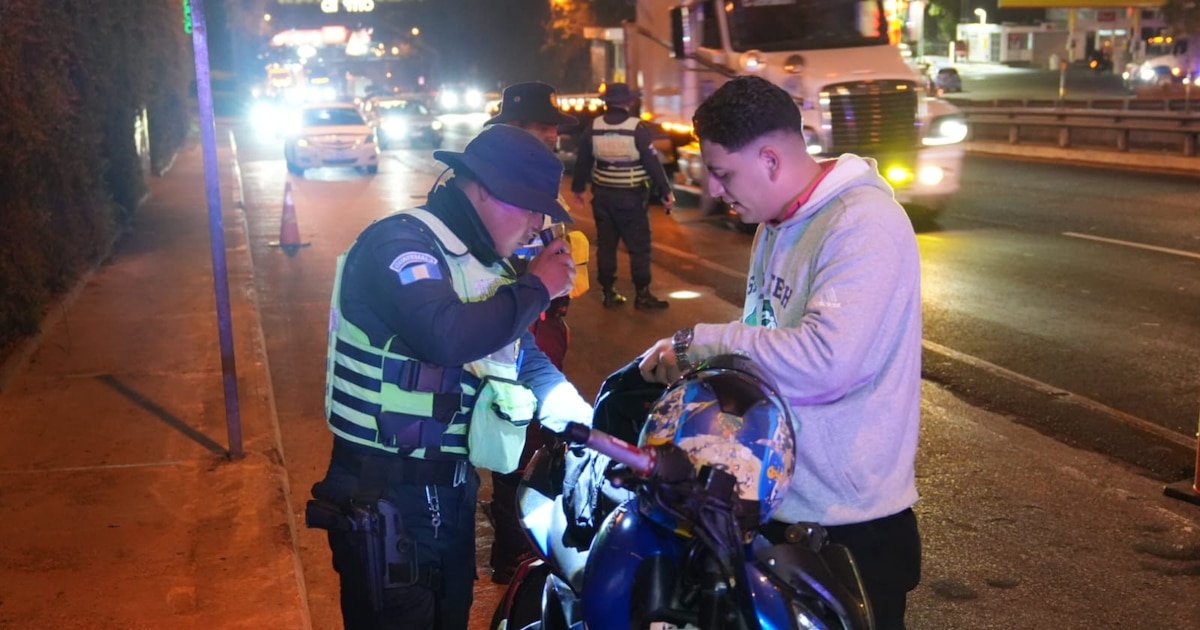
Las autoridades de Guatemala han impuesto 151 sanciones a motociclistas involucrados en carreras clandestinas, en el marco de una ofensiva dirigida a combatir esta práctica ilegal que pone en riesgo la vida de conductores y peatones. La Policía Nacional Civil (PNC), a través del Departamento de Tránsito, desplegó operativos en distintos puntos de la ciudad y áreas metropolitanas durante la noche del viernes y la madrugada del sábado, como parte de la aplicación estricta de la Ley y el Reglamento de Tránsito.
La PNC reportó que los motociclistas sancionados incurrieron en diversas faltas, entre ellas la conducción sin licencia, la ausencia de casco protector, la utilización de placas ocultas o inexistentes, así como la participación directa en carreras clandestinas. “Los motociclistas que pongan en riesgo su vida y la de los demás conductores con acciones fuera de la ley, serán sancionados, tal y como ocurrió a 151 conductores a los que se entregó remisiones”, precisó la institución. Las sanciones incluyeron la consignación de licencias de conducir y la identificación de los responsables, en cumplimiento de los lineamientos del Plan Centinela Metropolitano.
Durante el desarrollo de estos operativos, las autoridades también identificaron a 181 personas y revisaron 181 vehículos, tanto de dos como de cuatro ruedas. Las acciones se extendieron a lo largo del fin de semana, con patrullajes y dispositivos de control en zonas donde se había detectado la organización de carreras ilegales. El objetivo, según enfatizó la PNC, es sancionar a quienes actúan al margen de la ley y proteger la seguridad de la ciudadanía, especialmente en un contexto de alto tránsito previo a la Semana Santa.

En paralelo a la lucha contra las carreras clandestinas, las autoridades han intensificado los operativos viales en las principales carreteras del país ante el inicio del periodo vacacional. Personal del Departamento de Tránsito de la PNC instaló puestos de prevención y concientización en puntos estratégicos, como el kilómetro 52 de la autopista Palín-Escuintla, donde se montó un stand para informar a los automovilistas sobre la importancia de conducir con responsabilidad y precaución.
Estos dispositivos buscan reducir la siniestralidad vial, que tiende a incrementarse durante la Semana Santa debido al aumento del flujo vehicular en rutas hacia destinos turísticos y áreas de recreación. En el departamento de Chimaltenango y en la Ruta CA-1, a la altura del kilómetro 58 en Cuilapa, Santa Rosa, los agentes de tránsito realizaron inspecciones a vehículos de dos y cuatro ruedas, identificando a 90 automóviles y motocicletas y verificando 45 solvencias. La finalidad principal es prevenir accidentes automovilísticos mediante la revisión de documentos, el control del estado de los vehículos y la orientación directa a los conductores.
Las autoridades exhortan a los automovilistas a revisar las condiciones mecánicas de sus vehículos, portar la documentación en regla y acatar las indicaciones de los agentes en los puestos de control. Además, recalcan la necesidad de evitar conducir bajo los efectos del alcohol y de abstenerse de realizar maniobras peligrosas o participar en actividades ilegales como las carreras clandestinas.

La Dirección General de Protección y Seguridad Vial (PROVIAL), en coordinación con la PNC, continuará desplegando estos operativos durante toda la Semana Santa, con el propósito de proteger la vida de los guatemaltecos y visitantes. La estrategia de seguridad incluye patrullajes, filtros de revisión y campañas de concientización en las principales rutas del país, reforzando el mensaje de que el respeto a la ley y la prudencia al volante son fundamentales para evitar tragedias en las vías.
Con estas acciones, las autoridades buscan no solo sancionar a quienes infringen la normativa, sino también crear conciencia sobre la importancia de la seguridad vial en una de las temporadas de mayor movilidad en el país. La vigilancia en carreteras y zonas urbanas se mantendrá activa, con el compromiso de reducir los riesgos y garantizar traslados seguros para todos los usuarios de las vías guatemaltecas.
INTERNACIONAL
WATCH: Travelers reveal whom they blame for miles-long Houston airport lines as Trump rescues TSA pay
NEWYou can now listen to Fox News articles!
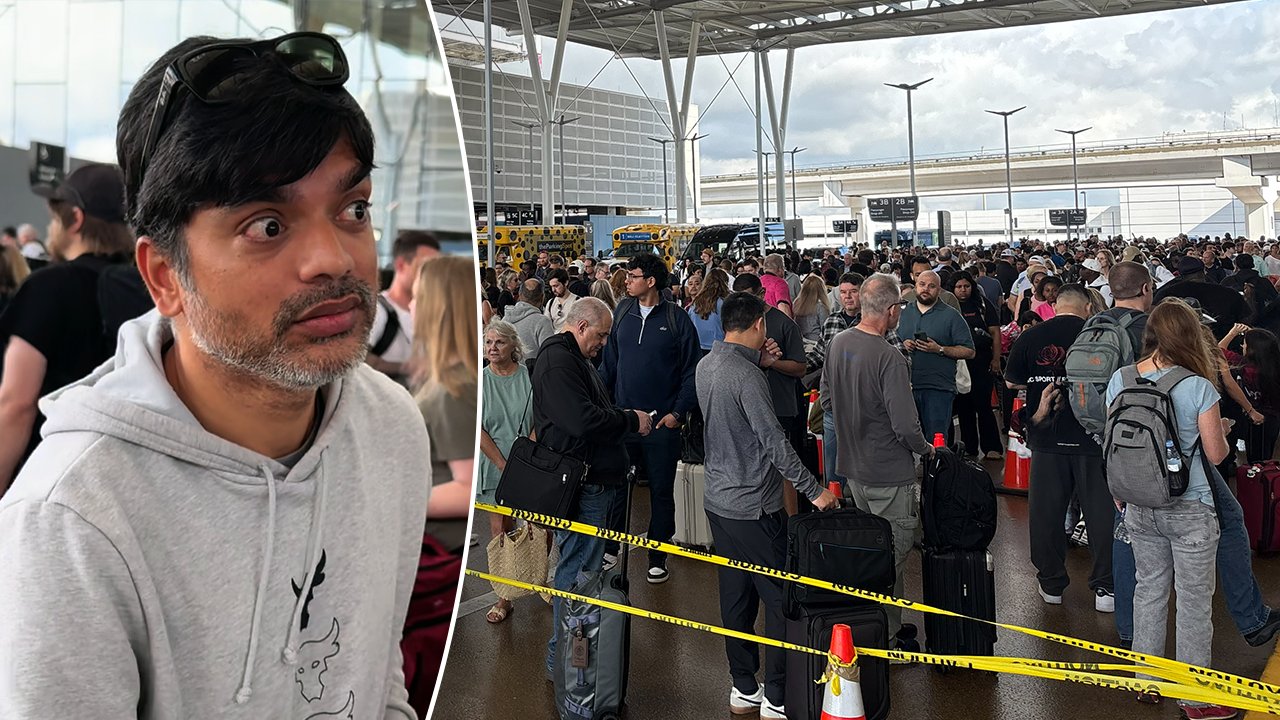
Neither party escaped travelers’ ire as some estimated they had to walk miles to reach the back of the security line and wait several hours to catch their flights at Houston’s George Bush Intercontinental Airport.
Fox News Digital asked travelers waiting in line at Bush whom they believed was to blame for the massive wait times. One traveler named Tim simply responded: «The politicians.»
On Thursday, lines at Bush snaked through check-in, baggage claim, out the doors and through underground subway tunnels. One traveler, who did not share his name, estimated that he and his family had to walk two miles to reach the back of the line. While many arrived several hours ahead of their scheduled departure times, those who did not could be seen frantically searching for terminals with smaller lines.
When it comes to who bears the blame, another traveler, who did not identify herself, answered: «All congressmen.»
WATCH: AIRPORT TRAVELERS REVEAL WHAT THEY TRULY THINK ABOUT ICE HELPING TSA WITH MASSIVE LINES
«All of them, regardless of their party,» she added. «They just need to do their jobs.»
Another, named Lancet, singled out the Democrats, who have demanded reinstating funding for the Department of Homeland Security contingent on broad reforms to U.S. Immigration and Customs Enforcement and Border Patrol.
«I mean, honestly, look, the Democrats are not voting on the DHS being reinstated. And they’re the ones who pay for TSA from what I know,» said Lancet. «So, without paying the people, they obviously can’t work.»
Houston’s George Bush Intercontinental Airport has been among the airports most heavily impacted by the partial government shutdown, which has led to TSA agents missing paychecks for more than 40 days. Nearly 500 TSA agents have quit, and as of Friday, the agency has missed out on $1 billion in pay.
The partial shutdown was caused by disagreements in Congress over ICE and Border Patrol’s enforcement of immigration law in cities across the U.S., with Democrats making funding contingent on major changes in tactics and policy. Late Thursday night, the Senate passed a bill to fund most of DHS, including TSA, but it is not final. The House still needs to approve the measure and send it to the president before funding resumes and workers are paid.
President Donald Trump signed an executive order Friday directing federal officials to ensure TSA employees are paid, calling the ongoing shutdown an «emergency,»
One traveler named Kevin, who was waiting in a security line in an underground subway corridor with hardly functioning air conditioning, did not hold back.
«Anybody who votes for a Democrat after this should be shipped out of the country,» said Kevin. «This is a Democrat mess.»
FETTERMAN URGES FELLOW DEMOCRATS TO ‘DO THE RIGHT THING’ AS GOVERNMENT SHUTDOWN TAKES TOLL ON WORKERS
ICE agents look on as travelers file through a line at the Houston airport. (Peter Pinedo/Fox News Digital)
At the front of the same line, which stretched halfway across the airport’s subway corridor, a traveler named April answered, «I have no idea to be honest with you, but also the construction doesn’t help either.»
«Having to go to Terminal A and Terminal E and going back and forth, yeah, it’s not been great,» she added.
One traveler named Maria, who despite the line bore a large smile and a chipper attitude, told Fox News Digital, «You know what? I would only blame myself for not getting to the airport sooner.»
«I’ve been flying for many, many years, so I know. Got to get to the airports soon, guys. Get your Subway, get your Starbucks, and get to airports,» she quipped, smiling.
«I don’t know, man, I don’t get political about these things,» answered a traveler named Pinal. «It is what it is, and we all are just going through the motions right now.»
DEMOCRATS HAMMER ICE FOR ARRESTING 2 AT SAN FRANCISCO AIRPORT
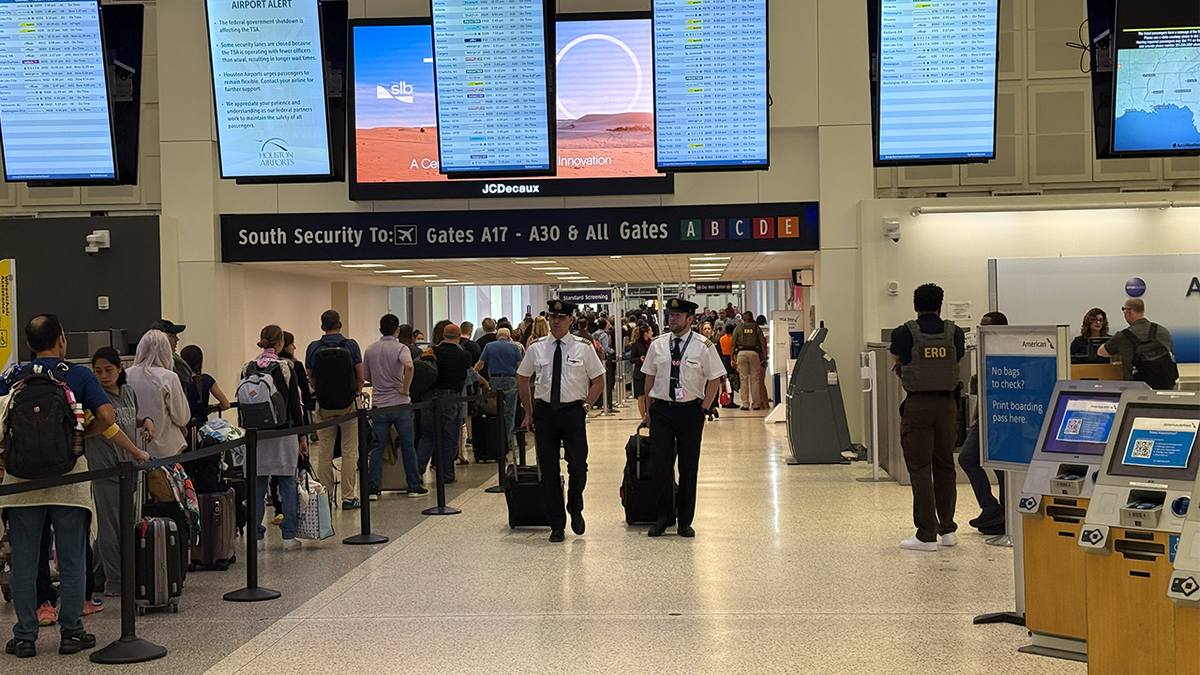
Pilots stroll out of security as ICE agents assist airport staff. (Peter Pinedo/Fox News Digital)
«There’s a lot of people to blame,» said a woman who did not identify herself. «But at least I think the important part is everybody’s working together to try to be as efficient as possible. I got here at 10, and my flight is at 1:30, so I got there in enough time, hopefully.»
CLICK HERE TO DOWNLOAD THE FOX NEWS APP
«It’s just the division,» remarked a young man named Nick. «Everybody should be unified, working together, instead of just picking teams, fighting against each other, you know?»
«People rather be on a team than rather just focus on a solution,» Nick continued. «If we could just focus more on the problem and working together rather than focusing on the differences, I think that would be a major change. But it’s tough, man.»
airports, homeland security, congress, enforcement, immigration, houston and galveston, texas

La vuelta de Donald Trump al Despacho Oval, tan ansiada por los partidos de extrema derecha en Europa, puede estar jugando en su contra. Los últimos meses, desde finales del año pasado, vieron una sucesión de resultados electorales y movimientos en sondeos que muestran que los partidos y candidatos respaldados por el presidente de Estados Unidos, (que son los mismos que respalda Vladimir Putin) empiezan a tocar techo en su ascenso o directamente a perder apoyos.
Los analistas europeos dudan si se debe puramente a un efecto negativo del presidente Trump o si es una tendencia más de fondo que ni siquiera el apoyo del magnate republicano puede evitar. Pero los datos muestran que los europeos empiezan a reaccionar en las urnas contra los partidos que quieren destruir la Unión Europea.
La tendencia es a la estabilización o incluso a la caída de esos partidos y a la victoria de quienes plantan cara a Trump. Como sucedió este martes en Dinamarca, donde la primera ministra socialdemócrata, Mette Frederiksen, consiguió para su partido un 19% de los votos, según los sondeos en boca de urna.
Es un mal resultado, el peor de la socialdemocracia en Dinamarca, debido también a la subida de un partido de izquierda ecologista. Pero es mejor de lo que se esperaba antes de las amenazas de Donald Trump sobre Groenlandia y permite a Frederiksen seguir en el cargo salvo improbable sorpresa en la formación de la coalición de gobierno.
Las malas noticias para Putin y Trump empezaron con la caída de la extrema derecha holandesa que permitió que, por primera vez en casi dos décadas, los Países Bajos tengan ahora un primer ministro liberal-progresista, Rob Jetten.
Poco después, el 8 de febrero, el socialista António Seguro ganaba las presidenciales portuguesas con casi un 67% de votos frente al ultraderechista André Ventura. La extrema derecha alemana, AfD, sigue chocando con su techo del 20% en Alemania occidental, a pesar de que en los últimos años hubo sondeos que le daban cerca del 30%.
El fin de semana pasado hubo buenas noticias para candidatos liberales y progresistas y malas noticias para los respaldados por Trump y Putin.
El domingo resistió el primer ministro liberal esloveno Robert Golob frente a un candidato, el antiguo primer ministro Janez Jansa, apoyado por Trump, Putin y, según varios reportes de prensa, por agentes enviados por el primer ministro israelí Benjamin Netanyahu. Golob ha sido de los jefes de gobierno europeos, junto al español, el irlandés y el belga, más críticos con los bombardeos indiscriminados de Israel en Gaza en los últimos dos años.
Las municipales francesas, aunque no son extrapolables a unas presidenciales, sí mostraron señales de que la extrema derecha también toca techo, de una recuperación del socialismo tradicional francés y de una resistencia mayor de lo previsto por parte de los partidos liberales que apoyan al presidente Emmanuel Macron.
La extrema derecha sólo consiguió una victoria de calibre en una gran ciudad al hacerse con Niza, pero gracias a un candidato, Éric Ciotti, cooptado a la derecha tradicional. Los socialistas resistieron con victorias importantes en las tres mayores ciudades francesas: París, Lyon y Marsella. La extrema derecha sigue sin ser capaz de ganar en las grandes ciudades, que serán esenciales en las presidenciales de dentro de un año.
Este lunes llegó otra sorpresa que debilita a Trump en Europa. La niña europea de sus ojos, la italiana Giorgia Meloni, perdió claramente (por casi ocho puntos) el referéndum constitucional con el que intentaba cambiar el sistema judicial. La derrota, inesperada y dolorosa porque la participación fue mucho mayor de la prevista, supone prácticamente un plebiscito negativo para Meloni. El resultado tendrá consecuencias en Bruselas, donde se ha tratado hasta ahora a Meloni con guante de seda a pesar de varios desplantes.
Uno de los lugares comunes de los analistas políticos europeos es ver a Italia como el laboratorio donde primero pasa todo. Italia vio nacer el fascismo e Italia vio nacer el antifascismo. Italia tuvo al primer jefe de gobierno populista en Europa (Silvio Berlusconi) y fue el único país grande del bloque que llegó a tener una jefa de gobierno de extrema derecha (Giorgia Meloni). Italia puede estar ahora enseñando que esa era empieza a encontrarse con resistencia en las urnas.
La reacción europea contra la extrema derecha tiene una cita crucial en las urnas el próximo 12 de abril. No por el país, pues Hungría representa apenas el 1,1% de la economía de la Unión Europea y el 2,1% de su población. Sino por su líder, Viktor Orban, una especie de padre de los ultras europeos porque fue el primer en llegar al poder.
El Fidesz de Orban está en los sondeos casi 10 puntos por detrás del Tiszma de Peter Magyar, un conservador europeísta. La caída de Orban puede ser el momento del fin de la era en la que se pensaba que Europa iba camino a estar dominada por partidos de extrema derecha.

El jefe del Ejército pidió la baja de 34 oficiales condenados por delitos de lesa humanidad

Vinculan a Zulemita Menem con el polémico casamiento en la reserva de Cafayate: cuál es su relación cercana con los novios

Bombazo: Inter Miami inició negociaciones con el brasileño Casemiro ¿Se junta con Messi?

Las autoridades de Guatemala sancionan a 151 motociclistas por carreras clandestinas

Más de la mitad de los intendentes, entre ellos varios históricos del peronismo, rechazaron una convocatoria de Kicillof

WATCH: Travelers reveal whom they blame for miles-long Houston airport lines as Trump rescues TSA pay

¡VERGÜENZA NACIONAL! Humillan a la Policía Federal mandándolos a un merendero antes de darles un aumento de sueldo digno

El Presidente y Karina Milei volvieron a respaldar a Manuel Adorni tras la polémica por sus vuelos

Manuel Adorni: “Mi patrimonio lo construí antes de entrar al Gobierno, no tengo nada que esconder”

Javier Milei admitió “contratiempos” para bajar la inflación

 POLITICA1 día ago
¡DERIVA ECONÓMICA Y SOBERBIA POLÍTICA! El abismo entre el «relato oficial» y la realidad de una clase media que no aguanta más
- POLITICA15 horas ago
Kicillof refuerza su perfil de candidato y se aferra al fallo de YPF para polarizar con Milei
- ECONOMIA2 días ago
Se apaga una cadena de farmacias: revoleo de cheques sin fondos, deuda multimillonaria y cierres