INTERNACIONAL
‘Only Trump can stop Russia’: Millions face freezing winter, Ukraine energy executive warns

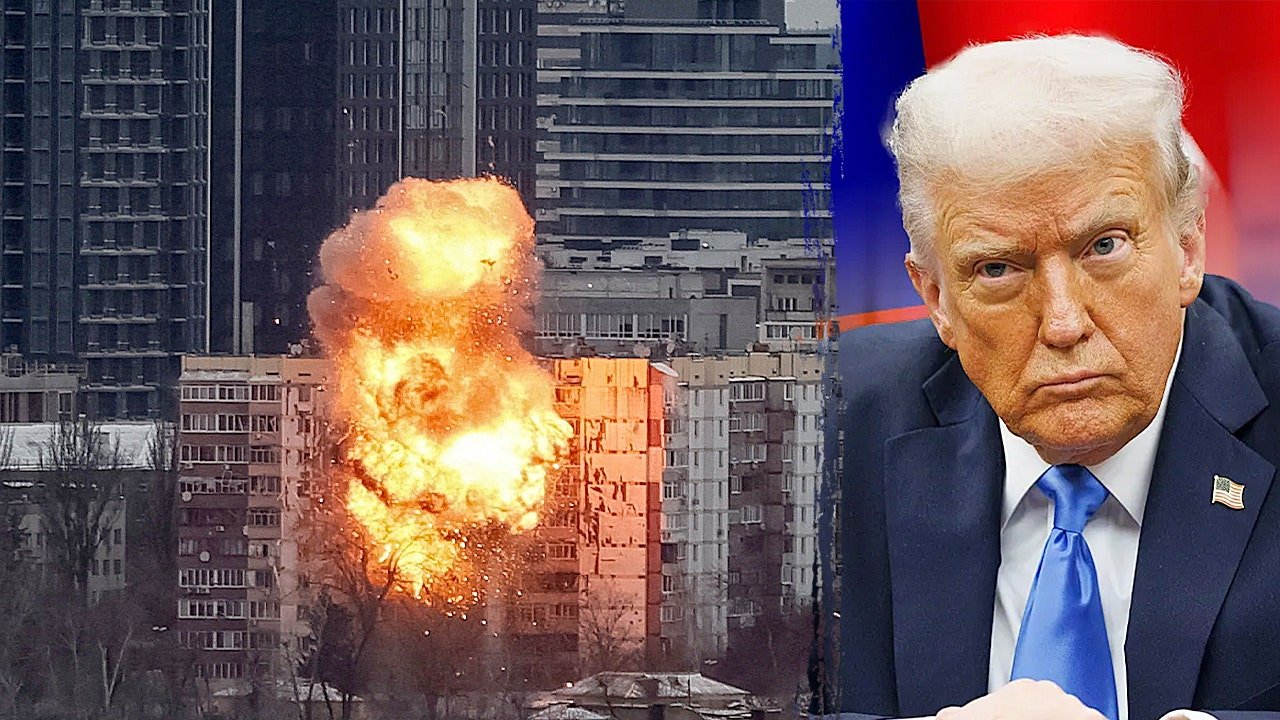
NEWYou can now listen to Fox News articles!
Russian strikes on Ukraine’s power grid will continue without President Trump stepping in, Ukraine’s top energy executive has warned, as millions risk a freezing winter without power.
DTEK’s Maxim Timchenko spoke out as Ukraine braced for further Russian drone and missile attacks on energy infrastructure and a day after Trump met Ukrainian President Volodymyr Zelenskyy for the third time to bring an end to the nearly four-year war.
«Yesterday’s meeting gave us renewed hope. But our task is not to live from hope to hope — it is to continue doing what we have done for four years: responding to immediate challenges and fighting every day,» Timchenko told Fox News Digital.
TRUMP TOUTS ‘TREMENDOUS PROGRESS’ BUT SAYS HE’LL MEET PUTIN AND ZELENSKYY ‘ONLY WHEN’ PEACE DEAL IS FINAL
U.S. President Donald Trump and Ukrainian President Volodymyr Zelensky shake hands at a news conference following a meeting at Trump’s Mar-a-Lago club on December 28, 2025 in Palm Beach, Florida. (Joe Raedle/Getty Images)
«We are deeply grateful to President Trump for his leadership. We believe he and his team are the only ones who can force Russia to negotiate and stop the war, together with the support of our partners in the European Union and other countries,» the DTEK CEO said.
Founded by Ukrainian entrepreneur Rinat Akhmetov, DTEK is Ukraine’s largest private energy company and a backbone of the nation’s power supply.
Before Russia’s full-scale invasion in 2022, the company operated eight thermal power stations. Three were later occupied by Russian forces.
«Today, we operate five power stations, and each of them has been attacked at least five times since the full-scale invasion,» Timchenko confirmed.
PUTIN REJECTS KEY PARTS OF US PEACE PLAN AS KREMLIN OFFICIAL WARNS EUROPE FACES NEW WAR RISK: REPORT
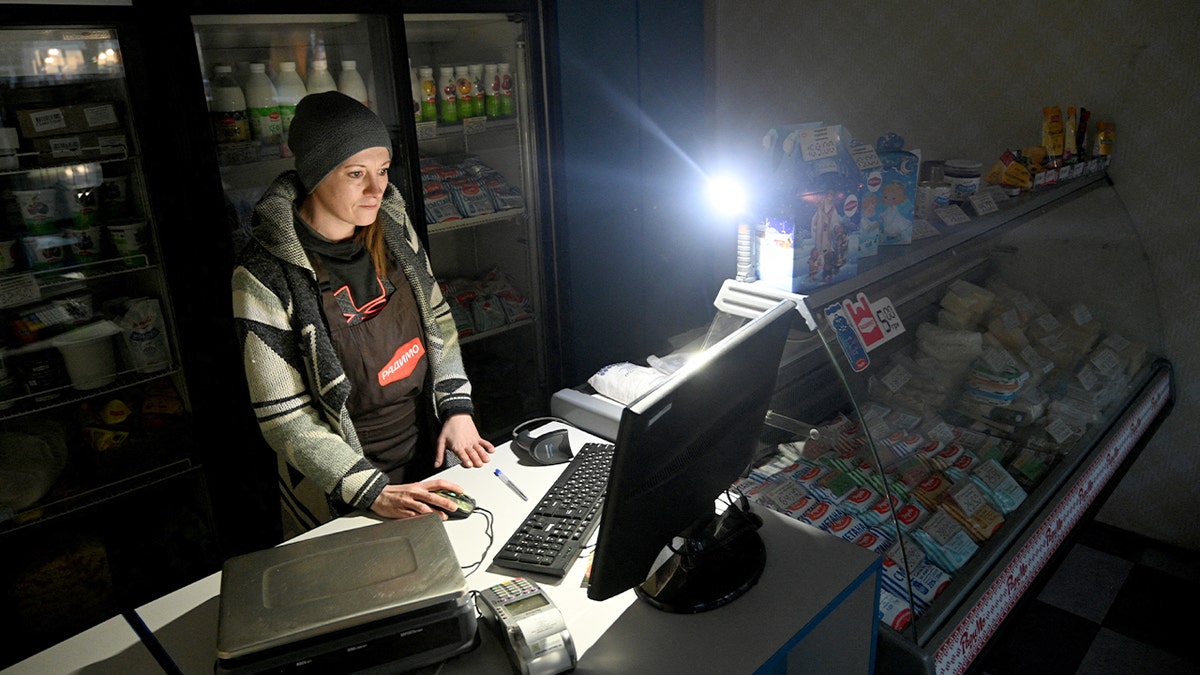
A seller waits for customers in a shop during a partial blackout in Lviv on Nov. 28, 2024, following Russian strikes on Ukrainian energy infrastructure amid the Russian invasion of Ukraine. (Yuriy Dyachyshyn/AFP via Getty Images)
He described the damage as unprecedented. «The level of destruction is incomparable to any energy system in the world. Nothing like this has happened in modern history,» he said.
At one point, he said, nearly all of DTEK’s generation capacity was damaged or destroyed, with losses totaling hundreds of millions of dollars.
«And I can say that at some moment of time, 90% of our generation capacity was damaged or destroyed,» he explained.
«With this destruction, we lost hundreds of millions of dollars in direct damages, and I don’t even mention lost revenue. So, only for 2025, our recovery budget was about $220 million, but if you take it from the beginning of the full-scale invasion, I say it’s hundreds, hundreds of millions of dollars,» Timchenko said.
Despite the destruction and losses faced, his company has repeatedly restored power to millions of Ukrainians.
«Since 2022, we have managed to reconnect more than 30 million households and clients,» Timchenko said. «We are fighting and we are fast.»
RUSSIA UNLEASHES MAJOR DRONE, MISSILE ATTACK ON UKRAINE AS US DIPLOMATIC TALKS CONTINUE
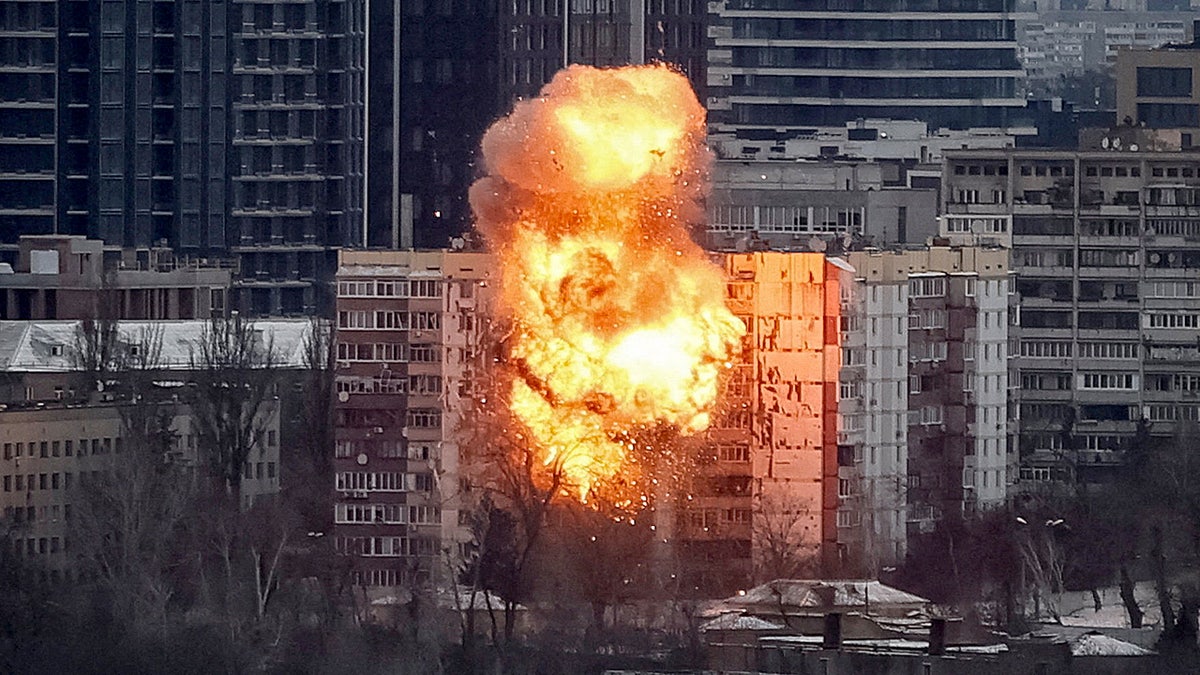
A drone hits an apartment building in Kyiv during Russia’s attack on Ukraine on Saturday, Dec. 27, 2025. (Gleb Garanich/Reuters)
«For the last two years, it has been extremely difficult. Attacks have become so intense and we live in crisis mode every single day because our equipment is destroyed, power stations damaged, and the only thing we are thinking about is how to restore power supply as soon as possible,» Timchenko said.
He also added that recovery efforts include resuming gas drilling, continuing construction of Eastern Europe’s largest wind park, and building a major battery storage system with U.S. firm Fluence.
Otherwise, in Odesa, for example, around 600,000 people have been affected by outages, with some neighborhoods left without power for days at a time.
But Russia’s most recent large-scale strike came on Dec. 26, when missiles and drones hit Kyiv and surrounding areas, cutting electricity to more than 1 million people during freezing temperatures.
FORMER SECRETARY OF STATE SAYS PUTIN WON’T AGREE TO UKRAINE PEACE DEAL UNLESS FACED WITH ‘BIGGER STICK’
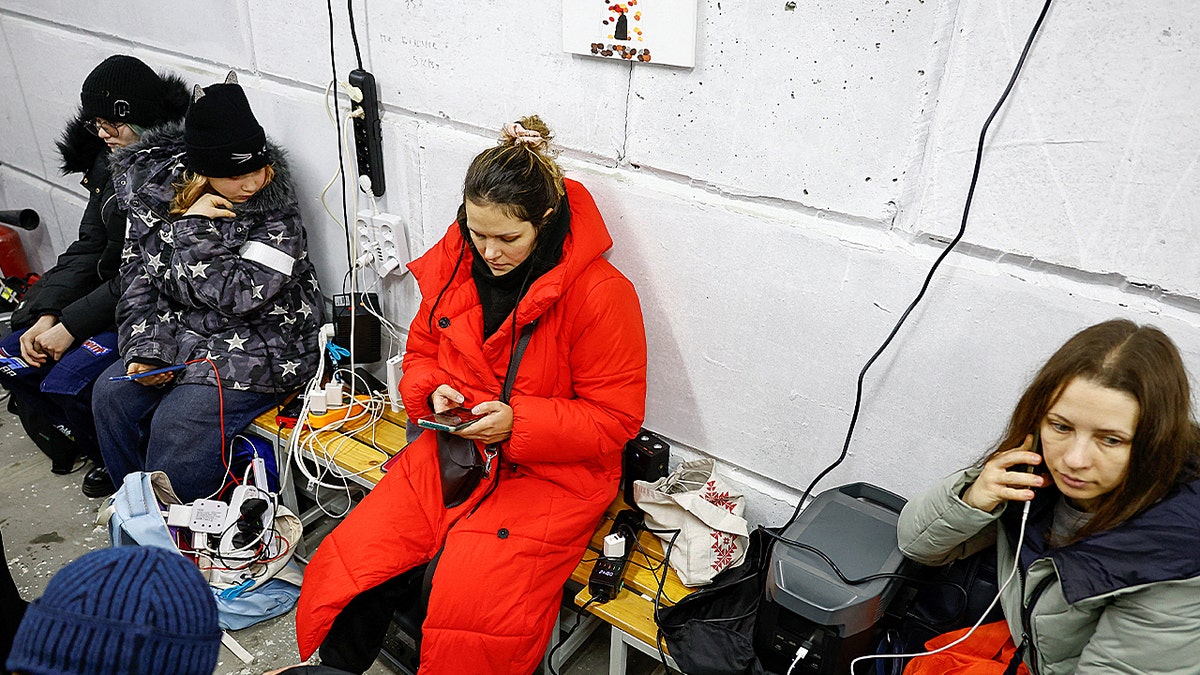
DTEK says they have restored power to 30 million Ukrainian households despite repeated Russian strikes on critical energy infrastructure. (Reuters)
«People have learned how to live without necessities like electricity,» Timchenko said.
«The temperature in Kiyv was minus 10 degrees and because of this attack, we couldn’t get water, we couldn’t get heat, and of course, there is no electricity.
«They attacked us with ballistic and Kalibr missiles and calibers, then 500 drones and other types of missiles,» he added.
CLICK HERE TO DOWNLOAD THE FOX NEWS APP
Looking ahead, Timchenko stressed Ukraine’s dependence on continued support.
«The energy system is at the core of this fight. Modern life simply cannot exist without electricity. We need continued global support,» he added.
russia,volodymyr zelenskyy,donald trump,ukraine,vladimir putin











INTERNACIONAL
Pope Leo says he ‘can’t comment’ on 20-year sentence of Hong Kong pro-democracy activist Jimmy Lai
NEWYou can now listen to Fox News articles!
Pope Leo XIV this week said he «can’t» comment on the 20-year sentence imposed on a democracy activist in Hong Kong.
«I can’t comment,» the American-born Leo told EWTN News, which covers Catholic news globally, while speaking to reporters in Italy.
He added, «Let’s pray for less hatred and more peace and work for authentic dialogue. God bless you all.»
Hong Kong publisher and democracy activist Jimmy Lai, who is a converted Catholic, was sentenced to 20 years by Beijing last month for violating their 2020 national security law, which U.S. Secretary of State Marco Rubio called «unjust and tragic.»
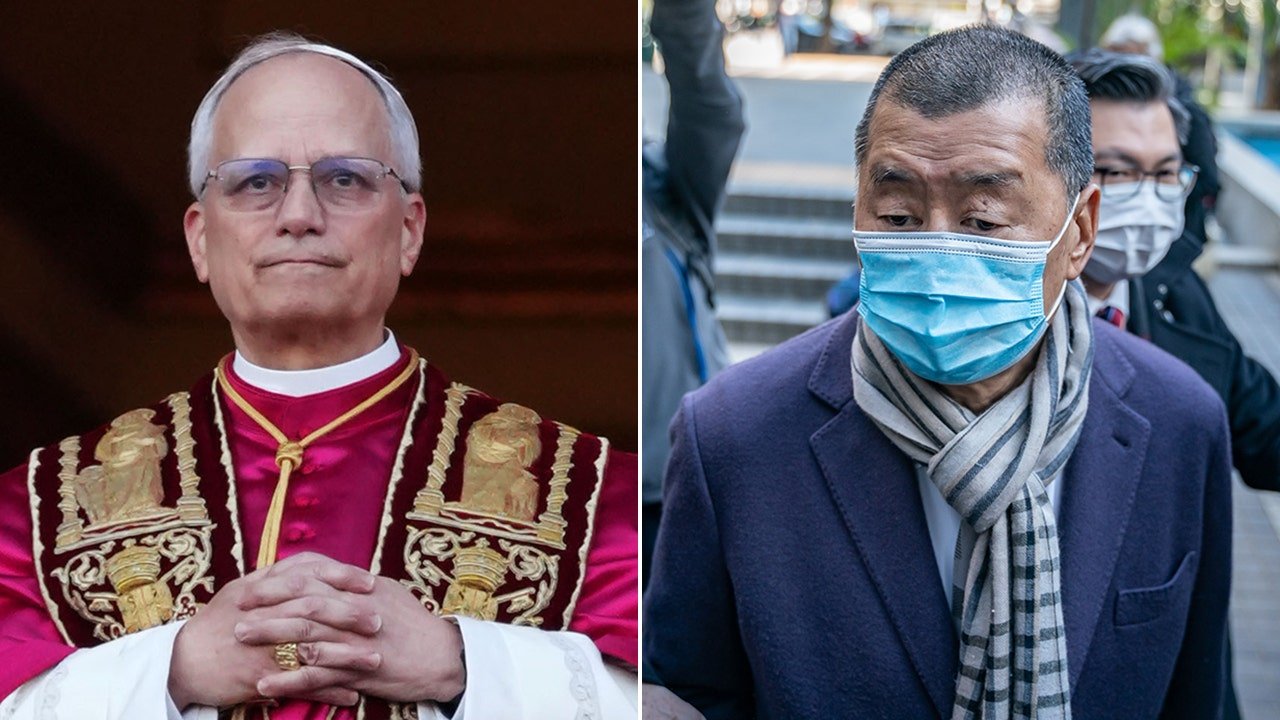
Pope Leo XIV this week said he «can’t» comment on the 20-year sentence imposed on a democracy activist in Hong Kong. (Christopher Furlong/Getty Images; Anthony Kwan/Getty Images)
«The conviction shows the world that Beijing will go to extraordinary lengths to silence those who advocate fundamental freedoms in Hong Kong,» Rubio said in a statement. «The United States urges the authorities to grant Mr. Lai humanitarian parole.»
The 78-year-old founded the now-closed Hong Kong-based Apple Daily in 1995, while the island was still under British rule.
Lai’s sentence closed one of the country’s most consequential national security cases since Beijing imposed the sweeping new law in 2020 in the wake of months-long anti-Chinese Communist Party protests in 2019, which were sparked by fears Beijing was eroding Hong Kong’s promised autonomy.
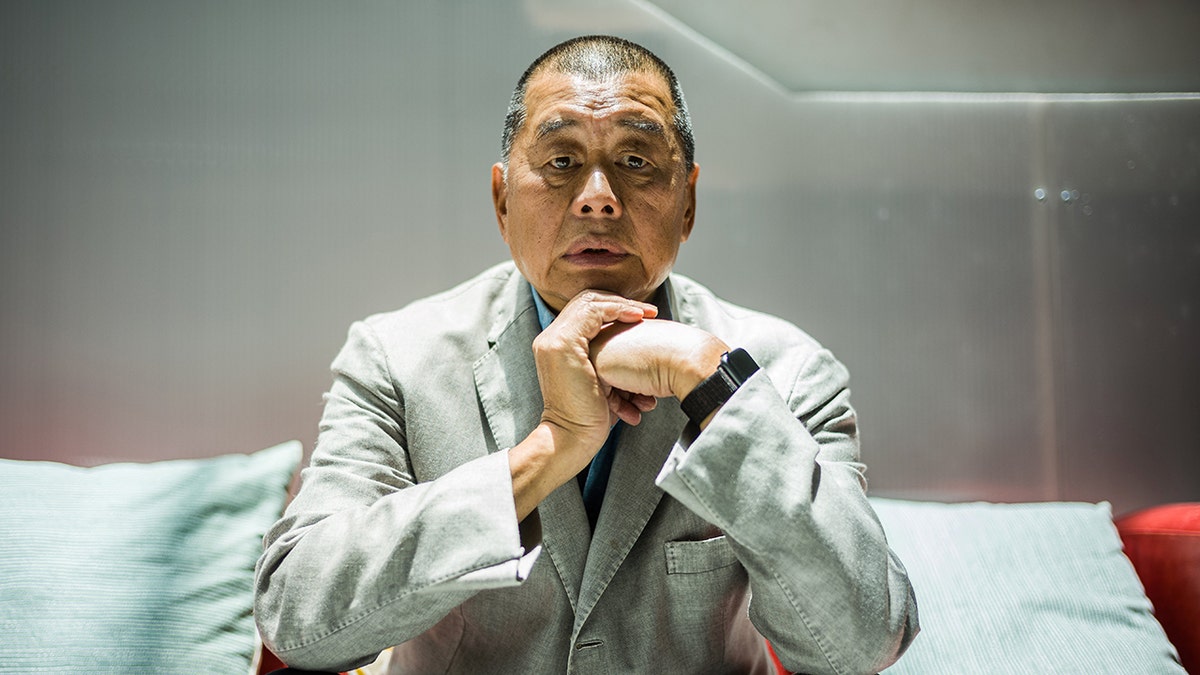
Lai has already been in custody since 2020. (Anthony Wallace/AFP via Getty Images)
They were followed by a sweeping security crackdown that criminalized dissent and reshaped the city’s legal system.
CHINA PHONY CONVICTION OF JIMMY LAI IS A WARNING
Lai had been arrested several times during the 2019 protests, and he was detained at his home in 2020. His newspaper was also raided at the time and closed.
He was found guilty in December of attempting to undermine national security.
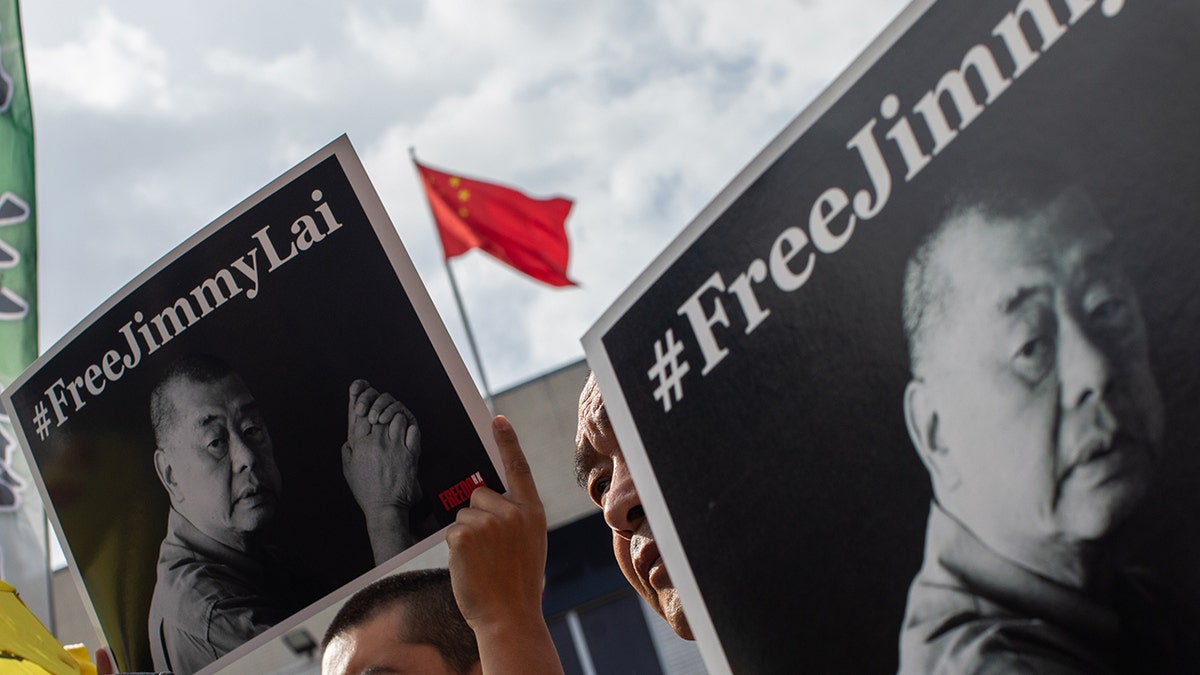
Jimmy Lai supporters in Los Angeles last month. (Apu Gomes/Getty Images)
President Donald Trump said in December that he had personally urged Chinese President Xi Jinping to release Lai.
CLICK HERE TO GET THE FOX NEWS APP
«I spoke to President Xi about it, and I asked to consider his release,» Trump said. «He’s not well, he’s an older man, and he’s not well, so I did put that request out. We’ll see what happens.»
Related Article

pope leo xiv,china,world,hong kong

NEWYou can now listen to Fox News articles!
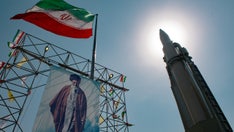
When War Secretary Pete Hegseth was asked recently whether U.S. forces would ever move to secure enriched uranium reportedly stored at Iran’s Isfahan nuclear complex, he declined to say, citing operational security.
The exchange highlighted a question the U.S. and Israel’s air campaign alone cannot answer: even if U.S. strikes degrade Iran’s nuclear infrastructure, who would physically secure the enriched uranium, and how?
Iran is believed to possess a significant stockpile of uranium enriched to 60%, near weapons-grade. That material could theoretically be used in multiple nuclear devices if further refined.
Moving from 60% to weapons-grade 90% enrichment requires additional processing, and weaponization would involve further technical steps. But analysts say the more immediate issue is physical control of the material itself.
«If the U.S. wants to secure Iran’s nuclear materials, it’s going to require a massive ground operation,» Kelsey Davenport, director of nonproliferation policy at the Arms Control Association, told Fox News Digital.
Davenport said the highly enriched uranium believed to be stored at Isfahan appears to be deeply buried and contained in relatively mobile canisters. Securing it would likely require locating the full stockpile, accessing underground facilities and safely extracting or downblending the material.
Satellite imagery taken on Jan. 30, 2026 shows a new roof over a previously destroyed building at the Natanz nuclear site. (2026 PLANET LABS PBC/Handout via Reuters)
«It’s not even clear the United States knows where all of the uranium is,» she said, noting that the mobility of storage containers raises the possibility that some material could be moved or dispersed.
The administration repeatedly has said preventing Iran from obtaining a nuclear weapon remains a central objective of Operation Epic Fury.
«Ultimately, this issue of Iran’s nuclear pursuit and their unwillingness through negotiations to stop it is something President Trump has said for a long time needs to be dealt with,» Hegseth said.
Senior administration officials have argued that Iran sought to build up its ballistic missile arsenal in part to create a deterrent shield — enabling Tehran to continue advancing its nuclear program while discouraging outside intervention.
So far, however, the bulk of U.S. strikes have focused on degrading missile launchers, air defenses and other conventional military targets.
Experts note that dismantling missile systems may reduce Iran’s ability to shield a potential nuclear breakout. But physically controlling enriched uranium itself presents a separate and more complex challenge.
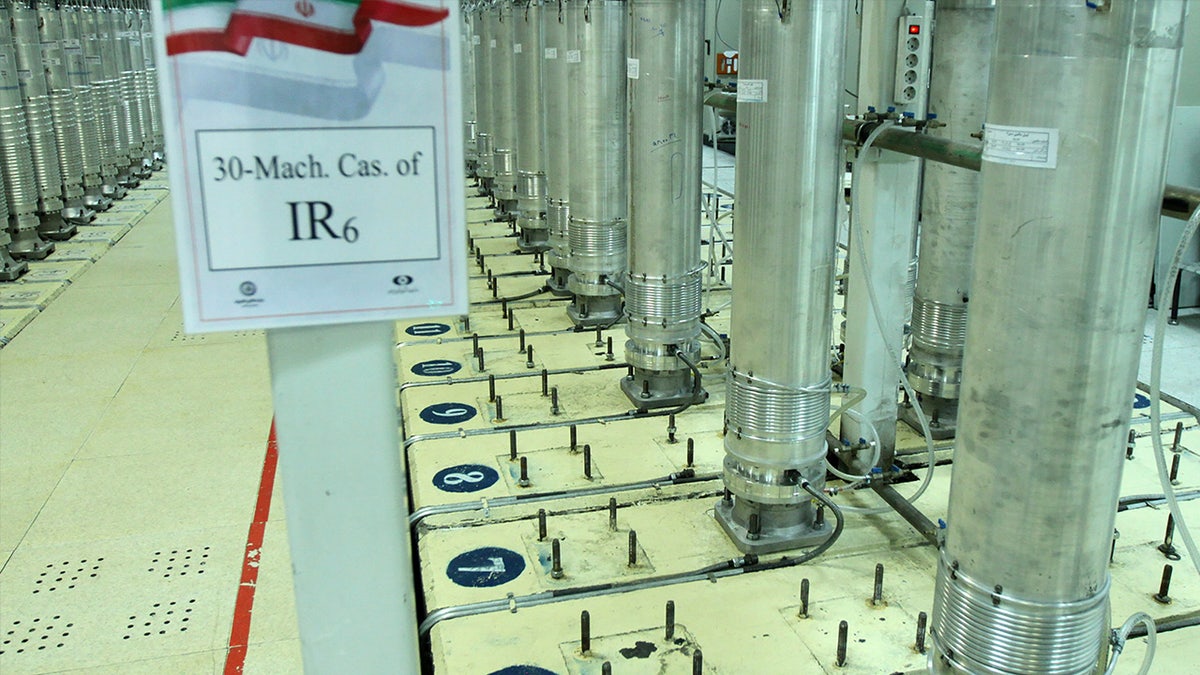
This photo released on Nov. 5, 2019, by the Atomic Energy Organization of Iran shows centrifuge machines in the Natanz uranium enrichment facility in central Iran. (Atomic Energy Organization of Iran via AP, File)
Airstrikes versus physical control
Defense officials have acknowledged that degrading nuclear infrastructure from the air is different from safely managing or securing nuclear material.
Airstrikes can destroy centrifuges, power systems and support buildings. But enriched uranium stored underground may remain intact unless it is physically secured, removed or verifiably downblended.
Striking or extracting nuclear material also carries safety risks that military planners must weigh.
If storage casks containing uranium hexafluoride gas were compromised, the material could pose chemical toxicity risks to personnel entering the site without proper protective equipment. Analysts say a conventional strike is unlikely to trigger a nuclear detonation, but dispersal of material could create localized hazards and complicate recovery efforts.
Chuck DeVore, a former Reagan-era defense official who worked on nuclear issues, argued that directly targeting the stockpile may not be a priority under current battlefield conditions.
«You don’t want to release the material into the surrounding areas and cause radioactive contamination,» DeVore said, adding that deeply buried facilities are difficult to reach from the air.
DeVore also downplayed the immediacy of a breakout scenario, arguing that further enrichment, weaponization and delivery would be difficult to execute undetected amid sustained U.S. air operations.
Even if Iran were able to further enrich uranium, he said, assembling a deliverable weapon under active military pressure would present significant technical and operational hurdles.
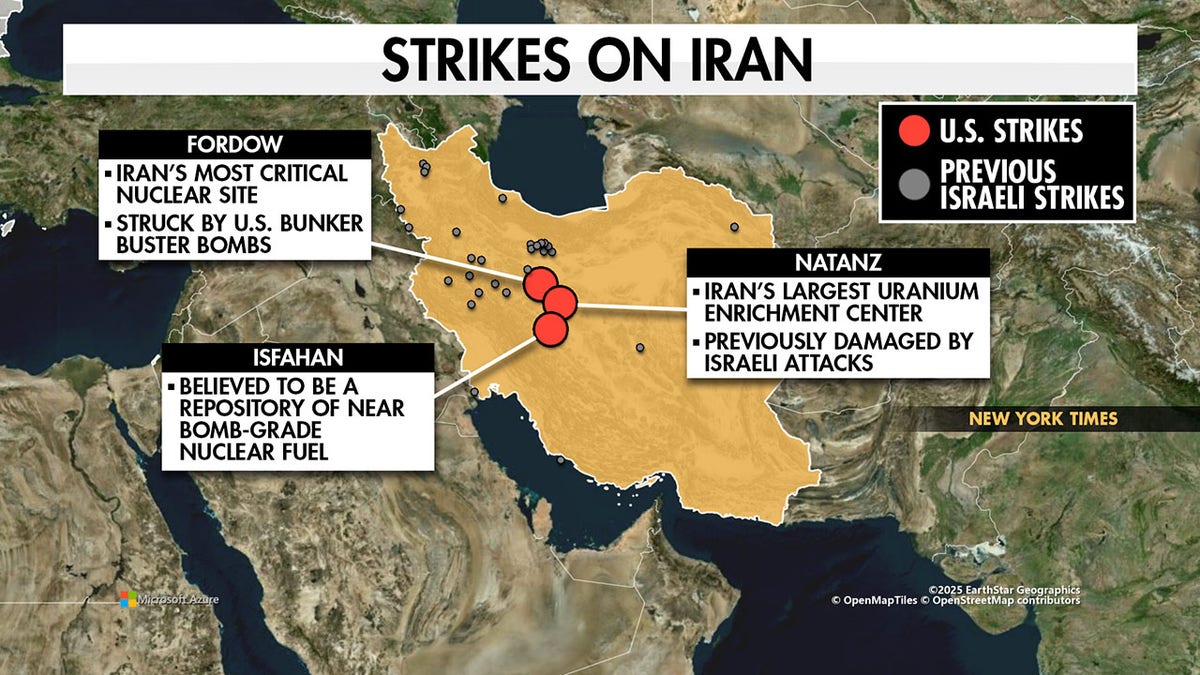
Trump said that the United States completed a «very successful» strike against Iranian nuclear sites at Fordow, Natanz and Isfahan, saying that Iran’s nuclear enrichment installations have been «obliterated.» (Fox News)
Still, DeVore acknowledged that long-term control of the uranium would ultimately require a political resolution inside Iran and some form of outside oversight.
What would securing it require?
Nonproliferation experts say securing enriched uranium generally involves more than military force. It requires verified accounting of the material, sustained access to storage sites and either removal or downblending to lower enrichment levels suitable for civilian use.
Davenport said internationally monitored downblending would be the safest option if political conditions allow.
«The IAEA remains the best place to go back into Iran to monitor the sites, to try to track down and account for the enriched uranium,» she said, describing downblending as a relatively straightforward technical process compared to attempting to extract and transport highly enriched material in a contested environment.
Both pathways — physical seizure or internationally monitored reduction — depend on conditions that do not currently exist.
Administration officials argue that dismantling Iran’s missile network weakens Iran’s ability to shield a nuclear breakout and reduces the immediate threat to U.S. forces and regional allies.
But suppressing missiles and controlling enriched uranium are separate challenges.
CLICK HERE TO DOWNLOAD THE FOX NEWS APP
Destroying infrastructure can slow or disrupt a program. Physically locating, accounting for and securing nuclear material requires sustained access, reliable intelligence and — ultimately — political conditions that allow it.
For now, the administration maintains that Iran will not be allowed to obtain a nuclear weapon. How the enriched uranium itself would be secured remains a question without a public answer.
Related Article
war with iran,iran,nuclear proliferation,nuclear disasters

Salah se toma la revancha

La ciudad de Buenos Aires y Mendoza renovaron su acuerdo con la Guía Michelin para potenciar el turismo gastronómico

Modern Love: Un apagón hizo que lo nuestro fuera posible

Reforma laboral: el Gobierno prepara su estrategia para defenderse del amparo judicial que presentó la CGT

Pope Leo says he ‘can’t comment’ on 20-year sentence of Hong Kong pro-democracy activist Jimmy Lai

Por el conflicto en Medio Oriente, la soja superó los USD 440 y trepó a su nivel más alto en casi dos años

Puertas adentro, Villarruel explotó: «El esfuerzo no lo hizo la política» y demolió el relato económico de Milei

El hijo adoptivo de José María Muscari tomó una tajante decisión de vida a los 18 años

Petri y Villarruel se cruzaron por un gesto en el Congreso: de “golpista” a “te conozco por el trencito de la alegría”

¡Interna total! Pablo Layus explotó y blanqueó quiénes son los que arruinan Intrusos: «Te matan»

 CHIMENTOS2 días ago
El hijo adoptivo de José María Muscari tomó una tajante decisión de vida a los 18 años
- CHIMENTOS2 días ago
¡Interna total! Pablo Layus explotó y blanqueó quiénes son los que arruinan Intrusos: «Te matan»
- INTERNACIONAL3 días ago
Mapa de la guerra en Medio Oriente: dos bandos y 13 países involucrados en un conflicto que jaquea al mundo