INTERNACIONAL
Operativo militar en Ecuador dejó pérdidas millonarias a las mafias del narcotráfico en la frontera norte

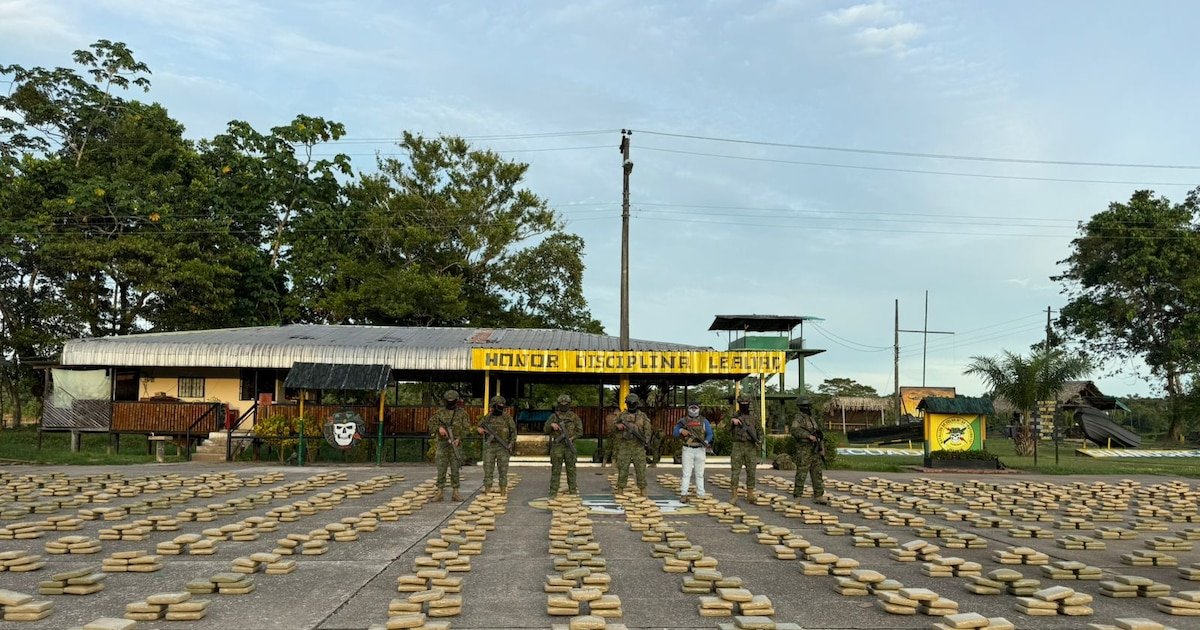
Las organizaciones criminales dedicadas al narcotráfico recibieron un nuevo golpe en la frontera norte de Ecuador tras una operación de alta intensidad ejecutada por el Bloque de Seguridad, que dejó pérdidas económicas estimadas en más de USD 5,5 millones y afectó de forma directa una ruta clave del tráfico transnacional de drogas. La intervención fue realizada por el Ejército Ecuatoriano en el sector de Playas del Cuyabeno, sobre el río Aguarico, en la provincia amazónica de Sucumbíos, una zona históricamente utilizada por estructuras criminales para el transporte de estupefacientes hacia mercados internacionales.
De acuerdo con la información oficial difundida por el Ministerio de Defensa Nacional, durante la operación se decomisaron 4.480 libras de sustancias catalogadas sujetas a fiscalización, equivalentes a 2,24 toneladas de droga, además de una embarcación y un motor fuera de borda empleados para el traslado del cargamento por vía fluvial. Todo el material incautado fue puesto a disposición de las autoridades competentes para los procedimientos legales correspondientes, conforme a la normativa vigente.
La magnitud del decomiso y el valor económico atribuido a la droga reflejan la importancia estratégica de la operación. Las rutas fluviales de la Amazonía ecuatoriana, en particular aquellas conectadas con la frontera con Colombia y Perú, se han convertido en corredores logísticos para organizaciones criminales que aprovechan la compleja geografía, la baja presencia estatal histórica y la conexión con redes transnacionales del narcotráfico. En este contexto, Sucumbíos ha sido señalada de manera reiterada por autoridades ecuatorianas como un punto sensible para el control del crimen organizado.

El golpe se produce en medio de una ofensiva sostenida del Estado ecuatoriano contra los grupos de delincuencia organizada, en el marco de las políticas de seguridad implementadas por el actual Gobierno. Desde finales de 2023, Ecuador enfrenta una escalada de violencia vinculada al narcotráfico, con disputas entre bandas por el control de rutas, puertos y territorios, lo que ha llevado a un reforzamiento del rol de las Fuerzas Armadas en tareas de seguridad interna, especialmente en zonas fronterizas y estratégicas.
Según el Ministerio de Defensa, el impacto de la operación no se limita al decomiso de droga, sino que afecta directamente la capacidad operativa de las mafias, al cortar rutas, destruir infraestructura logística y generar pérdidas económicas significativas. El mensaje oficial es que estas organizaciones no solo pierden cargamentos, sino también tiempo, recursos y capacidad de maniobra, elementos clave para sostener el negocio ilícito a gran escala.
La operación en el río Aguarico también pone en evidencia la importancia del control fluvial en la lucha contra el narcotráfico. A diferencia de las carreteras o los puertos, los ríos amazónicos permiten el movimiento discreto de grandes volúmenes de droga, con menor exposición mediática y mayores dificultades de vigilancia. Por ello, las Fuerzas Armadas han intensificado patrullajes y operaciones en estas zonas, combinando inteligencia militar, control territorial y acciones de interdicción.

Desde el Gobierno se ha reiterado que la ofensiva contra el crimen organizado será permanente y sostenida. Las autoridades han insistido en que no se trata de operativos aislados, sino de una estrategia de presión constante para reducir el margen de acción de las mafias y recuperar el control del territorio. En esa línea, el Ministerio de Defensa ha subrayado que el objetivo es claro: desarticular las economías criminales que alimentan la violencia y la inseguridad en el país.
El golpe asestado en Sucumbíos se suma a una serie de operativos recientes que buscan frenar el avance del narcotráfico en Ecuador, un país que, por su ubicación geográfica, se ha convertido en un punto clave del tránsito de drogas producidas en la región andina. Mientras las autoridades refuerzan el discurso de tolerancia cero frente a las mafias, el desafío de fondo sigue siendo consolidar una presencia estatal efectiva y sostenida en los territorios más vulnerables, para evitar que estas rutas vuelvan a ser ocupadas por las organizaciones criminales.
corresponsal:Desde Quito







INTERNACIONAL
Colorado House advances conversion therapy lawsuit bill; GOP lawmaker calls it ‘slap in the face’ to SCOTUS

NEWYou can now listen to Fox News articles!
The Democratic-controlled Colorado House passed a bill Thursday allowing people harmed by conversion therapy to sue therapists, just days after the Supreme Court blocked enforcement of the state’s ban on the method.
HB26-1322 would establish a pathway for Coloradans to bring civil claims against licensed mental health professionals accused of causing harm through efforts to change a person’s sexual orientation or gender identity.
The bill also allows people to seek legal action against the entities that hired and supervised a professional who conducted conversion therapy. The bill now heads to the state Senate, which is also controlled by Democrats, for consideration.
The measure could open the door to lawsuits years after therapy takes place and expose providers to significant financial liability.
KAGAN TURNS ON LIBERAL ALLY JACKSON WITH FOOTNOTE JAB OVER FREE SPEECH
Students listen to a man explaining the significance of the statues adorning the U.S. Supreme Court building on March 31, 2026, in Washington, D.C. (Roberto Schmidt/Getty Images)
The legislation was advanced just days after the U.S. Supreme Court ruled that Colorado cannot enforce its conversion therapy ban regarding conversations between therapists and LGBTQ+ minors, arguing the law likely violates the First Amendment by allowing some viewpoints but not others.
In an 8-1 decision Tuesday, the court said the law favors one viewpoint by allowing therapists to affirm a minor’s gender identity or sexual orientation, but not help them change it if they want to.
Matt Soper, a Republican in the Colorado House, told Fox News Digital that the new bill pushed by Democrats is a «slap in the face» to the Supreme Court.
SUPREME COURT RULING ON SECRETIVE CALIFORNIA GENDER POLICY COULD RESHAPE PARENT RIGHTS FIGHTS NATIONWIDE

Demonstrators protest against conversion therapy outside the U.S. Supreme Court as the Court hears oral arguments in Chiles v. Salazar, a landmark case on conversion therapy, on Oct. 7, 2025, in Washington, D.C. (Andrew Caballero-Reynolds/AFP via Getty Images)
«We have a bill that’s designed to be a de facto ban on conversion therapy moving forward,» Soper said.
«That just hits at the heartstrings of the average American, that the Supreme Court can’t even have a ruling be hot off the press before you have a legislature already pushing to undo what the Supreme Court just ruled,» he continued.
«At the bottom line, there’s not even a sense of what the law is or can be from the Supreme Court when you have states that are already working really hard to undermine an 8-1 ruling.
«Americans don’t like it when you have a legislature immediately trying to overturn or undermine the highest court in the land before the printing has even cooled down.»
NJ SCHOOL DISTRICT’S SECRETIVE TRANSGENDER POLICY FACES LEGAL THREAT FOR BUCKING SUPREME COURT RULING
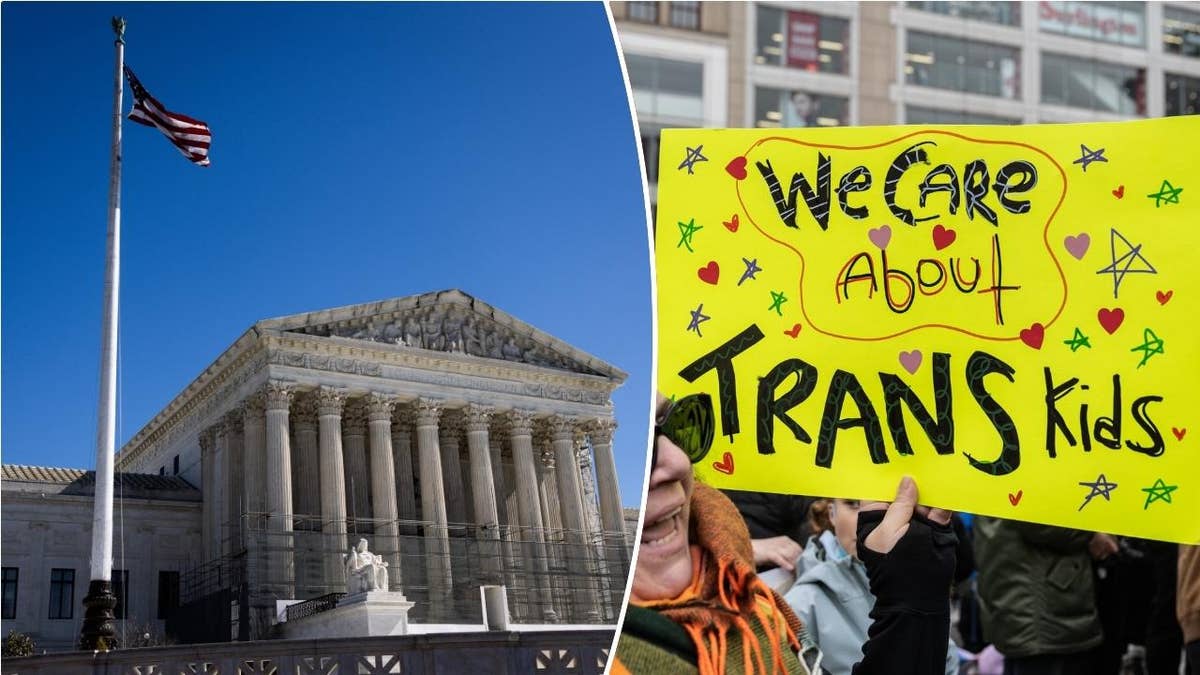
Colorado lawmakers passed a bill allowing lawsuits over «conversion therapy» days after a Supreme Court ruling limited the state’s ban. (Getty Images)
The sponsors of the bill in the Colorado House, Reps. Alex Valdez and Karen McCormick, released a statement following the high court’s ruling, reiterating that conversion therapy is «ineffective and harmful.»
«In Colorado, you belong just the way you are. Now more than ever, we must protect LGBTQ+ Coloradans from the harmful practice that is conversion therapy. We vow to keep moving forward to safeguard the rights of the LGBTQ+ community in Colorado,» the lawmakers said.
DAVID MARCUS: SCOTUS GETS CASE ON TRANSING KIDS RIGHT, DESPITE THREE CLUELESS JUSTICES
The Supreme Court’s decision stemmed from a lawsuit brought by Kaley Chiles, a licensed Christian therapist, who argued her conversations with youth clients were a form of protected speech.
The Colorado government argued the conversations amounted to professional conduct that the state was allowed to regulate.
The case centered on a law Colorado passed in 2019 banning what the state government described as conversion therapy.
JONATHAN TURLEY: JUSTICE JACKSON’S ‘CHILES’ DISSENT REVEALS NARROW VIEW OF THE FIRST AMENDMENT
While the 2019 law required that claims against providers be filed within two years, HB26-1322 would remove time limits for legal action, and if the victim has died, their representatives could pursue damages within five years of the individual’s death.
Soper criticized the bill for lacking a cap on recoverable damages or a statute of limitations on claims.
CLICK HERE TO DOWNLOAD THE FOX NEWS APP
«A mental health therapist could actually be liable for their entire life,» he said.
Fox News Digital’s Michael Dorgan and Ashley Oliver contributed to this report.
legislation, colorado, first amendment, politics, state and local
INTERNACIONAL
«Está todo parado»: el turismo se desploma en Cuba en medio de la profunda crisis energética

Las calles de La Habana casi sin turistas, incluso en esta Semana Santa, muestran una fotografía abandonada de Cuba. En plena crisis energética, la isla mantiene un desplome en el turismo, y registró un 30% menos de visitantes en los dos primeros meses del año respecto a 2025.
«En esta zona, Habana Vieja, Parque Central, el mítico Capitolio, el turismo está malo por el problema energético. No está entrando turismo por eso. Todo en Cuba está parado», se queja Alberto Ruiz Laffitte, encargado del cuidado de los autos clásicos descapotables destinados al paseo de turistas.
La isla sufre una grave crisis energética desde 2024 debido a las frecuentes averías de sus obsoletas centrales termoeléctricas y la falta de divisas del Estado para importar combustibles, algo que se ha agravado desde enero de este año por el asedio petrolero de Estados Unidos.
Los apagones son constantes, es difícil conseguir combustible para los automóviles y las calles aparecen oscuras y sin tráfico, una imagen que recuerda a la pandemia de Covid-19.
Hasta febrero, se habían recibido 262.496 visitantes internacionales, es decir, 112.642 menos que en el mismo período del año anterior, informó el lunes un informe de la Oficina Nacional de Estadísticas e Información (ONEI) del país caribeño.
El sector turístico, esencial para su economía, se encontraba ya en crisis antes del agravamiento de la situación energética a partir de enero por el asedio petrolero de Washington y la captura de Nicolás Maduro en Venezuela.
Solo en 2025, el país recibió 1.810.663 visitantes internacionales, las peores cifras desde 2002 (sin contar los años de la pandemia).
«Hay muy poco turismo. No hay prácticamente. Nuestro trabajo se ha hecho muy difícil; ahora hasta ofrecemos servicio a cubanos y lo cobramos en la moneda nacional», cuenta Ezequiel Palacios, chofer de un carro a caballo en la Habana Vieja.
En febrero, señaló la ONEI, apenas llegaron a la isla 77.663 turistas.
El número de viajeros de los dos mayores mercados emisores, Canadá y Rusia, descendió en un 28,4% y un 7,6%, respectivamente, hasta los 124.283 y los 20.668 ese mes.
La mayoría de mercados experimentaron retrocesos durante este período, algunos de carácter marcado, como es el caso de la comunidad cubana en el exterior, que cayó más de un 40%, hasta los 23.002 viajeros; y de EE.UU., que cedió un 55,9%, hasta los 11.791.
También sufrieron un descenso las cifras de México (6.674), Francia (5.649), España (4.422) e Italia (4.059). Solo se incrementaron los visitantes procedentes de Argentina (10.590) y China (5.429).
Con la situación de desabastecimiento de combustible en la isla caribeña, agudizada por el bloqueo petrolero, las autoridades cubanas comenzaron a cerrar algunos hoteles.
Desde inicios de febrero, el viceprimer ministro Oscar Pérez-Oliva Fraga aseguraba que «se había diseñado un plan en el turismo para reducir los consumos energéticos, compactar las instalaciones turísticas y aprovechar la temporada alta que está transcurriendo en estos momentos».
Esto afectó principalmente a varias instalaciones turísticas ubicadas en el balneario de Varadero (oeste) y de los cayos del norte de la isla.
Además, el pasado 4 de marzo, las autoridades del país caribeño extendieron hasta el 10 de abril el aviso de falta de combustible para aviones en todos sus aeropuertos, señalando que el déficit de queroseno afecta a todos los aeropuertos internacionales de Cuba.
Tras una Semana Santa en mínimos, Cuba perfila un fin de temporada alta con cifras muy lejanas a los máximos de turistas registrados en 2018 (4,6 millones) y en 2019 (4,2 millones).
Esos números récord estuvieron ligados al «deshielo» de las relaciones diplomáticas entre EE.UU. y Cuba en esos años y a la eliminación de restricciones de Washington a los viajes a la isla.
La situación del turismo en Cuba contrasta con la de destinos similares de la región del Caribe, como Punta Cana (República Dominicana) y Cancún (México), que están registrando máximos históricos de visitantes tras la pandemia.
NEWYou can now listen to Fox News articles!
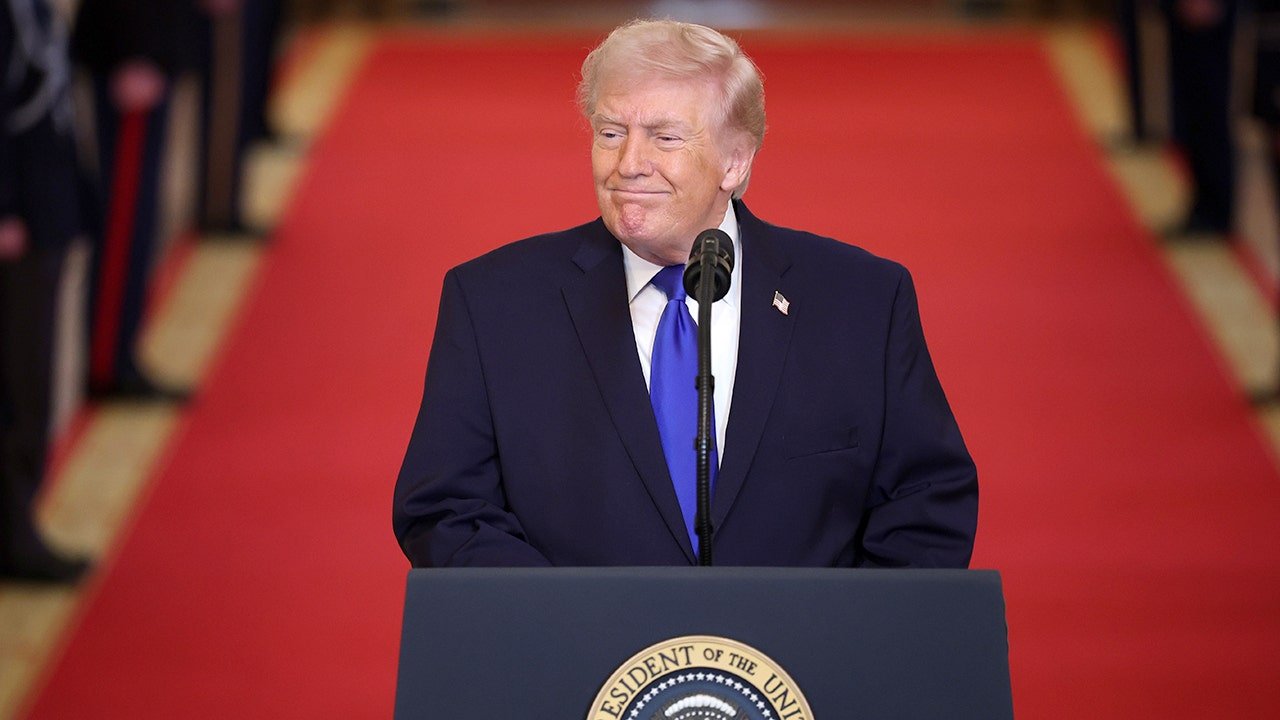
FIRST ON FOX: President Donald Trump’s fiscal year 2027 budget proposal focuses on combating violent crime while boosting immigration enforcement, including funding for more agents, alongside additional resources for expanded detention capacity and removal operations, according to information provided exclusively to Fox News Digital by the Office of Management and Budget (OMB) led by Director Russ Vought.
The plan calls for more than $19 billion in federal law enforcement funding — a 15% increase over current levels — which the administration says would go toward targeting violent criminals, drug traffickers and illegal immigrants.
«The President’s FY 2027 Budget fully funds a strong border, the removal of violent criminal aliens from our streets, and stops the endless stream of benefits to illegal aliens given preference over American citizens,» an OMB spokesperson said in materials shared with Fox News Digital.
OMB said the administration is building on what it described as «great success in reducing crime under President Trump’s leadership.»
GOP, DEMOCRATS CLASH ON CAPITOL HILL AS REPUBLICANS TARGET CARTELS AND DEMS PUSH TO CURB ICE PARTNERSHIPS
President Donald Trump’s fiscal year 2027 budget proposal focuses on combating violent crime while increasing immigration enforcement. (Win McNamee/Getty Images)
«[We] will continue undeterred in removing the criminal illegal aliens terrorizing innocent Americans and arresting the criminals who bring drugs, crime, and chaos to our streets,» the office said.
The proposal would fund more federal agents «working to capture illegal aliens,» expand task forces targeting transnational criminal groups like Tren de Aragua and MS-13 as well as drug cartels, and increase the number of prosecutors handling violent crime cases, according to OMB.
The budget also relies heavily on funding from the Working Families Tax Cut Act (WFTC), which OMB said provides more than $190 billion for homeland security efforts over multiple years, including at least $31.4 billion in 2027.
TRUMP DEFENDS MINNEAPOLIS FEDERAL ENFORCEMENT, SAYS CRIME PLUNGED AFTER ‘THOUSANDS OF CRIMINALS’ REMOVED

The Trump administration has made securing the border and deporting criminal illegal aliens a priority. (Gregory Bull/Associated Press)
That funding would be used to finish construction of the southern border wall, deploy new border security technology and support large-scale immigration enforcement operations, according to OMB.
A major focus is expanding detention and deportation capacity.
OMB said WFTC provides $75 billion for Immigration and Customs Enforcement (ICE), including funding to expand detention space to as many as 100,000 single-adult beds and 30,000 family-unit beds. It also includes $15.4 billion for transportation to increase removals and allows for a 67% increase in ICE staffing through 2029.
TRUMP UNLEASHES ‘TOUGHEST FENTANYL CRACKDOWN IN HISTORY’ AS GOP VOWS ‘CONSEQUENCES’ FOR CHINESE PRODUCERS

US Immigration and Customs Enforcement (ICE) agents, along with other federal law enforcement agencies, attend a pre-enforcement meeting in Chicago. (Christopher Dilts/Bloomberg)
The proposal also includes $899 million for immigration courts — a $99 million increase — which the administration says would help speed up deportation proceedings by adding judges and expanding courtroom space.
The administration has pointed to prior federal enforcement surges as evidence that a heavier law enforcement footprint can quickly reduce crime.
In Memphis, Tennessee, a Department of Justice-led operation involving federal agents and National Guard troops resulted in more than 1,700 arrests in a single month, including suspects tied to homicide, drug trafficking and gang activity, according to data previously reported by Fox News Digital. The operation also recovered nearly 300 firearms and located dozens of missing children.
TRUMP TASK FORCE RACKS UP 500 ARRESTS IN JANUARY AS PRESIDENT BRANDS CARTELS ‘ISIS OF THE WESTERN HEMISPHERE’
A similar federal task force effort in Washington, D.C., has led to more than 10,000 arrests since 2025 and the seizure of over 1,000 illegal firearms, according to prior Fox News Digital reporting. Violent crime in the district has dropped sharply during that period, including declines in homicides and robberies.
The Coast Guard would also see increased funding, with a $2.1 billion boost to operations aimed in part at stopping migrants and illegal drugs at sea, according to OMB.
CLICK HERE TO DOWNLOAD THE FOX NEWS APP
The broader fiscal 2027 budget is expected to include a significant increase in defense spending as well. Reuters reported that Trump is preparing to request a $1.5 trillion defense budget, potentially the largest year-over-year increase in post-World War II history, with funding for missile defense systems, fighter jets and warships.
Trump’s proposed FY 2027 budget is expected to be presented to Congress on April 3, Good Friday.
deportation, immigration, tren de aragua, illegal immigrants, border security

Colorado House advances conversion therapy lawsuit bill; GOP lawmaker calls it ‘slap in the face’ to SCOTUS

Se cumple «profecía» de Milei: al BCRA le salen dólares por las orejas pero llega una prueba difícil

Con el eje puesto en Adorni, Javier Milei convocó a una reunión general del Gabinete

«Está todo parado»: el turismo se desploma en Cuba en medio de la profunda crisis energética

Marcha atrás: Conmebol presionó a U Católica y Boca Juniors podrá llevar hinchas a Chile

Qué ver en Netflix, la miniserie de 6 episodios que es la joya oculta y nadie puede perderse: «Post Mortem: Nadie muere en Skarnes»

Dos jubiladas que le habrían prestado dinero a Manuel Adorni negaron conocerlo

Quiénes son las dos acreedoras del préstamo con el que Adorni compró su departamento en Caballito

El Gobierno reevalúa la estrategia de comunicación por el caso Adorni y mide el impacto en la imagen de Milei

Milei se pone al frente de la defensa de Adorni y lo suma a un acto por Malvinas en una nueva muestra de respaldo

 POLITICA3 días ago
Dos jubiladas que le habrían prestado dinero a Manuel Adorni negaron conocerlo
- POLITICA2 días ago
El Gobierno reevalúa la estrategia de comunicación por el caso Adorni y mide el impacto en la imagen de Milei
- POLITICA20 horas ago
Milei se pone al frente de la defensa de Adorni y lo suma a un acto por Malvinas en una nueva muestra de respaldo