INTERNACIONAL
Pritzker joins chorus of Dem governors boycotting White House dinner after snub ignites ‘chaos’


NEWYou can now listen to Fox News articles!
A chorus of Democratic governors are rallying behind their fellow Democratic Governors Jared Polis, from Colorado, and Wes Moore, from Maryland, after they did not receive invites for a traditionally bipartisan White House dinner.
Illinois Democrat Governor J.B. Pritzker was among those who decided they would be boycotting the slate of events hosted at the White House for the National Governors Association’s annual winter gathering held Feb. 19-21.
«No way will I attend the White House dinner with this President,» Gov. Pritzker said Tuesday. «I’m standing with Gov. Wes Moore and Gov. Jared Polis — and standing against Trump’s corruption and hatred. And I’m calling on my Republican colleagues to do the same.»
The boycott is being led by the chair of the Democratic Governors Association, Kentucky Gov. Andy Beshear, and its vice chair, Michigan Gov. Gretchen Whitmer. Other Democratic Party governors who have committed to the boycott include California Gov. Gavin Newsom, Pennsylvania Gov. Josh Shapiro and Minnesota Gov. Tim Walz. A coalition of 18 governors signed a statement Tuesday slamming President Donald Trump for creating «chaos and division» by snubbing the state leaders.
GOP MUTINY FORCES HOUSE SPEAKER MIKE JOHNSON TO DELAY VOTE ON KEY PIECE OF TRUMP’S AGENDA
Democratic Party Governors Wes More (left), from Maryland, and Jared Polis (right), from Colorado. (Getty Images)
The White House reportedly decided to divert from the traditional path of inviting both Republican and Democratic governors to the events being held at the White House. Although a White House official also reportedly told Politico that «many Democrats were invited to dinner at the White House» while others were not.
The move not to invite all Democrat governors to the winter gathering comes after President Trump got into a public spat with Democrat Governor of Maine, Janet Mills, at a bipartisan «Governors Working Session» last year in February over transgender sports participation. The heated back-and-forth was televised on national stations for all to see and led to the pair exchanging barbs for the subsequent weeks over the matter and over the state’s unwillingness to follow federal orders, such as those related to transgender sports participation.
When reached for comment on the matter, a White House spokesperson referred Fox News Digital to press secretary Karoline Leavitt’s comments Tuesday on the matter from the White House briefing room, during which she defended President Trump’s decision to not invite the Democratic Party governors.
«I just spoke with the president about this. It is a dinner at the White House. It’s the people’s house. It’s also the president’s home, and so he can invite whomever he wants to dinners and events here at the White House,» Leavitt told reporters from the White House briefing room Tuesday.
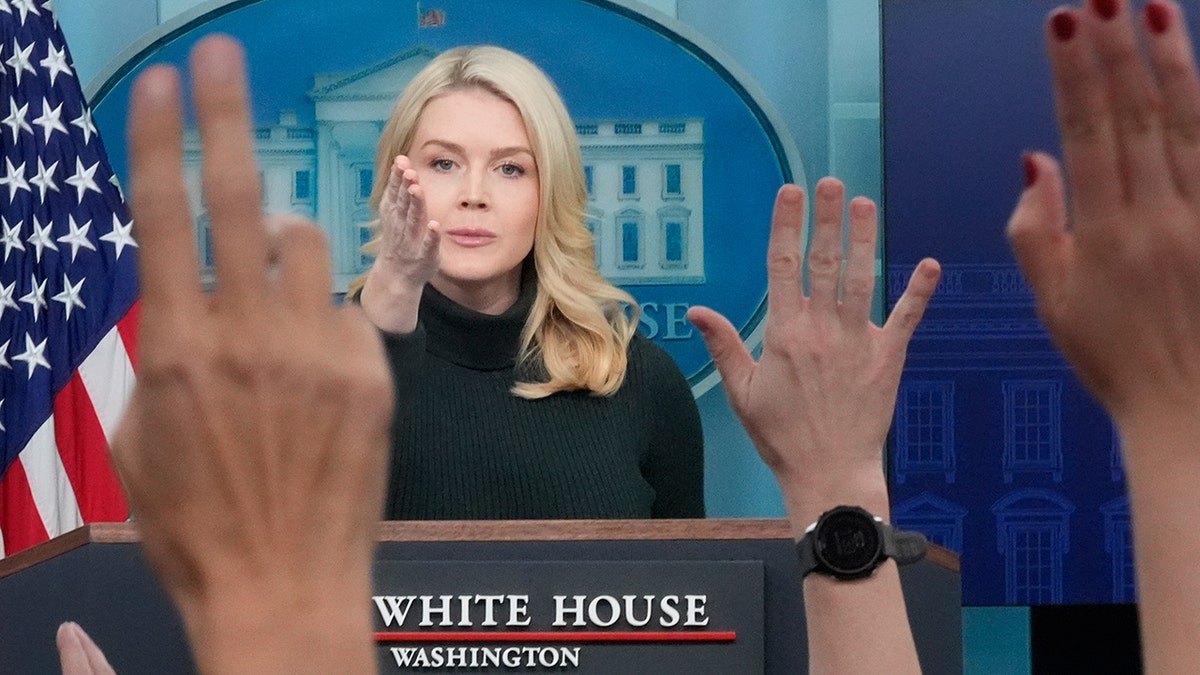
Reporters raise their hands to ask a question as White House press secretary Karoline Leavitt speaks with reporters in the James Brady Press Briefing Room at the White House, Monday, Jan. 26, 2026, in Washington. (Alex Brandon/AP Photo)
FAR-LEFT NONPROFITS IN THE HOT SEAT AS LAWMAKER EXPOSES THEM FOR ‘SOWING CHAOS’ IN US
She added that Gov. Moore had been invited the previous year, but never ended up coming. «Nobody reported on it. But, again, the president has the discretion to invite whomever he wants to the White House, and he welcomes all those who received an invitation to come and if they don’t want to that’s their loss.»
During an appearance on CNN’s «State of the Union,» Moore suggested his lack of an invite was due to race, telling the show it was «not lost» on him that he is the only black governor in the country and the president was trying to deny him attendance at an organization’s event that Moore said his fellow Democrat governors have said they would like to see him lead. Moore also pointed to the fact he led a delegation of governors to the White House several weeks ago.
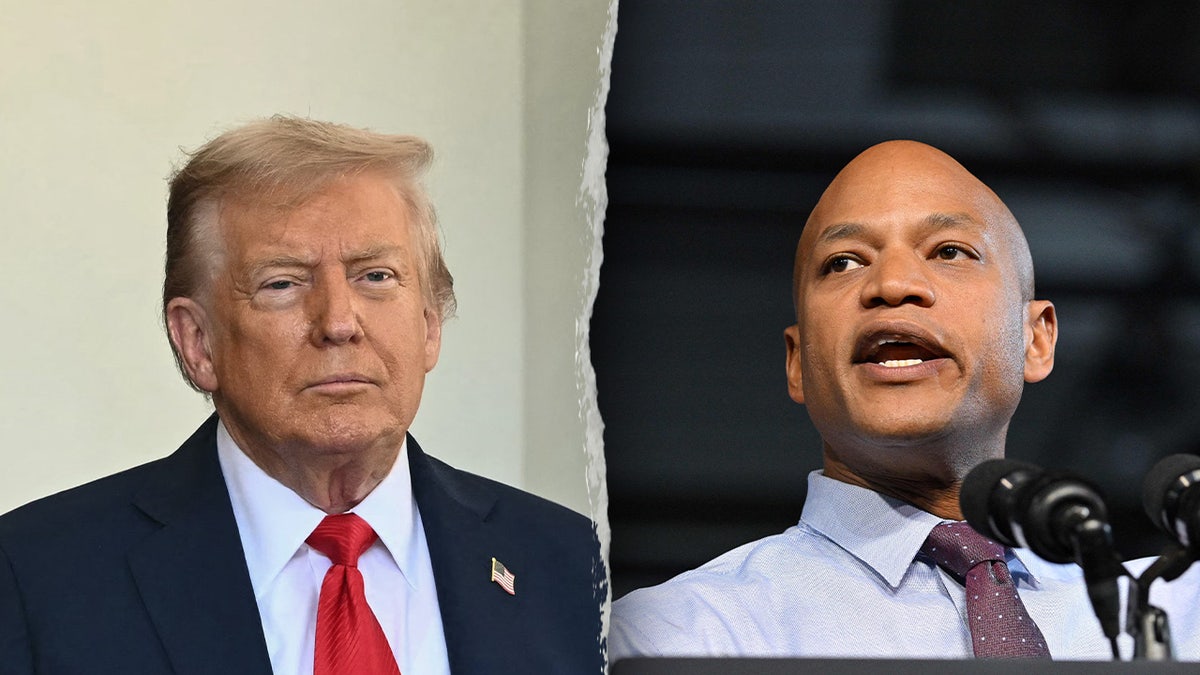
President Donald Trump (left) and Maryland Democratic Gov. Wes Moore (right) (Mandel Ngan/AFP via Getty Images)
In a statement, Brandon Tatum, CEO of the National Governors Association, said he was «disappointed in the administration’s decision.»
CLICK HERE TO DOWNLOAD THE FOX NEWS APP
Oklahoma Gov. Kevin Stitt, a Republican who is the chairman of the NGA, said in a Monday letter to fellow governors that the association was «no longer serving as the facilitator» for the upcoming event, according to The Associated Press. Stitt said the NGA was meant to represent all governors — those of the 50 states as well as the governors of American Samoa, Guam, the Northern Mariana Islands, Puerto Rico and the Virgin Islands.
Fox News Digital’s Rachel Wolf and Patrick Ward contributed to this report.
governors,white house,politics,democratic party,state and local,donald trump











NEWYou can now listen to Fox News articles!
In less than a week, Canadian Prime Minister Mark Carney has gone from supporting U.S. actions against Iran to raising the issue that the U.S. and Israel «acted without engaging the United Nations or consulting with allies, including Canada» to on Wednesday not ruling out Canadian military participation in the conflict.
«He’s been all over the place,» Nader Hashemi, a Canadian-born associate professor of Middle East politics at Georgetown University, told Fox News Digital. «It doesn’t look very good for him or for the government of Canada.»
«My own reading is that he’s influenced by public opinion and his understanding of Canada’s national interests and where they lie, and specifically the relationship with the United States at its core. His first statement was very supportive of the American-Israeli attack and then he walked it back two days later when he got a lot of pushback because there was no reference to Canada’s support for international law, rules-based order and the United Nations.»
Smoke rises over Tehran, Iran, on March 2, 2026, after explosions were reported in the city during the joint U.S.-Israel operation against Iran. (Contributor/Getty Images)
When asked whether Canada would join the U.S. military against Iran during his visit to Australia on Wednesday, Carney told reporters that «one can never categorically rule out participation» and that Canada «will stand by our allies, when makes sense.»
However, former NATO commander and retired Canadian major-general David Fraser told CTV News Channel that it’s «unlikely» that Canada would be drawn into the U.S.-Israeli war against Iran unless a member state, such as Turkey, called for assistance under Article 5 of the North Atlantic Treaty.
Carney’s latest comments signal the Canadian prime minister’s desire to ensure that «it doesn’t create a deeper rupture with the United States than already exists,» said Hashemi.
Melissa Lantsman, deputy leader of the Canadian Conservative Party, summarized the prime minister’s changing position on the U.S.-Israeli attacks on Iran with a post on X: «We support it, we’re upset about it, we think it’s bad, but also, we might join in.»
Her colleague, Michael Chong, the Conservative shadow minister for foreign affairs, told Canadian broadcaster CTV that «supporting the airstrikes and at the same time calling for a secession of those strikes» is «an inherent contradiction.»
NATO CHIEF PRAISES TRUMP’S IRAN STRIKES, SAYS KEY ALLIES ‘ALL FOR ONE, ONE FOR ALL’
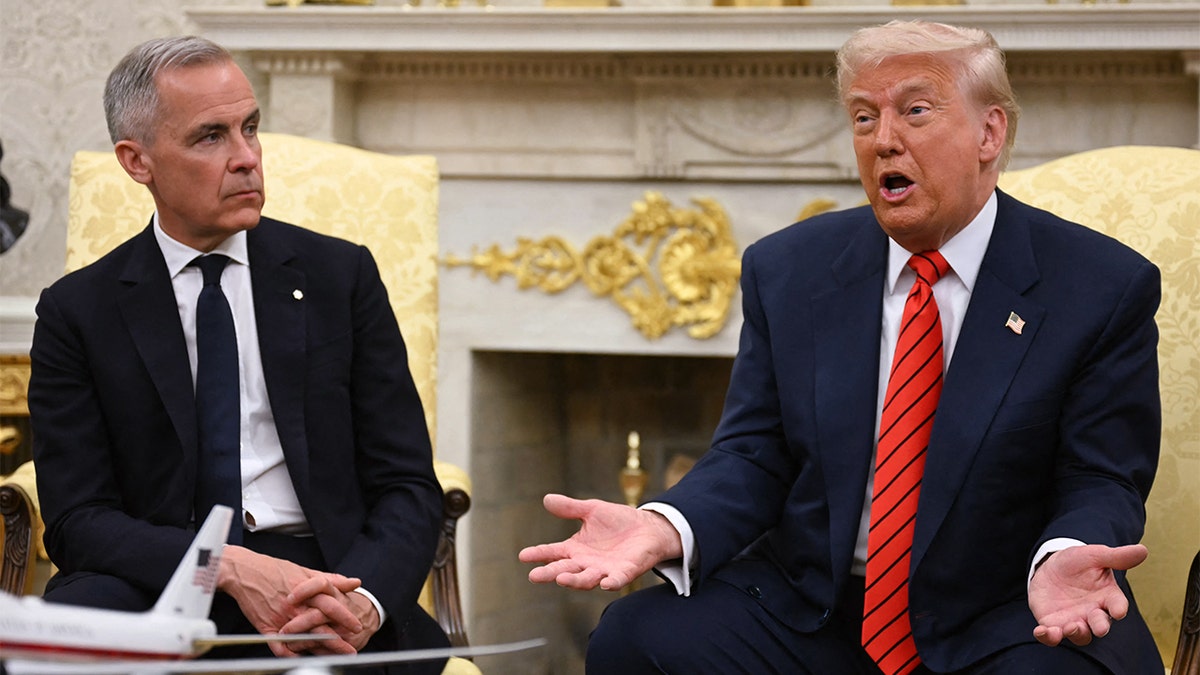
US President Donald Trump meets with Canadian Prime Minister Mark Carney in the Oval Office of the White House in Washington, DC, on May 6, 2025. (Jim Watson / AFP)
Carney has also had pushback from the political left.
After the airstrikes against Iran began, Alexandre Boulerice, foreign affairs critic for the New Democratic Party of Canada, said in a statement that his party «strongly condemns the American and Israeli bombings of Iran» and «deplores the Carney government’s decision to blindly support this dangerous venture by Israel and Donald Trump’s administration. We want Canada to be a voice for diplomacy, peace and international law.»
During his Australian tour this week, the prime minister said that «hegemons are increasingly acting without constraint or respect for international norms or laws while others bear the consequences.»
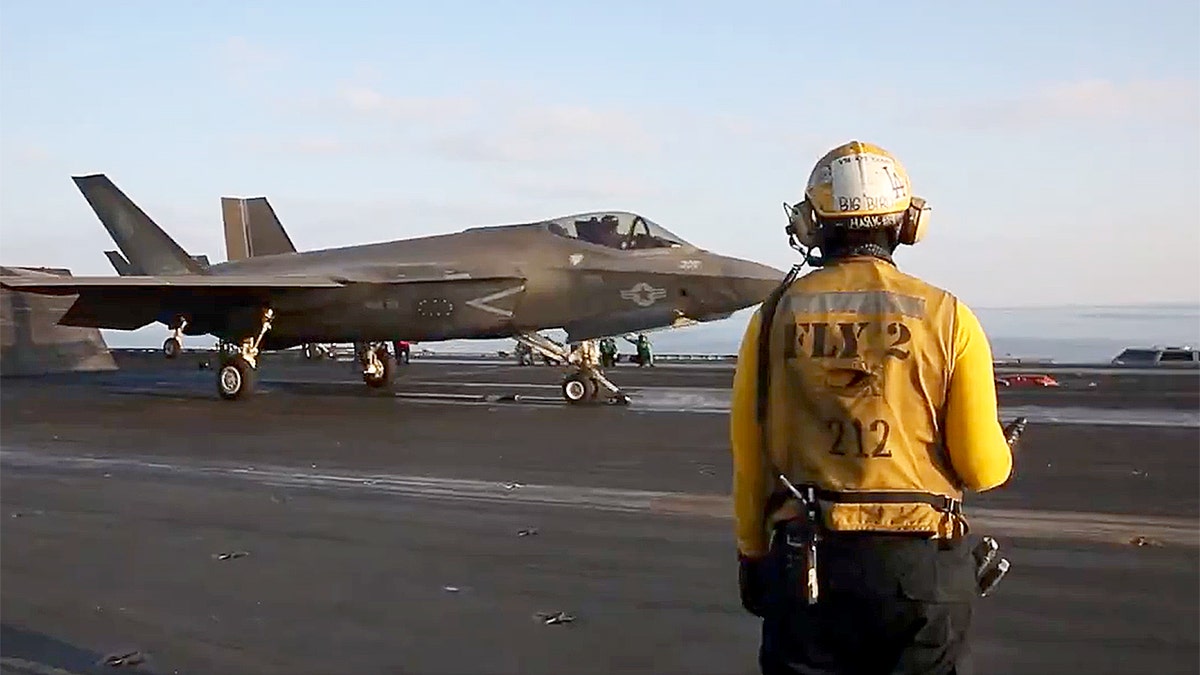
U.S. Central Command released a video on Thursday, March 5, 2026, showing American aircraft taking off during Operation Epic Fury against Iran. (CENTCOM)
He also said Canada supports «efforts to prevent Iran from obtaining a nuclear weapon and to prevent its regime from further threatening international peace and security,» but noted that Canada «take[s] this position with regret because the current conflict is another example of the failure of the international order.»
Carney said that «Canada calls for a rapid de-escalation of hostilities and is prepared to assist in achieving this goal.»
CLICK HERE TO DOWNLOAD THE FOX NEWS APP
At a security and defense conference in Ottawa, also this week, Foreign Affairs Minister Anita Anand said that Canada calls «on all sides to respect the rules of international engagement» and that «international law binds all parties» in the Middle East conflict.
The results of an Angus Reid Institute poll, involving 1,619 respondents and released on Tuesday, showed that 49% of Canadians opposed the U.S.-Israeli airstrikes against Iran, while 34% were supportive.
Related Article

war with iran,canada,mark carney,conflicts,national security,united nations,terrorism
INTERNACIONAL
Hegseth blasts Brits, says Iran’s chaotic retaliation has driven its own allies ‘into the American orbit’

NEWYou can now listen to Fox News articles!
War Secretary Pete Hegseth said Wednesday that Iran’s decision to strike neighboring countries has backfired strategically, driving Gulf states that had hoped to stay out of the conflict «into the American orbit» as the U.S. prepares to dramatically increase firepower over Tehran.
«What Iran is doing by targeting allied countries that would otherwise want to stay out of this, they’ve actually pulled them into the American orbit,» Hegseth said during a briefing at U.S. Central Command headquarters in Tampa, Florida.
He cited the United Arab Emirates, Qatar, Bahrain, Saudi Arabia and Kuwait as countries now offering expanded cooperation, arguing that Tehran’s retaliatory campaign has strengthened regional alignment with Washington rather than weakened it.
The comments come as U.S. military officials say Iran has launched strikes against a growing number of countries in the region since the conflict began, with CENTCOM Commander Adm. Brad Cooper noting Tehran has targeted at least a dozen nations.
War Secretary Pete Hegseth said Wednesday that Iran’s decision to strike neighboring countries has backfired strategically, driving Gulf states that had hoped to stay out of the conflict «into the American orbit» as the U.S. prepares to dramatically increase firepower over Tehran. (Andrew Harnik/Getty Images )
Rather than isolating the United States, Hegseth suggested Iran’s actions are consolidating support for the campaign.
«The amount of firepower over Iran and over Tehran is about to surge dramatically,» he said, pointing to additional basing access and increased bomber operations.
Hegseth also addressed allied basing access, including the United Kingdom’s initial hesitation to grant U.S. forces early access to strategic facilities.
PETE HEGSETH CRITICIZES ‘FAKE NEWS’ COVERAGE OF IRAN STRIKES, SAYS ONLY TRAGEDIES MAKE FRONT PAGE
«It was unfortunate that … the Brits didn’t, from day one say, hey, go ahead and have access,» he said. «But we got there, we got there. And that’s now part of the way that we’re operationalizing bomber runs … The amount of firepower over Iran and over Tehran is about to surge dramatically, and part of it is that we’re going to have even more basing.»
Gulf and Arab governments have publicly condemned Iranian missile and drone strikes on their territories as violations of sovereignty and threats to regional security, while stopping short of criticizing U.S. military action.
Saudi Arabia, Qatar, Bahrain, Kuwait, the United Arab Emirates and Jordan issued a joint statement strongly condemning Iran’s «indiscriminate and reckless» missile and drone attacks against sovereign territory in the region, reaffirming their right to self-defense.
Regional leaders have framed Iran’s actions as dangerous escalations rather than legitimate retaliation, underscoring a rare moment of unified public opposition among Gulf Cooperation Council members.
Beyond the Gulf, Azerbaijan has also protested what it says were Iranian drone strikes on its Nakhchivan exclave, which injured civilians and damaged the international airport. Baku summoned Tehran’s ambassador and said it reserved the right to take retaliatory measures in defense of its territory, even as Tehran denied responsibility for the incident.
Some regional analysts say Iran appears to have miscalculated by striking at U.S. assets in third party nations.
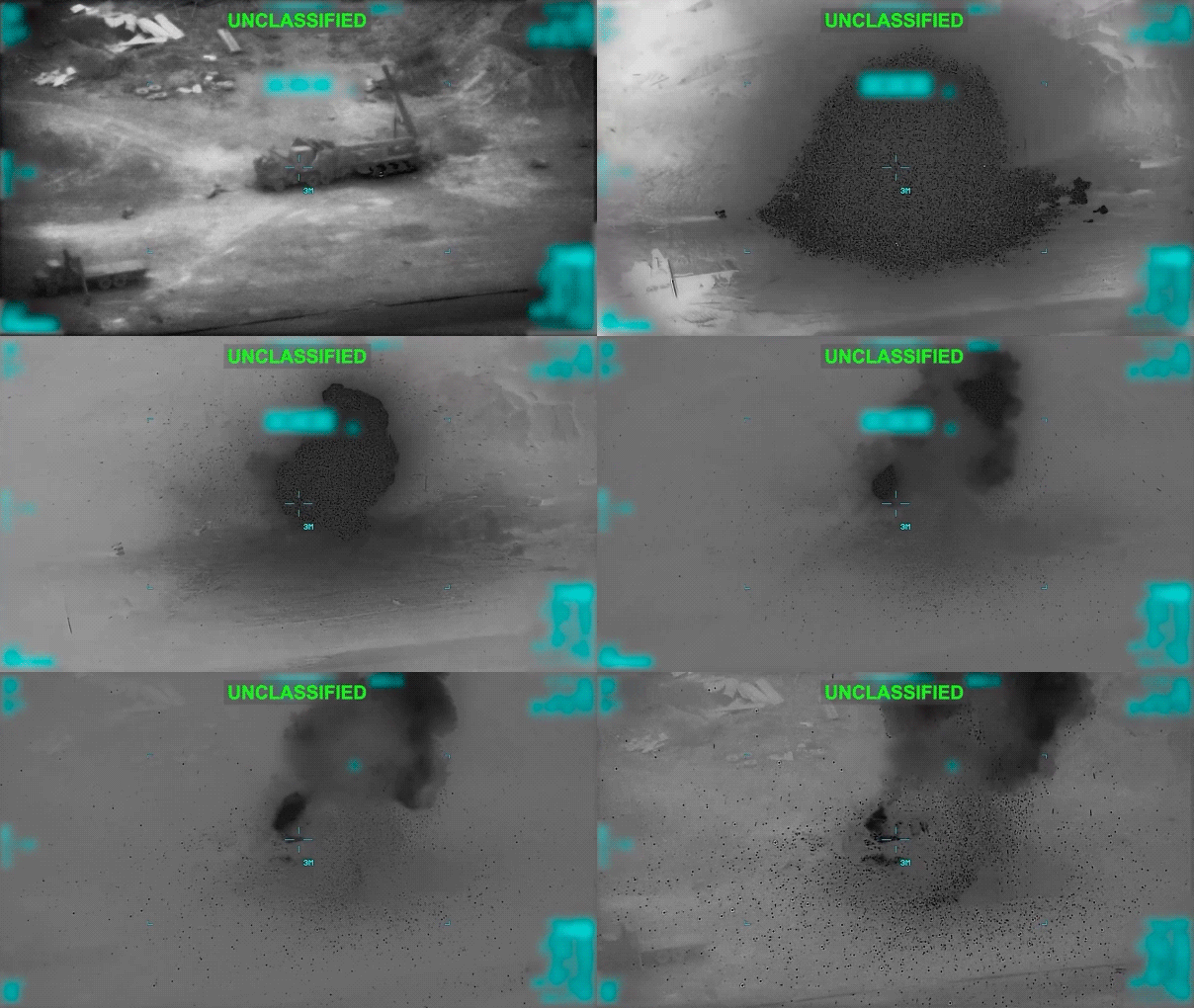
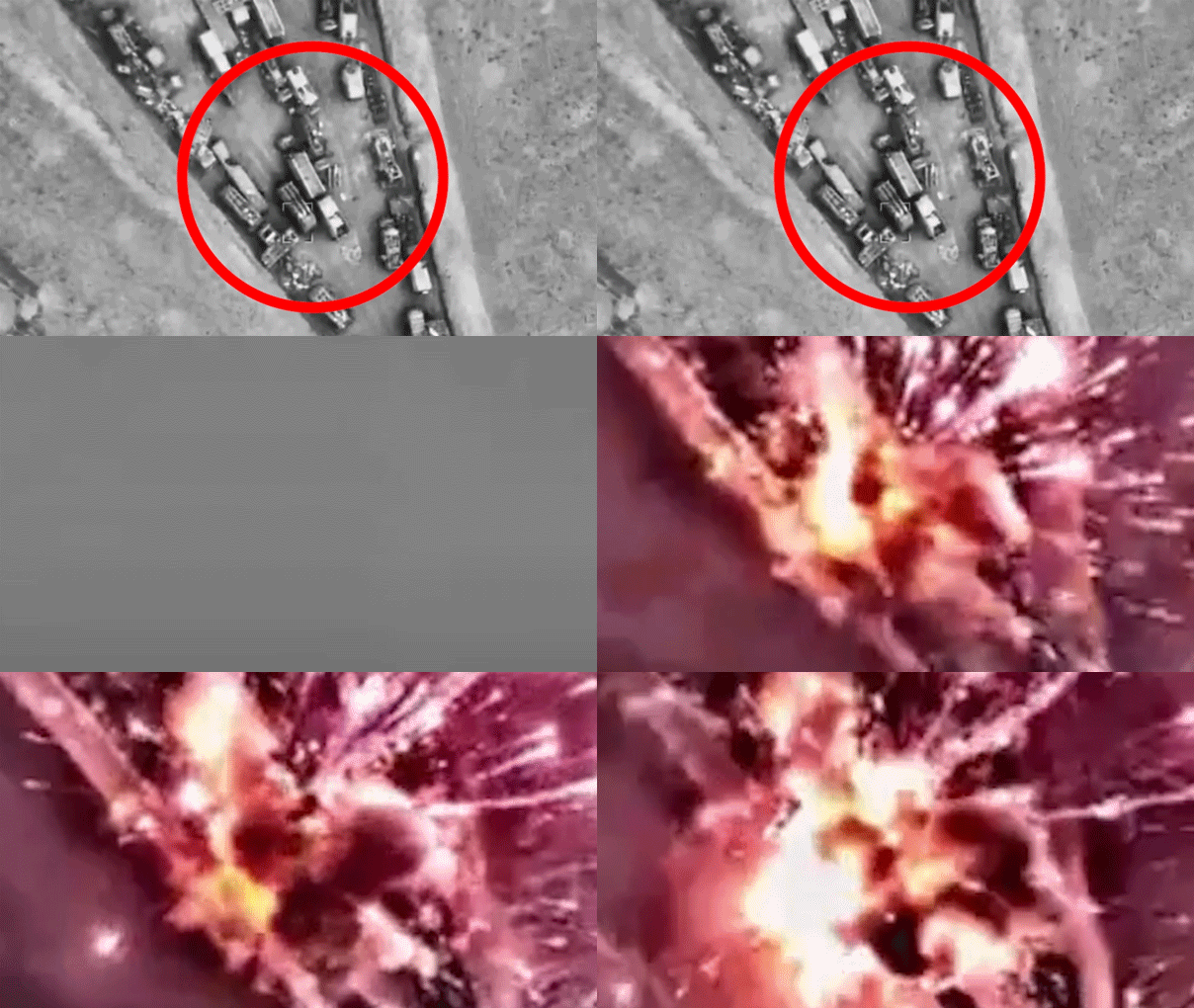
U.S. Central Command released footage showing strikes on Iranian mobile missile launchers. (@CENTCOM via X)
US SURGES FORCES TO MIDDLE EAST AS PENTAGON WARNS IRAN FIGHT ‘WILL TAKE SOME TIME’
«It was absolutely inevitable that the Iranians would seek to lash out, to widen the conflict … but all they’ve really done is made everybody quite mad and that was a really bad calculation on their part,» said Danielle Pletka, a senior fellow at the American Enterprise Institute.
Peter Doran, a senior fellow at the Foundation for Defense of Democraices, noted the shift in regional alignment.
«It would have been unbelievable just one year ago to see Saudi Arabia and the Gulf states lining up with the United States and Israel against the Islamic Republic,» he said.

This map shows the targets of Iran’s retaliatory strikes. (Fox News)
Hegseth dismissed suggestions that the war is spiraling outward, arguing that Iran’s actions are instead clarifying the battlefield and strengthening U.S. partnerships.
«This idea that it’s expanding or going — no,» he said. «It’s actually simplifying in a number of ways exactly what we need to achieve and how we’ll achieve it.»
Pentagon officials say U.S. bombers have struck nearly 200 targets in the past 72 hours, destroyed more than 30 Iranian naval vessels and significantly reduced missile and drone attacks since the opening days of the operation.
CLICK HERE TO DOWNLOAD THE FOX NEWS APP
Officials maintain that the campaign’s objectives remain limited to degrading Iran’s ability to threaten Americans and its neighbors, even as the president has suggested he needs to have a say in who becomes Iran’s next leader.
«I think the president’s having a heck of a say in who runs Iran, given the ongoing operation we have,» Hegseth said.
Related Article
war with iran,pete hegseth,conflicts defense,pentagon
INTERNACIONAL
Bajo asedio y sin aliados: Irán intensifica sus ataques en Medio Oriente mientras China y Rusia optan por la cautela
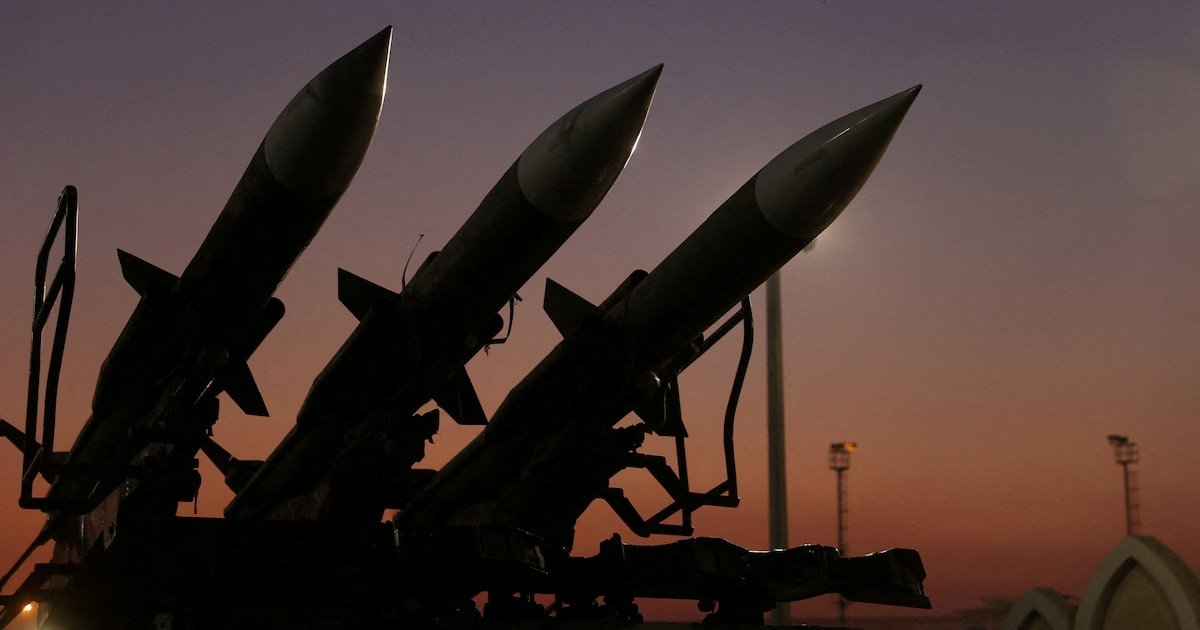
Con su líder supremo muerto y su maquinaria de guerra bajo una incesante presión estadounidense , Irán ahora se encuentra prácticamente solo: sus socios de larga data, Rusia y China, no ofrecen nada más que condenas diplomáticas y expresiones de preocupación.
Teherán ha respondido a los ataques estadounidenses e israelíes ampliando el conflicto más allá de Medio Oriente, disparando misiles y drones con un impacto que está resonando en los mercados energéticos mundiales , sacudiendo las capitales desde Washington hasta Beijing y paralizando el transporte marítimo que transporta el 20% del suministro mundial de petróleo a través del Estrecho de Ormuz.
Los misiles iraníes alcanzaron lugares tan lejanos como Chipre, Azerbaiyán, Turquía y los países del Golfo, llevando la guerra a sus propias fronteras al atacar empresas críticas, infraestructura energética y bases estadounidenses. Instalaciones petroleras, refinerías y rutas de suministro clave fueron alcanzadas, lo que causó graves interrupciones en el suministro de crudo y gas natural.
Con el Estrecho de Ormuz ya cerrado, los ataques han disparado los precios de la energía, desestabilizando los mercados globales y obligando a las principales economías a luchar, lo que pone de relieve la exposición del mundo a las consecuencias de la respuesta de Teherán a la guerra.

La moderación de Rusia y China refleja un cálculo frío, dicen los analistas: intervenir mientras Irán se enfrenta a Israel y Estados Unidos traería altos costos, ganancias limitadas y riesgos impredecibles, cargas que ninguna de las dos potencias parece dispuesta a asumir.
“Putin tiene otras prioridades, y la principal es Ucrania”, declaró Anna Borshchevskaya, experta en Rusia del Washington Institute. “Sería una tontería que Rusia entrara en una confrontación militar directa con Estados Unidos”.
Una fuente rusa de alto rango afirmó: “La escalada en Irán y sus alrededores, así como en el Golfo, ya está desviando la atención de la guerra en Ucrania. Es un hecho. Todo lo demás son meras emociones sobre un ‘aliado caído’», añadió.
Tanto Beijing como Moscú han ayudado a Irán a desarrollar capacidad militar para contrarrestar la presión estadounidense e israelí, suministrándole misiles, sistemas de defensa aérea y tecnología destinada a reforzar la disuasión, complicar las operaciones estadounidenses y aumentar el coste de los ataques. Sin embargo, ese apoyo parece ahora limitado.

China ha pasado años inmiscuyéndose en la diplomacia de Medio Oriente, mientras que Rusia ha convertido a Irán en un pilar de su alineación antioccidental.
Sin embargo, a medida que el conflicto estalló, ambas potencias se vieron limitadas: China por su dependencia de la energía y el comercio del Golfo y por las prioridades de seguridad en Asia, y Rusia por una guerra agotadora en Ucrania que ha minado su capacidad de proteger a sus socios y agudizado su necesidad de preservar los vínculos con los estados del Golfo ricos en petróleo.
El resultado es una paradoja absoluta: Irán sigue siendo estratégicamente útil para ambos, pero no lo suficientemente útil como para que se pelee por él.
Con el ancho de banda diplomático y militar y los recursos económicos de Rusia todavía absorbidos por la guerra en Ucrania, la prioridad del presidente Vladimir Putin es evitar una escalada con Washington y salvaguardar los intereses de Rusia en Medio Oriente, en lugar de apostar por la suerte de Irán en el campo de batalla.
“Si Rusia hubiera apoyado directamente a Irán, se habría distanciado de los países del Golfo y de Israel”, dijo Borshchevskaya. “Eso no es lo que Putin quiere”.
La respuesta moderada de Beijing refleja una estrategia de larga data: evitar compromisos de seguridad vinculantes que estén alejados de sus intereses fundamentales.

A diferencia de Estados Unidos, cuyas alianzas se basan en obligaciones de defensa mutua, China prefiere asociaciones basadas en el comercio, la inversión y la venta de armas, vínculos que no la arrastren a conflictos costosos más allá del este de Asia, dijo Evan A. Feigenbaum del Carnegie Endowment for International Peace.
Beijing, una de las mayores potencias comerciales y compradores de energía del mundo, mantiene vínculos con Irán y sus rivales sunitas del Golfo y, en América Latina, nunca puso todas sus apuestas sólo en Venezuela.
“Si Beijing quisiera hacer más, no desviaría su atención estratégica ni sus recursos militares de la seguridad fundamental», argumenta Henry Tugendhat, del Washington Institute. “Solo le importa su prestigio en el extranjero. Le importan Taiwán, el Mar de China Meridional y las amenazas percibidas de Estados Unidos y Japón”.
El conflicto podría incluso traer ventajas para Beijing. Desde la barrera, China puede observar cómo las fuerzas estadounidenses se encuentran retenidas lejos del este de Asia y cómo sus arsenales militares se agotan, a la vez que obtiene una visión en tiempo real de las capacidades y operaciones estadounidenses, información que podría orientar su análisis sobre el futuro escenario de Taiwán.

La principal vulnerabilidad de China sigue siendo el flujo de energía a través del Estrecho de Ormuz, por donde pasa alrededor del 45% de sus importaciones de petróleo. Sin embargo, según los expertos, Beijing ha acumulado reservas estratégicas y volúmenes sustanciales de petróleo iraní que ya se encuentran en buques cisterna o almacenes.
Afirman que la crisis ha permitido a Moscú y Beijing replantearse su papel de mediadores. China indicó que el ministro de Asuntos Exteriores, Wang Yi, ha conversado con ministros europeos y árabes para impulsar el diálogo, mientras que Putin ha mantenido conversaciones similares con líderes del Golfo y funcionarios iraníes.
Rusia también ve beneficios concretos: el aumento de los precios del petróleo fortalece su economía de guerra y una administración estadounidense atada a Medio Oriente tiene menos ancho de banda para Ucrania.
Rusia no se beneficia del colapso del régimen iraní, pero tampoco vincula su destino a la supervivencia de Teherán, afirmó Borshchevskaya. Moscú está evadiendo riesgos, manteniendo la flexibilidad, independientemente del resultado del conflicto, y establecería vínculos con cualquier nuevo gobierno, incluso uno alineado con Washington.

La fuente rusa señaló a Siria como precedente. A pesar de haber respaldado al derrocado presidente Bashar al-Assad durante años, Moscú conservó sus bases en el Mediterráneo y rápidamente forjó vínculos con el nuevo líder sirio, Ahmed al-Sharaa, lo que subraya su disposición a sacrificar lealtad por influencia a largo plazo.
(Reuters)
Middle East

¡Estrategia, acción y clásicos! Amazon ha anunciado los juegos gratis de este mes de marzo de 2026 para suscriptores Prime

Los gobernadores activan agendas paralelas para tratar de dinamizar la producción en sus provincias

Miguel Galuccio, presidente de Vista Energy: “La realidad macroeconómica es mucho mejor que la que teníamos hace tiempo atrás”

Franco Colapinto saldrá a pista en el Gran Premio de Australia para iniciar la nueva era de la Fórmula 1: horarios, TV y todo lo que hay que saber

En medio de la guerra de Irán, el ministro de Defensa participó en la cumbre militar en Miami y ratificó el apoyo a EE.UU.

La nueva era K: certezas y varias incógnitas

Puertas adentro, Villarruel explotó: «El esfuerzo no lo hizo la política» y demolió el relato económico de Milei

Pampita se mudó a un castillo francés de detalles alucinantes: «1000 metros, 14 ambientes, vale 11 millones de dólares»

El drama que vive Oriana Sabatini a horas del nacimiento de su hija con Paulo Dybala: se complicó la salud de su abuela de 90 años

Petri y Villarruel se cruzaron por un gesto en el Congreso: de “golpista” a “te conozco por el trencito de la alegría”

 POLITICA3 días ago
Petri y Villarruel se cruzaron por un gesto en el Congreso: de “golpista” a “te conozco por el trencito de la alegría”
- CHIMENTOS1 día ago
¡Interna total! Pablo Layus explotó y blanqueó quiénes son los que arruinan Intrusos: «Te matan»
- INTERNACIONAL2 días ago
Mapa de la guerra en Medio Oriente: dos bandos y 13 países involucrados en un conflicto que jaquea al mundo